RSS
 

Archive for January, 2015

19. Januar 2015

20 Jan

Das Bild des Tages von: afineyoungman

Ein Haus vor einem Hügel.

Fotolinks des Tages

1. Eine komische Mischung

Den Freunden des Surreal-Kuriosen wird dies ein visuelles Festmahl sein: Bored Panda publizierte eine prächtige Reihe bizarrer Kabinett-Karten, die echte Fotografie und Illustration miteinander vermischt. Diese Serie, die vom Macher Colin Batty bei Bored Panda eingereicht wurde, ist deshalb so interessant, weil sie Gewöhnliches mit Ungewöhnlichem auf faszinierende Weise verbindet und sämtliche No-Gos ignoriert (man malt doch nicht auf alte Foto-Karten!). → ansehen

+ Falls Ihr Euch fragt, was mit Kabinett-Karten eigentlich gemeint ist, hilft ein Blick auf Wikipedia.

2. Liebe unterm Himmelszelt

Fotografen aus aller Welt sind derzeit hellauf begeistert, denn sie haben derzeit die Chance, den Kometen mit dem wunderschönen Namen „C/2014 Q2 Lovejoy“ auf Film oder Sensor zu bannen. Zwar ist das Wetter über Deutschland dieser Tage für solche Abenteuer ungeeignet und, naja, finden muss man das fliegende Wunder auch erst mal. Doch da kommt ein Artikel von Spiegel Online gerade recht. Dieser zeigt einerseits 5 großartige Aufnahmen von Lovejoy und gibt anderseits ein paar kleine Tipps, wie man dem Kometen überhaupt auf die Schlichte kommt. → ansehen

3. Offene Wunden der Zentralafrikanischen Republik

2014 war ein Jahr der Tragödien und es war für viele schon schwer, dem Lauf der wichtigsten Ereignisse zu folgen. Dabei ging insbesondere eine schreckliche Sache unter: Die Unruhen und mörderischen Konflikte in der Zentralafrikanischen Republik. Dort begannen muslimische Rebellen einen Krieg, der viele Menschen tötete und einige Gegenbewegungen provozierte. Mit dabei: 6000–10000 Kindersoldaten. Der Franzose William Daniels fotografierte die Geschehnisse und zeigt erneut die Grausamkeit des Mordens und der Rache auf. (Vorsicht: die Bildstrecke zeigt schwer verletzte und tote Menschen.) → ansehen


kwerfeldein – Fotografie Magazin | Fotocommunity

 
Comments Off on 19. Januar 2015

Posted in Equipment


The Workflow Process With Jonathan Skow

19 Jan

Hi FashionPhotograhyBlog.com readers,

Vince Gonzales from Vinpix has joined us again on the site, following the interview he did with Trina Turk and Jonathan Skow; the faces behind the popular Californian fashion label, “Trina Turk”, Vince takes Jonathon Skow, LA photographer and fashion celebrity, aside to find out how the photographer processes his workflow when shooting for the “Trina Turk” range. Take it away Vince… 

Vinpix Jonathan Skow Trina Turk

 Vince Gonzales:  Jonathon, tell me a little about your workflow when you are approaching these shoots when you are going to a location. Our readers are kinda nerdy and techie so you can’t get too nerdy here… obviously, you are shooting digital, but do you shoot any film?


Jonathon Skow: No, no film. All digital


Vince Gonzales: And is it 35 format or medium format?


Jonathon Skow: 35 format.


Vince Gonzales: Do you use natural light for exteriors with strobes? 

Vinpix Jonathan Skow Trina Turk

 Jonathon Skow: [I use] Pretty much all natural light. I like back lighting, yeah it’s pretty much all natural light. Sometimes we’d use the shiny board or we’d put a black cloth on one side; something that would give in a little bit of shape.


It’s pretty much [natural light], I don’t want it to look like too polished, the idea is like this natural California lifestyle so I don’t want it to feel too refined. It’s nice to me when there’s a little bit of shadow to it, or if there’s some flare or sunspots; things like that I like l welcome.


Vince Gonzales: And what’s your post process? Are you doing that or is that being handled somewhere else? 

Vinpix Jonathan Skow Trina Turk

 Jonathon Skow: No, I just have a digital tech who comes on the shoots and we use light room. Usually we have a recipe like “oh this [image] let’s try to make this a little warm or less contrast”.  Honestly, and I hate to admit this, but I am influenced a lot by Instagram, in the idea of their filters.


I came into photography from the creative side, being someone old enough to start in film and then moved into digital. I still was kinda [wary] of [digital] you know. I always thought that the film was this natural sort of process that would happen and [when] you would get it back it would be surprise but younger people would be like  “oh but why bother, why not do that yourself on digital?” And I was like “no you can’t do that” but then Instagram  made me think “oh why not put a weird filter on it and have a look”.


Not that we go super extreme but I’ll talk with the digital tech before and we’ll look at some different things and have a plan for the sort of mood of what the [shoot] is going to be. Not that we stray too far but there’s little tweaks. 

Vinpix Jonathan Skow Trina Turk

Did you find Vince’s interview with Jonathan Skow interesting? Please leave your comments below in the comment section. We would like to know what you thought about this post. If you enjoyed this post, stay tuned as Vince has another post coming up soon on FashionPhotograhyBlog.com. You can also read our article on how Trina Turk and Jonathan Skow got their clothing lines “Trina Turk” and “Mr Turk” got started here.


IMAGE SOURCE: 

Feature image & images 1-4: Stills of Trina Turk’s designs, courtesy of Jonathan Skow & Vinpix


Fashion Photography Blog

 
Comments Off on The Workflow Process With Jonathan Skow

Posted in Uncategorized


4 Tips for Effective Lighting Using Only One Speedlight

19 Jan

Flashes

If the idea of incorporating flash into your photography work strikes fear in your heart, this is a must read article for you!

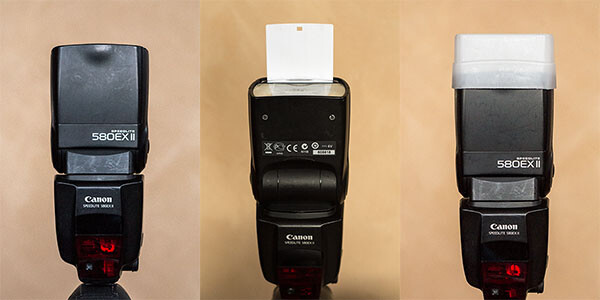
The ability to use a portable electronic flash can do wonders for your work by giving you more creative options, and the truth is you don’t need a ton of fancy equipment to begin utilizing flash. In fact, this article is focused purely on the speedlight, the Canon 580 EXII Speedlite to be exact (equivalent to the Nikon SB-900), and how you can get started experimenting with lighting effects using just one speedlight.

Among the smallest, most compact forms of external lighting, speedlights offer consistent, daylight-balanced lighting powered by four AA batteries. They are easy to fully integrate with your DSLR camera, allowing the two units to operate as one. While most speedlights offer manual settings, it is also easy to just leave it on auto (TTL) and let it adjust the light output according to your camera settings. Depending on what kind of camera you own, it might come with its own built-in pop up flash, but a speedlight is still recommended due to its ability to tilt and swivel, giving you more control over where the flash is aimed.

The following examples were photographed using a Canon 5D Mark III and a 580 EXII Speedlite. All included photographs were shot in auto (TTL) setting and received no retouching other than cropping and resizing.

Ambient Light Isn’t Always the Best Light
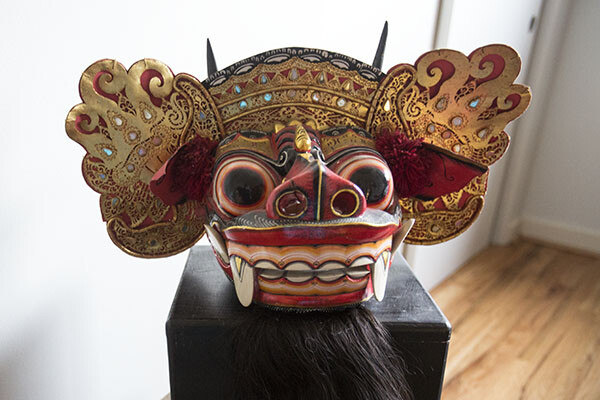
No Flash

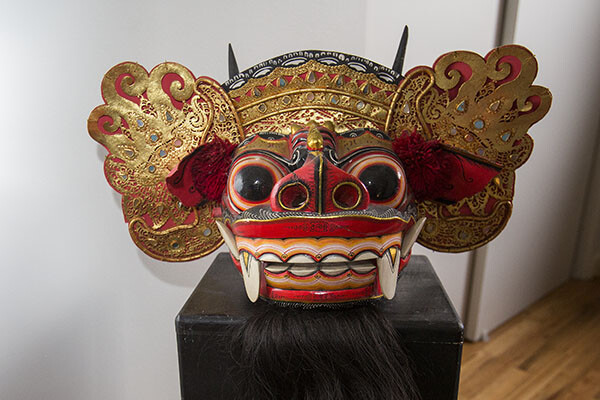
While ambient lighting is often the easiest lighting source to use, it comes with its share of shortcomings. There might be too much or too little ambient lighting, it might be coming from the wrong direction, or it might have a strong color cast. To kick-off this example, let’s see how this Balinese mask photographs using just the ambient light available in the room (see image above). Notice that the colors are dull and the surfaces of the mask are unevenly illuminated. It’s a less than optimal photo, showcasing all of the shortcomings of relying purely on ambient lighting.

If you’re lucky, the ambient light might be able to be moulded using a reflector or simply moving your photo subject. But say you can’t control the ambient light? Here are some tips for using a speedlight in your favor.

Option 1: Shoot with the flash straight on
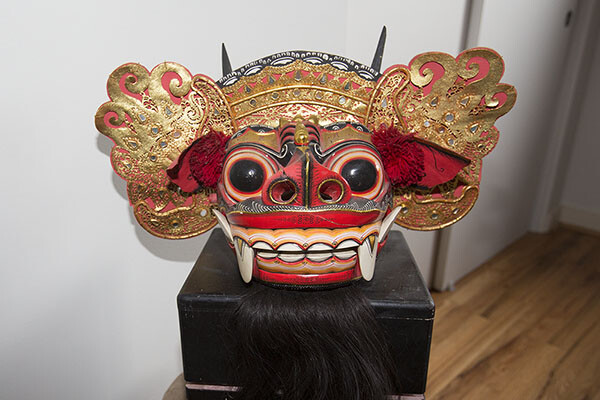
Straight On

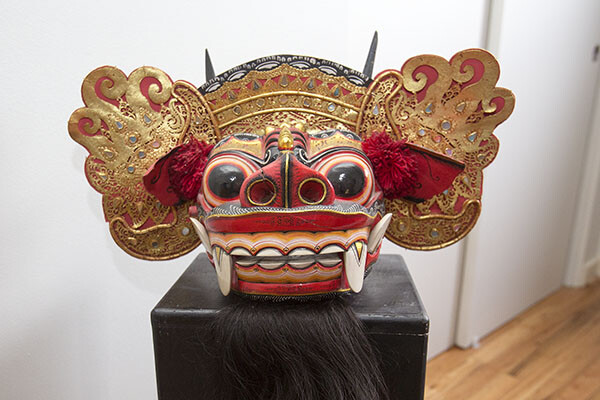
The easiest way to use your speedlight is to aim it directly at your subject. The result is a decently lit subject, similar to the type of photo that a built-in pop up flash would produce. Notice how that colors pop more and the mask is more evenly lit compared to the photo shot in ambient light. However, aiming your flash straight forward can result in some harsh shadows, not to mention cause human photo subjects to be temporarily blinded by light flashing in their faces. It is also very non-directional light making the subject appear flat and lacking dimension.

Option 2: Bounce the flash off the ceiling or wall
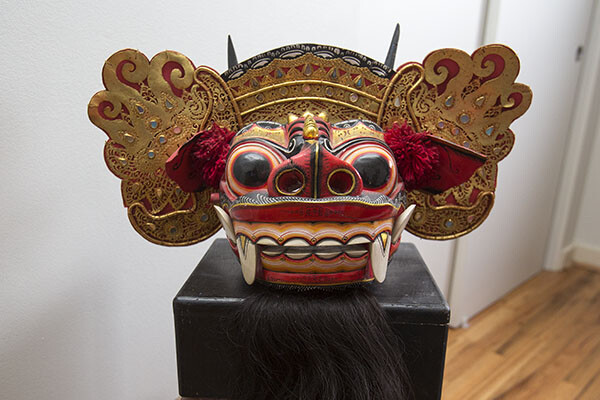
Straight UP

Flash bounced straight up off the ceiling

The simplest way to soften the speedlight’s effects is to bounce the flash off of a nearby surface. In this case, the flash is aimed directly up at a white ceiling. When the flash is fired, the light is spread out onto the ceiling and reflected down on the subject. As a result, the front part of the mask from the eyes to the nose are nicely lit, but the mouth, ears, and ornamental headdress are left in the shadows. This is one of the pitfalls of simply bouncing the flash off the ceiling: the image will generally produce shadows on any protruding elements of your subject.
Bounce Off Wall My Left

Bounced of the wall to the left of the camera.

Alternatively, the flash can also be pointed directly at a nearby wall so the light is bounced in another angle. In the above example, the flash was bounced off a white wall to the right of the mask. The result is more dramatic lighting that focuses on one side of the mask, using the shadows to indicate more depth.

Option 3: Use the built-in white bounce card
 

Straight Up with Whitecard

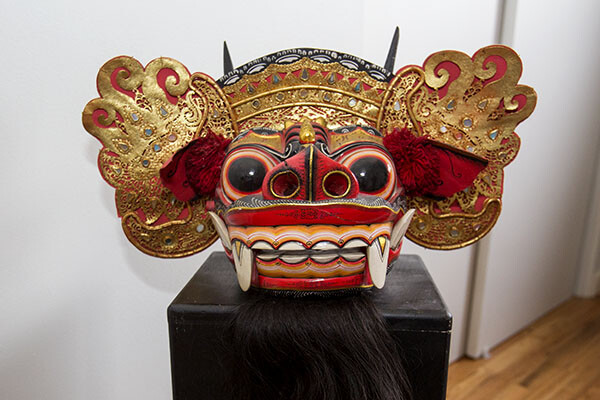
To solve the problem of shadows produced by bouncing the light off the ceiling, one solution is quite simple. Keep the speedlight pointed at the ceiling, and simply pull up the thin white bounce card that is built into the top of the flash. When the flash is fired, the light not only bounces off the ceiling, but a portion of it is also reflected off the bounce card, as seen in the catchlight of the mask’s eyes.  The resulting image is much more evenly illuminated, all thanks to a thin piece of plastic. However, the eyes do reflect quite a bit of the spilled light from the ceiling.

Option 4: Use a white flash diffuser cap on your speedlight
Flash Cap copy

When it comes to flash modifiers for speedlights alone, there are a ton of options to choose from. One of the most effective modifiers is also incredibly compact and cheap: a translucent white cap or box that fits snugly on your flash. It helps to evenly spread out the light to eliminate harsh shadows. In this case, the diffuser cap was attached to the flash which was pointed directly up at the ceiling. The effect is similar to using the built-in white bounce card in Option 3, but the light is more controlled. The evidence is strongest in the mask’s eyes, which now only have the catch light and not the spilled light bounced from the ceiling.

This is just a very basic introduction to flash photography with a speedlight, intended to simply demonstrate how adding a single external flash can produce dramatically different results. What is your take on flash photography? Do you prefer natural light, speedlights, or strobes?

googletag.cmd.push(function() {
tablet_slots.push( googletag.defineSlot( “/1005424/_dPSv4_tab-all-article-bottom_(300×250)”, [300, 250], “pb-ad-78623” ).addService( googletag.pubads() ) ); } );

googletag.cmd.push(function() {
mobile_slots.push( googletag.defineSlot( “/1005424/_dPSv4_mob-all-article-bottom_(300×250)”, [300, 250], “pb-ad-78158” ).addService( googletag.pubads() ) ); } );

The post 4 Tips for Effective Lighting Using Only One Speedlight by Suzi Pratt appeared first on Digital Photography School.


Digital Photography School

 
Comments Off on 4 Tips for Effective Lighting Using Only One Speedlight

Posted in Photography


10 Recent Articles with Real-world Tips to Help You Grow as a Photographer

19 Jan

As 2015 came into play, we thought it might be a good idea to make a list of some recent educational resources to share with you. In this period of added motivation and energy the beginning of the year usually brings, take time to upgrade your photographic skills and build up some business muscle. The following 10 articles are full Continue Reading

The post 10 Recent Articles with Real-world Tips to Help You Grow as a Photographer appeared first on Photodoto.


Photodoto

 
Comments Off on 10 Recent Articles with Real-world Tips to Help You Grow as a Photographer

Posted in Photography


Versteckspiel mit Sandra Lazzarini

19 Jan

© Sandra Lazzarini

An den Bildern der italienischen Fotografin Sandra Lazzarini bin ich lange hängen geblieben. Vielleicht, weil jedes ein gewisses Geheimnis birgt, denn den Portraits fehlt häufig das Gesicht, das für Aufnahmen von Menschen doch so wichtig erscheint. Aber dieses Versteckspiel gibt den Bildern etwas Surreales und sehr Interessantes.

Oft verstecken die Modelle von Sandra sich selbst hinter Blumen und Händen oder drehen sich mit dem Rücken zur Kamera. Sie stehen in der Natur oder im Urbanen. Man wartet fast schon darauf, dass sie gleich die Blumen fallen lassen oder den Arm senken, damit man einen Blick auf das vollständige Gesicht erhaschen kann. Aber vergebens, nichts passiert. Sandra selbst schreibt zu ihren Bildern:

Ich liebe es, Frauen zu fotografieren, insbesondere Frauen mit verdeckten Gesichtern durch Gesten, die unfertig wirken, als würde gerade etwas passieren. Dadurch werden wir alle Teil dieser pausierten Realität zwischen Nachdenklichkeit und Selbstvergessenheit.

Sich sehr wohl der Erfolglosigkeit bewusst, die es bedeutet, einer Liebe den Rücken zuzukehren oder sich vor der unerbitterlichen Kraft zu verstecken, die ausbricht, wenn eine Liebe in das eigene Leben tritt. In der Welt der Fotografie halte ich mich für einen Tropfen im Meer.

Eine Frau vor einem blühenden Baum hält sich ein Auge zu.

Eine Frau steckt mit dem Kopf in einer Hecke.

Eine Frau steht im Gebüsch und hält einen Tennisball vor ihr Auge.

Eine Frau mit Partyhut auf dem Gesicht, liegt auf einem Steg.

Eine Frau mit weißen Blüten in der Hand und vor dem Gesicht.

Eine Frau hält zwei Laubblätter wie Hörner an ihren Hut.

Eine Frau mit Blumenstrauß in der Hand steht an der Wand mit dem Rücken zur Kamera.

Eine Frau hält einen Strauß aus weißen Blüten vor ihr Gesicht.

Eine Frau hält in einer Hand eine Blume. Die andere streckt sie weit aus, so das sie durch den Bildrand abgeschnitten ist.

Hände umarmen eine Pflanze auf einem Balkon.

Eine Frau steht in einem eingezäunten kleinen Garten an einer Straße und umarmt einen Baum.

Wenn Ihr nicht genug vom Versteckspiel bekommt, dann besucht doch auch einmal die Webseite von Sandra Lazzarini.


kwerfeldein – Fotografie Magazin | Fotocommunity

 
Comments Off on Versteckspiel mit Sandra Lazzarini

Posted in Equipment


Power Grows on Trees: Wind Energy via Leafy Green Turbines

19 Jan

[ By WebUrbanist in Conceptual & Futuristic & Technology. ]

urban wind farm designs

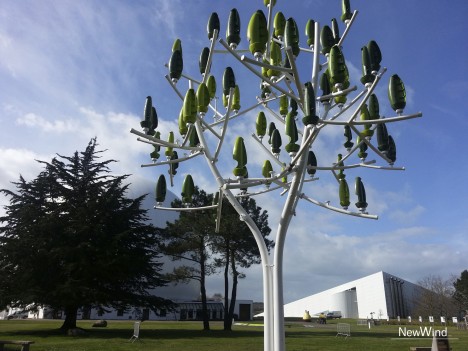
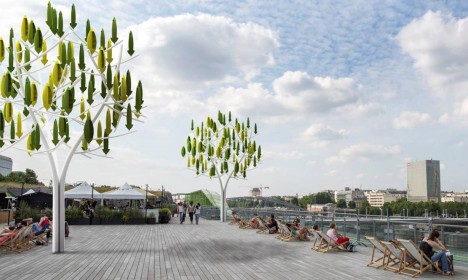
Addressing noise and visual pollution associated with wind energy generation in urban contexts, these new trunk-style towers support suspended leaf-shaped turbine housings, hung from organic-looking branches.

energy generating tree design

Inspired by the movement of leaves in the wind, New Wind founder Jérôme Michaud-Larivière developed this project with technology and aesthetics equally in mind, conceiving of the design as part public art and part civic infrastructure.

urban wind tree generator

The technology behind the design is robust, sophisticated and efficient. Even the tiniest gusts of wind (starting at a few miles per hour) will turn the small blades secreted away within each individual leaf making them well-suited to all sorts of city environments. Each blade can rotate and generate power in both directions and thus more versatile. According to New Wind, “With 72 artificial leaves serving as micro-turbines spinning on a vertical axis, the Wind Tree is designed to harness more gentle winds. The developers say this can extend to breezes blowing as slowly as two meters per second, making the turbine useful across more than 280 days of the year. Its power output is calculated at 3.1 kW.”

urban wind turbine tree

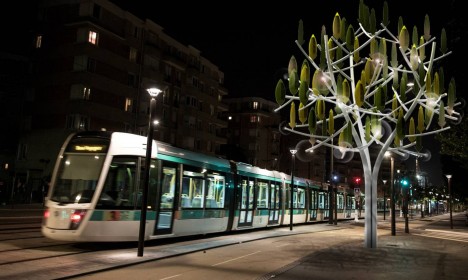
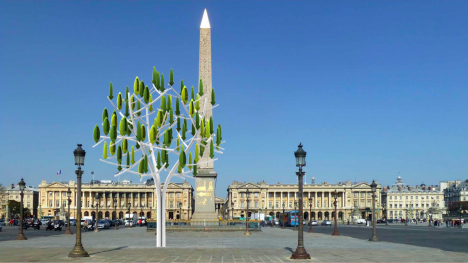
A prototype has already been deployed in Paris and the idea is to eventually roll out small pockets (or perhaps: forests) in various public spaces, from gardens and parks to squares and shopping centers. Of course, potential applications in non-urban areas exist as well, particularly as future iterations evolve even greater levels of efficiency.

urban wind tower prototype

Currently, the plan is to power street lamps or energize electric car charging stations. Eventually the hope is to add photovalics to the trunks and branches, adding energy-harvesting capacity in another form to the same structures. Ultimately, these creations may supplant the need for power grids in localized areas like parks where bringing in energy adds more infrastructure that well-placed generators could provide instead. For now, the price tag still seems a bit steep: just over $ 36,000 USD, but that could come down in time as the production process is refined and if sufficient buyers express interest in scaling the strategy.

Share on Facebook


[ By WebUrbanist in Conceptual & Futuristic & Technology. ]

[ WebUrbanist | Archives | Galleries | Privacy | TOS ]


WebUrbanist

 
Comments Off on Power Grows on Trees: Wind Energy via Leafy Green Turbines

Posted in Creativity


18. Januar 2015

19 Jan

Das Bild des Tages von: Sebastian Kahl

Ein zutrauliches Eichhörnchen.

Fotolinks des Tages

1. Hipstermerkel

Unsere Bundeskanzlerin ist inspirierend. Zumindest, wenn man sich den Tumblr „Hipstermerkel“ ansieht, auf dem verschiedene Menschen ein Portraitfoto von Angela Merkel auf verschiedenste Weise bearbeitet haben. Im Hipsterstil mit Bart und Brille oder mit diversen Grafiken und Sprüchen. → ansehen

+ Wenn Ihr jetzt selbst kreativ sein wollt: Das Originalfoto stammt von einem Artikel auf Spiegel Online. Die eigenen Werke kann man auf dem Tumblr einreichen.

2. Auf dem Thron

Die Mächtigen der Welt sind auch nur Menschen. Dies zeigt recht eindrücklich die Künstlerin Cristina Gugger alias Krydy anhand von Fotomontagen, in denen sie Politiker und andere Machtinhaber auf das Klo setzt: Von Angela Merkel über Papst Franziskus bis hin zur Queen. Gut gemacht sind diese Bildmanipulationen auf jeden Fall. → ansehen

3. Der weibliche Körper im Wandel

Die Fotografin Polly Penrose hat sich über sieben Jahre lang selbst portraitiert. Ihre Aktaufnahmen zeigen sie in oft sehr akrobatischen Posen und offenbaren die Veränderungen ihres Körpers. Die Serie heißt „A Body of Work“ und wird in ein paar Jahren sicher noch um einiges interessanter. Hoffentlich bleibt Polly dabei. → ansehen


kwerfeldein – Fotografie Magazin | Fotocommunity

 
Comments Off on 18. Januar 2015

Posted in Equipment


Prism Break: China’s Eye-Soothing Rainbow Road Tunnel

19 Jan

[ By Steve in Architecture & Cities & Urbanism. ]

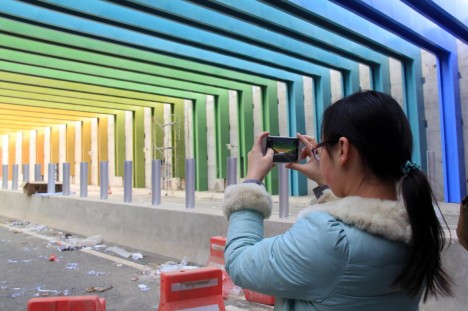
China Rainbow Tunnel 2
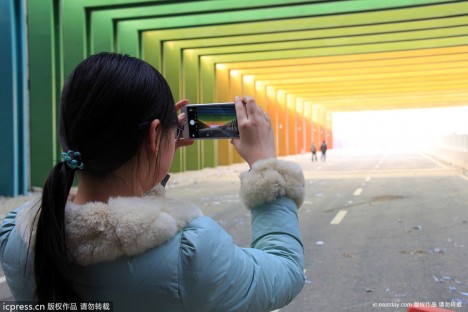
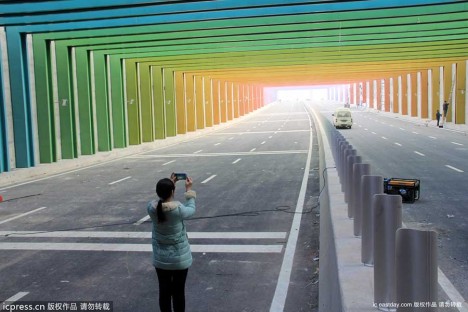
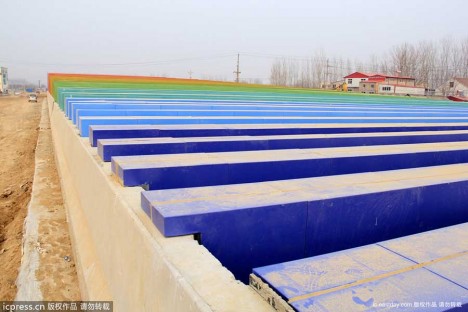
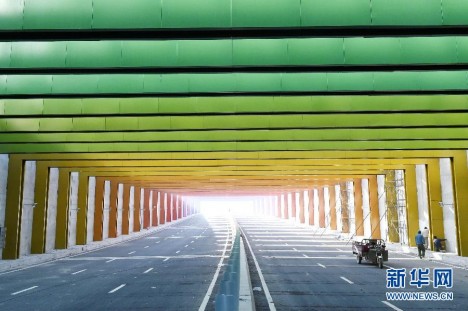
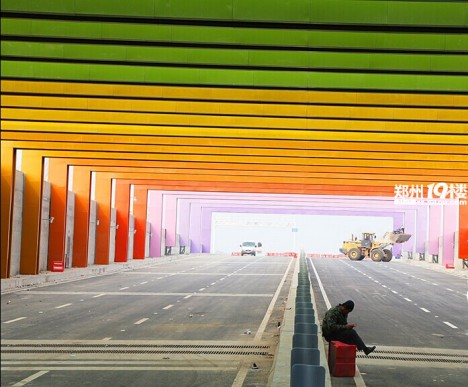
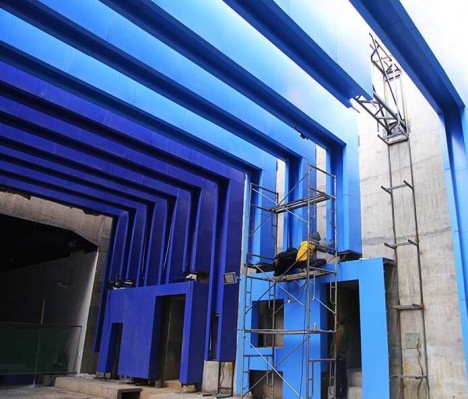
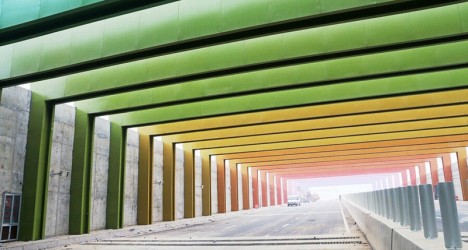
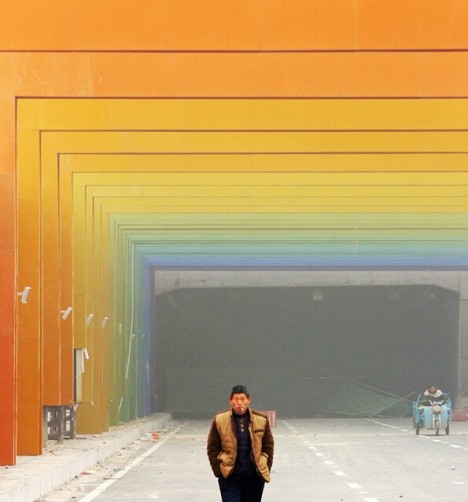
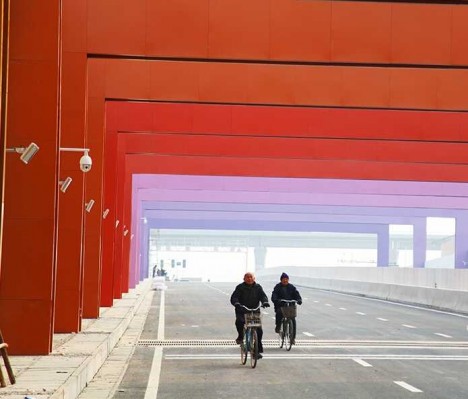
A 1,000-foot long rainbow underpass in Zhengzhou, China is designed to help drivers’ eyes adjust from daylight to a artificial lighting and back again.

China Rainbow Tunnel 2b

China Rainbow Tunnel 2a

Break out the Skittles, it’s time to drive the rainbow! Well, almost… the Cheng Avenue rainbow tunnel isn’t quite ready for prime time though it’s already cost Zhongmou County a pot of gold – about 100,000,000 yuan (about $ 16 million) and counting.

China Rainbow Tunnel 6

China Rainbow Tunnel 8

China Rainbow Tunnel 8b

The tunnel (actually a shallow underpass) is located about 50 meters north of the S223 Provincial Highway intersection just outside Zhengzhou in China’s east-central Henan province. The area around the project appears rather dry and drab; the soil radiating the pale yellow hue of dust blown eastward by strong winds scouring the Gobi Desert.

China Rainbow Tunnel 9a

China Rainbow Tunnel 9

China Rainbow Tunnel 7b

China Rainbow Tunnel 7a

If civic planning authorities intended to alleviate the visual monotony by injecting some color into the landscape, a 400-meter (1,312 ft) long “rainbow tunnel” is one way to do it. No matter if some bureaucratic committee can’t decide on a single hue: the rainbow tunnel has got ‘em all!

Next Page – Click Below to Read More:
Prism Break Chinas Eye Soothing Rainbow Road Tunnel

Share on Facebook


[ By Steve in Architecture & Cities & Urbanism. ]

[ WebUrbanist | Archives | Galleries | Privacy | TOS ]


WebUrbanist

 
Comments Off on Prism Break: China’s Eye-Soothing Rainbow Road Tunnel

Posted in Creativity


5 Tips for Using Pinterest for Photography Inspiration

19 Jan

Untitled-1

Let me just come right out and say it – I think Pinterest is amazing. Not only is it a wealth of information when it comes to recipes and easy craft projects for my two kids, but it is also an incredible source for both photography instruction and inspiration. As a photographer, I am constantly inspired by the images that I see while browsing the “Photography” category on Pinterest, and I think it can be a really valuable tool in terms of identifying your personal style in photography as well as pushing yourself as a photographer.

That said, I think it goes without saying that Pinterest is not always used appropriately. We’ve probably all had a prospective client email us asking, “Can you do this?” with a link to a particular pin on Pinterest, where the client means that exact pose, backdrop, and that exact style of post processing. This isn’t inspiration, it’s flat-out stealing. But Pinterest really can be a great resource when used correctly, so here are some tips on the best way to use Pinterest for photography inspiration:

1. Don’t (Only) Browse Your Favorites

If you’re a newborn photographer, don’t just search Pinterest for newborn photos. Rather, try browsing the general photography category, or searching for more general terms like “golden hour” or “high contrast photos”. I’m a firm believer that portrait photographers can be inspired by landscapes, and vice versa. There’s no good reason to limit yourself!

2. Click Through

Once you find an image that you love, take the time to click through the link and make sure that (a) the pin leads to the proper photograph or specific blog post, (b) the correct photographer is credited (Google is not a photographer), and (c) that the photographer wants the image to be pinned. Many photographers pin their own photos and encourage others to repin, or include “pin now” buttons on their blog, which generally makes me feel comfortable with repinning their work. Others install a script that will not allow images from that website to be pinned, which is pretty self-explanatory that they’d prefer their work did NOT appear on Pinterest. If you’re not sure whether or not it’s okay to pin an image after visiting the original website, it’s a good idea to shoot the photographer a quick email or leave a comment asking if they’re open to their images being pinned. This is really new territory without much legal precedent, so I just think it’s better to be safe than sorry!

3. Caption Everything

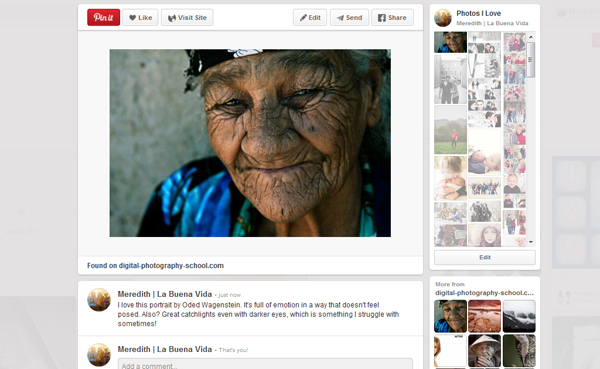
Leave yourself thoughtful and detailed comments about what, specifically, you love about the photo. Is it the lighting, the pose, the processing, the coordination of outfits? Or is it the emotion behind the image? Whatever it is, try to identify something concrete that speaks to you about each and every image that you pin. I also think it’s good practice to include the photographer’s name in your caption, especially if the image isn’t watermarked, not only to help ensure that the images are properly attributed, but also to begin to identify who inspires you as a photographer.  Here’s an example of how I captioned one image that I pinned as inspiration, coincidentally from this article by Oded Wagenstein about using reflectors here on dPS.

Pinterest2

Text Reads: “I love this portrait by Oded Wagenstein. It’s full of emotion in a way that doesn’t feel posed. Also? Great catch lights even with darker eyes, which is something I struggle with sometimes!”

4. Reflect Regularly

Every couple of months, be sure to go back and look at the images that you’ve pinned, and see if there’s anything that you can glean from what they have in common. Are you noticing a lot of photos with a particular style of processing, or that you’ve pinned many images from a different genre of photography that perhaps you’d like to try? Are you noticing that you’ve selected lots with strong posing, which is something that you could possibly brush up on a little? Try to identify at least one theme across the images that you’ve pinned.

Several years ago I realized that nearly every photography blog I followed was written by a newborn photographer. After months of admiring from a far, and soaking up everything I could read about newborn photography, I finally decided to ask a couple expecting friends if I could come over and take some pictures of their new babies, “just for fun”. My first time photographing a newborn certainly wasn’t perfect, but it ignited a love of a whole new genre of photography that I may never have pursued otherwise. I’m sure this won’t be the last time that I discover a love of something new photographically!

Pinterest3

This is an image from that very first time photographing a friend’s newborn. Years ago, I never would have guessed that this would be a genre of photography that I now love!

5. Put it into Practice

Once you’ve identified some common themes about images that you admire, carve out some time with your camera to put it into practice. Are you a portrait photographer who was pinning lots of images of food? Make some time in your schedule to read about techniques for food photography, and then give it a shot.

Here’s a personal example: one area that I’m not as confident in is posing several people together. I recently did a session for a friend’s family, and checked out several of her Pinterest boards before the session. I noticed that many of the captions on the images that she had pinned were about how she liked how the siblings were posed in the portraits – arms wrapped around each other, holding hands, etc. So, I made it a personal goal to really spend some time looking at small group posing before their session, which made me more confident in posing in general. I think that I was more able to encourage her daughters into a pose that would emulate the feel that their mom liked, while also being more natural for them than it would have if I had tried to recreate one specific pose that I’d seen on Pinterest.

Pinterest1

 Do you use Pinterest to find inspirational images? Any dos or don’ts you’d like to add to the list?

googletag.cmd.push(function() {
tablet_slots.push( googletag.defineSlot( “/1005424/_dPSv4_tab-all-article-bottom_(300×250)”, [300, 250], “pb-ad-78623” ).addService( googletag.pubads() ) ); } );

googletag.cmd.push(function() {
mobile_slots.push( googletag.defineSlot( “/1005424/_dPSv4_mob-all-article-bottom_(300×250)”, [300, 250], “pb-ad-78158” ).addService( googletag.pubads() ) ); } );

The post 5 Tips for Using Pinterest for Photography Inspiration by Meredith Clark appeared first on Digital Photography School.


Digital Photography School

 
Comments Off on 5 Tips for Using Pinterest for Photography Inspiration

Posted in Photography


Real-world samples: Sony Alpha 7 II in Kauai

18 Jan

Our initial samples gallery from the Sony a7 II saw the camera tested in a variety of real-world conditions, and now we’ve followed it up with even more samples from the mirrorless full-frame camera. Better yet, we tested it out in what is arguably one of the most photogenic places on Earth. And while it’s nothing compared to actually taking a Hawaiian vacation, browsing through these samples is at least a small reprieve from the winter blues. See gallery
Articles: Digital Photography Review (dpreview.com)

 
Comments Off on Real-world samples: Sony Alpha 7 II in Kauai

Posted in Uncategorized