RSS
 

Archive for December, 2014

20. Türchen: Cewe

21 Dec

Cewe

20. Türchen

Im heutigen Türchen hat die Firma Cewe für Euch gewichtelt und gleich drei große Gutscheine im Wert von 150 € hinein gelegt. Bei Cewe findet Ihr alles was mit Foto-Druck zu tun hat: Kalender, Fotobücher, Poster, Sticker, Drucke auf Tassen und T-Shirts, Puzzles und Memorys. Im Grunde alles, auf dem Ihr Euch Fotos vorstellen könnt, gibt es bei Cewe auch zu kaufen – mit Euren eigenen Bildern.

Besonders hervorheben möchten wir hier die hochwertigen Cewe-Wandbilder. Bei Cewe kann man sein Foto professionell auf Materialien wie Acrylglas oder Alu-Dibond drucken lassen. Während Alu-Dibond eine edle, reflexionsfreie und matte Bild-Anmutung bietet, hat man beim Druck hinter Acrylglas eine starke Tiefenwirkung und leuchtende Farben.

Cewe Materialübersicht

Mit dem Gutschein könnt Ihr natürlich ganz frei aus dem gesamten Angebot von Cewe wählen und Eure Bilder auch auf Leinwand, Hartschaum oder als Gallery Print drucken lassen. Wie auch immer Ihr Euch entscheidet, wir wünschen Euch viel Spaß mit dem Gutschein und beim Stöbern auf der Cewe Webseite.

Um einen der Gutscheine zu gewinnen, schreibe einen Kommentar unter bürgerlichem Namen und gültiger E-Mail-Adresse bis heute um 24 Uhr. Danach verlosen wir sie per Zufallsgenerator unter allen Kommentatoren. Die genauen Gewinnspielregeln findest Du hier. Viel Glück!

Update: Gewonnen haben Pascal, Nicola und Daniel.


kwerfeldein – Fotografie Magazin | Fotocommunity

 
Comments Off on 20. Türchen: Cewe

Posted in Equipment


Starstruck: Adam Woodworth’s nighttime photography

21 Dec

Photographer Adam Woodworth has been taking photos in one way or another for as long as he can remember. Over the past few years one of his many areas of focus has been landscape astrophotography, specifically imagery that captures perfect alignments of the galactic center of our Milky Way Galaxy over haunting New England locations. Take a look at his work and read our Q&A. See gallery

Articles: Digital Photography Review (dpreview.com)

 
Comments Off on Starstruck: Adam Woodworth’s nighttime photography

Posted in Uncategorized


Tips for Retouching a Night Photograph using Lightroom

21 Dec

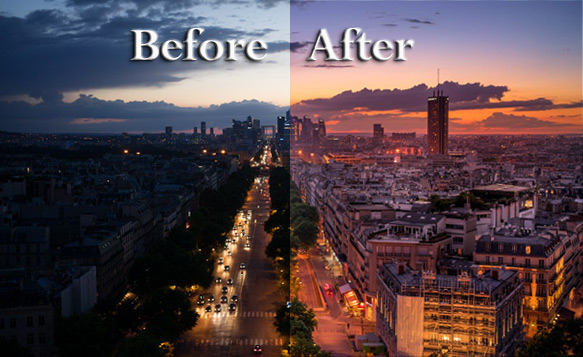
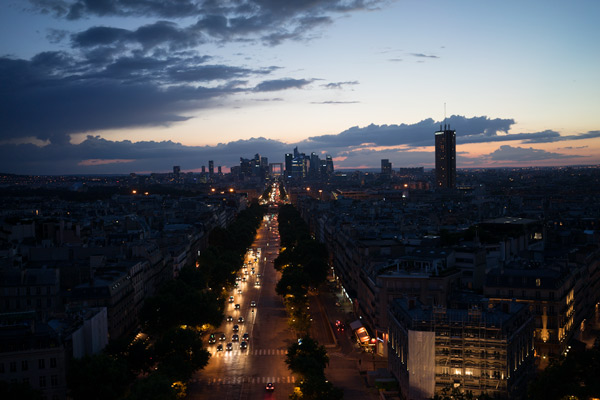
I will show you an experience I had of shooting in the middle of the night after sunset without a tripod. Many monuments don’t allow you to shoot with a tripod but you still want to take a photo. The nicer light in my opinion is usually after sunset or before sunrise, so I will show you how to take and process a photo without a tripod at night.

dPS-Before-after

If you have a nice high vantage point to take a beautiful photo but cannot put down your tripod you will see that there
is something we can do about it. The trick is you must put your camera on a timer, (use the built-in 2-second timer) meaning when you press the shutter it counts to two and then takes a photo. This way when you take the photo you are not pressing the button so there is less vibration.

Next go into manual mode and put it on 1/20th of a second. Usually it will be blurry, but if you put your arms on your stomach and stop breathing you should get a sharp photo. Then open the lens as much as you can. As you can see the photo is very sharp and I was only at 320 ISO.

As usual I am always shooting to get the highlights, so what you do is you put your camera at 1/20th of a second, 2 second on timer, approximately f/2.8 aperture (or open as wide as you can), then start going up on the ISO. You take several photos until you see that you have something you like.

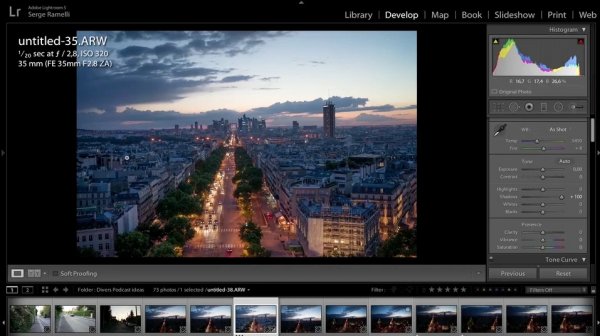
Now let’s see how we are going to retouch this photo. First we are going to open up the shadows; you see how we can see the entire city?

Screen shot 1
Now on the white balance. When you are taking a photo of a sunset in a city there is one white balance that I advise you to use, but it is very difficult to get the right white balance right away. What I usually do is go to the shade preset, and add a bit of magenta, that is something I like.

Then bring down the highlights, and lastly do the white and black points.

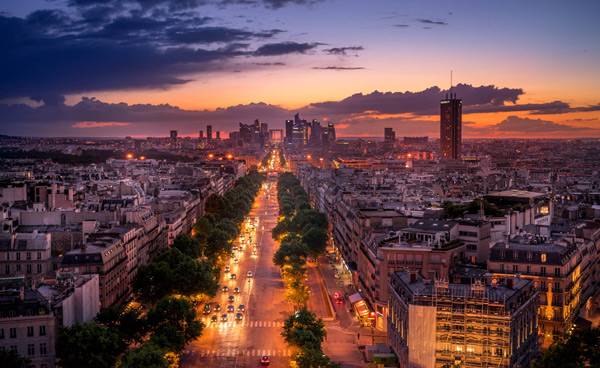
Look how incredible this photo is, I took it without a tripod at night, now the only problem is that I don’t have a long exposure so the cars are very sharp, I don’t have the lighting streak behind the cars that I would have liked but it’s still pretty good.

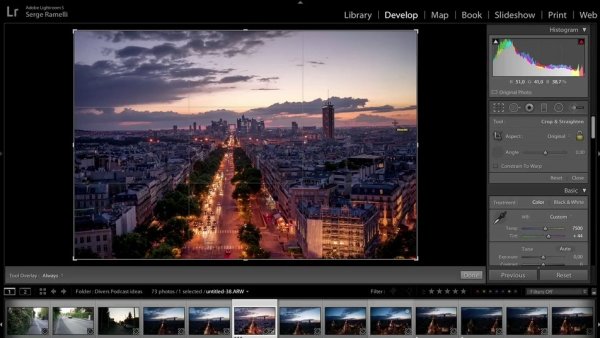
Ok, now let’s crop the photo a bit to get it to look more dynamic.

Screen shot 2

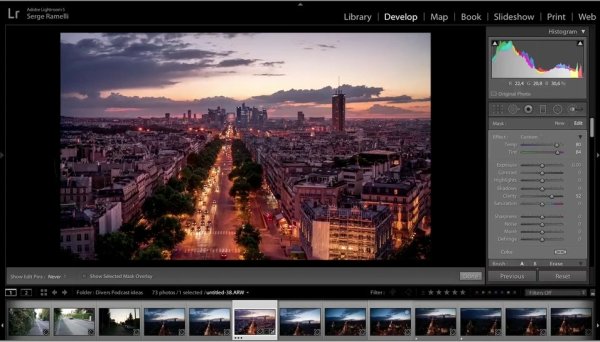
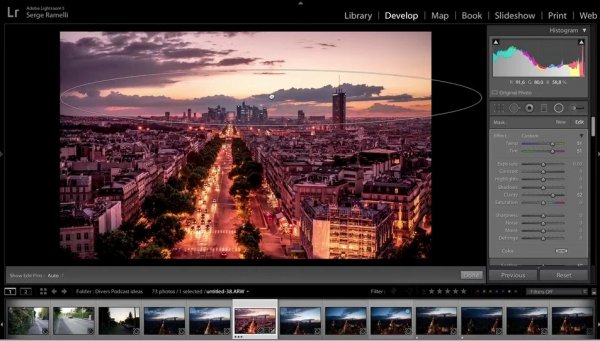
Next, let’s take a brush, select a warm temperature and add some clarity to it and we will now start painting the photo in specific areas where we want to add color.

Screen shot 3

We will now create a graduate filter to accentuate the sunset.

Screen shot 4
Create a new graduate filter to add some highlights to parts of the buildings to make them come out a little bit more.

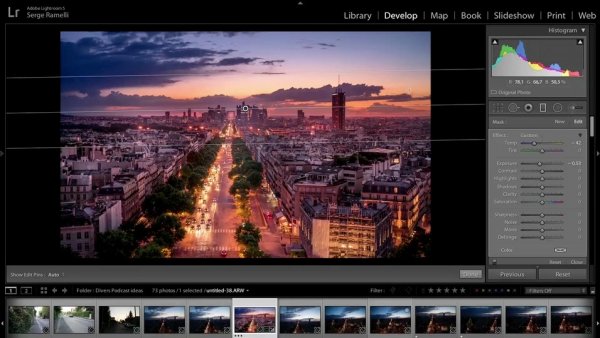
We will now add a gradient filter on the top of the photo to create more of a blue sky.

Screen shot 5

We will remove some clarity on the overall photo. Last but not least let’s add some sharpness, there is almost no noise as I am using this amazing Sony camera, so we will only remove a bit of noise.

We can now see the end result of this photo that was taken at night without a tripod. I find it quite incredible!

Before

After

For a full walk-through of how this is done check out this video:

If you enjoyed this tutorial you can find more of Serge’s tips and courses here.

PhotoSerge

googletag.cmd.push(function() {
tablet_slots.push( googletag.defineSlot( “/1005424/_dPSv4_tab-all-article-bottom_(300×250)”, [300, 250], “pb-ad-78623” ).addService( googletag.pubads() ) ); } );

googletag.cmd.push(function() {
mobile_slots.push( googletag.defineSlot( “/1005424/_dPSv4_mob-all-article-bottom_(300×250)”, [300, 250], “pb-ad-78158” ).addService( googletag.pubads() ) ); } );

The post Tips for Retouching a Night Photograph using Lightroom by Serge Ramelli appeared first on Digital Photography School.


Digital Photography School

 
Comments Off on Tips for Retouching a Night Photograph using Lightroom

Posted in Photography


Deal 9: Grab Hacking Photography’s 100 Lightroom Presets for just $10 (88% Off)

21 Dec

On the 9th day of Christmas dPS gave to me – the biggest discount of the year with…

88% off Hacking Photography’s mega preset deal!

NewImage

Yesterday Our Deal Was Big… But Today is Bigger!

Yesterday we brought back a popular deal from over at SnapnDeals and the response was amazing – over 1000 of you saved 70% on a great course.

Today’s deal is another of our most popular from SnapnDeals this year and it’s at the biggest discount yet – 88% off the retail price on this great presets bundle.

For just $ 10 you’ll pick up 100 professionally-developed presets from Mike Newton over at Hacking Photography. That’s just 10 cents per preset!

With them you’ll be able to convert your photos from average to amazing with just one click, saving you a whole lot of processing time.

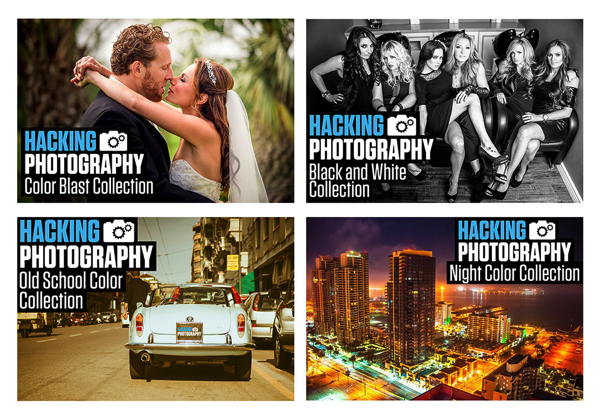
Split into four collections of Lightroom presets, you’ll get:

  • 25 color blast presets – stunning, vivid, rich, buttery colors in every image
  • 25 black and white presets – for a stark, sharp effect that’ll give your images the soul they could be missing
  • 25 old school color presets – roll back the clock for a vintage appearance
  • 25 night color presets – to add different colored street, building and ambient lights

Don’t know how to use Presets? Fear not! Included in the bundle are instructions on how to download, install and use them.

We don’t need to say much more than at $ 10 for the next 24 hours, these are an absolute bargain.

Grab them here before they’re gone.

PS: as with all our deals this week there’s a money back guarantee on this product. If you find it isn’t suiting your needs simply ask for your money back within 60 days for a full no questions asked refund.

googletag.cmd.push(function() {
tablet_slots.push( googletag.defineSlot( “/1005424/_dPSv4_tab-all-article-bottom_(300×250)”, [300, 250], “pb-ad-78623” ).addService( googletag.pubads() ) ); } );

googletag.cmd.push(function() {
mobile_slots.push( googletag.defineSlot( “/1005424/_dPSv4_mob-all-article-bottom_(300×250)”, [300, 250], “pb-ad-78158” ).addService( googletag.pubads() ) ); } );

The post Deal 9: Grab Hacking Photography’s 100 Lightroom Presets for just $ 10 (88% Off) by Darren Rowse appeared first on Digital Photography School.


Digital Photography School

 
Comments Off on Deal 9: Grab Hacking Photography’s 100 Lightroom Presets for just $10 (88% Off)

Posted in Photography


21. Türchen: Epson

21 Dec

Epson Fotodrucker

21. Türchen

Erst dieses Jahr auf der Photokina vorgestellt, steht der Epson SureColor SC-P600 heute in unserem Türchen. Mit ihm könnt Ihr hochwertige Fotodrucke bis zur A3+-Größe produzieren. Ihr müsst oft Eure Fotos ausdrucken lassen? Mit diesem Drucker macht Ihr Euch selbstständig und druckt demnächst bequem von zu Hause aus.

Der SureColor SC-P600 druckt sehr schnell und fertigt einen A3+-großen Bogen in nur 153 Sekunden an. Zwei Papierzuführungen ermöglichen Ausdrucke auf verschiedenen Foto- und Künstlerpapieren wie Leinwand und auch dicken Materialien von bis zu 1,3 mm Stärke. Ein Rollenpapierhalter erlaubt den einfachen Druck von Panoramabildern.

Epson Fotodrucker

Über ein 6,8 cm großes Farbdisplay ist der Drucker auch ohne Computer einfach zu bedienen. Er verfügt über einen WLAN-Anschluss. In ihm kommen zudem die neu entwickelten UltraChrome-HD-Tinten mit insgesamt neun Farben (CMY, lm, lc, lg, llg Matte- und Photoblack) zum Einsatz, die einen sehr weiten Farbraum abdecken und auf geeigneten Papieren die bis dato höchste Schwarzdichte im A3+-Fotodruck erlauben. Er ist für einen Preis von 769,00 € erhältlich.

Um den Epson SureColor SC-P600 zu gewinnen, schreibe einen Kommentar unter bürgerlichem Namen und gültiger E-Mail-Adresse bis heute um 24 Uhr. Danach verlosen wir ihn per Zufallsgenerator unter allen Kommentatoren. Die genauen Gewinnspielregeln findest Du hier. Viel Glück!


kwerfeldein – Fotografie Magazin | Fotocommunity

 
Comments Off on 21. Türchen: Epson

Posted in Equipment


Die 5 Videos des Monats

21 Dec

Video © Aileen Wessely

Die Beschäftigung mit Fotografie muss nicht nur in Bildgalerien oder Texten stattfinden – auch das bewegte Bild eignet sich perfekt. An dieser Stelle zeigen wir Euch in Zukunft einmal im Monat eine bunte, handverlesene Wundertüte aus fünf sehr sehenswerten Videos, die wir in den Weiten des Internets gefunden haben: Kunst, Interviews, Tutorials, Dokumentationen und mehr. Film ab für die erste Ausgabe.


1. Blackout City

Haben wir nicht schon genug Timelapse-Videos gesehen? Nicht, wenn sie so gut sind wie dieses: Nicholas Buer sammelt seit Jahren an verschiedenen Orten Bildmaterial, um es zu einem Film zusammenzufügen, der die dauerbeleuchtete Stadt London so zeigt, wie man sie in Wahrheit nie zu Gesicht bekommt: Unter dem Sternenhimmel bei kompletter Dunkelheit. Das Ergebnis ist eindrucksvoll.

• Weiterführender Link: Auch die Landschaftsfotografie von Nicolas ist sehr sehenswert.


2. Celluloid

Der Videokünstler Marco Brambilla dreht einen kurzen Film eines tanzenden Liebespaars und überlagert die einzelnen Frames digital mit Film-Ageing-Effekten. Das Ergebnis? Ein wundervolles Stück Kunst, das an einer beliebigen Stelle pausiert werden kann und jeweils ein tolles abstraktes Bild ergibt. Unbedingt anguckenswert.


3. Der Fotobuch-Salon: „Purity“ von David Magnusson

Ein äußerst spannendes Format: In ganzen neunzig Minuten besprechen Damian Zimmermann (Photoszene), Markus Schaden (Schaden.com), Wolfgang Zurborn (Lichtblick School), Oliver Rausch und Frank Dürrach (Fotoakademie-Koeln) in Anlehnung an „Das literarische Quartett“ in jeder Folge ein Fotobuch. In der ersten Ausgabe geht es um das umstrittene Buch „Purity“ von David Magnusson.

• Weiterführender Link: Ein Interview mit David Magnusson bei Spiegel Online.


4. The Art Of Photography: Martin Munkácsi

Auf dem generell abonnierenswerten YouTube-Channel des Video-Podcasts The Art Of Photography wird der in Ungarn geborene Fotograf Martin Munkácsi vorgestellt, der als Reportage- und Fashion-Fotograf zu den bedeutendsten Fotografen des 20. Jahrhunderts zählt. Wir bekommen einen ausführlichen Einblick in das Leben und sehen sehr viele Bilder des extrem vielseitigen Fotografen, der als Einfluss von Henri Cartier-Bresson gilt.

• Weiterführender Link: Auf The Art Of Photography gibt es unheimlich viele gute Inhalte.


5. Methods in Macro Photography

Der talentierte Makro-Fotograf Thomas Shahan nimmt uns mit auf eine seiner Fototouren und erklärt seinen Weg, um gute Makro-Bilder von Insekten zu machen. Besonders hilfreich für jeden, denn dein Ansatz und sein Equipment sind oft selbstgebastelt, Lo-Fi und es ist sehr erstaunlich, was er bereits mit einem umgekehrten Objektiv, einem selbstgebastelten Diffusor und dem internen Blitz erreicht.

• Weiterführender Link: Ein Artikel mit ausführlicheren Informationen über Umkehrringe für erschwingliche Makro-Fotografie.


Die Bonus-Links

• Ganze 200 kostenlose Dokumentationen hat Open Culture gesammelt. Darunter auch viel über Fotografie.

• Leider nicht einbettbar, trotzdem sehr sehenswert: Der spanische Fotograf Alberto García-Alix über seine Fotografie.

• Mit Artikel: Kenji Yamaguchi ist so etwas wie der Daniel Düsentrieb von National Geographic und baut Spezialanfertigungen für die Fotografen, die etwas ausgefallenere Ansprüche haben.


Welche sehenswerten Videos rund um die Fotografie habt Ihr in der letzten Zeit gefunden, die wir vergessen haben? Sagt es uns auf Twitter oder in den Kommentaren.


kwerfeldein – Fotografie Magazin | Fotocommunity

 
Comments Off on Die 5 Videos des Monats

Posted in Equipment


Deal 8: 70% off Photoshop Artistry: Fine Art Grunge Composition Course

21 Dec

Today’s deal is perfect for those of you wanting to awaken your creative genius and create some art with your images.

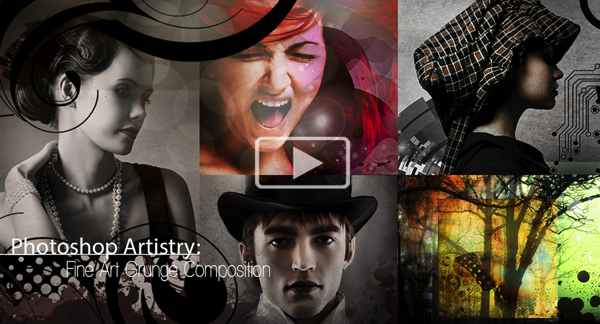
It is 70% off the Photoshop Artistry: Fine Art Grunge Composition course.

Photoshop artistry

We offered this course on our sister site – SnapnDeals – earlier this year and it ended up being our most popular deal of the year, so we convinced it’s creator – Sebastian Michaels – to bring it back for dPS readers today.

The best thing you can do to learn what this course is about is to head over to the sales page where Sebastian has created a great video run down of what the course covers and why you might consider signing up.

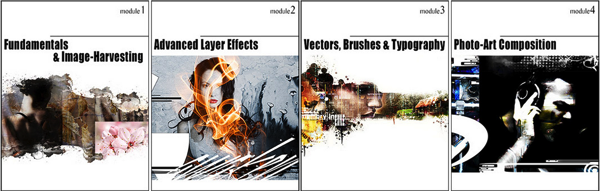
You get a whole lot with this course including:

  • 68 videos, each averaging over 20 minutes in length
  • Each lesson is accompanied by PDF downloadable cheat sheets
  • Sebastian’s huge texture library (over 5 gigabytes in total is available to you)
  • Sebastian’s custom brush (and edge effect) library
  • Sebastian’s high res vector graphic library

Photoshop artistry grunge

Normally this course retails for $ 297 and in January it is set to increase in price but for the next 24 hours it is yours for $ 89.

Best of all – there’s a 60 day satisfaction guarantee on this course. If you buy it and if you don’t find it meets your needs you’re able to simply ask for a refund and Sebastian will get you your money back.

Head over to check out full details of what is included here (there are also a heap of previous students testimonials).

googletag.cmd.push(function() {
tablet_slots.push( googletag.defineSlot( “/1005424/_dPSv4_tab-all-article-bottom_(300×250)”, [300, 250], “pb-ad-78623” ).addService( googletag.pubads() ) ); } );

googletag.cmd.push(function() {
mobile_slots.push( googletag.defineSlot( “/1005424/_dPSv4_mob-all-article-bottom_(300×250)”, [300, 250], “pb-ad-78158” ).addService( googletag.pubads() ) ); } );

The post Deal 8: 70% off Photoshop Artistry: Fine Art Grunge Composition Course by Darren Rowse appeared first on Digital Photography School.


Digital Photography School

 
Comments Off on Deal 8: 70% off Photoshop Artistry: Fine Art Grunge Composition Course

Posted in Photography


Writer’s Favorite Lens – The Canon 24-105mm f/4

21 Dec

I like shooting all manner of outdoor scenes. I am a sucker for landscapes and seascapes, which almost always require a wide-angle lens. I really enjoy exploring new cities with my camera, which also requires a wide-angle lens but can also be helped by a little zoom to capture details. And, of course, I like taking pictures of my family while we are out, which requires portrait focal lengths. My favorite lens, the Canon 24-105mm f/4 does all these things, and does them remarkably well.
Bernard

A wide angle allows you to get right behind your subject and also get the background. Shot at 24 mm (1/100, f/8, ISO 200)

So when the dPS writers began writing about their favorite lenses, I did not need to think more than a second to determine which lens was my favorite. I carry other lenses, like an extreme wide angle, and a longer telephoto zoom, but I find I rarely need to break them out. In fact, perusing my Lightroom library shows me that I actually used the 24-105mm to capture over 60% of all the pictures I have ever taken.
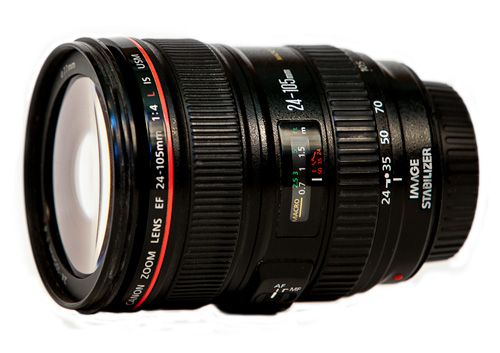
Canon 24-105mm f/4 L IS

Image courtesy of Canon

Here is a quick look at the technical specs for this lens:

  • Local lengths: 24-105 mm (38mm – 168mm on APS-C cameras)
  • Aperture: f/4 (max.) – f/22 (min.)
  • Dimensions: 8.4 cm x 10.7 cm (3.3″ x 4.2″)
  • Weight: 670g (1.47 lb.)
  • Minimum focusing distance: 45 cm

A Great “Walking-Around” Lens

Sure, there is a place for prime lenses. But gone are the days when serious photographers needed to carry around a bunch of prime lenses in order to get high quality. Sometimes you want to just carry your camera and one lens. And sometimes you just don’t want to have to change lenses.

With the 24-105mm, you can carry one lens of high quality and moderate size, and shoot with it all day. It will handle landscapes, urban, street, and people photography really well. As such, it is almost ideal for taking on the family vacation, where you will likely encounter any or all of these scenes. Rather than dig through your bag to find a lens, then change lenses, and then get the shot, you can just walk around with the 24-105mm on your camera and be ready for almost everything.
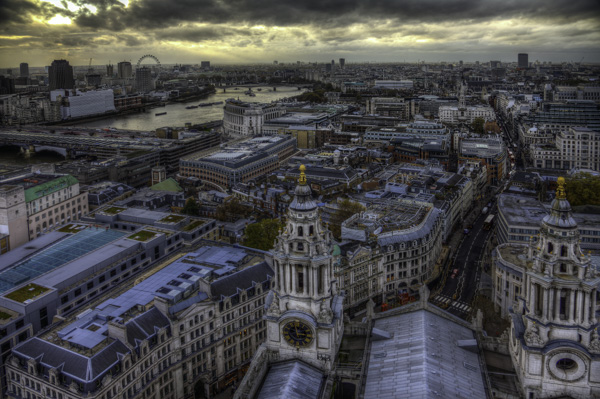
London from top of St. Paul's

The 24-105mm is great for urban shots where you want to zoom out to get the whole scene. It is also nice to walk around with one lens when you have to climb a bunch of stairs, like at St. Paul’s Cathedral in London. Zoomed all the way out at 24mm (1/80 sec., f/5.6, ISO 200).

This is particularly true for full-frame shooters. At full frame, zooming all the way out to 24mm will take a nice wide angle shot, and that is often as wide as you will need to go. Further, at full frame you need to get up to 105mm to cover the portrait focal lengths and get a little bit of telephoto for details. More on that in a second.

High Quality

But am I really just advocating for good walk-around lenses in general? I don’t think so. The focal lengths for these sort of lenses are nice, but they have to be of high quality, and the 24-105mm is remarkable in that regard. It is an L-series lens. It is fully weather sealed. It is sharp and has great image quality. It is known for fast and accurate focusing. My personal experience with it has borne this out. But beyond that, any test I have ever seen of this lens has given it high marks. I have honestly never seen a bad review of this lens (or even a luke-warm one).
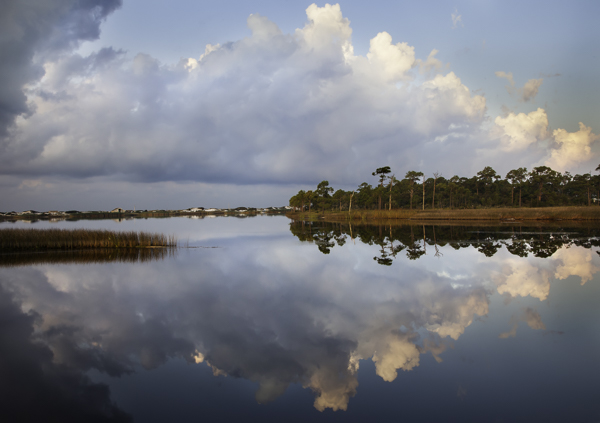
Western Lake

Landscapes and seascapes require a good wide angle. Shot at 28mm (1/30 sec., f/16, ISO 200).

Compared to Other Mid-Range Zooms

But don’t most serious photographers use a 24-70mm for their mid-range zoom lens? Perhaps. I believe they are drawn to the aperture of f/2.8 (versus the f/4 for the 24-105mm). There is no question that the wider aperture of such lenses will get you a greater degree of background blur, and the 24-70 is a really nice lens. But I have a few reasons why the 24-105mm is a better choice for many photographers, particularly those shooting full frame:

1 – Image stabilization

Although the aperture on the 24-70mm opens up one stop more (f/2.8 versus f/4), the 24-105mm has image stabilization, which actually gives you three extra stops in low-light situations.  So unless you need to stop the action in low light, you will actually get better low-light performance out of the 24-105mm.

2 – Better for portraits

If you want to shoot portraits, the 24-70mm is not a good choice despite its wider aperture, at least if you are shooting full frame. The best focal length for portraits is in the range of 80-90mm, which is not included in the range of the 24-70 mm at full frame. It will get there with an APS-C camera since the crop factor will result in an effective focal length of up to 105mm, but not at full frame.

3 – Price/cost

The 24-105mm is a relative bargain at $ 1,150, since you will pay almost twice as much for the 24 -70mm f/2.8.

The price of the 24-105mm becomes even better if you buy it along with a camera, as it is the “kit lens” for some high-end Canon cameras.

The Importance of Lens Diameter

One final note on price, and that is to consider the effect of the purchase of filters. I use a lot of filters, as do many outdoor photographers. I carry three different strength neutral density filters, a polarizer, and a graduated neutral density filter kit. Some photographers might add a UV filter to that list as well. So it is worth mentioning that another good thing about the 24-105mm is that its lens diameter of 77 mm is the same as other common Canon lenses (it is the same for the three lenses I use most often).
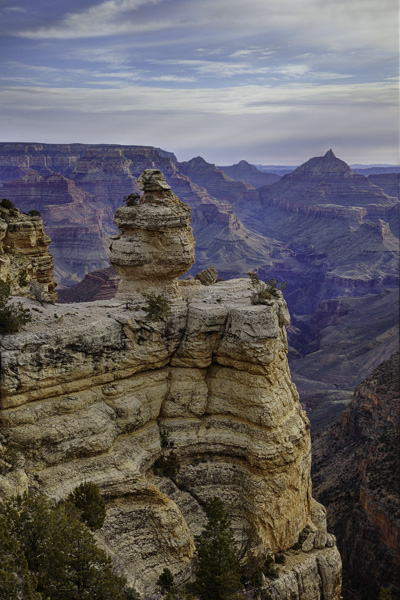
Grand Canyon

When out hiking, you often want to keep your weight down, so a walking around lens like the 24-105 works great. Shot at 58 mm (1/200 sec., f/11, ISO 250).

Why is that important? Because having the same lens diameter on different lenses means that I can use the same set of filters on all of them. If I had to buy new sets of filters for lenses of different diameters, it would get very expensive, very fast. That is especially true if you are using high-quality filters (and you should be, since it directly affects the optics).

Lenses that share the 77 mm diameter with the 24-105mm include the:

  • 100 – 400 mm f/4.5 – 5.6
  • 70 – 200 mm f/2.8
  • 17 – 55 mm f/2.8
  • 17 – 40 mm f/4
  • 16 – 35 mm f/4
  • 10 – 22 mm f/3.5 – 4.5

Not for Everyone

So I think the 24-105mm f/4 is the perfect combination of great focal lengths, high quality, and reasonable price. It will allow you to take landscapes, urban scenes, street photos, and family pictures. You might never take it off your camera.
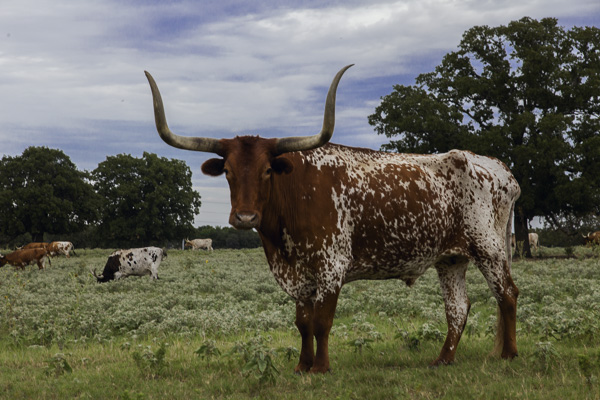
Longhorn

Sometimes you want to zoom in a bit. Shot at 82 mm (1/100 sec., f/8, ISO 400).

But, of course, the 24-105mm is not for everyone. Even among those looking for a good walking-around lens, the $ 1,150 price tag might be too strong. In addition, there are a lot of things this lens won’t do, like macro, for example.  It doesn’t have enough reach for sports or wildlife photography. Although the focal length of the 24-105mm does cover the “portrait lengths,” portrait and wedding photographers will doubtlessly want a faster lens. In fact, anyone shooting inside will likely want a faster lens (larger maximum aperture).
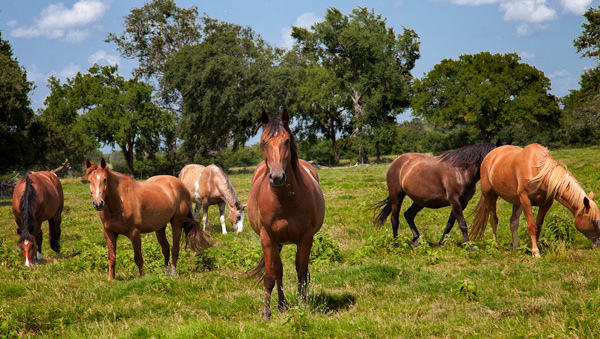
When you are photographing horses, you need to be ready for a variety of focal lengths.  Sometimes they will walk up to you looking for a treat, and sometimes they stay away.  These stayed away, so I needed all 105 mm.  (Shot at 105 mm, 1/160 sec., f/11, ISO 200)

When you are photographing horses, you need to be ready for a variety of focal lengths. Sometimes they will walk up to you looking for a treat, and sometimes they stay away. These stayed away, so I needed all 105 mm. (Shot at 105 mm, 1/160 sec., f/11, ISO 200)

Conclusion

For many, the 24-105mm will be a great choice. Rarely do you see this combination of focal length, quality, and price. I would say that it would make a great addition to your photography bag, except that it is likely that this lens won’t spent much time in your bag (unless your camera is also in your bag). I agree with Bryan Carnahan of The Digital Picture, who writes that “if I had only one lens, this would be the one.”

googletag.cmd.push(function() {
tablet_slots.push( googletag.defineSlot( “/1005424/_dPSv4_tab-all-article-bottom_(300×250)”, [300, 250], “pb-ad-78623” ).addService( googletag.pubads() ) ); } );

googletag.cmd.push(function() {
mobile_slots.push( googletag.defineSlot( “/1005424/_dPSv4_mob-all-article-bottom_(300×250)”, [300, 250], “pb-ad-78158” ).addService( googletag.pubads() ) ); } );

The post Writer’s Favorite Lens – The Canon 24-105mm f/4 by Jim Hamel appeared first on Digital Photography School.


Digital Photography School

 
Comments Off on Writer’s Favorite Lens – The Canon 24-105mm f/4

Posted in Photography


20. Dezember 2014

21 Dec

Das Bild des Tages von: Johannes Carolus

Mann schwimmt im Wasser. Perspektive von oben.

Fotolinks des Tages

1. Krypto-Fotografie im Aufkommen

Das Wort „Datenverschlüsselung“ ist heutzutage in aller Munde und die Sicherheit der eigenen Privatsphäre ist im Kontext der globalen Überwachung sehr gefragt. So drängt sich die Frage auf, ob Verschlüsselung nicht auch im Bereich der Fototechnik möglich ist. Einem Hacker mit dem Namen „Hickok“ ist es nun gelungen, einen Prototyp zu bauen, indem er Linux-basierte Firmware auf eine Samsung NX3000 spielte, die ein solches Unterfangen zulässt. Damit können nur Menschen, die das eingerichtete Passwort kennen, aufgenommene Fotos einsehen. Gerade im Bereich des investigativen Fotojournalismus kann eine auf diese Weise modifizierte Kamera verhindern, dass Behörden Fotos überprüfen können. Laut Hickok kann die Kamera gestohlen werden, Diebe gehen dabei jedoch leer aus. Ob die frei zum Download stehende Software auch auf anderen Kameras aus der Samsung-Reihe läuft, ist zum jetzigen Zeitpunkt ungeklärt. Dies dürfte nur eine Frage von (sehr) kurzer Zeit sein. → ansehen

+ Hackaday klärt die Frage, ob Fotos ohne Passwort kopiert werden können.

2. Rennomierte Foto-Editoren und Fotografen nennen wichtige Fotobände 2014

Fotobücher waren wohl noch nie so beliebt, wie 2014. Es ist also nicht verwunderlich, dass Best-Of-Listen auch dieses Jahr von Fotobuch-Listen dominiert werden. Die „Vogue Italia“-Fotoabteilung bat Fotografen, Editoren und Künstler, zwischen drei und fünf Fotobücher auszuwählen, die 2014 essentiell waren. Bei den Personen handelt es sich um anerkannte Persönlichkeiten wie den Magnum-Fotografen Peter Van Agtmael, TIME-Foto-Chefredakteur Mikko Takkunen, World-Press-Award-Juror David Campbell und viele andere. Somit erfreut sich diese Liste großer Relevanz und wird manchen Geldbeutel um ein paar Euro erleichtern. Was bei näherer Betrachtung etwas sauer aufstößt, ist die Tatsache, dass Joel Meyerowitz nur zwei Bücher nennt, und prompt sein eigenes Buch empfiehlt. → ansehen

3. Woher kommt der Weihnachtsschmuck?

Mittlerweile wird wohl ein Großteil unserer Wohnungen mit Weihnachtsschmuck verziert sein. Doch wenn man gerade einen roten Stiefel in der Hand hält, könnte die Frage auftauchen, wo der denn eigentlich herkommt. The Guardian hat recherchiert und ist dem Weihnachtsschmuck auf die Schliche gekommen. 60 % des global genutzten Schmucks wird in einem Ort in China hergestellt, der 600 Firmen beherbergt und in dem hauptsächlich Migranten für 250 bis 380 € pro Monat 12 Stunden am Tag arbeiten. Unter welchen Umständen die Arbeiter produzieren, was wir uns in der Adventszeit an Türen, Fenster und Bäume hängen, und warum wohl mehr Chinesen den Weihnachtsmann als Jesus kennen, darüber informiert dieser ausführliche Artikel, der mit ein paar sehr deutlichen Aufnahmen einen Blick hinter die Kulissen des Weihnachtsfestes zulässt. → ansehen

+ Die chinesische Nachrichtenseite Sina News zeigt viele der vor Ort gemachten Fotos in höherer Auflösung.


kwerfeldein – Fotografie Magazin | Fotocommunity

 
Comments Off on 20. Dezember 2014

Posted in Equipment


20 December, 2014 – The Granting Process

21 Dec


In the last 15 years, I have had the privilege to meet and get know as well as make good friends with some of the finest photographers in the world.  Michael Reichmann is one of those photographers, and it has been a privilege to be able to travel to many of the different corners of the world with him. More than anything else he became one of my best and finest friends.  When I made the decision to joining Luminous-Landscape, I did so because we shared a common passion and a great desire to share that passion with others around the world.  Of course, the passion is photography and as the founder of the site Michael has shared his passion freely for fifteen plus years.  

Late last year Michael shared with me his latest passion, and as we headed into 2014, he began to work on the Luminous-Endowment.  His dream was to create an organization that could award grants to photographers so they could pursue and complete photographic projects that may not have been able to do without a form of assistance.  The Luminous-Endowment was born, and in less that a year the organization has raised a nice amount of money and made it’s first round of grants. Please stop over to the Luminous-Endowment site and learn more about what we do and also think about purchasing at our special Christmas price Michael’s Retrospective book.  All proceeds for the book go into the Luminous endowment.

Alain Briot one of the finest instructors I have met and a regular contributor on Luminous-Landscape is one of the jurors for the Endowment.  You can learn about the jurors on the Endowment site.  Today Alain shares with us his insight into The Granting Process and how a photographer who may interested in obtaining a grant can prepare better and submit a grant application that will give them an edge.  At the same time, it gives those of us who won’t be requesting a grant somethings to think about as we go about creating our regular work and projects.


The Luminous Landscape – What’s New

 
Comments Off on 20 December, 2014 – The Granting Process

Posted in News