RSS
 

Archive for October, 2014

Creative Discovery Through Mistakes

29 Oct

One of the great things about creativity is that it can germinate from a mistake. The trick for photographers is to develop an awareness and eye to see mistakes as creative opportunity so as explore them until they become a crafted photograph. It is very easy to feel that we have to be in control of the creative process from beginning to end and that is not required. Sometimes taking an extended look at a mistake can yield new ideas that would never have come to mind otherwise. Working a scene and trying new angles, settings, focal lengths, etc. is one way to hone your final product through “seeing,” and other times “seeing” happens after the fact when photo editing (see Always Check Your Seconds). The trick to “seeing” after the fact is to not become so absorbed in your initial idea of what you had wanted to accomplish and to be open to new viewpoints and possibilities.

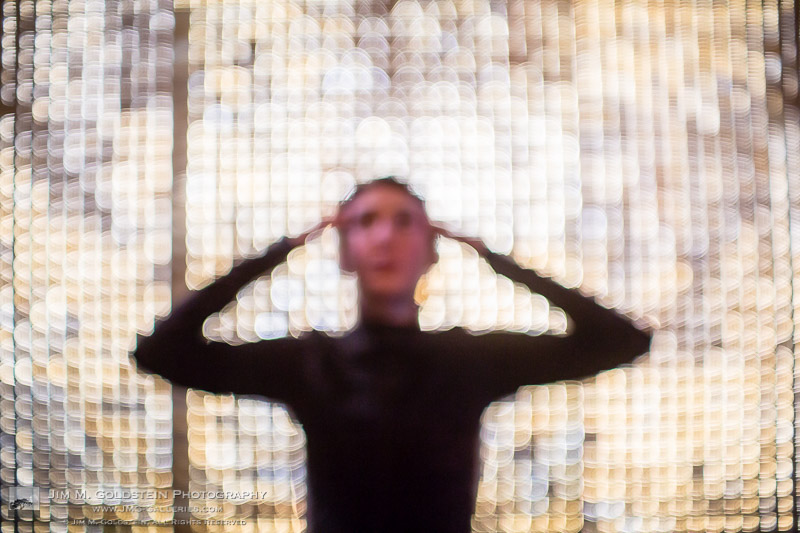
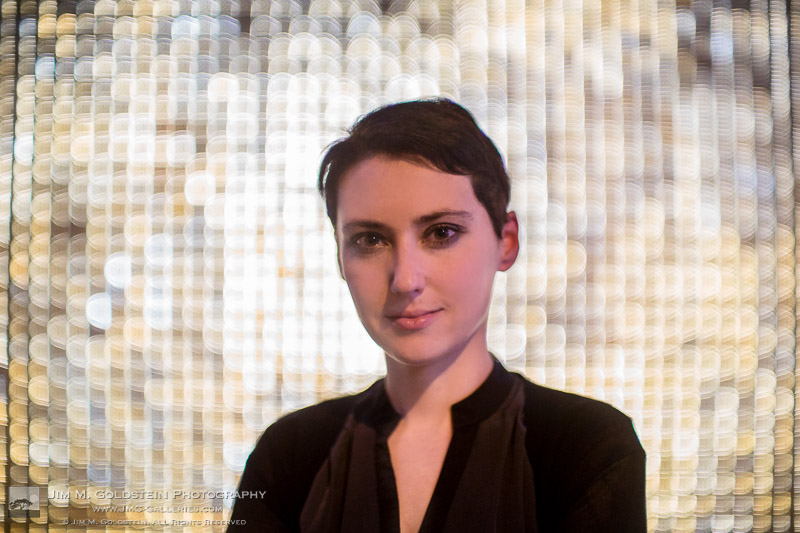
Sometimes mistakes present themselves in an obvious fashion as was the case while I was taking example photos with a new Petzval lens. My aim was to photograph a model and leverage the optics of the lens to capture it’s iconic swirled bokeh in the background. The output as seen below was exactly what I had intended, but in the process a mis-shot was captured and I didn’t notice it’s potential until I was photo editing. Granted the intended shot was perfectly fine; I found the mistake photo fascinating. I instantly saw the opportunity to create something new that I’d never seen before. Inspired I went back out to replicate the optical aberration with a Canon 50mm f/1.0 which lacked the swirled bokeh.

The intended outcome of my shoot.

The accident that sparked an idea

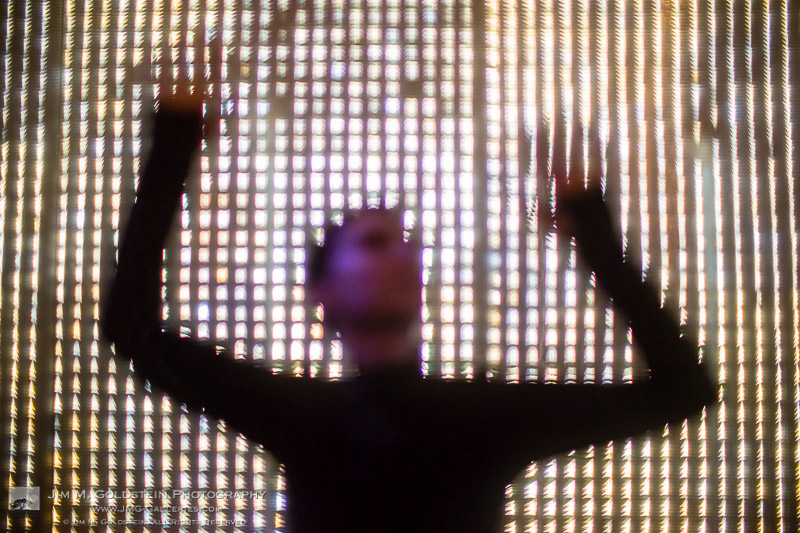
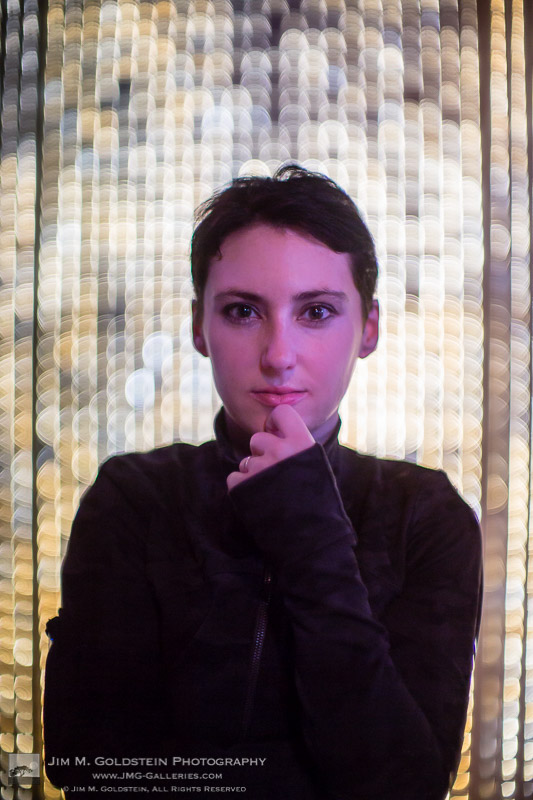
The reshoot of my model with a new lens and similar settings yielded the results I had envisioned (see below). Granted the end results are not for everyone, but given the spooky nature of how my model turned out I thought it made for a great Halloween styled photo set. My mistake yielded a new technique I’m eager to continue to perfect.

Experimental Portrait – The Normal One

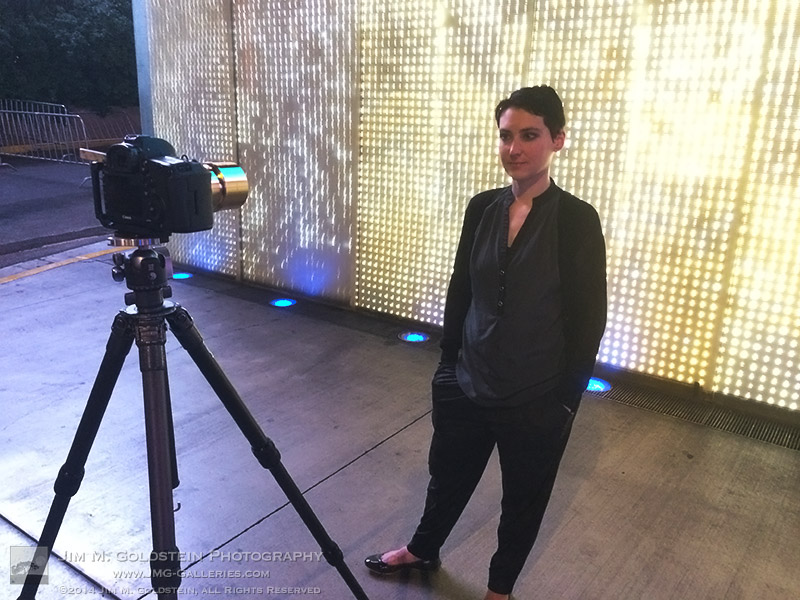
Behind the Scenes - Experimental Portraits

Behind the Scenes – Experimental Portraits


Copyright Jim M. Goldstein, All Rights Reserved

Creative Discovery Through Mistakes

The post Creative Discovery Through Mistakes appeared first on JMG-Galleries – Landscape, Nature & Travel Photography.


Related Stories

  • Creative Discovery Through Mistakes – Enclosure
  • Best Photos of 2013 by Jim M. Goldstein
  • Best Photos of 2013 by Jim M. Goldstein – Enclosure
Feed Ads by FeedBlitz
powered by ad choices


JMG-Galleries

 
Comments Off on Creative Discovery Through Mistakes

Posted in Equipment


Im Gespräch mit Ann-Christine Jansson

29 Oct

Ein Beitrag von: Ann-Christine Jansson

Im Sommer dieses Jahres machte mich eine Freundin auf dem Lumix-Festival in Hannover mit einer schwedischen Fotografin bekannt, die sich mir als Ann-Christine Jansson vorstellte. Wir unterhielten uns – wie sollte es an diesem Ort auch anders sein – über Fotojournalismus und sie erzählte mir, wie sie selbst im Vorwende-Deutschland und um die Zeit des Mauerfalls herum als Bildreporterin gearbeitet hatte.

Erstaunt darüber, wie sich dieses Berufsbild in den vergangenen 20, 30 Jahren offenbar gewandelt hat und interessiert daran, was sie wohl dazu zu erzählen hätte, lud ich Ann-Christine ein, unser Gespräch alsbald fortzusetzen. Wieder in Berlin verabredeten wir uns bei ihr zu Hause.

Ann-Christine, Du kommst ursprünglich aus Schweden, lebst und arbeitest aber schon sehr lange in Berlin. Wie kam es dazu?

Nach meinem Studium in Schweden begann ich Anfang der achtziger Jahre, zwischen Westberlin und Stockholm zu pendeln. Ich war noch nicht so firm in meinem Deutsch. Manchmal kam ich in ein sprachliches Blackout; es gab tatsächlich Situationen, in denen alles schwarz war. Ich wusste nicht mehr, ob ich auf Schwedisch oder auf Deutsch denken und mit welchen Worten ich mich ausdrücken sollte.

So kam ich per Zufall zur Fotografie, weil die Sprache der Bilder international ist. Ich fing an, verschiedene Sachen zu fotografieren, die hier in Berlin passierten. Es war die Zeit der Demonstrationen und Hausbesetzungen.

Ich habe immer in Westberlin, hier in Kreuzberg, gelebt und das hat mich sehr fasziniert. Solche Straßenschlachten, wie es sie hier damals gab, kannte ich aus Schweden überhaupt nicht. Ich komme aus einem Baumwollwatteland, sage ich da manchmal.

In den siebziger Jahren gab es in Stockholm zwar auch große Demonstrationen gegen den Vietnamkrieg und wir sind traditionsgemäß immer zur amerikanischen Botschaft marschiert, draußen wurde die amerikanische Fahne abgebrannt und danach sind wir alle brav wieder nach Hause gegangen und mehr passierte dann auch nicht.

Hier habe ich dann, wie gesagt, ganz was anderes erlebt. Ich war sogar mal auf einer Demonstration, für die ich offiziell als Fotografin akkreditiert war, behängt mit Ausweisen und orangefarbenen Pressebändchen.

Ich machte da nichts als meinen Job, wobei ich aber wohl einer Truppe Polizisten mit Knüppeln im Wege stand und bewusstlos geschlagen wurde. Und das kannte ich überhaupt nicht, sowas konnte ich mir dort, woher ich komme, überhaupt nicht vorstellen.

Mit einem Schlag Fotoreporterin. Hast Du dann hier in Berlin für Zeitungen oder Magazine gearbeitet?

Ja, ich bekam ziemlich schnell Kontakte zu skandinavischen Medien und arbeitete für sie per Auftrag sowie als „feste Freie“. Auch für deutsche Zeitungen habe ich gearbeitet, wie etwa die taz, den Stern und viele andere Magazine und Zeitschriften.

Eine zeitlang arbeitete ich hier in Berlin als rasende Bildreporterin. Ich machte dieselben Termine wie die Agenturen. Aber die skandinavische Zeitung, für die ich fotografierte, wollte ihre eigene Bildsprache. Sie wollte eben nicht die Bilder, die alle anderen auch bekamen.

Wie hast Du denn damals die Bilder von hier an die Redaktionen in Skandinavien gesendet? Das musste ja schnell gehen. Wie lief das technisch ab?

Das lief so: Ich bin zuerst schnell ins Labor gefahren, habe meine Filme entwickelt und während sie trockneten schon die Bilder ausgewählt, dann schnell Abzüge gemacht und flott den weißen Rand mit Ort, Zeit und Inhalt der Aufnahme beschriftet.
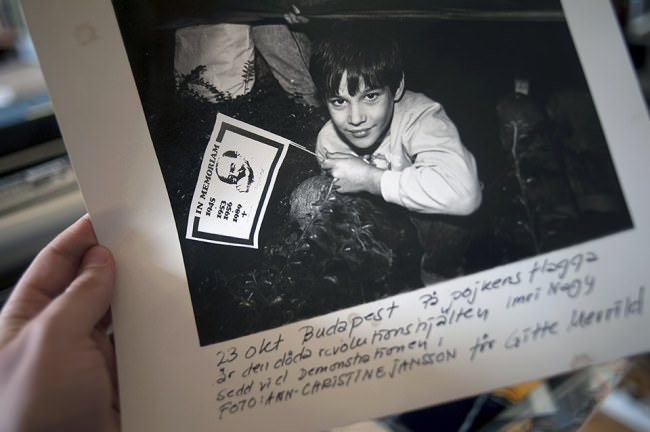
Handabzug mit weißem Rand, beschriftet

Dann habe ich die Redaktion in Stockholm oder Helsinki angerufen und die hat mir dann bei einer Agentur wie dpa oder Reuters eine Leitung bestellt. Bei denen stand so ein spezielles Funkgerät, eine Art Bildfax.

Dann wusste ich: Ich habe jetzt von meinem Büro bis zur Agentur ungefähr zehn Minuten Zeit. Ich bin hier immer Rallye gefahren und das hat mir viel Spaß gemacht. Ich war damals eine leidenschaftliche Autofahrerin. Heute fahre ich ja eher langsam und betulich.

Ein solches Bildfax hat Ann-Christine noch zu Hause, auch wenn es längst ausgedient hat. Heute hat sie es für mich extra aus dem Regal geholt und den Staub weggepustet, um zu demonstrieren, wie man den Apparat bediente.

Hier, man musste den Abzug auf die Walze spannen und dann übertragen. Hier in diesem Abtastkopf ist eine Leuchtdiode, die lief hin und her und tastete das Bild ab, während es sich auf der Walze drehte.
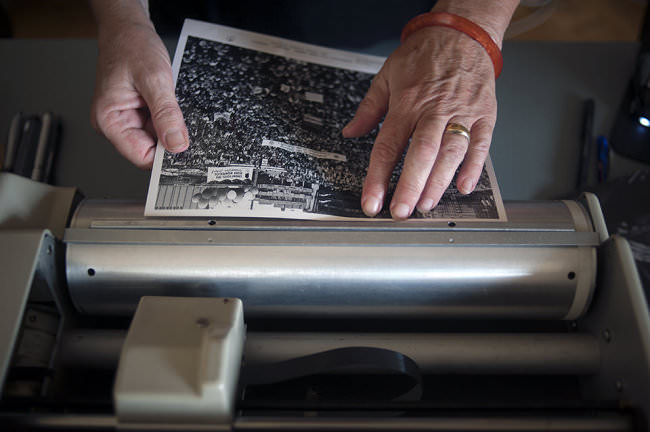
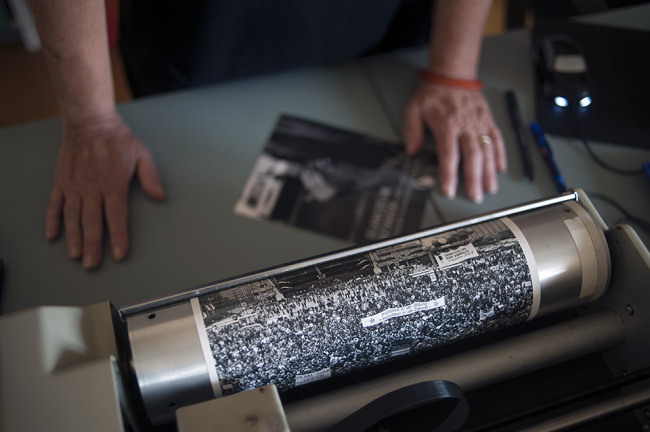
Zwei Hände spannen einen Fotoabzug auf die Walze eines Bildfaxes.

Ein Fotoabzug auf der Walze eines Bildfaxes.

Waren die Qualitätsverluste bei der Bildübertragung nicht enorm?

Ach, das funkte sich scharf, sagten wir immer.

Wie lange dauerte es, bis ein Bild dieser Größe vollständig übertragen war?

Die Übertragung eines Schwarzweißbildes dauerte sieben Minuten. Man konnte auch Farbe damit funken, aber das dauerte dann drei mal sieben Minuten.

… für alle drei Farbkanäle, Rot, Blau und Grün wahrscheinlich …

Genau. Es gab auch ein externes Mikrofon. Bevor es losging, rief ich hier „Hello Helsinki, hello Stockholm“ hinein. Das knisterte und knasterte und wenn ich das Okay hörte, drückte ich auf Start.
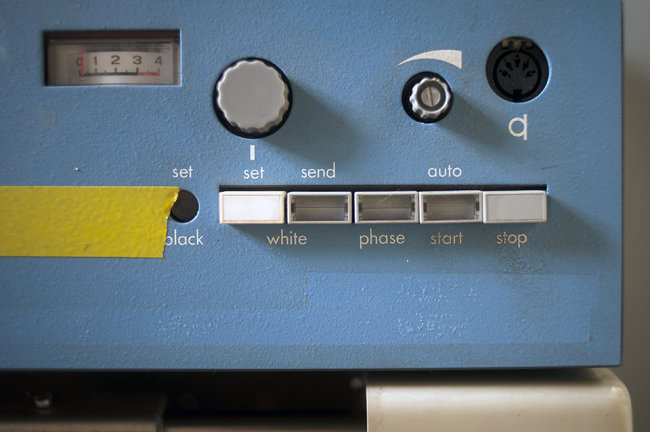
Bedienknöpfe an einem Bildfax von Rudolf Hell.

Das habe ich, wie gesagt, anfangs immer bei verschiedenen Agenturen gemacht. Ich war ja auch nicht nur in Berlin, sondern auch viel auswärts unterwegs, wie etwa bei größeren Ereignissen, dem Castor-Transport zum Beispiel.

Die Agenturen hatten dann ein mobiles Büro in irgendeinem Hotelzimmer aufgebaut. Meine Zeitung kontaktierte sie und dann konnte ich da die Filme schnell im Badezimmer entwickeln und von dort aus meine Bilder senden.

Später bekam ich dann ein eigenes Gerät von der Zeitung gestellt, weil ich so viel für sie arbeitete. So ging es dann schneller.

Wie lange waren diese Geräte im Einsatz, bevor sie durch eine neue Technik abgelöst wurden?

Oh, das weiß ich nicht mehr genau. Aber Du siehst ja, dieses Foto hier ist von 1991; also bis in die 90er Jahre hinein wurden die Geräte noch benutzt. Das „Funkgerät“, wie wir es nannten, war eine Erfindung von Rudolf Hell, einem deutschen Erfinder und Unternehmer.

Später kam dann eine neuere Technik zum Einsatz. Ich erinnere mich, wie sie dann in der Nachrichtenagentur AP und bei Reuters so ein Übertragungsgerät hatten, in das man nur das Negativ einführen musste – quasi eine Vorstufe zu den ersten Scannern.

Ich weiß auch noch, wie ich nach irgendeinem Ereignis meine Negative im Hotelzimmer fönte und dabei schon die besten Aufnahmen auswählte. Ich musste wirklich die wichtigsten zwei, drei Negative auf die Schnelle auswählen, denn das Funken war sehr teuer.

Und danach kam dann die digitale Übertragung. Das muss so Mitte der neunziger Jahre gewesen sein, wenn ich mich richtig erinnere. Aber bei den Daten bin ich mir nicht so sicher. Aber ich weiß noch, ich war eine der Ersten, die eine E-Mailadresse hatten – bei compuserve, mit einer ganz langen Zahl, weil man vor dem @-Zeichen noch keine Buchstaben schreiben konnte.

Damit konnte man auch noch keine Bilder verschicken, dazu gab es dann wiederum verschiedene Übertragungsprogramme, die ich von meiner Zeitung bekam und mit denen ich mich in deren Computer einwählen konnte.

Ich erinnere mich noch, wie ich hier nachts einmal saß, mich zum ersten Mal einwählte und die Deadline war zehn Uhr. Ich war furchtbar aufgeregt und rief Punkt zehn Uhr in der EDV-Abteilung bei der Zeitung an: „Ist es angekommen?“ „Jaja, ist da.“ Welch eine Erleichterung!

Und dann ging es später ja direkt per E-Mail und über FTP. Das ist so grob die Entwicklung.

Um mal nicht bloß über Technik zu reden, lass uns mal zu Deinen Bildern kommen. Bilder, die Du in der ehemaligen DDR vor und in der Zeit der friedlichen Revolution und der Wiedervereinigung fotografiert hast. Was kannst Du dazu erzählen?

Ja, mein Arbeitsgebiet war der Osten und Osteuropa, weil ich ja in Berlin stationiert war. Ich konnte als schwedische Touristin über den Checkpoint Charlie nach Ostberlin einreisen und fotografierte dort. So lernte ich, bevor die Mauer fiel, Mitte der achtziger Jahre die Opposition in der DDR kennen.
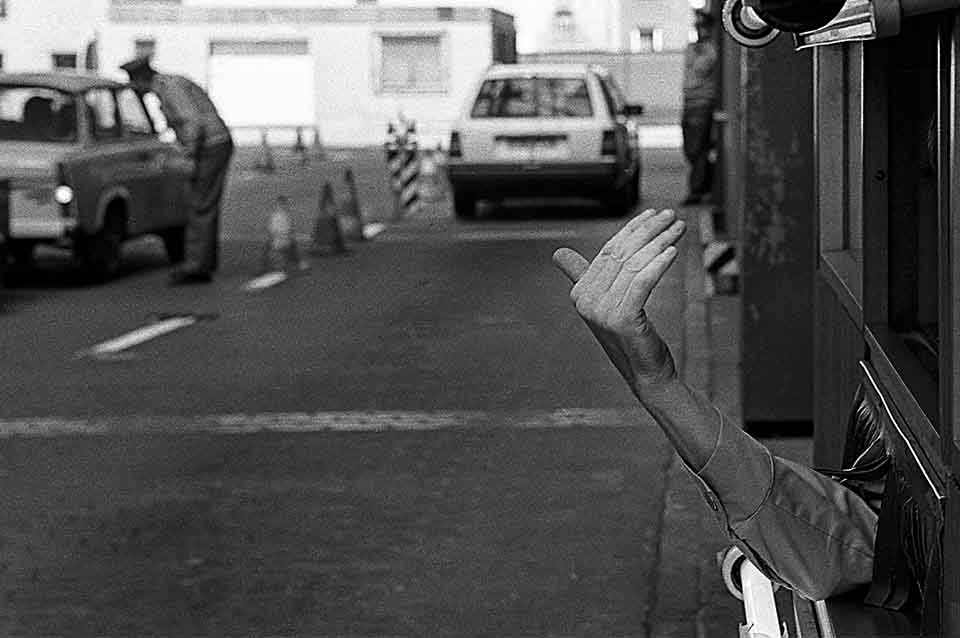
Die Hand eines Grenzkontrolleurs winkt zur Durchfahrt auf der Ostberliner Seite des Grenzübergangs Checkpoint Charlie.

Das fand ich sehr spannend. Die Leute von der Opposition waren sehr mutig. Angst war immer mit im Spiel. Teilweise erschienen meine Bilder auch ohne meinen Namen, weil das so gefährlich war. Damals gab es noch keine Computer, aber bei der Grenzkontrolle hatten sie so ein System, dass sie Punkte in den Passrücken setzten – eine Art Code, um zu markieren, wie gefährlich jemand war.

Bevor überhaupt jemand ahnen konnte, dass die Mauer einmal fallen würde, war ich zusammen mit einer schreibenden Journalistin aus Dänemark einmal offiziell eine Woche lang in der DDR, um fotografisch über das Thema Umweltschutz zu berichten.

Jeden Tag hatten wir Termine mit irgendwelchen offiziellen Leuten, die da in ihrem Zimmer saßen, mir das Fotografieren untersagten und Vorträge über den BRD-Imperialismus hielten.

Irgendwann hatte ich es dicke und sagte: „Es tut mir leid, wir kommen aus Skandinavien. Was bitte haben wir mit BRD-Imperialismus zu tun? Schauen sie zum Fenster raus; es ist wunderschönes Licht; ich bin Fotografin; ich kann hier nicht sitzen; ich muss fotografieren.“ Das gab natürlich einen großen Skandal, alles wurde unterbrochen.

Dann sind sie mit uns irgendwo an die Ostsee gefahren. Dank meiner Kontakte zur Opposition bekam ich Tipps, wo wir hinfahren sollten. Es gelang uns, unsere werte Begleiterin für ein Weilchen abzuhängen, indem wir sehr früh aufstanden, lange bevor wir einen Termin mit ihr hatten. Wir fuhren los und ich habe aus dem Autofenster hinaus einige Umweltschäden dokumentiert.

Einmal war ich auch in einem Ort im Süden der ehemaligen DDR. Ich hatte einen Kontakt, der mich mit seinem Trabi dorthin fuhr. Der ganze Ort war mit Kohlestaub bedeckt – das war unglaublich! Ich erinnere mich, wie ich ein Straßenschild fotografierte, auf dem man die Buchstaben vor Dreck nicht mehr lesen konnte.

Dahinter standen Gebäude, klassische Betonplattenbauten, die man vor Staub auch nicht richtig sehen konnte. Mein Begleiter rief: „Kannst Du Dich denn nicht ein bisschen beeilen? Das Gebäude da hinten ist nämlich die Parteizentrale.“
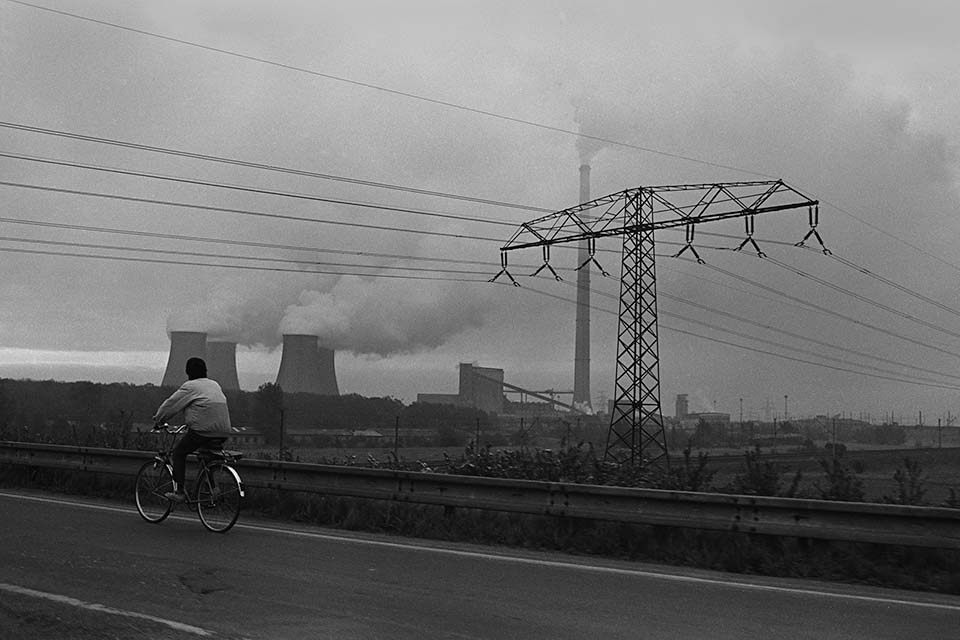
Ein Kohlekraftwerk stößt dicke Rauchschwaden in den bewölkten Himmel aus. Im Vordergrund ein Radfahrer.

Mit welcher Kamera hast Du damals gearbeitet?

Ich habe damals noch mit einer komplett mechanischen Kamera gearbeitet und manuell scharf gestellt. Nachdem ich zurückgekommen war und die Filme rausgeschmuggelt hatte, stieg ich auf eine Nikon F4 um. Die hatte Autofokus und das war sehr hilfreich.

Ich habe die Kamera auch immer noch. Früher hatte ich zwei davon. Die waren sehr robust. Man konnte sie ohne Weiteres zu Boden fallen lassen und hinterher problemlos damit weiter fotografieren.

Als die Mauer dann fiel, funkte ich wie eine Weltmeisterin Bilder nach Skandinavien. Auch unmittelbar danach war eine sehr spannende Zeit. Da öffnete sich eine neue Welt und ich konnte viel herumreisen und viele Reportagen machen. Ich war in Ungarn, in Tschechien, Polen, Russland …
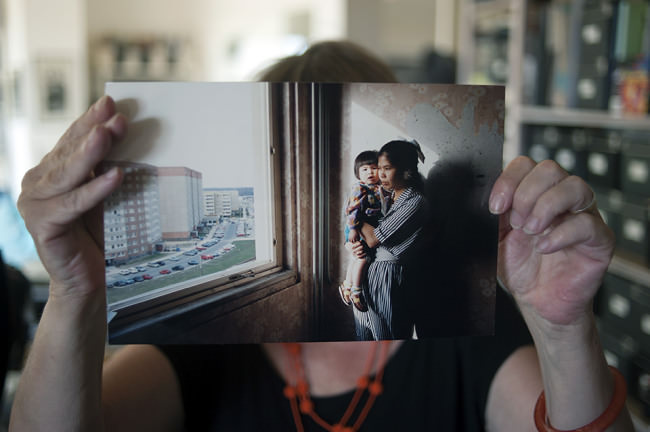
Ann-Christine Jansson zeigt einen Abzug eines Fotos von einer vietnamesischen Frau mit ihrem Kind auf dem Arm am Fenster einer Plattenbauwohnung.

Also ich habe im Prinzip nur per Auftrag gearbeitet. Die Redaktion rief mich an und ich fuhr los. Manchmal schlug ich auch selbst Themen vor. Ich reiste nicht immer, aber doch oft gemeinsam mit einem schreibenden Journalisten. Die Reportage machten wir in Text und Bild also fast immer zusammen.

Welches war das aufregendste Thema, dem Du nachgegangen bist?

Am meisten hat mich immer Sozialreportage interessiert. Ich wollte darüber berichten, wie die Leute leben und wie ihre Situation ist.

Als ich nach der Wende in Tschechien war, machte ich eine Reportage über den längsten Straßenstrich Europas an der E55, direkt hinter der deutschen Grenze. Die armen Mädchen, die da arbeiten, waren wirklich Sklaven. Das war fürchterlich!

Der Pass wurde ihnen weggenommen, sie bekamen kein Geld, sie bekamen gar nichts. Damals überlegte ich zum ersten Mal vielleicht jemanden von dort hinaus zu schmuggeln.

Die Reportage war natürlich mit einigen Schwierigkeiten verbunden. Man konnte da ja nicht einfach in irgendein Bordell reingehen und sagen: „Hallo, kann ich ein Foto machen?“ Das wäre lebensgefährlich gewesen.

Ich war mit einer schreibenden Journalistin aus Finnland dort. Und wir fanden unseren Weg hinein. Wir waren ja schon ein bisschen älter und so wie wir aussahen, konnten wir ganz offensichtlich nicht anschaffen.

Wir stellten keine Gefahr dar – das war gut – und wir saßen da einfach mit im Bordell. Solange, bis ich dann irgendwann die Erlaubnis erhielt, dort zu fotografieren.

Ich habe da eine junge Frau begleitet und war mit ihr dann auch auf der Straße. Ich brauchte unbedingt solche Bilder, um eine gute Bildreportage zu machen. Der Zuhälter kannte uns dann schon, weil wir ja ein paar Nächte da mit herum gesessen hatten.

Offiziell konnte diese junge Frau auch kein Deutsch, aber im Zwiegespräch merkte ich, dass sie doch ein bisschen konnte. Sie war heilfroh, dass sie mit mir unterwegs sein konnte, denn in der Zeit musste sie nicht arbeiten.

Inzwischen existiert dieser Strich nicht mehr. Mit der Wandlung der politischen Verhältnisse in Europa hat er sich aufgelöst.

Eine andere Reportage, die mich bewegt hat, war eine über die Menschen, die über die EU-Grenze, die damals noch zwischen Polen und Deutschland verlief, in den Westen flüchteten.

Wenn nachts die Neiße niedrig stand, wateten sie durch das Wasser nach drüben. Ich war damals – das muss so um 1992 gewesen sein – offiziell ein paar Nächte mit dem Bundesgrenzschutz unterwegs und fotografierte.

Dieses eine Bild mit der Frau, die die Hände vorm Gesicht zusammenschlägt, finde ich sehr stark.
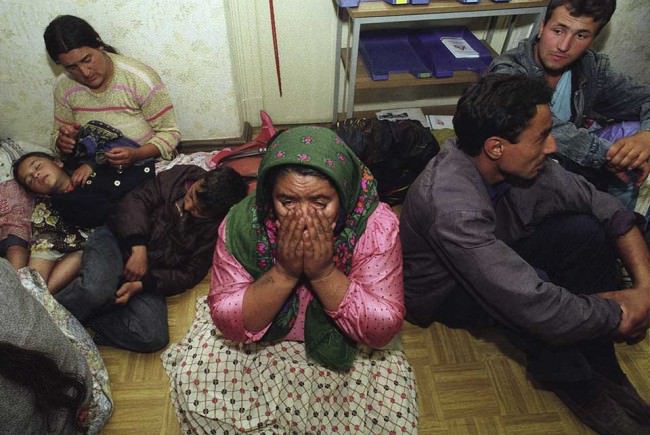
Eine Frau schlägt in einem Flüchtlingslager an der deutsch-polnischen Grenze die Hände vors Gesicht.

In meinen Bildern steckt ja auch immer ein Teil von mir. Das heißt, manchmal habe ich vorher schon eine Vorstellung im Kopf, ein inneres Bild, wie der Ort aussehen könnte, auch wenn er dann tatsächlich ganz anders ist.

Der zweite Aspekt ist: Jeder hat ja seinen ganz persönlichen Rucksack, den er mit sich herumträgt. Die Füllung sind die Erfahrungen aus der Kindheit. Zum Beispiel dieses Foto hier (zeigt ein Bild mit einem Jungen hinter einem Zaun), das bin auch ich. Das war in einem Aufnahmelager für Asylsuchende und ich ging bewusst hinunter auf Augenhöhe mit dem Jungen.
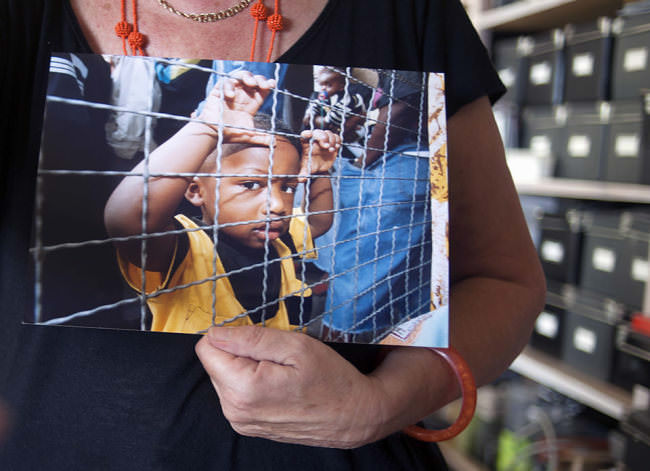
Ein dunkelhäutiger Junge steht in der Anlufstelle für Asylsuchende an einem Zaun und schaut verlegen in die Kamera.

Ich komme aus einer betulichen Kleinstadt, wo es eine sehr große soziale Kontrolle gab. Stadtgespräch war zum Beispiel: „Der örtliche Wursthändler hat einen Skandal verursacht.“ Er hatte sich scheiden lassen und war nun, oh weh, mit einer Norwegerin zusammen.

Als ich älter wurde, wollte ich nur noch weg. Ich wollte noch etwas anderes von der Welt sehen. Dieses Bild mit dem Gitter hat mich daran erinnert; ich wollte raus.

Hier ist noch ein Bild von einem Bauern aus einer LPG. Herrlich wie er sich amüsiert, oder? Aber der konnte über sich selbst lachen und seine Nase hat ja auch eine gewisse Ähnlichkeit mit seinen Kartoffeln.
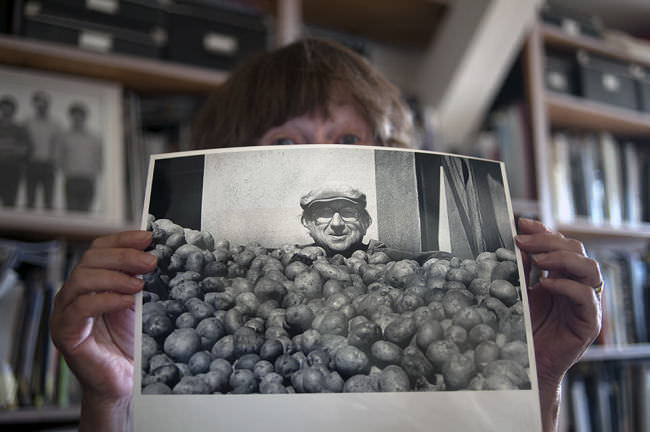
Gesicht eines Bauern über seiner Kartoffelernte in einer LPG.

So komme ich mir auch manchmal vor. Ich finde einfach ganz wichtig, dass man die Fähigkeit behält, über sich selbst lachen zu können.

Ann-Christine zeigt vom 31. Oktober bis zum 30. November 2014 ihre Fotos von der Opposition in der DDR in der Zionskirche am Zionskirchplatz in Berlin-Prenzlauer Berg. Die Ausstellung „Radikal persönlich“ wird an diesem Freitag, den 31. Oktober um 17 Uhr eröffnet.

Da sie wirklich für die Fotoreportage brennt und ihre Erfahrungen gern an Interessierte weitergibt, bietet sie inzwischen auch Kurse an, für die man sich hier anmelden kann.

Das Titelportrait hat Agata Szymanska-Medina fotografiert, eine Schülerin von Ann-Christine.


kwerfeldein – Fotografie Magazin | Fotocommunity
 
Comments Off on Im Gespräch mit Ann-Christine Jansson

Posted in Equipment


Interview: Anne Geddes on photography and philanthropy

29 Oct

We recently had the opportunity to sit down with one of the most recognizable names in photography – Anne Geddes. In our interview, recorded in partnership with CreativeLive, DPR’s Barney Britton talks with the photographer about how her career started, the transition from film to digital, and her efforts as a global advocate for children. See video

Articles: Digital Photography Review (dpreview.com)

 
Comments Off on Interview: Anne Geddes on photography and philanthropy

Posted in Uncategorized


The Optimum Digital Exposure

29 Oct


One of the most popular articles on Luminous-Landscape is by Michael Reichmann Expose (to the) Right from 2003.  It’s an article that has been referenced numerous times and even today makes total sense.  Today, Bob DiNatale revisits this concept in his article The Optimum Digital Exposure.  It’s a different take on achieving a good exposure with today’s digital cameras.

Michael and Kevin are traveling this week.  Michael is headed to PhotoPlus East (PPE) and Kevin is headed to Scotland to lead a Rockhopper Workshop.  Michael will publish an update from PPE and Kevin will publish articles from Scotland (if the internet cooperates).  We will be back full force the week of November 10th.


The Luminous Landscape – What’s New

 
Comments Off on The Optimum Digital Exposure

Posted in News


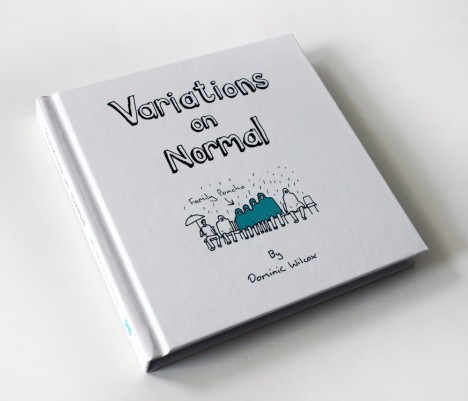
Variations on Normal: Book of Absurdly Brilliant Inventions

29 Oct

[ By WebUrbanist in Design & Products & Packaging. ]

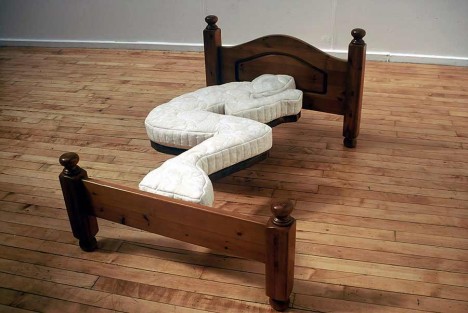
dominic wilcox sleeping bed

The work of Dominic Wilcox is a wonderful blend of out-of-the-box design inspiration that, finally, you can get shipped to your door (in a box, no less!).

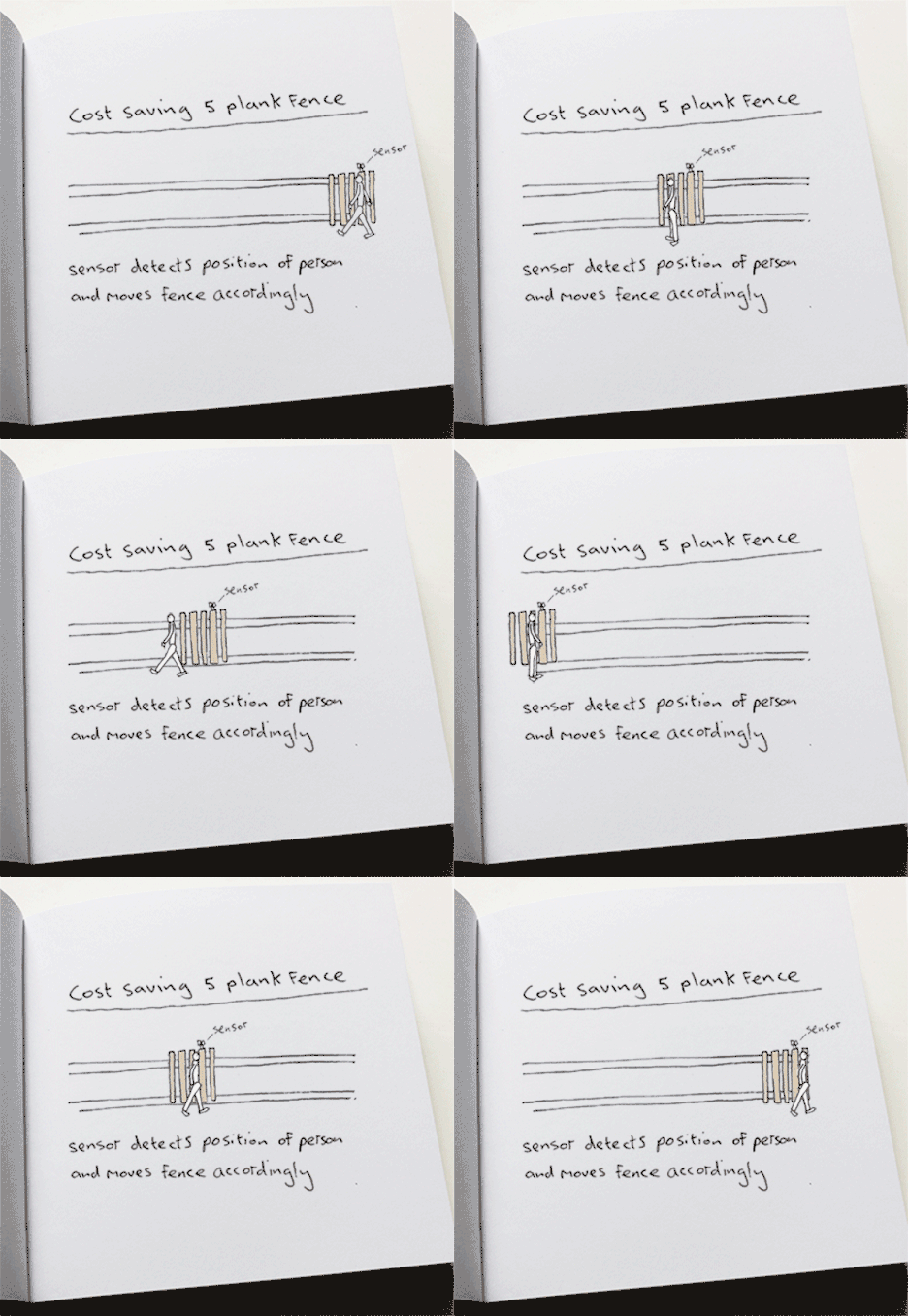
cost saving fence designs

duel use coffin workstation

Often intentionally impractical and definitively theoretical, the ideas found inside this 128-page book (as on his blog) are nonetheless extremely compelling. Presented as something between sketches and comics, they will challenge you to look at the world from fresh new angles, not to mention their pure entertainment value.

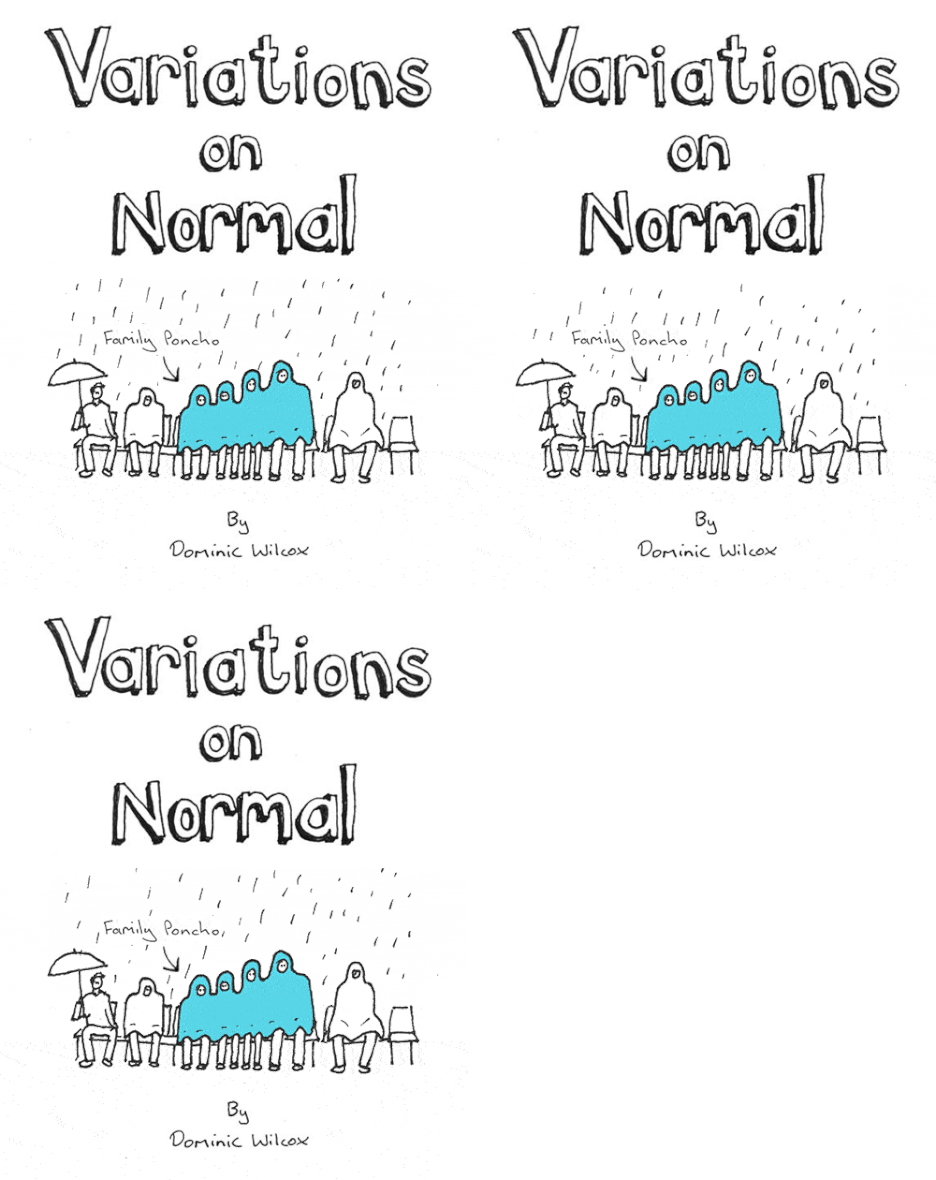
variations on normals

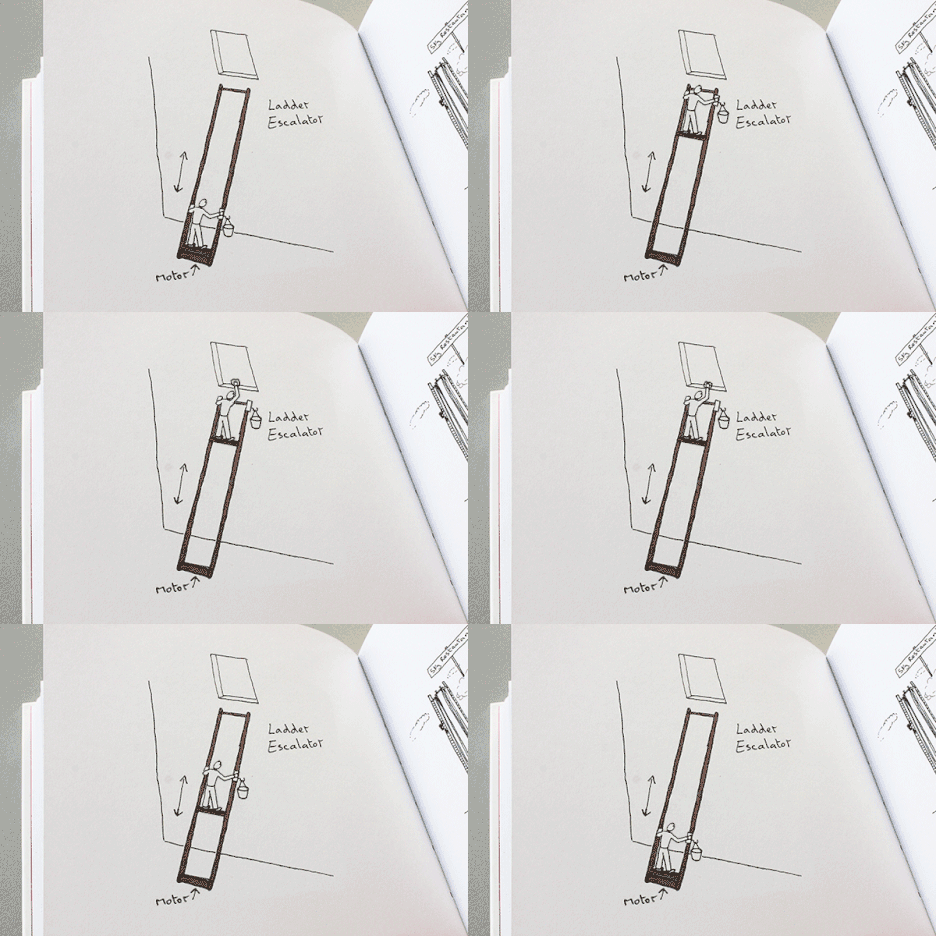
ladder escalator playful design

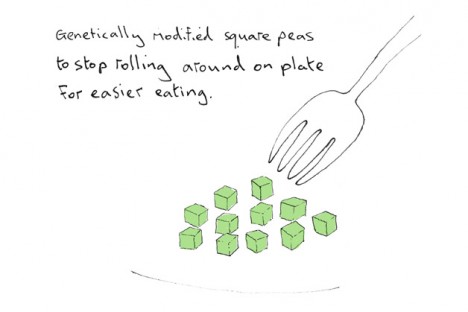
From mobile fences and motorized ladders to square peas and coffin workstations, there is always an element of functionality (hence design, not art) but also a playfulness to each piece.

square peas genetically modified

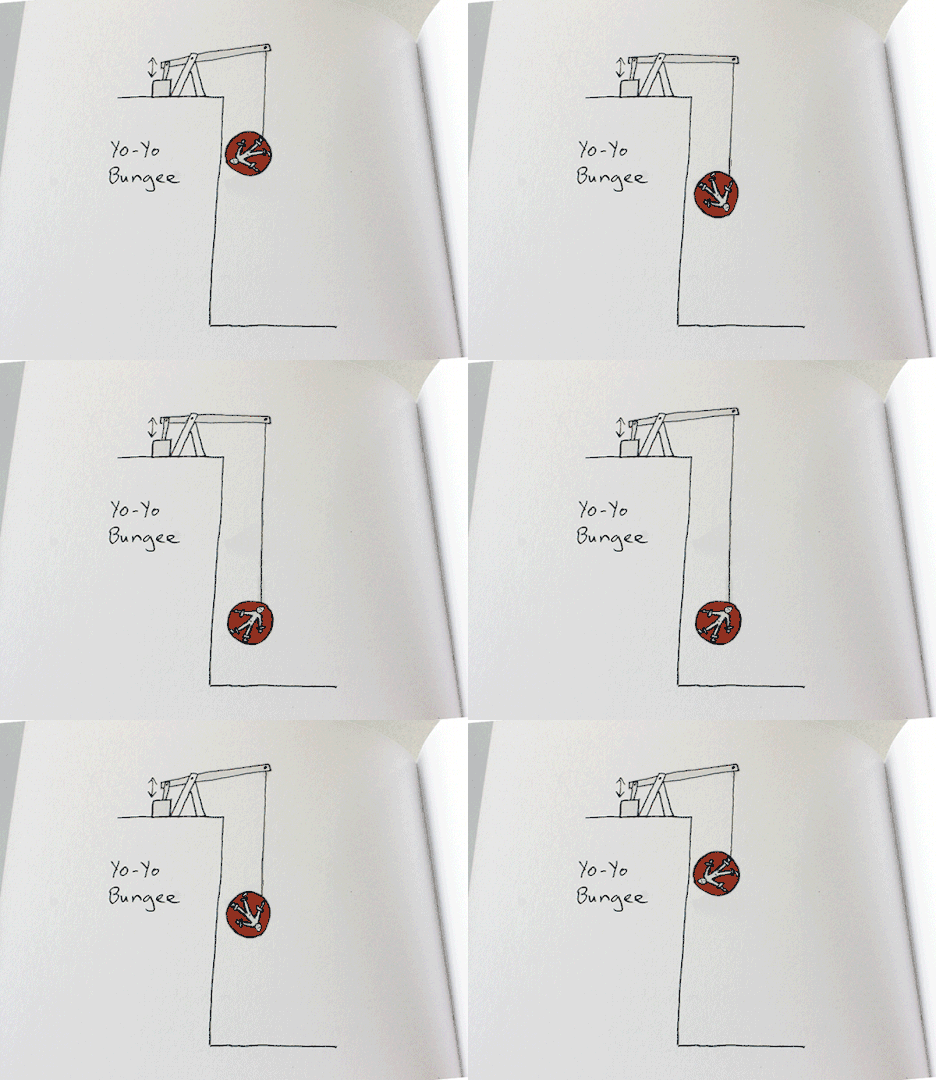
yoyo bungie system design

About his inspiration: “I’ve convinced myself that within everything that surrounds us, there are hundreds of ideas and connections waiting to be found. We just need to look hard enough. Some of my ideas develop from observations on human behaviour and I express them through the objects I create. I also experiment with materials to try to find surprises that can’t be found simply by thinking with a pen or a computer.”

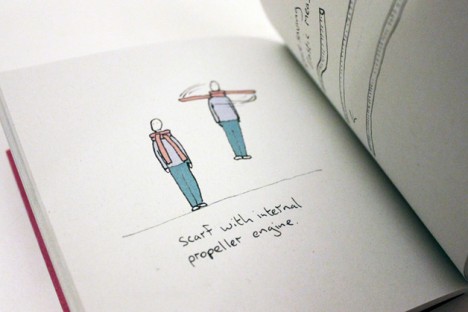
scarf with integral propeller

variations on normal static

Wilcox lives in London but was educated at the Royal College of Art (Design Products MA) and the Edinburgh College of Art (Visual Communication BA).  More about his book and other recent works can be found on his website.

Share on Facebook


[ By WebUrbanist in Design & Products & Packaging. ]

[ WebUrbanist | Archives | Galleries | Privacy | TOS ]


WebUrbanist

 
Comments Off on Variations on Normal: Book of Absurdly Brilliant Inventions

Posted in Creativity


Transparent Home: Glass Dwelling Puts Urban Life on Display

29 Oct

[ By WebUrbanist in Architecture & Houses & Residential. ]

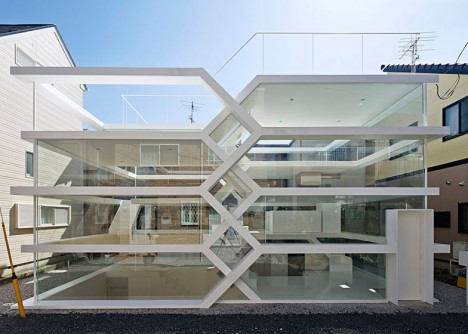
see through house japan

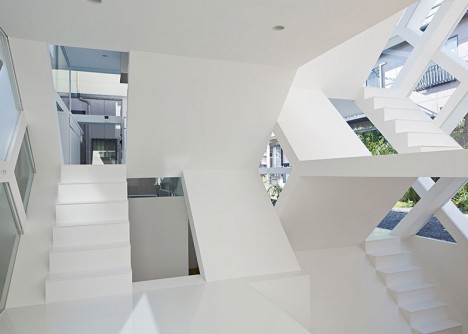
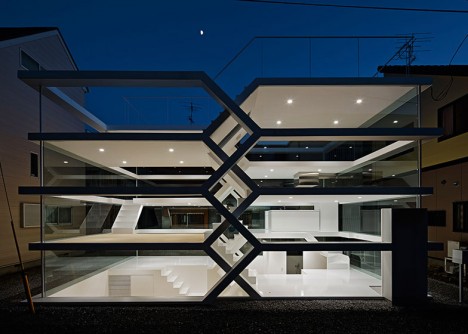
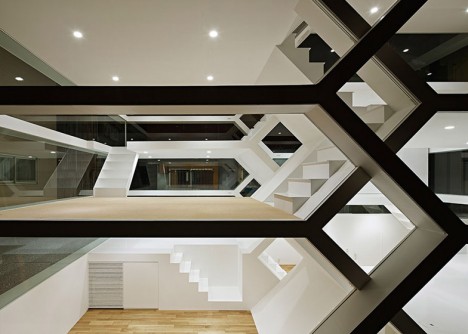
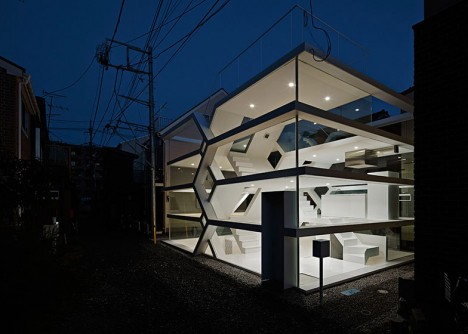
A beautiful and boldly open design, this see-through structure uses glass to reveal (and staggered layers to conceal) different parts of the everyday lives of its occupants.

see through transparent house

see through ome facade

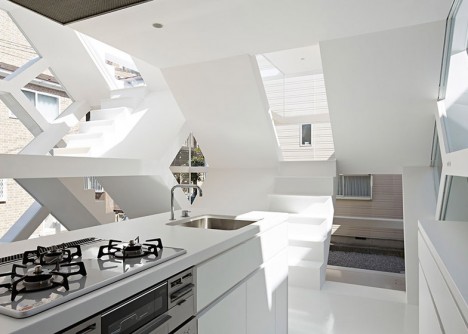
Designed by architect Yuusuke Karasawa for a medium-density city lot in Tokyo, the snakelike S House relies on upper layers, underground areas and limited walls to create privacy where required or desired.

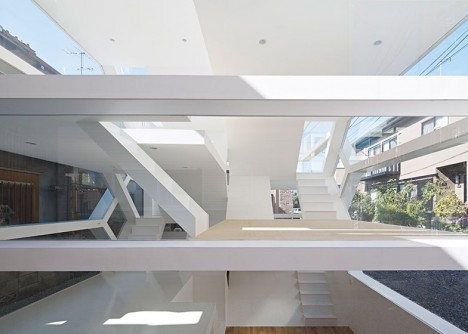
see through floor plates

see through ome interior

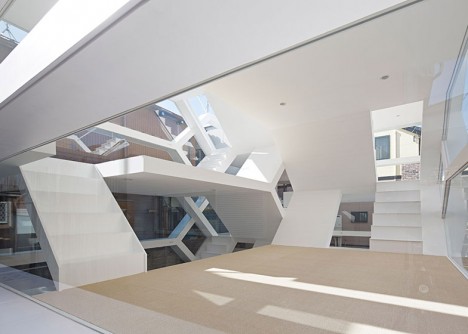
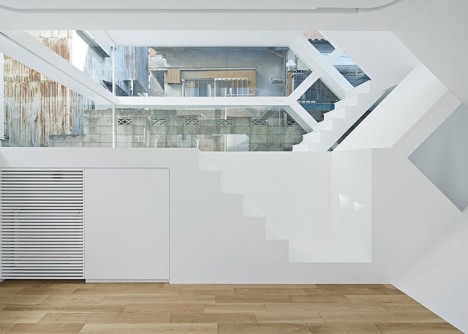
The split-level approach replaces corridors with staircases and serves to section off parts of the interior without creating excessive walls, all reinforcing the overall openness of the design (reminiscent of Modernist masters including Mies van der Rohe, Philip Glass and Le Corbusier).

see through house design

see through kitchen area

see through exterior view

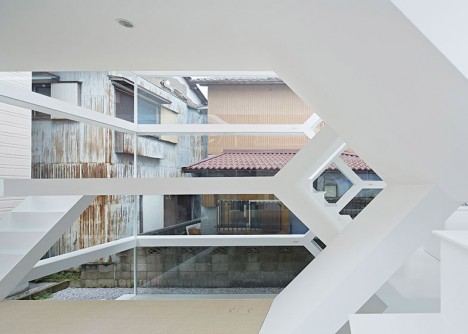
Primarily white, limited wood accents are added and the neighborhood becomes a kind of passive decor, its textures visible from almost any area of the interior.

see through japanese urbanism

see through night view

see invisible house detail

Partly, the design plays on a cultural element of respect for personal space found in Japan – prying eyes are not something to be worried about.

underground bedroom japan house

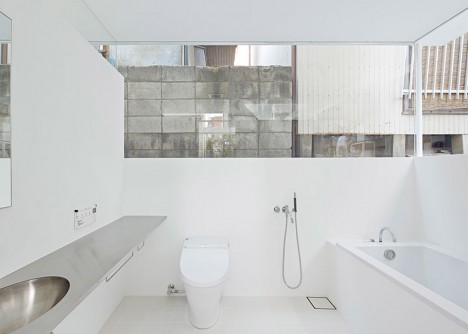
see through master bath

see through rooftop deck

Nonetheless, the master bedroom and bathroom are located on the level below ground, and a rooftop deck also affords a higher degree of seclusion when needed.

Share on Facebook


[ By WebUrbanist in Architecture & Houses & Residential. ]

[ WebUrbanist | Archives | Galleries | Privacy | TOS ]


WebUrbanist

 
Comments Off on Transparent Home: Glass Dwelling Puts Urban Life on Display

Posted in Creativity


Apple unveils iPad Air 2, iPad Mini 3 and new 27in iMac with ‘5K’ display

29 Oct

After unveiling its new iPhone models last month, Apple announced two new tablets today – the iPad Air 2 and the iPad mini 3. The iPad Air 2 features a new Apple A8X chipset which Apple claims is 40% faster at the CPU level than the processor used in its predecessor. The iPad Air 2’s cameras have been upgraded too, and both new tablets also gains the TouchID fingerprint sensor. Meanwhile Apple also announced a new version of its 27in iMac desktop computer with a 5120 x 2880 screen resolution. Click through to read more

Articles: Digital Photography Review (dpreview.com)

 
Comments Off on Apple unveils iPad Air 2, iPad Mini 3 and new 27in iMac with ‘5K’ display

Posted in Uncategorized


Going Wide With the Tokina 11-16mm f/2.8

29 Oct

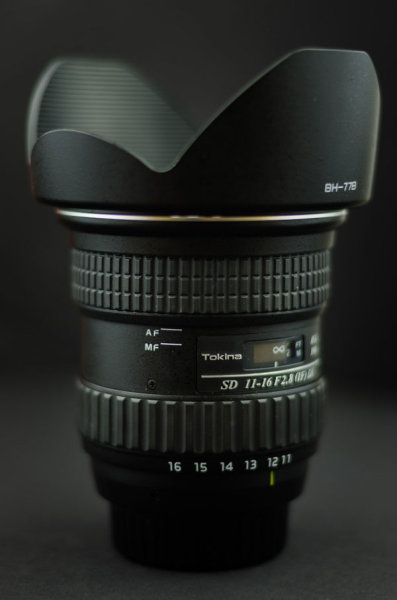
The Tokina 11-16mm f/2.8 APS-C sensor lens is without a doubt my favorite lens in my camera bag and it also has some great reviews throughout the photography community. But is this lens for you? What are its strengths and weaknesses? Ultimately, what kind of photographs can you take with it?

tokinalens

Who is the Tokina 11-16mm f/2.8 for?

On the surface this wide angle crop sensor lens is going to appeal to just about any landscape photographer using an APS-C sensor DSLR and particularly those who are on tighter budgets, as it can be found (at the time of this writing) for around $ 500 making it quite affordable for its quality.

The main strengths

The Tokina 11-16mm has been a popular lens for a few years with good reason. It is sharp throughout its focal range and has limited distortion and artifacts which can be easily corrected inside Lightroom or other post-production software.

The lens is built like a tank and can really take a beating in the wild.

The constant f/2.8 aperture is a great benefit if you plan on photographing in low light situations – for example – taking photos of the night sky.

Its weaknesses?

Of course, with every set of strengths, comes a set of weaknesses and the Tokina 11-16mm has a couple that are worth mentioning here.

The small focal length range does at times feel a bit limiting. You’re always going to be at a wide angle shot, whereas something like the Nikon 10-24 will get you closer to your subject without swapping lenses.

As I mentioned the Tokina is built like a tank, and as such, is quite large (550g) which does make it cumbersome to take with you on longer hikes. Not saying that it’s not doable, just that smaller is better when you’re packing for a trek and it’s worth considering.

Overall I haven’t noticed too many problems with the lens, but the one I have, does get a little finicky when trying to focus in low light situations. It’s not always a problem, and by no means a deal breaker for me, but it is something to be aware of.

So what kind of photographs can you take with this lens?

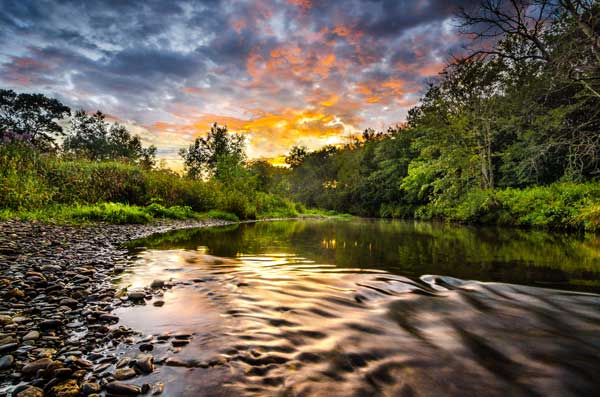
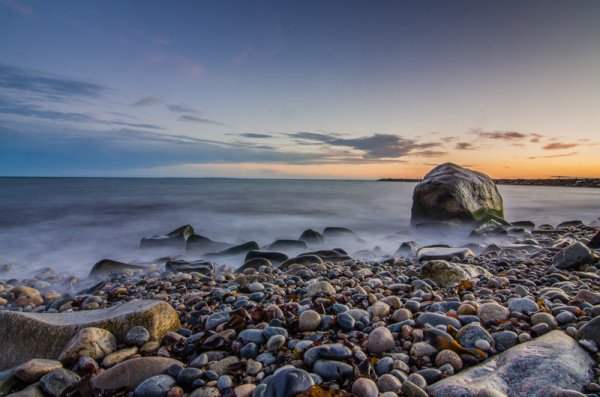
As with any lens the photographs you make are only limited by your creativity when it comes to subject matter. That said, dramatic sunset photographs, or dynamic seascape scenes are the bread and butter for this lens.

lazyphotographer

ISO 100 | f/14 | 11mm | 2.5 seconds

improve-photography-self-critic-5

ISO 100 | f/11 | 11mm | 6 seconds

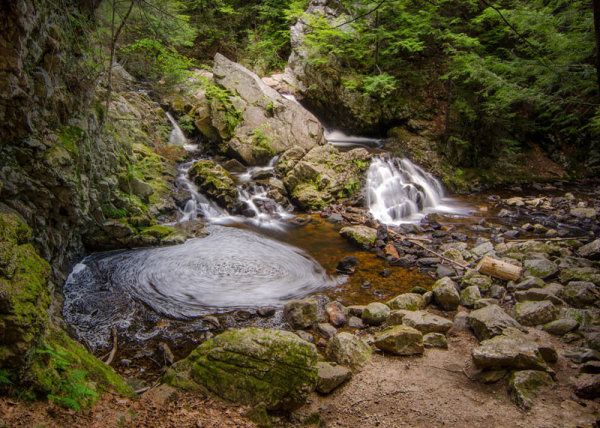
On top of these, if you’ve wanted to capture a silky smooth waterfall photograph, this lens will certainly get it done, and I’ve used it many times photographing the numerous waterfalls of New England.

show and tell-6

ISO 100 | f/14 | 16mm | 3 seconds

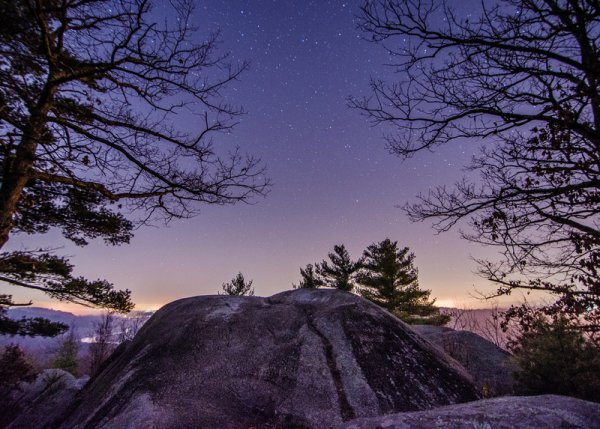
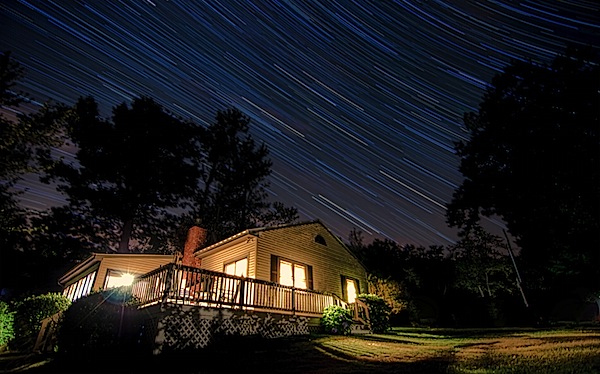
As mentioned above, having that constant f/2.8 aperture gives you the ability to capture great night sky photography. Pair it with a modern DSLR capable of shooting at relatively high ISOs and you’ll be able to capture some great shots of the stars, or create star-trails if that’s more your thing.

p2077635047-4

ISO 800 | f/2.8 | 11mm | 30 seconds

startrailphoto

ISO 800 | f/2.8 | 11mm | 30 seconds (~150 exposures)

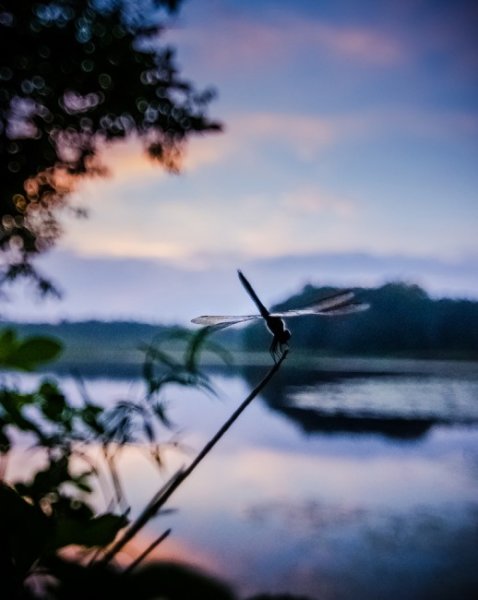
Finally, even though this is a wide angle lens, you don’t have to get caught up in capturing these massive scenes to get something out of it. Sometimes you can make it work for a subject as simple as a dragonfly watching the sunset. So it really is limited only by your creativity.

Dragonfly-Watching-Sunset-518x650

ISO 3200 | f2.8 | 16mm | 1/1250

Do you already own the Tokina 11-16mm f/2.8?

Tell us your own thoughts on the lens and share some of your favorite shots taken with it in the comments below. Do you have a different favorite lens? See what dPS writer Andrew S. Gibson considers his favorite here.

The post Going Wide With the Tokina 11-16mm f/2.8 by John Davenport appeared first on Digital Photography School.


Digital Photography School

 
Comments Off on Going Wide With the Tokina 11-16mm f/2.8

Posted in Photography


Better Star Trails Photographs with StarStaX

28 Oct

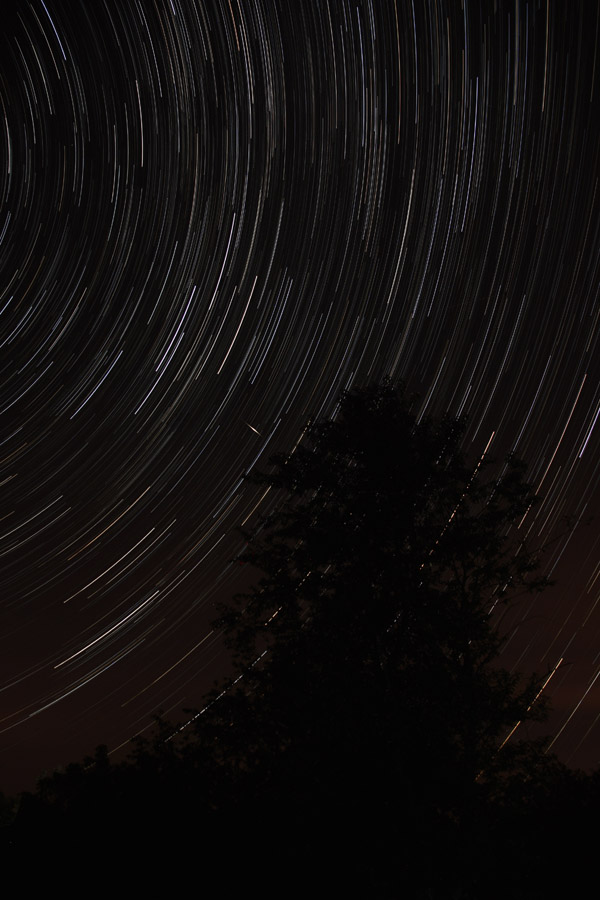
Long, swirling star trail photography is on the bucket list of many photographers. In the film days, this required leaving your shutter open for one continuous exposure on the order of hours and hoping that everything would turn out just right. In the digital era, many photographers rely on a process known as stacking to take a large number of individual frames and combine them into the final image. This article will lay out how to capture incredible star trail photographs and combine them using the free program StarStaX.

StarStax, star photography, stacking, star trails, how to, astrophotography

Shooting Your Individual Star Trails Photographs

Many detailed posts have been written about how to capture individual photographs for star trails stacking, so this article will only provide a quick overview. Check out the linked posts at the end of this article for additional details.

For equipment, you will need your camera, a fast wide angle lens, a sturdy tripod, a remote shutter release, and a full battery or two. A red headlamp or flashlight as well as a folding chair can also come in handy. I recommend a wide angle lens, like 18 mm (or wider), so that you can capture a larger expanse of the sky. A fast lens (one with a wide aperture, like f/1.8) is also preferred so that you can capture more light with each frame. (Most of the photographs in this article were shot at 18 mm and f/3.5 on my Tamron 18-270 mm lens.)

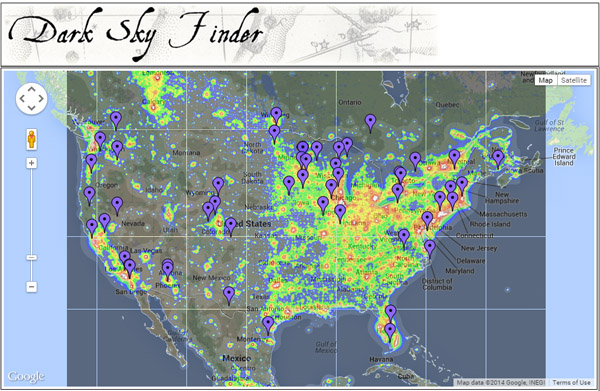
dark sky finder, star trails, astrophotography

Choose your location and timing carefully. Capturing star trails around the time of the new moon is preferable, so that bright moonlight does not wash out all the stars from the sky. You also want to get as far from artificial lights as possible. You can use the web site Dark Sky Finder to look for possible dark sky locations near you. Once you have chosen a location, you can use the web site Clear Dark Sky to check their 48 hour forecasts about the potential for clear sky in a given location.

Once you are on location, spend some time choosing your final composition. Think about a position that will provide an interesting foreground – an unique tree, a geologic formation, or a body of water – as well as an expansive view of the night sky. If you want an image of the stars swirling around a complete circle, then be sure to include the North Star in your viewfinder (in the Northern Hemisphere). If you want extremely long swirls in less time, then compose for a view farther away from the North Star.

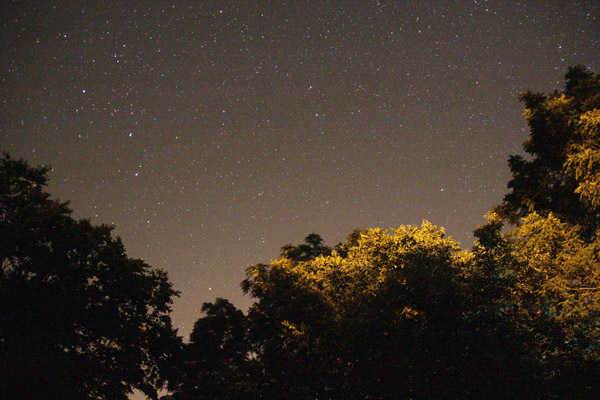
star photography, star trails, astrophotography

Shoot one photograph with your widest aperture and a fairly high ISO value for 30 seconds. (The image above was shot at 30 seconds, f/3.5, and ISO 6400.) Your image will be quite noisy, but you should get a strong sense for your overall composition.

Once you have your composition nailed down, you want to dial in your final settings using manual mode. Choose your widest aperture (like f/1.8 or f/3.5), a 30 second shutter speed, and a mid-range ISO like 800-1600. (Newer cameras have less noise at higher ISO values, but you may want to use an ISO of 400 or 800 with an older or entry-level camera.) Turn off the autofocus and use manual focus to focus on infinity.

Before you start shooting, cover your lens with a lens cap or piece of black paper and shoot a few frames. These will be your dark frames when you process the images in StarStaX. Dark frames allow the program to subtract digital noise and hot pixels from your final image.

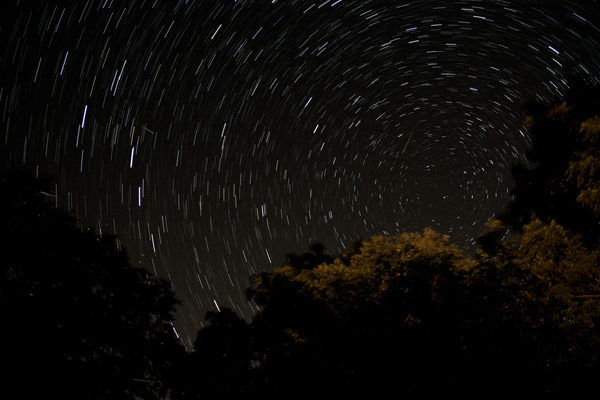
star photography, star trails, astrophotography

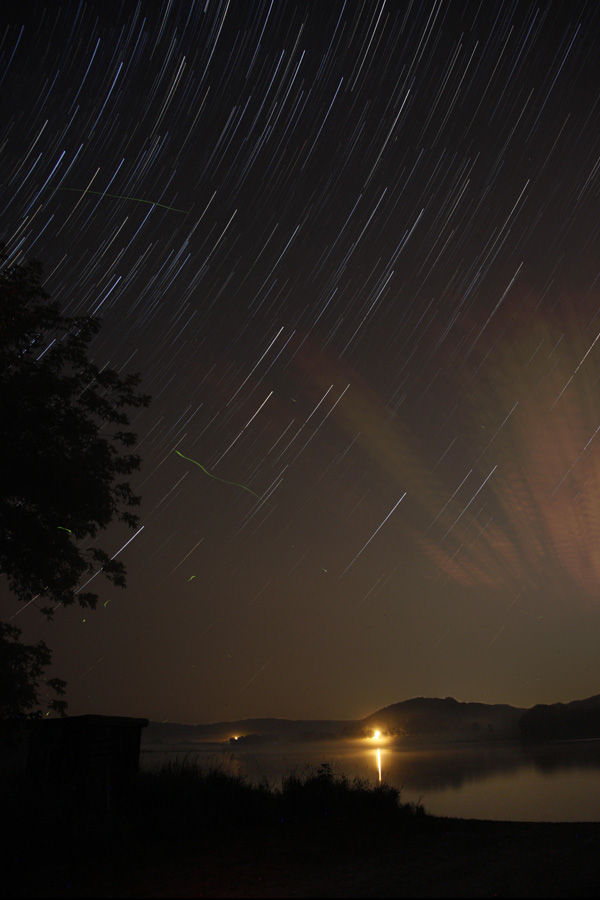
This image is a stack of 26 images shot with 18mm, 30 seconds, f/3.5, ISO 800. The green squiggles are fireflies.

Use your remote shutter release to lock down your shutter. As soon as your camera finishes taking the first 30 second picture, it will start taking the next, and so on. Then pull out your folding chair, sit back, and enjoy the wait. An hour’s worth of shots is a good goal to aim for. The more photographs that you take for your stack, the longer and more defined your final star trails will be.

Once you have finished capturing your shots, remember to take a few dark frames again at the end. Leave your settings the same but cover the lens with the lens cap and shoot a couple more frames.

Preparing Photographs for Stacking

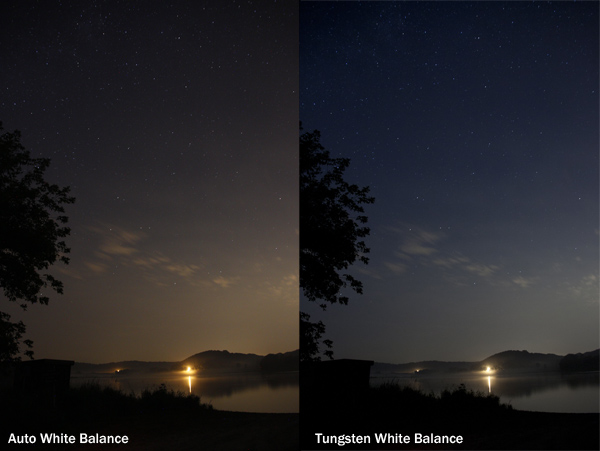
Depending on your photographs and the end result you are envisioning, you may want to do some post-processing on your individual frames before loading them into StarStaX. Whether you use Lightroom, Photoshop, or another post-processing software, you will want to apply a similar treatment to all your images if you choose to do any corrections, such as adjusting the white balance or fixing the colors.

star photography, star trails, how to, astrophotography

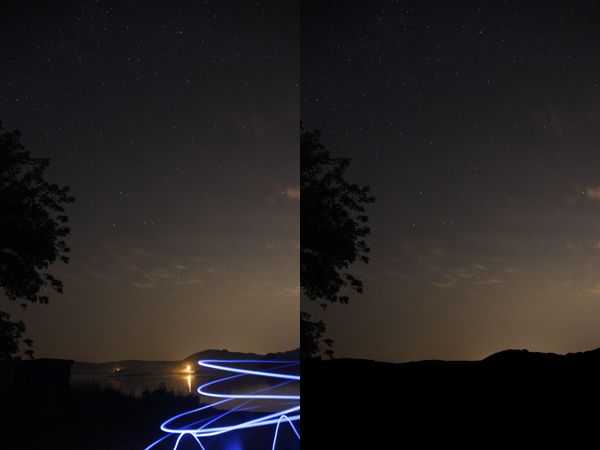
You may also need to do some quick editing of individual shots, especially if you were shooting at a location with unwanted stray light. In the photographs below, you can see that this frame captured the light from passing cars on the far side of the lake. The quickest solution to problems like these is to open these individual frames in Photoshop, set the brush tool to black, and paint over any unwanted light.

star photography, star trails, how to, astrophotography

You can see a big difference in the foreground between these two stacks of the same individual star trails. Painting out the stray light trails in those few individual pictures allows for a more seamless and less distracting foreground, once you stack all the photographs together.

star photography, star trails, how to, astrophotography, StarStax, stacking

Alternatively, you can choose one frame in Lightroom or Photoshop and make any adjustments needed until the non-sky portions of your image are just right. Then, after creating your star trails in StarStaX, you can combine your ideal foreground with your stacked sky using layers and masks in Photoshop.

Stacking Your Star Trails Photographs Using StarStaX

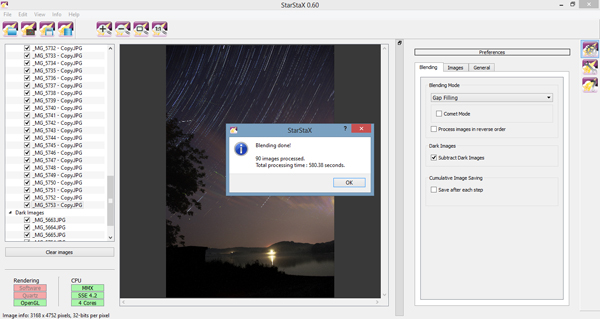
StarStaX was developed by Markus Enzweiler and is available as a free download for Windows, Mac, and Linux computers. (Screen shots courtesy of the Windows 0.60 version.) After downloading and opening the program, the first thing you need to do is load your individual photographs by going to File -> Open Images or hitting the Open Images button. You may select JPEG, TIFF, bitmap, or PNG file types. After selecting your star trails shots, you need to load your dark frames by going to File -> Open Dark Frames or hitting the Open Dark Frames button.

StarStax, star photography, stacking, star trails, how to

Once you have both types of files loaded, it is time to run your first stack. The default options are a good starting point: try lighten mode and check the button for subtract dark frames, if you have uploaded some. Click Edit -> Start Processing or the Start Processing button. The amount of time it will take the program to complete the stacking will vary based on your computer and the number of individual photographs, but it should be on the order of a few minutes at most.

After the program has finished stacking your images, click File -> Save As or the Save button and save your stacked image. Stacks will not save automatically. You can use the zoom tools to look more closely at your stack and see if the results match your expectations.

StarStax, star photography, stacking, star trails, how to, astrophotography

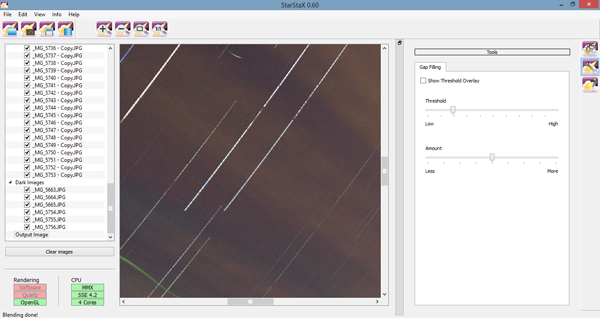
You may notice that there are some gaps in your star trails, which result from the time between one photograph ending and another beginning. In that case, you may want to run the stack again. Your individual photographs and dark frames are still loaded, so just change the blending mode to Gap Filling and start processing your files again.

After your gap filling version has finished processing, there are a few options you can use to adjust the amount of gap filling applied. Click the Images tab and experiment with the different sliders to minimize the appearance of any gaps. Click the 1:1 button to zoom into the pixel level, as in the image below, to see the impact of the Gap Filing sliders.

StarStax, star photography, stacking, star trails, how to, astrophotography

Want a really unique shot? Run the stack again in either Lighten or Gap Filling and click the checkbox for Comet Mode. Your final star trails will each take on the appearance of a streaking comet.

star photography, star trails, how to, starstaX, astrophotography

Stack of 90 images including six dark frames, each shot at 18 mm, 30 seconds., f/3.5, and ISO 800.

Now You Try

Now that you have the basic idea, you need to find a great location and give it a try! Do not feel discouraged if you are far from any suitable dark sky locations. You might be surprised at what you can capture even under less than ideal settings.

StarStax, star photography, stacking, star trails, how to, astrophotography

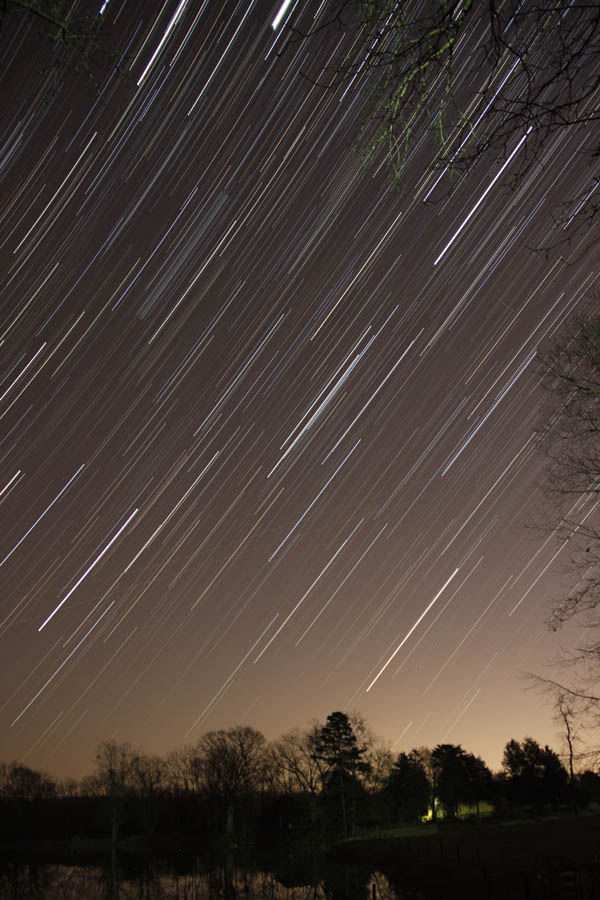
Thus photo was taken just outside a city in North Carolina and was a stack of 78 images and seven dark frames, each taken at 30 seconds, f/3.5, and ISO 800.

Have you used StarStaX to capture star trails? Share your thoughts or favorite images in the comments below!

Need more help for shooting your star trails images, try these articles:

  • Tips for Photographing Star Trails
  • How To Photograph Star Trails
  • Photography Under the Stars

The post Better Star Trails Photographs with StarStaX by Katie McEnaney appeared first on Digital Photography School.


Digital Photography School

 
Comments Off on Better Star Trails Photographs with StarStaX

Posted in Photography


Li Hui: Vor meinem inneren Auge

28 Oct

Sanft, nah und leicht, diese Attribute bekommen nur wenige Aufnahmen in diesem Magazin. Wie aus dem Traum gegriffen verzaubern Portraits der Künstlerin Li Hui, ohne auch nur ein einziges Gesicht in seiner Gesamtheit zu zeigen. Sie erzählen von großen Gefühlen wie Einsamkeit, erwecken aber keine Melancholie.

Es ist nicht leicht, zu begründen, warum die Bilder einer Li Hui so wirken, wie sie wirken. Allein an der analoge Arbeitsweise, ausschnitthaften Portraits, getaucht in Unschärfe oder den alltäglich anmutenden Momentaufnahmen kann es nicht liegen.

Ein scheint, als ob die Fotografin etwas sagen will, das jenseits koginitiver Umschreibungen liegt – und es schwingt etwas mit, das – Achtung, antiquiertes Wort – Liebe genannt wird. Und das, obwohl in den wenigsten Aufnahmen zwei Personen zu sehen sind.

Eine Frau im Hintergrund.

Eine nasse Katze schaut nach oben.

Silhouette eine Person in einer Doppelbelichtung.

EIne Person steht auf einem Weg.

Eine Person ist durch Grashalme hindurch erkennbar.

Eine Frau steht vor einer Wand und schaut weg von der Kamera.

Eine Person versteckt ihr Gesicht hinter einem Kissen.

Von Sonnenlicht durchflutete Wolken.

Ein Finger wird in ein Glas Sprudel eingetaucht.

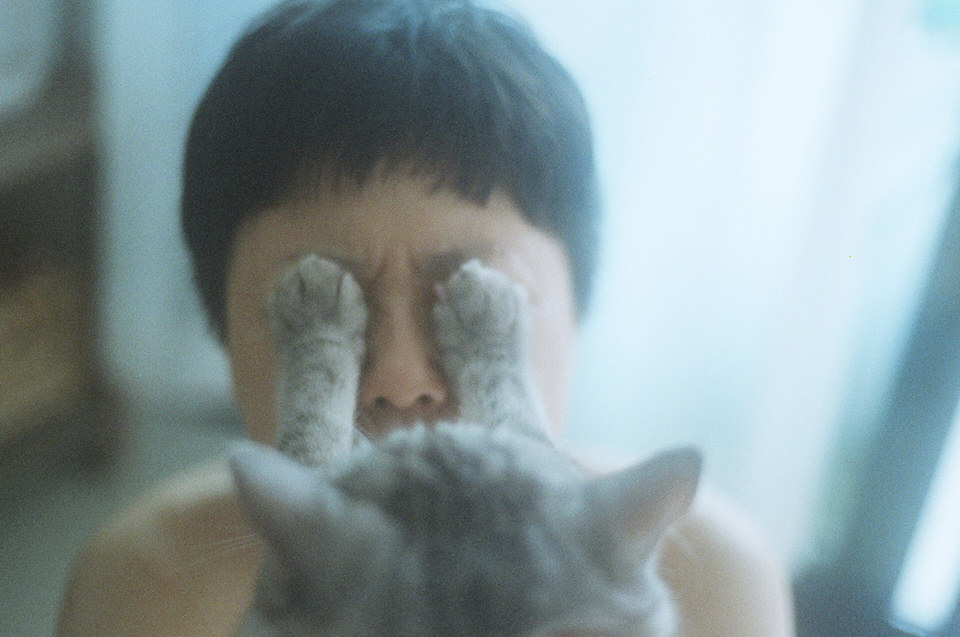
Zwei Katzen-Tatzen auf den Augen einer Frau.

Zwei Strumpfhosenfüße vor einem Aquarium.

Eine Person zieht eine rote Strickjacke an.

Eine Frau hält eine Katze.

Eine Frau öffnet ihren BH.

Auf meine Nachfrage erklärt Li Hui:

Subtile Dinge berühren mich. Wenn ich Musik höre, wird mein Geist sehr aktiv, Szenen erscheinen vor meinem inneren Auge, die zur Musik passen. So entstehen meinen Aufnahmen.

Als ich sie frage, ob sie mir etwas mehr über ihre Herkunft und Persönlichkeit sagen will, als ich im Internet herausfinden konnte, lehnt Li Hui ab. Sie glaubt, dass ihre Bilder wichtiger sind als sie selbst. Solch eine Demut überrascht nicht, doch ist sie viel zu selten unter Menschen, die mit der Fotografie etwas ausdrücken wollen.

Und so belasse ich auch diese Bildstrecke bei wenigen Worten und scrolle noch einmal von oben nach unten alle Aufnahmen durch. Ich werde sie nicht vergessen.


kwerfeldein – Fotografie Magazin | Fotocommunity
 
Comments Off on Li Hui: Vor meinem inneren Auge

Posted in Equipment