RSS
 

Archive for September, 2014

11 September, 2014 – Upgrading To The Leaf Credo 80

11 Sep


This is date I hope many of us take a moment to reflect on as it is the anniversary of 9/11.  This was a most tragic day and one I’ll never forget.  Please remember those that have fallen and those that serve.  I have two sons in the military (Navy and Army) as well as a daughter in law serving in the Army.  Like all their brothers in arms they serve with dedication so we can live the lives we do.  I am very proud of them. Also, don’t forget all of those victims of that day, and those that served and have not come home.  Let’s hope we can get through the challenges ahead.  As the FDNY says "Never Forget"  

Continuing with our articles on Medium Format we share a story by Robb Williamson today, Upgrading To The Leaf Credo 80.  Not only is Robb a great photographer, but he is a detailed writer.  He shares with us his decision and process of making an upgrade to the Leaf Credo 80.  He also gives good insight into using technical cameras with medium format digital backs.

Michael and Kevin leave for Cologne, Germany on Sunday and they will be covering Photokina.  This is the largest photo show in the world and happens only every other year.  Unlike in the past when most manufacturers actually announced products at the show, mostly everything that is new has already been announced.  As usual though, there will be surprises.  Michael and Kevin have a number of interviews set-up with some of the big wigs of the industry.  They will be making regular and daily reports on what they see and hear.  So, check in regularly next week to keep up on the latest.

LuLa also has a number of soon to be released videos as well as a large number of interesting articles and reviews.  We’ll be working hard during the next few months to give you more content and informative articles as well as announcing some new workshops for the next two years.  Plus we’ll have a few surprises too.


The Luminous Landscape – What’s New

 
Comments Off on 11 September, 2014 – Upgrading To The Leaf Credo 80

Posted in News


11. September 2014

11 Sep

Ein Beitrag von: Resa Rot

Eine unscharfe Hand im Vordergrund legt sich um die Silhouetten zweier Schafe


kwerfeldein – Fotografie Magazin | Fotocommunity

 
Comments Off on 11. September 2014

Posted in Equipment


Umfrage! Mit welchem 35-mm-Film fotografiert Ihr?

11 Sep

Viele Menschen, die schon eine Weile digital fotografieren, haben irgendwann mal Lust, die analoge Welt der Fotografie zu erkunden. Sie wollen nicht gleich mit Mittelformat anfangen, doch neben der Frage, welche Kamera denn zu kaufen sei, wissen sie erstmal gar nicht, welchen Film sie nehmen sollen. Und wo sie ihn bekommen.

So geht es heute auch mir. Vor ein paar Wochen habe ich mir eine Canon AE-1 Spiegelreflexkamera gekauft und wollte direkt loslegen. Doch dann musste ich erstmal bremsen. Denn da ist doch gar kein Sensor drin (ach, echt?).

Filme? Gibt es wie Sand am Meer. Und jeder ist ein bisschen anders. Ich hatte aber keine Lust, tausende Erfahrungsberichte über Filme im Internet zu studieren.

Angefangen habe ich dann einfach mit dem Fotoland-Film aus dem DM, der für 1,45 € zwar günstig ist, ich mir jedoch bis heute nie ganz sicher bin, ob es bei ihm nicht auch mal einen Ausfall geben kann. Schlechte Erfahrungen habe ich aber bisher keine damit gemacht.

Aktuell nutze ich gerne den Kodak Portra 400* (ein Farbfilm) und den Kodak Tri-X 400* (ein Schwarzweißfilm). Für meine Straßenaufnahmen verwende ich gern den Portra, um meine Familie zu fotografieren, den Tri-X.

Jedoch sind beide recht teuer, sei es nun auf Amazon oder direkt beim Fotohändler. Und naja, ganz ehrlich schwimme ich nicht im Geld und bin daher öfter ganz einfach unsicher, ob es nicht noch andere Filme gibt, die gut sind (mit „gut“ meine ich auch, ob sie sich gut pushen lassen, aber das führt nun zu weit).

Zwar habe ich einige kompetente Kollegen in der Redaktion, doch ich dachte, dass ich auch mal hier in die große Runde fragen möchte. Schließlich interessiert das Thema nicht nur mich.

~

Deshalb mache ich diese Umfrage, die für jeden Analogen einfach zu beantworten ist:

Mit welchem 35-mm-Film fotografierst Du?

Bitte schreibe die volle Bezeichnung des Films (es dürfen auch mehrere sein) und seine Eigenheiten in einen Kommentar. Außerdem ist für mich der Preis interessant und wo Du die Rolle kaufst. Wenn Du Beispielbilder, die Du damit gemacht hast, verlinken kannst, wäre das die Krönung, aber mach Dir keinen Stress.

Auf geht’s!

* Das ist ein Affiliate-Link zu Amazon. Wenn Ihr darüber etwas bestellt, erhält kwerfeldein eine kleine Provision, Ihr zahlt aber keinen Cent mehr.


kwerfeldein – Fotografie Magazin | Fotocommunity

 
Comments Off on Umfrage! Mit welchem 35-mm-Film fotografiert Ihr?

Posted in Equipment


Fujifilm introduces XF 56mm F1.2 R APD with apodization filter

11 Sep

Gearing up for Photokina, Fujifilm has announced the XF 56mm F1.2 R APD – APD standing for apodization. The lens is a variant of the existing XF56mm F1.2 R, utilizing the same underlying design of 11 elements in 8 groups but it adds an apodization filter. Essentially a radial gradient filter, it aims to produce better-looking highlights and more pleasant bokeh. Read more

Articles: Digital Photography Review (dpreview.com)

 
Comments Off on Fujifilm introduces XF 56mm F1.2 R APD with apodization filter

Posted in Uncategorized


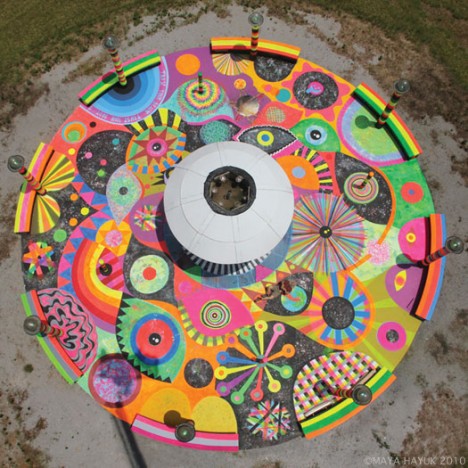
Fluorescent Geometry: Eye-Popping Murals by Maya Hayuk

11 Sep

[ By Steph in Art & Street Art & Graffiti. ]

Maya Hayuk 5

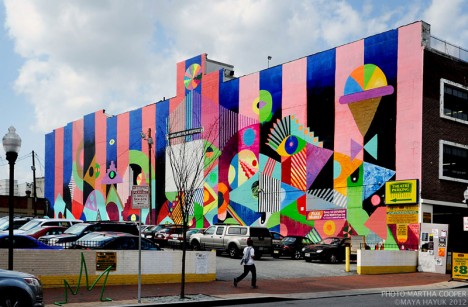
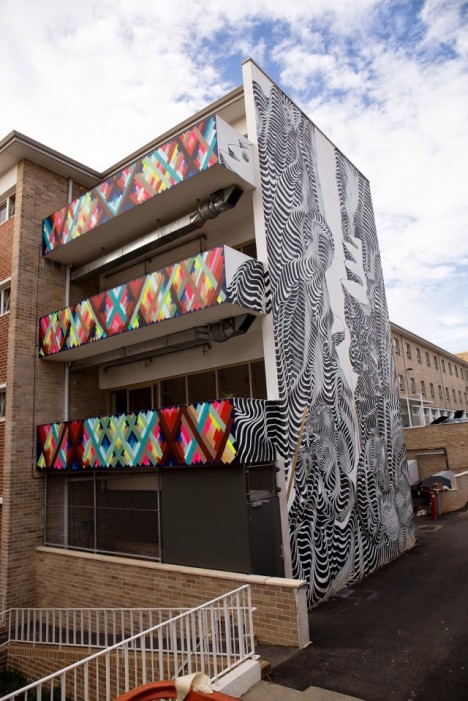
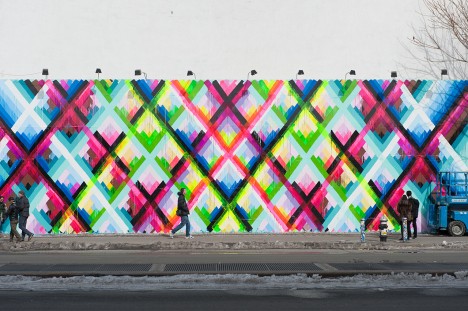
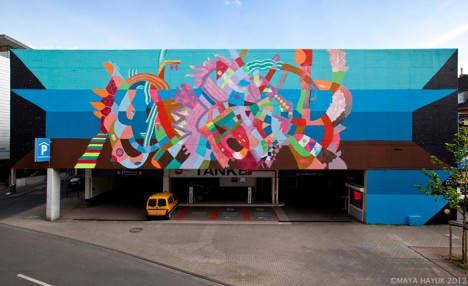
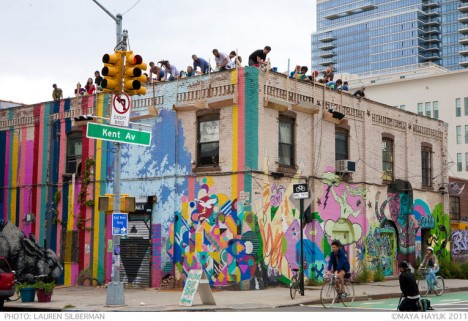
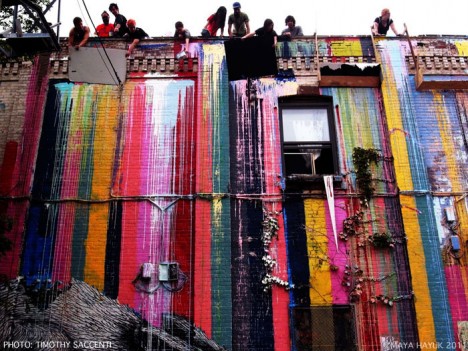
Striking geometric shapes in acid-bright palettes breathe life into gray urban spaces thanks to the signature style of artist Maya Hayuk. Often appearing perfectly symmetrical, her work seems to be planned and painstakingly designed well in advance, but it’s often created spontaneously in response to the feel of the chosen setting.

Maya Hayuk 2 Maya Hayuk 3

Precise lines in rainbow fluorescents converge into chaotic arrangements of geometric shapes, interspersed here and there with more organic imagery like human eyeballs. Look into one of Hayuk’s kaleidoscope-like creations long enough and you’ll start to notice little eccentricities, like sharp-toothed creatures, hiding in the mix.

Maya Hayuk 4 Maya Hayuk 6 Maya Hayuk 7

According to her bio, Hayuk is inspired by popular culture, Ukrainian handicrafts and advanced painting practices “while connecting to the ongoing pursuit of psychedelic experience in visual form.” It’s safe to say she achieves this effect, each massive mural looking trippier the longer you stare at it.

Maya Hayuk 8 Maya Hayuk 9 Maya Hayuk 10

In addition to large-scale murals located all over the world, Hayuk paints works on canvas and collaborates on a range of other creative projects, from fashion to music videos. In an interview with Cooler, Hayuk says “I listen to a lot of music while I work, there are a lot of repeating patterns in my art and in music. I also found it exciting to help create an object that empowers the person holding or carrying it. I do believe in this kind of magic.”

Share on Facebook


[ By Steph in Art & Street Art & Graffiti. ]

[ WebUrbanist | Archives | Galleries | Privacy | TOS ]


WebUrbanist

 
Comments Off on Fluorescent Geometry: Eye-Popping Murals by Maya Hayuk

Posted in Creativity


High Speed Sync Versus a Neutral Density Filter to Overcome Bright Sunlight in Portraits

11 Sep

ND3

For several years now I have used high speed sync (HSS) in order to light portraits in full sunlight at a wide aperture. If you’re unfamiliar with HSS, it allows you to shoot at shutter speeds that are higher than the native sync speed of your camera (usually 1/200 or 1/250 of a second, read your camera and flash manual to find yours) while still using speedlights. The reason this ability is so enticing is that you can shoot flash-lit images at wide open apertures in full sunlight, allowing for a shallow depth of field. Normally if you were using a flash, your maximum shutter speed would be at 1/200 or slower, meaning that you would need to close your aperture down in order to get a proper exposure in the sun.
ApertureOnly

Raw image shot at f/29

How HSS works is that the flash will begin pulsing light, just before the shutter opens, since the exposure is so short. The problem with this is that much of the output of the light is lost in the pulsing process, meaning that you need more flash units to achieve a decent output. For example, when I am shooting at 1/8000th of a second, I need to combine four flashes, on one stand, in order to light a subject that is about five feet away. And that is without any modifiers, like an umbrella or soft box. The other issue with HSS is that not just any flash and trigger system will do the trick. You need to have gear that will communicate information from the camera to the flash.

A couple systems that can do that are the PocketWizard Flex TT5 and Mini TT1, or the RadioPopper PX system. Since most photographers don’t already own one of these triggers systems, this means starting from scratch, which isn’t cheap. I personally opted for the RadioPopper system, since the PocketWizard Flex system for Canon was super glitchy. The RadioPopper system wasn’t perfect either. Just the amount of batteries alone, for four Canon Speedlites with triggers, including a ST-E2 transmitter for the camera, required 27 batteries. Even though they were mostly all rechargeable (the ST-E2 required the hard to find 2CR5 battery), imagine trying to troubleshoot a misfire. Did the batteries need changed in one of the transceivers or was the speedlite misaligned, obscuring the sensor? Or imagine that one of the speedlites’ batteries may be slightly more drained than another, causing only three of four lights to fire. This made the overall exposure fluctuate with every frame.
HSS1

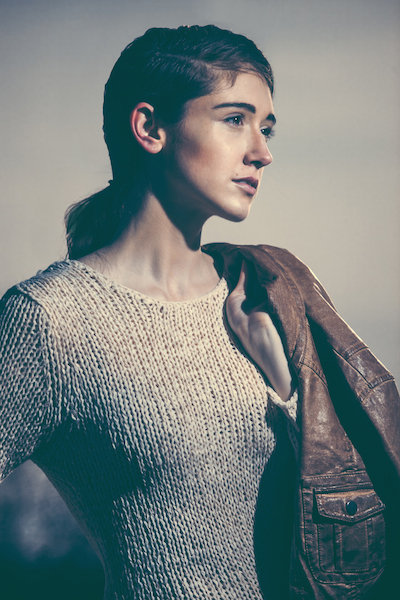
Raw image unlit

HSS2

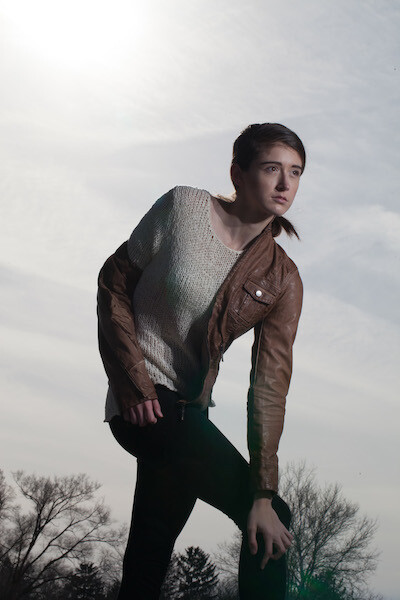
Raw image, 1/8000 @ f/2.8

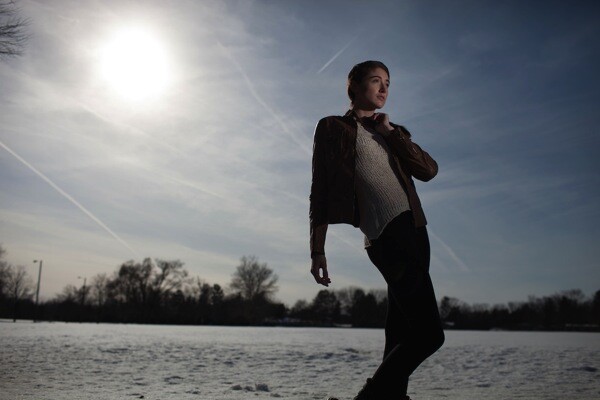
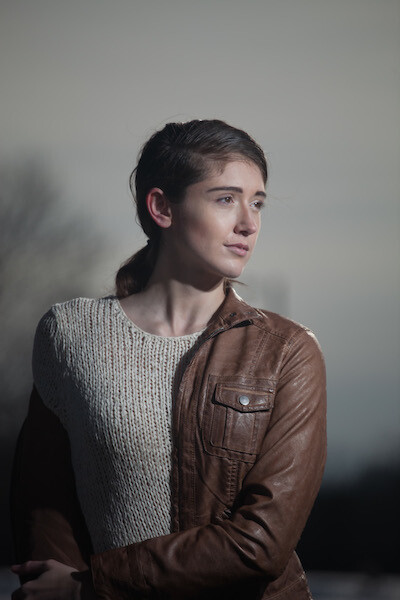
I recently decided to compare HSS against using a variable neutral density (ND) filter. ND filters screw on to your lens and cut down the light that hits the sensor, thus allowing for a wider aperture in bright light. This allowed my shutter speed to stay at or below the sync speed cutoff, allowing the full strength of the Speedlite to light my subject. This meant that I wouldn’t need to transmit ETTL information (sell the RadioPoppers) and it meant that I would need fewer Speedlites (less batteries).

After setting my ISO as low as it would go (50), my shutter speed as high as was allowed (1/200th on the Canon 5D MarkII), and my Speedlites at their full output, I dialled down the variable ND until the ambient light perfectly balanced with the light from the flash.
ND1

Raw image unlit

ND2

Raw image, 1/200 @ f/4

Some people have pointed out that there could be the issue of a color cast with certain brands of ND filters. I have not experienced any issues with the ProMaster brand. However, it’s important to keep in mind that if you are shooting directly in to the sun, there will likely be glare in your image, causing a possible color cast or the image to appear washed out.

Note that this experiment was done using Canon 430EX Speedlites with RadioPopper PX triggers. I’ve since sold them all, opting for the cheaper, sturdier and more powerful LumoPro LP180 with PocketWizard PlusX triggers. Now with one bare bulb flash, and a variable ND filter, I can effectively cut the ambient light while fully lighting a subject at f/1.4 in full sunlight.

The post High Speed Sync Versus a Neutral Density Filter to Overcome Bright Sunlight in Portraits by Nick Fancher appeared first on Digital Photography School.


Digital Photography School

 
Comments Off on High Speed Sync Versus a Neutral Density Filter to Overcome Bright Sunlight in Portraits

Posted in Photography


10. September 2014

11 Sep

Ein Beitrag von: Corinna Dumat

Die Rückenansicht einer Frau


kwerfeldein – Fotografie Magazin | Fotocommunity

 
Comments Off on 10. September 2014

Posted in Equipment


Ricoh surfs into action camera market with WG-M1

11 Sep

Ricoh is entering the choppy waters of the action camera market, which is currently dominated by GoPro. The company isn’t truly a newcomer into the rugged market, as it has been making rugged cameras for many years. The WG-M1 is a 14MP camera that can dive up to 10m underwater, be dropped from 2m, and function at temperatures as low as -10C – all without a housing. The WG-M1 sports a 14MP CMOS sensor, super-wide lens with a 160° field-of-view, 1.5″ LCD, 1080/30p video, and Wi-Fi. Naturally, mounts for nearly every purpose will be available.

Articles: Digital Photography Review (dpreview.com)

 
Comments Off on Ricoh surfs into action camera market with WG-M1

Posted in Uncategorized


10 September, 2014 – Beta Testers Needed

11 Sep


Once in a while a new and different program comes along in the photography field that gets our attention.  One in particular is Mylio.  Previously in the post we were helping them get 100 Beta Testers.  Mission Acomplished.

It only took a few hours but the 100 Beta Testers have been signed up.  Watch here for an announcement when the next wave of Bata Testers will be announced.


The Luminous Landscape – What’s New

 
Comments Off on 10 September, 2014 – Beta Testers Needed

Posted in News


Inky’s Giga Bundle: $4,816 Worth Premium-Quality Resources for Only $69

11 Sep

Do you remember InkyDeals? We tell you about them every time they have some amazing design and photography deal worth sharing. This time InkyDeals came up with Giga Bundle that includes vector illustrations, t-shirt designs, high-quality textures, Photoshop brushes, video tutorial for creating an old retro-style countdown timer, and 9 responsive premium Bootstrap 3 templates. Awesome Deal For Photographers As Continue Reading

The post Inky’s Giga Bundle: $ 4,816 Worth Premium-Quality Resources for Only $ 69 appeared first on Photodoto.


Photodoto

 
Comments Off on Inky’s Giga Bundle: $4,816 Worth Premium-Quality Resources for Only $69

Posted in Photography