RSS
 

Archive for September, 2014

16 September, 2014 – Photokina 2014 Report – Day 1

17 Sep


Every two years the world’s largest photographic trade show takes place in Cologne, Germany. This year Michael and Kevin are in attendance and will be reporting on those things that they saw of greatest interest to them, and hopefully to you as well.

We will not be reporting on many mainstream items for two main reasons. One, they are being covered very well elsewhere, and two, for the most part that aren’t that exciting – al least not to us.

Click here for our first day report, images and video coverage.


Our friend, Sean Reid of Reidreviews, a subscription site, has just published the web’s first in-depth review of the new Leica X.


The Luminous Landscape – What’s New

 
Comments Off on 16 September, 2014 – Photokina 2014 Report – Day 1

Posted in News


Gefallen an Banalitäten und Unordentlichem finden

17 Sep

„Fotografieren heißt Bedeutung verleihen”, schrieb Susan Sontag über die Fotografie. Brad McMurray verleiht scheinbar Banalem Wert und fordert die Betrachter heraus, geduldig hinter die Fassade des ersten Eindrucks zu blicken.

Der Bildermacher beschreitet den aus der Straßenfotografie wohlbekannten humoristischen Weg, das Offensichtliche ohne Schnickschack zu fotografieren – und konfrontiert einen mit der schieren Unmöglichkeit des Vorgefundenen. Er kommt derweil ohne die Anwesenheit von Personen aus und konzentriert sich auf Architektur und recht häufig unfreiwillig chaotische Landschaftsgärtnerei.

„Wie ist denn das passiert?” Wenn der Vorhang gefallen ist und die Absicht hinter der Aufnahme blitzartig klar wird, bleibt einem fast nichts anderes mehr übrig, als wohlwissend zu schmunzeln. McMurray nimmt nichts vorweg, sondern überrascht mit einem wohldosiert komischen Charme, der leicht an William Eggleston erinnert.

Blick in diverse Formen von trockenen Büschen und Ästen.

Selbstportrait des Fotografen in Form eines Schattens.

Alte Gebäude in rot.

Schatten eines Baumes auf einer Wand.

Ein Zaun, der ausgesägt werden musste, weil ein Baum hinübergewachsen ist

Eine fast durch und durch weiße Straßenecke.

Blick auf Zaun und Wohnwagen.

Ein Luftballon sitzt auf einer stacheligen Pflanze

Zwei seltsam anmutende Büsche vor einem Haus.

Ein komisch geschnittener Busch.

Eine Hauswand von roten Sonnenstrahlen bemalt.

Eine Hauswand von roten Sonnenstrahlen bemalt.

Schiefer Zaun vor Wand, auf der ein Strand aufgemalt wurdde.

Seitenblick auf ein rotes, altes Auto.

In einer Nachricht an mich skizzierte McMurray seinen gestalterischen Ansatz wie folgt:

Meine Arbeit beleuchtet das Normale und Gewöhnliche in dieser Welt. Ich denke, dass kein Thema derart mit Bedeutung aufgeladen ist, wie dieses. Ja, es ist möglich, Gefallen an Banalitäten und Unordentlichem zu finden.

McMurray schreibt mir weiter, dass er vorgefundenen Formen visuellen Sinn geben wolle – und die Kamera dazu das passendste Werkzeug sei. Er vertraue darauf, dass das Geheimnis und die Poesie von alleine folgen. Dies verleiht seinen Bildern einen minimal romantischen Unterton, der sich in Aufnahmen versteckt, bei denen diffuses Licht und sanfte Farben den Ton angeben.

Ich würde McMurrays Dokumentation die Zuordnung „intelligente Fotografie” geben. Weshalb? Weil er den Mut hat, wohltuend zurückhaltend zu kommunizieren. Und das gerade in einer Zeit, in der Photoshop dominiert und die lautesten Arbeiten hervorstechen, um nach Aufmerksamkeit zu heischen.


kwerfeldein – Fotografie Magazin | Fotocommunity

 
Comments Off on Gefallen an Banalitäten und Unordentlichem finden

Posted in Equipment


Beginner’s Guide to Tripods

17 Sep

The lowly tripod – the unsung hero behind so many fantastic shots – finally gets its day in the spotlight here on dPS.

Do you want to photograph the stars? You’ll need a tripod. Want to get silky smooth waterfall photos? Yep tripod again. Need to photograph an HDR to extend the dynamic range of your scene? Oh yes, tripod required there too.

Basically, if you want to do anything more than point and shoot, you’ll need to bring your three legged friend along with you.

beginners-tripods

I’ve decided to write this article in a way that assumes you’re just starting out with your journey in photography. So for those of you who have spent some time getting to know your tripod and how to use it, please feel free to add your own advice to the comments section below.

Buying the right tripod

A tripod allows you to frame a shot exactly how you want, and keep it there indefinitely. This allows you to take long exposures, use heavy lenses without straining your arms, or compose the same scene with different subjects in order to photograph it later. All tripods are essentially the same – three legs meeting at a center-point that supports your camera. However, all tripods are not created equal.

Buying the right tripod can be a challenge, one that can easily cause you to give up, head to your local big box store, and by the first $ 30 dollar option you see on the shelf. This is not the best idea, especially since you’ve spent good money on that camera body and lens you’re trying to support. Would you trust a $ 30 plastic tripod to hold your camera steady for a shot like this? I know I wouldn’t.

sturdy-tripod-must

In general you want a tripod that’s strong enough to support your camera, light enough to carry with you wherever you go and affordable enough to not break your budget. Here’s some simple pointers to help get you started:

  1. Know what you need: For working in the studio weight and a compact height won’t be so important, but for landscape and travel you’ll want something light enough to hike with, and compact enough to fit in your luggage.
  2. Aluminum or carbon fibre: If you’re on a tight budget, or won’t be doing many rigorous activities with your tripod, then aluminum will be your go-to as it’s more affordable, but still offers great support. Carbon fibre will set you back a bit more than its aluminum counterpart, but it offers a huge benefit in terms of strength to weight ratio, so it’s ideal for the landscape photographer – especially those intending on more rigorous travels.
  3. Tripod heads: I’ve always been a fan of ball heads and honestly haven’t used anything else. They are often less expensive then the more feature packed options, and are smaller, lighter, and allow you to frame your shot quickly and easily.

Got any more buying tips? Share them below!

Using a tripod

In this video I share some basic tips on how to set up a tripod in various situations to get the best shots every time. I’ll talk a bit more about various setups below the video as well.

Low angle perspective

Many tripods offer the ability to get very low to the ground, which is a great way to change the perspective of a scene to create interest. If this is the sort of thing that you’re looking to do, make sure when you’re comparing tripod options that you pay attention to the minimum height specifications.

low-angle-perspective

When height is needed

When you’re looking to add height to the tripod remember to keep a few things in mind. As I mentioned in the video above, always extend your legs from the widest segment first, as these will offer more support than the smaller legs and always use your center column as a last resort. Finally, something I didn’t mention in the video but that’s also very important, is that weighing down your tripod can really help quite a bit when you’re out shooting on a windy day. You can either carry a sandbag with you, or simply use your camera bag if you’ve got a couple of heavy lenses or bodies inside.

When you’re on a tricky landscape

Finally, using a tripod on a tricky landscape like a hillside or staircase is something that takes a bit of planning. Each leg of the tripod will likely have to be extended to a different length, and positioned at a different angle, but the goal is to have your center column (and thus your center of gravity) aligned evenly between the three legs, and perfect straight up and down. This will give you the most support, and allow you the most freedom to frame your shot.

Throw it all out the window

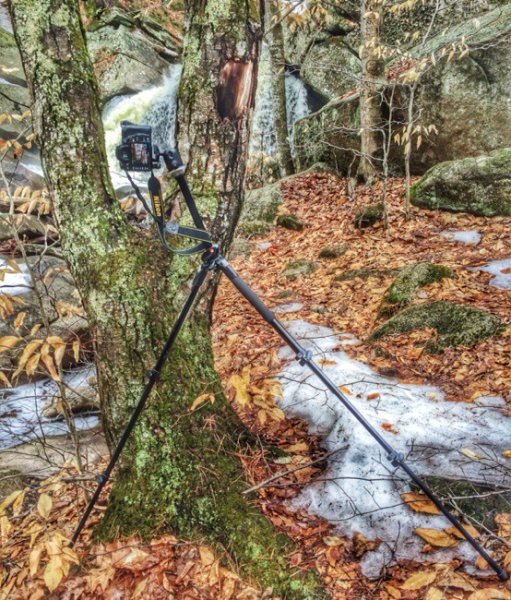
Of course there are times when you just have to throw everything mentioned here out the window ,and do what you have to do to get the shot. As an example I’ll show you a shot I made earlier this year at Trap Falls, framing the waterfall inside of a Y-shaped tree.

trap-falls-framed

The tree is on a hill, and the base of the Y was a bit too high for my tripod fully extended, which meant that I needed to use every bit of the tripod to its full potential.

As you can see in the behind the scenes photograph below, the center column is extended well beyond what I’d consider an ideal situation. I wouldn’t necessarily call this setup stable, but it did allow me to get the shot I wanted. So like everything in photography, just because there are rules that you should follow whenever you can, if there’s a shot you can’t get by following them, but think you can get it safely by bending the rules a bit, then by all means go for it.

20140411-125515

Note: This is not a mysterious two legged tripod – the third leg is hidden behind the front leg due to the perspective of the shot.

The post Beginner’s Guide to Tripods by John Davenport appeared first on Digital Photography School.


Digital Photography School

 
Comments Off on Beginner’s Guide to Tripods

Posted in Photography


Urban Glider: Compact Portable Electric Unicycle for Cities

17 Sep

[ By WebUrbanist in Technology & Vehicles & Mods. ]

urban glider design crowdfunding

Light, small and surprisingly fast, this single-wheeled cycle is designed to let you zip around cities, then stop and pick it up like a suitcase when you arrive at your destination – a sweet last-mile solution for urban commuters and travelers.

unicycle electric personal vehicle

The Urban Glider uses a gyroscopically-stabilized electric mono-wheel to help you stay upright as you stand on footplates straddling the sides of a central 16-inch wheel.

urban glider prototype concept copy

Leaning back lets you slow, stop or reverse while leaning forward engages the engine in that direction, and tilting to either side allows you to turn using intuitive movements.

urban glider colors

The convenient size of the device means you don’t have to worry about parking or locking up your car, scooter or bike. And unlike other small-scale solutions, you also do not need to switch out blades or skates for shoes between uses.

unicycle city street sidewalk

Hopping from the glider to other transit is also simple, since you can carry the 24-pound vehicle onto buses, trains or planes.

urban glider design

unicycle urban glider design

With a top speed of around 13 miles per hour you won’t be breaking any records for velocity, but can get places much faster than you would be able to on foot.

The battery is designed to last for up to 6 hours of use and can be charged in last than 30 minutes. Currently, crowdfunding on Kickstarter is paused but the company seems adamant about making a go of this personal vehicle one way or another. The Urban Glider is set to retail for $ 1200 – expensive on some metrics, perhaps, but fairly cheap as short-distance electric transit goes.

Share on Facebook


[ By WebUrbanist in Technology & Vehicles & Mods. ]

[ WebUrbanist | Archives | Galleries | Privacy | TOS ]


WebUrbanist

 
Comments Off on Urban Glider: Compact Portable Electric Unicycle for Cities

Posted in Creativity


Olympus shows ‘Open Platform’ Micro Four Thirds camera module

16 Sep

Olympus is using Photokina to show a prototype ‘Open Platform’ camera module. Developed with the MIT Media Lab, the module is a Micro Four Thirds compatible unit that can be controlled from a smart device. Like Sony’s QX series, the Olympus has its own shutter button but it also offers a hotshoe an is built around a more open software platform to allow developers to create apps to control it.

Articles: Digital Photography Review (dpreview.com)

 
Comments Off on Olympus shows ‘Open Platform’ Micro Four Thirds camera module

Posted in Uncategorized


Photokina 2014: Nikon stand report

16 Sep

We swung by Nikon’s Photokina 2014 stand to see the new D750 in action and investigate what else they have in store for show attendees. The booth itself is a bit less flashy than some of the competitions, and distinctly lacking in cars and ladies wearing sequins, but that doesn’t mean that it doesn’t make an impression.

Articles: Digital Photography Review (dpreview.com)

 
Comments Off on Photokina 2014: Nikon stand report

Posted in Uncategorized


Paramount, Loop & Rembrandt Lighting

16 Sep

Image from Alana Tyler Slutsky's Surrealia series featured on Fashion Photography Blog (FashionPhotographyBlog.com)PARAMOUNT, LOOP & REMBRANDT LIGHTING

Hello FashionPhotographyBlog.com readers!

So.. I suppose this time around we’ll get into the long awaited Light – Part III posts.  (If you haven’t read Light – Part I or Light – Part II, check them out!)  Part III will cover basic lighting techniques ever photographer should know.  Today we’ll cover three of the six big, basic lighting techniques.

Before we can get to the meat of it.. First, the boring technical part:

Light is metered in f/stops.  F/stops in light are opposite of how you’re used to thinking of them as they relate to aperture.  (This will be confusing for a minute, just bear with me.)  In a camera, f/1.4 lets a lot of light in, f/22 is a relatively small aperture which doesn’t allow much light to pass.  In lighting, the larger the nbumber, the brighter the output of light.  A light reading f/11 is extremely bright compared to f/4.  How does this make sense?  Instead of thinking of them independently, think of how light meter readings and aperture work together.  If a light is extremely bright, your aperture should be stopped down to avoid over exposure.  While f/11 is a bright light, it’s a smaller aperture opening, making the image properly exposed.

Now on to the fun part!

LIGHTING TECHNIQUES

The order in which these techniques are listed easily transition into each other.  If you want to learn different lighting styles, give them a try!  Follow the order of the list and it will be easy to move between them.

Butterfly Lighting: Butterfly lighting is commonly called “Paramount lighting.”  The reason for this being that Paramount Pictures (yes, the movie company) used this as their signature lighting style when it came to shooting their leading ladies.  The name “butterfly light” is derived from the shadow that falls under the nose which resembles a butterfly.

True Paramount lighting example featured on Fashion Photography Blog (FashionPhotographyBlog.com)

True 'Paramount' lighting

To achieve this type of lighting, place the light high and directly in front of the face.  (Because the light is directly in line with the face, it works best when putting your light on a boom.)  Butterfly light is typically a more feminine lighting and when used properly, it will accentuate high cheekbones.  *Be cautious of subjects with hallow or deep eye sockets – when the light is placed high, if your subject has deep eye sockets there will be no light in their eyes.*

Paramount lighting example featured on Fashion Photography Blog (FashionPhotographyBlog.com)

Take notice – if the light is high enough, it will cast a shadow under the eye from the eyelashes. (It's exaggerated in this image with the extreme fake lashes)

Butterfly lighting diagram as featured on Fashion Photography Blog (FashionPhotographyBlog.com)

Butterfly Lighting Diagram

Loop Lighting: To achieve, place your key light slightly to the side of the subject so the shadow under the nose becomes a small loop. Butterfly lighting can easily be transformed into loop lighting by lowering the light and slightly moving it over. This type of light works best with average, oval-shaped faces.  *The loop shadow will never merge with the shadow on a cheek. This creates a new lighting technique called “Rembrandt Lighting.”*

Loop lighting example featured on Fashion Photography Blog (FashionPhotographyBlog.com)

Notice that the nose shadow never touches the cheek shadow

Loop lighting diagram as featured on Fashion Photography Blog (FashionPhotographyBlog.com)

Loop Lighting Diagram

Rembrandt Lighting: Rembrandt lighting gets it’s name from the lighting in Dutch painter Rembrandt van Rjin’s paintings, who used skylights and high-up windows to illuminate his subjects.  This became a very common light pattern in his paintings.  This lighting technique is known for creating a triangle of light on the subjects cheek.

Rembrandt self portrait as featured on Fashion Photography Blog (FashionPhotographyBlog.com)

Rembrandt's Self-Portrait

To create a small triangle of highlight on the shadowy cheek, place the key light farther to the side of the subject than it is in the loop lighting scenario.  The light is going to almost be coming off a bit to the side of the subject and slightly above eye level (however, this depends on how their head is placed.)  You may have to play around and move the light closer to the subject in order to get a nice, strong Rembrandt light.  This is a highly flattering lighting technique that can be used on almost anyone!

Rembrandt lighting example as featured on Fashion Photography Blog (FashionPhotographyBlog.com)

Rembrandt lighting!

Rembrandt lighting diagram as featured on Fashion Photography Blog (FashionPhotographyBlog.com)

Rembrandt Lighting Diagram

Check in tomorrow for the other three basic lighting techniques – split, broad and short lighting.

Alana


IMAGE SOURCE:

Feature image & image 1: photography by Alana Tyler Slutsky from her Surrealia series. To view the rest of the photos from this series visit her website.

Image 2-9: Alana Tyler Slutsky


Fashion Photography Blog

 
Comments Off on Paramount, Loop & Rembrandt Lighting

Posted in Uncategorized


10 Must-Have Camera Settings for Concert Photography

16 Sep
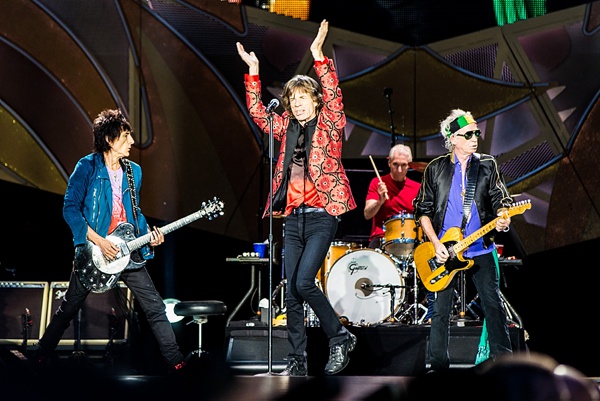
The Rolling Stones

The Rolling Stones: Nikon D800, 185mm at f4, 1/320, ISO 1600

The correct camera settings are key to getting awesome concert photos in low light situations. Maybe you were in this situation before. You used the full automatic mode in front of the stage and – BAM- the little flash monster sitting on top of your camera pops up and throws the ugliest light you can think of onto the singer’s face. At this point, a lot of frustrated concert photography beginners just take their cameras home and never shoot a concert again. But wait, in this article I’ll share the camera settings I use all the time during concert shoots and I promise they’ll help you to immediately boost your career as concert photographer. Let’s start.

1) Aperture Priority Versus Manual Exposure Mode

I started off using aperture priority mode; you tell your camera the aperture you want to use and the camera sets the shutter speed accordingly. This is a great option for a beginner to use, because you’ll be stressed enough with all the other things going on around you. However, I soon recognized that only manual mode would give me the flexibility I was looking for. I set aperture, shutter speed, and ISO and then change them on the fly using the internal exposure bar in the viewfinder. I am constantly checking my LCD screen and have a look at the histogram to see if my exposure is correct.
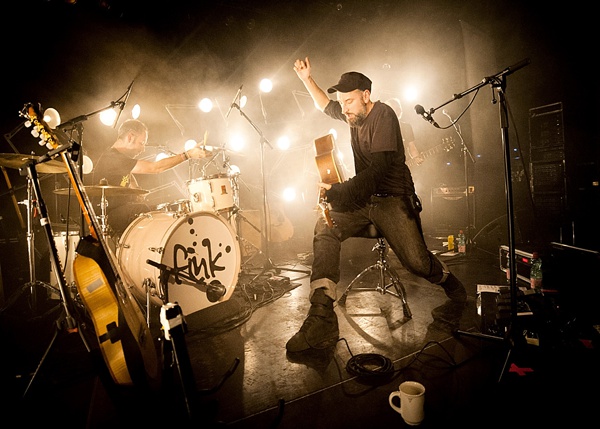
Fink

Fink: Nikon D700, 14mm at f/2.8, 1/200, ISO 3200

2) Use the Lowest Aperture Number

When deciding which lenses will work best for concert photography, you’ll always come to the same conclusion: use fast lenses and shoot them wide open. Set your aperture to the smallest number on your lens e.g. f/1.8 (which reflects a big aperture). This allows the most possible light to enter your sensor and is a must-have setting in ultra low-light stage conditions. The best zoom lenses have an aperture of f/2.8, the best prime lenses f/1.4 or f/1.8. For Beginners on a budget I suggest to get a 50mm f/1.8, which is cheap and therefore a no-brainer for concert photography.

3) Use a Fast Shutter Speed

Have you ever been on a concert where the artist was hyperactive jumping from one side of the stage to the other? To freeze these movements you have to use a fast shutter speed. In general, I set my shutter speed at 1/200sec and faster. Otherwise you risk blurred photos.
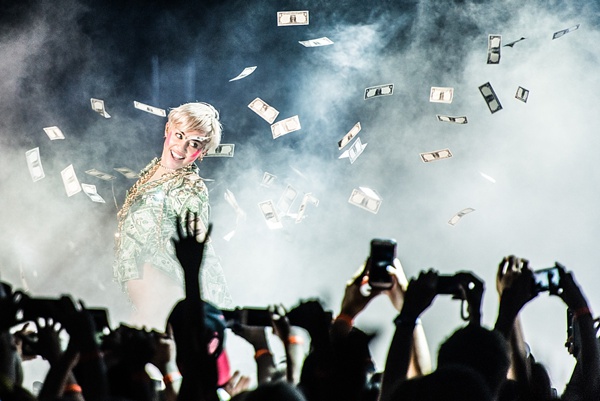
Miley Cyrus

Miley Cyrus: Nikon D800, 340mm at f/4.8, 1/320, ISO 1600

4) High ISO Values

ISO or film speed refers to the sensitivity of an analog film. Today the term is used for the sensitivity of your digital sensor. The higher the ISO setting the less light is needed for a proper exposure, but the more noise you will encounter in your pictures. Depending on the ability of your camera a good starting point for ISO is a setting of 1600. If my shutter speed is too low, I will crank up the ISO setting to 3200 or 6400.

5) Spot Metering

Set your camera’s internal light meter to spot metering. This takes a light reading limited to the center of your viewfinder (a very small percentage, and some cameras allow you to choose where to meter – check your manual). When shooting concerts, you will often find yourself in a situation where the artist is lit by a spotlight and the rest of the stage is almost dark. When using spot metering mode, place the artist’s face in the middle of your viewfinder and you’ll get the right exposure for it. When using the Matrix (or evaluative) metering setting, the camera will take a light reading at several points in the scene and you’ll probably get overexposed faces if the background is dark.
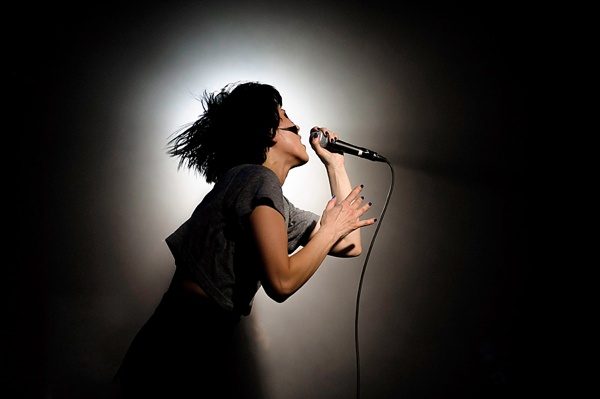
Atari Teenage Riot

Atari Teenage Riot: Nikon D700, 50mm at f/1.8, 1/2500, ISO 1600

6) Use the Middle Autofocus Point

On your camera, only use the central focus point in low light situations. This will be the most accurate one. If you don’t always want to have the artist in the middle of the frame, you have to recompose. Simply push your shutter button halfway down to focus on the artist’s face. By holding the shutter button halfway down you lock focus. Now move your viewfinder until you get the desired framing and push the shutter button fully down.

To use this technique, you have to set your camera to Autofocus single (AF-S for Nikon, One Shot for Canon) mode, otherwise the camera focuses continuously while you’re reframing your picture. You can also set the AF-ON button to focus, which I prefer.

7) Use Auto White Balance

I use the auto white balance setting on my camera. The reason being is that I shoot in RAW format and can therefore adjust the white balance setting in post-production anyway.
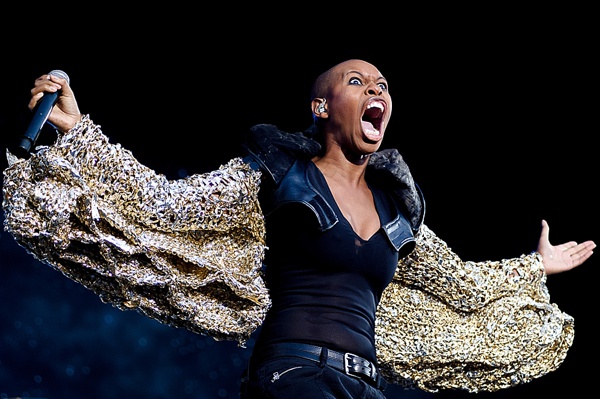
Skunk Anansie

Skunk Anansie: Nikon D700, 85mm at f/3.5, 1/500, ISO 1600

8) Multiple Shot (Burst) Mode

Set your camera to multi-shot mode (may be called High Speed shooting mode). It allows you to rapidly shoot three to four photos in a row (depending on the frames per second of your camera model. It’s more likely that at least one of the four photos is tack sharp whereas the others might not be in focus.

9) Never Use Flash

First, you are not allowed to use a flash in concert photography. Imagine ten photographers burst their flashes at the same time. This would be quite annoying for the artist. Second, straight flash pictures don’t look awesome.
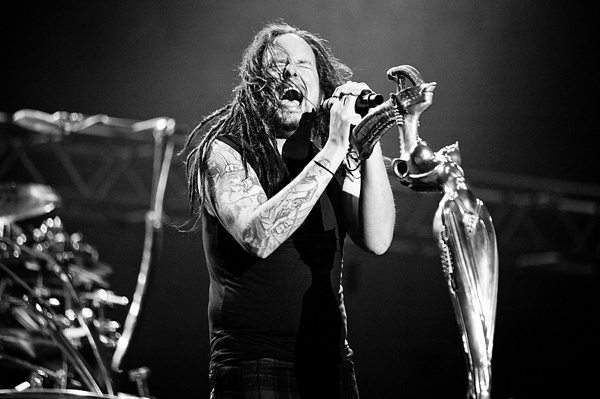
Korn

Korn: Nikon D700, 130mm at f/2.8, 1/250, ISO 3200

10) Shoot in Raw Format

Always shoot concerts in RAW format. If you shoot in JPEG mode, the internal camera computer adds contrast, saturation and sharpness to your photos. These files look great when you open them on your computer, but don’t leave much freedom in post-production. If you shoot in RAW format, the camera does not process the photo at all. The advantage is that you can change parameters like exposure, white balance, saturation, contrast, clarity and so on afterwards.

Here is a summary of my ten must have camera settings:

  1. Use manual exposure mode
  2. Use your lowest aperture number
  3. Use fast shutter speeds
  4. Use high ISO values
  5. Use spot metering
  6. Use your middle autofocus point
  7. Use the auto white balance setting
  8. Use burst mode
  9. Never use flash
  10. Shoot in RAW format

With these camera settings you will be able to get great results when shooting in low light conditions such as concerts.
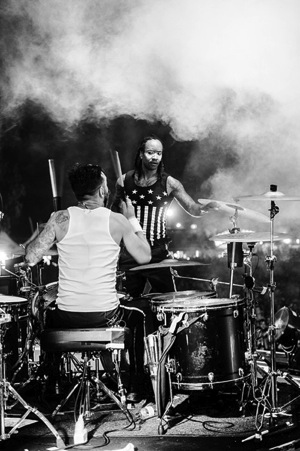
The Prodigy

The Prodigy: Nikon D800, 85mm at f/1.8, 1/320, ISO 1600

Zola Jesus

Zola Jesus: Nikon D700, 50mm at f/1.8, 1/200, ISO 1600

Being a concert photographer can be tough. There are a lot of industry secrets that nobody is talking about and it took me almost six years to reveal them.

So I decided to write the Guide to Rockstar Concert Photography which is a step-by-step guide which will provide you with all the information necessary from shooting your first concert, learning which camera gear and settings you need, how to build an awesome portfolio, understanding the rules of the photo pit, getting signed by magazines, shooting exclusively for your favorite bands, and making money with your work.

This guide is available for the first and only time at SnapnDeals at a 50% off discount to help you getting started to become a Rockstar Photographer too.

The post 10 Must-Have Camera Settings for Concert Photography by Matthias Hombauer appeared first on Digital Photography School.


Digital Photography School

 
Comments Off on 10 Must-Have Camera Settings for Concert Photography

Posted in Photography


Stadt am Rand

16 Sep

Ein Beitrag von: Ben Kuhlmann

Gewohnheit kommt von Wohnen, Wohnen vom Gewohnten.

Mit diesem Zitat von Gert Selle aus seinem Buch „Die eigenen Vier Wände“ (Form+Zweck Verlag, 2011) begann mein Interesse am Alltäglichen, dem wir in unserem Leben wenig Bedeutung zuschreiben.

Seit Urzeiten wohnen wir Menschen in den unterschiedlichsten Formen. Das Wohnen beschreibt eine gewöhnliche Handlung, der eigentlich schon immer dasselbe Muster zugrunde liegt.

Blick auf eine Plattenbausiedlung am Abend, am Himmel die Mondsichel

Ein Wandschrank in einem WohnzimmerEine ältere Frau sitzt in ihrem Wohnzimmer

Die eigenen vier Wände dienen uns seit jeher als Rückzugsort und Festung zugleich. Diesem banal anmutenden Schema habe ich in meiner Bachelorarbeit besondere Aufmerksamkeit geschenkt.

Wir alle sind neugierig, wie ein anderer wohnt und versuchen immer wieder Einblicke in verschiedene Wohnformen zu erhaschen. Dazu muss man nur einen Blick auf das Mittagsprogramm im Fernsehen werfen.

Wohnblock in einer Plattenbausiedlung, im Vordergrund eine Rutsche im Sandkasten

Ein Kühlschrank steht in einer Ecke am FensterEin junger Mann sitzt auf dem Sofa in seinem Wohnzimmer

Reality-TV spielt oft in Eigenheimen unterschiedlichster Form, sei es Wohngemeinschaft, sozialer Wohnungsbau oder Luxusvilla.

Allen Fernsehformaten ist gemein, dass sie zum einen unseren Voyeurismus befriedigen und uns zum anderen zeigen, wie ein jeder nach Individualität strebt und sich seine „Höhle“ nach den eigenen Wünschen und mit den ihm zur Verfügung stehenden Mitteln gestaltet.

Blick auf einen Wohnblock hinter Bäumen

ein Wandschrank und zwei schwarze SesselEine junge Familie auf dem Sofa in ihrem Wohnzimmer

Wie aber sieht das in solchen von außen gesichtslos anmutenden Großwohnsiedlungen an der Peripherie unserer Städte genau aus?

Dieser Frage bin ich in meiner Abschlussarbeit nachgegangen und habe exemplarisch vier deutsche Städte im Norden, Osten, Süden und Westen der Republik besucht, um das Leben und Wohnen dort zu dokumentieren.

Meine Aufnahmen aus Bremen, Jena, München und Köln kombinieren die äußerliche Verdichtung mit dem nüchternen Blick in die Innenräume. Die Monotonie der äußeren Fassaden habe ich in der konsequenten Bildsprache der Innenaufnahmen versucht fortzusetzen. Einzig der Mensch mit seinen Interessen und Geschmäckern ist das Element, das sich in diesem Quadrat jeweils ändert.

Blick auf eine Hochahaussiedlung am Stadtrand

Ein Wandschrank in einem WohnzimmerEine ältere Dame mit ihren zwei Schoßhündchen auf einem Sofa mit Leopardenmuster

Bei meinem Vorhaben erwies sich die Türschwelle auch gleichzeitig als Hemmschwelle. es war nicht einfach, als Fremder mal eben in die angesprochene „Festung“ zu gelangen.

Man möchte sich mit seiner Zimmerdekoration präsentieren, jedoch nur gegenüber Freunden und Bekannten und nicht gegenüber fremden Neugierigen oder gar potentiellen Dieben.

Ähnlich wie die Facebook-Pinnwand, die man vielleicht als modernes Wohnzimmer betrachten kann, so hängen in den realen Wohnzimmern Bilder von Familie und Freunden an der Wand, in den Fotoalben im Wandschrank finden sich Bilder der vergangenen Urlaubsreisen.

Blick aus einem hohen Geschoss hinaus auf einen Wohnblock

Ein Medien- und Bücherregal in einem WohnzimmerEin älterer Herr auf dem Sofa in seinem Wohnzimmer

Das Wohnzimmer gibt Hinweise auf die Interessen und Persönlichkeit seiner Bewohner. Ähnlich wie die Präsentation also, wie wir sie im Internet sehen – nur eben analog.

Der Titel meiner Arbeit spielt zum einen mit dem gängigen Klischee sozialer Randlage, genauso wie mit der Lage dieser Orte an der städtischen Peripherie.

Blick über den Rasen auf eine Fluchttür in einer Wohnsiedlung

Wandschrank in einem WohnzimmerEine Famile auf dem Sofa in ihrem Wohnzimmer

„Stadt am Rand“ zeigt Menschen und Wohnformen fernab gängiger Klischees wie sie beispielsweise der Rapper Sido in seiner Hymne „Mein Block“ über das märkische Viertel beschreibt.

Für mein Projekt konnte ich einige wunderbare, offene und interessante Menschen begeistern, die einen Einblick in ihre eigenen vier Wände gewährt haben.


kwerfeldein – Fotografie Magazin | Fotocommunity

 
Comments Off on Stadt am Rand

Posted in Equipment


Photokina 2014: Canon stand report

16 Sep

Canon’s Photokina stand is popular as always. The company is eager to show off its EOS 7D Mark II to Photokina attendees, and the public in turn turned out to give the camera a try judging by the crowds at the booth. We took our turn handling the 7D II and checked out the booth.

Articles: Digital Photography Review (dpreview.com)

 
Comments Off on Photokina 2014: Canon stand report

Posted in Uncategorized