RSS
 

Archive for September, 2014

22 September, 2014 – Leica and Fuji Video Interviews Concluded

22 Sep

 UPDATE: We now have completed the upload of Part 2 of the Leica video interview and also Part 2 of the Fuji video Interview.  We apologize for the delay, but our Cologne hotel’s Internet service had bandwidth limitations.


The Luminous Landscape – What’s New

 
Comments Off on 22 September, 2014 – Leica and Fuji Video Interviews Concluded

Posted in News


Mit Schmetterlingen im Bauch

22 Sep

Der 28-jährige Australier Joe Nigel Coleman feiert das Leben. Und das, ohne mit seinen Bildern in die billig-kitschige Glorifizierung zu verfallen, die man gerade bei Naturaufnahmen häufig zu sehen bekommt. Dafür sind die Bilder des Fotografen zu eigenständig.

Die Fotografie sei für ihn die Möglichkeit, das Leben um ihn herum aufzunehmen und das nicht notwendigerweise so, wie es ist, sondern, wie er es sieht – oder sehen will. Coleman ist sich der leichten Übertreibung bewusst und führt sie noch weiter aus. Es sei eine Art romantisierte Reflexion seines Lebensstils, seiner Träume und Sehnsüchte.

Und so kreiert der Fotograf ein Portfolio, das sehr sowohl an Richard Gastons Reiseaufnahmen oder Bastian Kalous’ Polaroids erinnert. Trotzdem drückt Coleman seinen Aufnahmen einen Stempel auf, auch in physischer Form. Denn eine Vielzahl seiner analogen Fotografien ist überlagert mit Light Leaks und Spielereien, mit denen er seine Aufnahmen ziert.

Landschaft mit dramatischen Wolken.

Drachen am Himmel.

Eine Frau schaut in die Kamera.

Die Sonne erscheint am Ende des Waldes wie ein roter Punkt.

Ein Haufen Äste wird als Lagerfeuer benutzt.

Eine Person mit Rucksack, die durch ein Fenster zu sehen ist. Collage.

Zwei Bilder in einem: Ein Mann am Meer und einmal das Meer selbst.

Hunderte Vögel versammeln sich auf einem Felsen. Draufsicht.

Ein Mann, der beide Hände hebt und lächelt.

Spielerei mit einem Landschaftsbild.

Ein Felsen am Meer, von einem Lightleak erhellt.

Ein Lagerfeuer im Gegenlicht.

Das bewusst oder unbeweusst eingesetzte Rot, das sich in vielen Aufnahmen Colemans findet, erinnert an den Puls des Lebens, den Coleman fühlt und ein bisschen an die leidenschaftliche Eroberung der Natur. Auch, wenn die hier vorgestellten Aufnahmen auch allein für sich wunderbar funktionieren, spricht doch aus der Gesamtheit der Bildstrecke ein Coleman. Der Coleman, der sagt: „Ich war hier. Und es war gut.“

Er selbst erinnert sich noch gut daran, wie er vor einigen Jahren in einem Prager Geschäft ein paar antike Kameras kaufte. Als er die ersten Rollen Film zurückbekam, schaute er sie mit Schmetterlingen im Bauch durch, völlig begeistert von dem, was er erschaffen hatte. Diese Euphorie und Lust an der Fotografie entstammt seiner durchweg positiven Betrachtungsweise des Lebens.

Und diese ist in allen seinen Bildern wiederzuerkennen – ungeschminkt, nicht inszeniert und auch deshalb angenehm authentisch. Folgen kann man Coleman sowohl auf Facebook als auch Instagram.


kwerfeldein – Fotografie Magazin | Fotocommunity

 
Comments Off on Mit Schmetterlingen im Bauch

Posted in Equipment


The Cutest Backup Battery with 500% Power

22 Sep

Extra photos for bloggers: 1, 2, 3

People say you’re the life of the party. You’ve been known to stay out until the wee hours of hte morning, but it’s so hard to find a friend who can keep up!

The Battery Buddy is the friendly face (and high capacity power source) you need to keep you company and keep your phone charged up for adventure.

Your new friend is ready to go anytime, packing energy to charge your phone up to 5 times before needing a recharge of his own.

Photo and video your adventures without worrying about where you’ll ever find a power outlet at this hour?!

And if you make another human friend while you’re out, the Battery Buddy is cool with sharing – he’s got two USB ports!

Get to know the Battery Buddy
$ 49 at the Photojojo Shop


© Britta for Photojojo, 2014. |
Permalink |
No comment |
Add to
del.icio.us

Post tags:


Photojojo

 
Comments Off on The Cutest Backup Battery with 500% Power

Posted in Equipment


22. September 2014

22 Sep

Ein Beitrag von: Michaela Knizova

Eine Frau verheddert in Gardinen


kwerfeldein – Fotografie Magazin | Fotocommunity

 
Comments Off on 22. September 2014

Posted in Equipment


Im Gespräch mit Dhiren Babaria

22 Sep

Ein Beitrag von: Dhiren Babaria

Hallo Dhiren. Danke, dass Du Dir die Zeit für ein Interview mit uns nimmst. Zuerst, erzähl uns doch mal etwas über Dich: Wer bist Du, was machst Du?

Von der Ausbildung her bin ich Architekt und das trägt natürlich viel dazu bei, wie ich Dinge sehe und analysiere. Ich liebe den Impressionismus und finde ihn höchst inspirierend, ein bisschen hat es auch damit zu tun, dass ich im Herzen ein Romantiker bin. Was man auch in meinen Arbeiten sieht, ist, dass ich ziemlich selbstbewusst bin.

Blick durch eine Straßenschlucht in einer nächtlichen Stadt.Lichspiele in den Räumen eines Tempels.

Wie bist Du zur Fotografie gekommen und was hat Dich dazu bewegt, bei ihr zu bleiben?

Ich fotografiere erst die letzten 15 Jahre. Was mich ursprünglich zum Fotografieren brachte, war die SLR-Kamera an sich. Alle von SLRs aufgenommenen Bilder, die ich gesehen hatte, sahen unverkennbar besser aus. Also wollte ich auch solche besseren Bilder machen. Inzwischen jage ich aber ganz anderen Dingen nach. Meine Ziele haben sich verändert. Wie das berühmte Zitat schon sagt: Das Beste kommt erst noch. Meine Reise geht also weiter.

Lichtspiele in den Räumen eines Tempels.

Eine nächtliche Stadt.

Da Du von Zielen gesprochen hast: Wie würdest Du in Worte fassen, was Du zu erreichen versuchst?

Mit kreativen Medien ist es ja immer sehr schwer, messbare Ziele zu setzen und diese auch auszuwerten. Ich jage also etwas, was ich bereits sehen, aber in seiner Gesamtheit noch nicht festhalten kann. Zumindest noch nicht! Ich lebe in der Hoffnung, dass ich eines Tages an diesem Punkt ankommen werde.

Vor zehn Jahren wollte ich da sein, wo ich heute bin, aber heute wäre ich gern woanders. Ein bewegliches Ziel. Irgendwie eine großartige Tragödie.

Nachtszene mit Straßenlaterne vor einem Haus.

Nachtszene mit einer Straßenlaterne vor einem Haus.

Was sind übliche oder immer wiederkehrende Themen, die Du in Deinen Bildern behandelst und warum?

Ich würde sagen, dass mich die Natur, Architektur und Menschen am meisten interessieren. All diese Genres tauchen in meinen Bildern immer und immer wieder auf, weil sie zu einem bestimmten Teil auch eine klassische Schönheit besitzen, die zeitlos ist.

Ein anderer Faktor, der diese Teile verbindet und vervollständigt, ist die Qualität des Lichts. Ich kann das, was ich aufnehme, gar nicht von dem Licht trennen, in dem ich es fotografiere. Licht ist ein extrem wichtiges Element für mich. Ich bevorzuge es, in weichem Licht zu fotografieren, das eine schöne Harmonie in der Szene schafft.

Strukturen in einem Canyon.

Gräber unter einem großen Baum.

Erzähl uns ein bisschen was darüber, wie Du arbeitest. Planung, Fotografieren, Nachbearbeitung – was sind Deine Schritte, was ist besonders wichtig für Dich?

Normalerweise gibt es zwei unterschiedliche Arten von Projekten: Die einen sind geplant, die anderen zufällig. Erstere sind das Ergebnis eines sorgfältig geplanten Shoots und die anderen sind das Resultat meiner Reisen. Geplante Projekte brauchen oft einen großen Anteil an Zeit für Recherche im Vorhinein. Etwa, geeignete Orte zu finden, mich auf eine geeignete Tageszeit festzulegen und den Wetterbericht im Auge zu behalten.

Für die zufälligen Projekte muss ich nur meine Kamera und eine leichtgewichtige Festbrennweite im Gepäck haben. In der Nachbearbeitung ist mir auch das Sichten der Bilder und neben der Bearbeitung die Erstellung von Kandidatenlisten für ein Projekt sehr wichtig. Das ist vielleicht der schwierigste Teil meiner Arbeit, denn er erfordert, dass ich sehr objektiv auf meine eigenen Arbeiten blicke.

Landschaft mit Wiese, Bäumen und Büschen.

Landschaft mit einer wilden Wiese an einem Wandrand.

Kannst Du noch etwas mehr über diesen kritischen Teil des Auswählens sagen? Was sind Deine Gedanken dabei, welche Kriterien wendest Du an?

Als ich beschlossen hatte, meine Webseite zu veröffentlichen, habe ich mir selbst versprochen, dass alle Projekte, die ich dort veröffentliche, eine bestimmte visuelle und fotografische Qualität haben würden und alles darunter es einfach nicht ins Projekt schaffen würde. Ich fotografiere sehr viel mehr als ich zeige und so geht es wohl vielen Fotografen.

Es gibt Projekte, die nie das Tageslicht erblicken und auf dem digitalen Schneidetisch sterben. Da ist der Bezug zu unserem Gespräch weiter vorn, als es um das Auswählen von Orten und die Entwicklung von Konzepten ging. Was ich sehe und was ich versuche, festzuhalten. Manchmal sieht mein geistiges Auge ein Bild, aber ich kann es nicht einfangen. Und wenn ich es einmal schaffe, wird es ein Projekt.

Weg durch einen Wald.

Die meisten Deiner Arbeiten sind strikt schwarzweiß. Aber manchmal schleicht sich auch etwas Farbe ein. Was denkst Du über diesen Kampf?

Ich wusste, dass Du dieses Thema auf den Tisch bringen würdest! Es ist wirklich zu einem inneren Kampf für mich geworden. Ich habe eine unsterbliche Liebe für die Kunst der Schwarzweiß-Fotografie entwickelt. Wenn ich könnte, würde ich einfach alles in schwarzweiß aufnehmen, aber manchmal ist die Farbe selbst das Subjekt der Aufnahme. Ich mache nur wenige Projekte, in denen das passiert. Ab und zu taucht also etwas Farbe auf, aber mein Herz gehört der Schwarzweiß-Fotografie.

Landschaft im Nebel.

Strukturen an einem Baum und Gebüschen im Schnee.

Um Deine Bilder abschließend noch in den Kontext Deines Lebens zu setzen: Du hast erwähnt, dass Du Architekt bist, aber was noch? Familie, Jobs, andere Hobbies? Was ist Dir wichtig, was treibt Dich an?

Ich mag spazieren sehr gern, meine Freundin und ich unternehmen oft richtig lange Spaziergänge. Ich mag campen und reisen. Ich mag es, auf Nebenstraßen unterwegs zu sein. Anzuhalten und umzukehren, wenn ich eine wilde Wiese sehe oder einen Fluss fließen höre. Ich mag es, dem Licht nachzujagen. Und ich mag Jazz und gute Kinofilme.

Danke für Deine Worte, Dhiren!


kwerfeldein – Fotografie Magazin | Fotocommunity

 
Comments Off on Im Gespräch mit Dhiren Babaria

Posted in Equipment


Vandalized Villa Savoye: Imagining a Modernist Icon in Ruins

22 Sep

[ By WebUrbanist in Art & Photography & Video. ]

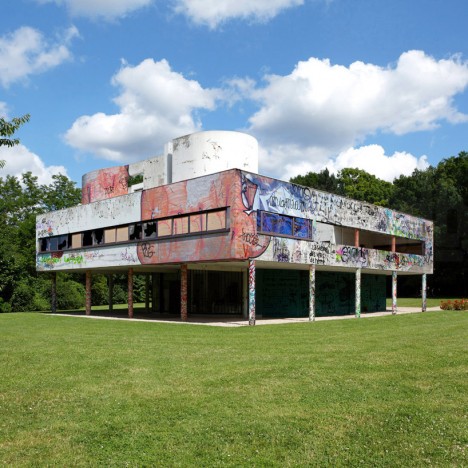
villa vandalized hacked ruined

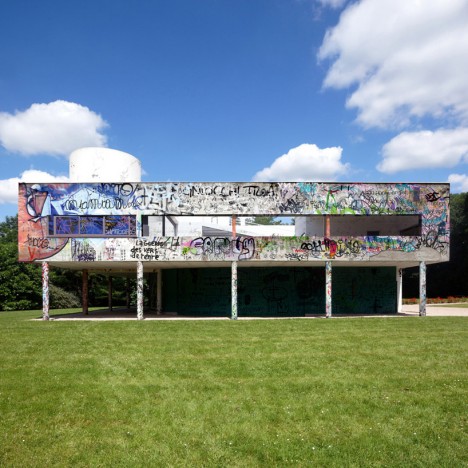
Le Corbusier’s “machine for living in” is one of the most-studied works of Modern architecture, but what would it look like if it ceased to be preserved and was left to be ransacked and ruined?

villa graffiti painted structure

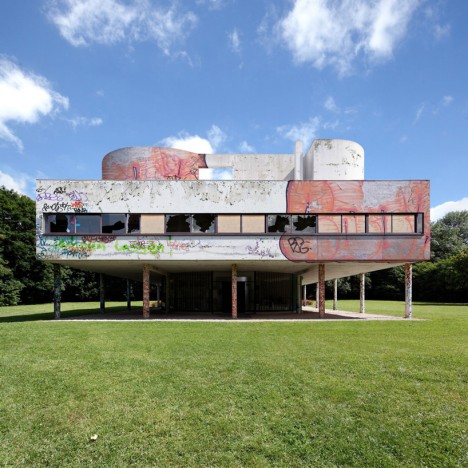
villa savoye graffiti vandalized

Artistic photographer (and photo-editor) Xavier Delory is exploring just this possibility, starting with the Villa Savoye but planning to branch out to other monumental and iconic works as well.

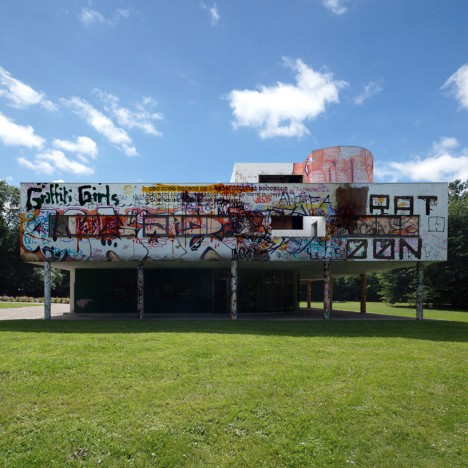
villa savoye abandoned architecture

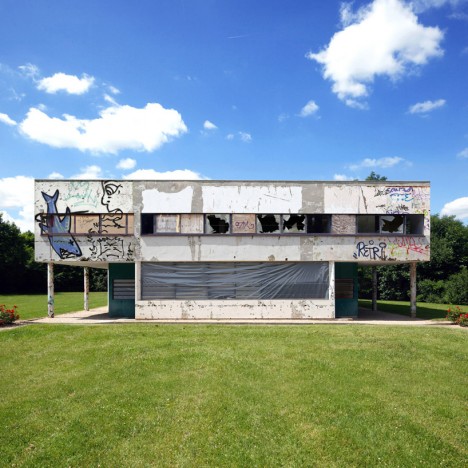
The visual devastation is breathtaking: “The ribbon windows that navigate its perimeter have been shattered, haphazard strokes of paint ornament its pilotis, and large pieces of graffiti cover its stark white free façade. The manipulations intend to make a statement about the ‘five points of architecture’, and in turn, highlight the death of modernity.”

villa modernist building destroyed

In part, he is making a point about preservation and putting architecture on a pedestal: in reality, few buildings are so carefully and lovingly maintained and restored as those few select works that make it into the history books. Indeed, in a way, these are almost architectural fictions that do not reflect ordinary realities of construction and use.

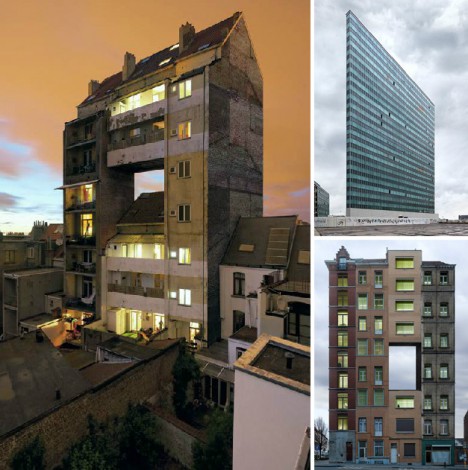
architectural facade photo edits

building facade studies

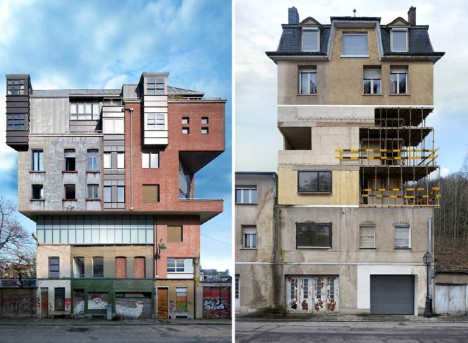
Other manipulated photo sets by Delory explore different aspects of our built environment and raise questions about contemporary cities, including a series of mixed-material structures that question our obsession with facades and the difficulty of creating variety at scale.

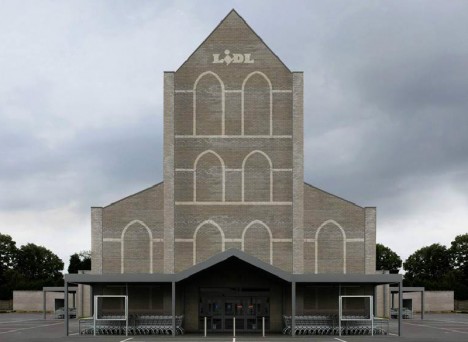
super market church

remote habitat cookie cutter

A sequence of hybrid churches-and-supermarkets examines the idolization of commercial structures (have shopping malls become our places of worship?), while a collection of rural homes sans windows and doors makes one wonder if conventional architecture does enough to integrate houses and their landscapes. For fans of faux facades, this series of dissected buildings is also well worth a look.

Share on Facebook


[ By WebUrbanist in Art & Photography & Video. ]

[ WebUrbanist | Archives | Galleries | Privacy | TOS ]


WebUrbanist

 
Comments Off on Vandalized Villa Savoye: Imagining a Modernist Icon in Ruins

Posted in Creativity


20 Tips for Photographing Historical Reenactments and Festivals

22 Sep

No matter what the season, people love to congregate in special places to celebrate or commemorate special events. Here are some tips that may help you take maximum advantage of the opportunities that festivals and historical reenactments present.
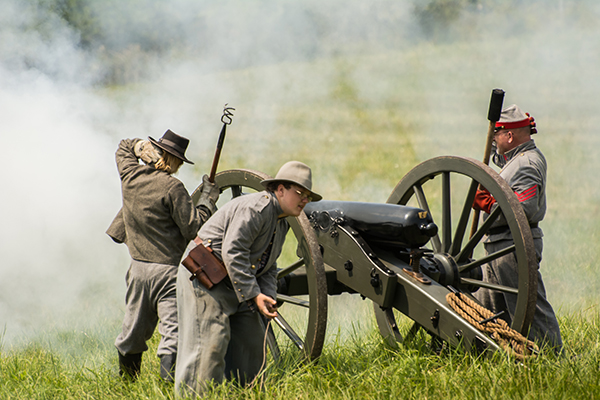
firing the canon

#1 Research the event before you go

Do some homework before you attend the event, to get an idea of the subject of the celebration, and something of its history. For example, if you are attending a battle reenactment, a little research before you arrive may give you an inside advantage as to how the battle may unfold in front of you. Even local street festivals exist for a celebration, so know what you can expect to experience, such as special displays, parades, entertainers, and fireworks.

#2 Know the rules of the event

For instance, some events may not allow you to bring coolers or large backpacks into a crowded venue, which could include your camera bag. Prepare accordingly to abide by the rules.

#3 Acquire a schedule of events and map of the venue before arriving

You’ll know ahead of time when to arrive and which locations you would like to shoot first.

#4 Develop a shot list

Preparing a shot list is a good way to help you to get all the images that you intend to capture. It is so easy to get caught up in a single attraction, then, when day is done, realize that you missed a lot of other shooting opportunities. So give yourself a game plan for the day, remembering that schedules can be flexible.

#5 Arrive early and stay late

The early bird gets the worm or the best parking place. Of course we know the best light of the day is during the early morning and pre-sunset, so arrive early and stay late to take advantage of it. Also, at many events the crowds don’t arrive until midday, and many who arrive early may also leave early.
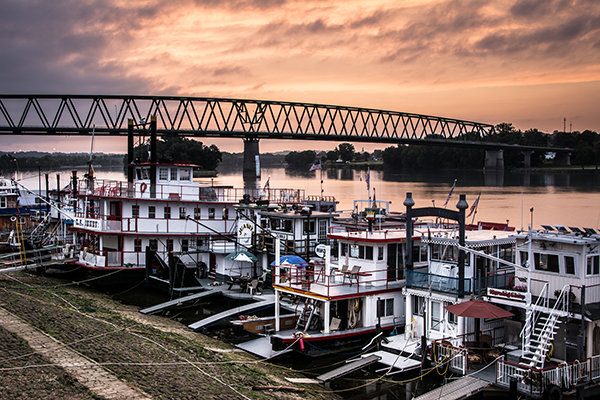
Sunrise at the Ohio River Sternwheel Festival gives a colorful view of the event before the crowds arrive.

Sunrise at the Ohio River Sternwheel Festival gives a colorful view of the event before the crowds arrive.

#6 Bring a compass

Upon arriving it is very important to get your bearings, which may require taking a compass reading. This becomes very important when looking to for the best lighting and vantage point from which to shoot.

#7 Meet the people involved with event logistics

Interaction with the event coordinators, staff, participants or re-enactors of an event can be very beneficial to you when it comes to getting inside information, and perhaps some behind-the-scenes shots. In some cases getting to know the right person might land you a unique vantage point, not accessible to the public. Offering to send photos to them can also be great way to get access to some great images. (Don’t forget to get contact information.)

#8 Be prepared

Always bring a spare camera battery. There is nothing worse than missing a great shot because your battery went dead. Spare memory cards are a must also, because you could be shooting thousands of photos each day and you want to have enough memory with you to hold all your images. For shooting in the middle of the day, in the harshest lighting conditions with deep shadows, consider using your pop-up flash to provide fill light for close-ups and portraits.

#9 Prepare for weather

Be prepared by checking the weather forecast ahead of time. You may find yourself standing for long periods of time in the direct sunlight, so sun screen is a must. Also bring plenty of water to stay hydrated. A wide brim hat can also be useful to keep the sun out of your eyes. Your equipment also may need protection from weather elements, especially moisture related.

#10 Be aware of the wind direction

Wind direction can be very important if you are photographing an event where there will be weapons (e.g. canons) fired. If your shooting location is downwind from the action, all you may get in your image is a lot of smoke. In some cases this could add some very interesting effects but, it is best to be aware of this ahead of time.

#11 Play nice with re-enactors and other photographers

Sometimes photographing these events can mean shooting in very crowded locations with everyone wanting to get that same great shot. Be courteous to your fellow photographers, interact with the people around you and work to help everyone have a great experience. Offer suggestions that might be helpful to those who are obviously less experienced. Also, remember festival workers are providing a service to you and in many cases it might be for very little or no pay, so be considerate of them.

#12 Choose an appropriate lens

A good walk-around lens, like a 28-300mm or 18-200mm zoom, is a desirable choice for these types of events and will allow you to use the same lens all day. However, if such an item is not in your arsenal, narrow your options down to just a couple of lenses, like a wide angle and a 200mm or 300mm telephoto.  If you choose to use multiple lenses, remember there can be lots of dust in the air at outdoor festivals, so you need to be careful while changing them not to get dust in your camera, which will find its way onto your sensor. If you must change lenses it would be a good idea to try to find a dust-free area, (your car would be a good spot, if parked nearby).

#13 Shoot with a higher ISO if necessary

Raising your ISO will allow the shutter speed to stop the action and aperture to maximize your depth of field. However, in some instances a narrow depth of field may be useful to make your subject stand out from the background.

#14 Watch your background

When you are shooting at a reenactment event, the last thing you want in an otherwise perfect image is a car or other object that will seem historically out of place in the background. In some cases you can remove these objects in post-production, but it is best to avoid them, and look for a different vantage point that allows you to exclude them.
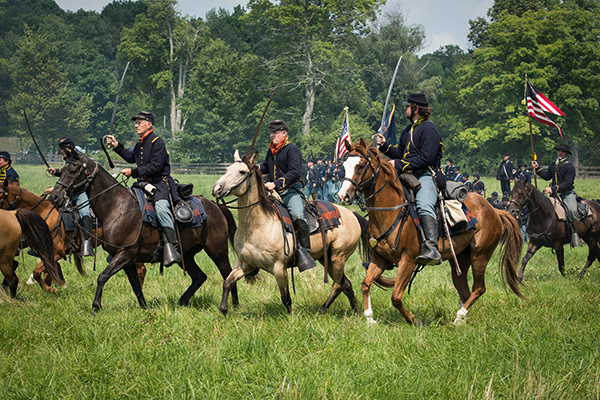
DSC_9671-Edit-2

#15 Look for details

Be observant to discover details that may make your shots stand out from all the other photographers shooting at the same location. Look for expressions on the faces of participants and spectators, as well as interactions between them.
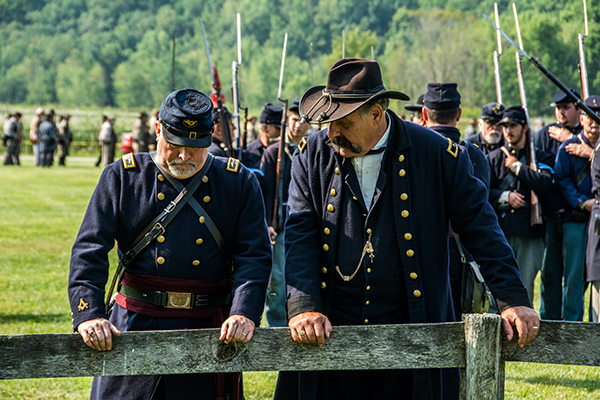
Two officers standing at the fence discussing battle strategy.
Two officers standing at the fence discussing battle strategy.

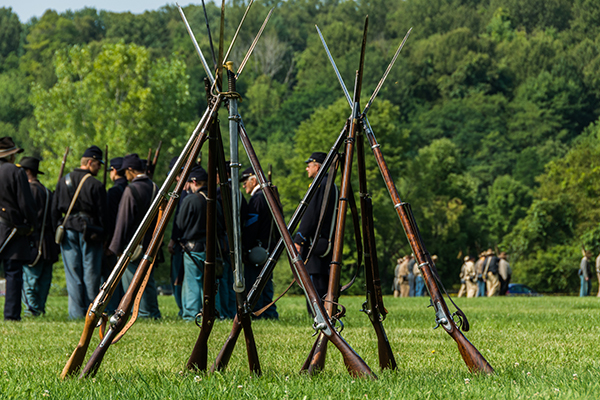
Look for detail

This image captured from ground level, features a unique detailed view of reenactment maneuvers.

#16 Think safety

Remember to keep in mind where you are, when you are looking through your lens for an extended period of time. It is easy to lose track of just how close to the action you might have become.

#17 Tell a story

You’ve heard it said that picture is worth a thousand words, so look for images that tell a story. It doesn’t make much difference how well the photo is composed, that your exposure is correct and image is in sharp focus, if the shot doesn’t communicate the event experience to the viewer.
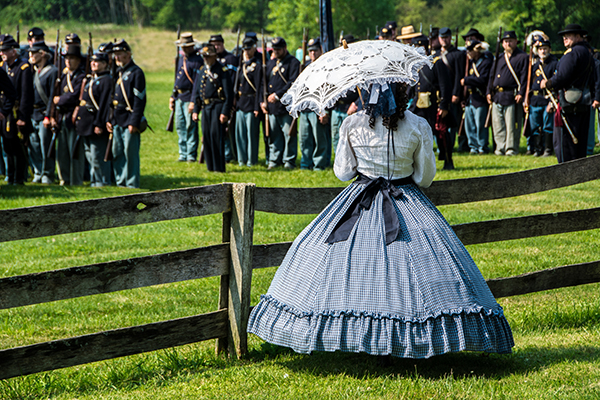
Lady in era dress watching and waiting, tells a story

Lady in period dress, watching and waiting, tells a story.

#18 Attend more than one day

If possible, returning for a second day can allow you to get some really great images. After attending the first day, it becomes easier to anticipate the action (especially in the case of a reenactment event), pick up other happenings missed the first day, or re-shoot favorite subjects with alternate lighting and camera settings.

#19 Capture images that may interest the event organizers

Often times festivals or events are looking for images to use for next year’s promotional material. Depending on the event’s budget, some might even offer to pay for desirable images, while others may not be able to offer more than a byline (it’s still very cool to see your images published). Many events hold a photo contest that pays prize money and features the winning image in promotional material. You should give such an opportunity your best shot.
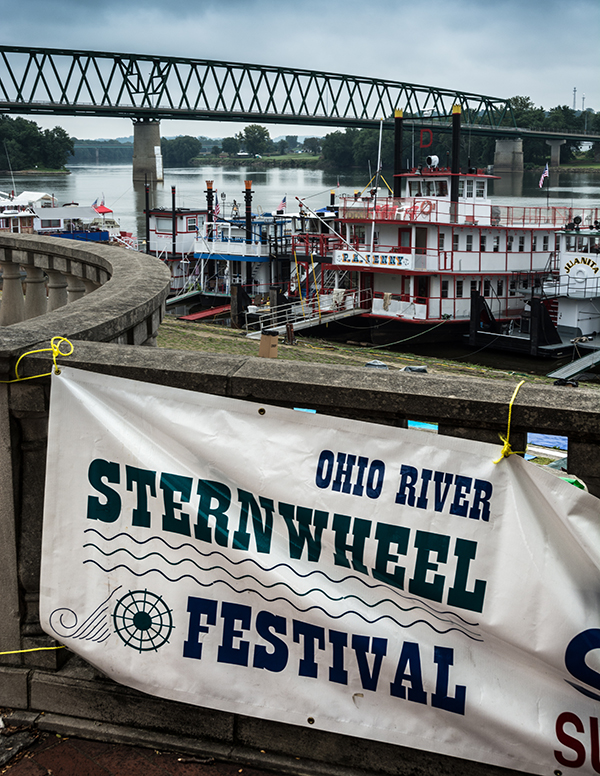
Shoot images that might interest event organizers, such as this image from the Ohio River Sternwheel Festival held in Marietta, Ohio.

Shoot images that might interest event organizers, such as this image from the Ohio River Sternwheel Festival held in Marietta, Ohio.

#20 Give your photos a vintage effect in post-production

Giving your image a nice sepia tone to match the photos of former eras can be an interesting way to present reenactment or old-time feeling events.  Click on this link to download an American Civil War Lightroom preset. This preset will give you the era’s sepia tone effect, with faded corners and added grain.
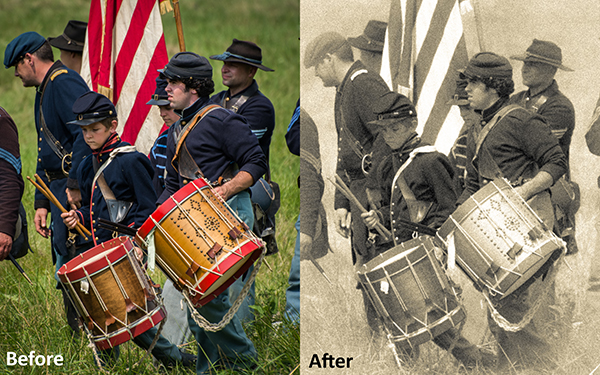
DSC_9684_rto

Remember to have fun when you are photographing events and festivals. It is easy to get so involved with getting that perfect shot that you don’t take the time to enjoy the experience. Please share some of your favorite reenactment or festival shots.

The post 20 Tips for Photographing Historical Reenactments and Festivals by Bruce Wunderlich appeared first on Digital Photography School.


Digital Photography School

 
Comments Off on 20 Tips for Photographing Historical Reenactments and Festivals

Posted in Photography


Big Game Hunting: The World’s 9 Biggest Board Games

21 Sep

[ By Steve in Gaming & Computing & Technology. ]

Biggest Game Boards
Board games may be old fashioned to some but they’re anything but boring no matter how big a board they’re played on. Here are 9 of the biggest.

Triple (Size) Letter Score

Biggest Scrabble Game Board 1

Biggest Scrabble Game Board 2

Biggest Scrabble Game Board 3

Popular word game Scrabble celebrated its 50th anniversary in 1998 and in honor of the occasion, two teams from the United Kingdom’s armed forces played the biggest Scrabble game EVAR, turning London’s Wembley Stadium into a ginormous Scrabble board. The reinforced fiberglass letter tiles measured 2 x 2 meters (about 6 feet per side) and were 40cm (almost 2 inches) thick, requiring two team members to shift each one into position… and you thought soccer was a slow game! On the bright side, just be glad Welsh words weren’t allowed.

Take A Walk On The Boardwalk

Monopoly in the Park 1

Monopoly in the Park 2

Monopoly in the Park 3

Do you know the way to San Jose? Make a left at Baltic and don’t forget to bring your Get Out Of Jail Free card! We’re talking Monopoly here; Monopoly In The Park to be exact. The 930 sq/ft permanent Monopoly board offers anyone a chance to make it big on Silicon Valley real estate. I want the iron… darnit!

Ukraine Not Weak!

Biggest RISK Game Board 1

Biggest RISK Game Board 2

Biggest RISK Game Board 3

Beloved by Kramer and Newman, RISK is the classic game of world domination where the board is as big as the world… or so the players wish! Everyone from be-suited gentlemen to cosplaying geek gamers has tried to imitate Vladimir Putin playing larger-than-life RISK but there’s a drawback: the bigger the board, the harder it is to take the game with you on the New York subway.

Next Page – Click Below to Read More:
Big Game Hunting The Worlds 9 Biggest Board Games

Share on Facebook


[ By Steve in Gaming & Computing & Technology. ]

[ WebUrbanist | Archives | Galleries | Privacy | TOS ]


WebUrbanist

 
Comments Off on Big Game Hunting: The World’s 9 Biggest Board Games

Posted in Creativity


browserFruits September, Ausgabe 3

21 Sep

Viele waren vielleicht in dieser Woche in Köln zur Fotomesse oder sind es sogar noch. Für alle Zuhausgebliebenen gibt es heute unsere browserFruits, die ganz unabsichtlich absolut photokinafrei geblieben sind. Vielleicht gibt es ja nächste Woche spannende Berichte und interessante Technikartikel, die dieses Mal noch nicht bis zu uns vorgedrungen ist. Wenn Ihr etwas habt, schreibt uns gern.


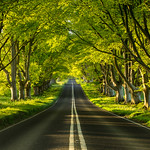
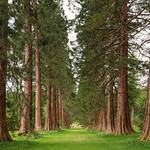
Fotospecial: Alleen

Flickr

500px


Deutschsprachig

• Wenn sich Verlage in der Google-Bildersuche bedienen, kann es schon einmal passieren, dass auf dem Cover eines Mathebuchs eine Pornodarstellerin landet.

• Eine Fotoserie über verfallene Diskotheken: Ruinen des Größenwahns.

• Bon Prix hat gemeinsam mit dem Fotografen Wolfgang Armbruster ein kostenloses E-Book zum Thema Modefotografie zusammengestellt. Hier finden sich viele Informationen zu den Grundlagen und einige Tipps für Fortgeschrittene.

• Der Kriegsfotograf Christoph Bangert (Ihr erinnert Euch vielleicht an das Buch „War Porn“) berichtet auf Zeit Online rückblickend über seine Erfahrungen im Irak, die er bei seinem ersten Auftrag für die New York Times gemacht hat.

• Wir bekommen einfach nicht genug von Cinemagrafien. Dieses Mal von Julien Douvier.

• Der Radiosender WDR2 hatte am vergangenen Montag den Fotografen Jim Rakete zu Gast. Das (ohne Musikunterbrechungen) einstündige Interview könnt Ihr auf der Webseite des Senders anhören und herunterladen.


International

• Der brasilianische Illustrator Rafael Mantesso verbindet Bilder seines Hundes mit Zeichnungen – mit sehr lustigen Resultaten.

• Flickr hat seine Top 20 unter 20 gewählt. Darunter sind einige beeindruckende junge Talente – und für regelmäßige kwerfeldein-Leser auch alte Bekannte.

• Die Fotos der Serie „Death Valley“ von Jordan Sullivan zeigen minimalistische Landschaftsaufnahmen, die ihre besondere Wirkung vor allem als Serie erst richt entfalten.

• Der Fotograf Jérémie Souteyrat hat ausgefallene Einfamilienhäuser in Tokio fotografiert.

• Genug Platz für 864 Millionen Bananen – Wired zeigt Bilder vom Bau eines gigantischen Containerschiffs.

• Martin Parr kennt Ihr sicher. Nein? Seine kuriosen Fotografien der britischen Arbeiterklasse werden hier auf Konbini vorgestellt – und ausführlich kommentiert.

• Alt, günstig und knackscharf: Petapixel hat eine tolle Auflistung mit (relativ) unbekannten Objektiven von Canon, die für den kleinen Geldbeutel große Leistung versprechen.

• Der Fotograf Wang Yuanling zeigt wunderbare Fotos aus den ländlichen Gebieten Chinas. Sie sind stille Zeugen einer schwindenden Welt.

• Sehr kreative Skulpturen aus Lebensmitteln haben wir bei Fubiz entdeckt.


Neuerscheinungen und Tipps vom Foto-Büchermarkt

Buchtipps

• Die Gesellschaft Deutscher Tierfotografen sucht jedes Jahr in einem Wettbewerb die Naturfotografen des Jahres. Aus diesem Wettbewerb entsteht auch jedes Jahr ein Buch. Darin enthalten die Gewinnerbilder mit einem Text zu deren Entstehung. „Europäischer Naturfotograf des Jahres“* von 2013 kostet 20 €.

• „Unsere schöne, zerbrechliche Welt“* von Peter Essick. Es enthält unterschiedliche Fotoserien von einigen der schönsten Plätze dieser Erde und dokumentiert die großen Umweltprobleme unserer Zeit. Jedes Foto wird durch einen Text über die Entstehung des Bildes, Essicks persönlichen fotografischen Erfahrungsbericht sowie durch recherchierte Informationen zu den dazugehörigen National-Geographic-Artikeln ergänzt. Die gebunde Ausgabe kostet 32,95 €.


Wettbewerbe

• „KameraKinder“ ist ein Wettbewerb für alle Kinder von 6 bis 12 Jahren, die in Nordrhein-Westfalen leben.


Zitat der Woche

Ich fotografiere, um herauszufinden, wie etwas aussieht, wenn es fotografiert wurde.

Gary Winogrand –

Mehr Zitate


Videos

Ein Film über den Fotografen Jim Rakete. Danke an Julia für den Hinweis.


Selbstportraits für Anfänger. Eine kleine Anleitung.


* Das ist ein Affiliate-Link zu Amazon. Wenn Ihr darüber etwas bestellt, erhält kwerfeldein eine kleine Provision, Ihr bezahlt aber keinen Cent mehr.


kwerfeldein – Fotografie Magazin | Fotocommunity

 
Comments Off on browserFruits September, Ausgabe 3

Posted in Equipment


Tips From a Landscape Photographer

21 Sep

B&H Photo Video is a huge mega camera store in New York City, but they also have a great selection of helpful videos. In this video Robert Rodriguez Jr. gives you some tips and insight into what it’s like to be a landscape photographer.

  • Capturing something that means something to you
  • Capturing emotion in photos is the essence of being creative
  • Compositions with layers to add depth
  • Why going back to one place again and again can help you take better photos of it
  •  The 4 a.m. filter
  • Printing your work, making it tangible

“Before you can think out of the box, you have to start with a box” – Twyla TharpThe Creative Habit: Learn It and Use It for Life

How will you get outside your box and be more creative?

Check out Living Landscapes and also Loving Landscapes, two dPS eBooks on this subject!

The post Tips From a Landscape Photographer by Darlene Hildebrandt appeared first on Digital Photography School.


Digital Photography School

 
Comments Off on Tips From a Landscape Photographer

Posted in Photography