RSS
 

Archive for August, 2014

Das Kameraband

08 Aug

Ein Beitrag von: Lukas Monschein

Eigentlich kannte ich dieses Mädchen bereits einige Zeit durch ihre Fotos auf Flickr und seit Kurzem über diverse Facebook-Chats und Skype-Dates, aber London war die Stadt, in der ich diese junge, talentierte Fotografin aus Norwegen das erste Mal persönlich treffen durfte.

Ihr Name ist Silje Tveitnes und ich kann mich noch genau erinnern, wie unsere Gruppe von Fotografen in einem Hostel nahe der Oxfort Street saß und wir nur noch auf sie warteten. Als sie mir schrieb: „We are close!!“, gingen alle nach draußen, um sie zu dort erwartungsvoll in Empfang zu nehmen. Alle, die zu diesem „London Flickr Meetup“ gereist waren, bekamen eine herzliche Umarmung, inklusive mir. Ein wunderbarer Start.

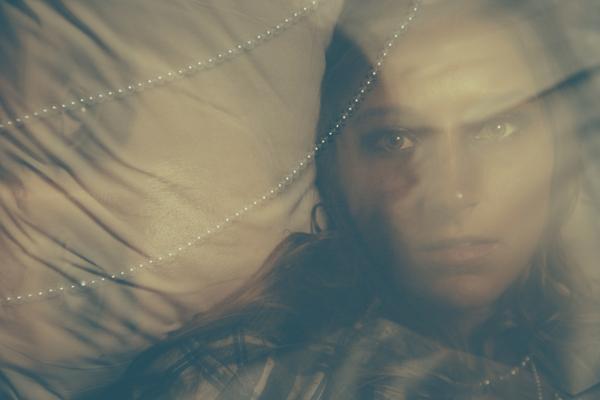
Mädchen vor einem Auto auf einer Straße

Unsere Gruppe aus acht Fotografen saß dann noch bis in die Nacht in der Bar des Hostels, um sich besser kennen zu lernen und endlich von Angesicht zu Angesicht miteinander reden zu können. Als es spät wurde, ging einer nach dem anderen etwas Energie für den nächsten Tag zu tanken, bis nur noch Silje und ich übrig waren.

Es fühlte sich so an, als ob wir uns schon seit einer Ewigkeit kannten, obwohl wir uns gerade zum ersten Mal wirklich trafen und wir vertieften uns in lange Gespräche, bevor wir uns schließlich auch auf unsere Zimmer zurückzogen.

Nach einem aufregenden Tag mit den anderen, verbrachten Silje und ich den Abend zu zweit in den Straßen von London auf der Suche nach einer gemütlichen Bank. Ich hatte einige Wochen zuvor einen Traum gehabt, in dem ich mit ihr auf einer Bank mitten in London saß. Davon hatte ich ihr erzählt und sie hatte vorgeschlagen, dass wir beim Meetup einfach nach solch einer Bank Ausschau halten sollten.

Mädchenportrait auf einer Brücke

Kleine Person vor Waldlandschaft

Nach einigem Suchen – Bänke sind in der Londoner Innenstadt überraschend schwer zu finden – stießen wir dann doch auf ein ruhiges Plätzchen inklusive Bank. Auch an diesem Abend fühlte es sich so an, als ob wir uns schon viel länger kennen würden. Es fühlte sich einfach richtig an, in ihrer Nähe zu sein. Sie hatte offensichtlich das gleiche Gefühl, denn der Abend endete in einem langersehnten Kuss. Es war einfach perfekt und nichts hätte diese Glücksgefühle trüben können.

Am nächsten Tag wachte ich mit einem Lächeln auf, es fühlte sich großartig an. Aber bereits im Laufe des Tages schoss mir immer wieder ein Gedanke in den Kopf: Entfernung. „Ich lebe in Österreich, sie in Norwegen. Was zum Teufel tue ich da?“ Wie stellten wir uns das vor? Zu diesem Zeitpunkt dachte ich mir nur, dass das nie funktionieren könnte.

Zwei Menschen stehen am Strand mit ihren Surfbrettern hinter sich

Das Ende des Meetups kam natürlich viel zu schnell und jeder unserer Gruppe machte sich wieder auf den Weg nach Hause. Auch Silje und ich traten unsere Wege in verschiedene Himmelsrichtungen an. Auf dem Weg nach Hause dachte ich immer wieder an die vielen neuen Gesichter, die ich kennengelernt, an die Abenteuer, die wir in der Stadt erlebt und an die Fotos, die wir gemacht hatten.

Doch am meisten dachte ich an die erste Umarmung, unsere Gespräche am Abend auf der Bank und vor allem an den ersten Kuss mit ihr. Dieses Mädchen hatte etwas an sich, das mich nicht mehr los ließ. Es tat weh, nach Hause zu fliegen, ohne zu wissen, wann oder ob ich sie jemals wieder sehen würde.

In den nächsten Tagen und Wochen skypten wir mehr den je und trotzdem stand etwas unausgesprochen zwischen uns. Auf einer Schulreise nach Spanien wurde mir dann bewusst, dass es so nicht weitergehen konnte. Nach einer Woche ohne Kontakt vermisste ich sie so sehr, dass ich sie einfach aus Valencia anrief, nur um ihre Stimme zu hören.

Das Gespräch dauerte 90 Minuten und spiegelte sich dementsprechend auf meiner Telefonrechnung wider, aber das war mir egal. Todesmutig fragte ich sie, ob wir es nicht einfach probieren sollten. Meine Erleichterung, als sie dem Experiment „Fernbeziehung“ zustimmte, war riesig.

Mädchen in blühender Berglandschaft

Nahes Mädchenportrait in blühender Landschaft

Das Treffen in London ist mittlerweile zwei Jahre her. Ich sitze gerade in einem Flieger auf dem Weg nach Wien, auf dem Heimweg von einem der unzähligen, viel zu kurzen Besuche in Norwegen. Es wird jedoch das letzte Mal für eine lange Zeit sein, dass ich Österreich als mein Zuhause bezeichne, denn in zwei Monaten, nach zwei Jahren Fernbeziehung, kann ich endlich zu meiner großen Liebe nach Norwegen ziehen.

Es wird das erste Mal sein, dass wir im gleichen Land leben. Es ist der nächste Schritt in unserem Experiment, von dem außer uns fast niemand geglaubt hat, dass es funktionieren könnte.

Es war die Fotografie, die uns zusammen gebracht und uns verbunden hat, wenn viel zu viele Kilometer zwischen uns lagen. Wir haben zusammen Fotourlaube gemacht und Fotoprojekte erarbeitet. Ich kann es nicht erwarten, unser neues Leben in Bildern festzuhalten, um unsere Geschichte weiterzuerzählen.

Morgen erzählt uns Silje selbst die Geschichte aus ihrer Sicht.


kwerfeldein – Fotografie Magazin | Fotocommunity
 
Comments Off on Das Kameraband

Posted in Equipment


LensRentals looks into the Canon EF 16-35 f/4 IS

08 Aug

The team over at LensRentals has been doing a lot of work recently, looking at the performance of Canon’s new EF 16-35mm f/4L IS USM wideangle zoom. They’re pretty impressed by the optical quality of the new lens, but being in the business of renting and repairing gear, they also wanted to know how well it would stand up to the rigors of daily use – and how easy it would be to work on. Click through to learn how the new EF 16-35mm f/4L IS USM compares mechanically.

Articles: Digital Photography Review (dpreview.com)

 
Comments Off on LensRentals looks into the Canon EF 16-35 f/4 IS

Posted in Uncategorized


Pocket Tent: Tiny Prefab Home Inflates Itself with Body Heat

08 Aug

[ By WebUrbanist in Design & Products & Packaging. ]

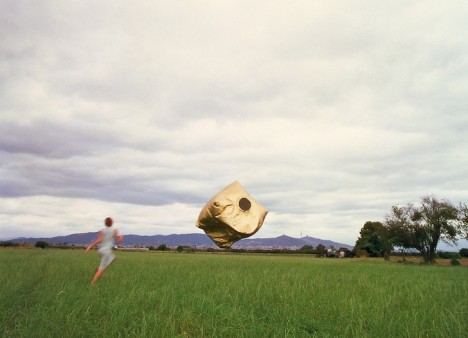
portable pocket house inflated

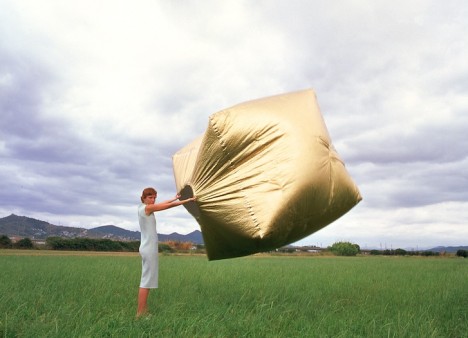
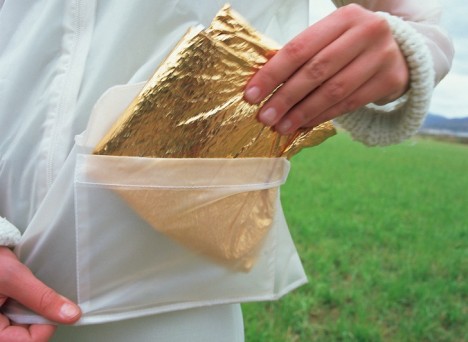
A brilliant application of material science toward simple living, this portable self-inflating structure folds up into a manageable miniature package but expands to create a small dwelling space.

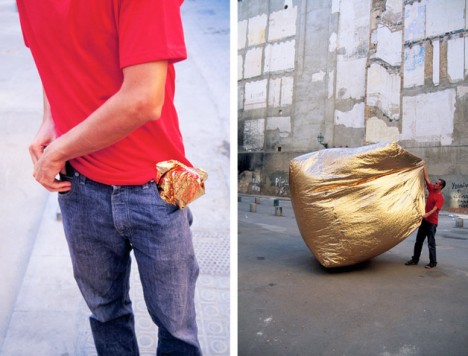
portable fold up home

Created by Martin Azua, the Basic House is a genius “habitable volume; foldable, inflatable and reversible … made from metalized polyester” that uses body or solar heat to inflate itself. As its designer explains, “is not a product, rather a concept of extreme reduction.”

portable modular prefab design

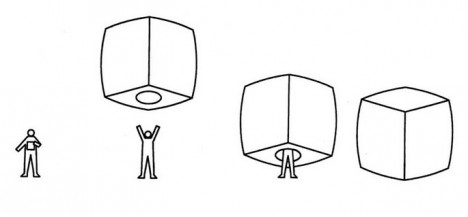
In a clever twist, this tiny portable space is made to be inverted so that it can deflect solar heat (for cold situations) in one configuration but capture it (to warm its interior) when reversed. Versatile and durable, the design could be used for everything from homeless shelters and travel tents to emergency housing and much more.

portable pocket travel tent

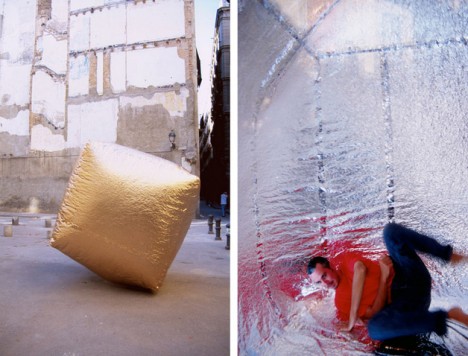
portable tent home concept

portable house interior exterior

More from its maker on his motivation: “Our habitat has turned into a space of consumption in which an unlimited number of products satisfy a series of needs created by complex systems and relations that are difficult to control. Cultures that maintain a more direct interaction with their environment show us that the idea of habitat can be understood in more essential and reasonable terms.”

Share on Facebook


[ By WebUrbanist in Design & Products & Packaging. ]

[ WebUrbanist | Archives | Galleries | Privacy | TOS ]


WebUrbanist

 
Comments Off on Pocket Tent: Tiny Prefab Home Inflates Itself with Body Heat

Posted in Creativity


Apple expands OS X Mavericks Raw compatibility

08 Aug

Apple has issued an update for OS X Mavericks, adding Raw support for ten recent camera models. Digital Camera Raw Compatibility Update 5.06 provides system-level support for Raw files from the Sony Cyber-shot DSC-RX100 III, Olympus OM-D E-M10 and Nikon 1 V3. See the full list of cameras. Read more

Articles: Digital Photography Review (dpreview.com)

 
Comments Off on Apple expands OS X Mavericks Raw compatibility

Posted in Uncategorized


Collaboration – 8 Ways to Work With Other Photographers

08 Aug

In an industry where marketing strategy and professional branding are needed to survive and to “make it” fiscally, we are missing something that should define our artistic craft. Just like in any other industry, collaboration is not an ideal that limits photographers, but one that can propel us personally and professionally. Understanding that photography is not usually seen as a “team sport”, how can we collaborate with each other while retaining our individuality as visual artists?

Here are 8 ways to work with other photographers

#1 Photos – create something together

Photos

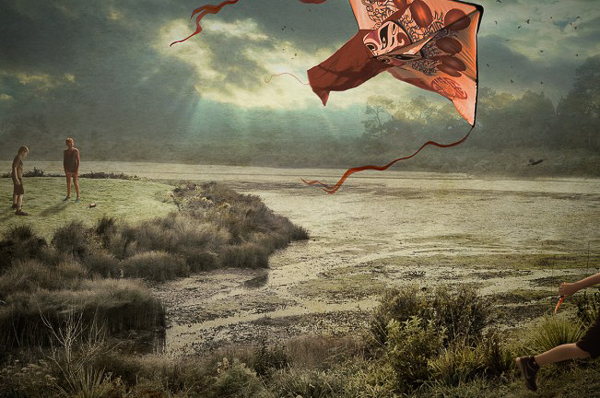
The Kite (created by Francisco Diaz and Deb Young)

To varying degrees, we are each protective of our images. We watermark. We utilize Google’s image search function to ensure that our work is not being borrowed. We even occasionally check to see that the photographer down the road is not emulating our brand, or photographic style. Yet, with a bit of deep thinking and reflection, we should understand that there is little in the photographic world that is fresh or new. Realizing this, we are able to detach a bit from our work and open our minds to the possibility of collaborating in the production of photographs.

One example of collaborative creation can be found in the work of Francisco Diaz (USA) and Deb Young (New Zealand). The pair work continually on their appropriately titled The International Collaboration Project that crosses borders and photographic norms. Frank “wondered if disparate individuals from countries halfway around the world could work together in real time as a positive model for creation rather than destruction.” Diaz and Young’s project proves that not only a positive model of creation exists, but that photographers can work together to produce meaningful imagery collaboratively.

#2 Assist another photographer

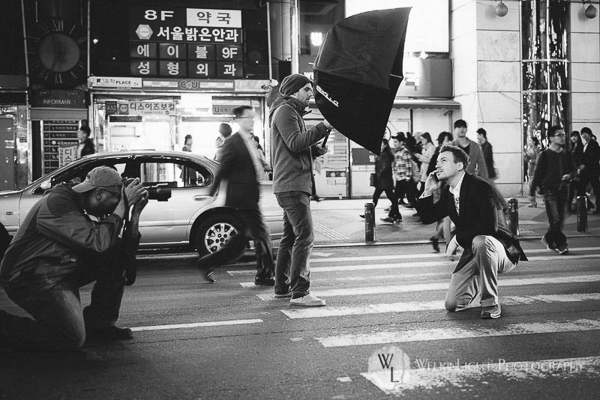
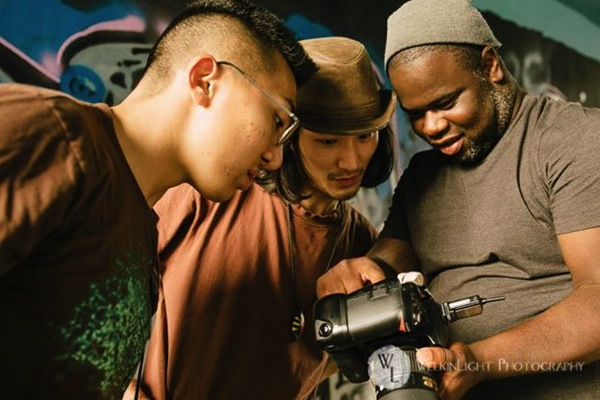
Owning your own photography business has many perks. Yet, working for someone else does not mean that you have degraded yourself or your position as a pro shooter. Working for someone can be likened to helping. By assisting a fellow photographer, you not only have the chance to learn a new technique, you have the opportunity to give back to the photographic community. With the right attitude, experienced shooters can prove to be amazing assistants and can aid their comrades.

Assist

Photo courtesy of Welkinlight Photography

#3 Pose for another photographer

You don’t have to be a hundred pound, six-foot bombshell to be a model. Posing for a fellow photographer is incredibly helpful for both you and the shooter. Your collaborator will be able to test new techniques (such as posing and lighting) with a patient model. Moreover, as a photographer, you will be accepting, and let faux pas like chimping (reviewing the screen after every click of the shutter) slide. Perhaps the most important perk of modelling is that you get the opportunity to see how your own clients feel posing and being directed by a photographer. This empathetic exercise will have immediate benefit as you transition back to photographer.

Model

Glen Riley of GTR Photographic Images modelling

#4 Constructive Critique

Fairly regularly, friendly photographers and I sit down with a coffee or beer to share and critique our recent work. In addition, each participant shows work that they are currently inspired by. In this way, members of the group gain valuable feedback from their respected peers, and have the chance to view their work from an alternate perspective. Additionally, there is an opportunity to learn about inspirational industry professionals (or hobbyists). By constructively acknowledging one another’s work, we collaboratively prompt each other to improve our craft.

#5 Trade services with another photographer

Every weekend we clean and pack our kits to meet clients for sessions, or to head out to shoot personal work. Yet, when was the last time the camera was pointed at you and your loved ones? Sure, quality photographic services can be expensive (just check your own pricing guide). Why not reach out to other photographers and propose trades? Fellow photographer Dylan Goldby (Welkinlight Photography) and I do just that. We both receive portrait packages of our loved ones that would normally cost hundreds of dollars. Yet, with a collaborative mindset, those lifestyle packages become free.

Trade

Photo courtesy of Welkinlight Photography

#6 Send referrals to other photographers

It is important to try multiple genres of photography (landscape, architecture, lifestyle, fashion, nudes, etc.). However, if you have already honed your craft and identified your photographic niche, don’t gobble up every assignment that comes your way. If approached by a client but your “competition” shoots the genre or project better than you, send the client their way. I repeat, send your competition assignments! I promise that practicing this habit will come back to benefit you in the end. Your competition will remember your kindness and return the favor. Generally speaking, those photographers who are considerate of their colleagues have an easier time filling their calendar.

You Are Soft

Portrait of a client that was referred to me by a fellow photographer

#7 Share – gear and links

Gear is expensive and anyone with GAS (gear acquisition syndrome) can testify that it is easy to see a zero bank account balance with one trip to B&H or your local camera store. There is a more economical option of renting gear from a photographic supply store, or better yet, borrow gear from fellow photographers. Need a Wescott Apollo Orb for a studio session? Simple, ask a fellow photographer. Keep in mind that it will soon enough be your turn to lend.

Hint: Under no circumstance should you lend gear to shooters you don’t trust or know well. Also, be sure to add extra care when handling gear that is not yours.

Yet, sharing isn’t limited to material goods. From name-dropping in casual conversation, to displaying the work of others on your Facebook photography page, spread the work of others. By sharing the work of fellow photographers, you are helping generate camaraderie and showing that you are not solely self-interested. An excellent model of this practice can be found in the fine art photographer Mark Eaton. Pulling up Mark’s blog, it is immediately obvious that Mark cares just as much about supporting his fellow photographers, as he does his print sales.

Vision Reduced by Mark Eaton

Vision Reduced by Mark Eaton

#8 Teach

When was the last time you taught someone something? There is an indescribably satisfying feeling gained when you share knowledge. Let’s face it. Everything we know about photography, we were taught. There is no such thing as a “self taught” photographer. Learned about lighting on YouTube? Guess what, a fellow pro took the time to make that YouTube tutorial.

We each have the responsibility to pay knowledge forward. Teaching photographic skills and strategies to others will not increase competition (remember, it takes more than technical expertise to distinguish an accomplished photographer). Take an amateur, or less experienced photographer, on a photo walk. Write a tutorial detailing a technique you use. Instruct a workshop at a local community center. Who knows, you might enjoy teaching so much that this aspect of collaboration becomes part of your business plan. Examples of photographers turned teachers can be found in the great workshops offered by Flash Light Expeditions or the tailored Southeast Asian tours led by fellow dPS contributor Etienne Bossot.

Teach

Students learning at a course offered by Flash Light Expeditions

While many of us feel that photography and artistic creation are solitary actions, we should be careful not to isolate ourselves in our vast industry. No man (or woman) is an island. By collaborating with fellow photographers, the opportunity to grow, both personally and professionally, is limitless.

Have you tried any of these things? Do you have other ideas of tips on how to collaborate? Please share in the comments below.

The post Collaboration – 8 Ways to Work With Other Photographers by Andrew Faulk appeared first on Digital Photography School.


Digital Photography School

 
Comments Off on Collaboration – 8 Ways to Work With Other Photographers

Posted in Photography


Tree of 40 Fruit: Single Plant Grown with Dozens of Grafts

08 Aug

[ By WebUrbanist in Art & Sculpture & Craft. ]

tree of 40 fruits

Giving the phrase ‘garden variety’ a fresh new meaning for urban gardeners, this amazing hybrid plant makes it possible to raise dozens of types of produce on a single tree using low-tech grafting techniques.

tree 40 fruit growing

A work of both art and science by Syracuse University art professor Sam Van Aken, the all-in-one Tree of 40 Fruit is the culmination of years spent experimenting with hybridized stone fruit trees that produce peaches, plums, peaches, apricots, nectarines, cherries and much more.

tree fruit growing experiments

Treating his work (with over 250 types of fruit) as a combination of farming and arborsculpture, Aken combines heirloom, antique, and native varieties, all set to bloom in seasonal sequences designed to create edible results as well as aesthetic effects throughout the year.

tree fruit before after

The custom-crafted hybrid looks like an ordinary fruit tree until it blossoms a key points through spring, summer and fall with its rich variety of flowers and fruits.

tree fruit peaches branch

Using a chip grafting process, Aken takes a sliver off of a tree and tapes it the growing hybrid, letting the pieces grow together over the winter then pruning them back as needed.

tree 40 fruit sites

The resulting trees of 40 fruit continue to be grown and dispersed around the country to museums, community gardens and other public spaces.

In an interview with Epicurious, Aken explains that “as the project evolved, it took on more goals. In trying to find different varieties of stone fruit to create the Tree of 40 Fruit, I realized that for various reasons, including industrialization and the creation of enormous monocultures, we are losing diversity in food production. In addition to maintaining these varieties in my nursery, I graft them to the Tree of 40 Fruit. Additionally … I go to local farmers and growers to collect stone fruit varieties and graft them to the trees. In this way they become an archive of the agricultural history of where they are located as well as a means to preserve antique and native varieties.”

Share on Facebook


[ By WebUrbanist in Art & Sculpture & Craft. ]

[ WebUrbanist | Archives | Galleries | Privacy | TOS ]


WebUrbanist

 
Comments Off on Tree of 40 Fruit: Single Plant Grown with Dozens of Grafts

Posted in Creativity


Panasonic Lumix DMC-GH4 and Sony Alpha 7S added to studio comparison

07 Aug

With our comparative review underway, we’ve added studio test scene results from both the Panasonic Lumix DMC-GH4 and Sony Alpha 7S to our comparison tool. The 16MP Micro Four Thirds Panasonic GH4 and 12MP full-frame Sony a7S both shoot 4K video, and we spent some time in part one of our review taking a look at those features. Take a look now at the stills capabilities of both of these cameras by comparing them to each other and an ever-growing list of competing models in our studio test scene comparison tool. Read more

Articles: Digital Photography Review (dpreview.com)

 
Comments Off on Panasonic Lumix DMC-GH4 and Sony Alpha 7S added to studio comparison

Posted in Uncategorized


Six Ways to Take Care of Your Creative Spirit

07 Aug

I like photographers. Some of my favorite people and closest friends are photographers. In general, I find us to be a likeable bunch: witty, intelligent, wildly attractive. I also find that we reside in a grey area where we aren’t quite regarded as artists. We are the redheaded stepchildren of the art world, and I can say that because I both am a redheaded stepchild and have a redheaded stepchild. Truth be known, she is the easiest kid of the bunch. She pulls no punches, just tells it like it is. Much like photography.

lynsey_mattingly_1

But we are artists! As much as any painter or sculptor, or person that is covered in bronze paint and stands as still as a statue on a street corner. Have you seen these people? My eyes water just thinking of the shower they have to take every night when they get home from work. I have always been grateful that photography is fairly low on the mess scale. So instead of showering off bronze paint for hours, or ceremoniously ridding the clay from our hands, here are six ways you can care for and nurture your creative artist soul.

Take care of your eyes

When I get home from a long shoot, I always complain that my eyeballs hurt, and they do! It’s not that they are dry or that something is wrong with my vision, it’s just that after being on high alert for hours, my eyes are stressed out. So much so that I actually saw an eye doctor to make sure that I wasn’t going to need to have my eyeballs removed anytime soon. Do you know what the doctor told me? That I need to rest my eyes before and after a shoot just like a professional baseball pitcher would rest his arm before a game. For some reason having an actual doctor, with a high degree in medicine and lots of fancy initials after his name, telling me this, made me actually listen. I’ll save you the office visit; be good to your eyes. They are the only lenses you can’t replace.

lynseymattingly_4

Have other hobbies

Like many pros, I started photography as a hobby. I am the classic “MWAC” (Mother With A Camera), having a career that’s spanned a decade, but rooted from pictures I took of my own children, with a fancy camera I didn’t know how to operate at the time. My former mother-in-law told me I took nice pictures and I figured if she said that, considering that she hated everything else I did, they must be fairly good.

I then immersed myself in photography, reading every blog, shooting every single thing my kids did in hopes that it would be portfolio building. Photography was what I lived and breathed. It’s the only thing people knew about me, but it wasn’t enough. One day, pushed past the brink, frustrated and burnt-out, I sold all of my back-up equipment and extra lenses in a week and had convinced myself, and everyone else, that I was never going to do it professionally again. I kept my Canon 5D and 50mm f1.2L, thinking that I would want to take pictures of my kids someday with something other than the camera on my iPhone.

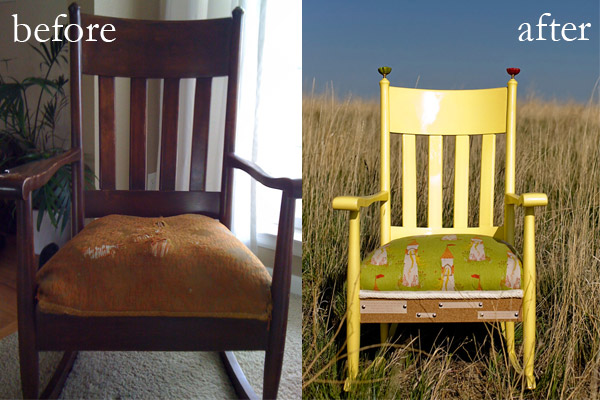
One outlet is not enough for the average creative person. You owe it to yourself, and to your photography, to be great at something else. Or to be really horrible at something else, but regularly try something else. I make chairs. I find old chairs in flea markets or on the side of the road with “free” signs and I bring them home, let them sit in my garage for months or longer, and then rehab them with new ideas and fresh materials. Sometimes I sell them, sometimes I give them away, and sometimes they turn out really awful and I put them out in my yard with a “free” sign. The point is that this gets out all of my creative energy, and when I am stuck in a photography rut, I make a chair. When a chair frustrates me, I grab my camera.

lynsey_mattingly_chairs

Take Chances

One of my first national publications only happened because I contacted a celebrity that lived a few hours away, who had just had a baby, and asked if I could take her pictures for free. I honestly thought she wouldn’t even respond, assuming she even got the email, because I did some crazy research to even find an email address that might be hers. Not only did she respond, and say yes, but she actually had two publications that were wanting to buy photos of her and her new family. There’s opportunity and there’s flat-out luck, and when you strike both you have a say in your own destiny.

I had been taking pictures professionally for four years, but this was my first huge break and having an international publishing gig, and continuous contacts, has opened doors for me, no doubt. Put every cliche about trying: not knowing until you do, you’ve got nothing to lose, etc., into a pot, and stir. It turns out our parents were right, and all of those silly sayings are true.

lynseymattingly5

Stop Comparing Your Work

When I first became interested in portrait photography I was obsessed with this one photographer’s blog. Not just because her images were beautiful, but also because I loved her words. We had similar backgrounds and a similar style, and when she talked about her life outside of photography, I understood. When she shot images that were different, I got it. Had she sent me a note before study hall, oh how I would have checked every single box. The only thing keeping me from hanging out on her front lawn confessing my profound crush was about a thousand miles. I was infatuated; with her photographs, her business, her life, her success. I wanted it for myself. And because of the similarities, I found myself doing things the way she did, hoping for, and sometimes even assuming, the same outcomes. I wasted a great deal of time trying to align my path with hers and holding her work in a higher regard than my own.

A decade later and my business is, my by own account, every bit as successful as I thought hers seemed. But it is not the same. Until I realized that what worked for her wasn’t always going to work for me, and that perhaps her end goal was different than mine, I wasn’t in any way being inspired by her. My obsession with a woman I hadn’t even met at that point was my focus (and yes, I would later meet her, and boy what a disappointment that was, is best saved for another article). No one else’s tips, ideas, or work can be your focus. Be inspired, yes, but don’t let jealousy, or in my case, crazy obsession, get the best of you. Your images are yours, and they can be whatever in the world you want them to be, so long as you don’t run them through another photographer’s filter.

lynsey_mattingly2

Don’t Stop Taking Snaps

When you are a professional photographer, or perhaps just a really good photographer, it’s easy to put extra scrutiny on your everyday snapshots. The pictures you take on your cellphone or with a Polaroid or point-and-shoot – a pretty landscape, a funny face of a friend, the loaf of zucchini bread you just baked that came out of the oven poofy and golden brown. Those shots are easy to over-think, to obsess over, or to give too much time and attention to, and miss the very point of taking them.

I find myself checking the background when I take pictures of my cat. The world doesn’t need perfect pictures of my cat. I don’t need perfect pictures of my cat. The internet doesn’t even need perfect pictures of my cat (I checked). Let the snapshots be snapshots and view them completely different than your “work” so you don’t tire of doing the everyday picture taking that was likely what gave you a love of photography.

lynseymattingly_halloween

Respect Your Gift

That’s what photography talent is – a gift. You have been entrusted to all its amazement whether you are just beginning, doing it professionally, or as a hobby that enables the creative piece of you to speak. You’re here on this very site, reading about photography, because photography calls to you in some way, due to your natural ability. Treat your gift with compassion, cut yourself some slack when needed, and allow yourself as many periods of rest as you do challenges. I was never a cheerleader and getting sappy kind of freaks me out, so when I say that you (yes, YOU) are a creative force to be reckoned with, you know I mean it.

What’s something you do to take care of your creative spirit?

lynsey_mattingly3

The post Six Ways to Take Care of Your Creative Spirit by Lynsey Mattingly appeared first on Digital Photography School.


Digital Photography School

 
Comments Off on Six Ways to Take Care of Your Creative Spirit

Posted in Photography


7. August 2014

07 Aug

Ein Beitrag von: Florian Weiler

Ein Portrait


kwerfeldein – Fotografie Magazin | Fotocommunity
 
Comments Off on 7. August 2014

Posted in Equipment


3 Ways to Embellish Your Engineer Prints

07 Aug
Extra photos for bloggers: 1, 2, 3

Unless you’ve been living under a big fat rock, you are all over our Engineer Prints right?

Yup folks, we are now printing your photos human sized in lo fi black and white ink. Deck the walls! And floor. And ceiling!

If you’ve done just that and want EVEN more pizzazz, we’ve got you covered.

Three ways to give your prints color with some personality to boot coming atcha. Go go go!
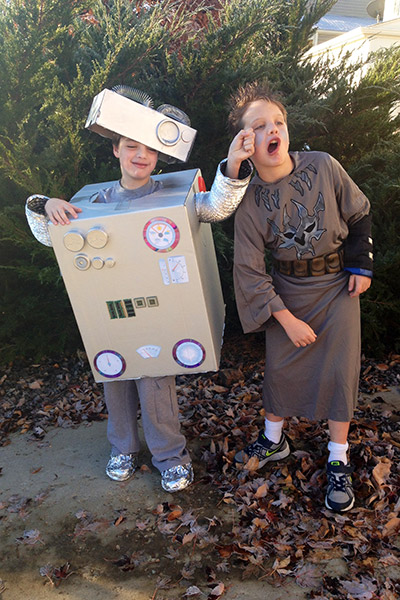
Make Your Engineer Prints Even More Amazing

(…)
Read the rest of 3 Ways to Embellish Your Engineer Prints (126 words)


© Erika for Photojojo, 2014. |
Permalink |
No comment |
Add to
del.icio.us

Post tags:


Photojojo

 
Comments Off on 3 Ways to Embellish Your Engineer Prints

Posted in Equipment