RSS
 

Archive for August, 2014

How to Create Amazing Urban Landscape and Street Photography Images

15 Aug
A stitched panorama in a city can make a great scene!

A stitched panorama in a city can make a great scene!

Many of us live in cities nowadays, in fact almost 80% of the world’s population lives in, or near, a large city. While it is fantastic to be out in nature, photographing the remote seascape scenes or the snow capped mountains, that is not possible for most photographers, everyday. That might mean that you don’t photograph for weeks at a time. As you probably know by now, to make big improvements in your photography you need to practice, practice, and practice some more.

Living in a city has its own scenes that are great to photograph, this is why street photography is such a popular genre of photography. These urban landscapes can not only be interesting, but you can make some very powerful images in an urban or city setting. Here are some pointers on how to create amazing urban landscape and street photography images.

1. Urban landscapes are the same as rural landscapes

Ok, not visually maybe, but in the way you approach them. In traditional landscape photography you will use a leading line to draw the eye into the scene. You will make sure that there is foreground interest that holds the viewers eye. You will use composition guidelines to set up your shot. This is all true for urban landscapes too. Visually design your scene as you would when you photograph a landscape scene. Be sure that the scene has a good background, a strong mid ground and a compelling foreground. This is not a rule, but it will help when you set up your shot.

2. The mundane becomes unusual

We have all seen pretty much all the objects in a city. The fire hydrants, the mailboxes and the scenes all look familiar to us city dwellers. In urban landscapes it’s not only about the architecture or the street scenes, it is about making those well know objects look different or interesting. Think of the time of day that you photograph. Late afternoon sunlight, warm light can make a fire hydrant or mailbox look somehow magical. Graffiti can look gritty, textured, and interesting in the soft light. Look at how you can change the angle or lines in a normal scene. Come from a different angle and see how that change makes all the difference to making mundane objects seem different.

Look for a way to make mundane scenes look different

Look for a way to make mundane scenes look different

3. Textures and close up

Every city has literally thousands of different textures, including: walls of buildings, cobbled streets, paved walkways, wooden walkways, benches, grass, the list goes on. Each of these surfaces has texture which are great for urban landscape photography. To emphasize texture, you will want to be shooting in side light conditions. The side light will emphasize the granularity of the surface of the street, or the grain in the wooden bench. Textures can be a whole theme on their own. Think of the textures on the sidewalks, the brick walls, the concrete buildings, the glass surfaces (reflections are amazing too).

Try this, go out into your city and try and shoot 24 photographs of different textures, at different times of the day. The range of different images will amaze you, and it will open up your eyes to what is possible when you focus on just one theme. Secondly, try and isolate some subjects in the scene. Get in closer to what you are shooting. By doing this, you will isolate part of the scene and make it look more intriguing.
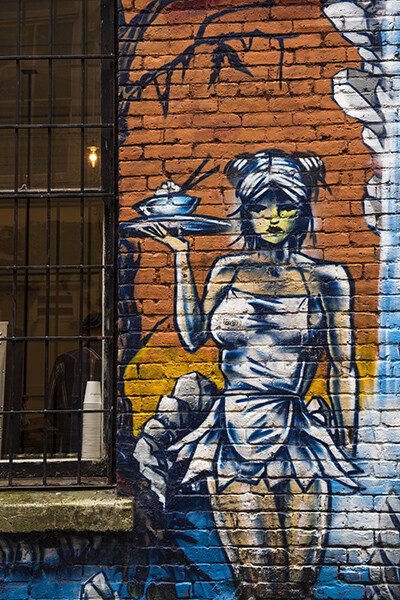
This graffiti art looks amazing, but the textures and grittiness make the image more impactful

This graffiti art looks amazing, but the textures and grittiness make the image more impactful

4. Use colour

We all photograph in colour nowadays, and then convert that image to black and white (if you don’t, you should!) but shooting for colour in your city can be a lot of fun. Decide on a colour you want to photograph and go out and look for all the different scenes you can find that contain your colour. To make it more challenging, try and isolate that colour to make 80% of your image the chosen colour. This will help you see beyond subjects and look at colour in a whole new way. You can also try and get the different colours in a scene into a cohesive arrangement, your primary colours (reds, yellows and blues) will be immediately powerful in a shot. A fire hydrant can become more interesting because of the redness of it. A blue wall becomes an abstract image, colour is a good theme to use in your urban images.
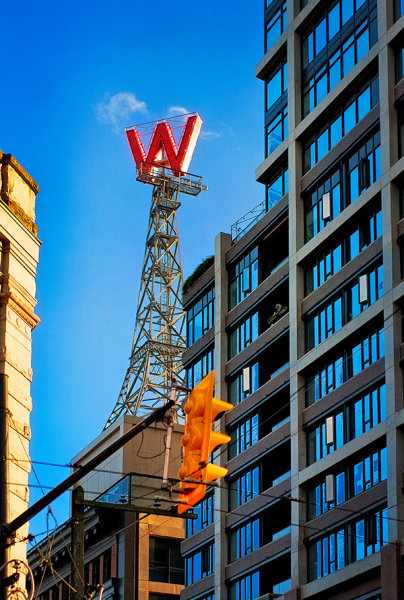
Vibrant colours can make your image pop!

Vibrant colours can make your image pop!

5. Photographing people

Cities are built for people, there are lots of them in any city.  It is always fun to see how people interact with the city. Do they use the park benches, do they take time to look around them in the city or do they simply march on to work. Look for opportunities to capture photos of people doing everyday stuff, but try and find a great backdrop to shoot against. A graffiti wall or a moving bus can make the perfect setting, good architecture too! Always be aware of people’s reaction to being photographed. I generally try and photograph people when they are not camera aware. If they spot me taking the shot, I will walk over to them, show them the image and explain why I shot it. Sometimes, people are not happy to be photographed, be respectful of this and be friendly. It’s amazing what a smile and a relaxed attitude can do.
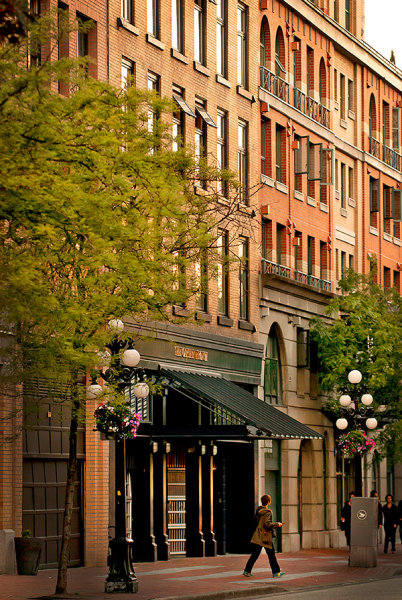
Use the city buildings as a backdrop to the people in the image

Use the city buildings as a backdrop to the people in the image

Your turn

Photographing in your city can be fun. Of course, always be aware of your surroundings. Be careful not to step off the sidewalk into the street without looking at the traffic (trust me, this happens). Also, be aware of where you are wandering. You may have innocently wandered into the “rough” neighbourhood which might be a bad idea with a large SLR around your neck.

Apart from being aware of your safety, photograph with abandon. Try and capture the essence of the city. Try and photograph the well known places in a new and fresh way. Above all, get out and photograph. As I said earlier, it may not always be possible to go out and shoot in some amazing natural setting, but you can get some really great images just outside your front door, in your home city.

Here is a fun exercise, choose a time to go out and get some urban shots. Select a theme and shoot five images, choose another theme and shoot another five, and so on. Once you have done this a few times, upload your favourite image to the comments below and let’s see how creative the shots are. I look forward to seeing your city through your eyes!
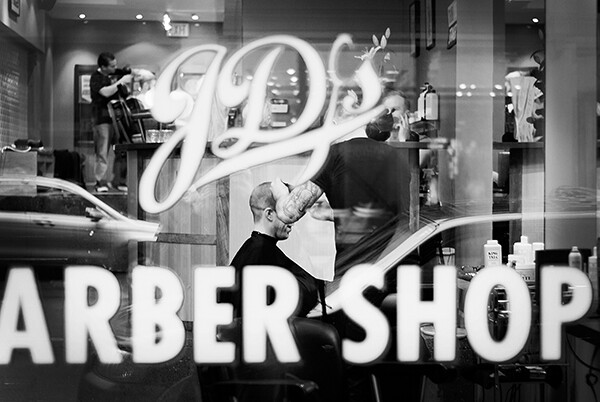
Look for refections, shapes and everyday life!

Look for refections, shapes and everyday life!

The post How to Create Amazing Urban Landscape and Street Photography Images by Barry J Brady appeared first on Digital Photography School.


Digital Photography School

 
Comments Off on How to Create Amazing Urban Landscape and Street Photography Images

Posted in Photography


Truck-A-Tecture: 2 Convertible Nomadic Dwellings on Wheels

14 Aug

[ By WebUrbanist in Technology & Vehicles & Mods. ]

truckatecture scissor lifted shelter

With participating design studios from around America, this exhibition features a series of amazing mobile spaces that use technology and ingenuity to explore new possibilities for the modern nomad. Two of the four projects in particular are worth a closer look, whether or not you are able to visit and see them on display in Omaha, Nebraska this month (images by Tom Kessler via Kaneko).

truckatecture truck based architecture

The Office of Mobile Design contributed the Aero-Mobile to the Truck-A-Tecture collection, using a scissor lift system to raise up and deploy a pod that then extends over the cab of the vehicle.

trucktecture

truckatecture top fabric steel

Fold-down walls expand usable space while the elevated platform allows for a smaller footprint and thus more versatile parking options (not to mention some safety in areas with aggressive or curious wildlife).

truckatecture modular furniture shelter

truckatecture interior structure view

The Pneumad by Min|Day is an inflatable structure that takes up relatively little space but spreads out to create a geodesic shelter with modular furniture.

trucktectwo

truckatecture inflatable dome home

The idea is, in part, to reduce the spatial and energy requirements of a portable shelter, making it possible for smaller vehicles to tow a part-time dwelling.

truckatecture other mobile shelters

truck a tecture gallery

On display through for two more weeks, the exhibition was organized “to explore the potentials of mobile living and adaptable architecture [and] generate conversation on current-day trends toward nomadic lifestyles. [It] offers new perspectives on transformable spaces. the projects utilize various mechanical techniques to provide the itinerant individual, traveling by vehicle, the ability to spread out when temporarily stopped.”

“A mash-up of popular and elite cultures, Truck-A-Tecture will transcend the current definitions of ‘pre-fab’ and ‘mobile architecture.’ Topics of nomadism, transportation, trucking culture and the nature of ‘home’ are among the topics to be explored in this exhibition. Other issues to be considered in this dialogue are sustainability and technological advances that have led many to a leaner, more efficient lifestyle.”

Share on Facebook


[ By WebUrbanist in Technology & Vehicles & Mods. ]

[ WebUrbanist | Archives | Galleries | Privacy | TOS ]


WebUrbanist

 
Comments Off on Truck-A-Tecture: 2 Convertible Nomadic Dwellings on Wheels

Posted in Creativity


Ich bin die hölzernen Türen

14 Aug

Ein Beitrag von: Maxime Simoncelli

Es ist für mich nicht ganz einfach, über meine Arbeiten zu sprechen, weil es immer damit endet, dass ich davon erzähle, wie ich zur Fotografie kam und weniger darüber, wie ich arbeite, weil sich das immer wieder ändert. Ich benutze viele verschiedene Techniken, denn ich mag die Vielseitigkeit von mobiler Fotografie, die Geduld, die analoges Arbeiten erfordert, manchmal möchte ich impulsiv sein und dann wieder lange über eine Serie nachdenken und mich selbst dokumentieren.

Ich denke, dass meine Arbeiten sehr unterschiedlich sind, obwohl meine Inspiration immer wieder von den selben Orten kommt, aus meinen Träumen und inspiriert von Musik, Gemälden, Zeichnungen oder Texten, die ich mag. Ich arbeite gern mit Farben und einige meiner Serien haben eine stark surreale und traumartige Stimmung, mit der ich auch die Farben assoziiere.

Das Wichtigste ist für mich, meine Bilder mit Musik zu verbinden, aus ihr ziehe ich die meiste Inspiration. Bands wie Tenhi oder Agalloch haben einen unglaublich starken Einfluss auf mich und ich kann die Gefühle, die ihre Musik in mir heraufbeschwören und die Arbeiten, die ich unter ihrem Einfluss erstelle, kaum voneinander trennen.

Leute haben meine Arbeiten als „unheimlich“ oder „ätherisch“ beschrieben und ich denke, dass das sehr gut beschreibt, was ich mache. Nicht, dass ich dringend einer bestimmten Ästhetik folgen möchte – ich tue, was ich visuell ansprechend finde – aber es ist schön, wenn Leute meine Arbeiten mit Worten beschreiben, die ich selbst mag.

Ein großer Ast und ein gerade noch zu erahnender Mensch im Nebel.

Von langen Haaren umspielte Hände legen sich in viele kleine Blüten.

Bunte Blütenblätter auf einer Wasseroberfläche.

Ein Mensch in einem bunten Wald.

Jemand hebt etwas zu seinen nackten Füßen auf.

Eine Person steht in einem grünen Wald und hebt viel Geäst auf.

Berge spiegeln sich in einem See mit vielen Farben.

Eine Person mit Efeu auf dem Kopf steht im Wald.

Doppelbelichtung mit Wald und einer Person.

Der wichtigste Teil für meine Bilder ist trotzdem die Natur und wird es auch immer sein. Anfangs habe ich nur Naturfotos gemacht, aber nach einem Jahr oder so hat es mich ein bisschen gelangweilt und ich beschloss, dass es Zeit war, weniger wörtlich zu arbeiten und auf die weite und bereichernde Welt der Symbole zurückzugreifen und mit ihnen zu arbeiten.

Nicht, dass die Natur ihren Reiz für mich verloren hätte – ganz im Gegenteil – aber ich hatte neue Texte und Bilder gelesen und gesehen und fühlte das wachsende Verlangen, etwas auszudrücken, was hinter dem Wahrnehmbaren liegt, etwas Idealistischeres. Der Dichter Verlaine ist hierbei mein Vorbild, ich möchte die Schönheit und symbolische Perfektion seiner Worte auf meine Bilder übertragen.

Ich schere mich nicht wirklich darum, ob ich mal hauptberuflich fotografieren werde oder ein Amateur bleibe, solange ich irgendwann, in ferner Zukunft, einmal aufwachen werde, eines meiner Bilder ansehe und die gleichen Gefühle habe wie beim Lesen eines Gedichts von Verlaine. Obwohl ich glaube, dass ich das nie erreichen werde, bleibe ich dran und versuche es jedes Mal noch etwas mehr.

Bewaldete Berge in tiefhängenden Wolken.

Ein Mädchen mit Umhang und Kapuze hält eine Glaskugel in der ausgestreckten Hand vor einem herbstlichen Wald.

Herbstlich bunte Abhänge im Nebel.

Ein Mensch mit Umhang und Kapuze in einem Wald.

Eine Person hält eine Fackel.

Bewachsener Boden unter Wasser.

Silhoutten von Gras und einem Ast vor einem bunten Himmel.

Ein Mensch hält ein Trinkhorn.

Meine Muse, Samantha, ist das einzige Modell neben mir selbst, mit dem ich arbeite und außerdem ein wichtiger Teil von allem, was ich tue. Ihre Weisheit und ihr literarisches Wissen sind immer eine große Hilfe und die Hälfte meiner Bilder würde ohne sie auch gar nicht existieren. Ich denke, dass es wichtig ist, die Meinung der Menschen zu hören, die einem wichtig sind.

Oft fehlt mir die nötige Perspektive auf meine eigenen Arbeiten und das erleben wir wahrscheinlich alle. Einige bewerten ihre Arbeiten in einem langsamen Prozess nach Wochen und Monaten immer wieder, aber das ist sehr schwer für mich, weil ich nie das Gefühl vom Anfang vergessen möchte.

Dieser Artikel wurde für Euch von Aileen Wessely aus dem Englischen ins Deutsche übersetzt.


kwerfeldein – Fotografie Magazin | Fotocommunity

 
Comments Off on Ich bin die hölzernen Türen

Posted in Equipment


New Photographer’s Guide to Blue Hour

14 Aug

Among the many tips and tricks new photographers get with regards to lighting, the time of day is an essential concept, which for getting some shots of landscapes and some dynamic shots of natural light and artificial light, is the time at dusk or dawn. This time is just before the appearance of the sun or just after it, when the light is soft enough to emphasize most of the dark of the scene, and yet not so dark that it necessitates the use of additional light source. This is a guide to Blue Hour, that natural time frame which is so poplar among photographers.

Blue hour 03

What is Blue Hour?

Blue Hour can be defined as the period of the day when the colour of the sky ranges from blue to dark blue, followed by black sky or vice versa depending upon the time of day it is being considered (i.e. for sunrise or sunset). It is termed as BLUE HOUR based on the consideration that the blue hue in the sky lasts for about an hour. In reality it lasts between 30 to 40 minutes approximately. Its duration also depends upon the geographical location and the season.

Rule of Thumb for Blue Hour times

The rule of thumb for Blue Hour is when exactly it starts and ends:

  • Sunrise: during this part of the day the Blue Hour starts around 30 minutes prior to sunrise. The peak of it can be 10 minutes before the sunrise. During sunrise, the blue hour diminishes very fast towards the sun rising on the horizon.
  • Sunset: during the sunset the Blue Hour roughly starts 10 to 15 minutes after the sun has set. I personally prefer to capture Blue Hour during the sunset as it gives me added time to setup my equipment, or change my location before the actual Blue Hour starts.
  • There are websites available where one can find out the approximate blue hour duration at any location so that you can plan your trip accordingly.
  • If the sky is overcast then the duration of Blue Hour will shorten and in some instances the clouds can be too dense soas to wash out the complete Blue Hour.

What to capture during Blue Hour

Blue hour 04

Blue Hour is best to capture cityscapes, landscapes and scenic beaches. The shots require long exposure or slow shutter speed thus making it difficult for taking pictures of people or moving bodies, as a slight movement can make the picture blurry but yet the light is optimum to bring out the vibrance of the landscapes.

Why to capture Blue Hour pictures

#1 Creativity in capturing motion

Since, Blue Hour photography requires long exposures or fairly slow shutter speed, depending upon the scenario the long exposure can be creatively used to capture motion. The best part about Blue Hour is to capture light trails of vehicles while also capturing cityscapes, and if it is partially cloudy then the movements of the clouds can be used to create a drag effect. When capturing scenic beaches the movement of water appears to be dreamy. All of these effects add to the dynamics of the photograph.

#2 Easy control of parameters in dim light

I personally find capturing shots during Blue Hour fairly easy and interesting as compared to bright light conditions. With the availability of the right gear (e.g. tripod, remote trigger or shutter release) it’s easy to control various parameters to compose your shots. In comparison to this during a bright sunny day there are chances of getting overexposed images or burnt spots if there is no proper control of the light source with regards to the subject. However, every photography technique has its own pros and cons.

Blue hour 05

List of Equipment for Blue Hour

The following are the essentials which can be considered as a must for Blue Hour photography:

  • DLSR – a must for taking any pictures. The better the DSLR, the better will be the noise performance for long exposures.
  • A rigid tripod – this as a must and the reason being long exposure/slow shutter speed during blue hour. So handheld shots maximize the chances of blurry images.
  • A cable or wireless remote shutter release – this is also one of the essential items which can help you in avoiding camera shake. An alternative to this is self-timer mode but at times you may need to use Bulb (exposures longer than 30 seconds) mode to capture the surroundings (for multiple layer blending) when shooting Blue Hour.
  • A handy flash light – to look around the surrounding areas when setting up your tripod in case the place is a bit dark.
  • A stop watch – this is now available in most of mobile phones, and comes very handy when you need to monitor the duration of shutter release in case your DSLR or remote doesn’t do that.
  • A wide angle zoom lens or lens suitable for composition – not a must but a wide angle zoom lens will help you in composing your frame properly as you can zoom in and out depending upon what you need to see in your picture.
  • Lens cleaning cloth and blower – this is one of the essentials to keep the lens clean in case of fingerprints or dirt. Although this isn’t specifically a Blue hour essential, it is a photography essential nevertheless.
  • Miscellaneous bits – these things can be handy and will make your photography comfortable. If you are setting up your camera around grass then a bug repellent will be useful and also if the weather is hot don’t forget to carry a small towel to wipe off the sweat rather than dripping onto your DSLR or lens.

Blue hour 02

How to capture Blue Hour

Step one: Setting up your equipment

The first and foremost is to setup your camera on a tripod, on firm ground, to avoid any camera shake. Place the tripod on the ground and give a firm press against it, to make sure it is set in position. Place your camera on the tripod and make sure it is properly locked on. Take a look from the viewfinder and compose your frame, and also make sure that the camera is properly aligned using a bubble level or electronic level (if available in your camera). Do make sure that you are not directly under a source of bright light, which can make lens flare.

Connect the remote to the DSLR if it’s a wired one, or keep a wireless remote ready to be used. Looking into the viewfinder, try and use the autofocus to lock focus on any of the bright objects in your frame. Once the focus has been locked put the focusing switch on your lens to Manual Focus in order to avoid any re-focusing and lost focus.

Try capturing picture in RAW format, rather than JPEG, as it gives us more flexibility and details when post-processing the image. Double check that your focus is covering the complete frame properly by taking a couple of test shots. I always try and make sure that I am there well before Blue Hour so that I can take my sweet time to setup my equipment and be ready to take pictures.

Blue hour 01

Step two: Taking multiple exposures

Once your equipment has been setup, and the lens has been focused properly, set the aperture between f/8 and f/16 to make sure you have a good depth of field. My personal preference is that I keep a balance of ISO and shutter speed to control the noise in the picture. The preferred setting for ISO is between 100-200, and the rest I leave to the shutter speed which ranges from five seconds to over a minute, depending upon the foreground details or any light show I need to capture. I prefer shooting in full manual mode so that I can control all the parameters.

If you have set a frame of the shot which contains trees and grass, try and capture couple of exposure in well lit condition so that you may use those during the post-processing. This will also give you an idea of what shutter speed you will need to capture the sky.

Keep taking shots at different intervals during the Blue Hour in order to use the best exposure during the post-processing of the image. If your composition contains any light shows or any other architecture which has a lot of light, you can adjust the shutter speed to suit, and prevent it from being overexposed. At the same time you should keep reviewing your shots to make sure they are correctly exposed for post-processing.

Post-processing of exposures

This can be a separate article on “Multiple Layer Blending in Adobe Photoshop” but I will give a brief description about it here.

I use Adobe Photoshop for multiple layer blending of my photographs of Blue Hour. If the picture is a RAW file format then you can change the basic parameters like Exposure, Clarity, Vibrance, Temperature, etc., when you open the file. Once you have done that, the actual image opens up in Adobe Photoshop. Select and open multiple images on the basis of exposure of sky, foreground, etc. Select one image that has the best Blue Hour exposure and create a blank “New Layer” to copy the other image which has good exposure of the foreground.

Layer blending

Arrange the different layers as per the priority of coverage in the example image the layer having a major section of the sky to be set as top layer followed by the foreground layer. Use the Erase tool to remove the underexposed areas from the top layer to reveal the correctly exposed layer for the foreground (you can also use a layer mask). Adjust the parameters like Selective Colour, Shadow/Highlights, Contrast, etc., of every layer to have an even colour effect. Merge these layers to form a single layer upon completion and you have got your final image ready.

I personally don’t merge the layers which gives me the flexibility to alter any of the layers if required in future.

Feel free to drop your suggestions and comments, if you have any, as I am always eager to learn more and more.

The post New Photographer’s Guide to Blue Hour by Ausaaf Ahmad appeared first on Digital Photography School.


Digital Photography School

 
Comments Off on New Photographer’s Guide to Blue Hour

Posted in Photography


I’m Back From Vacation. Now What?

14 Aug
Extra photos for bloggers: 1, 2, 3

Vacation time’s almost over! Your phone and camera are filled with photos from all your fun trips…what now?

You don’t want them stored in your laptop forever, but there isn’t enough shelf space in the world to show them off.

Where we’re going we don’t need shelves.

We’ve rounded up some our favorite photo projects from our archives and elsewhere around the ‘net to show you what to do with those awesome photos of yours.

10 Ideas for Showing Off Vacation Photos

(…)
Read the rest of I’m Back From Vacation. Now What? (501 words)


© Lauren for Photojojo, 2014. |
Permalink |
No comment |
Add to
del.icio.us

Post tags:


Photojojo

 
Comments Off on I’m Back From Vacation. Now What?

Posted in Equipment


14. August 2014

14 Aug

Ein Beitrag von: Nikolas Moreno

Ein sehr dunkler Waldrand mit Hochstand.


kwerfeldein – Fotografie Magazin | Fotocommunity

 
Comments Off on 14. August 2014

Posted in Equipment


Wie man ein geiles Foto macht

14 Aug

Ich beginne diesen Artikel mit einem komischen Gefühl im Bauch. Ich habe schon oft darüber nachgedacht, dieses Thema anzuschneiden, hier in unserem Magazin. In meinem Kopf fliegen tausend Argumente hin und her und dieser Artikel ist der Versuch, diese zu ordnen.

Wie Ihr schon lesen könnt, drehen sich meine Gedanken um einen Themenkomplex, der nicht ganz leicht zu fassen ist. Wenn ich versuche, das alles in einen Satz zu packen, dann würde sich das so lesen:

Alles wird erklärt.

Ich schreibe hier nichts Neues. Jede Person kennt diese Artikel und Programme, in denen alles, was mit der Fotografie zu tun hat, erklärt wird. Wie man tolle Landschaftsfotos macht, welches Licht für ein Portrait gut ist und weshalb ein Blitz bei einem Makro so wichtig ist.

Mein ungutes Gefühl gilt jedoch nicht den Artikeln und Workshops, die insbesondere Technik erklären. Mit Technik meine ich, wie man Negative entwickelt, was Bokeh ist und wie in Lightroom die Datenbank aufgebaut ist.

Dies hat meiner Meinung nach absolute Berechtigung und ist auch notwendig. Worum es mir geht, ist das Erklären von wie man ein geiles Bild macht.

Nicht die Funktion wird erklärt, sondern die Form. Foto-Magazine, Hobby-Fotografen oder irgendwelche anderen Leute erklären in Artikeln oder Videos, wie man solch ein Foto oder so einen Effekt herstellt. In kurz: Wie man fotografiert.

Und ja, ich weiß, der Übergang zwischen Technik erklären und Kreativität erklären, der ist fließend. Jedoch fällt mir auf, dass die Detailtreue, die mitunter bis ins Kleinste auserklärt wird, sehr, sehr hoch ist.

Ihr merkt, ich kämpfe immer noch mit den Worten, aber so langsam komme ich dem Phenomen näher. Workshops, Video-Anleitungen und Blogartikel, die sich „In 10 Schritten zum perfekten (bitte Wunsch einfügen)-Foto“ nennen, beleuchten jeden noch so ungeahnten Schritt, führen „Anfänger und Fortgeschrittene“ (was auch immer das ist) direkt zum fotografischen Erfolg.

Erfolg. Ganz wichtig. Erfolg.

Was mich an alle dem stört, ist Folgendes: Diese Fotografen erklären nicht, wie sie selbst arbeiten, sondern, wie man ein tolles Bild macht. Das impliziert schon sprachlich eine fachliche Hohheit, die niemand haben kann. Denn gerade in der Fotografie ist gut oder toll doch sehr davon abhängig, wer das Bild betrachtet.

Dazu kommt – und das finde ich viel schlimmer – dass aus diesem How-To-Gedöns ein riesiger Markt entstanden ist, der jeden Mausklick bis zum „jetzt hier drücken“ vormacht.

Was passiert? Jedes Fünkchen eigener Kreativität, jeder Anschein eines Selbst-Entdecken-Wollens wird unterdrückt. Wir haben ja genügend Profis, die uns die richtigen Schritte vormachen.

Meine Kritik gilt also nicht denjenigen, die verständlich machen, wie man einen Lith-Print macht oder wie eine Langzeitbelichtung zu erledigen ist, sondern dieser riesigen Maschinerie derjenigen (ja, es sind meistens Männer), die uns sogar sagen wollen, was wir wie zu fotografieren haben.

Was kommt dabei heraus? Eine große Masse an Fotografien, die alle so aussehen, wie es die Meister vorgemacht haben. Kopien von Kopien von Kopien. In diesem Zusammenhang sei vorangestellt, dass Foto-Gurus fast immer so tun, als ob sie auf die ganzen Tricks selbst gekommen sind. Ist klar.

Was mir dabei ein schlechtes Gefühl macht, ist Folgendes: Dieser Markt macht die Kreativität und Eigenständigkeit von Fotografie-Begeisterten schon von klein auf kaputt.

Anstatt zu befördern, den eigenen Kopf einzuschalten, in sich hineinzuhören, einfach auszuprobieren und einen persönlichen Weg mit der Fotografie zu gehen, wird ständig befeuert, dass doch nun diese Technik der Hit, diese Kamera das kann und es den hundertachtundzwanzigsten Workshop für aalglatte Haut im Strobisten-Streiflicht-Studio-Setting gibt.

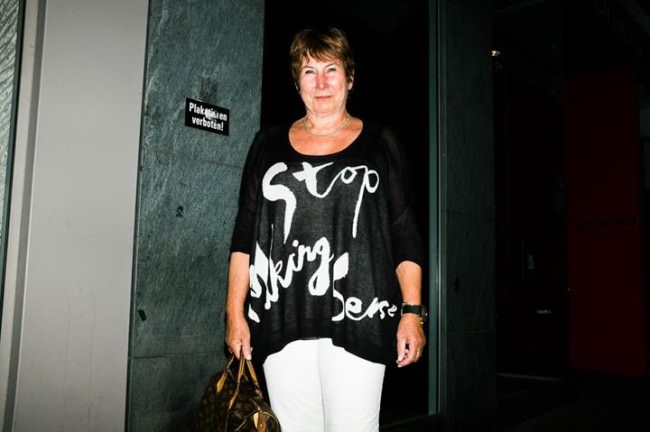
Eine Frau mit einem Oberteil, auf dem STOP MAKING SENSE steht.

Alles wird erklärt.

An dieser Stelle muss ich so ehrlich sein und sagen, dass ich das auch schon gemacht habe. Ich habe zig How-To-Posts geschrieben, Workshops gegeben und Videos publiziert, in denen ich genau diesen Weg gegangen bin. Zwar habe ich mich immer unwohl dabei gefühlt, den Erklär-Bär zu spielen und diesem Gefühl hätte ich früher auch folgen sollen.

Denn heute bin ich nicht sehr stolz darauf. Ehrlich gesagt schäme ich mich ein wenig dafür.

Denn wer einmal auf diesen Zug aufspringt und jeden kleinen Scheiß in Mini-Portiönchen erkären kann, bekommt relativ schnell ganz viele Fans. Und wer viele Fans hat, kann relativ schnell auch viel Geld verdienen (Ausnahmen gibt es immer). Es dauert meist nicht lange, da klingelt schon das Telefon und irgendjemand bietet Dir Geld dafür an, das, was Du machst, ganz groß rauszubringen.

Doch ich habe mich irgendwann gefragt, ob es das ist, was ich will. Ob ich mein Leben lang den Erklär-Bär spielen oder einfach mal selbst fotografieren will. Erfahrung sammeln. Die Fotografie erst einmal zu erleben und irgendwann, wenn ich alt und grau bin, vielleicht einen Workshop zu machen, der Leute herausfordert, der sie auf die eigene Bahn bringt.

Doch zuvor muss ich erst einmal meine eigene Bahn finden. Und da bin ich noch lange nicht.

Ich selbst habe mir, was Anleitungen und How-Tos betrifft, 2011 vorgenommen, erst einmal die Klappe zu halten. Zu machen, zu erleben und von meinen Erfahrungen zu sprechen, wenn ich hier schreibe. Meine Fotos zu zeigen, wenn ich sie zeigenswert finde, aber nicht darauf rumzuhacken, wann ich wie fotografiert habe und den Leser so für dumm zu verkaufen.

Kurz: Meinen Weg zu gehen und zu versuchen, aus der ganzen Suppe und den Wertvorstellungen, die ich jahrelang so vergöttert habe, herauszufinden und etwas zu machen, was erst einmal nur mir gefällt.

Meine Familie und Freunde zu fotografieren und ihnen immer wieder mal ein Foto zuzustecken, ohne Tamtam. Meine Welt festzuhalten, ohne dem ständige Drang zu folgen, anderen zu erklären, wie sie das auch machen können.

Für mich ist die Fotografie sehr intim und persönlich. Sie hat etwas mit mir und nicht mit den vorgekauten Vorstellungen von anderen zu tun.

Aus diesem Grunde bedauere ich, wie seelenlos so viel in Foto-Magazinen und -Blogs publiziert wird. Ich finde es schade, wenn ein Medium wie die Fotografie so nervtötend mit Bullshit-Erklärungen und Das ist ein geiles Bild, mach es nach, dann hast Du auch ein geiles Bild voll ist.

Wo ist hier das Menschliche? Der Zweifel? Das Rotzige? Das unperfekte Leben einer Person, die versucht, mit der Fotografie klarzukommen? Die stolpert? Die dazulernt? Die einfach lebt? Wo?

Nein, aus jedem Schrittchen, das man dazugelernt hat, bastelt man ein How-To. Ich finde das schade. Und ich möchte damit nichts (mehr) zu tun haben. Und ich weiß, wie verlockend es sein kann, alles zu erklären.


kwerfeldein – Fotografie Magazin | Fotocommunity

 
Comments Off on Wie man ein geiles Foto macht

Posted in Equipment


The Essential Guide to Black and White Photography

14 Aug

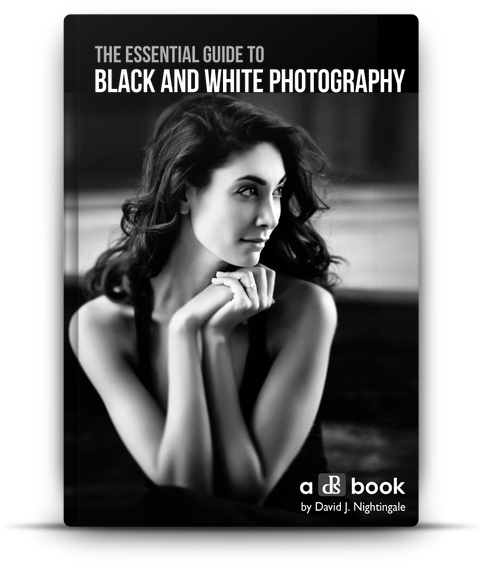
There has been a real buzz of excitement around dPS headquarters this past week because today we’re launching a new eBook that we’re really proud of – The Essential Guide to Black and White Photography – an eBook that will walk you through everything you need to know to take beautiful black and white images!

Blackandwhitephotographycover

My first love with photography was with black and white photography. It was in a high school. The class that I remember sitting in a darkroom with two friends, watching images appear in front of me on paper, sitting in a chemical bath.

At first they were faint grey outlines of the image, but as the chemicals did their work, tone, shade and contrast were added to the image until it had fully appeared.

While our family photos were all shot in colour from the time I was born, as a teenager I would spend hours gazing into those first black and white images that I’d shot and developed. I’m not exactly sure what it was about them but there was a timeless, classic and magical quality to them that I still love today.

It turns out that many of us here at dPS have similar memories and love for the black and white image, and so when we started to talk about putting together this new eBook on the topic we did so with real anticipation and energy.

We looked around for a photographer to author this guide 12 months ago and came across the work of David Nightingale. David not only shoots beautiful images but he’s the creator of one of the most successful courses on the topic so we knew we’d found our dream author and set out to convince him to partner on the project.

Thankfully he agreed and after many months of preparation today we’re excited to announce The Essential Guide to Black and White Photography is available for you to purchase with a very special Early Bird Offer.

The eBook walks you through everything from learning to ‘see’ and take beautiful black and white images, to advice on gear right through to processing your images to perfection.

NewImage

Early Bird Special

NewImageWhen you purchase The Essential Guide To Black And White Photography you’ll also receive a free copy of 10 Recipes for Amazing Black And White Photography.

This bonus eBook contains all the ingredients you’ll need for shots such as an Ansel Adams Landscape right through to vintage images and classic black and white portraits.

These recipes helps you take the amazing teaching in the essential guide, and put it into action in a variety of situations – it’s the perfect companion!

Normally this would cost you $ 9.99 USD, with our new essential guide it’s FREE – but for a limited time only.

Grab Your Copy Today

These two eBooks are yours today to download for just $ 19.99 USD.

They have straight forward explanations and tricks for all skill levels. Anyone wanting to take better black and white photos will get something out of this book.

Pick up yours here today.

The post The Essential Guide to Black and White Photography by Darren Rowse appeared first on Digital Photography School.


Digital Photography School

 
Comments Off on The Essential Guide to Black and White Photography

Posted in Photography


Samsung announces Galaxy Alpha with metal body and 12MP camera

14 Aug

Samsung has announced the Galaxy Alpha – the first Galaxy smartphone with a metal frame. With its 4.7-inch 720p AMOLED screen the Galaxy Alpha is similar in dimensions to the Galaxy S5 Mini but 6.7mm thinner. The device comes with a 12MP rear camera which is unusual in that no other current high-end Samsung offers this sort of megapixel-count but no information on sensor size and technology is currently available. 

Articles: Digital Photography Review (dpreview.com)

 
Comments Off on Samsung announces Galaxy Alpha with metal body and 12MP camera

Posted in Uncategorized


Accessory Review: Drobo Mini RAID

14 Aug

The Drobo Mini is a portable RAID storage solution with four HD bays, speedy Thunderbolt connectivity, and desktop-based monitoring software. Ideal for photography and videography, the Drobo Mini has many features that might make it attractive to enthusiast and professional photographers and videographers. See how the Drobo Mini fared in our review.

Articles: Digital Photography Review (dpreview.com)

 
Comments Off on Accessory Review: Drobo Mini RAID

Posted in Uncategorized