RSS
 

Archive for June, 2014

A little bit better: Nikon D810 First Impressions Review

27 Jun

The Nikon D810 replaces both the D800 and D800E, and the changes that Nikon has made in the new DSLR are significant. There’s no OLPF to get in the way of resolution, and as well as a lower base and higher maximum ISO sensitivity the D810 is 25% faster than its forebears, offers a slightly improved AF system and boasts 1080/60p video with built-in stereo recording. We had a chance to get our hands on a pre-production D810 recently, and we’ve prepared a detailed look at its key features. Click through to read our First Impressions Review

related news: Digital Photography Review (dpreview.com)

 
Comments Off on A little bit better: Nikon D810 First Impressions Review

Posted in Uncategorized


Olympus debuts ‘Anywhere Classroom’ video series

27 Jun

Olympus US has announced a new video series. Titled ‘Anywhere Classroom’, the videos provide beginners with tips for a variety of shooting scenarios. The first three videos launch today, featuring Olympus Visionary Jay Dickman offering tips for outdoor photography and demonstrating with the OM-D E-M1. A second season is planned for fall 2014 featuring advice for light painting and night shooting. See video

related news: Digital Photography Review (dpreview.com)

 
Comments Off on Olympus debuts ‘Anywhere Classroom’ video series

Posted in Uncategorized


Review of the Turfstand by Windborne

27 Jun
The Turfstand sheds the legs of conventional light stands and adds ground-anchoring spikes for a new layer of stability in outdoor lighting.

The Turfstand sheds the legs of conventional light stands and adds ground-anchoring spikes for a new layer of stability in outdoor lighting.

When you stop and think about it, how much is there to really say about a light stand? I suppose we could discuss height, weight or materials, but once we got our preferences out on the table, it would be a pretty short conversation. As long as it holds what you put on it safely and securely, and you can get it where you need it, the discussion is pretty much over, right? If we were talking about a traditional light stand, maybe. But since we’re talking about the Turf Stand, there’s actually quite a bit more to discuss.

Created by Michigan photographer Mike Drilling, the Turfstand is anything but traditional. Replacing the three legs we’re all used to with five sharp, metal spikes, at first glance the Turf Stand bears more of a resemblance to Poseidon’s trident than it does to a light stand. But a light stand it is. Obviously designed for outdoor photography, the base goes about ten inches into the ground, anchoring it securely into just about any terrain.

Specifications

  • Height:  8 feet from base to top of stand when fully extended (2.4 m)
  • Weight:  2.5 lbs (1.13 kg)
  • Spikes:  5 – the longest of which are 10″  (25.4 cm)
  • Materials:  aluminum and steel
  • Maximum load:  approximately 4.5 lbs (2.04 kg)
  • Price:  $ 139.00 (USD) on company website. $ 99.95 (USD) on Adorama and Amazon

First Impressions

There is no question that a lot of thought went into the design and manufacture of the Turfstand. Straight out of the box it appears to be sturdy and well-crafted. While I’ll confess to having one of those, “Why didn’t I think of this?” moments, I also have to admit to being a bit skeptical. After all, a conventional light stand and sand bag have always served me well in the past, so what’s the big deal? Then I remembered how much I hate dragging sand bags around with me, so that became a quick point in the Turfstand’s favor. Then I thought about uneven terrain, odd angles, and some of the other dilemmas that Mother Nature and circumstance sometimes throw in our way. Skepticism slowly gave way to intrigue and I was eager to put the Turfstand through its paces.

turf-stand-review-dps-001

Caution #1 – those spikes are sharp!

Considering the fact that the stand was designed to give you a sturdy base in grass, dirt, mud, sand, clay, etc., I would fully expect the spikes to be sharp. I would, however, also expect there to be a guard of some sort included for when the stand is not in use. First and foremost, you MUST be abundantly aware of how you carry this thing, especially when walking with or moving around your subject. Regardless of which direction I had the spikes pointed, I was a bit nervous- not only for the safety of the people around me, but for my own as well. After all, this was designed for uneven terrain. Tripping while carrying this stand unprotected could have some pretty serious results. Putting it in my light stand bag was not a viable solution, out of fear that the spikes might damage the bag itself, or the umbrellas and softboxes also stored in it. I addressed my concern with some heavy-duty cardboard.

turf-stand-review-dps-006

Caution #2 – this is not an air-cushioned stand

If you’ve been doing this a while, you know that air-cushioned stands lower slowly, regardless of how much weight is mounted on them. Non-air-cushioned stands, on the other hand, will slide down pretty fast as soon as the thumb screws are loosened. While this should not be a factor that prevents you from using this stand, you should be aware of it. As with all light stands and background stands, maintain control of each section as it’s lowered. You’ll not only keep the people around you safe, but you’ll also avoid accidents that could damage your gear.

turf-stand-review-dps-010

Out in the field

I do a lot of portrait location work, so I was pretty excited to see how the Turfstand performed. As noted, the spikes are pretty sharp, so driving the base into the ground was pretty easy. I tried it out on grass, hard-packed gravel, wet soil, and our famous Georgia clay. I couldn’t find anything on the Turfstand website regarding water-resistance, so I passed on the idea of trying it out in a running, shallow river nearby, but my guess is it would be fine, as long as the base was not completely submerged.

One area where the Turfstand performed exceptionally well, was when I tried it at odd angles. How many times have you been shooting portraits on location and not been able to get your light stand down low enough? Portraits with subjects sitting on the ground often require an assistant holding the light, or turning a light stand on its side and laying it horizontally on the ground. The Turfstand’s unique design allowed me to stick it securely in the ground at a 45 degree angle, bringing the softbox down to a lower height, without the usual hassles.

turf-stand-review-dps-003

Taking odd angles and uneven terrain a few steps further, I decided to see how the stand would fare if stuck into the side of a hill. As you can see from the photo below, it’s pretty adept at putting a light in places you wouldn’t be able to even try with a conventional light stand. Even better, it lets you do so without putting you, or an assistant, in a physically dangerous or precarious position. We all want to get “The Shot” but personal safety should come first (most of the time).

turf-stand-review-dps-008

The other big question mark for me was how the Turfstand would perform under windy conditions. Starting with the premise that no light stand is going to stay 100% still in even a light breeze once an umbrella or softbox is mounted on it, my concern was less about movement and more about falling over. By virtue of its three legs, a traditional light stand is going to have a lower center of gravity, resulting in less lateral sway. The down side is that on a windy day your traditional stand will either stay up or get blown over. Up or down. There’s not going to be much in between. An assistant or a sand bag will obviously help, but not everyone has the luxury of a second set of hands on a photo shoot. While I did notice some sway with the Turf Stand–particularly when used at unconventional angles–I was never worried about it being dislodged from the ground.

As with any piece of equipment, you have to use some common sense. In windy conditions, a softbox will fare better than an umbrella, but remember that any chain is only as strong as its weakest link. In the case of the Turfstand, my weakest point was where my speedlight and softbox were attached. Just because the Turfstand can withstand a heavy wind, don’t assume that your light or modifier can. As the product insert says, “Nothing works in a hurricane.”

For purposes of this test, I used a Nikon SB800 speedlight in a 24″ Glow HexaPop softbox (one of my favorite modifiers for ease of use and quality of light, full review coming soon). The combination of the two was well below the 4.5 pound load limit. As with any light stand, exercise caution against pushing the maximum load limit, or maximum extension.

turf-stand-review-dps-007

Pros of the Turfstand

  • Lightweight and easy to use
  • Sturdy and secure
  • Quality materials and construction
  • One-year, 100% guarantee
  • Great performance on irregular terrain
  • Reasonably priced

Cons of the Turfstand

  • The spikes could be a hazard
  • Non-air-cushioned construction

Final thoughts

I review a lot of photography products, and some of the highest praise I can offer is that a product does what it says it’s going to do and does it well. That is certainly the case with the Turfstand. Plant it in the ground and it’s not going anywhere. It’s a unique solution to a problem that any location photographer has faced, and any solution that lets me leave the sand bags at home is a solution well worth considering. You’ll notice below that I’ve given the Turfstand 4 out of 5 stars. If the designers can come up with a guard for the spikes when not in use (something I’d be willing to pay extra for, by the way), and switch to air-cushioned construction, I’d gladly give the 5th star.

As noted, the Turfstand sells for $ 139.00 (USD) on the Windborne website, but even at its $ 99.95 Adorama price, I can’t help but think the price is maybe a bit high. Realizing that you can buy two conventional air-cushioned light stands for the cost of just one Turfstand makes you stop and think about whether the added versatility is worth the added cost. As with any gear purchase, only buy it if your answer is “yes.” For me, I don’t see it being a major part of my workflow right now, but it’s nice to know that an option like the Turfstand is available if that changes.

The post Review of the Turfstand by Windborne by Jeff Guyer appeared first on Digital Photography School.


Digital Photography School

 
Comments Off on Review of the Turfstand by Windborne

Posted in Photography


Happy Camera Day!What Kind of Camera are YOU?

26 Jun
Extra photos for bloggers: 1, 2, 3

“What kind of camera am I?”

It’s a burning question we’ve all had in the back of our minds, and today it shall be answered.

In honor of National Camera Day this Sunday, June 29th, we are going to help you find out what kind of camera you would be if you were reborn as the best invention ever.

Now sit back and put on your virtual Sorting Hat to discover what kind camera TRULY represents your personality.

Discover Your Camera Alter Ego for National Camera Day!

(…)
Read the rest of Happy Camera Day!
What Kind of Camera are YOU? (509 words)


© Lauren for Photojojo, 2014. |
Permalink |
No comment |
Add to
What Kind of Camera are YOU?”>del.icio.us

Post tags:


Photojojo

 
Comments Off on Happy Camera Day!What Kind of Camera are YOU?

Posted in Equipment


’5 Bridges’ Wins Competition to Stitch Portland Back Together

26 Jun

[ By WebUrbanist in Architecture & Cities & Urbanism. ]

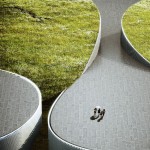
stitch portland pool below

In many cities, freeways cut through the heart of urban centers like fresh wounds faded to old scars, but what if there were a way to reintegrate the disparate sides across the divide?

stitch portland five bridges

stitch portland swimming pool

The Portland chapter of the American Institute of Architects awarded first place to a particularly daring solution to this problem, one that proposes inhabitable fitness infrastructure to close the gap.

stitch portland climbing walls

Designed by Chadbourne & Doss, the scheme calls for cycling and running tracks, climbing walls, swimming pools and skate parks, all set to hover over the roadways below.

stitch portland skate park

Each section allows for existing traffic flows, working in and around them while mixing new programmatic layers into their midst.

stitch portland running track

The idea is to use these activities to join both sides but also simultaneously provide a series of iconic structures visible to (hopefully just the passengers of) fast-passing cars on the freeway as well.

stitch portland velodrome cycling

The shape of each, being uniquely suited to its purpose, creates a sequence of distinctly different architectural forms experienced in succession.

Share on Facebook


[ By WebUrbanist in Architecture & Cities & Urbanism. ]

[ WebUrbanist | Archives | Galleries | Privacy | TOS ]


WebUrbanist

 
Comments Off on ’5 Bridges’ Wins Competition to Stitch Portland Back Together

Posted in Creativity


7 Proven Ways to Come Home with Better Travel Photos

26 Jun

It s all about the light

Your next vacation or around-the-world escapade is the perfect time to brush up on your photography skills.

After all, taking a great photograph is never more important than when you’re seeing people and places you may never see again. Travel opens your eyes to other cultures, and if you prepare before you leave, it can also open the eye of your camera lens to infinite possibilities.

But first things first – let’s make sure you have a basic understanding of photography before you step onto the plane. Here’s a list of seven proven ways to come home with better travel photos.

#1 Take a good look at your gear

You don’t need to spend a million dollars on crazy-expensive gear. However, you do need a camera from this century. Better yet, a camera that was made in the last five years. Technology is changing so rapidly that you’re really going to notice a difference with newer cameras.

Also, don’t be afraid to check out the new lightweight DSLR cameras that are all the rage. You may feel cooler hauling around a huge Nikon D5300, but a more compact model can take great pictures too (plus compact is always better when you’re traveling).

#2 Get intimate with your settings

Get intimate with your settings

You haven’t just been leaving your camera in Auto mode, have you? What fun is that? Now I’m not saying you have to learn how to manually focus before you take-off for say, Fiji, but at least get familiar with these three need-to-know settings (the Exposure Triangle) on your DSLR camera.

#3 Do your research

Dive into Google Images, Flickr, or 500px to look for photos (and photographers) you love. Choose at least three travel photographers and follow their blogs.

Not only will get some great ideas for photographs, you’ll be able to find tips and techniques for getting specific effects you’ve seen in the photos you admire.

#4 Get to know your subject

Get to know your subject

Photographing people is one of the most exciting parts of travel photography. Imagine getting great shots of Buddhist monks in Laos, a tribesman in the African bush, or mountain people in the Himalayas. But you’re not just going to walk up to someone you’ve never spoken to and stick a camera in their face (promise me you won’t do that).

So how are you supposed to approach your subject? The #1 tip is to make friends first. That can be tough in and of itself when there is a language barrier, but it’s not impossible. Read: Practical tips to build your street photography confidence (which also applies when travelling).

#5 Get lost

Get Lost

You’re not going to get great travel photographs taking pictures of the monuments and sites that every other tourist on earth has already photographed. When you travel, get lost! Venture out into villages and unknown areas that no one else goes to. Don’t be afraid to get off the beaten path.

The most exciting photos you’ll take won’t be of the Empire State Building, they’ll be of the ancient bartender in that random dive bar in Astoria, Queens (the one you never would have found if you hadn’t gotten completely lost).

#6 Get close

Repeat after me: “I will not be a lazy photographer.”

Get close

Lazy photographers use lenses instead of legs. I want you to use those legs of yours to walk, run, jump, swim, crouch, bend, and move any way you can to get close to your subject. Why? Because the simple act of getting close to your subject will drastically improve your travel photographs.

Once you’ve followed step #4, don’t be afraid to put your camera as close as possible to your subject, sometimes right in their face even.

Disclaimer: this tip does NOT apply to house fires, political violence, or wildlife safaris.

#7 It’s all about the light

It s all about the light

The other day a student of mine showed me a photograph that was taken in the middle of the day, under the hot Hoi An sun. There were several problems with the shot, but the main reason it looked flat and lifeless was simply because of the time of day it was taken.

I told her what I tell everyone; don’t bother getting out your camera between the hours of 8 a.m. and 4 p.m. The light is too harsh. Get up before the sun and/or wait until the sun is about to set, and you’ll enjoy amazing light that will work wonders for your photographs.

That same student sent me a photo the following day, this time taken just before sunset. It was 10x better. Had she suddenly become a better photographer in less than 24 hours? Yes. But only because she learned to tell time.

Follow these seven tips and I have no doubt you’ll be taking amazing travel photographs on your next trip. Have any additional tips you’d like to share? Please do so in the comments below.

Safe travels!

The post 7 Proven Ways to Come Home with Better Travel Photos by Etienne Bossot appeared first on Digital Photography School.


Digital Photography School

 
Comments Off on 7 Proven Ways to Come Home with Better Travel Photos

Posted in Photography


26, June 2014 – Acadia National Park – A Quick Guide To Photography

26 Jun


It’s summer time and a lot of you will be heading out to America’s National Parks to capture their beauty and to enjoy the great outdoors.  I was in Yosemite NP last week working on a NEW LuLA tutorial.  It’s one of the grandest National Parks of them all. I’m still working on images and will post some on the home page soon.  Today’s article is by QT Luong.  He is known for being the first person to photograph all 59 US National Parks in Large Format.  He has come on board as a regular contributor and we will be regularly publishing his articles on his National Park Photography guides.  we’ll start with the ‘A’s and today’s article is  Acadia National Park – A Quick Guide To Photography.


The Luminous Landscape – What’s New

 
Comments Off on 26, June 2014 – Acadia National Park – A Quick Guide To Photography

Posted in News


Traumwelten

26 Jun

Seid Ihr bereit für eine fantastische Reise in die Traumwelten von Kindra Nikole? Hier könnt Ihr einsamen Wanderern, Elfen und Naturgeistern begegnen. Menschen werden eins mit dem Wald, kommunizieren mit den Tieren und legen sich ins weiche Grasgeflecht unter die Bäume, um der geheimnisvollen Welt um sich herum zu lauschen.

Kindra Nikole lebt in Seattle und ihre konzeptionellen Arbeiten stützen sich auf surreale, unwirkliche Traumwelten in der Natur. Als ihre wichtigsten Einflüsse nennt sie den Illustrator Brian Froud, den „Muppet Show“-Erfinder Jim Henson, Autor J. R. R. Tolkien, den japanischen Regisseur Hayao Miyazaki und die Fotografin Kirsty Mitchell. Kindras fantastische Bilder haben oft einen düsteren Hauch, meist geht es um eine einsame Gestalt in der Natur und verschiedene Emotionen.

In einem Interview mit dem Magazin Lost Freedom verrät sie:

Ich bin ziemlich schrullig und introvertiert und ich glaube an die Kraft der Natur, des Kosmos. All das beeinflusst auch meine Arbeiten. Wenn ich meine Fotos beschreiben müsste, würde ich sagen, sie tendieren ins Missgelaunte, Mystische und Myteriöse. […] Während der Bildbearbeitung höre ich Ambient-Musik, was mir hilft, mich fallen zu lassen und was meine Ergebnisse sicher stark beeinflusst.

Eine Frau mit Efeukleid steht im Wald. Auf dem Kopf trägt sie Tannenzapfen.

Eine goldene Frau hockt zwischen Wurzeln.

Eine Frau trägt ein kleid aus violetten Blumen.

Eine Frau steht in einem See aus Wolken.

Eine Frau steht am Rand eines Sees und trägt einen langen Mantel.

Eine Frau liegt im Gras und hält einen Blumenstrauß.

Eine Frau mit Eiskrone in einem schneebedeckten Wald.

Eine Frau mit Eiskrone in einem schneebedeckten Wald zwischen zwei Bäumen.

Eine Frau trät eine Krone aus brennenden Kerzen. Auf Schultern und Händen stehen ebenfalls Kerzen.

Kindra Nikole schreibt zu ihren aufwändigen Bildideen auch immer ausführliche Blogbeiträge, oft sogar mit kleinen Making-Of-Videos. Also schaut auf jeden Fall auf ihrem Blog vorbei. Desweiteren findet Ihr Kindra auch auf Facebook und Flickr.


kwerfeldein – Fotografie Magazin | Fotocommunity

 
Comments Off on Traumwelten

Posted in Equipment


Nikon announces full-frame D810 with no OLPF

26 Jun

D810_24_70_front.png

Nikon has announced its latest midrange FX-format digital SLR: the D810. The camera replaces both the D800 and D800E, and features a 36.3MP CMOS sensor with no low-pass filter. The EXPEED 4 engine from the D4s has been incorporated, allowing for a wider ISO range, improved image quality and metering as well as faster burst shooting. Nikon has also redesigned the mirror mechanism and introduced an electronic first-curtain shutter option to reduce the risk of ‘shutter shake’ reducing resolution. Click through to read more

News: Digital Photography Review (dpreview.com)

 
Comments Off on Nikon announces full-frame D810 with no OLPF

Posted in Uncategorized


Photography Tutorial: Intro Into Cameras

26 Jun

SLR camera montage

INTRO TO PHOTO: PART 1 – CAMERAS


Hey FashionPhotographyBlog.com readers!  I’m Alana Tyler Slutsky, a NYC based fashion photographer.  For quite a while I had no one to turn to in order to seek advice and ask questions about photography.  From learning the basics to testing with models, I didn’t know what was right and what was wrong.  It’s this very reason that I’m so thankful for FPBlog’s editor, Ed, for giving me the opportunity to contribute.  I hope to shed some light on the subjects I found difficult to understand and give all you readers some much needed help that I didn’t have in the beginning.


Now that FashionPhotographyBlog.com is back up and running, what better way to say “we’re back!” than by dishing out all of the information that everyone asks for when starting in fashion photography?!  Check in weekly for information posts on a range of topics from cameras and lighting, to retouching, to producing a fashion photo shoot!


Now that that’s out of the way… Let’s get to the good stuff!  Over the next three days, we’ll be breaking down the building blocks of photography.


I know that this is going to be one of those pretty generic posts that goes over the basics but I feel obligated to write it… After all, this is a blog that caters to all levels and we were all once new and unsure before.


So, here goes nothing… A brief intro to photo and how cameras work.


(Hey, maybe you experienced folks will pick up a thing or two. If not, use this as a refresher!)


Types of Cameras


There are many different types of cameras out there in the world. What the majority of photographers use is a SLR – a single lens reflex camera. (Digital SLR cameras are referred to as D-SLR cameras.).

SLR cameras use a lens and a mirror to reflect what is seen via the lens into the viewfinder. Essentially, what you see in the viewfinder is what you get.


How a SLR camera works diagram

How an SLR camera works – The mirror lifts up to reveal the film or shutter

The most common type of camera body that is used is a 35mm camera. 35mm camera bodies are designed to use, you guessed it, 35mm film. The cameras that you most of you use and own are digital 35mm cameras.


Pentax K1000 Camera

Pentax K1000 – My favorite!

While 35mm cameras are popular among professionals, it’s not uncommon to find a pro using a “medium format” camera. These cameras, in the days of film, were used with specific film which was larger in format, thus yielding a larger negative. So why is this important today? Digital medium format cameras have larger sensors, which allow them to have more megapixels. While megapixel count isn’t always that important, it helps to have the most megapixels you possibly can when shooting something that will be displayed in a relatively large format – such as a billboard. We’ll get more into this in a bit. The most common brands of medium format cameras are Hasselblad, Mamiya and Phase One.


Hasselblad 501 Camera

Hasselblad 501 – A film medium format camera which can be outfitted with a digital back

Film Size Comparison Diagram

645, 6×6 & 6×7 films are all forms of medium format film.

Be sure to check back tomorrow for Day 2 – Exposure.


If you have any questions, feel free to shoot me an email at alana@alanatylerslutsky.com.


Happy shooting!

Alana


PHOTO SOURCE:

Feature Image & Photo 1: www.arts.tau.ac.il
Photo 2, 3, 4, 5: Alana Tyler Slutsky


Fashion Photography Blog

 
Comments Off on Photography Tutorial: Intro Into Cameras

Posted in Uncategorized