RSS
 

Archive for June, 2014

Der Blick auf die Umgebung

09 Jun

Ein Beitrag von: Lotta Heinz

Ich mag Gehen und dabei die Langsamkeit, die vor allem beim Analogfotografieren eintritt. Sie zwingt mich, die Dinge zu betrachten. Man lernt, sich zu bescheiden und eine Wahl zu treffen. Das gefällt mir. Meine letzte Digitalkamera habe ich vor kurzem meinem Vater geschenkt.

Eigentlich ist es so, dass ich mich nicht besonders für Fotos interessiere, sondern Fotografieren einfach zu meinem Leben gehört. Es ist einfach Ausdruck eines bestimmten Lebensstils. Ich würde mich nicht als Fotografin bezeichnen. Ich fotografiere eben; andere machen andere Dinge.

Ich mag die Rauheit und Wildheit in der Gegend, in die ich gezogen bin. In der Oberpfalz, wo ich lebe, ist es nicht satt und üppig. Die Natur hier ist unaufdringlich. Auch das gefällt mir. Ich gehe lieber bei Wind, Regen oder Nebel nach draußen als bei mildem und sonnigem Wetter.

Wein Weg aus Holzplanken, der in ein Nebelfeld führt, in dem einige, vor allem tote Bäume, stehen.

Nebliger Weg im Wald.

Eine Blechhütte, die am Rand zwischen Wald und Feld steht.

Ein Basketballkorb, der vor einem Wald im Wasser steht.

Landschaft mit einem kleinen See.

Ein See, umgeben von Nadelbäumen.See mit einem kahlen Ufer, rechts im Hintergrund ein Wald.

Ein Bauwagen, der an einem bewaldeten Hang steht.

Eine Straße mit Telegrafenmasten, die zwischen zwei Feldern verläuft.

Ein schneebedecktes Feld, auf dem ein Fußballtor steht.

Eine neblige Wiese, auf der vor einem Baum und Gebüsch ein Fußballtor steht.

Ein Haus, umgeben von einigen Bäumen, am Rande eines Feldes.

Eine Hütte in einem nebligen Wald.

Tiefstehende Sonne bricht durch die Bäume in einem Wald.

Ein schneebedecktes Feld im Nebel.

Ein schneebedecktes Feld im Nebel.

Ich habe (möglichst) immer die Kamera dabei. Ich bin fast ständig in der Natur unterwegs. Ich liebe Unterwegssein; ich bewege mich gern in fremden Gegenden. Mein Pferd Csillag ist dabei, es gehört ebenso zu meinem Leben wie die Kamera.

Die Kamera verändert den Blick auf die Umgebung. Ich habe außerdem eine sehr persönliche Beziehung zu meiner Kamera. Diese kommt von meinem Vater, der mir als Kind seine Dunkelkammer gezeigt hat und der mir meine liebste Kamera geschenkt hat.

Mein Fotografieren ist eher intuitiv. In gewisser Weise geht es nicht so sehr um die Fotos, sondern um eine veränderte Haltung, die man einnimmt, wenn man sich mit der Kamera bewegt. Als Zugezogene ist die Kamera für mich auch ein Werkzeug, um mit dem Gefühl von Fremdheit und Nichtverbundenheit umzugehen.


kwerfeldein – Fotografie Magazin | Fotocommunity

 
Comments Off on Der Blick auf die Umgebung

Posted in Equipment


Highly Intelligent ‘About Me’ Page Tips for Photographers to Build Their Brand

09 Jun

Crafting a compelling bio and writing the perfect pitch are quite challenging. Working in a service industry requires its own rules. Nobody wants to hire a person he doesn’t know, doesn’t trust or doesn’t like. That’s why talking about yourself is extremely important while creating your own brand. If you check your Google Analytics, you’d see that the ‘About Me’ Continue Reading

The post Highly Intelligent ‘About Me’ Page Tips for Photographers to Build Their Brand appeared first on Photodoto.


Photodoto

 
Comments Off on Highly Intelligent ‘About Me’ Page Tips for Photographers to Build Their Brand

Posted in Photography


Nikon 1 V3: Real-world Sample Images

09 Jun

Screen_Shot_2014-06-08_at_9.14.56_PM.jpg

Nikon’s 1 V3 is the newest model in the company’s enthusiast mirrorless interchangeable lens camera system. The V3 is built around an 18.4 MP CX-format sensor, and uses a hybrid contrast (171 points) and phase detect (105 points) AF system. The V3 boasts a continuous shooting speed that outpaces DSLRs at 20 fps with full autofocus. The camera is also capable of 1080/60p Full HD video. Click through to see how it performs.

News: Digital Photography Review (dpreview.com)

 
Comments Off on Nikon 1 V3: Real-world Sample Images

Posted in Uncategorized


Alptraumhaftes Träumen

09 Jun

Wenn wir uns schlafen legen, dann lassen wir los. Alles in uns kommt zur Ruhe und wir begeben uns in die andere Welt, die für jeden eine andere ist. Für die einen ist es eine dunkle Welt voller Gefahren, aber auch Geheimnisse, für einen anderen ist es ein beständiges Schauen auf ein Bild in einem Bild.

Und wehe dem, der nichts träumt.

Michalina Wo?niak träumt auch. Sie liest viel. Sie studiert Germanistik in Lublin, einer Stadt im Osten Polens. Sie findet ihre Helden in Büchern und ihr Gefühl in Dichtungen wieder. Ihre Lieblingsdichter sind Halina Po?wiatowska und Rafa? Wojaczek.

In ihrem Kopf entstehen dann neue Geschichten. Manchmal sind diese himmelblau wie zartgesponnene Mädchenträume.

Ein blaues Zimmer und eine Matratze.

Ein runder Spiegel an einer Wand.

Aber sie sagt auch, sie trägt den Wahnsinn im Herzen und sie muss diesen bändigen. Ihre Dämonen im Kopf verdichten sich zu Bildern und werden alptraumartige Fiktion, die nun nicht mehr nur in ihrem Kopf existieren, sondern Auslass erhalten.

Michalinas Träume erinnern mich an meine Kindertage. Als man gemeinsam durch die Gegend stromerte und alte, verfallene Häuser entdeckte. Und, wer kennt das nicht, man denkt sich Geschichten aus. Ereignisse, die hinter den dunklen und zugewucherten Gemäuern gefangen sind. Spiegelbilder in den Fenstern, die zu Fratzen werden. Das Knarren von trockenem Holz, das im Kopf zu einer Bewegung wird und dort, liefen da nicht eben noch Kinder vorbei und glucksen und lachen über dich?

Ein altes Gemäuer mit grünblättrigen Bäumen davor.Ein altes, zugewuchertes Gemäuer.

Zwei Mädchen halten sich an den Händen und stehen im Wald.

Ihre Bilder sind ein angenehmer Gegenentwurf zur typischen träumerischen Mädchenfotografie, wie man sie allerorten häufig findet. Die Heldinnen ihrer Geschichten sind dunkel und vielleicht sogar böse. Sie erinnern uns an die tiefsten Geheimnisse aus unseren Träumen, die wir niemandem erzählen.

Die Gesichter der Mädchen bleiben oft verborgen. Versteckt hinter langem, strähnigem Haar oder verwischt und verzerrt wie ein Standbild, das nicht stillhalten möchte. Nur allein unsere Fantasie vermag ihnen Ausdruck verleihen.

Meine Lieblingsgeschichten sind diese, die manchmal innerlich zerstören und dich nicht schlafen lassen. Diese, die berühren – nicht alle sind schön, manche sind schrecklich und hässlich, aber echt. Du kannst an ihnen nicht vorbeigehen.

Michalinas Gespinste sind voller Weltschmerz. Irgendwo muss er eben hin, sagt sie und die Fotografie hilft ihr dabei, auszudrücken, was sie fühlt. Dabei ist es egal, ob digitale oder traditionelle Technik zum Einsatz kommt, beides ist hilfreich.

Ein Mädchen hockt auf dem Waldboden vor einem Kreuz.

Ein Mädchen steht im Wald vor einem selbstgebastelten Kreuz.

Es ist nicht verwunderlich, dass ihre Bilder in mir etwas auslösen. Dass ich inne halte und versuche, hinter das Bild zu schauen. Wer ist dort, wer ist dieser Mensch? Aber ich kann diese Frage nicht beantworten. Denn die Bilder des anderen bleiben ein Spiegel, in denen ich „nur“ mich selbst erblicke.

Aber sie kann auch ganz anders. Neben den düsteren Geschichten aus dem Wald gibt es auch mal farbenfrohe Momente und da knüpft sie wieder an das Mädchensein an, ans Träumen und Geborgensein.

Zwei Mädchen mit hübschen, geflochten Zöpfen sind von hinten zu sehen.

Michalina Wo?niak ist jetzt 21 Jahre alt, vor fünf Jahren hat sie mit der Fotografie begonnen, da war sie 16. In diesen fünf Jahren hat sie sich eine eigene Sprache angeeignet, die hier und da ganz klar zum Ausdruck kommt. Aber sie befindet sich noch am Anfang und ich bin gespannt, wie sie sich weiter entwickeln wird.

Bist Du neugierig geworden? Noch mehr Bilder kannst Du auf ihrem Blog oder tumblr verfolgen und natürlich via Facebook.


kwerfeldein – Fotografie Magazin | Fotocommunity

 
Comments Off on Alptraumhaftes Träumen

Posted in Equipment


Lessons you can learn from master photographers – Minor White, Ansel Adams, and Syl Arena

09 Jun

The reason I have put pen to paper (fingers to keys) is to share with you some simple tips and knowledge that can be gained from taking a look at some notable photographers. Some would even argue that these people are among some of the most creative and artistically idolized craftsmen who have ever captured light with a box. If you’re just starting out on your photographic journey these tips from some of the masters will hopefully help you along.

Minor White
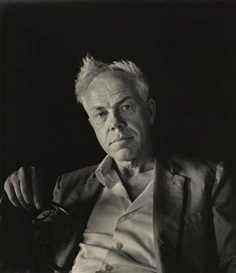
Minor White by Imogen Cunningham

Portrait of Minor White by Imogen Cunningham

Born during the summer of 1908 in Minneapolis, Minor White held jobs as a waiter, bartender, and even worked in military intelligence during World War II. He was a very spiritual man and his beliefs spilled over into his photography. Co-founder of Aperture magazine along with Ansel Adams and other notable photographers, Minor was also an early advocate of the Zone System pioneered by Adams and Fred Archer. An early practitioner of infrared photography, White ventured into an array of subject matter but his work with the small, and often overlooked scenes and objects, such as frost on glass and dilapidated structures remain some of his most acclaimed.

Lessons you can learn from Minor White:

Make photographs all the time, even if you don’t have a camera.

Minor said that he was “always mentally photographing everything as practice”. This is solid wisdom for any photographer of any skill level. Unfortunately, the realities of most of our lives limit the time we get to spend with a camera in hand. The good news is that our artistic mind is never absent. Think about which exposure would blur that passing train just right. What aperture would give me enough depth of field to put that entire table into focus? You’ll be more prepared next time when you have your camera handy.

Don’t overlook small objects and details.

Some of Minors’ most celebrated works were of seemingly mundane or otherwise less than notable subjects. Be on the lookout for details and textures of things that you see every day. This is especially useful if you have an interest in abstract photos.

Drops of rain on my back door glass. Easily overlooked.
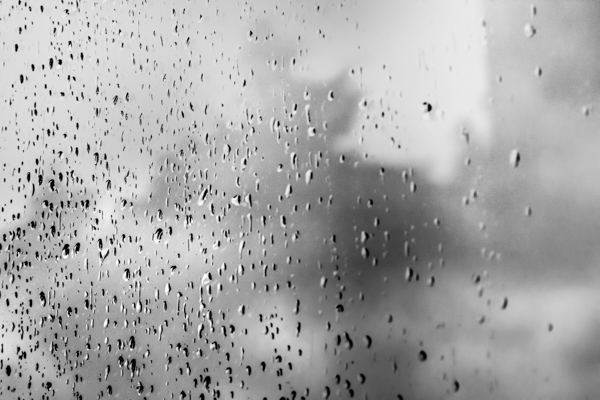
Rain on glass small

Simple occurrences made more interesting with a little creative thinking.
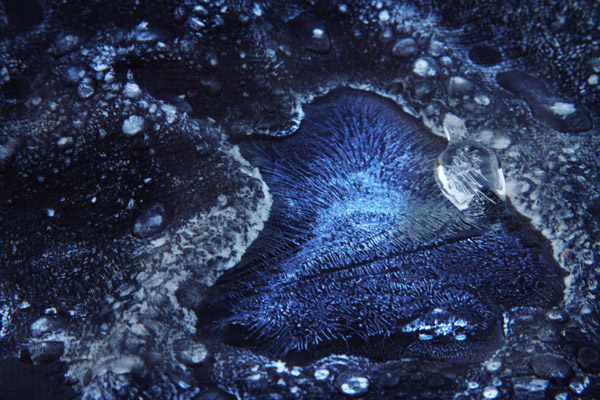
Ice on Firepit small 1

The early morning blue hour made this frost and ice on the cover of my fire pit look otherworldly.

Ansel Adams
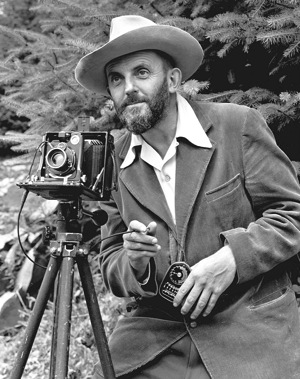
Ansel Adams self portrait

The portrait of Ansel Adams taken by J. Malcolm Greany around 1947

Chances are, you have heard at least something about Ansel Adams, even if that something is that he was a famous early photographer. It’s true, he is considered by more than a few to be one of the best photographers of the twentieth century. There have been volumes filled with the ins and outs of this photographic master. Born on February 20th, 1908 into a well established family in San Francisco, Ansel Adams discovery of photography was unplanned. Ansel was a gifted piano player. An exceptional piano player in fact, so exceptional that he was set to become a professional concert pianist until he decided to commit himself fully to photography. Honestly, the next sections could be titled “What can Ansel Adams NOT teach you?”. The man was such a force in the early days of modern photography that it almost seems unfair to point out only a few practices that will help you improve your own work. However, I have managed to list some basic tips from Ansel Adams that you can put into action in order to make you a better photographer right now.

Lessons you can learn from Ansel Adams:

Slow down

I’m sure you’ve heard this before and possibly have read about the importance of slowing down and making your photographs with more deliberate intentions. Our crushingly convenient modern era of virtually unlimited and relatively low cost film (i.e. digital photography) has lent itself to making us potentially sloppy in our shooting. We sometimes press the shutter button entirely too often in order to get a suitable image for processing. I will shamefully raise my hand and admit that I too am guilty of this spray and pray method of shooting, more so in my earlier photography days right after I made the leap from analog to digital.

I did myself a favor, that I also encourage you to do for yourself, and decided to take things more seriously. Ansel would consider all aspects of his composition: from the elevation and tilt of his camera, the perspective of his lenses, the cast of shadows, even the future effects of the wind on the clouds. There will be times when you are racing against a sunset or you will be trying to catch some specific or fleeting moment and at those times you must shoot quickly and intuitively. Usually, however, we rush for no perceivable reason and often overlook or forget small changes that can make or break an image. So the next time the muse slaps you across the face to make an image, calm yourself down and work the problem. Think about what it is you are trying to do. Put yourself into the correct mindset to make better images and you might find, strangely enough, that your images become better also.

Teach yourself to see the finished product before you make the exposure.

The act of seeing or visualizing is another subject that has been touted by the photographic community many times. Visualization is one of those things that really can’t be brought about by technical instruction in the traditional sense; meaning there are no classes on visualization. Ansel Adams himself remarked that visualization cannot be taught, it is be learned. Think about that concept.

It’s undeniably true that some people learn faster than others when it comes to visualizing finished prints. However, it is equally true that no one started out being able to see in their mind’s eye the final result of a photo. Like most things, it takes practice, as well as patience, and more than a healthy helping of sheer determination. When you begin to see the print before it is made, then really all that stands between you and your vision is the selection of techniques which, similarly, require just as much determination and commitment to master.

Use a tripod

To reiterate, please, use a tripod whenever and wherever possible. A tripod is one of the single most important tools you can use to increase the focal clarity and sharpness of a photograph. Minimizing camera shake and vibration is key to making crisp images, period.

Colorflowersmall

By using a tripod I eliminated the need to worry about vertical camera movement in the macro shot above. Ansel tells us that the ideal tripod is “a cubic yard of solid concrete with a 1/4″ X #20 bolt head sticking out of the top”. If you don’t have a huge block of cement lying around to attach your beloved camera to, then the next best thing is to obtain a quality tripod and use it.

Having some way to keep your camera absolutely still is essential when working with long exposures like the image below.
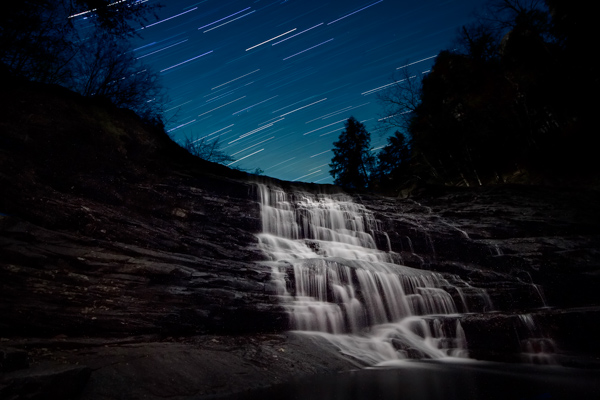
Cane Creek Cascades Star Trail Color3

Exposure time: approximately forty seven minutes. This long exposure time would not have been possible without the use of a tripod.

Using a tripod (correctly) also forces you to, again, slow down and think about the photograph you are intending to make. dPS has a superb article on tripod employment that can be found here.

Syl Arena

Syl Arena

Photo by Vera Franceschi

Syl Arena, is a uniquely humble and genuine person, author, teacher, lecturer, and a speedlite Jedi. He is a magician of sorts when it comes to creating and moulding light. Syl currently resides on the west coast around San Luis Obispo, California. His biography is brief and barely mentions any notable achievements of which there are many. The lessons I learned from him actually lean more towards the philosophical than the technical. That being said, you will find this section contains no real insight from Mr. Arena concerning artificial light manipulation or photographic technique in general. For that I would highly suggest you check out his blog or his new Q&A site for loads of information.

My first introduction to Syl was through the gift of one of his books (thanks Mr. Veneman), “LIDLIPS: Lessons I didn’t learn in photo school“. In that book, this highly educated, highly skilled, highly successful, highly haired photographer simply and truthfully listed page by page the things he was never taught. They ranged from personal revelations on the photographic process to small background stories of some of his location shoots. He mentioned nothing about technique or gear really, just lessons from his life as a picture maker, unpretentious and sincere.

Lessons you can learn from Syl Arena:

Don’t be afraid.

Your limited gear, your perceived skill level, your lack of obvious subject matter, your lack of confidence, fear of trying something new; don’t be afraid of any of these things, or anything else for that matter. You will never have the all of the best gear so don’t let it worry you. Instead, learn to make the best use of what gear you have. You will never learn all there is to know about making photographs so learn what you can, where you can. Feeling like you’ll never get an image just right? You are your own worst critic, so don’t hide your work from the world.

Be inspired, not intimidated.

This is one of the hardest things to overcome, especially if you are just beginning to learn about photography. It’s easy to feel envious or even jealous of other photographers work. This can sometimes lead to convincing yourself that your work has no merit. Chances are, that image you’re envying and ogling over is a product of hard work, patience, diligence, determination, perseverance, and many other great words that the thesaurus can produce.

Viewing other artists work is one of the best ways to grow your own creativity.

Take the work as seriously as you want, but not yourself.

As you grow and learn as a photographer, remember that we all started out understanding absolutely nothing about photography; so keep that in mind the next time someone asks you a question about one of your photographs in a less than learned way. Most likely, you have learned something from someone who was nice enough to teach you. Please pay it forward.

Have you learned any lessons from other master photographers? Who is your mentor? Please share in the comments below.

The post Lessons you can learn from master photographers – Minor White, Ansel Adams, and Syl Arena by Adam Welch appeared first on Digital Photography School.


Digital Photography School

 
Comments Off on Lessons you can learn from master photographers – Minor White, Ansel Adams, and Syl Arena

Posted in Photography


Inspiration Pad: Lined Notebook for Thinking Outside the Box

09 Jun

[ By WebUrbanist in Design & Products & Packaging. ]

inspiration pad contours

Made for those who like to color outside lines and jot outside boxes, each page of this bound pad provides a unique source of inspiration and different framework for drawing, sketching and writing out ideas.

inspiration pad detail

inspiration pad shifty

Available from tmsprl, the minimalist brown-bound notebooks show traditional lines on the front and back but playing on and warping the horizontal blue-on-white (with red verticals) convention within.

inspiration pad building angle

inspiration pad geographic contours

inspiration pad thick lines

Some pages sport twisting topographic lines while others thin, thicken, curl, loop, twist and spiral, encouraging the user to put pencil or pen to paper in different ways throughout.

inspiration pad cover

inspiration pad lined up

inspiraiton pad trending curve

inspiration pad stair steps

inspiration pad wavy blue

The deeper you delve the more surprises you find, starting with upward-swooping lines and culminating in crazy abstract patterns and strangely whimsical shapes.

inspiration pad infinity symbol

inspiration pad outward spiral

inspiration pad wrapped swirl

inspiration pad back cover

A few notes from its creator: “If you’re in search of inspiration, this notepad might help. Second edition. 48 pages, dimensions 165 x 210 mm, softcover. Printed on sustainable paper in Belgium.”

Share on Facebook


[ By WebUrbanist in Design & Products & Packaging. ]

[ WebUrbanist | Archives | Galleries | Privacy | TOS ]


WebUrbanist

 
Comments Off on Inspiration Pad: Lined Notebook for Thinking Outside the Box

Posted in Creativity


Fenster: Ausstellungstipps, Ausgabe 4

09 Jun

So langsam macht sich die Sommerpause bemerkbar: Es gibt weniger intessante Ausstellungen und unsere eigenen Köpfe schweben auch mehr in den Wolken der Sommerurlaubsplanung. Trotzdem können wir Euch heute vier Ausstellungen in Berlin, Wien und Köln ans Herz legen.

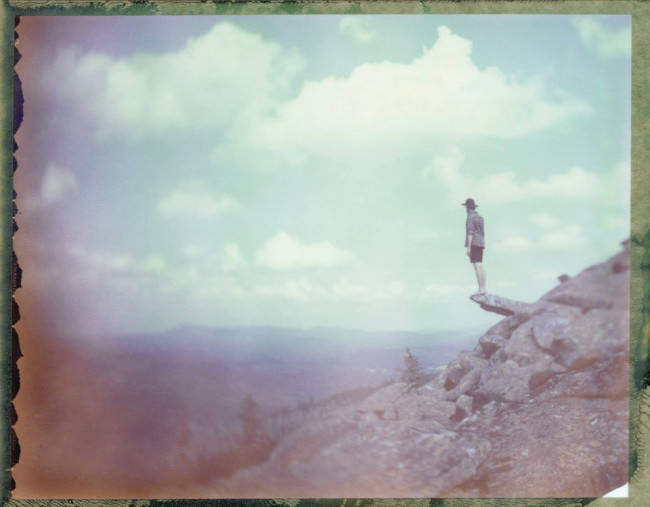
Ein Mann steht auf einem Felsvorsprung und schaut in die Weite.

Berlin

Tipp von Marit Beer

Wer unser Magazon aufmerksam verfolgt, dem müssen wir Bastian Kalous eigentlich nicht mehr vorstellen. Und wer noch einen weiteren Hinweis braucht, dem sei das Wort Polaroid zugeworfen.

Noch bis zum 14. Juli zeigt der Sofortbildshop „Istantland“ in seinen neuen Räumlichkeiten in der Mulackstrasse 22 in Berlin einige seiner Arbeiten. Und da man Nützliches mit Schönem gern verbindet, bin ich diese Woche direkt mal vorbei gegangen. Und diese neuen Räumen sind schön! Auf zwei Etagen zeigen weiß getünchte Wände bayrische Bergseen und Gebirgsketten in himmlischen Farben.

Und wer vom Beine-in-den-Bauch-Stehen schon ganz fertig ist, der kann sich in olivfarbene und bequeme Sessel sinken lassen. Am besten im unteren Geschoss, da, wo der Raum so klein ist, dass nur ein Sessel reinpasst und sonst nichts. Dort kann man verweilen und die Bilder an der Wand aus anbetungswürdiger Pose bewundern.

Wer Bastian Kalous auch persönlich treffen möchte, der sollte sich zum Ausstellungende nach Berlin begeben. Das genaue Datum, zu dem er aus dem bayrischen Exil in die Hauptstadt kommt, steht allerdings noch nicht fest und wird beizeiten auf der Facebookseite der Ausstellung bekannt gegeben.

Nebenbei kannst Du Dich übrigens nett mit dem Besitzer unterhalten, Dich über die neuesten Entwicklungen bei Impossible erkundigen und vielleicht auch einen dieser unglaublich teuren Filme kaufen.


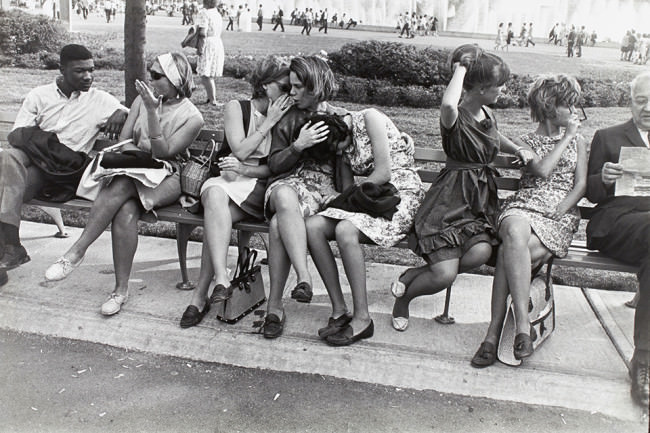
Frauen auf einer Bank.

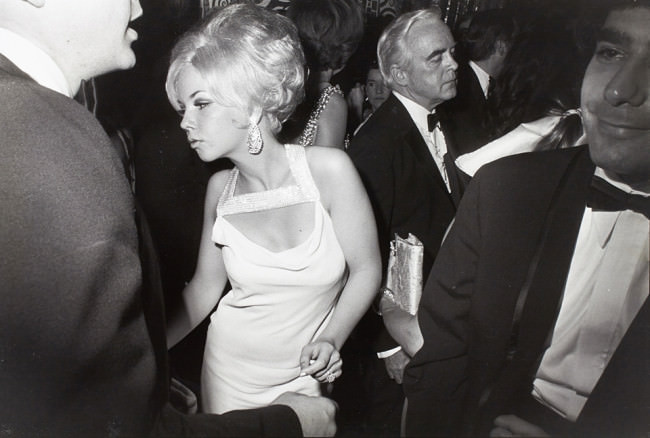
Eine Frau tanzt auf einer Party zwischen Männern.

Wien

Tipp von Katja Kemnitz

Ich weiß nicht, ob man die Galerie WestLicht in Wien überhaupt noch jemandem empfehlen muss, denn ich finde fast jede Ausstellung so interessant, dass ich es jedes Mal bedaure, etwa 900 km weit weg zu wohnen.

Seit dem 6. Juni läuft zum Beispiel die Ausstellung „Women are beautiful“ mit Arbeiten von Garry Winogrand, die 85 Straßen-Fotografien aus den 1960er und 70er Jahren zeigt. Und wie der Name schon sagt, hat Garry Winogrand in seiner Serie Frauen dokumentiert.

Ein Portrait einer Zeit des Aufbruchs: Die Ausübung neu gewonnener – und neu erkämpfter – innerer und äußerer Freiheiten brachte in den Nachkriegsjahrzehnten einen Wandel im Selbstbild der Frau. Winogrands Serie dokumentiert, wie die gesellschaftliche Veränderung im öffentlichen Leben Form annimmt.

Seine Kamera folgt den Frauen durch die Straßen von Manhattan, durch die Parkanlagen und auf High-Society-Partys und beobachtet, wie sie mit selbstbewusster Eleganz den öffentlichen Raum für sich beanspruchen und sich soziale Transformation in Körpersprache, Auftreten und Habitus manifestiert.

Garry Winogrand gilt als manischer Fotograf, der keine Straße entlang gehen konnte, ohne einen Film zu füllen. Als er 1984 starb, hinterließ er etwa 2500 unentwickelte Filme. Die Serie „Women are beautiful“ hat Garry jedoch noch selbst editiert und auch als Buch herausgebracht*. Der Band ist jedoch eine absolute Rarität und daher kaum zu bezahlen.


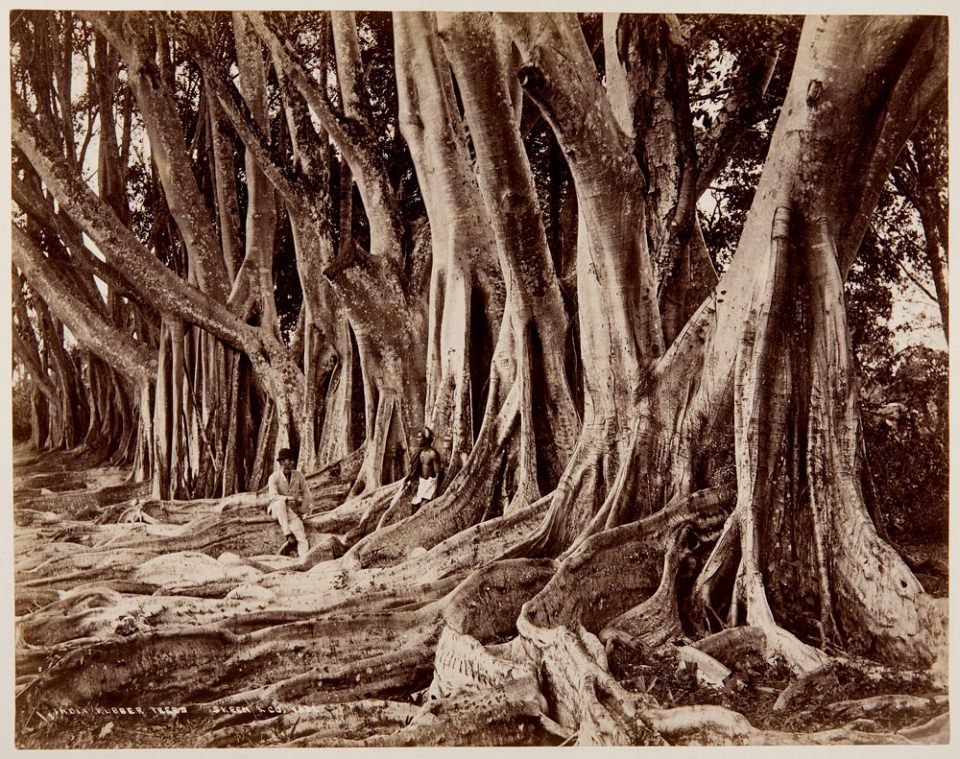
Eine Reihe indischer Gummibäume, auf deren großen Wurzeln zwei Männer sitzen.

Skeen & Co: Indische Gummibäume. 1031, ca. 1870er Jahre, Albuminabzug, 221 x 280 mm,
Museum für Ostasiatische Kunst Köln, P 388

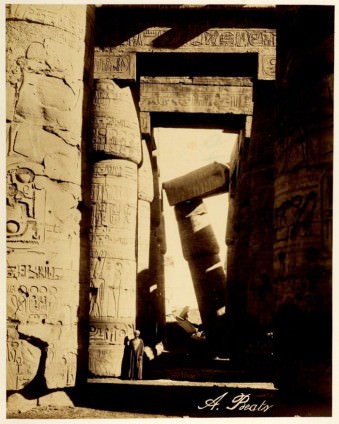
Ein historischer Tempel, in dem eine Säule schief über einem Durchgang lehnt.

Antonio Beato: Hipostyle Halle, großer Tempel und schiefe Säule, Karnak,
ca. 1870er Jahre, Albuminabzug, 283 x 226 mm, Museum für Ostasiatische Kunst Köln, P 564

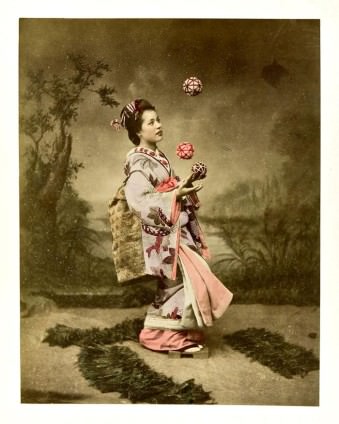
Kolorierte Aufnahme einer asiatischen Frau, die mit Bällen jongliert.

Anonym: Mit Temari-Bällen jonglierende Frau, ca. 1890er Jahre, Albuminabzug, handkolo-riert, 266 x 206 mm, Museum für Ostasiatische Kunst Köln, P 132

Köln

Tipp von Aileen Wessely

Das Museum für ostasiatische Kunst zeigt noch bis zum 7. September seine Ausstellung „Von Istanbul bis Yokohama: Die Reise der Kamera nach Asien 1839-1900“. Sie feiert das 100-jährige Bestehen des Museums und zeigt 350 historische Fotografien der Sammlung, aufgenommen von europäischen und einheimischen Fotografen.

Diese Fotografien wurden von den Gründern des Museums, Adolf Fischer (1856-1914) und seiner Frau Frieda (1874-1945), auf gemeinsamen Ankaufreisen gesammelt, die sie nicht nur nach Ägypten, Indien, Ceylon, Birma und Singapur, sondern auch nach Japan, China und Korea führten.

Sie stammen zumeist aus kommerziellen Fotostudios, die sich nach der Öffnung des Suez-Kanals gern in der Nähe der großen Häfen ansiedelten, die den Globetrottern die Bilder als fertige Souvenirs anboten. Die populären Dampferrouten werden in der Ausstellung rekonstruiert, mit den Fotografien illustriert und auch zu anderen Objekten der Sammlung in Beziehung gesetzt.

Die Fotografien bezeugen nicht nur das hohe künstlerische Niveau der frühen Fotopioniere, sie machen aus heutiger Sicht auch die romantische Verklärung und den unwiederbringlichen Verlust alter, gewachsener Kulturen im vorderen Orient sowie in Ost- und Südostasien deutlich.

Zur Ausstellung erscheint auch ein Katalog in deutscher und englischer Sprache, der für 34 € im Museum erhältlich ist.

Adresse: Universitätsstraße 100, 50674 Köln
Öffnungszeiten: Di – So 11 – 17 Uhr, Mo geschlossen, 1. Do im Monat 11 – 22 Uhr
Eintritt: 9 € / ermäßigt 5 €


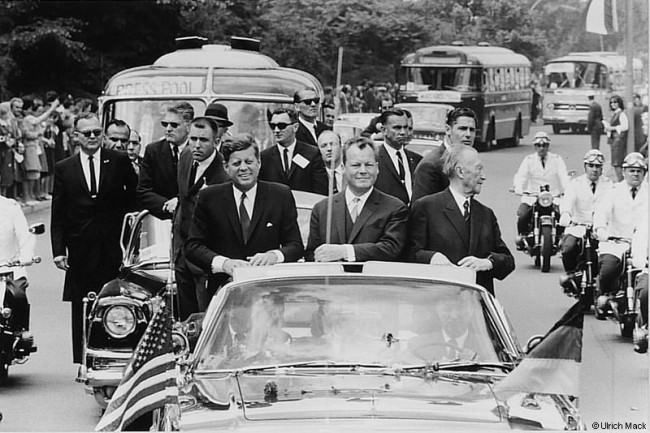
Kennedy auf seiner Triumphfahrt durch Berlin, 1963.

Ulrich Mack: Kennedys Triumphfahrt, Berlin 1963

Köln

Tipp von Aileen Wessely

Auch das Forum für Fotografie feiert: Nicht sich selbst, sondern das Doppeljubiläum von 100 bzw. 90 Jahren von Leica. Vor 100 Jahren entwickelte Oskar Barnack das Ur-Modell der Leica, das erstmals eine handliche Kleinbildkamera, ganz aus Metall gefertigt, mit Schlitzverschluss und neuem Bildformat von 24 x 36 mm war.

Vor 90 Jahren beschloss Ernst Leitz die Serienfertigung der Leica mit dem von Max Berek entwickelten Objektiv mit den nun historischen Worten „Es wird riskiert!“ Damit wurde die Leica zum Meilenstein der Geschichte der Fotografie; sie trieb ihre Entwicklung wie nur wenige andere voran und gilt als Basis des modernen Fotojournalismus.

Die Ausstellung „Meisterwerke berühmter Leica-Fotografen“ wurde von Knut Kühn-Leitz, dem Enkel von Ernst Leitz, zusammengetragen. Zu sehen sind ikonische Aufnahmen von Meistern wie unter anderem Henri Cartier-Bresson, Elliot Erwitt, Thomas Hoepker, Sebastiao Salgado und Aufnahmen der Ur-Leica von Oskar Barnack.

Es erscheint zusätzlich eine Biografie über Ernst Leitz, die als Bildband mit Texten verschiedener Autoren konzipiert ist, die die unternehmerischen Risiken und technischen Herausforderungen beleuchten, denen er sich erfolgreich gestellt hat. So wird gleichzeitig auch die Erfolgsgeschichte der Leica nachgezeichnet.

Ausstellungsdauer: 7. Juni – 13. Juli 2014
Adresse: Schönhauser Str. 8, 50968 Köln
Öffnungszeiten: Mi – Fr 14 – 18 Uhr, Sa 12 – 18 Uhr, So 12 – 16 Uhr
Eintritt: Erwachsene 2 €, ermäßigt 1 €


Habt Ihr weitere Empfehlungen für andere Leser? Welche Fotoausstellung hat Euch kürzlich begeistert, die noch geöffnet ist? Lasst es uns in den Kommentaren wissen.

* Das ist ein Affiliate-Link zu Amazon. Wenn Ihr darüber etwas bestellt, erhält kwerfeldein eine kleine Provision, Ihr bezahlt aber keinen Cent mehr.


kwerfeldein – Fotografie Magazin | Fotocommunity

 
Comments Off on Fenster: Ausstellungstipps, Ausgabe 4

Posted in Equipment


8. Juni 2014

09 Jun

Ein Beitrag von: Thorsten Nunnemann

La Maison du Gouffre - das Haus zwischen den Felsen © Thorsten Nunnemann


kwerfeldein – Fotografie Magazin | Fotocommunity

 
Comments Off on 8. Juni 2014

Posted in Equipment


Agony & Ivory: 12 Not So Grand Abandoned Pianos

08 Jun

[ By Steve in Art & Street Art & Graffiti. ]

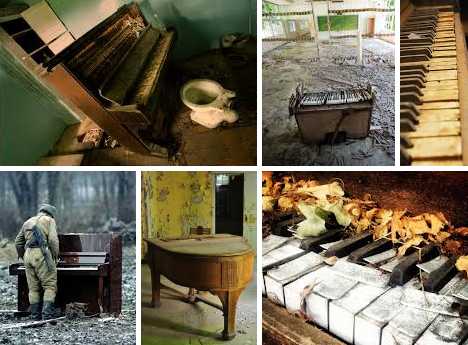
abandoned pianos
88 keys and nothin’ on… except dust, dirt & decay. These 12 abandoned pianos may irk music lovers but cheer those who live life slightly out of tune.

New York Minuet

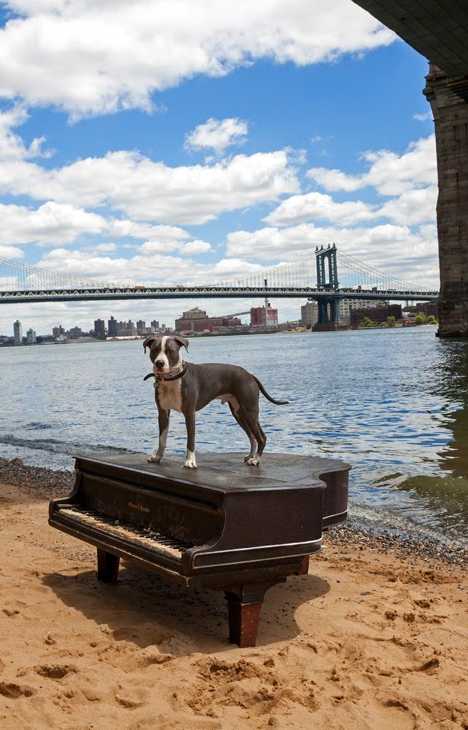
abandoned piano East River(image via: James and Karla Murray Photography)

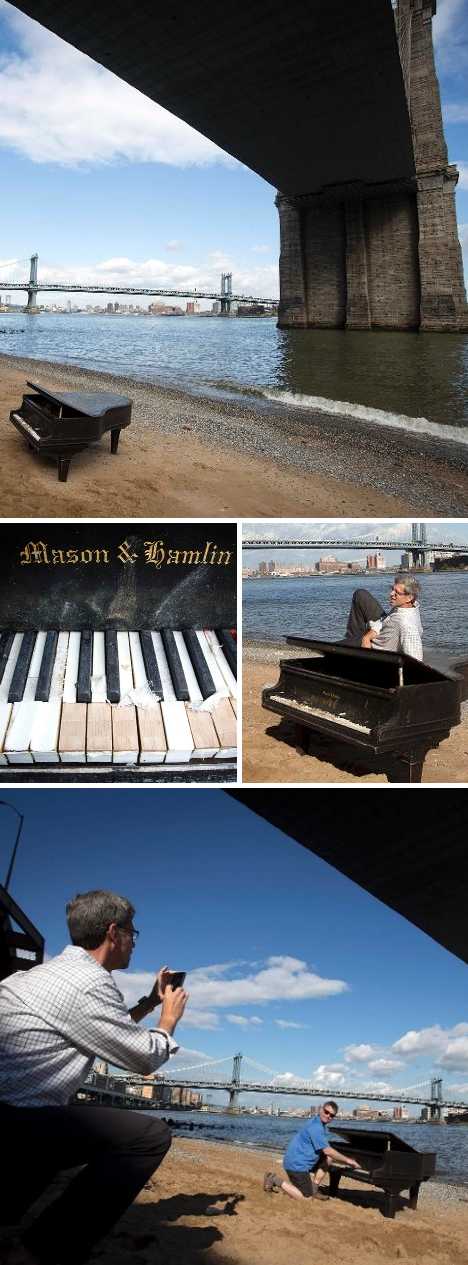
OK, so abandoning pianos is a thing now. Take the East River Piano, a now-silent Mason & Hamlin found wallowing (when the tide’s in) and waterlogged on the Manhattan side of the river, under the Brooklyn Bridge. It couldn’t have been easy to lug the 300-lb behemoth down to the riverside but someone (probably with a little help) did just that sometime towards the end of May, 2014.

abandoned piano East River NYC(images via: Canoe.ca/REUTERS/Carlo Allegri)

Photographer Carlos Chiossone told NBC 4 New York he was out for a walk and noticed a photo shoot taking place on and around the piano. “But then they left,” said Chiossone, “and the piano is still there.” Who will remove the #EastRiverPiano and when? The City Parks Department issued a short statement saying the beach is not under their jurisdiction, or in the words of the late Freddy Prinze, “It’s not my job, man.”

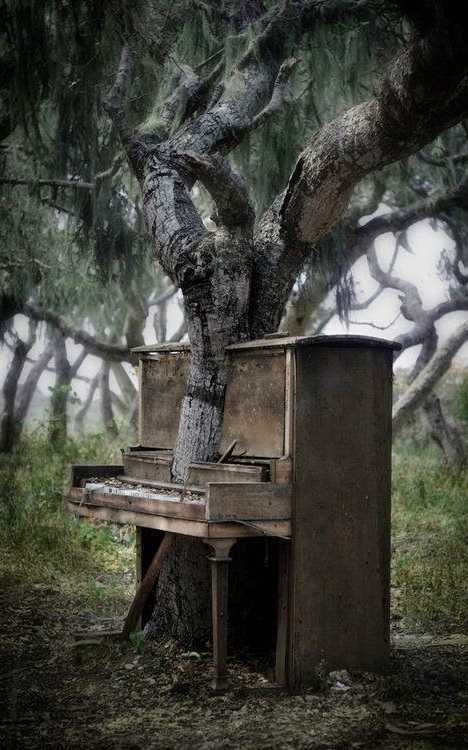
Piano Tree Oh

abandoned piano tree Mifflin(image via: WeirdWood)

Artist Jeff Mifflin’s Piano Tree was a so-called “living installation” set in a forested area just off the Disc Golf Course at California State University in Monterey Bay. Mifflin took an old stage piano and after some judicious sawing, made it appear an ancient tree was growing out of the old upright’s heart. The tree continued to grow even after it was unnaturally mated, however, and would be evolving today if a drunken music-hater had not taken his frustrations out on the artwork.

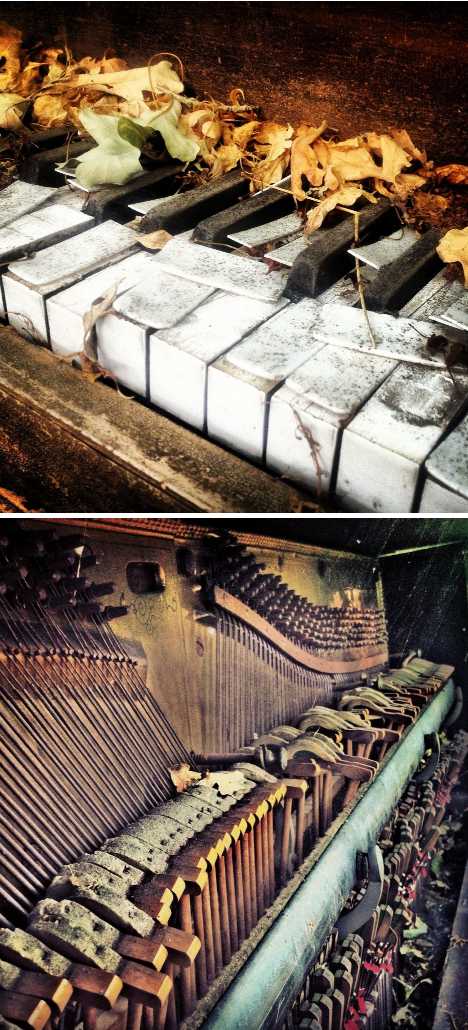
Leaves Behind

abandoned piano leaves(images via: Zariat)

“I encountered an abandoned piano yesterday,” states blogger and photographer Zariat, and “I was charmed by the elegance it maintained while slowly decaying beneath the fallen leaves.” That’s the thing about abandoned pianos: while definitely fish out of water, they seem to maintain a certain degree of dignity regardless of how pitiable and perilous their situation.

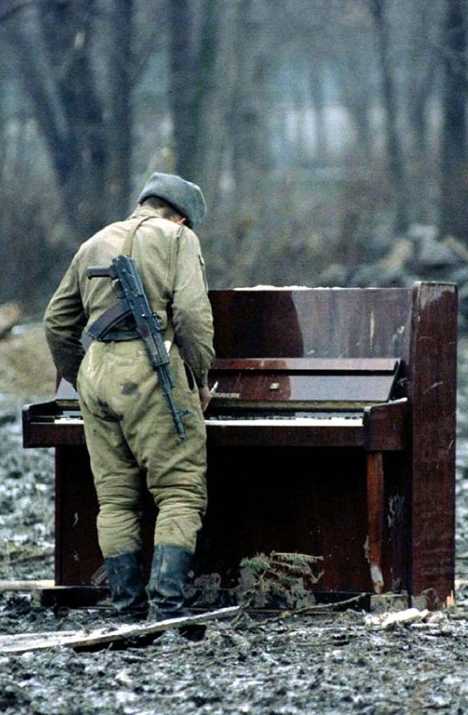
Don’t Shoot Me I’m Only The Piano Player

Russian soldier abandoned piano Chechnya(image via: Reddit/red321red321/Imgur)

Why was this Russian soldier playing an abandoned piano? Because it was there! And by “there” we mean Chechnya, sometime in 1994 shortly after the advent of the First Chechen War. It’s not known if the piano was ticking when the soldier began tickling the ivories, nor if the instrument was rigged to explode should the player hit a bum note.

Next Page – Click Below to Read More:
Agony Ivory 12 Not So Grand Abandoned Pianos

Share on Facebook


[ By Steve in Art & Street Art & Graffiti. ]

[ WebUrbanist | Archives | Galleries | Privacy | TOS ]


WebUrbanist

 
Comments Off on Agony & Ivory: 12 Not So Grand Abandoned Pianos

Posted in Creativity


Camera Basics 101 The Exposure Triangle

08 Jun

One of the first things you will want to get your head around in photography is understanding exposure. To do that you will need to learn some camera basics and master:

The Exposure Triangle

If this term has of yet eluded you, or you’re not quite ready to claim full mastery here are 3 video tutorials to help you understand the basics of the exposure triangle including:

  • ISO
  • Aperture
  • Shutter speed

In this first video the host Mark Wallace (with Adorama TV) goes through all three of these elements and explains each briefly, and how they work together:

Mark also mentions this book in the video as a good starting point for learning more about exposure.

Next up is Shoot in Manual Mode Pt. 1 – Aperture, Shutter Speed and ISO – by photographer Sean von Tagen

Lastly is this video by a host whose name I couldn’t find. If you can get past his really monotone voice, the information is really good and should be easy to understand and follow.

If you want more reading, try these:

  • Exposure Triangle – Not just about more/less light
  • Understand Exposure in Under 10 Minutes
  • Getting off Auto – Manual, Aperture and Shutter Priority modes explained
  • Photo Nuts and Bolts – Know your camera and take better photos – a dPS eBook

The post Camera Basics 101 The Exposure Triangle by Darlene Hildebrandt appeared first on Digital Photography School.


Digital Photography School

 
Comments Off on Camera Basics 101 The Exposure Triangle

Posted in Photography