RSS
 

Archive for June, 2014

Wundermaschinen

17 Jun

Die Wundermaschinen von Jan von Holleben können alles, was das Herz begehrt. Eure kühnsten Wünsche werden damit erfüllt: Vom Zeitanhalten über Dinge verkleinern und verändern bis hin zum Einfach-glücklich-Machen. Letzteres haben sie bei mir auf jeden Fall schon beim Schreiben dieses Artikels bewirkt, denn die Ideen sind so schön bunt und lustig, dass ich selbst direkt ins Fantasieren kam.

Dazu kommen die schönen Umsetzungen, denn jede Maschine ist liebevoll konstruiert und besteht aus verschiedensten Dingen. Jan von Holleben steht selbst Modell für jedes Bild und man kann nicht anders und will diese Apparate direkt bestellen. Alle. Sofort.

Eine Maschine, die links Wattebauschwolken einsaugt und auf der rechts eine Planze steht, an der ein Mann riecht.

Model 006, die CO2-Clean-Maschine (inspiriert von Hubertus von Holleben und Torstein Nybø), filtert nicht nur Lokal CO2 aus der Luft, sondern kann auch Global eingesetzt werden.

Eine Maschine. Rechts steht ein lächelnder Mann im Anzug mit Herzluftballon in der Hand.

Model 001, die Sweet-Man-Maschine (inspiriert von Dirk Feldhaus) ist wohl nur für einen Teil der Menschheit interessant. Dennoch fanden wir, sie ist eine der wesentlichen Maschinen unter den zehn und ein großer Schritt, um das Universum zu einem besseren Ort zu machen. Links platziert man den problematischen Menschen, drückt dann den Knopf und los geht’s.

Eine Maschine mit großem Pfeil. Ein Mann läuft gerade hindurch.

Model 004, die Tele-Transportations-Maschine (inspiriert von Zana Kontomanoli und Gabriele Reuter) ist selbsterklärend, denke ich. Man definiert Ort und Zeit auf dem Bildschirm, drückt Enter und Zzzzzzzzing! Man sollte mehrere von ihnen an strategisch sinnvollen Orten aufstellen, denn die tragbare Version ist noch in der Entwicklung und nicht zum Einsatz freigegeben.

Eine Maschine, in deren Mitte ein Mann unter einer riesigen Zahnbürste steht.

Model 003, die Guten-Morgen-Maschine (inspiriert von Ursula Bärenz), macht einen sauber und bereit für den Tag in nur maximal drei Minuten (alles inklusive!).

Eine Maschine.  Auf der linken Seite liegen viele kleine Bälle, auf der rechten viele große.

Model 005, die Minimal-Re-Normal-Maschine (inspiriert von Herbert Schröter), ist für alle Dinge, die zu viel Platz verbrauchen. Reduziert die Größe von allem. Legt die Dinge danach in eine kleine Box und normalisiert die Größe wieder, sobald Ihr sie braucht.

Eine Maschine neben der ein Mann im Kleid mit rosa Perücke steht.

Diese Maschine wirkt vielleicht etwas seltsam, aber wir haben wieder unsere Gründe für diese Auswahl: Model 008, die Geschlechter-Tausch-Maschine (inspiriert von Heidi von Holleben). Geht man rechts als Mann hinein, kommt man links als Frau wieder heraus (siehe Bild). Geht man links als Frau hinein, wird man die Maschine als Mann verlassen. Das kann endlos wiederholt werden. Keine Sorge. Wir haben alles ausgiebig getestet.

Auf der linken Seite der Maschine liegt jede Menge Süßes, auf der rechten Seite läuft eine Barbie gerade heraus.

Mein lieber Bruder wollte eine Maschine, die Süßigkeiten in sexy Frauen verwandelt. Na gut! Wir entschieden uns dafür, denn mit zuviel Süßigkeiten um einen herum scheint die Maschine nützlich. Ich weiß, es gibt ein paar Leute, die diese Maschine gerne wollen. Hier habt Ihr sie und werdet glücklich damit oder optional für das pure Glück, lasst Euch Model 009 schicken.

Ein Mann füllt Luftballons in eine Maschine.

Model 009, die Happy-Maschine (inspiriert von Violetta Donhöffner) macht Euch und alle in einer gut definierten Umgebung einfach nur glücklich! Wirklich einfach!

Eine Maschine aus Zahnrädern und Uhren.

Model 002, die Zeit-Stopp-Maschine (inspiriert von Marius von Holleben) hält die Zeit aller anderen an, aber nicht die eigene. Und das so lange, wie für Eure erstaunliche, weltrettende Aktion erforderlich ist.

Eine Maschine, unter der ein Mann steht und etwas hineinwirft.

Das ist meine Lieblingsmaschine: Model 007, Universal-Alles-Maschine (inspiriert von André Netzker). Mit einem Zufallsgenerator ausgestattet, verwandelt diese Maschine alles in etwas anderes. Man hat keine Kontrolle darüber, was es wird, aber man kann sicher sein: Es wird etwas Gutes.

Auf Jan von Hollebens Webseite findet Ihr noch weitere tolle Serien und Bilder. Und jetzt erzählt mal: Welches ist Euer Favorit? Und welche Maschine sollte Jan unbedingt noch entwerfen?


kwerfeldein – Fotografie Magazin | Fotocommunity

 
Comments Off on Wundermaschinen

Posted in Equipment


16. Juni 2014

17 Jun

Ein Beitrag von: TAG Fotografie

© TAG Fotografie


kwerfeldein – Fotografie Magazin | Fotocommunity

 
Comments Off on 16. Juni 2014

Posted in Equipment


Compact Cooking: 15 Modular & Multipurpose Kitchen Designs

16 Jun

[ By Steph in Design & Fixtures & Interiors. ]

MOdular Kitchens Main

Most of us only use our kitchens a couple times daily, so why should they take up an entire room of valuable space? Compact, modular kitchens that can be packed away when not in use or expanded when you want entertain make a lot of sense, especially for the modern urban lifestyle. These 15 concepts range from space-saving wall-mounted kitchens for small spaces to countertop appliances that pack in multiple functions.

Outpost Add-A-Kitchen for the Office

Modular Kitchens Outpost 2

Modular Kitchens Outpost 1

While it was designed specifically with offices in mind, it’s not hard to imagine the Outpost modular kitchen in studio apartments, guest rooms and emergency shelters as well. The two-part system offers storage, individual ‘fridge cubes’, an oven, an induction tea set, a coffee maker and eating surfaces to keep all food-related functions contained in one space rather than spread out all over your co-workers’ desks.

nFridge Modular Refrigerator

Modular Kitchen nFridge 1

Modular Kitchen nFridge 2

Need a little more space in your refrigerator for temporary house guests? Just add an extra cold cube. The NFridge concept, created for the Electrolux Global Design Lab, breaks a fridge down into small cooling components that can be stacked on the ground or mounted to a wall to save space. It’s covered in a soft-touch digital membrane that’s resistant to dust and water, and uses magnetic refrigeration to produce cold more rapidly than conventional refrigerator technology.

Kitchen a la Carte

Modular Kitchens A La Carte 1.jp

Modular Kitchens A La Carte 2

Anywhere with plumbing and electricity can play host to Kitchen A La Carte, which breaks all the major functions of a kitchen down into small suitcase-like packs with wheels. These units can be pulled to a new location and quickly re-assembled.

Elements Modular Kitchen

Modular Kitchens Elements 1

Modular Kitchens Elements 2

Do you like having some shelf space above the stove for spices, or prefer to have your sink right next to the cooktop for easy cleaning? Electrolux Elements allows you to configure the various elements of a kitchen in any way you like, adding lighting, storage, cooking surfaces, refrigerators and other components as desired. The units draw power wirelessly through ‘powerboat’ technology supplied through the wall, which is supplemented with solar energy.

Accordion Expandable Kitchen

Modular Kitchens Accordion 1

Modular Kitchens Accordion 2

A space-saving geometric table hides far more function than you’d expect, stretching out like an accordion to reveal a sink, chopping board and storage for items like glassware and utensils. It takes up very little space when not in use, and many elements have a double purpose, like drawer covers that can be turned over and used as food preparation surfaces.

Next Page – Click Below to Read More:
Compact Cooking 15 Modular Multipurpose Kitchen Designs

Share on Facebook


[ By Steph in Design & Fixtures & Interiors. ]

[ WebUrbanist | Archives | Galleries | Privacy | TOS ]


WebUrbanist

 
Comments Off on Compact Cooking: 15 Modular & Multipurpose Kitchen Designs

Posted in Creativity


Invent a Slogan and Win Some New HDR Software

16 Jun

Whenever someone talks about HDR (High Dynamic Range) photography, it can either be with disdain or great appreciation, but as they say–different strokes for different folks. In any case, HDR photography has its roots in the 1850s when the French Photographer Gustave le Gray combined two exposures to render a seascape that contained large range of light, thus enabling a Continue Reading

The post Invent a Slogan and Win Some New HDR Software appeared first on Photodoto.


Photodoto

 
Comments Off on Invent a Slogan and Win Some New HDR Software

Posted in Photography


Being Madame Butterfly With Tina Wong

16 Jun

Tina Wong shares her latest work from her photo series "Madame Butterfly" as featured on Fashion Photography Blog (FashionPhotographyBlog.com)FashionPhotographyBlog.com was able to catch up with another of our past Photo of The Week winners, the fashion photographer, stylist and fashion editor, the triple threat talent that is Tina Wong. I was so glad to have her drop in to catch up and see what she has been up to since taking the winning photo from her “J’adore” series in her round of Photo of The Week.

It seemed that Tina had been making great strides with her career, as she revealed that, “There have been so many great experiences. The past few seasons I’ve been able to shoot at New York Fashion week, working on the 100-women print publication was a great experience as the photos were printed in a coffee table type magazine, I’ve been able to shoot for amazing clients in Miami and photos were used for large print advertisements.”

With all her successful achievements to date, where is Tina now at as a photographer? She shared that she has been “Shooting Fashion for 7 years now and I still have a way to go! I feel like with the saturated market for fashion photography, not only do you have to have talent and work very hard to master your craft but you need to know how to market yourself and get exposure with the various publications and clients. I work with a lot of smaller commercial clients and magazine editorials but feel like it’s time to take the next step but it will take proactive actions from my part to get there.”

So what has the difference been between shooting her winning photo and how she shoots now? Tina explained that “I feel like my style has matured through the years and my unique voice is emerging. It’s gone from bright lifestyle-like commercial photography to a quieter more romantic one. I call it quiet beautiful, when you look at someone and you try to admire them like a flower in a vase in an empty room, and then you see an unshielded unfiltered beauty. I know my equipment more and I know how to control my lighting more as well which is something that comes with time.”

Speaking of lighting, I asked if there has been any change to how the photographer set up her lights since taking her winning photo, Tina nodded and explained that “I think I’ve become a minimalist. I used to try more than 1 Profoto head to light the model and create different effects but I’m starting to like just 1 head or natural light with a reflector.”

While discussing her lighting preferences nowadays, Tina also shared with me one of her recent works from a series entitled “Madame Butterfly”. A truly beautifully crafted photograph, I was intrigued to uncover the story behind it. The photographer explained that the “Inspiration behind the butterfly photo was to try to capture how a rose looks like when a butterfly is on it… still and beautiful. I wanted a darker edgier undertone, not just pretty butterflies. Some of the photos on the series almost had her smoking a butterfly like a cigarette, also, I used the butterflies as her brows and whited out her entire face to create a more ghastly and eerie feel to it.” To shoot this photo the photographer used 1 Profoto head (Profoto Prohead Plus), a 5ft Octobox, 2 foam cores.

You can find out more about this shoot and contact Tina Wong’s via her website (www.tnastudios.com) or email at photography@tnastudios.com


Fashion Photography Blog

 
Comments Off on Being Madame Butterfly With Tina Wong

Posted in Uncategorized


Olympus Stylus SP-100EE Real-world Samples

16 Jun

Screen_Shot_2014-06-12_at_4.12.52_PM.png

The Olympus Stylus SP-100 EE is a superzoom camera with a built-in dot-sight that enables you to easily track moving subjects while the lens is zoomed in. The dot-sight pops up just above the high-resolution electronic viewfinder. To make long zoom focusing easier, the SP-100 also features a focus limiter, which lets the user choose what distances the camera searches. The SP-100 combines a 16MP BSI CMOS sensor with a 24-1200mm 50x optical zoom that captures 1080/60p HD video. We’ve been playing with it for a couple of weeks, to see how well it performs. See gallery

News: Digital Photography Review (dpreview.com)

 
Comments Off on Olympus Stylus SP-100EE Real-world Samples

Posted in Uncategorized


Cornwall

16 Jun

In den letzen sieben Jahren besuchte ich mit meiner Freundin sieben Mal die britischen Inseln. Wir waren in Irland unterwegs, in Nordirland, Schottland und Wales. Im Mai waren wir nun das zweite Mal in Cornwall.

Schon vor vier Jahren habe ich Cornwall in mein Herz geschlossen und wusste seitdem, dass es nicht mein letzter Besuch war. Und auch jetzt, nach dem zweiten Aufenthalt, hat sich an diesem Gedanken nichts geändert.

Die verträumten Küstenstädchen, die verwunschenen Gärten, die magischen Wälder und die spektakulären Küsten ziehen mich immer wieder in ihren Bann. Und egal bei welchem Wetter, zum Fotografieren findet sich auch immer etwas.

Der Fluss Fowey bei den Golitha Falls im Bodmin Moor, Cornwall.

Doch zunächst ist da die Anreise und die dauert länger als man annimmt. Auch wenn es in Cornwall selbst ein paar kleine Flughäfen gibt, so habe ich noch keine Verbindung gefunden, die uns schnell von Deutschland über London dorthin bringt. Also ist die Anreise immer eine Kombination aus Flug nach London und Fahrt mit dem Mietwagen in den südwestlichsten Zipfel Englands.

Und das dauert gute fünf Stunden, wenn man in der Nebensaison reist. Im Sommer kann die Fahrt gern auch länger dauern, wenn sich teils richtige Blechlawienen von London und den anderen größeren Städten nach Cornwall schieben.

Wie schon das letzte Mal mieteten wir uns auch diesen Mai wieder ein Cottage an der Küste. Auf Cornish Cottage Holidays findet sich in jeder Lage und für jeden Geldbeutel etwas und die Reservierung ist unkompliziert. Von Porthcurno ganz im Süden unternahmen wir dann eine Woche lang mehrere Tagesausflüge oder wanderten einfach die wunderschöne Küste entlang.

Die Aussicht vom Logan Rock in der Nähe von Porthcurno.

Eine Woche ist sicherlich zu kurz, um alles zu sehen. Es gibt einfach zu viele tolle Aussichten, zu viele goldene Strände. Wenn es um Landschaftsfotografie geht, habe ich aber mittlerweile einige Favoriten. Und auch, wenn diese Orte schon so oft fotografiert wurden, man kann einfach nicht anders, als selbst sein Glück mit Licht und Wetter zu versuchen.

Leider war uns das Wetter nicht immer gut gesonnen. Aber wie ich oben schon geschrieben habe, ist das in Cornwall nicht so schlimm. Einen verregneten Abend verbrachten wir zum Beispiel im fotogenen Fischerstädchen Mousehole. Für mich war das genau die richtige Stimmung, um diesen Ort zu fotografieren. Alles wirkte so ruhig und friedlich.

Das verregnete Küstenstädchen Mousehole.

Auch wenn tagsüber der Himmel zuzieht, was an der Küste sehr schnell passieren kann, gibt es fotografisch einiges zu entdecken. Im Mai sind das die mit Blauglöckchen gefüllten Wälder, wie hier nahe Camborne.

Ein verwunschenes Stück Wald nahe Camborne.

So schnell die Wolken die Sonne auch verbergen, so schnell wird diese wieder enthüllt. Dem Wetterbericht kann man eigentlich maximal 24 Stunden im Voraus Glauben schenken. Alles, was danach kommt, ist ein großes Fragezeichen. So war auch der Dienstag zunächst als komplett verregnet gemeldet und dann war es der sonnigste Tag: Leider ohne Wolken zu Sonnenuntergang, aber dafür mit spektakulärer Brandung am Godrevy Leuchtturm.

Brandung an den Klippen des Godrevy Leuchtturms.

Hier und auch an den anderen Küsten lohnt es sich, vorher die Gezeitentabellen zu studieren. Manche Küstenabschnitte fotografiert man am besten bei Ebbe, andere bei Flut.

Auch der nächste Tag wurde von sonnigen Abschnitten dominiert und so fuhren wir nach St. Ives, einem pittoresken Städchen mit einem Hafen, der bei Ebbe komplett leerläuft. So boten sich unzählige Fotomöglichkeiten. Postkartenmotive, wohin ich auch blickte. Da braucht es keinen dramatischen Sonnenauf- oder -untergang. St. Ives steht ein blauer Himmel mit weißen Wolken sehr gut.

Ebbe im Hafen von St. Ives an einem sonnigen Tag.

Auf den dramatischen Sonnenuntergang musste ich dann aber auch nicht verzichten. Die Kynance Cove war wie schon vor vier Jahren ein Garant für spektakuläre Fotos. Das Titelbild zeigt bis auf einen weiten Strand alles, was für mich Cornwalls Küste ausmacht: Steile Klippen, einzelne Felsen, die sich aus dem Meer erheben, Küstenblumen und eine weite Landschaft, gesäumt von zahlreichen weiteren Felsen.

Die Klippen der Kynance Cove im Licht der untergehenden Sonne.St Michael's Mount bei Marazion zur blauen Stunde.

Auch St. Michael’s Mount statteten wir einen Besuch ab. Er ist zwar nicht so groß wie sein Pendant in Frankreich, aber mindestens genauso fotogen. Bei noch niedrigem Wasserpegel gab es reichlich Kompositionsmöglichkeiten.

Wie auch an den anderen Küstenabschnitten ist man da schnell ein wenig überfordert. Entscheidungen müssen getroffen werden, welcher Vordergrund und welche Perspektive dem Ort am meisten schmeichelt. Wegen der Fülle an Möglichkeiten plante ich immer mindestens eine Stunde ein, um mich umzusehen. So wusste ich, sobald der Sonnenuntergang die Landschaft in mystisches Licht tauchte, immer, wo ich mein Stativ aufbauen musste.

Felsen am Porth Nanven nahe St. Just.

Für den letzten Tag hatte ich mir noch eine besondere Location aufgehoben. Von Porth Nanven findet man zahlreiche fantastische Fotos im Internet. Bei Ebbe und dem richtigen Licht steht spektakulären Fotos eigentlich nichts mehr im Weg. Auf die Ebbe zu Sonnenuntergang hatte ich die ganze Woche gewartet und alles schien perfekt, als tagsüber die Sonne von einem leicht bewölkten Himmel strahlte.

Gegen Abend zog es aber sehr schnell zu und es fing an, leicht zu regnen. Ich versuchte, das Beste aus der Situation zu machen. Auf die blaue Stunde ist eigentlich immer Verlass und auch bei Landschaftsfotos sorgt sie für eine einzigartige Stimmung.

Und vielleicht habe ich ja bei unserer nächsten Reise nach Cornwall etwas mehr Glück. Auch, wenn es ein paar Jahre dauern könnte – komplett ist mein Cornwall-Portfolio noch lange nicht.


kwerfeldein – Fotografie Magazin | Fotocommunity

 
Comments Off on Cornwall

Posted in Equipment


Fujifilm launches weather-resistant XF 18-135mm F3.5-5.6 R LM OIS WR

16 Jun

18135-news520.png

Fujifilm has announced its first weather-resistant lens, the Fujinon XF 18-135mm F3.5-5.6 R LM OIS WR, which is designed to match the high-end X-T1 mirrorless camera. Offering a versatile 27-200mm equivalent zoom range, the lens claims to have the world’s most advanced image stabilisation system, which uses high precision gyro sensors to give a claimed 5 stop benefit. It also has an air ventilation system to help prevent dust being sucked into the lens by the zoom operation. It’ll be available in July for £749.99 / $ 899.95.

News: Digital Photography Review (dpreview.com)

 
Comments Off on Fujifilm launches weather-resistant XF 18-135mm F3.5-5.6 R LM OIS WR

Posted in Uncategorized


Cel(l) Shorts: Crafty Urban Augmented Reality Animations

16 Jun

[ By WebUrbanist in Art & Drawing & Digital. ]

augmented reality cell animation

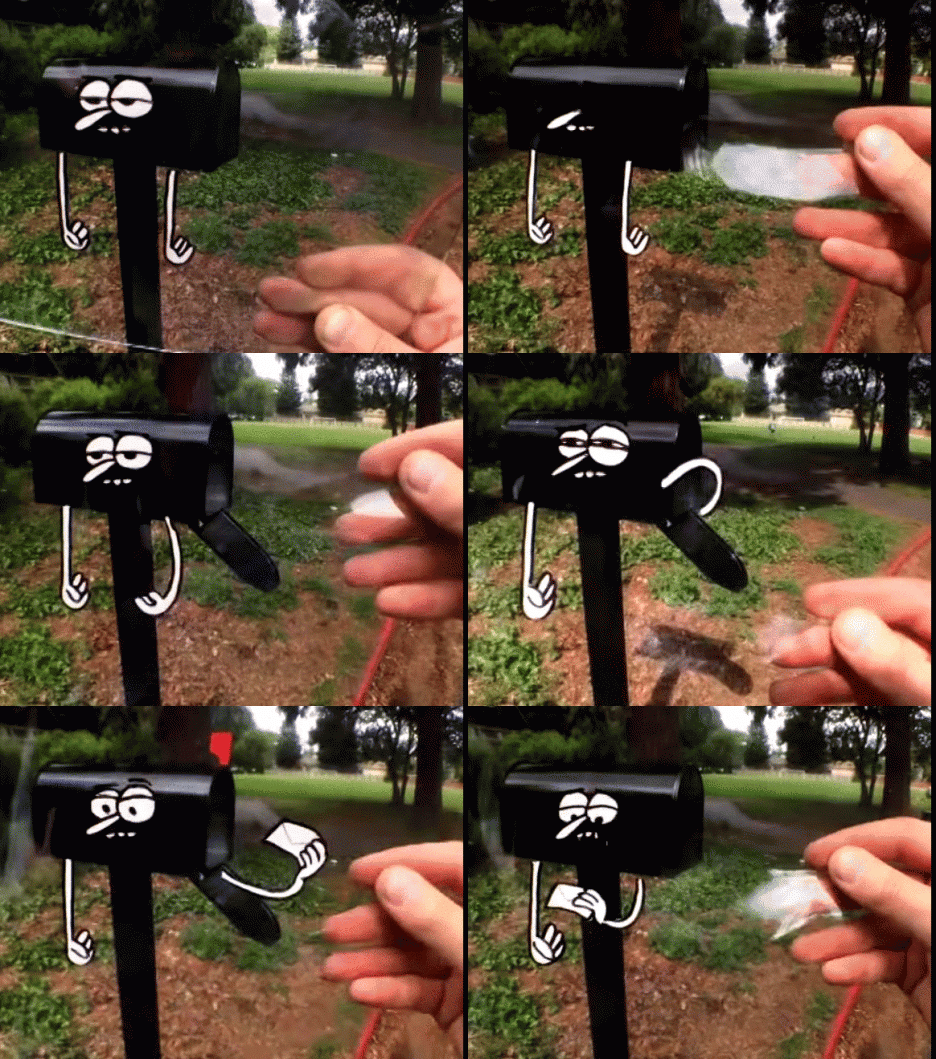
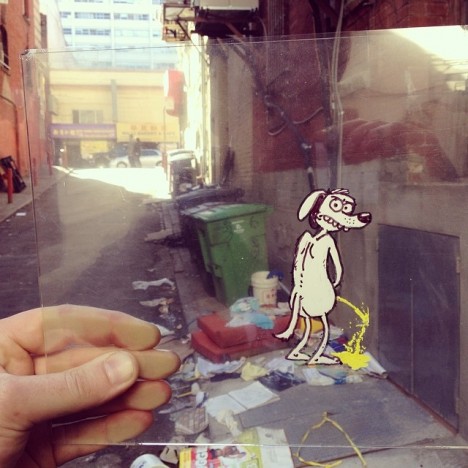
Employing a cellular phone coupled with traditional transparent cel animation techniques, this artist inserts strange characters and surreal stories into everyday built environments.

augmented reality mail box

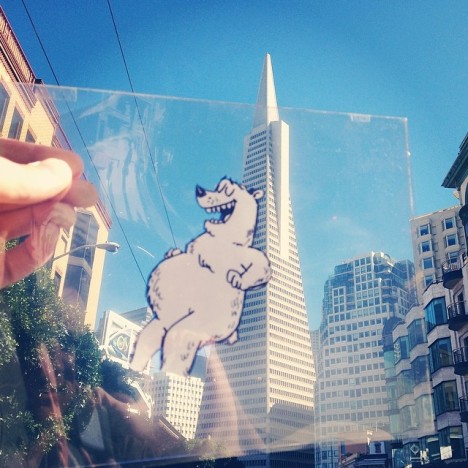
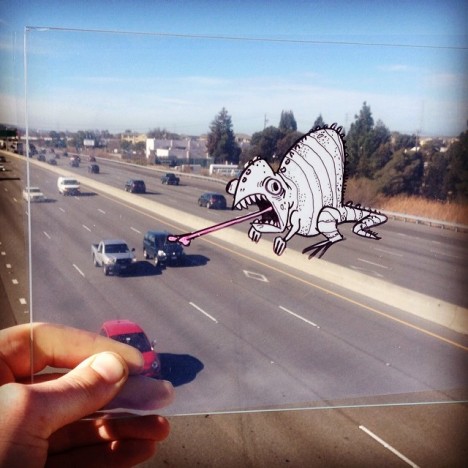
Animator Marty Cooper draws on the individual cels, holding them up for capture, but also displaces objects with which his creations seem to interact.

marty cooper bear skyscraper

marty cooper highway bug

marty cooper dog peeing

These creations, in turn, are brought to life to bounce on top of train cars, splash in pothole puddles oremerge from alleyway dumpsters to interact with their surroundings in clever ways.

Share on Facebook


[ By WebUrbanist in Art & Drawing & Digital. ]

[ WebUrbanist | Archives | Galleries | Privacy | TOS ]


WebUrbanist

 
Comments Off on Cel(l) Shorts: Crafty Urban Augmented Reality Animations

Posted in Creativity


How to use a Gobo to add Depth to Your Portraits with Subtractive Lighting

16 Jun

Mussell044FA

It’s our responsibility as photographers to use the interplay of light and shadow on our subjects to create the third dimension in our two-dimensional media. When the shadows are absent, we should do our best to craft the direction of natural light with tools that do this organically–tools that do not call attention to themselves.

One tool that I often see photographers using outdoors, typically in an attempt to counteract the effects of ambient light on a subject rather than simply crafting existing light, is flash fill. The problem, however, is that the use of flash fill outdoors (especially on-camera flash) frequently results in a very unnatural look and flat lighting—where all of the shadows are gone—which means that they lose the three-dimensional effect that we as artists seek to make our subjects look real. Very rarely is flash used in this manner subtle enough not to call attention to itself.

The answer is subtractive lighting

Subtractive lighting simply involves the blocking of unwanted natural light to create a natural three-dimensional quality to the lighting of people outside. The tools used to block unwanted light are called gobos or flags. Both terms are used in the world of cinematography, but are not used much the still photography world today.

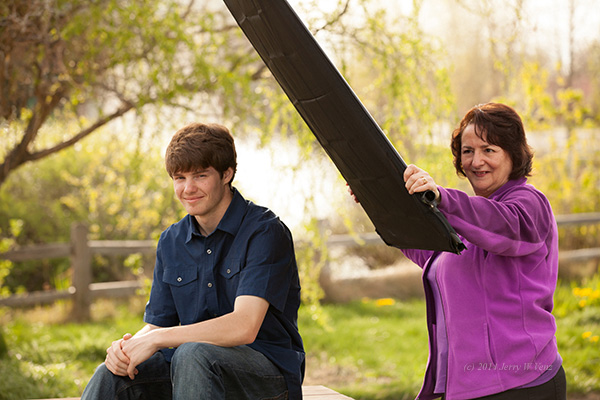
A flag is generally black, opaque, flat, and refers to something you could hold by hand or mount to a stand. As shown in the images below, this tool is used when you have placed your subject in a less than desirable, very open location with flat lighting.

Lopes102

Image with no gobo used

This is typically the lighting you’ll see with your subject out in the open. There’s strong light on both sides of his face, even though the sun is setting behind him. This is what’s referred to as flat lighting and it’s not very interesting.

In the next image you see how this can be corrected. Kathi, my wife and partner, is holding a 42″ flag close to the subject to create a dimensional shadow on the subject’s face.

Lopes112

Showing how the gobo is used

As you can see, just that simple modification of the natural light creates beautiful three-dimensionality.

Lopes106

Image with gobo used (notice the deeper shadow on his left cheek, camera right)

In this next example, we have our high school senior model, Jasmine, in the popular “Freak Alley” in downtown Boise. The sun is setting on camera left and is reflecting off a tall, distant, mirrored building to camera right. We blocked the direct sunlight on the left with our 42″ black flag, creating a nice shadow side on her face. Removing the much brighter sunlight coming from camera left (over 2 stops brighter than the reflected light on the right) also meant that I could open up the lens and slow down the shutter enough to record the dim light in the doorway behind her.

Mussell044FA

ISO 400, F/5.0 at 1/125th

If you don’t have a flag, you can accomplish similar results using a small natural light blocker, like a tree. This is where the generic term “gobo: (from go-between) comes into use. Gobos can be man-made things like buildings, houses, or a porch and they can also be something natural like a tree, forest, or hedges. Really, just about anything used to block light can be referred to as a gobo. The nice thing about a tree is that it can be in the picture, and act as a gobo to create the same type of lighting (called short lighting, where the shadowed side of the face is nearest the camera) that we used on Jasmine above.

Nick, in the image below, is a big athletic guy so I wanted to create some short lighting to trim down his face. To accomplish this, I leaned him into a small tree for its gobo effect which created a nice shadow on his face. The key to making this work is finding a tree with a small canopy. Since he must be very close to the tree for it to make a shadow on his face, the tree can’t have a big canopy or it will block the main light (the sky) and eliminate my nice deep background bokeh (those nice de-focused specular highlights, that will be a topic for a future article).

Connolly76

200mm lens, f/4.5 at 1/250th, ISO 400

Group portraits using subtractive lighting – more difficult but worth the effort

The hand held flag or small tree works great on individuals, but you need a much larger light blocker when photographing groups. To this end, scout your location for any large groups of trees, hedges, buildings, etc., which could serve as your gobo and help add three-dimensionality to your group portrait.

Again, to be effective, you must place your subject fairly close to the gobo so that you can see its effect (the shadow) on your subjects’ faces. Some photographers may have difficulty seeing this rather subtle effect with the naked eye, so I suggest to my students that they meter for the highlights on the subject’s face and take a test photo. It will be very obvious, when viewing the camera’s rear screen, if you have the shadows you’re looking for. How close, you ask, should the nearest member of your group be to the gobo? Usually about ten feet works for me. If you have a really big, tall tree line, then twenty feet may work beautifully.

In this last example, which was taken about two hours before sunset, the family was placed about fifteen feet away from a large stand of trees on the right. On the left, serving as the main light, is a large patch of clear blue sky with no sun in it. The only direct impact of the sun should be in creating backlight for the background.

Canode018

145mm lens, f/6.3 at 1/100th, ISO 400

Important caveat: Don’t stress if you can’t find the ideal location that will create the subtractive part of the natural lighting for groups, it’s not always possible. It’s perfectly acceptable to use soft, flat lighting when working with groups, especially large groups, one or two hours before sunset. Just make sure you have the other elements mentioned: keep the entire group in the shade, with the sun only touching the background, and that large patch of blue sky as your main light. We’ve used this technique to create many great portraits over the years.

Using true natural light, modified with the subtractive lighting technique, will produce superior portraits that will always look more natural than any flash technique. In addition, with the money you save not buying speed lights, soft-boxes, stands, weights, and radio triggers, you can invest in a really nice portrait lens. How’s that for a win-win?

If you have any other portrait lighting tips leave a comment below.

For more portrait lighting tips try out these articles:

  • Lighting Ratios to Make or Break your Portrait
  • 5 Reasons for Doing Natural Light Portraits
  • Let’s Talk About Light – 3 Types of Lighting Conditions and how to Use Them
  • Portraits – Lighting the Shot – a dPS ebook


The post How to use a Gobo to add Depth to Your Portraits with Subtractive Lighting by Jerry W Venz appeared first on Digital Photography School.


Digital Photography School

 
Comments Off on How to use a Gobo to add Depth to Your Portraits with Subtractive Lighting

Posted in Photography