RSS
 

Archive for May, 2014

5 May, 2014 – Having Fun With Panoramas

06 May


Panorama photography is very popular today.  Many smartphone and point and shoot cameras make shooting panoramas as easy as pushing a button and panning the camera.  In today’s article Having Fun With Panoramas, Kevin Raber shares how to shoot panos handheld shooting individual images.  He shares how to shoot and process these images.  His article includes multi row panos with over 50 images.  If you never tried doing panos or want to brush up on the technique then this article is for you.  

This July Luminous-Landscape hosts a workshop to the Northern Polar regions – Svalbard – Land Of The Polar Bear.  We have only 2 berths left on the first cruise.  The second cruise is Sold Out.  If you’d like a very special small boat experience to this region then register today.  You can find out more information HERE.


The Luminous Landscape – What’s New

 
Comments Off on 5 May, 2014 – Having Fun With Panoramas

Posted in News


How Self-Portraiture Makes You a Better Photographer

06 May

As long as art has existed, so too has the self-portrait. Van Gogh famously painted more than 30 self-portraits, using the available subject-of-self as both an outlet for his artistic talents, and as a method for perfecting his craft. Rembrandt, as perhaps the most prolific master of the self-portrait, painted, etched and drew more than 100 images of himself throughout his lifetime. One can even imagine the cavemen as having injected some degree of self into the prehistoric images painted on their cave walls.

Nebulous-1

Self-portraiture is NOT the same as a Selfie

But as rich in history as the self-portrait is, its categorization as a photographic ‘art’ is vulnerable due to the endless arms-length phone snaps, or ‘selfies’, now littering the internet. Lately, there has been a blurring of lines between the selfie and the self-portrait. As someone who has focused his own artistic energy toward self-portrait photography, I feel obligated to promote this art form, as self-portraiture provides value in terms of both the photos it produces, and the education if offers you as a new photographer.

The most patient model ever – you!

For me, self-portraiture began as a way to develop my own portrait photography skills, without the need for a model. As you probably know, learning the principles of photography, and the strategies for creating and controlling light, is a time-consuming process. It involves a great deal of trial and error, and asking a model to pose patiently while you make mistake after mistake isn’t always ideal. But you, yourself, are an infinitely more willing subject. Hours pass, memory cards fill with lackluster images, yet you don’t complain. Alone, you’re able to relax and focus on the task at hand: learning to become a better photographer.

Experimenting with artificial light (orange-gelled strobe imitating fire)

Use self-portraiture as a creative outlet

When enough solitary time passes, you’ll find that you begin to produce decent results. Soon, what began as a learning device morphs into a creative outlet. Self-portraiture is no longer an exercise to be performed in preparation for real photography; self-portraiture has become the real photography. Unlike selfies, your self-portraits are well conceived. The location, framing, lighting, depth of field and posing associated with the images are carefully planned. You work both sides of the camera with increasing efficiency, and the quality of your photography reflects the education received.

Self-portraiture offered a unique photo opportunity during this extended flight delay in Shanghai

From that point forward, you don’t hesitate to jump into frame should the inclusion of a person improve your photograph. When you want to test a new piece of gear, fine-tune a new technique, or kill a boring Sunday afternoon by setting up your camera, you do so with absolute independence. When photographing other subjects, you borrow from the lessons learned through self-portraiture, and the result is stronger photography, all-around.

‘Producing’ self-portraits offers both artistic challenges and skill-building opportunities

For those considering an attempt at self-portrait photography, here are a few tips to get you started:

Technique – focus

While taking self-portraits, one of the more difficult aspects to nail down is focus. You don’t have the luxury of pinpoint-focusing on the subject’s face, for example, when you, yourself are the subject. To get around this challenge, it is important to have a stand-in object on which you can focus the camera. I personally use my light stand, as it’s usually with me, and is tall enough to mirror my own height.

First, I determine where, in the frame, I will position myself and I place a ‘mark’ on that spot to ensure I’m continually in the right position. Small rocks, a line of chalk or a crack in the sidewalk have all worked well as my mark. Next I focus my camera on the light stand. Once my focus is perfect, I switch my DSLR to manual focus mode. From that point forward, unless I make manual focus adjustments, the focus will remain unchanged. As long as I stand on my mark, I’ll be in focus. This is particularly important when using shallow depth of field, where a single step forward or backward will cause you to be out of focus, ruining the shot.

Proper focus was critical to the success of this image, taken at a razor-thin f/1.4

Gear:

  • Tripod – when you’re in front of the camera, you can’t also hold the camera. Therefore, a tripod is an absolute must for serious self-portrait photographers. This is an obvious recommendation, I know. My real tripod tip is this: invest in a quality tripod that’s robust, yet light, so you won’t mind carrying it. Also make sure it offers flexibility with regard to the positions it can assume. If the legs act independently, and if the tripod can effectively hold your camera at heights from ground level to eye-level, it’ll come in handy.
  • Wireless remote trigger – while not essential, a wireless shutter release for your camera is a definite plus. The timer setting built into most cameras can get the job done, but for those serious about self-portrait photography, an inexpensive wireless remote is a no-brainer, and will save you from having to walk back to the camera after each frame.

My flexible tripod, offering a low perspective, and the remote in my pocket, allowed me to work quickly

Planning:

  • Self-portrait photography is a production. The act of selecting the location, framing, camera settings and your own placement within the frame is a slow and deliberate process. Taking self-portraits forces you to consider all of the individual components that combine to make a good photograph, and successfully intertwining these ingredients into a successful end result requires planning. So, plan, and learn to enjoy the process of planning your next photograph. The mental thought process will help your self-portrait photography as well as any other type of photography you choose to tackle.
  • Create and maintain a ‘shot list,’ which includes the theme, location, lighting information, prop information and any other specifics related to your upcoming shots. A shot list will help your photography in a few different ways. First, it will help you plan your upcoming shots, by forcing you to think through all of the photograph’s elements. Keeping a shot list will also cause you to view the world through your own photographic lens. You’ll find yourself on the lookout for new ideas, and will regularly pull out your phone (where my shot list is saved) to add new photo ideas. Finally, and most importantly, keeping a shot list will motivate you to get out and photograph more. It’s like a ‘honey-do’ list for yourself, and a shot that lingers for too long on the list will begin to bother you.

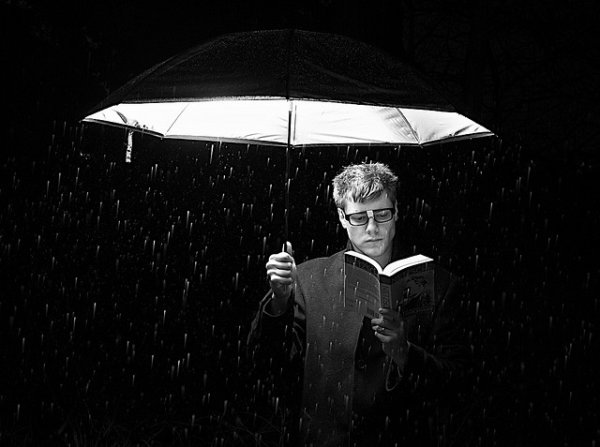
This image was on my ‘shot list’ for more than 3 weeks while I waited for the perfect rainy night

If you are eager to learn the art of photography, getting in front of the camera can provide a boost in your educational journey, and just may evolve into an enjoyable creative outlet.

Have you done any self-portraits? Please share in the comments below.

For more tips on doing self-portraits pick up the dPS ebook The Art of Self-Portraiture or read the 5 Benefits of a self-portrait project.

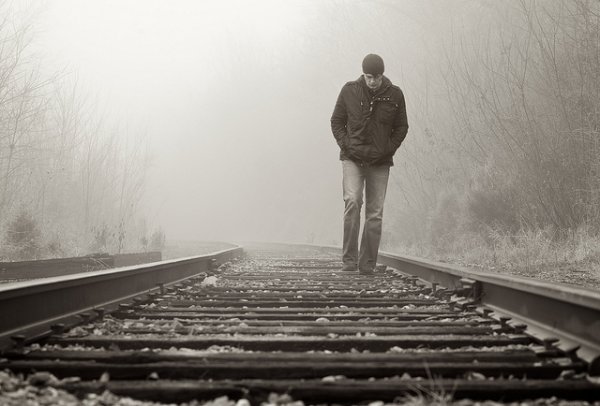
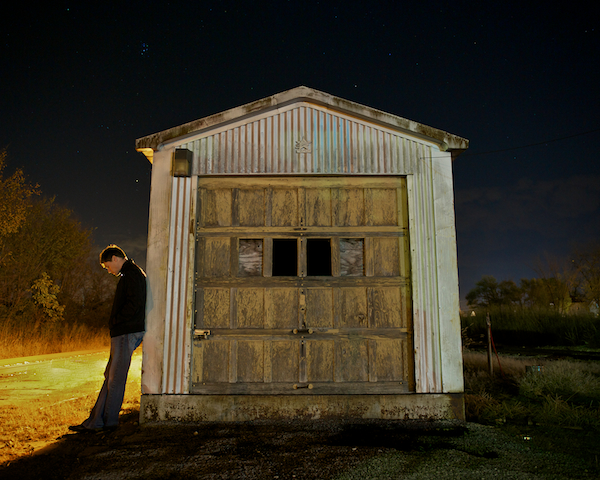
The-Other-Side-Tracks-1

The post How Self-Portraiture Makes You a Better Photographer by Ryan Pendleton appeared first on Digital Photography School.


Digital Photography School

 
Comments Off on How Self-Portraiture Makes You a Better Photographer

Posted in Photography


Behind the Shot: Shredded

06 May

900_Kirkjufell_5-2-2013_7.jpg

In the latest of his series of ‘Behind the Shot’ articles, landscape photographer Erez Marom shows us how he captured a dramatic image of Kirkjufell mountain, overlooking a frozen lake in Iceland. Marom talks about his equipment choice and exposure settings, and also gives a step-by-step look at the post-processing required to achieve the final result. Learn more

News: Digital Photography Review (dpreview.com)

 
Comments Off on Behind the Shot: Shredded

Posted in Uncategorized


Review of the Olympus TG-850 ‘Tough’ Waterproof Camera

06 May

I’ve discovered a flexible companion for all weather action, adventure, and family fun.

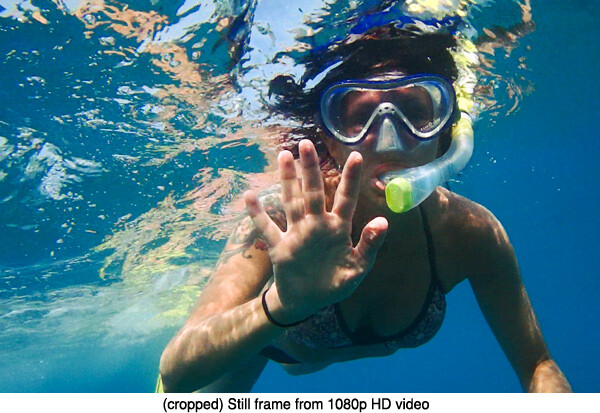
JillSnorkeling-TG-850-HD-video-frame

I’d been researching the ideal pocket-sized, waterproof, and shock-resistant camera to take to Hawaii for one of my Land and Sea Photography workshops. I’d compared every “tough” camera available online, but not one jumped out and said “Buy Me!”

Besides the full DSLR kit that I’d haul to the islands, I wanted to test and demonstrate a well-featured compact for capturing outdoor sports and vacation adventures. Almost every small durable camera available had been on the market for at least a year. Surely something ideal had been unveiled at the recent 2014 CES show in Vegas, but nothing was to be released in time for my imminent sailing.

My wish list of desirable features was brief:

  • Pocket-sized
  • Light weight, solid build
  • Comfortable, intuitive controls
  • Button-triggered Movie mode
  • Real wide-angle zoom below 28mm
  • Articulating LCD screen
  • Good LCD visibility in bright daylight and underwater
  • Fast power-up to shoot time
  • Fast to focus
  • Intelligent Auto ISO and low minimum ISO
  • One-button navigation to common shooting options
  • Exposure compensation
  • Underwater shooting modes
  • LED illumination for extra lighting
  • HD 1080p video
  • Hi-Speed 60fps or faster video for Slow-Motion fun
  • Sequential timer for action capture effects
  • Fast frame rate for recording bursts of action
  • Eye-Fi SD card compatible to shoot and upload images and video
  • Under $ 300 USD
  • Oh, and it must be crushproof, droppable and waterproof to at least 25 feet depth

I held out patiently, but my departure date was nearing and I was reluctant to purchase last year’s technology. Then I learned of the new Olympus ‘Tough’ TG-850, loved what I read on the Olympus Website. I made contact and a pre-release sample was sent overnight to my hotel just in time.

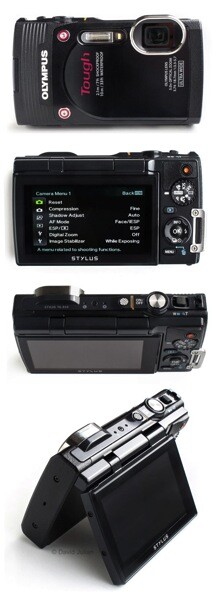
Olympus TG 850 camera 4VIEWS sm

I charged it up with the supplied direct-connect USB–>MiniUSB cable and secured a fast SD card into the waterproof double-locking connection, memory and battery compartment. My test camera had arrived in a generic box without instructions, yet I was delighted to find that the camera’s menus are the most intuitive I’ve seen, and feature a brief description for each selected menu option.

Once I’d configured some favorite user options, I tethered the camera’s supplied strap to my wristband for some body surfing to see how the TG-850 handled pounding surf breaks. The TG responds well to capturing spontaneous action and the lens clears of water drops easily. Power-on to shoot time feels very responsive at about 1.3 seconds. Weighing under 8oz (226g), it’s easy to use for hours without fatigue.

Features and User Experience

LCD screen

The TG-850′s hinged 3″ diagonal 460k-dot LCD screen is a unique feature in today’s compact waterproof camera market. The sturdy LCD screen can be flipped upwards to 180º, and is also one of my favorite features. It allows the convenience of shooting at low and high angles, or when snorkeling along at the surface or wanting an ant’s eye view of nature. Flip the LCD all the way facing forward and it’s great for solo selfies and group portraits.

Wide lens

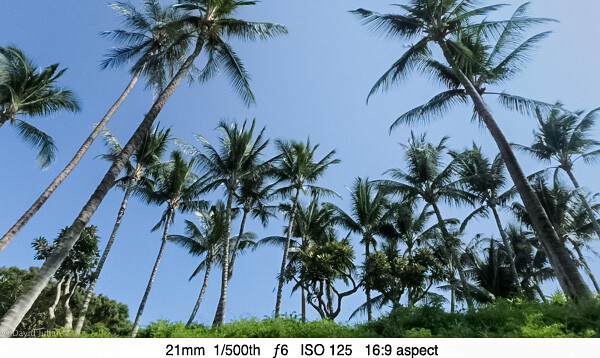
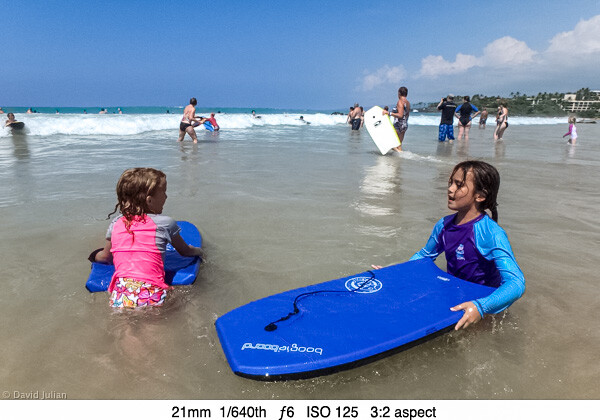
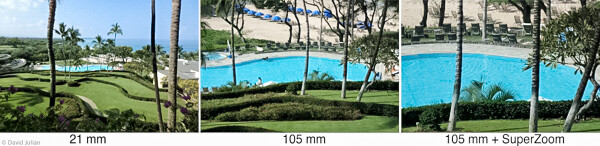
The very wide 21mm lens is my favorite feature of this camera. At review time, it’s the only waterproof pocket compact lens that is that wide without needing any extra attachments. Such a wide view allows more dramatic landscape compositions, in-the-action sports captures and easier group portraits. A digital zoom feature add extra reach, but as can be expected, there is some loss of quality. The on-off, zoom, Shutter, Movie, Mode and Playback controls are placed well for my single-handed operation. The TG-850 contains Olympus’s latest 16mp back-side illuminated CMOS ½.3 sensor coupled the powerful TruePic VII processor, for faster frame rates, video processing and other options.

DJulian Palm Trees 21mm

DJulian Kona kids boogieboards

Exposure settings

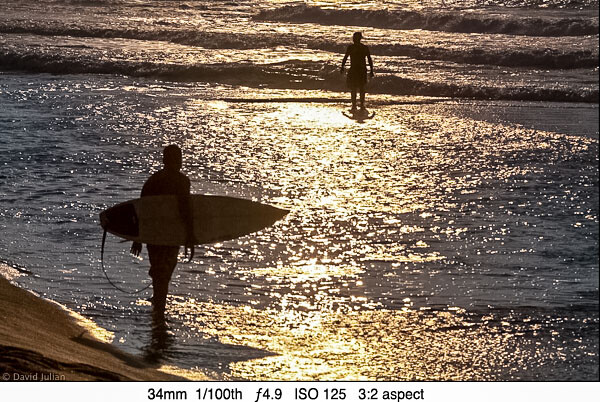
The sensor’s light sensitivity (ISO) can be set from 125 to 6400, HIGH or AUTO. My test of ISO settings revealed better quality than expected at settings from 200-1600, and after that it’s noisy as expected under magnification. With shutter speeds from 4 seconds to 1/2000th, there is plenty of room for creativity under many conditions. Set to Sports mode, my photos revealed very crisp water droplets shaken from a wet pooch. The onboard flash helps fill in harsh shadows or in backlit portraits. Metering can be switched from ESP Auto to Spot Center for more accuracy when needed. High contrast backlit scenes are easily balanced using the Exposure Compensation.

DJulian Backlit surfers Kona

File format and image quality

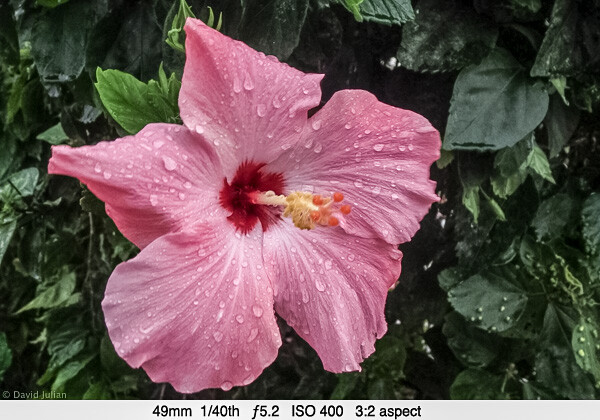
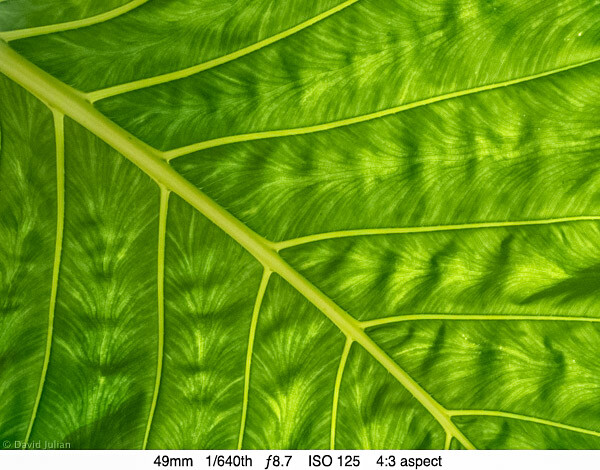
This camera does not shoot RAW format. No waterproof compacts do at this time, and I’m not expecting RAW anytime soon. Apparently the manufacturers uniformly conclude that this market segment isn’t after RAW processing. The good news is that the full-resolution 16mp JPGs I shot under varying conditions appear quite sharp when viewed in Lightroom at 1:3 magnification. At full-screen and 1:1 viewing, one can see the typical effects of compact sensor JPG processing that results in a rather painterly appearance. Photos shot at ISO 125-200 revealed the best shots of the trip.

DJulian Pink Hibiscus

DJulian Molokai Leaf Detail

Video

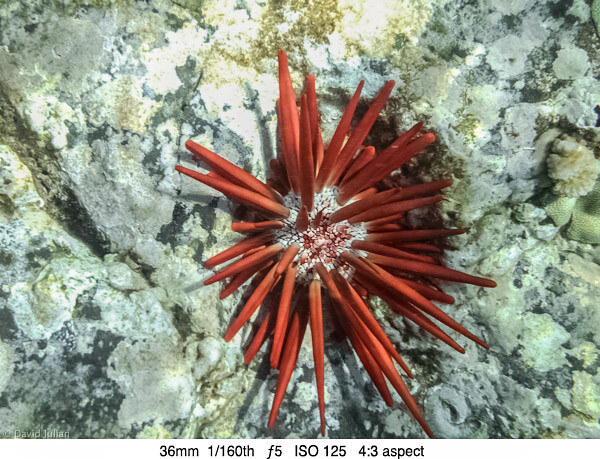
The TG-850 can shoot video at 1080 60p, 1080p, 720, VGA, high-speed 120fps at 640×480 and even 240fps at 432×324 video captures. Dual-mode lens-shift stabilization reduces normal handheld camera shake, and Hybrid mode reduces rhythmic shake during video shooting. I was ready to take the camera snorkelling off Lanai. Truly crisp contrasty underwater photography is a challenge for compact cameras, but the TG-850 produced very acceptable video for my online posts. Water depth plays a big part in color temperature and contrast, and three Underwater scene options help warm up the underwater blues.

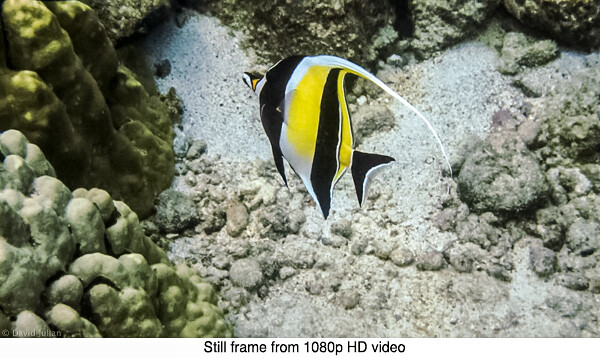
I am impressed with the sharp stills I clipped right from the 1080p video using a menu option. My use of the 120fps High Speed video produced fairly smooth slow-motion playback, though not quite as smooth as a Hero3 camera. The TG-850 videos are not distorted at the corners and edges as those I made with the Hero3. I found auto-exposure struggling when panning in uneven light conditions, but worked well enough for pleasing videos.

DJulian-Hawaii-Red-Urchin.jpg

DJulian Moorish Idol HD still

DJulian Sea Turtle Makena Maui Video Still

Here is a couple samples video done with the TG-850, the second one is done using 120fps high speed shooting mode.

Another feature that’s a lot of fun is the sequential shooting modes that allow fast frame bursts. Options include four different sequence settings including the ability to record a 60-frame burst in one second, a 60-frame burst at 20 fps for 3 seconds, or a 200-frame burst at 2.5fps for 80 seconds. A built in interval timer is also completely configurable for start delay time, interval time and sequences up to 99 frames. To replay the shot sequence you select the image ‘stack’ and the images show automatically in sequential order. Smart, easy and intuitive. For those who want to upload their images to a smartphone for social media, the TG-850 even has a menu setting to enable Eye-Fi SD card wireless transfers. I look forward to testing this soon.

DJulian Kona pool 21mm PANO TG 850 iso125

DJulian Kona pool TG850 ZOOM illo 3

DJulian Jill pool twirling frame sequence TG850

The 5-way control pad’s center button gives instant access many common shooting options:

  • 18 Picture styles including: Natural, Interval, Night Scene, Miniature, Backlight HDR, three underwater modes and some artsy effects you will at least try once
  • Flash control and LED assist lamp on/off – helps add light for closeups, macro and even video in low light
  • Exposure Compensation, +/- up to 2 stops helps compensate for difficult lighting
  • White Balance, including two custom WB settings
  • ISO including a very smart AUTO ISO mode
  • Timer and Multi-Frame speed modes
  • Image Size settings from 16mp to 3mp and VGA, which is great for emailing and social media
  • Aspect Ratios of 4:3, 16:9, 3:2, and 1:1 (square)

Other creative features accessible in the camera menus include:

  • AF Face/ESP detection – locks focus onto faces for quick grabs at gatherings
  • AF Spot – tracks the center of the frame. Works well when the subject is in a busy environment
  • AF Tracking – when a subject is moving across the frame or towards you
  • Spot or ESP pattern metering
  • Four sequential frame modes
  • The eighteen scene modes include the common standards as well as three underwater modes
  • Custom self-timing mode
  • Regular and Hybrid Stabilization for smoother video
  • Super Macro mode

Conclusions

The TG-850 is an excellent value for the features provided. It’s ease of use will appeal to families, and creative features will win over active enthusiasts. I cannot wait to take it back out into the wilds and have more fun.

Pros:

  • Well designed, fully-featured and very durable compact camera for outdoor and family adventures
  • Sturdy tilting LCD encourages experimentation
  • 16mp images and HD video quality are just right for most web and print publishing needs
  • 400-1600 ISO photos are better than other cameras we tested
  • Solid build and double-locked battery/card/cable door has a strong yet easily replaceable gasket
  • Little motor noise recorded when zooming video
  • Excellent creative options for shooting action
  • Face-detection ESP AF is rapid and helpful
  • Fast power-up to shoot time
  • Intuitive menu navigation and quick-button access to shooting options
  • Eye-Fi card ready for WiFi transfers
  • Recessed lens is well protected and clears easily when wet

Cons:

  • No RAW format
  • High quality JPGs seem overly processed when viewed full screen
  • The TG-850 has forgone the 720p high-speed video of its predecessor, the TG-830. Even my iPhone 5s can shoot 120fps High-speed in HD
  • Ridged plastic grip could be a durable rubber for wet hands
  • Slight jumpiness and motor noise at times when zooming during video
  • HD Video crops slightly into wide angle, appearing more like 24mm
  • Zoom switch could be sturdier, with smoother video zoom

Advice

  • Buy a floaty strap if you plan to use the camera around deep water. At the time of this review, Olympus is offering a free one with each camera purchase.
  • Try attaching a mini tripod or telescoping monopod such as the ones from iStabilizer for even more active shooting fun.
  • You will want at least one spare battery. I found a set of two Halcyon 1500 mAh batteries and a matching AC+Auto charger from Amazon for under $ 20. The Halcyon batteries are higher capacity than the originals, though I have not compared their actual hard-use longevity. (Note from the Editor: please note that using off market batteries can cause a void in your warrantee if anything should go wrong – be cautious and proceed at your own risk)
  • Check the battery/card door gasket for tiny particles of sand before every use in water. Any residual particles can admit water if under pressure.

The post Review of the Olympus TG-850 ‘Tough’ Waterproof Camera by David Julian appeared first on Digital Photography School.


Digital Photography School

 
Comments Off on Review of the Olympus TG-850 ‘Tough’ Waterproof Camera

Posted in Photography


World’s Weirdest Hotels: 14 Unique Offbeat Accommodations

06 May

[ By Steph in Boutique & Art Hotels & Travel. ]

World's Weirdest Hotels Main

There are art hotels with unusually creative and strangely-themed decor, and then there are hotels shaped like giant anuses, which are in a different class altogether. Hotels so strange and unusual that they qualify as roadside attractions whether you spend the night or not include a massive toilet, an operable crane, a survival pod with disco decor, a giant beer can and a manor where you can eat breakfast with giraffes hovering over your shoulder.

Hotel Shaped Like a Giant Anus, Antwerp, Belgium

Weirdest Hotels Anus
Weirdest Hotels Anus 2

It’s unlikely that you’ve ever thought to yourself, “Gee, I’d love to spend a night or two inside a giant anus,” but you have that opportunity anyway if you’re ever traveling through Antwerp, Belgium. Hotel Casanus began as a tongue-in-cheek work of art but is now actually a functioning rental on a small, isolated island as part of the 30-acre Verbeke Foundation Sculpture Park.

Giraffe Manor, Nairobi, Kenya

Weirdest Hotels Giraffe Manor

It’s certainly not every day that you can enjoy a gourmet meal in a quaint historic mansion as giraffes lean in through the windows over your shoulder. Giraffe Manor is located on a 140-acre sanctuary for one of the most endangered subspecies of giraffes in the world, Rothschild’s giraffes. The manor, which has ten guest rooms, offers up plates of giraffe food that you can feed to these hungry guests so they don’t go after your breakfast.

Sand Hotel, Dorset, England

Weirdest Hotels Sand Dorset

What’s the opposite of an ice hotel? A hot-weather alternative that’s no less ephemeral is the Sand Hotel in Dorset, England. Made of 1,000 tons of sand by British sculptor Mark Anderson, the hotel featured open ‘rooms’ that could be rented for only $ 21 a night.

Sewer Pipe Hostel, Mexico City

Weirdest Hotels Sewer Pipe

In case staying inside an anus sculpture is too extreme for you, perhaps a sewer pipe will be more accommodating. Mexico City’s TuboHotel is made up of stacked, reclaimed concrete sewer pipes with little more than a queen bed and a lamp inside.

Mount Gambier Jail Hotel, Australia

Weirdest Hotels Jail Australia

The spartan rooms of the Mount Gambier Jail hotel in Australia don’t look much different than they did when actual prisoners were staying there, and little has been changed about the entire facility since it was a functioning jail. It’s far from luxurious, but that’s kind of the point: the hotel markets itself as an ideal place to stay for penny-pinchers and the broke.

Next Page – Click Below to Read More:
Worlds Weirdest Hotels 14 Unique Offbeat Accommodations

Share on Facebook


[ By Steph in Boutique & Art Hotels & Travel. ]

[ WebUrbanist | Archives | Galleries | Privacy | TOS ]


WebUrbanist

 
Comments Off on World’s Weirdest Hotels: 14 Unique Offbeat Accommodations

Posted in Creativity


Putting Personality Into Your Pictures: A How-to Guide

05 May

What makes a great photograph? There a hundreds of fundamentals – from lighting to image structure, depth, color, personality and composition. Mastering the art of photography is what evokes emotions and makes people’s jaws drop when they see that image. Art is not what you see, but what you can make others see – Edgar Degas. Adding, revealing and capturing Continue Reading

The post Putting Personality Into Your Pictures: A How-to Guide appeared first on Photodoto.


Photodoto

 
Comments Off on Putting Personality Into Your Pictures: A How-to Guide

Posted in Photography


Foldio: A Pop-Up Photography Studio

05 May

Extra photos for bloggers: 1, 2, 3

You’ve got dreams of your very own photo studio – gleaming white walls, perfectly placed lights and windows overlooking the Manhattan skyline.

The Foldio is a dream come true! It’s a pop-up photo studio, complete with built-in lighting, small enough to take anywhere you want.

Foldio and its LEDs give you a bright evenly lit space for all kinds of photography projects – product photos for Etsy, stop-motion gifs, even pet portraits (of rodents or small reptiles).

Sturdy magnets hold your white walls in place, while clips make it easy to swap out backdrops.

When your shoot is through, fold it up and tote it anywhere. From Manhattan, NYC to Manhattan, Kansas and points beyond.

Pack Up Your Own Foldio Light Studio
$ 55 at the Photojojo Shop


© laurel for Photojojo, 2014. |
Permalink |
No comment |
Add to
del.icio.us

Post tags:


Photojojo

 
Comments Off on Foldio: A Pop-Up Photography Studio

Posted in Equipment


American Museum of Natural History photo archive now online

05 May

f08cfd833923561f6ee5271a56aae948.jpg

The American Museum of Natural History Research Library announced it has digitized and made available online its entire collection of more than 7,000 historical photographs. This massive archive was previously difficult to access, especially for those not in proximity to New York City. According to the Museum, its goal was to create digital representatives of the original photographs that maintained their integrity. They scanned the negatives whenever possible and scanned prints only when there were no negatives. Learn more

News: Digital Photography Review (dpreview.com)

 
Comments Off on American Museum of Natural History photo archive now online

Posted in Uncategorized


Jeff Mermelstein: TWIRL/RUN

05 May

Ich sehe das so: Die beste Beschäftigung mit einem Buch ist es, eine Rezension drüber zu schreiben. Denn dann gebe ich mir selbst die Aufgabe, die Lektüre bis in den letzten Winkel auszuleuchten, zu analysieren und im Idealfall einen agitierenden Artikel zu verfassen.

Heute schreibe ich über „Twirl/Run“ von Jeff Mermelstein. Seinen Namen hörte ich zum ersten Mal, als ich mir vor längerer Zeit den Film „Everybody Street“ ansah.

So durchsuchte ich erst einmal Amazon nach Fotobänden von ihm* – eine Angewohnheit, die mir irgendwann noch teuer zu stehen kommen wird.

Einer der Bände, den ich mir in den folgenden Monaten kaufte, war besagtes „Twirl/Run“*. Dieser liegt nun vor mir und ich untertreibe nicht, wenn ich sage, dass dies der beste Konzeptband ist, der mir bisher untergekommen ist.

Info am Rande: Derzeit umfasst meine Buch-Sammlung 230 Bildbände, von denen gefühlte 80% der Straßenfotografie zuzuordnen sind.

Konzeptband? Was für ein Konzept? Nun, der Titel sagt eigentlich, worum es geht. Um Twirl und Run. Twirl, vom Englischen ins Deutsche übersetzt, bedeutet zwirbeln, wirbeln oder an etwas drehen. Run kommt ganz klar von rennen.

Beide Thematiken sind im Buch Programm. Und zwar so: Von Seite 001 bis 035 sind ausschließlich Menschen zu sehen, die an ihren Haaren zwirbeln. Dann folgt ein kurzer Essay und die Zahlen beginnen wieder bei 001. Bis Seite 041 sind dann nur Menschen abgebildet, die rennen.

Diese Zweiteilung hebt das Konzept deutlich hervor – und das ist selten, da Straßenfotografen sich fast nie auf eine einzige Tätigkeit beschränken, sondern ihre Bereiche wesentlich weiter fassen.

Eine aufgeschlagene Doppelseite des Buches Twirl/Run von Jeff Mermelstein.

Eine aufgeschlagene Doppelseite des Buches Twirl/Run von Jeff Mermelstein.

Eine aufgeschlagene Doppelseite des Buches Twirl/Run von Jeff Mermelstein.

Fotografie

Dieses Buch hat es mir wirklich angetan. So sehr, dass ich es nur ungern aus der Hand lege. Warum?

Weil es eigentlich nicht zu fassen ist, was sich darin befindet. Denn mit jeder weiteren Seite, die ich öffne, frage ich mich, wie es denn in aller Welt möglich ist, diese beiden Themen so penibel zu verfolgen.

Denn das muss man ja erst einmal sehen, dieses Zwirbeln, nicht wahr?

Das Rennen, klar, das kennt man ja von diversen Straßenaufnahmen – wobei Mermelstein es schafft, höchst skurrile Rennsituationen aufzugreifen. Aber das Zwirbeln?

Klar. Leute zwirbeln. Aber so viele? Auf der letzten Seite des Buch wird dann klar, wie lange Mermelstein an diesem Projekt gearbeitet hat: Von 1995 bis 2008. Dreizehn Jahre.

Wer verbringt geschlagene fucking dreizehn Jahre auf der Straße, um Leute zu fotografieren, die sich die Haare zwirbeln oder zur Bahn rennen? Selbst, wenn man das Projekt nebenher und nicht als einziges macht, muss man dennoch immer die Augen dafür offen halten.

Es muss sich um eine strapazierfähige Leidenschaft handeln, das durchzuziehen. Auf den Kopf trifft den Nagel der amerikanische Kunsthistoriker Kozloff mit dieser präzisen Beurteilung des Mermestein’schen Schaffens:

Jeff Mermelstein, würde ich sagen, ist ein Absurdist mit Sinn für Humor.

Die Aufnahmen selbst sind methodisch einheitlich: Sie zeigen das Thema in schlichter, nüchterner Bildsprache. Keine extravaganten Kompositionen oder ungewohnte Blitzbeleuchtung. Nein, es wird so gezeigt, wie der Moment es zulässt.

Die Fotos sind gut gesättigt, aber nicht zu viel. Kontrastreich, aber das Schwarz säuft nicht ab und die Lichter reißen nicht aus. Solide Druckarbeit also.

Eine aufgeschlagene Doppelseite des Buches Twirl/Run von Jeff Mermelstein.

Eine aufgeschlagene Doppelseite des Buches Twirl/Run von Jeff Mermelstein.

Eine aufgeschlagene Doppelseite des Buches Twirl/Run von Jeff Mermelstein.

Buchgestaltung

Nun möchte ich ein wenig auf das Gesamtdesign eingehen, das von Greger Ulf Nilson großartig formvollendet wurde. Das Buch ist mit einem Hardcover bestückt, das mit einem Stoffeinband angenehm griffig in der Hand liegt und somit schon als haptisches Erlebnis erfahrbar ist.

Die Folienprägung des Titels beeindruckt, verknüpft mit der thematisch aufbereitetenden Typo (Twirl ist in sich verdreht, Run steht kursiv, unterstrichen und mit einem Punkt versehen) nicht nur auf den ersten, sondern insbesondere auf den zweiten Blick.

Diese Form der Buchveredelung entspricht dem Buch insofern, als dass es nicht einfach „irgendein Fotobuch ist“, sondern die Thematik bis in die letzten Ritzen des Buch fließt und ob der Qualität keinen Zweifel offen lässt.

Die Fadenbindung sorgt als i-Tüpfelchen dafür, dass der Band lange hält und nicht nach zwei Jahren auseinanderfällt.

Wie oben bebildert, sind die Fotos in Dreiergruppen pro Seite eng zusammengefasst und direkt untereinander gesetzt. Beim vertieften Schmökern schwingt ein deutliches Gefühl des Ganzen mit, denn: Es geht hier nicht um das einzelne, das perfekte Bild.

Es geht um alles.

Die Seitenzahlen sitzen außerdem nicht wie gewohnt außen, sondern innen – auch das ist eine Besonderheit, die nicht ungenannt bleiben soll.

Fokus auf die innenliegenden Seitenzahlen des Buches Twirl/Run von Jeff Mermelstein.

Die Mitte

In der Buchmitte befindet sich ein Essay. Laaaaangweilig?

Texte haben es in Bildbänden bekanntlich schwer und werden von Betrachtern meist stiefmütterlich behandelt. Denn, wer einen Bildband kauft, will ja Bilder und keine Geschichten.

Eigentlich wollte ich den Essay auch nicht lesen, doch durch einen versteckten Hinweis von Mermelstein wurde ich neugierig. In der abschließenden Danksagung am Ende des Buches schreibt er:

Robin Hemley, der einen wunderbar literarischen Essay abgeliefert hat, der nicht in der Geschichte der Fotografie verwurzelt ist – danke.

Es folgte also weder Pathos, noch eine kunstwissenschaftliche Bildbewertung oder brachiale Dekonstruktion der schummrigen Fotografenpsyche.

Nein, ich fand einen urkomischen Text über das Zwirbeln der Haare und das Rennen zur Bahn, sodass ich beim Lesen mehrmals laut auflachen, mich bei Hemley bedanken und Amazon nach Büchern von ihm durchforsten* musste (oh shit, ich bin echt zu oft auf Amazon).

Der Essay des Buches Twirl/Run von Jeff Mermelstein.

Resümee

Jeff Mermelstein hat 2009 ein grandioses Buch vorgelegt. Aufgrund der extravagenten Länge seines Projektes gelingt es ihm, eine fotografisch gesehen komplexe Aufgabe mit Bravour zu erfüllen. Dies hebt seine Arbeit deutlich von „gängiger Straßenfotografie“ ab und weist alternative Herangehensweisen auf.

Eine plausible Schlussfolgerung ist für mich, dass es möglich ist, die allzu oft gestellte Frage nach dem „Stil des Fotografen“ und die meist verkrampfte Suche nach Individualität auch über Bord zu werfen, ohne dabei Seele zu verlieren.

Sich dann schlicht auf eine Sache zu konzentrieren, die dem Fotografen selbst im Alltag auffällt. Dabei darf es sich um eine noch so triviale Angelegenheit handeln. Zusammengefasst in einem Buch, tausendfach dargelegt kann daraus ein brillianter Konzeptband entstehen.

TWIRL/RUN ist meines Erachtens ein Werk, an dem sich andere sowohl inhaltlich als auch an der gestalterischen Form messen lassen müssen. Jedoch hat Mermelstein die Latte derart hoch angelegt, dass es Gleichgesinnten allein schon beim Versuch, nach der Latte zu greifen, schwindelig werden dürfte.

Das Buch Twirl/Run von Jeff Mermelstein von vorn.

Informationen zum Buch

Gebundene Ausgabe: 88 Seiten
Fotograf: Jeff Mermelstein
Verlag: powerHouse Books
Auflage: 1. (3. November 2009)
Design, Art Director: Greger Ulf Nilson
Essay: Robin Hemley
Sprache: Englisch
Größe: 31 x 21,3 x 1,5 cm
Preis: 25,89 €* (Stand April 2014)

* Das ist ein Affiliate-Link zu Amazon. Wenn Ihr darüber etwas bestellt, erhält kwerfeldein eine kleine Provision, Ihr zahlt aber keinen Cent mehr.


kwerfeldein – Fotografie Magazin | Fotocommunity

 
Comments Off on Jeff Mermelstein: TWIRL/RUN

Posted in Equipment


Samsung NX Mini real-world samples gallery

05 May

5959934063AA44F99A6B4B8B7C30BEE2.jpg

Samsung’s NX Mini is the slimmest and lightest interchangeable lens camera on the market. It packs a 1″-type, 20MP CMOS sensor into its body, along with Wi-Fi with NFC and 1080/30p video. With the NX Mini, Samsung also introduced a new NX-M lens mount. We’ve been shooting with the 9mm F3.5 (24.3mm equivalent) prime on the camera and having some fun with the Mini’s flip up LCD for the occasional ‘selfie’. See gallery

News: Digital Photography Review (dpreview.com)

 
Comments Off on Samsung NX Mini real-world samples gallery

Posted in Uncategorized