RSS
 

Archive for May, 2014

Is it true? New service detects processed photos

07 May

tn_2-thumb.jpg

Fourandsix Technologies, Inc. has launched izitru.com (pronounced ‘is it true’) a new, free service and companion iPhone app that can determine whether or not an image has been processed. After uploading a JPEG file to the site, izitru runs six image analysis tests that can differentiate whether or not the image has been altered since it was captured with a digital camera. Izitru then assigns the image a ‘trust’ rating. Learn more

News: Digital Photography Review (dpreview.com)

 
Comments Off on Is it true? New service detects processed photos

Posted in Uncategorized


10 Accessories To Make Your Camera Bag Super-Interesting

07 May

Once you get into photography, many of the things you want to buy are very expensive, and all of the sudden those 15 lenses on your wish list seem to compete with your children’s college fund. For some reason, you start feeling like you “need” stuff to be a better photographer. Truth be told, you don’t need much, but it’s Continue Reading

The post 10 Accessories To Make Your Camera Bag Super-Interesting appeared first on Photodoto.


Photodoto

 
Comments Off on 10 Accessories To Make Your Camera Bag Super-Interesting

Posted in Photography


FlashQ: The little cube for flash photography

07 May

20140330022436-PB05_640b.jpg

An IndieGoGo project called FlashQ seeks to make wireless flash triggers small in size and stylish to look at. The FlashQ is a 2.4Ghz wireless trigger and receiver system that mounts to a camera’s hotshoe and a flash’s hotshoe adapter. The compact device is aimed at owners of mirrorless cameras and other small camera bodies. Learn more

News: Digital Photography Review (dpreview.com)

 
Comments Off on FlashQ: The little cube for flash photography

Posted in Uncategorized


[MODIFIED] Cell Phone – Six Battery Conservation Tips

07 May

Six ways to keep your cell phone’s battery running as long as possible.

Is your cell phone battery losing power constantly? Have you ever had to stop using your cell phone in the middle of a call because the battery died? Here are a few tips you can use to conserve your cell phone battery’s power:

* If you know you’re traveling to an area without coverage or with only spotty roaming coverage, consider turning off your cell phone. Your phone can use a lot of power trying to find a suitable network, although some phones may stop polling after a while to try to reduce this battery hoggishness. One other option if you need to use your calendar, notes, play Angry Birds, etc. is to put the phone in “airplane mode” where all communications are stopped yet local apps should still be usable….

Read more at MalekTips.
New Computer and Technology Help and Tips – MalekTips.Com

 
Comments Off on [MODIFIED] Cell Phone – Six Battery Conservation Tips

Posted in Technology


Did Amazon just patent the seamless background setup?

07 May

amazon-seamless-white-670x434.jpg

On March 18th the United States Patent and Trademark Office granted a patent to Amazon covering a specific method to achieve the common photographic technique of capturing an image of a subject against a plain white background. Patent No.US 8,676,045 B1 describes a setup using multiple lights and a white backdrop which results in images that require no post-process retouching to remove shadows. Learn more

News: Digital Photography Review (dpreview.com)

 
Comments Off on Did Amazon just patent the seamless background setup?

Posted in Uncategorized


Nikon D4S dynamic range and tone curve measurements

07 May

D4s_58_1.4_front.png

We’ve updated our first impressions review of the Nikon D4S with our JPEG Tone Curve and Dynamic Range measurements. Included are real-world examples of Nikon’s Active D-Lighting modes, which can significantly help in dealing with scenes containing challenging ranges of (dark to bright) tones. Have a look and, as always, you can compare the D4S to any other camera in our database. Learn more

News: Digital Photography Review (dpreview.com)

 
Comments Off on Nikon D4S dynamic range and tone curve measurements

Posted in Uncategorized


Park & Slide: 100,000 Sign Up to Slip 300 Feet Down a Street

07 May

[ By WebUrbanist in Art & Installation & Sound. ]

urban slide go now

For one day only, residents of Bristol were offered just 360 ‘tickets to slide’ (out of nearly 100,000 applicants) down a main city street at over 10 miles an hour, surrounded by thousands of jealous onlookers.

urban installation art design

Inspired by the previous year’s heat wave and created by Luke Jerram, this participatory crowdfunded project was an inclusive, all-ages community endeavor, with sliders ranging from 5 to 73 years old.

urban slide go detail

The slide was installed on Park Street in Bristol as part of Make Sunday Special and the Bristol Art Weekender, drawing a mix of participants from within and beyond the city.

urban slide ticket line

urban slide in action

Plastic sheets over padded mats were shaped and held in place by hay bales – this simple canyon was then supplied with continuous water to ensure a smooth ride from top to bottom.

urban water slide build

urban public water slide

While he has no plan to tour his own creation, Luke is going to make the plans freely available for other people who want to follow suit, making public water slides in their own towns or cities around the world.

Share on Facebook


[ By WebUrbanist in Art & Installation & Sound. ]

[ WebUrbanist | Archives | Galleries | Privacy | TOS ]


WebUrbanist

 
Comments Off on Park & Slide: 100,000 Sign Up to Slip 300 Feet Down a Street

Posted in Creativity


How to do Great Photography Even When Your Surroundings are Boring

07 May
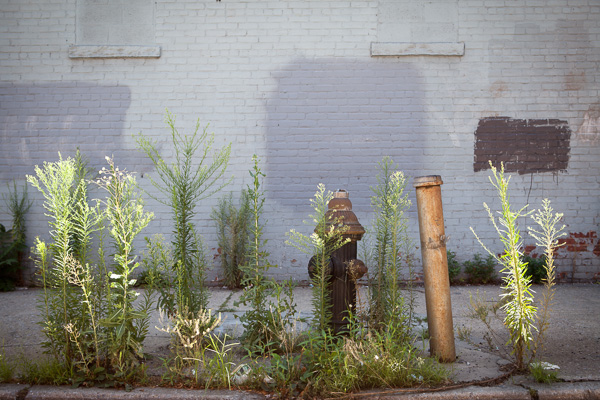
Gowanus Fire Hydrant

Gowanus Fire Hydrant

I have always been fascinated with great photography taken in areas that people might commonly refer to as ‘boring.’

I use the word boring because that is the specific word I most often see used as an excuse for people having trouble with their photography. Someone will say, “I wish I lived somewhere more interesting and beautiful”or “I can’t do interesting work where I live. It’s too boring.”. Can you relate to that?

What these people don’t realize is that what might seem boring and routine to them could seem fascinating to others, and by dismissing where they live they do not even give themselves a chance to try and photograph it in an interesting way.  They take themselves out of the game before they even start.

When someone uses the word boring, I tend to think that they mean quiet and not traditionally picturesque, or maybe there are not many people around and the ones that are around seem uninteresting.  These are not reasons that you cannot take an interesting photo. In fact, these topics all sound fascinating to me. Use these aspects to your advantage and figure out ways to make them interesting, photogenic, and appealing. Also, keep in mind that often the people that seem the least interesting, actually tend to be the most interesting.

Here are some tips to capture interesting photos in ‘boring’ places, and I hope after you read this article you will never use the word boring again.

Capture images of people you come across in everyday situations

Capture people that you come across in everyday situations

Take a camera with you on everyday excursions

Many people have the habit of only taking their camera out when there is supposed to be a picturesque moment. Maybe it’s a sunset, or to the park, or on a trip. This is a tough way to shoot because you already have the images you want to capture in your mind before you take them.

The goal here is to not stop yourself from taking images before you even start. The more ‘boring’ you think the place is, the more you should bring out your camera. Go into a situation with the mindset that you are going to figure out how to take an interesting photo no matter what happens.

Try to create interesting images in the course of your everyday life. Photograph your neighborhood. It could be at the gas station, at a roadside diner, in a supermarket, in a parking lot, or stopping on a quiet street corner at dusk. For me, this is the true fun of photography. It’s a way of helping you see aspects of your everyday world in an unique way.

Remember, if you have a DSLR that is too heavy to carry around frequently, there are alternatives. The most important one is the cellphone in your pocket. Cellphone cameras have come a long way, and while they are not close to the quality of a camera, you can still make good prints out of them. The most important reason for using a cellphone is that you are training your eye by using them when you otherwise wouldn’t take a camera with you.

Some other alternatives are to purchase a smaller prime lens or a pancake lens to lighten your DSLR for everyday use, or purchasing a mirrorless or micro 4/3rds camera. I personally love the Fuji X100s.

Dancer in Pharmacy

Dancer in Pharmacy. Taken with iPhone 4S.

Find beauty in the mundane

This is the most important point. Try to go beyond the safe photo. Capture something that you find interesting even though many people might not choose to put it on their walls. Don’t be afraid if other people hate it. That’s often a good sign. It only matters if you like it.

Focus on details and use everyday elements to make an image interesting. You don’t have to have a mountain, a stream, or a sunset in your photo to make it interesting. A brick wall, a parking cone, a street sign, or a bare building can all be beautiful when captured in the right way. Capture people that you come across over the course of your everyday routine. These can be the most interesting images since you will already know the subject well.

Aim to capture subtle images as part of your work. Subtle images might not jump out at a viewer right away, but they will stick with them. These images will make someone think and will become more interesting to the viewer over time as they wonder about them. Subtle images can be very powerful when done correctly.

Red Chair, Crate and Barrel

Red Chair, Crate and Barrel

To be honest, the jury is out on what I think about this image above, and I think it will have to age before I figure it out.  But I had to try it.  It might look completely normal and banal, especially if you live in the U.S., but it takes on a different meaning when you compare it to this image taken by William Eggleston in 1984.  The ‘boringness’, the browns and muted tones become the point of this image.

Tell a story

Pretend you have a viewer that knows nothing about where you are from. Maybe you live in a quiet corner of suburbia, where all the houses look the same, or maybe you’re in the middle of a rural area.

Your photos should tell the viewer what it is like to be there. Think about it as though you are talking to the viewer through your images. Use your images to tell the stories that surround you, no matter how big or small.
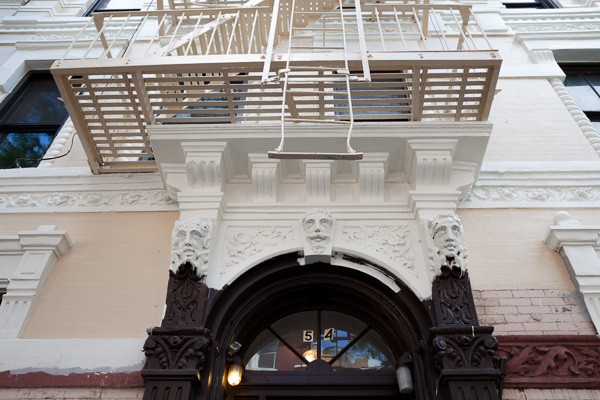
Gentrification

Gentrification

I have walked past this building with my camera every couple of days for almost seven years.  Then, one day there was an interesting image.

Experiment

It is a hard process to learn to photograph this way and you will undoubtedly take many bad photos during the learning process. You will have a hard time figuring out what is good and even asking for feedback might confuse you further. I don’t know about you, but that sounds like fun to me.

Find a friend or two or a fellow photographer that you trust and show them your images over time. Let them grow with your work while you do. This will become invaluable feedback down the road and help you talk out your work with them.

The only constant in this process is that it takes time to succeed and to figure out what you are doing and what you are photographing. There is no roadmap for doing this type of work.
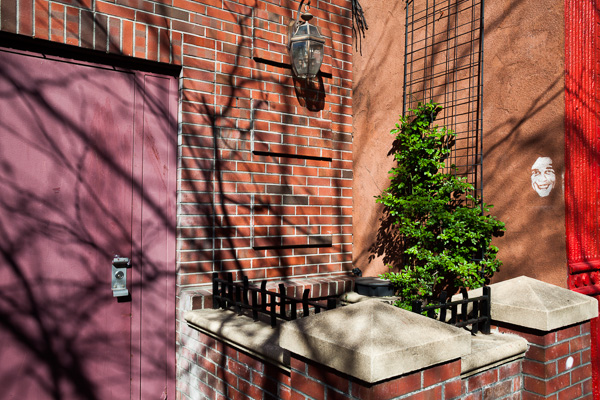
White Face

White Face

Don’t take your area or lifestyle for granted

Just because something does not seem interesting to you, does not mean it is not interesting. The way you do things and your environment are both vastly different from the rest of the world. Keep that in mind. Capture intimate aspects of your world for others and they will find those photographs fascinating, even if they might feel routine or normal to you.

Great photographers can do great photography anywhere, however it sometimes can take a little inspiration to get the wheels turning. The most important thing is to walk out the door frequently. If you think you are not going to capture any interesting images then you are not going to walk out the door.

Take a long walk, anywhere, at anytime, and challenge yourself to capture an interesting image.
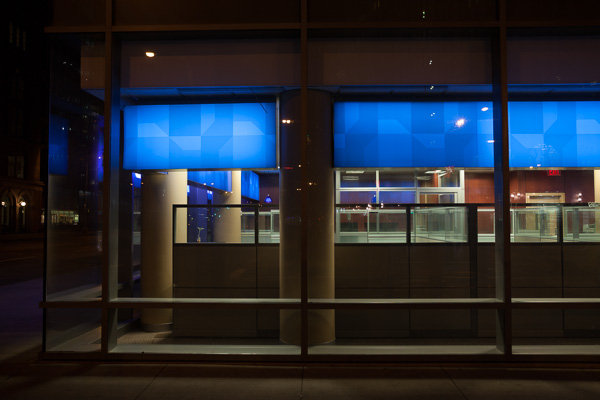
A Plant Grows, Chase Bank

Plant, Chase Bank

Further viewing

For further viewing, I highly suggest exploring the work of Williams Eggleston, Lee Friedlander, and Stephen Shore.  They are photographic masters who have spent much of their time photographing in this way.
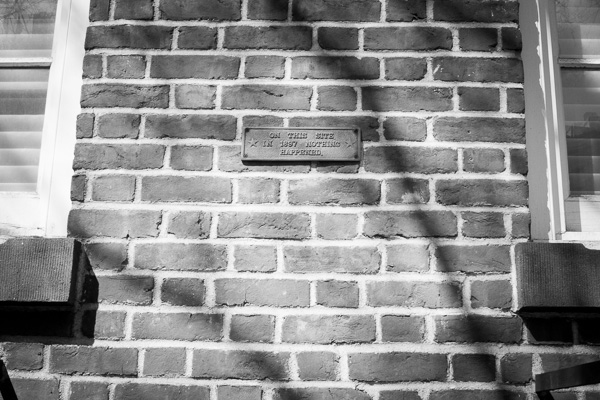
On This Site in 1897 Nothing Happened

On This Site in 1897 Nothing Happened

The post How to do Great Photography Even When Your Surroundings are Boring by James Maher appeared first on Digital Photography School.


Digital Photography School

 
Comments Off on How to do Great Photography Even When Your Surroundings are Boring

Posted in Photography


8 Steps to Create Mouth Watering Food Photography

07 May

On sale now at SnapnDeals for a limited time at 50% off Photographing Food 8 eBook Bundle by Taylor Mathis. Get it now if you want more great food photography tips.

Have you ever tried taking a picture of food and it just didn’t look as good as the dish tasted? Don’t worry, you aren’t alone. Taking pictures of food requires a different mindset and approach than what you would use in your portrait or landscape photography. Here are 8 steps you can take that will help you create mouthwatering food images.

Step 1. Choose one light source

Mathis photographing food 8 steps tip 1

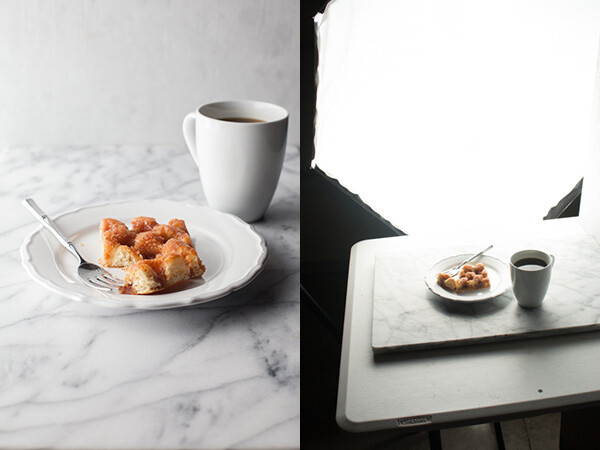
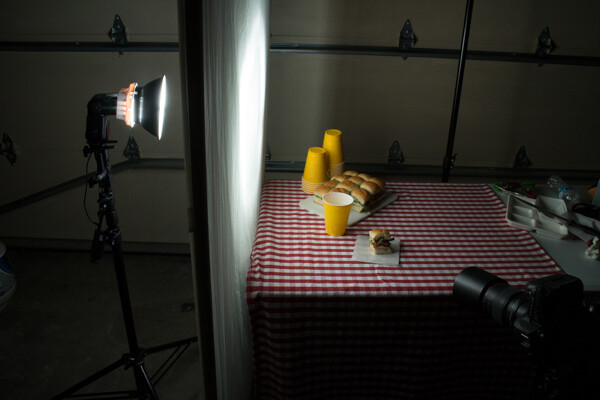
I know what you may be thinking. The more lights the better, right? Adding lights in portrait photography does give you ability to shape and light the face in beautiful ways, but when shooting food, one large diffused light source will yield amazing results!

This doesn’t mean you need to spend a ton of money to get started. All you need is a window. You can use a window where you live or if you are shooting on location, try a large restaurant window.

Step 2. Embrace food’s color

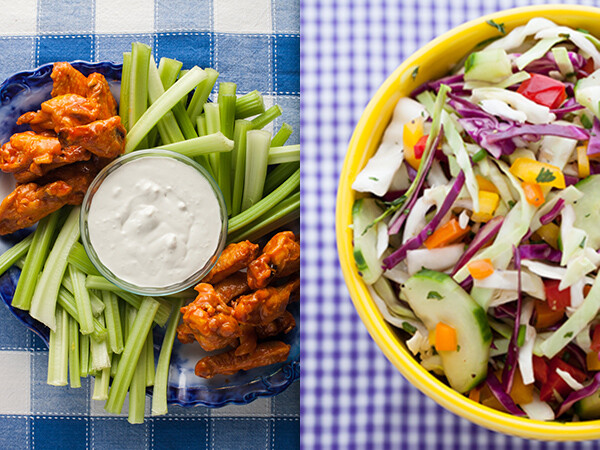
Mathis photographing food 8 steps tip 2

Food comes in a wide range or colors and textures. From your dark leafy greens, vibrant orange carrots, or pale purple shallots, you can have a rainbow of colors in front of you at meal time. Embrace this color with your prop selection and food styling. If you are lost on where to begin, look for inspiration in an artist’s color wheel! A color combination that I like is matching blue accessories with yellow or orange foods.

Step 3. Know when to use artificial light

Mathis photographing food 8 steps tip 3

I love using natural daylight in my food photography, but there are times when I need an artificial solution. A tungsten lamp or a small compact flash make great options for shooting your food at night. The key is to use a large diffusion source to create a beautiful, soft light that will fall over your set. I like to modify my light with umbrellas, soft boxes, or a large diffusion scrim.

Step 4. Get creative with the ingredients

Mathis photographing food 8 steps tip 4

Don’t overlook the ingredients and head straight for the shots of the main meal. With an ingredient shot you can create an interesting story that begins the journey to the final plated dish. For fruits and vegetables, I like to create visually interesting arrangements shot from an overhead angle. This is the type of shot that any camera can do, even just one on your cell phone. If you have a macro lens, take advantage of your close-up ability to shoot spices and ingredients with interesting textures. Close-up shots of these shapes and textures will bring an interesting and new perspective of food to your viewers.

Step 5. Think about final use

Mathis_photographing_food_8_steps_tip_5_new_crop

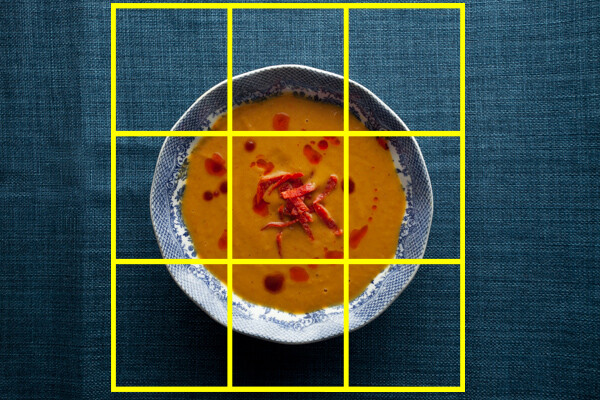
Your food image will commonly be cropped to a different size for its final use. It could be a square for use in a restaurant menu or a narrow rectangle that will fit on the side of a package. It doesn’t do you or the client any good if you create a beautiful image, but half the dish is cropped out when it comes time for printing. When shooting, you want to know what this final crop will be so that you can ensure that all the essential parts of the dish make it into the shot.

Step 6. Taking your food on location

Mathis photographing food 8 steps tip 6b

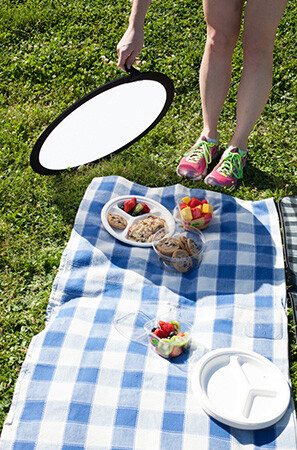
Taking your food shots out of the kitchen, and on location, will allow you to create images with beautiful outdoor scenic backgrounds. Whether it is a trip to the farm to capture fruits and vegetables ripe and ready to pick, or creating an outdoor entertaining event, an on location shot is one where weather may become a concern. There isn’t much you can do about rain cancelling a shoot, but you do have control over the harsh light from a bright and sunny day. When shooting outdoors, I always bring a collapsible diffuser with me. Placing this between my subject and the sun diffuses any harsh light that may be on my set. I am left with a soft evenly lit set on which I can create mouthwatering food images.

Step 7. Vary your background

Mathis photographing food 8 steps tip 7

What you shoot your food on top of will have a huge impact on the final photo. There are millions of options from which to choose. You can use anything from painted wood to cloth to stone. My favorite place to find backgrounds is at my local hardware store. There are thousands of potential backgrounds there. If you are feeling creative, you can stain and paint wooden boards to create a truly custom shooting surface. If you want a background that doesn’t require any customization, try painted ceramic or stone tiles. The large tiles, like you would use in a bathroom floor, are a sturdy surface with a ton of variety. Changing out your background to a new one, might just be the thing needed to create a more interesting food shot.

Step 8. Modify Your Light

Mathis photographing food 8 steps tip 8

A large soft diffused light is my go to for any food shot, but sometimes the shot may require a little bit more. Through blocking with black foam board, reflecting with white foam board, bouncing your light source or adjusting its height and placement, you can fine tune your lighting to create the mood and scene you desire. If you find yourself consistently using the same set-up, try switching things up. Using a different sized soft box or even a large white bed sheet can have a great impact on your final shot.

If you have felt intimidated or struggled with taking pictures of food, I hope these steps will help. If you want to take your food photography to the next level, give photographing FOOD issues 1-8 a try!

On sale now at SnapnDeals for a limited time at 50% off Photographing Food 8 eBook Bundle by Taylor Mathis. Get it now if you want more great food photography tips.

The post 8 Steps to Create Mouth Watering Food Photography by Taylor Mathis appeared first on Digital Photography School.


Digital Photography School

 
Comments Off on 8 Steps to Create Mouth Watering Food Photography

Posted in Photography


6. Mai 2014

07 May

Ein Beitrag von: Laura Schaeffer

© Laura Schaeffer


kwerfeldein – Fotografie Magazin | Fotocommunity

 
Comments Off on 6. Mai 2014

Posted in Equipment