RSS
 

Archive for May, 2014

Why the First DSLR You Buy Doesn’t Really Matter

23 May

It’s about time! You finally made the decision to buy your first DSLR camera, you have saved a couple of bucks and started browsing around. Quickly, you realize the market is full of good (really good) cameras, and you start to feel overwhelmed. You ask your photographer friend or, even worse, a camera store salesman and end up feeling even Continue Reading

The post Why the First DSLR You Buy Doesn’t Really Matter appeared first on Photodoto.


Photodoto

 
Comments Off on Why the First DSLR You Buy Doesn’t Really Matter

Posted in Photography


Non-stick glass: Nikon demonstrates new fluorine coating

23 May

Screen_Shot_2014-05-22_at_10.14.31_AM.png

Nikon’s 800mm F5.6 FL ED VR and 400mm F2.8 FL ED VR lenses earn the ‘FL’ in their names from the coating of fluorine applied to the lens elements. But what exactly is fluorine coating, and why is it important? In this video from Nikon Japan, the coating’s repellent properties are demonstrated as a variety of liquids are dripped, drawn and painted onto the lens surface. See video

News: Digital Photography Review (dpreview.com)

 
Comments Off on Non-stick glass: Nikon demonstrates new fluorine coating

Posted in Uncategorized


SherpaFund raises money after Everest avalanche

23 May

Screen_Shot_2014-05-22_at_10.28.52_AM.png

In April of this year an avalanche on Mount Everest took the lives of 16 sherpas who were preparing a route for their climbing clients. In the wake of this tragedy, a group of photographers have banded together to create SherpaFund.org, which will sell a collection of photographs to help the Sherpa families in crisis and establish long-term support for the wider community. Learn more

News: Digital Photography Review (dpreview.com)

 
Comments Off on SherpaFund raises money after Everest avalanche

Posted in Uncategorized


Rezension: Back to The Future

23 May

Ein Kind und ein Mann lachen auf den beiden Passbildern mit gleicher Pose in die Kamera. Sie tragen den gleichen Anzug, die gleiche Krawatte – ja, sogar die gleiche, etwas zu große Brille. Und sie sehen sich ähnlich. Aber es sind nicht Vater und Sohn, sondern es ist ein und dieselbe Person: Pancho aus Buenos Aires. Einmal 1983 und einmal 2010.

Er ziert das Cover des Buches „Back to The Future“* von Irina Werning. Das Projekt „Zurück in die Zukunft“ kennt Ihr vielleicht schon durch die Werbekampagne der Deutschen Bahn aus dem Jahr 2012.

© Irina Werning's Back to the Future, Pancho, Buenos Aires, Argentina, 1983 and 2010, published by teNeues, www.teneues.com. Photo © 2014 Irina Werning. All rights reserved.

Die argentinische Fotografin Irina ist neugierig und sie liebt alte Fotos. Sobald sie in einem Haus ist, geht sie auf die Suche danach. Und irgendwann begann sie, diese alten Bilder zusammen mit den darauf abgebildeten Menschen nachzustellen.

Sie analysiert die Fotos dafür nach dem Licht und der Technik und kopiert sie bis ins Detail genau. Selbst rotgeblitzte Augen und kleine Bildfehler fehlen auf den neuen Fotos nicht. Die Kleider kauft oder näht sie selbst, die Hintergründe sucht und baut sie nach.

Ihr Bildband zum Projekt ist im Verlag teNeues erschienen und es ist ein Buch, das Freude macht. Ich habe es selbst schon mehrere Male angesehen, bin immer wieder fasziniert und vergleiche voller Freude die Menschen von damals und heute. Diese Bilder sind so wunderbar komisch! Sobald ich Besuch bekomme, gebe ich es gleich in dessen Hände und es Folgt jedes Mal die gleiche Reaktion: Gelächter und Faszination.

© Irina Werning's Back to the Future, Riff Raff, London, Great Britain, 1976 and 2011, published by teNeues, www.teneues.com. Photo © 2014 Irina Werning. All rights reserved.

© Irina Werning's Back to the Future, Mechi, Buenos Aires, Argentina, 1990 and 2010, published by teNeues, www.teneues.com. Photo © 2014 Irina Werning. All rights reserved.

Das Thema Älterwerden ist an sich ja eigentlich ein eher ernstes, aber dank Irina Werning bekommt man dazu einen völlig neuen Zugang. Interessant ist auch, dass sie Kinderbilder aus aller Welt nachstellt: Argentinien, Großbritannien, USA, Frankreich, Deutschland, Indien, Island, Ghana und einige mehr. Und so ist bereits den Ausgangsbildern durch ihre kulturellen und geschichtlichen Besonderheiten meine Aufmerksamkeit sicher.

Auf jeder Doppelseite des Buches ist links das Ausgangsbild und rechts das nachgestellte Foto zu sehen. Darunter sind klein der Vorname des oder der Abgebildeten, das Land und die beiden Jahreszahlen vermerkt. Ein sehr kurzes Vorwort der Fotografin geht den 160 Seiten vorraus. Es ist überall im Handel oder direkt beim Verlag teneues.com erhältlich.

Informationen zum Buch

Back to The Future*, Irina Werning
Gebundene Ausgabe
160 Seiten
Größe: 26 x 21 x 2 cm
Verlag: teNeues
Neupreis: 39,90 €

* Das ist ein Affiliate-Link zu Amazon. Wenn Ihr darüber etwas bestellt, erhält kwerfeldein eine kleine Provision, Ihr bezahlt aber keinen Cent mehr.


kwerfeldein – Fotografie Magazin | Fotocommunity

 
Comments Off on Rezension: Back to The Future

Posted in Equipment


Free to Forge: Open Source 3D-Printed Metal Mesh Furniture

23 May

[ By WebUrbanist in Gadgets & Geekery & Technology. ]

3d printed metal bench

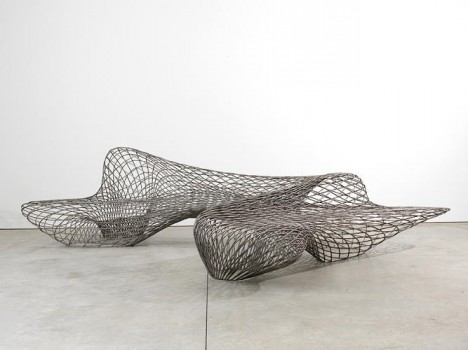
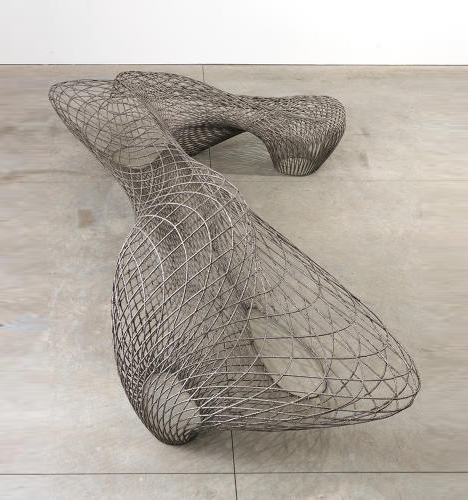
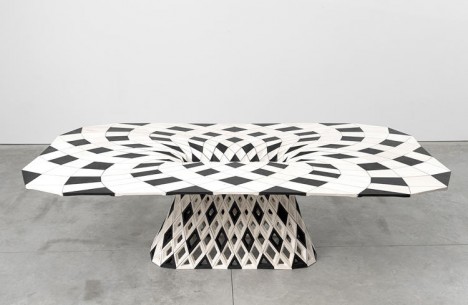
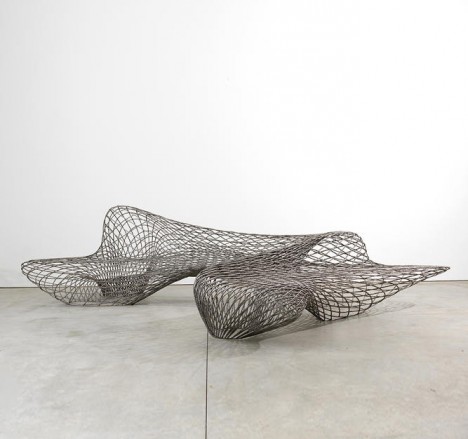
Completed by a robot programmed to extrude material in midair, the world’s first fully 3D-printed metal furniture shows off a fresh range of possibilities for creating intricate structures and complex shapes on demand.

dragon bench design details

Employing Autodesk and an MX3D machine, Dutch designer Joris Laarman created the Dragon Bench (above) and other pieces (below) that illustrate the rich potential of metals using additives to harden as they are deployed.

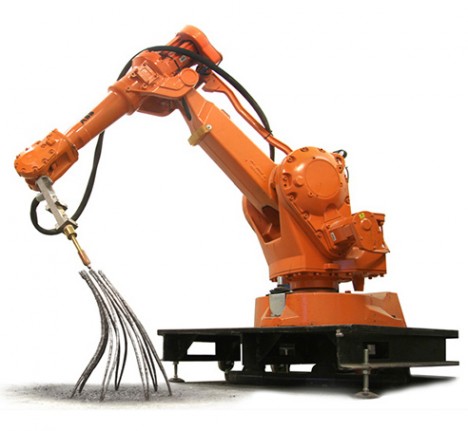
mx3d robot machine

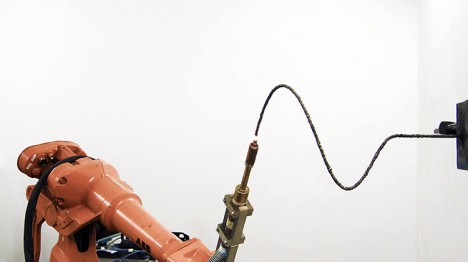
With this industrial robot [and] advanced welding machine we are able to print with metals, such as steel, stainless steel, aluminium, bronze or copper without the need for support-structures. By adding small amounts of molten metal at a time, we are able to print lines [horizontal, vertical and spiral] in mid air. The combination robot/welding is driven by different types of software that work closely together. This will eventually have to end up in a user friendly interface that allows the user to print directly from CAD.”

3d printed exhibit design

3d open source maker

3d printed chair series

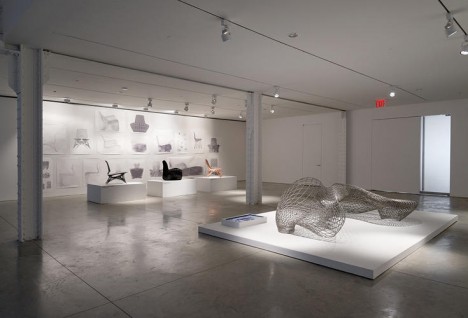
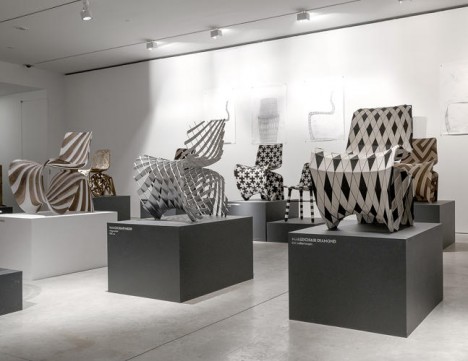
Within this series, currently on display at Friedman Benda gallery in New York City, are a set of organic (also 3D-printed) polyurethane chairs and table. Puzzle-piece parts are made first, costing around $ 50 – the components are assembled into a finished whole. The plans for these are also going to be made available online as free resources for anyone who wants to make their own – an easier, less material-dependent entry point for someone without access to their own metal-printing robot (at least as of yet).

mx3d demo example

bench

The potential of this technology extends well beyond stand-alone objects – components for cars, buildings or other infrastructure could be generated using the same machines and techniques. Meanwhile, when it comes one-off custom works of either art or design, three-dimensional complexity is suddenly a much lower hurdle to overcome.

Share on Facebook


[ By WebUrbanist in Gadgets & Geekery & Technology. ]

[ WebUrbanist | Archives | Galleries | Privacy | TOS ]


WebUrbanist

 
Comments Off on Free to Forge: Open Source 3D-Printed Metal Mesh Furniture

Posted in Creativity


Olympus OM-D E-M10 and E-M1 get firmware updates

23 May

shared:download-button.png

Olympus has issued new firmware versions for the OM-D E-M10 and E-M1. The E-M10 gets the same zero-second anti-shock mode recently added to the Pen E-P5 in an attempt to work around shutter shock problems. The E-M1 update adds a variety of new features, including several when used with Olympus OI.Share smartphone app. Learn more

News: Digital Photography Review (dpreview.com)

 
Comments Off on Olympus OM-D E-M10 and E-M1 get firmware updates

Posted in Uncategorized


High-Speed Art: Murals Spray-Painted for Train Passengers

23 May

[ By WebUrbanist in Art & Street Art & Graffiti. ]

mural art purple field

Made to been seen at high speeds, these colorful patterns intentionally form a sequential whole when experienced by commuters in adjacent railway cars.

mural art train view

mural art with train

Katharina Grosse (with photos by Steve Weinik for the City of Philadelphia Mural Arts Program) conceived of this seven-section series, dubbed Psycholustro, as a way to engage everyday travelers with a project that addresses their in-motion perspective and the passage of time.

mural up tunnel view

mural green painted section

Grosse, a German artist based out of Berlin, targeted different sites with different bright colors, in some cases covering up existing graffiti on buildings or walls (with the expectation of re-tagging by other artists).

mural green white detai

mural striped closeup shot

Lime green lights up an abandoned warehouse while bright orange highlights multiple structures and exposed rocks.

mural art purple orcks

mural art purple ties

In a potentially controversial move, however, a purple area covers not only piles of rocks but also sections of nature, including grasses, shrubs and trees.

mural art scene

mural art spray paint

Grosse describes her project as something that “shifts your notion of size through movement” seeming huge from up close but to scale when you pass it by from your seat on a train.

mural art wall close up

mural art fast speed

mural art orange building

Stephen Gardner, an Amtrak vice president, explains the project’s impetus: “There are some things that we can do better than other competing modes of transport, and that is to provide the traveler with a deeper engagement with the diverse landscape. One of our taglines is, “Enjoy the Journey.’”

Share on Facebook


[ By WebUrbanist in Art & Street Art & Graffiti. ]

[ WebUrbanist | Archives | Galleries | Privacy | TOS ]


WebUrbanist

 
Comments Off on High-Speed Art: Murals Spray-Painted for Train Passengers

Posted in Creativity


Stop Collecting Tips and Start Practicing Photography

23 May

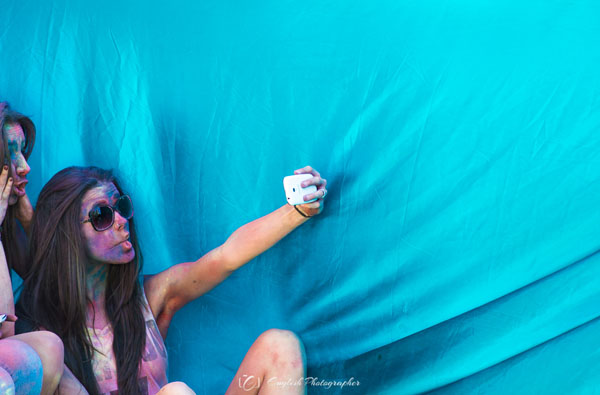
Young photographers are often better at digital photography than older photographers. This article will explain why this might be, and how you can improve your skills faster. You may be surprised to hear that IQ (Intelligence Quotient) apparently peaks at age fourteen.

Now, IQ is a deeply flawed measure of intelligence, and fourteen year olds certainly shouldn’t take over the world; but the young brain has incredible processing power.
young-photographers_8915-600

As we age, we lose this raw speed and (hopefully) replace it with shortcuts, experience and ‘wisdom’. This allows us to make better choices and retain the illusion of intelligence, but it also limits our creativity. Incensed? Read on…

Knowledge versus understanding

A quick mathematics question; what’s 8 squared? Ask a child and they’ll have to work it out. You probably know it’s 64 without thinking. This is knowledge; remembered facts.

Remember Pythagoras’ Theorem? Maybe you even know the same explanation, ‘the square of the hypotenuse is equal to the sum of the squares of the other two sides’. This is knowledge; a tool. Ask a mathematician and they’ll be able to prove it and explain why it’s true. This is understanding.
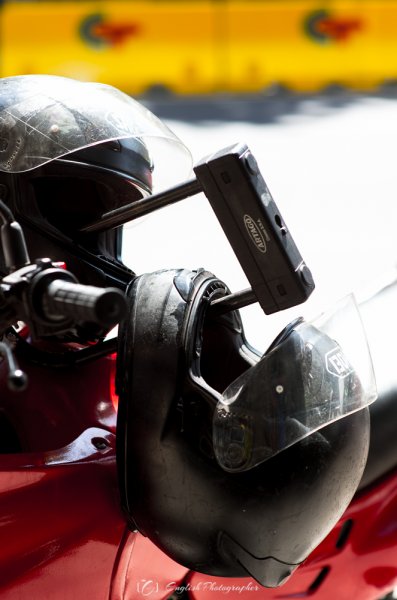
art-photography_1712Ask a layperson about the white balance setting on your camera. They’ll probably have no clue what you mean. Ask an average photographer and they’ll be able to tell you it controls the colour cast. Ask a physicist and they’ll understand far more deeply what’s going on and why.

Knowledge is very useful. It’s quick to learn by rote. How else can a young child pick up concepts that took the greatest geniuses years to develop? Most education equips us to slot into a role in a business. Understanding isn’t normally necessary. It’s enough to know that e=mc2 – only a few people need to understand the implications of this equation. Some of them for work; and others to satisfy a yearning to understand.

Precisely because our society values superficial understanding, it doesn’t occur to us to make knowledge our own, to transform it into understanding. We think that by knowing the name of something that we understand it. A brown-throated thrush. Satori. Light.

Make the leap from words to visuals

Words are useful; they allow us to communicate. But they’re really quite limited, and the language you speak tends to limit what you can think. Philosophers are acutely aware of this. So are mystics, and as artists, we’re always seeking to move beyond the cage that words present. Try defining love – or even the smell of fresh roses.

To communicate understandings, ideas and feelings, we have to package them up into sentences (parcels of knowledge) and share them with others, who then unpack them in the light of their own unique experience to create their personal understandings. I normally teach one-to-one, but when I teach bigger classes there’s a tendency for students to just collect the parcels and never unwrap them.

We are particularly prone to this, because Holistic Photography is both a craft and an art. We can certainly learn the first bit; apertures, shutter speeds, the inverse square law; but we often falter with the latter. The Golden Mean? That’s just another technique.
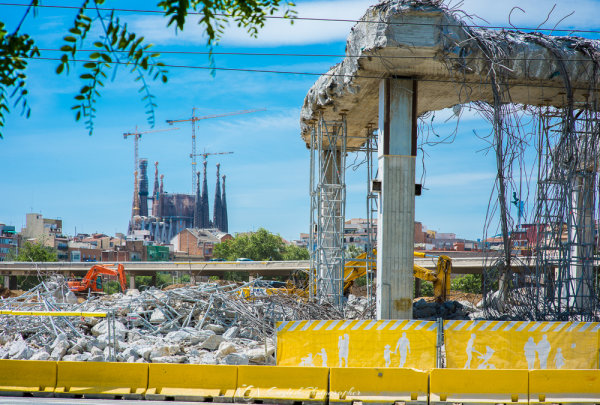
barcelona-sagrada-familia_1902

Sagrada Familia in Barcelona, from a different point of view

What ends up happening is that our head becomes so filled up with knowledge that it blinds us to the world around us. We’ll visit the famous cathedral that we read about in the guidebooks and have such a strong preconception about what it must be like that we fail to notice how it looks at the specific time that we’re there. When I’m teaching photography courses in Barcelona, the Sagrada Familia is a major attraction; but there are a myriad ways of photographing it that are overlooked. If we’re photographing people, we may get so stuck in our heads thinking about lighting ratios or the half-remembered tips of a ‘how to pose your model‘ article that we’re not available to make the human connection which leads to the poses that look best. We get stuck in our heads and cease feeling or seeing.

Stand in front of Rothko’s multiforms in a gallery if you get the chance. You can’t quite explain why, but they move you, if you let them. Van Gogh isn’t treasured (now) because of his technique, but because of the way he expressed his internal world, which happened to match our own at moments. Because while we’re all different, we’re also all the same.

There is a visual language. You can learn it in art school. Complementary colour schemes for emphasis, how different shapes can give different meanings, and where to put things in your frame and why. But to understand how to create, you’ll have to feel in your own body what works for you, and let your own mind tell you what’s right or wrong.
image-1

Theory versus action

Young photographers look for knowledge online. They have access to more information than they can ever read. Most are open to learning, so they progress rapidly. Like the zen master said, your cup can’t be full if you want to put more in it.

But they also have the benefit of few responsibilities, short attention spans and huge amounts of time. They underestimate the importance of learning from others. So they read a bit, get bored, and just play with the camera. Digital is free to experiment with, so they make thousands of mistakes and try things we never would. Then, when they reach a barrier, Google instantly provides the answer. It’s no wonder that they learn far faster.
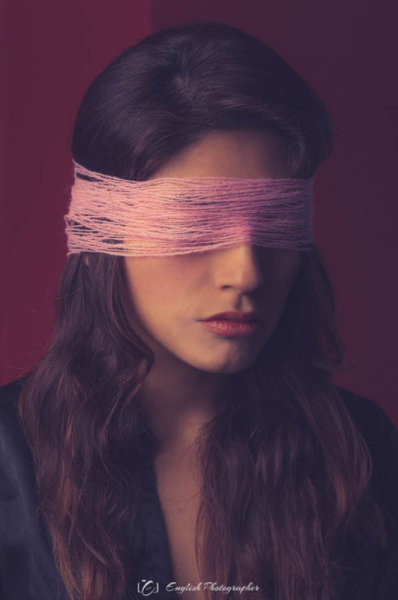
imageCompare the contrary method. To get a big stack of books and methodically work your way through them, supplemented by overpriced photography magazines. Let’s not forget the millions of photography articles online as well. It’s addictive. Our brain rewards us for learning. We feel like we’re improving. But content is a trap, and too much information atrophies or paralyzes us.

Information with application is different. If we can immediately use what we’re learning, we’ll assimilate it faster and retain more. I studied French for almost a decade and can hardly hold a conversation, but speaking Spanish with my Peruvian girlfriend makes it much easier to learn.

There needs to be a balance. I see some photographers who learned a few techniques back when film was still popular, and have just stuck with them. If it’s not broken, don’t fix it, they reason. But no, you need to be constantly evolving, learning form others and letting your photography keep pace with your own evolution.

But chances are if you’re reading this, you’re taking in too much information without applying it. Get a little bit of relevant theory and then practice, practice, practice until you understand it well enough to integrate it with your vision. Then seek out another bit of knowledge to turn into understanding.

The takeaway from this is that we’re really not as capable as we might imagine. Nor do we understand how to best work with our psychology to make the most of our energies. We try to learn the ‘right’ settings by looking at the aperture, shutter speed and ISO used in photos we admire. But our brain hasn’t evolved to memorize numbers.
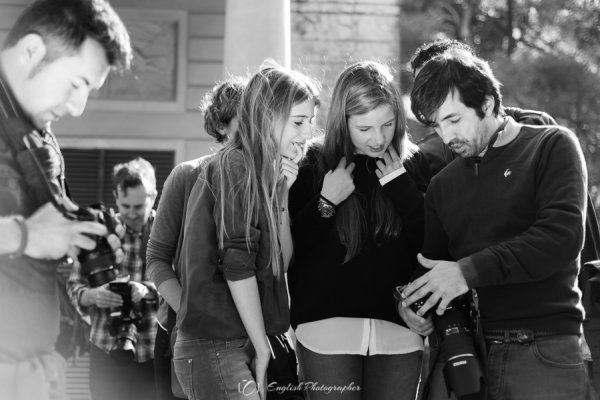
photographers_9490

It can however tell you if a drinks can is full or not just by picking it up. Far better it is then to develop the muscle memory associated with changing the settings on your camera. Work on specific areas until they’re second-nature and you’ll find your photography will improve far faster.

Go forth and practice!

So that’s enough theory for now. Here’s a test; set an alarm to ring in a couple of hours then carry on with whatever you were doing. Try and remember what this article was about. If you can’t remember what you read, then there was no point in spending your time to read it. There’s a wealth of knowledge available that can push your photography to the highest levels; but only you can unpack it into understandings. Make it applicable. Make it stick. Use it. Make it your own.

The post Stop Collecting Tips and Start Practicing Photography by Ben Evans appeared first on Digital Photography School.


Digital Photography School

 
Comments Off on Stop Collecting Tips and Start Practicing Photography

Posted in Photography


No Telephoto Lens No Problem – Tips on Shooting for the Crop

22 May

shoot-for-the-crop

Maybe your photos are better than you think. Perhaps all you need to transform your images into keepers is to simply cut out the dead wood and get ruthless with the crop tool. While I’m not against getting your shot perfect ‘in camera’, I do believe that cropping like a boss during post-production can turn a ‘meh’ shot into a ‘whoa’ shot just by carefully placing those marching ants in Adobe Camera Raw and hitting ‘crop’.

Why limit yourself to a mediocre image when there’s a little hidden gem inside your average shot, waiting to be teased out like a gleaming pearl?

Get closer after the fact

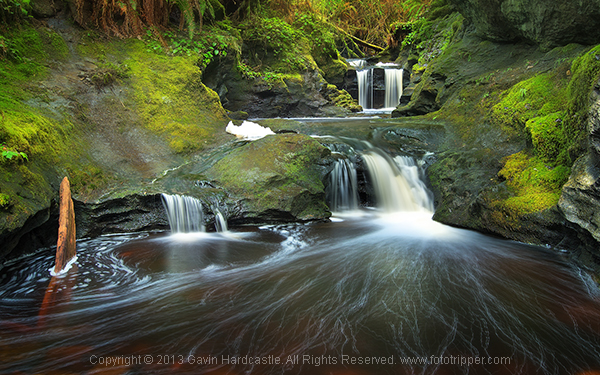
Here’s an example of a cropped shot with the full frame shot below it. During the shoot I was happy with the original composition (below), but after studying the shot at home I decided that the scene needed to be more intimate, so in I went with the scissors of brutality.

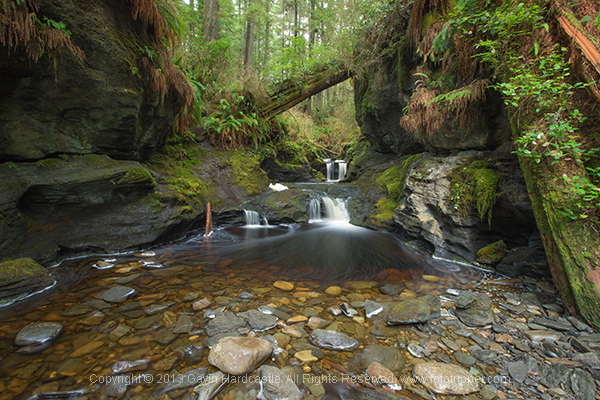
Vancouver Island Waterfall Landscape Image Crop - Gavin Hardcastle

Cropped version

How to Shoot for the Crop

Full image uncropped

Tell the story

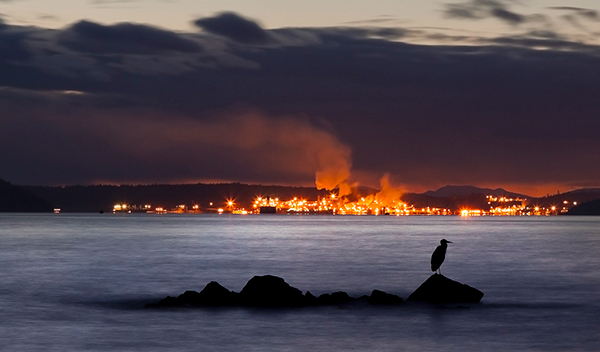
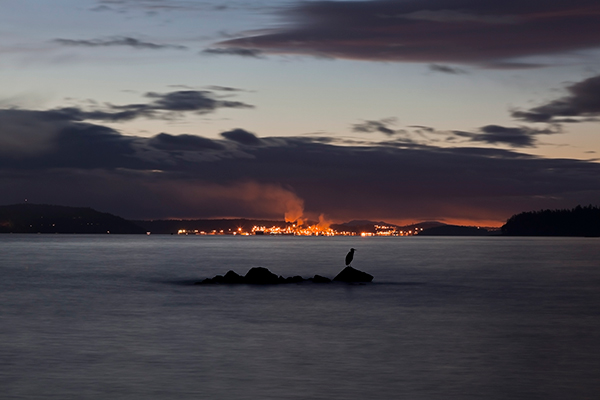
When your image has an obvious story, it’s often wise to cut out any non-essential space to ignite a more immediate reaction in your audience. By discarding all distractions, you’ll direct their attention to what matters most. With the image below, I wanted to portray the resilience of nature under the menacing specter of toxic pollution. I knew I had the shot but the story had much more impact after I’d cropped out all of the wasted space in my image. Ideally I would have used a longer lens to achieve the same result but all I was carrying at the time was a 24-105mm and there was no way I was going to let that stop me. Shoot, crop, done, breakfast.

'Held To Ransom' by Gavin Hardcastle

held-to-ransom-full-gavin-hardcastle

Use your megapixels

You’ve doubtless heard grumpy old fossils whine on about why big megapixels are pointless unless you’re printing wall sized prints. I’m here to tell you that’s a load of old codswallop. Try cropping out a small section of a 16 megapixel image and let me know good it looks at the full size of your computer screen. Lacking in resolution, hmm? Well I guess it depends on the size of your crop, but chances are things are starting to look a little crusty if you’re not packing some heat in the megapixel department. Size, as they say, does matter.

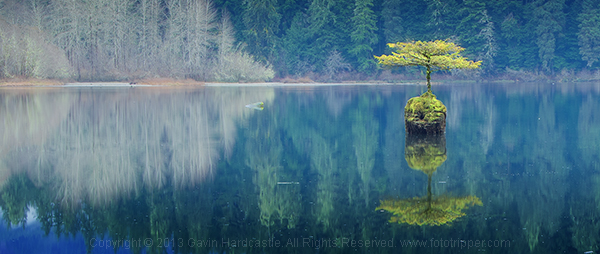
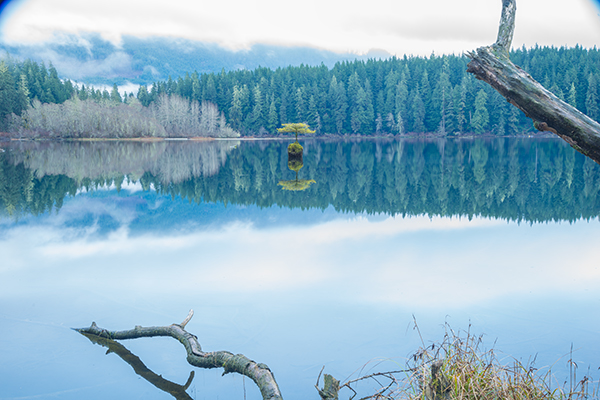
Here’s another example of using my megapixels to get closer to my subject. As you can see from the full frame image below the crop, I made no attempt at composing a foreground because I knew I’d be cropping out everything but my main subject – the magic tree of Fairy Lake on Vancouver Island. You can even see a hideous vignette in the full frame shot caused by the polarizer rig. Crop, done, lunch.

gavin-hardcastle-fairy-lake-port-renfrew-vancouver-island-crop

gavin-hardcastle-fairy-lake-port-renfrew-vancouver-island-full

If you can’t afford a big telephoto lens but have a good quality wide-angle lens and a decent megapixel count, it’s still worth taking that shot of the bird on the other side of the lake. You can crop it later and possibly come away with a keeper. Sometimes it’s not even the cost of long lenses that puts people off using them, it’s the chiropractors bills that come from dragging them around. That being said, a top notch telephoto lens creates a specific look and for serious wildlife shooters it’s a must-have lens. This isn’t an anti-telephoto article so don’t be leaving angry comments.

A second chance at composition

When you’re familiar with a location and you’ve shot there many times before, it’s easy to plan your compositions long in advance. But what if it’s your first time and you’re shooting under pressure? Sometimes you get lucky, but sometimes you won’t spot the perfect composition until you review your images back at home on a full size computer screen.  That’s when cropping will give you that second chance at getting the perfect shot.

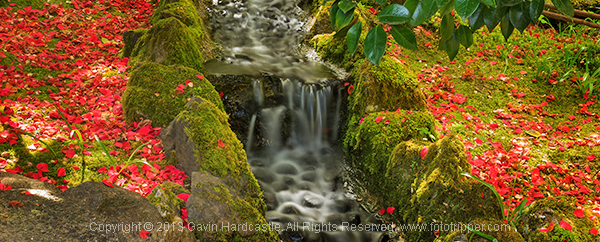
Butchart Gardens Vancouve Island Gavin Hardcastle

Teach yourself composition

I’m always telling my students that you can learn a huge amount about composition simply by reviewing and editing your images. Try and find two or more new compositions that are hiding in plain site right there in your existing images. This simple process teaches you a lot about balance, symmetry, framing, leading lines and whatever other compositional elements are right there in your images. Spend enough time doing this and you’ll become a better photographer when you’re out shooting. When cropping, you can start by asking yourself a few essential questions:

  • What is the main subject of my image?
  • What parts of the image do I love?
  • What parts of the image do I not like?
  • How can I focus the viewers attention?
  • What can I exclude?

By answering these five simple questions you’ll quickly identify the strongest parts of your image and transform them from stale, forgotten megabytes, into beautiful memories you can share with the world. I hope you found this article helpful and please, get cropping and then share your best cropped images with me, I’d love to see your results.

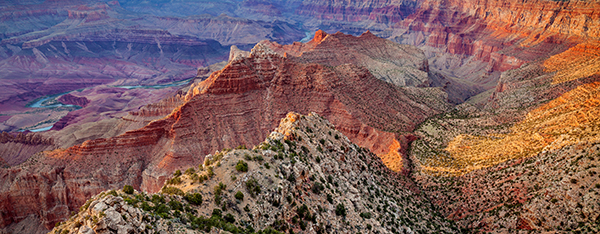
grand-canyon-crop

The post No Telephoto Lens No Problem – Tips on Shooting for the Crop by Gavin Hardcastle appeared first on Digital Photography School.


Digital Photography School

 
Comments Off on No Telephoto Lens No Problem – Tips on Shooting for the Crop

Posted in Photography


DxOMark recommends best lenses for the Nikon D800E

22 May

DxOMark-logo-520.jpg

The Nikon D800E, with its 36MP sensor and ‘cancelled’ anti-aliasing filter, is the highest resolution full-frame SLR on the market. Our friends and collaborators over at DxOMark have been looking into how various lenses score on it, and have now finished testing over 100 different optics from Nikon, Samyang, Sigma, Tamron, Tokina and Zeiss. They’ve picked out the highest-scoring in several categories, and published the results in a multi-part article. Click through to find out more

News: Digital Photography Review (dpreview.com)

 
Comments Off on DxOMark recommends best lenses for the Nikon D800E

Posted in Uncategorized