Ein Beitrag von: Sven Lange

kwerfeldein – Fotografie Magazin | Fotocommunity
Ein Beitrag von: Souvid Datta
Im Schatten von Kalkuttas Peripherien wachsen riesige Slums nach außen: Eine Vielzahl von verlassenen Terrassen und verzerrten Winkeln. Glänzende kleine Häuser mit klapprigen, gewellten Dächern stürzen aufeinander. Provisorische Treppen und Leitern verbinden Fenster mit Türen und Balkonen. Und hoch oben schweben schwarze Krähen durch den klaren Himmel und verschwinden wieder im Raster der wieder auflebenden Stadt.
Über vier Millionen Menschen kämpfen hier Tag und Nacht ums Überleben. Wie so viele andere berüchtigte Slums in Indien ist Kalkutta das Klischee vom Elend Indiens: Ein aufgewühlter Bienenstock von Familien, die in Fabriken, auf dem Recyclingmarkt und in anderen Industrien arbeiten, die einen jährlichen Gewinn von schätzungsweise 100 bis 200 Millionen Dollar einfahren.
Sie sind eine Parallelwirtschaft in einer alten Stadt, die bis vor Kurzem weitgehend in Vergessenheit geraten war – eine Metapher für die Stärke, die im Schatten von Indiens aufstrebender Wirtschaft liegt.
2009 startete Mamata Banerjee, die kontroverse Chefministerin des indischen Bundesstaates Westbengalen, eine Kampagne, um die Industrieproduktion durch die Entwicklung von Sonderwirtschaftszonen zu erhöhen und große Hersteller anzulocken.
Um das internationale Bild zu verbessern, haben viele Stadtplaner die populäre Idee der kompletten Sanierung der Slums als ein Instrument, das Wirtschaftswachstum ankurbeln, die Kriminalität zu reduzieren und sozialen Probleme zu bekämpfen, entdeckt. Und Kalkutta ist als nächste Stadt dran.
In den kommenden Jahren werden mehrere große Slums in Kalkutta zerstört werden. Über 3 Millionen Menschen werden umziehen müssen. Und alles innerhalb dieser seit Langem bestehenden, typischen Zweigen der Stadt – das Gute sowie das Schlechte – wird verloren sein.
Die Baugenehmigungen und der Bau von Hochhäusern, Geschäftsstellen und neue Wohnblocks begann im Jahr 2011 und die Umbauprozesse werden noch wird bis 2015 andauern.


Meine Serie zeigt zwei Slums: Panditya / Gorcha Bastis und Sonagachi. Der erste ist der größte Slum der Stadt und der andere ein berüchtigtes Rotlichtviertel. Entstanden aus einer größeren Werkserie, hat dieses Projekt das Ziel, das gesellschaftliche Leben in Kalkuttas Slums zu dokumentieren, als eine Aufzeichnung seiner komplexen Realität, unterschätzten Bedeutung, Kultur und seinem Beitrag zum Gesicht der Stadt. Das Projekt wird noch bis 2016 fortgesetzt.
Dieser Artikel wurde von Redakteurin Katja Kemnitz für Euch aus dem Englischen ins Deutsche übersetzt.
kwerfeldein – Fotografie Magazin | Fotocommunity
 Extra photos for bloggers: 1, 2, 3 Extra photos for bloggers: 1, 2, 3 |
|||
It’s here! It’s here! It’s time to memorialize our heroes and kick off the sunniest* season of them all.
No matter how you’re celebrating this weekend, we’ve got your packing list covered:
Fresh out of that last one? Follow us to a summer inspired link roundup. We’ve got tips for folks headed to the beach, the woods, the park, the amusement park, underwater or anywhere sunny.
Find Photo Inspiration for Your Memorial Day Weekend
*Sun not guaranteed in all locales.
(…)
Read the rest of Summertime Photo Tips and Inspiration (224 words)
© laurel for Photojojo, 2014. |
Permalink |
No comment |
Add to
del.icio.us
Post tags:

The Metropolitan Museum of Art has made available access to more than 400,000 digital images in its collection. The museum is calling this new program ‘Open Access for Scholarly Content’, which provides ‘access to images of art in its collection that the museum believes to be in the public domain and free of other known restorations’. Any images listed with the letters ‘OASC’ on the museum’s website are available to download without a fee. Learn more
News: Digital Photography Review (dpreview.com)

DxO Labs has released version 9.5 of its DxO Optics Pro software. This new release adds a non-destructive workflow that is completely integrated within Lightroom. It allows users to transfer Raw images from Lightroom cataloguer to DxO Optics Pro, process them, and then return them to Lightroom in Adobe’s open DNG format. Learn more
News: Digital Photography Review (dpreview.com)
[ By Steph in Design & Fixtures & Interiors. ]
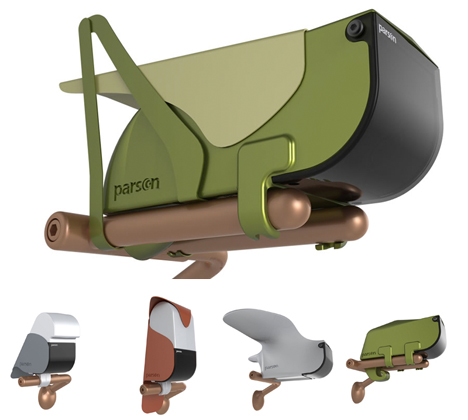
Would a cute, artistically designed chameleon sculpture make you feel better about being watched? A new series of CCTV camera cases by Italian designer Eleonora Trevisanutto transforms ugly, ordinary security equipment into decorative objects that make surveillance seem a little less intimidating.
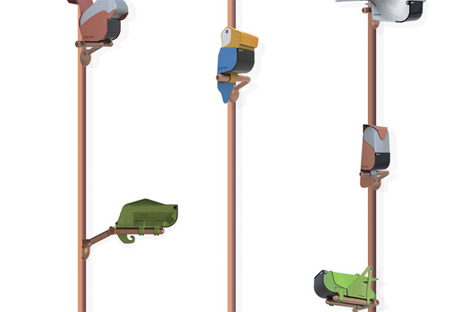
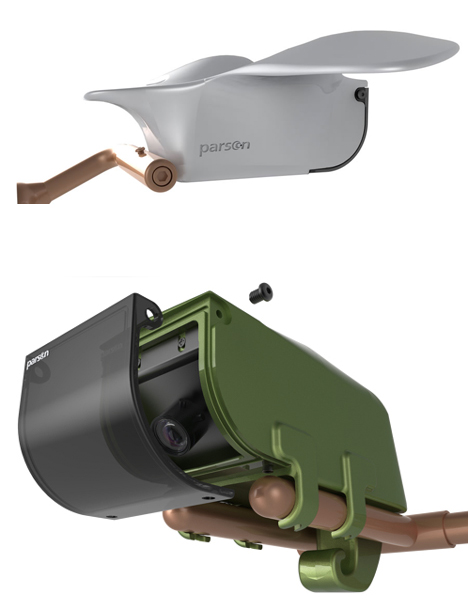
You’re still being watched, sure, but by a lizard, squirrel, grasshopper, owl or an adorable abstracted bird. It’s like a kinder, gentler Orwellian vision of the future. “The camera is no longer a ‘looming control’ means, but a decor element, an integral part of the place in which it is located.”
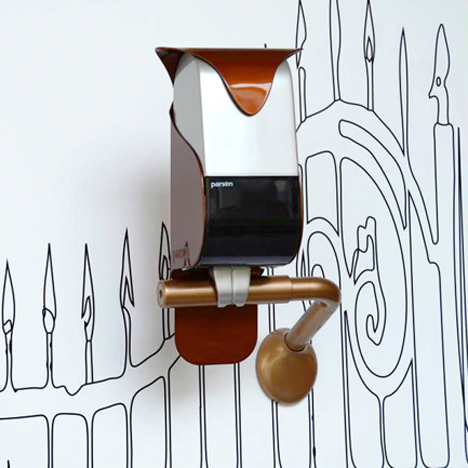
The need for less intimidating CCTV cameras does make sense for places like retail stores, daycares and other businesses where security is necessary, as well as private homes. The models don’t just differ visually; each animal offers its own individual functions, equipped with vision systems that can perform different operations like face recognition. That’s right – that lizard knows exactly who you are.
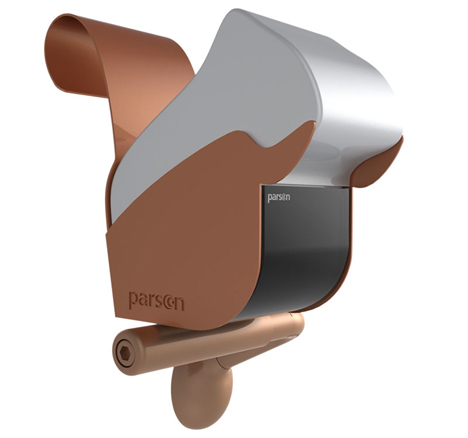
While many of us are so used to seeing ordinary cameras virtually everywhere we go that we don’t even notice them anymore, Parson’s ‘Animal’ series was made to be seen.
To celebrate the 110th birthday of deceased British author George Orwell, famous for his dystopian visions of the future, Front404 roamed the streets of …
Click Here to Read More »»
If you ever get that feeling you are being watched, well, for once it really is just your imagination – this fleet of surveillance cams is inactive but …
Click Here to Read More »»

There is something simply elegant about type-embossed metal – in part the association with classic high-end manual cameras, reprized in this classy logo series.
Click Here to Read More »»


[ By Steph in Design & Fixtures & Interiors. ]
[ WebUrbanist | Archives | Galleries | Privacy | TOS ]
Ein Beitrag von: Bastian Kalous
Mein Name ist Bastian Kalous und ich wohne seit 33 Jahren in der gleichen kleinen Stadt namens Freyung. Diese befindet sich im Süden von Deutschland, genauer gesagt im tiefsten Bayern. Gut versteckt in den tiefen dunklen Wäldern des Bayerischen Waldes, angrenzend an Tschechien und Österreich. Dort bin ich immer wieder unterwegs mit verschiedenen Sofortbildkameras, immer auf der Suche nach neuen, mir zum Teil noch unbekannten sowie teils schon bekannten, Orten der Ruhe und Stille.
Ein Großteil meines „Fotos-Spielplatzes“ befindet sich im Nationalpark Bayerischer Wald. Das ist meistens die erste Anlaufstelle, um neuen Sofortbildabenteuer zu bestreiten. Gut 15 Minuten liegt dieser zauberhafte Landstrich – in dem der Mensch die Natur weitestgehend sich selbst überlässt – von meiner Wohnung entfernt, ist also auch für kürzere Touren gut geeignet.

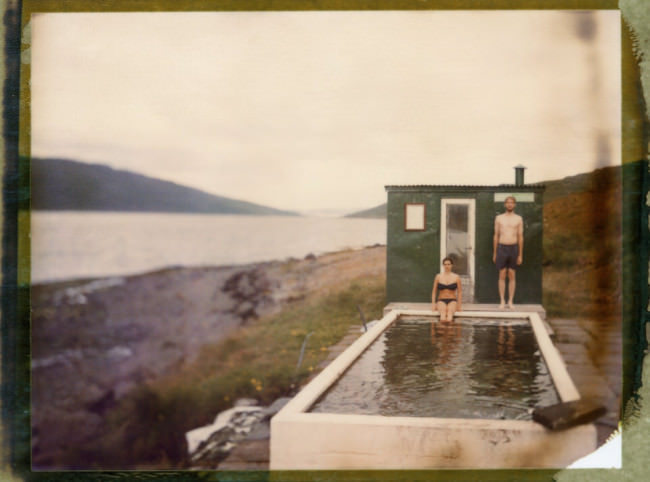
Sollte ich doch mal länger Zeit haben, lasse ich mich auch gern in andere Teile dieser Welt verschlagen. Das Berchtesgadener Land, Island, die USA, um nur ein paar zu nennen. Und hoffentlich habe ich noch länger die Gelegenheit, diese Leidenschaft in diesem Ausmaß zu teilen.
Worum es mir in meinen Fotos geht, ist – wie schon kurz angesprochen – das Finden von Ruhe, was in der heutigen Zeit oftmals bis kaum mehr möglich ist, speziell in der Natur. Auch diese wird allzuoft ausgeblendet und man bindet sie oftmals nur in den Alltag ein, wenn es um die ertragreiche Bewirtschaftung geht. Doch sie ist für mich persönlich viel mehr als nur Profit.

Wir sollten viel besser auf unsere Mutter Erde aufpassen und sie um einiges mehr schätzen. Wir können doch immer wieder von ihr lernen.
Auf all meinen Fotos, die ich hier zeige, sind Eindrücke meiner Wanderungen durch diese Natur. Egal, ob ich den Weg zum ersten Mal gehe oder ob ich schon öfter auf dem Pfad gelaufen bin – es sieht immer wieder anders aus, es riecht immer wieder anders, der Wind weht immer wieder anders oder er weht eben überhaupt nicht.
Vielleicht wurde mir der Weg durch einen umgeworfenen Baum, kniehohes Gras oder hüfthohe Sträucher erschwert. Ein jedes Mal ist es wieder beeindruckend für mich, wie der Lauf der Zeit die Umwelt und eben auch uns verändert und weiterentwickelt.


Und das kann von heute auf morgen passieren. Sieht man dann wieder im Vergleich dazu, wie schnell diese Veränderung vor sich gehen kann, dass ein Baum, der auf dem Boden liegt, viele Jahre braucht, um ganz und gar zerfallen zu sein, fällt mir auch immer wieder auf, wie schnelllebig unsere von Menschen gemachte Zeit doch ist.
Und für mich selbst versuche ich immer wieder, dieser Schnelllebigkeit der heutigen Gesellschaft zu entfliehen. Hierbei hilft mir wiederum die Natur.
Aber eben auch die Art und Weise der Fotografie, die ich für mich entdeckt habe. Die Verwendung der verschiedenen Kameras, zu der eigentlich immer ein Stativ, ein Belichtungsmesser und ganz allgemein ein relativ langsamer Aufbauprozess des ganzen Materials gehören.


Der Kreis schließt sich dann wieder, denn die meist abgelaufenen Filme sind alles andere als „perfekt“ in ihrer Farbgebung oder, was vielleicht noch viel schlimmer klingen mag: Es fehlen manchmal ganze Bildteile.
Wieder eine Verbindung mit der Natur, die eben auch nicht immer perfekt und sauber oder geordnet erscheinen mag. Aber all diese Dinge sind ja auch irgendwie Teil unsers alltäglichen Lebens.
Wenn man durch den Wald spaziert oder an einem Fluss entlangläuft und man findet einen dieser „Fehler“ der Natur, kann genau dieser tausend Mal interessanter für uns sein als eine schnurgerade verlaufende Allee.

Das alles liegt aber eben im Auge des Betrachters und für mich muss eine Banane nicht kerzengerade sein und auch ein menschliches Gesicht muss nicht das gesamte Leben faltenfrei erscheinen.
Kurz und knapp: Ich liebe das natürliche, entschleunigte Leben und jeder, der Zeit, Lust und Interesse findet, ist hiermit herzlich eingeladen, mit mir auf Reisen zu gehen.
Anmerkung der Redaktion: Noch bis zum 15. Juli 2014 werden die Bilder von Bastian in Berlin ausgestellt. Infos dazu findet Ihr auf Impossible.
kwerfeldein – Fotografie Magazin | Fotocommunity

You may have already noticed that we’ve made a small, but we hope very useful, change to the notifications system, adding on-site notifications for answers to your comments and activity in forum threads you’ve participated in. Click through for a little more detail on how it works, and to tell us how much you like it / hate it / how it could be improved / report bugs / ask us where the Nikon D4 review is…
News: Digital Photography Review (dpreview.com)
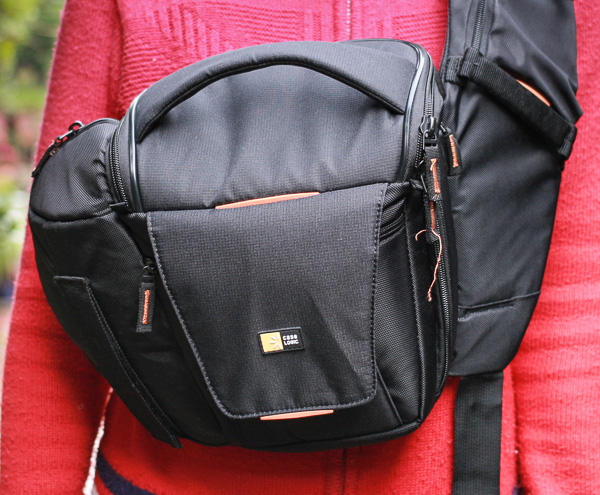
If you’ve ever bought a case for a tablet or a hard drive then you’re probably familiar with Case Logic products. The ubiquitous logo is hard to miss in the accessories section of computer and electronics stores.

What you may not know is that Case Logic also make some very good camera bags, up there in quality and design with established brands such as Lowepro, Crumpler, Kata and Think Tank.
So when David from Love Cases got in touch asking if I’d like to review a camera bag sold in his store, I selected the Case Logic SLRC 205 sling style backpack to test out.
The type of camera bag I use depends on the nature of the shoot and the amount of equipment I need. For example, I like to use my ThinkTank Retrospective 20 on portrait shoots. It’s a shoulder bag into which I can easily fit everything I need. But, it’s a heavy bag and all the weight is on one shoulder. After a while it hurts, and becomes uncomfortable to walk with – that limits its use to shoots where I don’t have to walk very far.
Sling bags are ideal when I need to walk some distance to arrive at the location of the shoot. I can put my gear in the bag, then take out what I need when I arrive.
I like to use a Black Rapid RS-Sport camera strap, which leaves my camera hanging down by my right side ready to use. If I have a sling bag I can keep it on my back while I shoot, held in place by the straps so it doesn’t move around. I don’t have to worry about where it is, or someone stealing it if I put it down.
However, I don’t use sling bags in one way they are intended. I never bring them around to the front to remove gear, as I find they are so high on my body that it’s an uncomfortable process. Not everybody feels this way, I’m sure. This photo shows where the camera bag lies when you swing it around to the front.
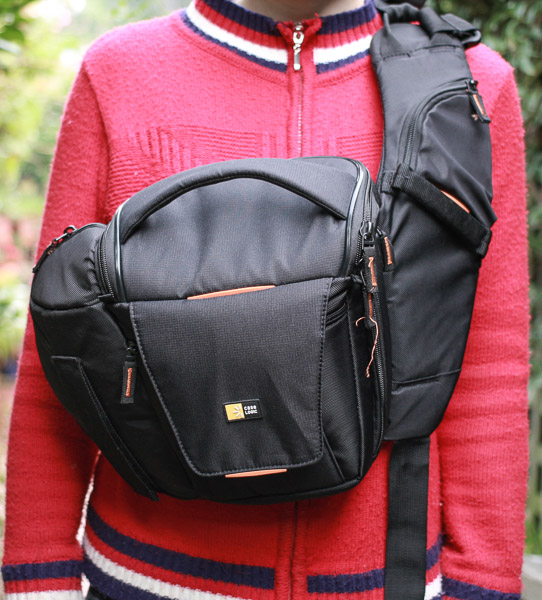
I’ve used this Case Logic sling bag on several shoots and I’m very pleased with it. It would suit me better if the main camera compartment was a little bigger, and it would be nice if it had a waterproof cover. But apart from that I’m delighted with it.
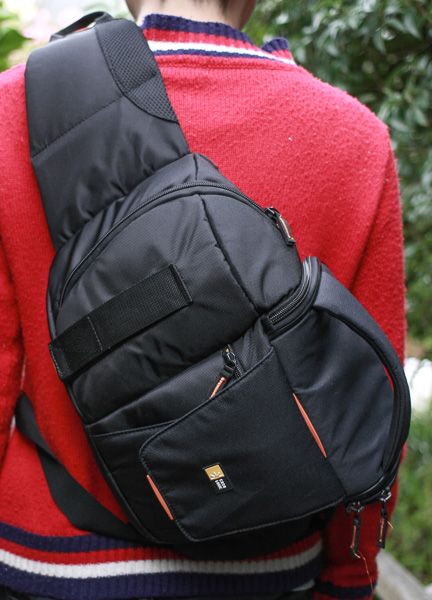
The Case Logic SLRC 205 from the back.
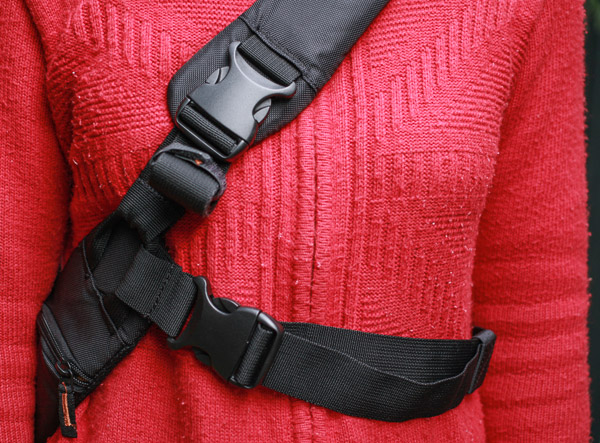
The bag straps from the front. The waist strap (bottom right) provides extra support and prevents the bag from sliding around on your back.
I really like the design of this camera bag. It has a number of well thought out features that make it easy to use.
This is for your camera and lens. Case Logic use a hammock system to support your camera. There is a flap with a hole in it at the top of the compartment, and you can place the lens through the hole and rest your camera on top. It keeps your camera ready to hand and provides extra protection if you drop the bag.
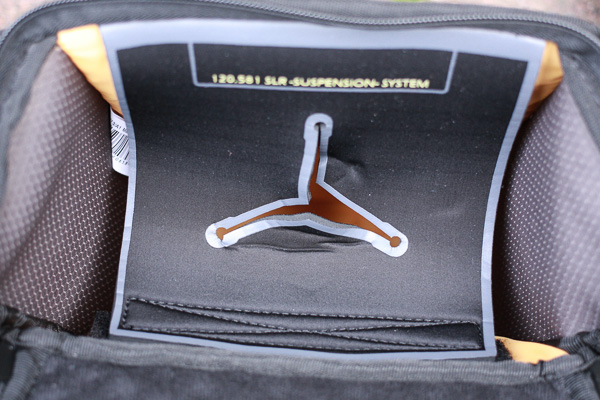
It’s a great idea, but the only drawback for me is that the compartment is too small for my camera, (an EOS 5D Mark II), when the hammock is in position. In terms of size, this bag is best suited for small digital SLRs or mirrorless cameras.
However, if I fold the hammock down (it is supported by velcro) I can fit my camera inside. The camera rests on the lens in this position, so I attach the lens hood to prevent the lens cap being dislodged by rubbing against the side.
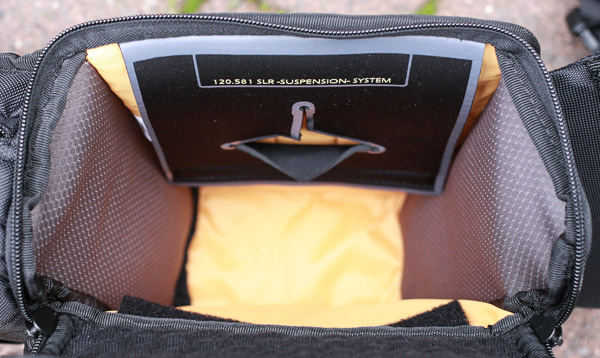
This is big enough to store another lens or accessories. I use it for my Black Rapid camera strap and a small prime lens. It’s not designed for another body, so if you want to take two cameras on a shoot then you’ll need another bag.
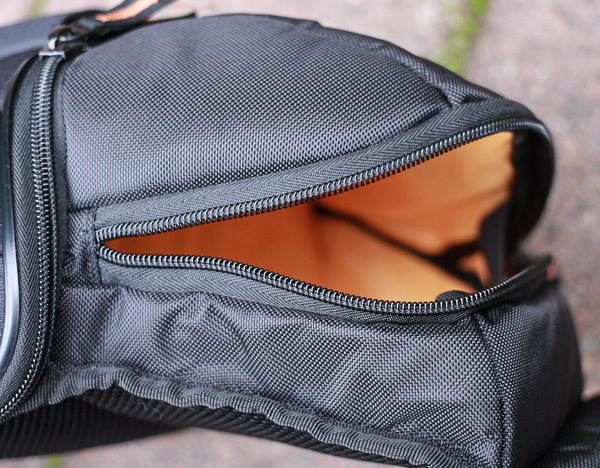
On the other side is a zipped compartment that opens to reveal memory card space storage.
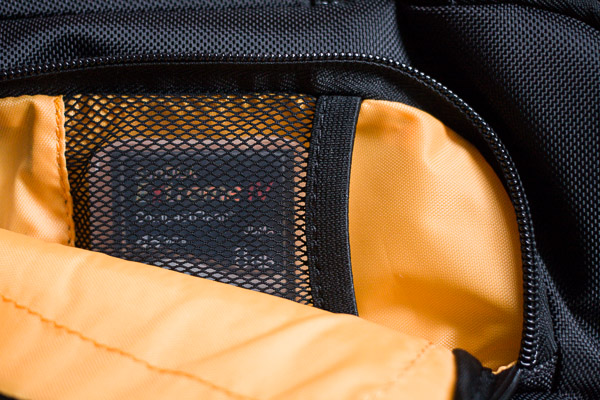
You can put anything that fits in here, but it’s ideal for a wallet. It’s hidden behind the velcro flaps used to support a tripod, making it virtually impossible for someone to steal the contents unnoticed.
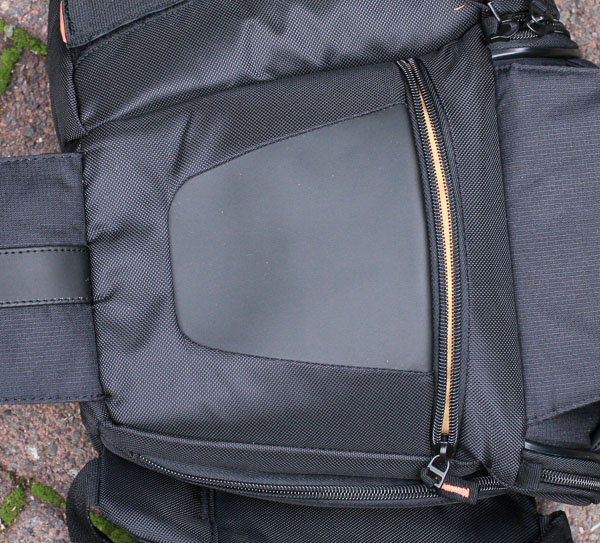
One of the straps has a small flap ideal for storing a small mobile phone. My iPhone 3Gs fits inside, just. If you have a larger phone than this you’ll need to find somewhere else to keep it.
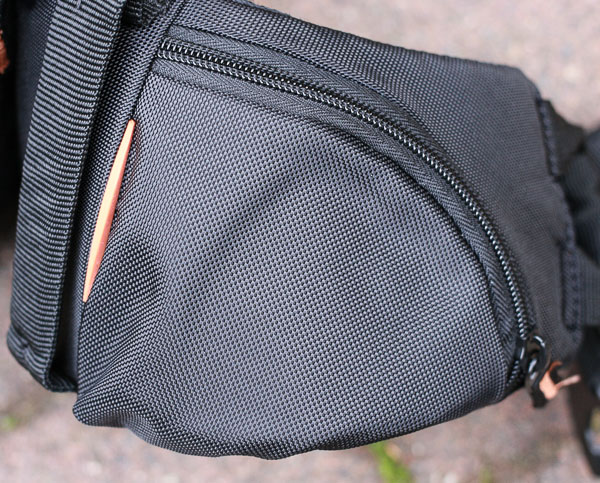
There’s a hook-n-loop strap to support a tripod. It’s a nice idea, best suited to small, lightweight carbon fibre tripods rather than heavier models.
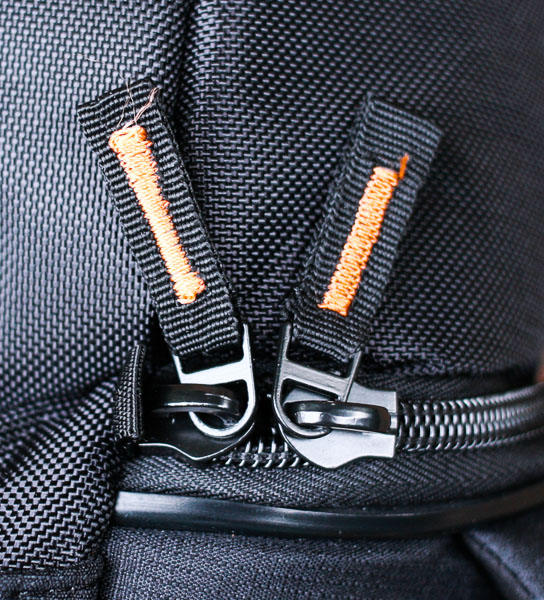
The quality of this bag is excellent. The outside of the bag is made from hard-wearing nylon. The zips are strong and durable and have tags marked with orange thread, making it easy for you to see them.
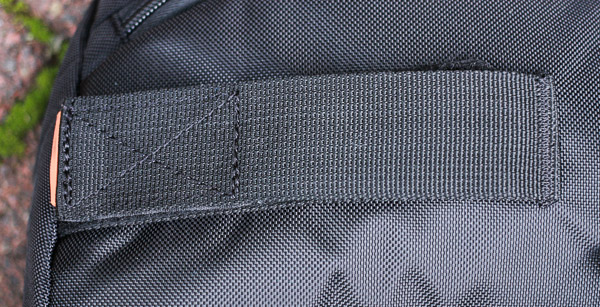
There are three strong, conveniently placed, handles that make the bag easy to pick up. The shoulder strap is well padded and nice and wide to spread the weight. The interior is bright yellow, so it is easy to see your black accessories such as lens caps. The support straps come with velcro tabs so any unused straps don’t dangle down.
This is a high quality camera bag ideal for anybody who takes a minimal amount of equipment on a shoot. It is most suited for photographers who use small SLR or mirrorless cameras. It is comfortable and easy to use. The only drawbacks are the size (if you have a large camera body) and lack of a waterproof cover.
Thanks to David from Love Cases for supplying the bag for review. Love Cases is a UK based company with international delivery. You can also buy the Case Logic SLRC 205 from Amazon.
My ebook Mastering Photography: A Beginner’s Guide to Using Digital Cameras introduces you to photography and helps you make the most out of your digital cameras. It covers concepts such as lighting and composition as well as all the camera settings you need to take beautiful photos like the professionals.
The post Case Logic SLRC 205 Sling Camera Bag Review by Andrew S. Gibson appeared first on Digital Photography School.

The NX30 uses the same 20MP, Samsung-designed CMOS sensor and Hybrid AF system as the more compact NX300, but puts it into an SLR-style body with a pull-out, tilting electronic viewfinder and generous hand grip. Add in Wi-Fi and NFC connectivity options, a 3″ AMOLED display and 1080/60p video, and the NX30 is arguably Samsung’s most enthusiast-oriented camera yet. But does it offer anything to standout from other high-performing cameras in its class? Find out in our review
News: Digital Photography Review (dpreview.com)
You must be logged in to post a comment.