RSS
 

Archive for April, 2014

Fotogenes Deutschland – Eibsee

17 Apr

Ein Beitrag von: Stefan Gerzoskovitz

Ein kalter Herbstmorgen, Nebel wabert knapp über die Wasseroberfläche. Das frühe Aufstehen ist schon längst vergessen und ich warte auf die ersten Sonnenstrahlen, die sich über den noch mit Schnee bedeckten Bergkamm kämpfen müssen.

Sobald die ersten Strahlen auf die Inseln treffen, löse ich die Kamera aus. Mit einem neutralen Graufilter will ich den Nebel zu einem seidenen Teppich verschwimmen lassen. Ich warte gespannt auf das Ende der Aufnahme und schaue erwartungsvoll auf das Display meiner Kamera.

So oder so ähnlich ging es mir schon einige Male an einem der schönsten Bergseen Deutschlands, dem Eibsee. Der glasklare Gebirgssee liegt ca. 9 km südwestlich von Garmisch-Partenkirchen direkt am Fuße der Zugspitze auf knapp 1000 hm und ist bequem mit dem Auto zu erreichen.

Zu Fuß kann man den See in etwa zwei Stunden komplett auf einem einfachen und breiten Fußweg umrunden. Gerade der Weg am Nordufer mit mehreren kleinen Buchten eröffnet immer wieder freie und traumhafte Blicke auf das Wettersteinmassiv mit Zugspitze und Riffelgrad.

© Stefan Gerzoskovitz

© Stefan Gerzoskovitz

Der See bietet zu jeder Jahreszeit reizvolle Motive. Im Frühjahr sorgt das frische Grün der Laubbäume für einen schönen Kontrast zu den noch schneebedeckten Gipfeln.

Im Sommer sind die Ufer an warmen Tagen oft bis spät abends mit Sonnenanbetern überflutet. Deshalb bieten sich zu dieser Jahreszeit eher die frühen Morgenstunden mit schönem, seitlichem Streiflicht an, um in Ruhe fotografieren zu können.

Im Herbst braucht der Eibsee keinen Vergleich zum Indian Summer in USA oder Kanada zu scheuen. Das türkisfarbene Wasser, die gelb und rot verfärbten Laubbäume und die gewaltige Bergkulisse im Hintergrund bieten Motive, die sich jeder Landschaftsfotograf in seinen Träumen erhofft.

Im Winter kehrt am Eibsee Ruhe ein. Obwohl die Wintersportler die nahen Parkplätze überfüllen, um zum Skifahren auf die Zugspitze zu fahren, herrscht am Eibsee besinnliche Ruhe. Hier lassen sich, je nachdem wie stark der See zugefroren ist, schöne Wintermotive finden.

© Stefan Gerzoskovitz

© Stefan Gerzoskovitz

© Stefan Gerzoskovitz

© Stefan Gerzoskovitz

© Stefan Gerzoskovitz

Ich kann nur jedem raten, sich mal weit vor Sonnenaufgang zum Fotografieren auf den Weg zu machen. Neben dem oft besten Licht hat das frühe Aufstehen auch noch einen weiteren Vorteil: Man kann die Natur mit allen Sinnen in Ruhe erleben und genießen. Für mich gibt es nichts Schönere, als auch mal längere Zeit an einem Ort zu stehen, die Lichtstimmungen zu beobachten und dann im richtigen Moment auf den Auslöser zu drücken.


kwerfeldein – Fotografie Magazin | Fotocommunity

 
Comments Off on Fotogenes Deutschland – Eibsee

Posted in Equipment


Canon G1 X Mark II First Impressions Review

17 Apr

CanonG1XII.jpg

Canon’s PowerShot G1 X Mark II is an intriguing update. It keeps the 1.5″-type sensor from its predecessor, but adds a faster processor, longer and brighter lens, tilting LCD, dual control rings and has Wi-Fi with NFC. The big change for 2014 is no more optical viewfinder. Our first impressions review covers the usual aspects of the camera (Controls, Body and Design, etc.), but also has our Shooting Experience report where we talk about it handles in the real-world. Learn more

News: Digital Photography Review (dpreview.com)

 
Comments Off on Canon G1 X Mark II First Impressions Review

Posted in Uncategorized


[MODIFIED] IrfanView – Disable Most Recently Used Files and Folders for Privacy

17 Apr

Increase your privacy by making IrfanView forget the most recently accessed files and folders.

For convenience, IrfanView offers an “Open Recent files” option in its “File” menu, providing you quick access to files you have opened lately. Also, when opening and saving files, IrfanView shows the most recently-access folders as well as commonly-accessed areas such as your Desktop, My Pictures, Favorites, etc.

While these features may be useful if you frequently modify the same files, or images in a particular file location, having this information readily available may violate your privacy if multiple people share the same machine. Thus, you can stop IrfanView from showing this information if desired:…

Read more at MalekTips.
New Computer and Technology Help and Tips – MalekTips.Com

 
Comments Off on [MODIFIED] IrfanView – Disable Most Recently Used Files and Folders for Privacy

Posted in Technology


Fenster: Ausstellungstipps, Ausgabe 2

17 Apr

Eigentlich wollten wir erst in der nächsten Woche die neue Ausgabe unserer Ausstellungstipps veröffentlichen. Aber da wir jetzt schon so viele neue Empfehlungen für Euch haben, verkürzen wir den Abstand ganz einfach und hoffen, dass ein paar für Euch spannende Veranstaltungen dabei sind!

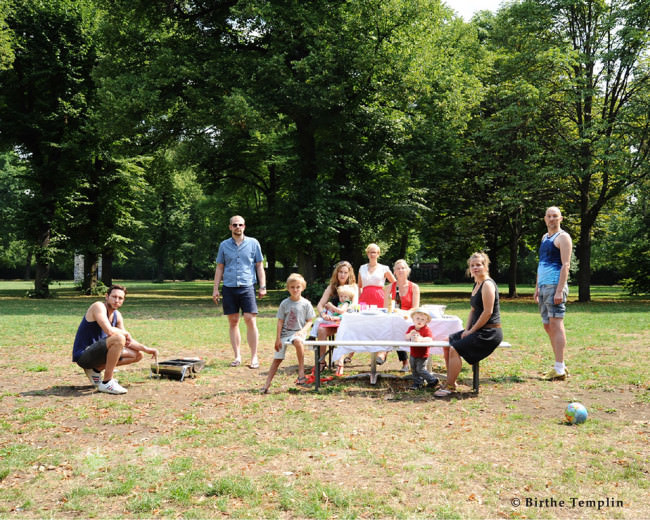
Familie Ostkreuz © 2014 Birthe Templin

Berlin

Tipp von Robert Herrmann

Für die meisten von Euch ist es sicherlich nichts Neues, dass auch wir Redakteure fotografieren. Ich möchte an dieser Stelle die Gelegenheit nutzen, um also einmal eine Empfehlung in eigener Sache abzugeben.

Wer zu Ostern in Berlin ist und die eiergesättigten Festtage mit einer Prise Kultur würzen möchte, sei eingeladen, sich die Gruppenausstellung „~Familie“ im Kunsthaus Bethanien anzuschauen.

Wir sind elf Fotografen, die sich ein Jahr lang unter der Leitung von Thomas Meyer an der Ostkreuzschule für Fotografie mit dem Thema Familie auseinandergesetzt haben. Was bedeutet heutzutage Familie? Wie bestimmt sie unser Leben? Wo findet sie im öffentlichen Raum statt? Herausgekommen sind ganz unterschiedliche Arbeiten, von ganz privat bis ironisch distanziert. Von sehr nah bis völlig abseitig.

Die Vernissage findet am Donnerstag den 17. April ab 19:00 Uhr statt.
Ort: Kunstquartier Bethanien, Projektraum, Mariannenplatz 2, 10997 Berlin-Kreuzberg
Dauer der Ausstellung: 18. – 20. April 2014, täglich von 14 bis 20 Uhr
Der Eintritt ist frei.


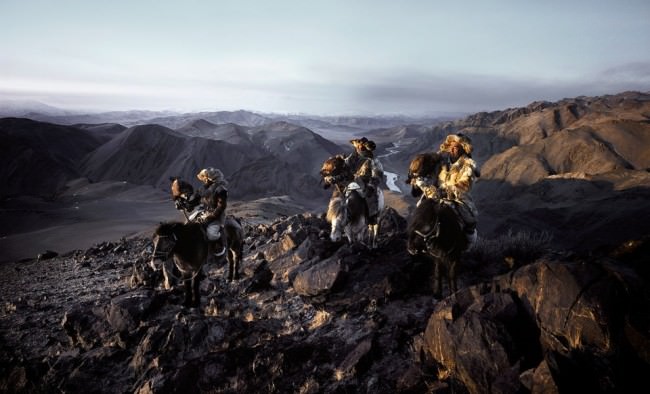
Hilao Moyizo Village, 2011 © Jimmy Nelson

Hilao Moyizo Village, 2011 © Jimmy Nelson

Tipp von Aileen Wessely

Der Fotograf Jimmy Nelson hat unter dem Titel „Before They Pass Away“ ein epochales Werk über die letzten indigenen Völker dieser Erde geschaffen. Und der Titel ist Programm, denn es geht darum, den Rest der Welt aufzurütteln, denn diese Kulturen werden höchstwahrscheinlich aussterben, wenn alles so weitergeht.

Besonders gefällt mir diese große Serie, da sie sehr, sehr viele Völker umfasst, die Nelson überall auf dem Globus aufgesucht und fotografiert hat, ohne dabei einen dokumentarischen Ansatz mit einem Schema X anzusetzen, um ja alle Kulturen irgendwie gleich darzustellen. Jimmy Nelson ist nicht objektiv, sondern ganz und gar subjektiv. Und leidenschaftlich.

Er wählt immer wieder unterschiedliche Darstellungs-, Portrait- und Inszenierungsformen. Einzelportraits vor schwarzem Hintergrund, Gruppenaufnahmen in der weiten Landschaft oder im überbordenden Wald. Gruppensitzungen in den typischen Behausungen ebenso wie aus dem Alltag heraus festgehaltene Szenen und Portraits.

Die Farbigkeit ist es, die mich bei seinen Arbeiten positiv erschlägt, über sie transportiert sich für mich ganz klar die Faszination. Noch bis zum 21. Juni 2014 ist die Ausstellung in den Berliner Galerien Camera Work und CWC Gallery gleichzeitig zu sehen, die gemeinsam den erforderlichen Platz für die vielen Bilder zur Verfügung stellen.


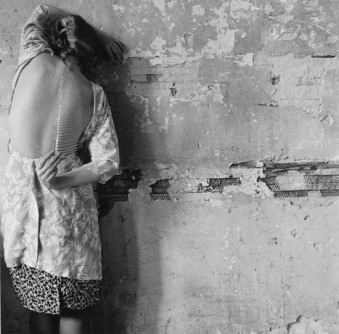
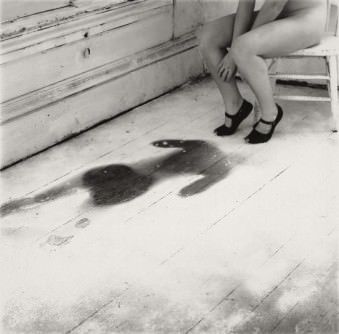
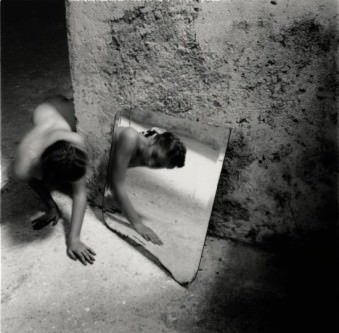
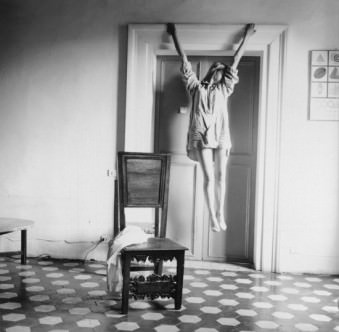
Francesca Woodman, Untitled , New York, 1979/2001 Schwarz-Weiß-Silbergelatineabzug auf Barytpapier / Black-and-white gelatin silver print on barite paper 14,7 × 14,8 cm / 25,3 × 20,2 cm © Courtesy George and Betty Woodman, New York / SAMMLUNG VERBUND, WienFrancesca Woodman, Untitled , Providence, Rhode Island, 1976/1999 Schwarz-Weiß-Silbergelatineabzug auf Barytpapier / Black-and-white gelatin silver print on barite paper 14 × 14,4 cm / 25,2 × 20,2 cm © Courtesy George and Betty Woodman, New York / SAMMLUNG VERBUND, Wien

Wien

Tipp von Marit Beer

Anfang des Jahres brachte die Sammlung Verbund die erste deutschsprachige Monografie von Francesca Woodman heraus, die einen neuen Blick auf ihre Arbeiten eröffnet und demnächst auch hier auf kwerfeldein in Form einer Rezension vorgestellt wird.

Die Vertikale Galerie in der Verbund-Zentrale in Wien zeigt noch bis zum 21. Mai 2014 ihr zu Ehren eine Ausstellung, mit 80 Fotografien aus den Beständen der Sammlung Verbund. Die Ausstellung ist jeden Mittwoch um 18 Uhr und jeden Freitag um 16 Uhr im Rahmen einer kostenlosen Führung zu besichtigen. Es wird darum gebeten, sich telefonisch oder per E-Mail vorher anzumelden.

Francesca Woodman, Self deceit #1 , Rome, Italy, 1978/1979 Schwarz-Weiß-Silbergelatineabzug auf Barytpapier / Black-and- white gelatin silver print on barite paper 9 × 9 cm / 24,7 × 20,2 cm © Courtesy George and Betty Woodman, New York / SAMMLUNG VERBUND, WienFrancesca Woodman, Untitled , Rome, Italy, 1977–1978/2006 Schwarz-Weiß-Silbergelatineabzug auf Barytpapier / Black-and-white gelatin silver print on barite paper 15,1 × 14,9 cm / 25,1 × 20,2 cm © Courtesy George and Betty Woodman, New York / SAMMLUNG VERBUND, Wien

Leider habe ich bisher selbst noch nicht den Weg von Berlin nach Wien geschafft, wünsche mir dies aber um so mehr, weil ich die Arbeiten Francesca Woodmans sehr schätze. In meinem Bücherregal türmen sich die Publikationen, die ihren Namen tragen. Ich habe hier schon einmal ihre Arbeiten besprochen und weiß, dass sie viel Einfluss auf Fotografen unserer Zeit hat.

Wer also in Wien oder der näheren Umgebung ist, dem empfehle ich unbedingt, diese Ausstellung zu besuchen, vor allem, weil Ausstellungen dieser Künstlerin relativ rar gesät sind.


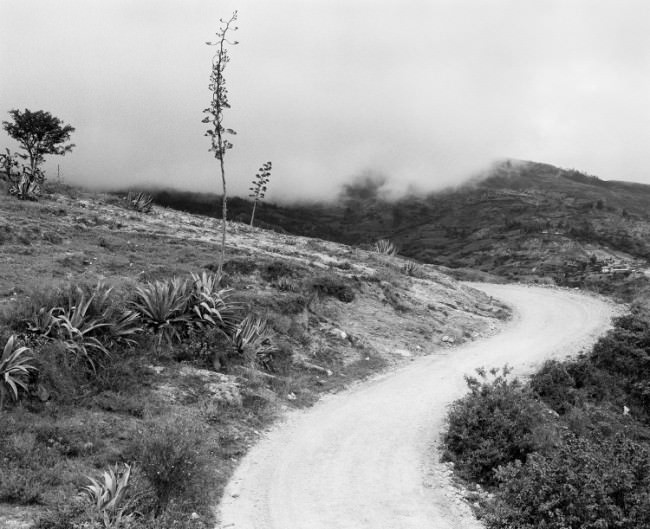
Sonnenstraße © Frank Gaudlitz

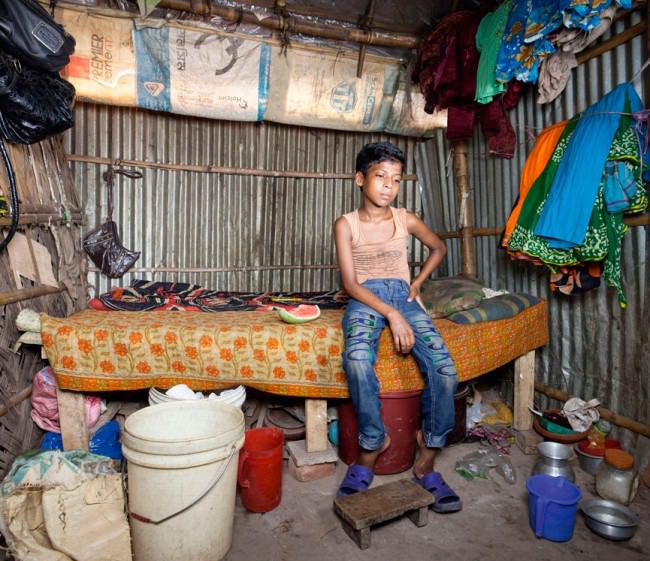
Provisional Installations © Sebastian Keitel

Köln

Tipp von Aileen Wessely

Fünf Räume, vier Fotografen und drei Kontintente. Das ist das Konzept der aktuellen Gruppenausstellung in den Kunsträumen der Michael-Horbach-Stiftung, die am 10. April eröffnet wurde und noch bis zum 10. Juni 2014 zu sehen ist.

Frank Gaudlitz zeigt Arbeiten aus seiner Arbeit „Sonnenstraße“, für die er 2500 km quer durch Südamerika zurücklegte und den wichtigsten Orten von Alexander von Humboldts Forschungsreise von 1802 folgte. In wirklich beeindruckenden, großformatigen Schwarzweiß-Arbeiten erlebt man die südamerikanische Landschaft und farbige Portraits zeigen die Einwohner in ihren Häusern.

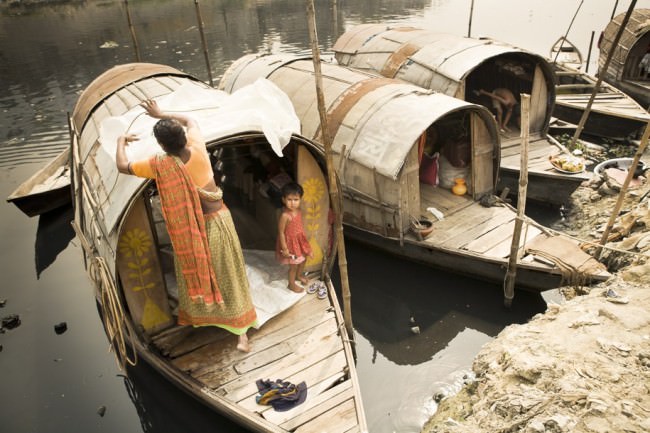
Um das Wie und Wo des Wohnens geht es auch in der Arbeit „Provisional Installations“ von Sebastian Keitel, der in sehr großformatigen, bunten und eindringlichen Bildern die Interieurs von Slumhütten aus Dhaka zeigt. Für die Arbeit „Water Gypsies“ besuchte die Fotografin Maria M. Litwa zwei Siedlungen von muslimischen Flussnomaden, ebenfalls in Dhaka.

Water Gypsies © Maria M. Litwa

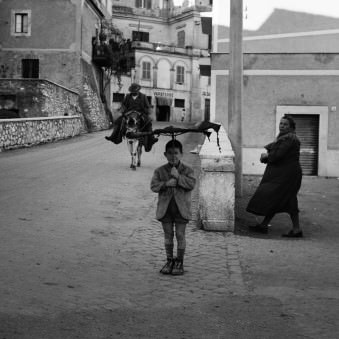
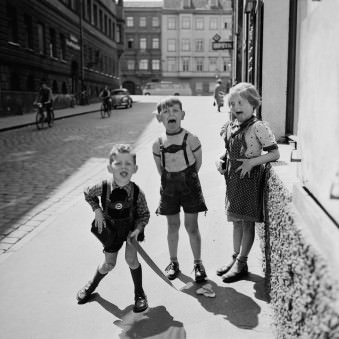
© Bill Perlmutter, Galerie Hilaneh von Kories© Bill Perlmutter, Galerie Hilaneh von Kories

Nach so viel für unsere Augen Exotisches von fernen Kontintenten ist es dann besonders spannend, im Kontrast Bill Permutters Arbeiten im zuhinterst gelegenen Raum zu betrachten. Als amerikanischer Soldat reiste er in den 50er Jahren durch das Nachkriegseuropa und brachte vielseitige Beobachtungen von den Straßen der Stadte mit – wiederum in schwarzweiß.

Die Vernissage musste ich leider ohne die zwei Bilder und vier Bücher, die ich zu gern gehabt hätte, verlassen, weil ich gerade keine Summe im mittleren vierstelligen Bereich bei mir hatte, aber viele der ausgestellten Arbeiten gibt es auch zu erschwinglichen Preisen in regulären Buchausgaben zu erstehen und das Anschauen allein lohnt sich auch allemal.

Die Kunsträume sind mittwochs und freitags von 14 bis 17 Uhr sowie sonntags von 11 bis 13 Uhr geöffnet. Der Eintritt ist frei.


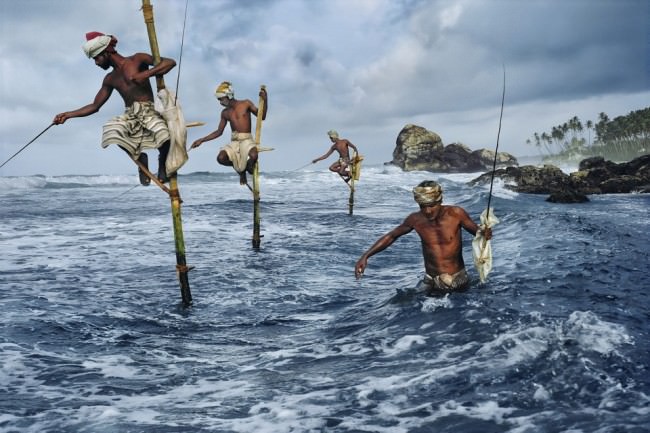
Fischer. Weligama, Südküste, Sri Lanka, 1995, © Steve McCurry / Magnum Photos

Fischer. Weligama, Südküste, Sri Lanka, 1995, © Steve McCurry / Magnum Photos

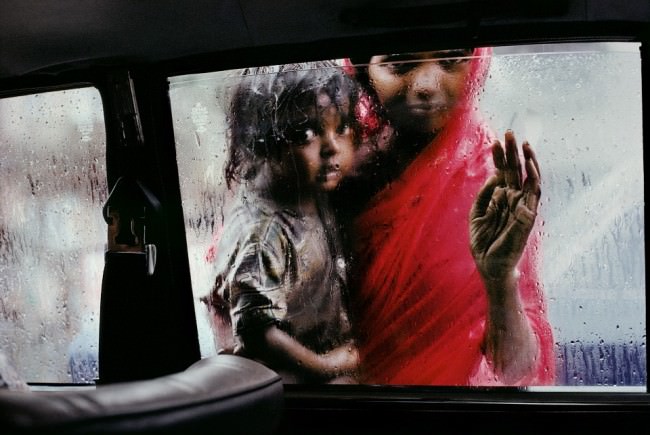
Bettlerin, Bombay, Indien, 1993.  © Steve McCurry / Magnum Photos

Bettlerin, Bombay, Indien, 1993. © Steve McCurry / Magnum Photos

Erfurt

Tipp von Katja Kemnitz

Selbst, wem der Name Steve McCurry nichts sagt – mindestens eines seiner Bilder hat wahrscheinlich jeder schon einmal gesehen. Das Foto „Afghan Girl“ ist eines der beeindruckendsten Portraits des Magnum Fotografen und wird zurecht oft afghanische Mona Lisa genannt.

Dieses und viele weitere farbgewaltige Bilder kann man noch bis zum 22. April 2014 in der Kunsthalle Erfurt sehen. McCurry dokumentierte zahlreiche Kriege und Konflikte, vor allem in Asien und im mittleren Osten. Die Ausstellung verspricht einen umfassenden Überblick über sein Werk.

Nachdem seine Bilder bereits Station in Wolfsburg und Hamburg gemacht haben, hoffe ich sehr, dass sie nach Erfurt auch bald in meine Gegend kommen werden. Wer die Chance hat, sie zu sehen, sollte sie unbedingt nutzen.


Welche Ausstellungen haben Euch kürzlich begeistert? Lasst es uns und alle anderen Leser in den Kommentaren wissen!


kwerfeldein – Fotografie Magazin | Fotocommunity

 
Comments Off on Fenster: Ausstellungstipps, Ausgabe 2

Posted in Equipment


Internet Explorer 11 – Change the Default Search Provider to Google, Yahoo!, or Something Else

17 Apr

Tired of IE11 always searching the web with Bing? Learn how to easily change the default search provider to something else.

By default, when you search the web with Internet Explorer 11, the Bing search engine from Microsoft is used.

While some enjoy using this website, others would rather search the web with Yahoo!, Google, or another search provider by default….

Read more at MalekTips.
New Computer and Technology Help and Tips – MalekTips.Com

 
Comments Off on Internet Explorer 11 – Change the Default Search Provider to Google, Yahoo!, or Something Else

Posted in Technology


Finding and Working with Available Light

17 Apr

I don’t use a flash for my photography, it’s a personal preference. Available light, in its many forms, is both challenging and rewarding so I rarely find a need to turn to creative lighting.
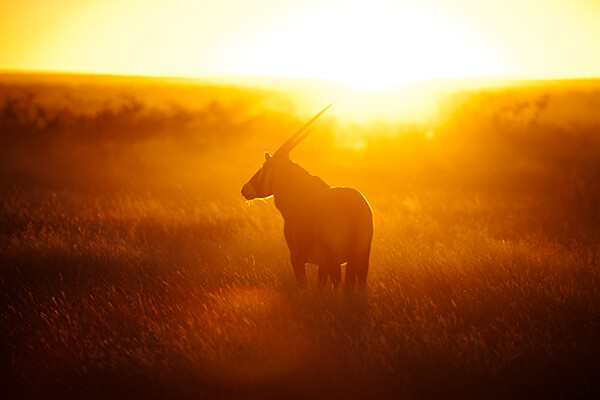
MWT_Avail_Light_2

Natural light, golden hour

What is ‘available light’?

Let’s be clear on definitions first. As a street photographer my preferred source of light is sunlight, more specifically, natural light. Available and ambient light refer to any and all light sources the photographer did not introduce for their photograph; light bulbs, candles, fire, neon, to name a few.

The available light around us is a great opportunity for our photography and photographers should be passionate about making best use of this light when capturing a photo.

George Eastman said, “Light makes photography. Embrace light. Admire it. Love it. But above all, know light. Know it for all you are worth, and you will know the key to photography.”

On a basic level we all recognise the beautiful sprawling vista before us looks wonderful bathed in the rays of the setting sun, and less so beneath an overcast grey sky. I refer to this as the quality of the light.

What are the different qualities of light?

Starting with the obvious, the sun, the qualities of its light are wildly variable.

MWT_Avail_Light_5

Natural light, sunset

Direct sun

The sun is warmer and softer at each end of the day. Shadows are long and also soft. These two periods, at sunrise and sunset, are referred to as the Golden Hour and many landscape photographers won’t recognise any other part of the day. Quick tip: when the skies are a glorious combination of oranges and reds, set your white balance to Sunny. Set to auto white balance, the camera often attempts to compensate for, what it believes are, overly warm tones.

During the day when the sun is high, the light is bright and harsh and shadows will be short. The principal challenge here is how to properly expose where there is a massive range of exposure between areas of light and shadow.

MWT_Avail_Light_4

Harsh direct sun

Indirect sun

This covers areas of shade, reflected sunlight, side lighting through a window and that pallid grey diffuse light from cloud cover.
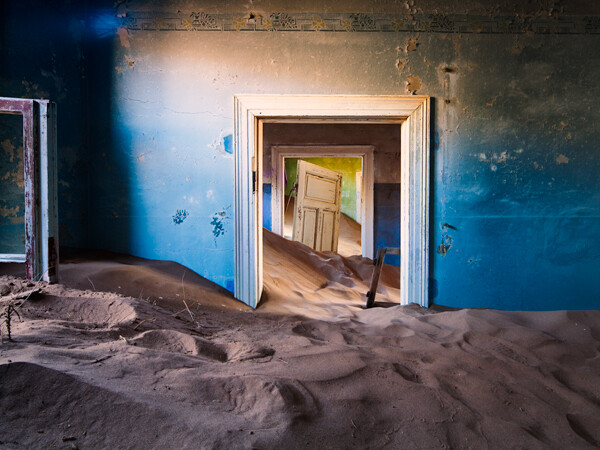
MWT_Avail_Light_3

Indirect sun from a side window

Artificial light

Ignoring light from the night sky, what remains to light our photography is artificial light. No less challenging to work with, artificial ambient lighting can vary in brightness from a candle to stadium lighting, and can be located on ground level to anywhere overhead. There could be multiple sources and, if all this wasn’t bad enough, some of those light sources could be moving!

What is the quality and direction of light?
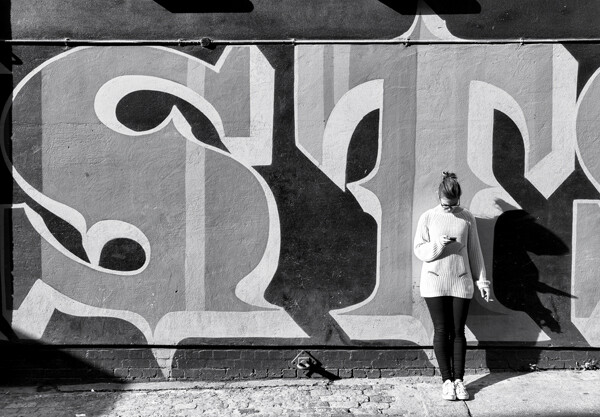
MWT_Avail_Light_6

Direct sun, nearly overhead casting short harsh shadows

Direct overhead sunlight

Taking a portrait in direct overhead sunlight is tough going. The light is bright and harsh, the shadows equally so. I’m a street photographer, so there’s no option to move subject(s). In this scenario I have to weigh up the contrasts between bright and dark areas, especially with faces. The subject’s clothes will affect the exposure, dark materials losing texture to the shadows more quickly. Backgrounds should be considered too. For example, a small portion of bright sky in the frame can horribly distract when the rest of the photo is a fairly balanced exposure.

If you can move your subject, the effects of the direct sun can be mitigated when you consider placing the person next to a light coloured wall, or other reflective surface. Very much along the lines of a subtle fill using the reflected light. These light and shadow areas will all be softer and your subject won’t be squinting. Moving to a wholly shaded area will result in a flat lighting with little or no shadow. Yes, exposure will be easy but your image will take on a decidedly flat look.

Open shade
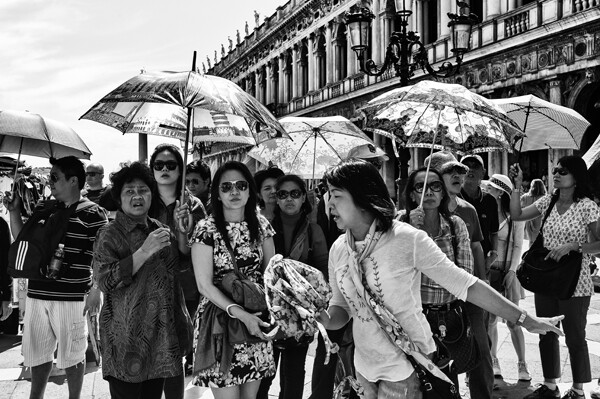
Open Shade, Combination Of Sun And Shade

Open shade, combination of sun and shade

These areas are great opportunities to introduce depth into your images with portions of direct sunlight as well as shadows cast from the shaded area, all within the frame. Trees are the obvious candidates for partially shaded areas, but also consider open doorways and alleys. The example above takes advantage of the shade cast by several umbrellas.

Side light or window light

Making use of light from the side, open windows or low sun late in the day, also generates images with a real sense of depth. The side lighting will reveal the smallest textures. The dynamic range of light to dark in these scenes is much reduced. Pay attention to the contrast play now on a more horizontal plane than you would see with overhead light sources.

Diffuse light

With little or no discernible direction, diffuse light from a shaded area or overcast sky introduces problems with colour temperature and a general lack of depth in images. I don’t let this bother my street photography, however this is a challenge for a scheduled shoot.

I have generally been referencing available light from the sun. Working in environments with artificial light you are faced with the same factors, though problems can be amplified. Unnatural light frequently complicates exposures with off colour temperatures and much lower levels of light.

On one occasion, I was commissioned to photograph an event where all the lighting was eye level and against the walls! There are only so many silhouette shots you can get away with and I spent a large part of the evening against a wall to be able to shoot with the light.

How much light do you have to work with?
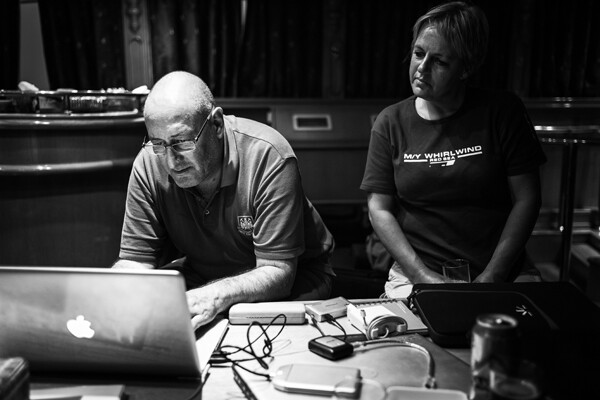
MWT_Avail_Light_7

Indoor artificial low light

Whatever the quality and level of the light, reflective surfaces are useful to make the best of the ambient levels. For planned shoots, particularly with models, metallic reflectors are an excellent method of manipulating light onto a subject. Even nature photographers carry fold up reflector discs to reduce the silhouetting effects of shooting into the sun. No reflector, and no alternate light sources? I suggest white walls, shiny floors, glass surfaces.

Low available light situations are challenging for photographers and this is one area where the right gear will enable you to take a better photograph. Capturing a well exposed image requires as much light as the sensor can get. Static subjects will allow a longer exposure. Events, concerts, parties, weddings all rely on photographers obtaining shots quickly. This means fast glass and, where needed, increased sensor sensitivity or ISO. I recommend a lens capable of f/2 for very low lit scenes. If you are shooting hand held, you will probably still need to increase your ISO to prevent a blurred exposure.

It frustrates me terribly to see so many people constantly using their smart phone, however, the light from the screens always helps illuminate faces. It is precisely this kind of observation that will help you find light where you need it. 

Notes on exposure

Exposure is influenced by aperture, shutter speed and ISO and your camera’s metering programme will wiggle those three factors to attempt to capture an evenly exposed scene. In reality, you are the principal metering programme; your ability to see where the light falls, the points of reflection and those areas of dark shadow.

My camera is set to spot metering and I pick an area of the scene to meter against and therefore influence the exposure. In bright sunlight, I might meter on the subject’s light coloured jacket to reduce the effects of the bright sun. At an event, I am likely to meter near to the ground to elevate overall exposure. Less commonly, and for balanced light situations, I will meter against the subject’s face. You will become more practiced with reading light levels and metering to control your exposures.

Don’t be fooled into thinking Auto White Balance will save your scene. Also, shooting RAW affords you the maximum dynamic range your camera is capable of and, though White Balance is an attribute, you still need to consciously set it. Carry white balance cards and custom white balance!

One final suggestion. Shoot RAW and set your camera to Black & White. Reviewing your images in monochrome will allow you to view only the luminosity in the scene and see where the light play is. You can set your image back to its original colour at a later stage.

Where would your photography be without light?! There are so many situations to which only practise reveals the solution, so please discuss available light questions and issues in the comments and I will do my best to answer.

The post Finding and Working with Available Light by Michael Walker-Toye appeared first on Digital Photography School.


Digital Photography School

 
Comments Off on Finding and Working with Available Light

Posted in Photography


16. April 2014

17 Apr

Ein Beitrag von: Charlotte Grimm

whom the moon a night song sings © Charlotte Grimm


kwerfeldein – Fotografie Magazin | Fotocommunity

 
Comments Off on 16. April 2014

Posted in Equipment


Ancient Engineering Fail: 12 Historic Structural Disasters

16 Apr

[ By Steph in Culture & History & Travel. ]

Engineering Fail Main
You can’t exactly fault ancient architects for building structures that were unable to withstand stone-shattering earthquakes, or simply experimental in nature – failure is part of the learning process, after all, and engineering methods were obviously less advanced back then. Big ambitions led to taking big chances, which often resulted in faulty construction and, occasionally, deadly collapses. Here are 13 examples of mistake-riddled churches, statues, lighthouses, stadiums and more from the period between 2600 BCE and the Renaissance.

Bent Pyramid of Egypt

Engineering Fail Bent Pyramid

Why does Egypt’s Bent Pyramid, an unusual example of early pyramid development created around 2600 BCE, have a sudden change in angle about halfway up? Archaeologists believe that what we see today is basically a mistake created during the learning process, in which the builders realized that the steepness of the original angle would be unstable and prone to collapse. The lower portion of the pyramid inclines at an angle of 54 degrees, while the top is a shallower 43 degrees. Another 54-degree pyramid is believed to have collapsed while this one was under construction, leading the builders to suddenly change their plans. Subsequent pyramids in the area were constructed at the 43-degree angle instead.

The Colossus of Rhodes, Greece

Engineering Fail Colossus of Rhodes

One of the seven wonders of the ancient world, the towering Colossus of Rhodes was a statue of the Greek Titan Helios that stood over 98 feet high on a pedestal in the city’s harbor. Erected by Chares of Lindos in 280 BCE to celebrate Rhodes’ victory over Antigonis I Monopthalmus of Cyprus, the statue was among the tallest of the ancient world. The statue stood for 56 years until the 226 BCE Rhodes earthquake, which brought it crashing down. After the oracle of Delphi stated that the Rhodians had offended Helios, they decided not to rebuild.

It’s certainly not surprising that seismic activity would have caused the statue to collapse, given that it was built long, long before any real understanding of earthquake-resistant engineering. But the fact that such a tall structure could have been built in the first place during that time is a wondering itself; modern engineers have speculated about the bronze plates and iron bars that would have been attached to the feet to reinforce them.

The Lighthouse of Alexandria, Egypt

Engineering Fail Lighthouse Alexandria

Another ancient wonder, the Lighthouse of Alexandria stood somewhere between 393 and 450 feet in height, making it among the tallest structures on earth for centuries. But the limestone structure, completed between 280 and 247 BCE on the island of Pharos, couldn’t stand up to three earthquakes spread out over four hundred years. It likely lost its upper tier before the first one struck in the year 956 CE, and by the third disaster in 1323, it was abandoned. What was left of it was covered with a medieval fort in 1480.

Fidenae Amphitheater Collapse, Italy

Engineering Fail Fidenae Ampthitheater

20,000 people were killed or wounded in the worst stadium disaster in history, which occurred in 27 AD at the Fidenae Ampthitheater about 8 miles north of Rome. The structure was cheaply built of wood and not up to the task of accommodating the 50,000 people who amassed to watch gladiatorial games after a ban on them was lifted. The Roman Senate decided that too many lower class people were ruining everyone’s fun, so they banned anyone with a personal worth under a certain amount from attending the events.

Circus Maximus Upper Tier Collapse, Italy

Engineering Fail Circus Maximus

Built in the 6th century BCE, the infamous Circus Maximus was an ancient Roman chariot racing stadium capable of holding 250,000 spectators who gathered to watch the Roman Games and gladiator fights, and later, the races. The oldest and largest public space in Rome, and has been in near-constant use every since, with its latest incarnation as a public park and space for events like concerts and festivals. But in 140AD, it was the site of a major disaster: the upper tier of seats collapsed under the weight of too many spectators. 1,112 people were killed in what remains the deadliest sports-related incident in history.

Next Page – Click Below to Read More:
Ancient Engineering Fail 12 Historic Structural Disasters

Share on Facebook


[ By Steph in Culture & History & Travel. ]

[ WebUrbanist | Archives | Galleries | Privacy | TOS ]


WebUrbanist

 
Comments Off on Ancient Engineering Fail: 12 Historic Structural Disasters

Posted in Creativity


The Power of Post-processing for Landscape Photography

16 Apr

Embracing the power of creative post-processing can transform your landscape photography from dull and lifeless, to lustrous and vibrant overnight!

We’re acutely aware that the preceding statement reads suspiciously like the voiceover script for a ‘next generation, nano-organic hair care’ commercial, but it’s true – digital post-processing can be a transcendent experience for your landscape images.

1 intro 001

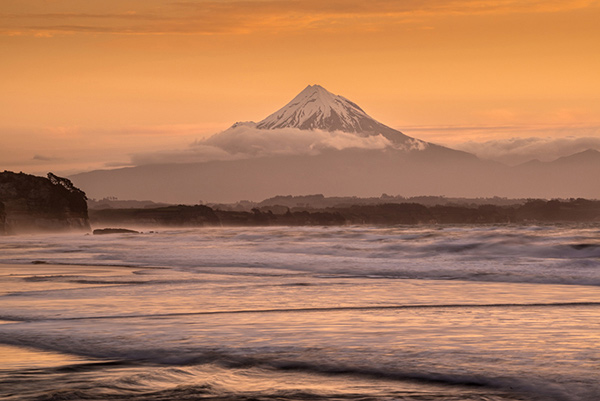
Sunset over the Mount Egmont from Wai-iti Beach, Taranaki Coast, New Zealand (by Sarah). Post-processing doesn’t always have to be complex to be effective. This image has received some basic adjustments to color, contrast and exposure to enhance its visual impact.

Why we need to post-process our landscape images

In the days of film photography we never performed any post-processing on our landscape images. Doing so entailed spending a small fortune on drum scanning and knowing someone with access to a supercomputer. Most landscape photographers were restricted to capturing everything in-camera and living with the results.

That state of affairs meant we needed to make decisions in the field that had permanent repercussions;

  • Which film stock and ISO to use?
  • Which color filters to apply?
  • How to achieve perfect exposure?

It is likely fair to assume that, for most dPS readers, film photography is either a distant memory or something that needs to be looked up on Wikipedia. We digital landscape photographers can gleefully wallow in the knowledge that RAW image capture and robust digital workflow allows us to make most of these decisions from the comfort of an office chair well after the time of capture.

The problem with RAW capture is that it usually produces really, really bland and unappealing images straight from camera. If you want to maximize the visual impact and creative options contained within a RAW file you need to post-process your images. It’s that simple.

2 before after

Sunset at Gentle Annie Beach (by Todd) West Coast, South Island New Zealand. This scene has all the ingredients of a successful landscape image, interesting visual elements, motion, and a nice blend of textures throughout the scene. However, the RAW file delivers an image that is bland, cold and lacking in contrast. Some simple post-processing of a single image file in Adobe Lightroom has resulted in an image that is visually inviting and makes the most of the tonal and color data contained within the image file.

2a intro 002

Lake Matheson and the Southern Alps at dawn (by Todd). Three distinctly different results were achieved from this one (bleak looking) RAW file! Long gone are the days where your creativity is restrained by in-camera results.

Two types of post-processing

In our latest dPS eBook Loving Landscapes – a guide to landscape photography workflow and post-production we break down landscape photography post-production into two distinct approaches:

  • Single exposure post-processing
  • Multiple-exposure post-processing

Let’s take a quick look at these two different approaches enhancing landscape photos.

Single exposure post-processing

As you will have figured from the name, this approach creates the finished image by processing a single image file. This is primarily accomplished within Lightroom and is the simplest approach to post-processing – if you read our first eBook, Living Landscapes, you will know that we love simplicity, particularly when it comes to post-processing!

We always attempt to capture a scene in a single file if possible, as it reduces the time spent in front of a computer and introduces less technical barriers to creativity than are found in multiple exposure post-processing.

3 se at 12

Lake Alexandrina (by Sarah). Single exposure landscape photography offers huge creative scope. Combining in-camera single exposure techniques such as long exposure with post-processing (black & white conversion) can create results that are stunning.

Multiple exposure post-processing

Occasionally it is impossible, for technical or creative reasons, to achieve the desired result with a single image file. Cue multiple exposure workflow – where the final image results from processing and merging elements from two or more image files. Multiple exposure landscape photography is a significantly more complex approach – both in the field and during the post-processing workflow. We use a combination of Lightroom and Photoshop to combine multiple images into a single final result.

One of the most common uses of multiple-exposure post-processing for landscape photography is exposure blending – where two or more exposures are combined to overcome high dynamic range in a scene.

4 exposure blending

The dynamic range of this high contrast scene (image above) exceeded the camera’s capabilities. Exposure blending allowed us to create a technically excellent result from two exposures. We detail three different approaches to exposure blending landscape scenes (including the making of this image) in Loving Landscapes.

5 mi wf 16

Misty sunrise at Castle Hill (By Sarah). HDR is another multiple exposure post-processing approach that resolves technical limitations as well as offering creative options.

In addition to providing solutions to technical challenges, multiple exposure landscape photography allows creative options that are simply impossible to achieve in a single frame. A good example of this is the merging of ‘best elements’ from multiple shots of the same scene taken at different times. This allows us to composite different elements together to create an image that exceeds the results achievable in a single exposure.

6 best elements

Lake Pukaki (by Todd), merging best elements in this scene allowed us to combine the best sun starburst and clouds, with the most dramatic waves and shoreline from the field sequence (of over 20 images). Covering the sun in another frame also allowed us to minimize the appearance of lens flare on the cliff face.

Give it a go!

Post-processing opens up a world of creative opportunities that allow you to better express your vision of the world around you. The technology is there, it is easy to use and the results can be spectacular – why wouldn’t you want to post-process your images?

Post-processing may seem a little overwhelming at first – and it can be – but you don’t require an art school diploma to start making dramatic improvements to your images. Our oft repeated advice is to keep it simple when you are starting out. Take the time to learn about the post-processing tools that affect the fundamental variables of photography: color, exposure and contrast and your images will improve dramatically.

Once you have those mastered, start experimenting with more complex tasks in Lightroom’s wonderfully non-destructive editing environment (there is nothing that can’t be undone in Lightroom) before transitioning to the more complex realm of multiple exposure Photoshop.

We hope that this has been of interest to you and we look forward to your feedback in the comments section.

*Note: photo-puritans can still experience some of the old school ‘thrill’ of making a finished image in-camera by shooting in JPEG-only mode. All of the color, tone and quality decisions can be set by messing around in the bowels of your camera menu. These settings are then baked into the finished JPEG, leaving much less scope for post-processing than with RAW capture. Why anyone would choose to do this deliberately is unclear – apparently, some folks love a challenge.


Check ou the newest dPS ebook – Loving Landscapes A guide to landscape photography workflow and post-production – a brand new dPS ebook by the authors of Living Landscapes

The post The Power of Post-processing for Landscape Photography by Todd Sisson appeared first on Digital Photography School.


Digital Photography School

 
Comments Off on The Power of Post-processing for Landscape Photography

Posted in Photography


Never lose your lens cap again with HACkxTACK

16 Apr

hacktack1.jpg

We all know the situation just too well. You’re out shooting with your DSLR or mirrorless camera when you decide to swap lenses and have no idea where you’ve put the lens cap for the lens that’s mounted on your camera body. Usually it’s in the very last place you look for it. In the worst case scenario you never find it at all. Two Canadian designers have a solution to this problem. Learn more
News: Digital Photography Review (dpreview.com)

 
Comments Off on Never lose your lens cap again with HACkxTACK

Posted in Uncategorized