RSS
 

Archive for March, 2014

Flexible Interiors: 13 Shape-Shifting Small Apartments

04 Mar

[ By Steph in Design & Fixtures & Interiors. ]

Transforming Interiors Main
Transforming furniture and living pod systems help make the most of a small space, but when entire rooms shape-shift in unexpected ways, the results can be astonishing. These compact apartment designs feature walls that slide and unfold, beds that descend from the ceiling, and interiors that can literally be turned upside down to change the function of built-in elements.

Yo! Home by Simon Woodroffe

Transforming Interiors Yo Home 1

Transforming Interiors Yo Home 2

An 80-square-meter space about the size of a one-bedroom apartment is transformed into a much larger-feeling home with 12 moving parts, including a bed platform that comes down from the ceiling just above the couches in the living room. By pulling something down, raising something from the floor or pressing a button to produce some other unexpected action, the small space expands to include a second bedroom, a full-sized kitchen, an office, a cinema, a dining room, a wine cellar and more.

Fluid Shapeshifting Berlin Apartments

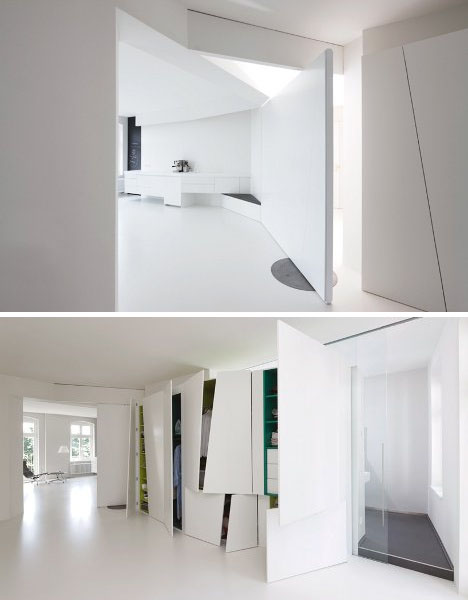
Transforming Interiors Shapeshifting Berlin

Two apartments in Berlin feature exceptionally fluid layouts thanks to pivoting and sliding walls. Frankfurt architecture firm reinhartjung created all-white interiors that help the various elements seamlessly transform to define new spaces in various shapes.

LifeEdited Apartment Packed with Transforming Elements

Transforming Interiors LifeEdited

Transforming Interiors LifeEdited 2

The result of a design competition by Treehugger founder Grant Hill, who actually lives in the winning proposal, the Life Edited apartment is an experiment in compact living that aims to help you “design your life to include more money, health and happiness with less stuff, space and energy.” Virtually everything in this apartment slides, unfolds or transforms in some way to pack as much as possible into a tiny New York apartment. Within this cube, 8 functional spaces can be created, even accommodating large dinner parties.

Pop-Up Interactive Apartment

Transforming Interiors Pop Up Apartment

The Pop-Up Interactive Apartment features a series of polypropylene panels that slide, fold and transform in other ways to change the space for different functions. These flexible dividers enable the 538-square-foot space to be partitioned for dining, sleeping, working and playing.

24 Rooms in One Apartment

Transforming Interiors 21 Rooms in 1 -2

Transforming Interiors 21 Rooms in 1

How do you turn a 350-square-foot studio into a fully functional apartment with the luxuries of a larger space? A Hong Kong designer has experimented with the limits of small space living by squeezing 24 rooms into one tiny cube. A system of sliding walls reveal seemingly endless utilities.

Next Page – Click Below to Read More:
Flexible Interiors 13 Shape Shifting Small Apartments

Share on Facebook


[ By Steph in Design & Fixtures & Interiors. ]

[ WebUrbanist | Archives | Galleries | Privacy | TOS ]


WebUrbanist

 
Comments Off on Flexible Interiors: 13 Shape-Shifting Small Apartments

Posted in Creativity


Blickfang: White Album

04 Mar

Seit es Internetdienste gibt, die uns kostenlos Satellitenbilder in hoher Auflösung zur Verfügung stellen, haben wir uns an den Blick auf die Erde von oben gewöhnt. Einer, der allerdings schon seit beinahe 15 Jahren regelmäßig aus dieser Perspektive auf die Welt schaut und sie dokumentiert, ist der Fotograf und Filmemacher Bernd Uhde.

Sein jüngst im Verlag Seltmann+Söhne erschienenes Buch „White Album“* hat mich sofort fasziniert. Darin zeigt er schneebedeckte Landschaften und urbane Strukturen immer mit dem orthogonal von oben nach unten gerichteten Blick.

White Album © Bernd Uhde

Die Bilder, wie beispielsweise die hier gezeigte Doppelseite, wirken teils so abstrakt – man könnte meinen, sie wären digital nachbearbeitet und manipuliert. Doch dem ist nicht so. Was hier manipuliert ist, sind die Landschaften selbst, die Uhde zeigt.

Wir sehen hier zwei in Reihen bepflanzte Felder. Die in regelmäßigen Abständen stehenden Bäume werfen lange Schatten auf den Schnee und erzeugen so ein sich wiederholendes und an Textilkunst erinnerndes Muster.

Uhdes Aufnahmen offenbaren die der vom Menschen geformten Landschaft zugrunde liegenden Muster. Sie sind real und abstrakt zugleich und nicht zuletzt – ästhetisch.

* Das ist ein Affiliate-Link zu Amazon. Wenn Ihr darüber etwas bestellt, erhalten wir eine kleine Provision, Ihr zahlt aber keinen Cent mehr.


kwerfeldein – Fotografie Magazin | Fotocommunity

 
Comments Off on Blickfang: White Album

Posted in Equipment


Red Epic Dragon jumps to top of DxOMark Sensor charts with score of 101

04 Mar

DxOMark-logo-520.jpg

Over the past few years, DxOMark’s tests and scores have provided a numerical measure for the Raw image quality potential of cameras. They’ve therefore been debated at some length by enthusiasts looking to see where their favourite model stands in the rankings. Now there’s a new DxOMark Sensor score champion, but perhaps surprisingly, the first camera to break the 100-point barrier isn’t a full frame model from Nikon or Sony, but the RED Epic Dragon movie camera. Click through for details and a link to the full report. 

News: Digital Photography Review (dpreview.com)

 
Comments Off on Red Epic Dragon jumps to top of DxOMark Sensor charts with score of 101

Posted in Uncategorized


Canon Interview: ‘We don’t see the smartphone as an enemy’

04 Mar

DSCF7300-1.JPG

Recently, editor Barnaby Britton had the opportunity to interview senior figures at Canon Inc. on two occasions, in Japan. The first meetings were held in late 2013 at Canon’s headquarters in Tokyo, and a follow-up interview was arranged at the recent CP+ show in Yokohama. Topics covered include the future of Canon’s mirrorless system, how Canon is innovating in its DSLRs and what 4K video means for photographers. Click through for the full interview.

News: Digital Photography Review (dpreview.com)

 
Comments Off on Canon Interview: ‘We don’t see the smartphone as an enemy’

Posted in Uncategorized


3. März 2014

04 Mar

Ein Beitrag von: Renee Quost

Sky © Renee Quost


kwerfeldein – Fotografie Magazin | Fotocommunity

 
Comments Off on 3. März 2014

Posted in Equipment


Don’t Look Down: 50 Inspiring Examples of Rooftopping Photography

03 Mar

You have probably heard of a new photography fad called “rooftopping,” in which brave daredevils find the way to the top of skyscrapers and other tall buildings to snap majestic shots. Just imagine the buzz of the roof topper who reached the top of the highest building in the city and saw the incredibly breathtaking view. If you want to Continue Reading

The post Don’t Look Down: 50 Inspiring Examples of Rooftopping Photography appeared first on Photodoto.


Photodoto

 
Comments Off on Don’t Look Down: 50 Inspiring Examples of Rooftopping Photography

Posted in Photography


Masters of Photography: Bruce Davidson, Master of the Subway

03 Mar
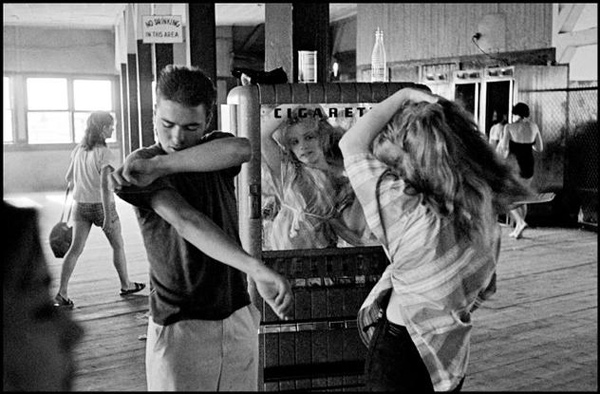
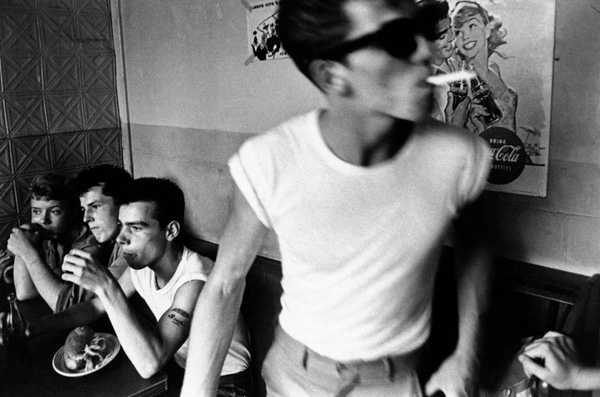
Coney Island, NY. 1959. From Brooklyn Gang.

Coney Island, NY. 1959. From Brooklyn Gang – Bruce Davidson/Magnum

We can all learn a great deal by studying the work of photographer, Bruce Davidson. Born near Chicago in 1933, Davidson has extensively photographed for over 50 years, including subjects such as the Civil Rights Movement in the early ’60s, circus performers, a Brooklyn gang, Spanish Harlem, and a five year project on New York’s subway system in the gritty days of the ‘80s. A few of his main influences were Robert Frank, W. Eugene Smith, and Henri Cartier-Bresson. Davidson joined the Magnum photo agency in 1958.

Besides Davidson’s intimate photographic style, which you need to view a few of his projects in their entirety to get a feel for, there are a few very important lessons that he can teach you about your own work.

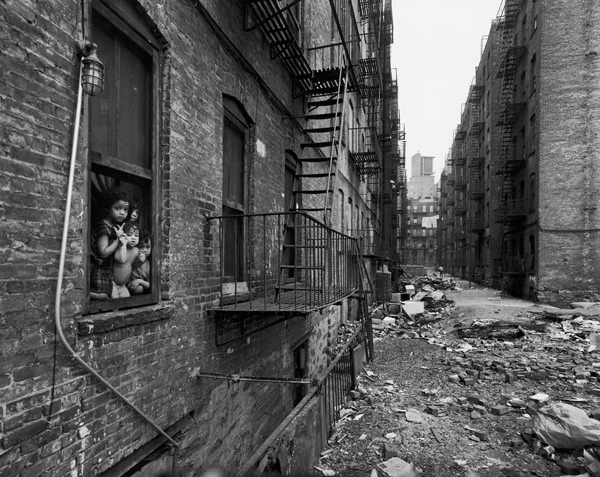
Much of Davidson’s work was focused on series and projects. One of his most important works is East 100th Street, where he captured life within a single block in East Harlem in the late ’60s. While many photographers may have tried to capture East Harlem in its entirety, Davidson honed in. He got familiar with a smaller area with a lot of life, and told broad stories by narrowing the subject matter. By focusing on a small part of a large area, he was able to become much more familiar and intimate with his subjects.

East 100th Street, Spanish Harlem, 1966.

East 100th Street, Spanish Harlem, 1966 – Bruce Davidson/Magnum

Davidson also spent time following a Brooklyn gang of youths called the Jokers in 1959, and he created a series of civil rights work when he following a group of freedom riders in the south (in 1961) through dangerous situations.

Besides his technical ability, one of Davidson’s main strengths was figuring out where the interesting stories were and putting himself where the action was. Then, he got close and familiar to his subjects. That idea might make you nervous, but based on some of his writings you can see that he was nervous at points as well. However, he did not let that stop him from doing it. He got close with his subjects and this closeness is shown within his images. It is one of the most important aspects of why his photographs are so successful.

New York City, 1962.

New York City, 1962 – Bruce Davidson/Magnum

While this intimacy was very important in his work, Davidson did not seem to think of himself as a documentary photographer, stating, “Documentary photography suggests you just stand back, that you’re not in the picture, you’re just recording. I am in the picture, believe me. I am in the picture but I am not the picture.”

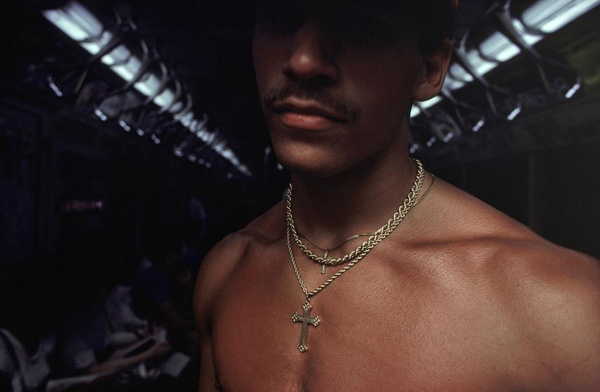
Starting in 1980, Davidson began an extensive five year project documenting the New York Subway system. The subway project is what hits closest to home for me, and it is inspiring to read about. When you visit New York City it is interesting to compare his photographs to the modern day look of the subway system. It helps to see your own work through this perspective. How would he do his project today? The subway system looks so much different, so how can I also capture it in an interesting way?

NYC Subway, 1980.

NYC Subway, 1980 – Bruce Davidson/Magnum

When talking about prolific photographers, it is easy to think that we cannot repeat their success. They seem bolder and more fearless. However, when you read Davidson’s quotes about the project, he does not sound much different than any of us would probably feel. He was just self aware enough and able to push through it. It is inspiring to say the least.

“As I went down the subway stairs, through the turnstile, and onto the darkened station platform, a sinking sense of fear gripped me. I grew alert, and looked around to see who might be standing by, waiting to attack. The subway was dangerous at any time of the day or night, and everyone who rode it knew this and was on guard at all times; a day didn’t go by without the newspapers reporting yet another hideous subway crime. Passengers on the platform looked at me, with my expensive camera around my neck, in a way that made me feel like a tourist—or a deranged person.

It was hard for me to approach even a little old lady. There’s a barrier between people riding the subway—eyes are averted, a wall is set up. To break through this painful tension I had to act quickly, on impulse, for if I hesitated, my subject might get off at the next station and be lost forever. I dealt with this in several ways. Often I would just approach the person: “Excuse me. I’m doing a book on the subway and would like to take a photograph of you. I’ll send you a print.” If they hesitated, I would pull out my portfolio and show them my subway work; if they said no, it was no forever. Sometimes, I’d take the picture, then apologize, explaining that the mood was so stunning I couldn’t break it, and hoped they didn’t mind. There were times I would take the picture without saying anything at all. But even with this last approach, my flash made my presence known. When it went off, everyone in the car knew that an event was taking place—the spotlight was on someone. It also announced to any potential thieves that there was a camera around. Well aware of that, I often changed cars or trains after taking pictures.”

Read more from Davidson on this project: Train of Though: On the ‘Subway’ Photographs. Now it’s time to explore Davidson’s work and think about a photographic project that you can do in your own area.

Subway.

NYC Subway, 1980.

NYC Subway, 1980 – Bruce Davidson/Magnum

Brooklyn Gang.

Brooklyn Gang, 1959.

Brooklyn Gang, 1959 – Bruce Davidson/Magnum

East 100th Street.

East 100th Street, Spanish Harlem, 1966.

East 100th Street, Spanish Harlem, 1966 – Bruce Davidson/Magnum

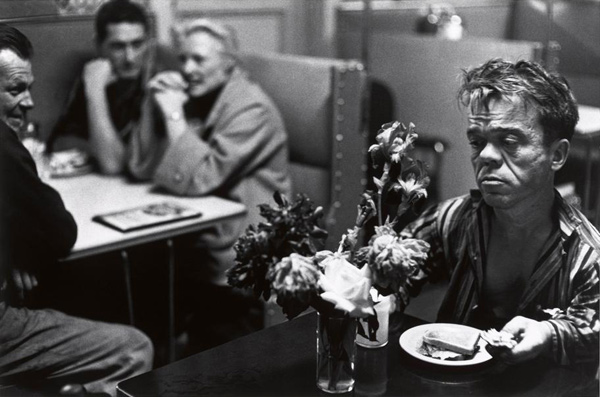
Circus

The Dwarf, Circus, Palisades, NJ. 1958

The Dwarf, Circus, Palisades, NJ. 1958 – Bruce Davidson/Magnum

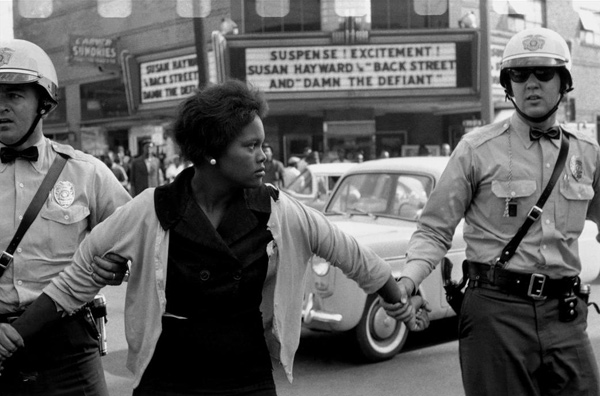
Times of Change: Civil Rights. 1961-65.

Birmingham, Alabama, 1963 by Bruce Davidson

Birmingham, Alabama, 1963 by Bruce Davidson/Magnum

The post Masters of Photography: Bruce Davidson, Master of the Subway by James Maher appeared first on Digital Photography School.


Digital Photography School

 
Comments Off on Masters of Photography: Bruce Davidson, Master of the Subway

Posted in Photography


Two Gizmos For Making Double Exposures

03 Mar
Extra photos for bloggers: 1, 2, 3

They say a picture is worth a thousand words. So, we did some math…

Turns out, a double exposure is worth two thousand words!

When you meld one image onto another, all of those extra words tend to run along the lines of, “Wow! Cool! Looks neat! I love it. How did you…?”

Sure, there are apps to fake double exposures and you can spend hours in photoshop or a darkroom (remember those?) creating ‘em.

But, we’re here to share two ways to make double exposures as you shoot, using reflective little Color Lens and Flash Filters and the magical Instax 90 Instant Camera.

Learn To make Double Exposures Two Ways*

*total value = 4,000 words

(…)
Read the rest of Two Gizmos For Making Double Exposures (373 words)


© laurel for Photojojo, 2014. |
Permalink |
No comment |
Add to
del.icio.us

Post tags:


Photojojo

 
Comments Off on Two Gizmos For Making Double Exposures

Posted in Equipment


A Buyer’s Guide to Canon Normal and Telephoto Lenses

03 Mar
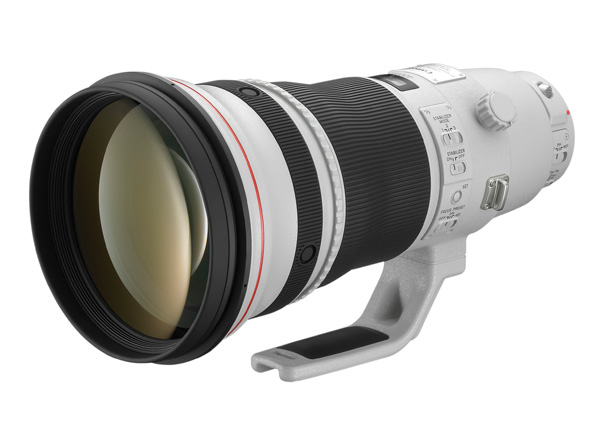
Canon 400mm lens

Canon EF 400mm f2.8L IS II USM lens

Andrew S. Gibson is the author of Understanding Lenses Part II: A Guide to Canon Normal & Telephoto Lenses, on 40% now at Snapndeals for a limited time only.

With so many lenses to choose from, it’s little wonder that photographers become confused about which option is the best. In this article I’m going to take a look at some of Canon’s best or most interesting normal and telephoto lenses, to give you a head start when it comes to understanding just what Canon offers in this part of their lens range.

But first, let’s take a quick look at the state of Canon’s lens line-up. I have no inside knowledge about which lenses Canon may introduce this year, but I do see a couple of emerging trends.

Trends in Lenses

The first is that Canon is not afraid to take an old lens and update it with a newer version. Good recent examples are the new EF 24mm and 28mm f/2.8 IS USM lenses. Both replaced older versions and included an Image Stabilizer (IS) which the previous models didn’t have.

The second trend is that newer lenses tend to be more expensive than the ones they replace. This is reasonable, as the newer lenses are better quality. If a new lens comes out and it seems expensive, you can be patient and wait a year or so for the price to drop if you don’t need it urgently. The two wide-angle lenses mentioned above have dropped in price by over 30% since their release.

That does mean it is possible that Canon will replace some of their aging normal and telephoto lenses in the near future. If you’re thinking about buying one and are worried about this, it’s up to you to decide how badly you need the current version. While the rumour websites like to speculate about forthcoming lenses, and are sometimes accurate, you never really know what will happen as Canon keep the details of new releases under wraps until the official day of release.

A good example of this is the EF 50mm f/1.4 lens. Some rumours sites are saying this is due for an update. But if this is true, and how far in the future it will happen, no-one really knows. Plus the replacement is likely to be more expensive than the current 50mm f/1.4 lens (but it may have IS). In the end, it’s up to you, but my advice is don’t spend too long waiting for new lenses – you could be waiting a long time.

Canon EF 200-400mm f/4L IS USM – the beast!
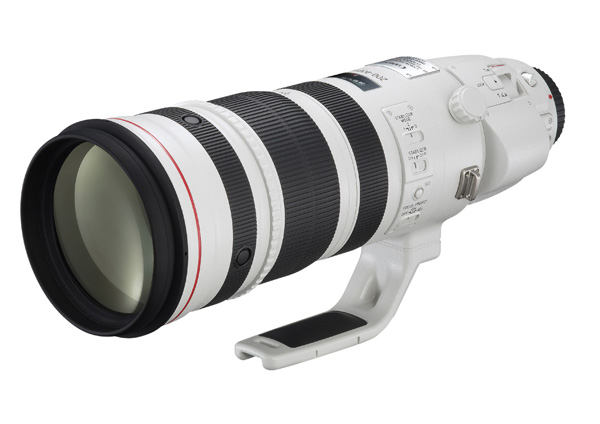
Canon 200-400mm zoom

Canon EF 200-400mm f/4L IS USM Extender 1.4x– only about $ 12,000 USD!

Let’s start off with this beast. It’s fun to speculate who would buy such an expensive lens. A professional sports photographer? Agencies like Getty or Reuters? This L series, super telephoto zoom, comes with a built in 1.4x extender (the only Canon lens to do so), a four stop Image Stabilizer, and a fixed f/4 aperture throughout the zoom range. It weighs over three and half kilos (7.9 pounds), but is not Canon’s heaviest lens. That honour belongs to the Canon EF 800mm f/5.6L IS USM lens (below), which weighs four and half kilos (9.9 pounds) and is another option for those of you with $ 13,000 to spend on new glass.
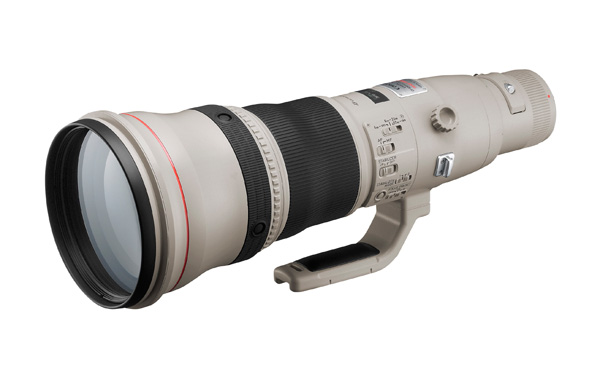
Canon 800mm lens

Canon EF 800mm f/5.6L IS USM Super Telephoto Lens for Canon Digital SLR Cameras

Canon 40mm f/2.8 STM
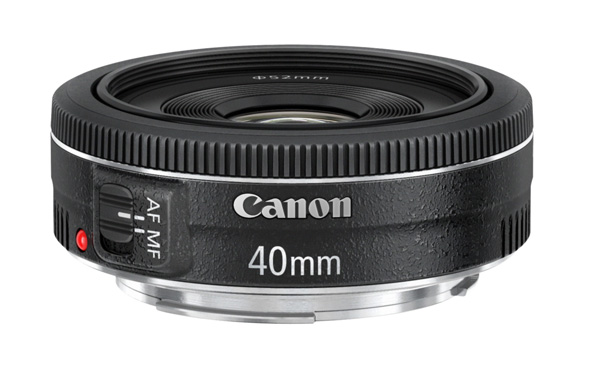
Canon 40mm pancake lens

Canon EF 40mm f/2.8 STM Lens

At the other end of the scale is one of Canon’s lightest, smallest and least expensive lenses. This 40mm pancake lens delivers excellent image quality, and excellent value for money. However it doesn’t have IS or a distance scale on the lens, features which may be important to some people.

How does this lens give such excellent quality for such a low price? It contains just six optical elements that measure little more than a centimetre across (0.4″). They are cheaper to manufacture than the larger elements found in Canon’s other lenses, and the result is a lower price.

This focal length is a short telephoto on an APS-C camera or a normal lens on a full-frame camera.

Canon 50mm f1.4 USM
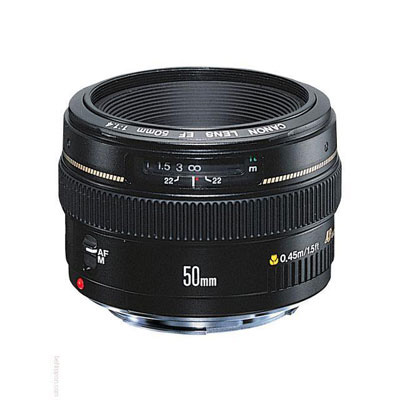
Canon 50mm f1.4 lens

EF 50mm f/1.4 USM

Canon users aren’t lacking for choice when it comes to 50mm lenses. Canon makes four models, including the 50mm f/1.8, the 50mm f/1.2L and 50mm f/2.5 macro. But my favourite is the EF 50mm f/1.4 USM. It’s a third of the price of the more expensive L series 50mm lens, but has better autofocus and smoother bokeh than the f/1.8.

50mm lenses make great portrait lenses on APS-C cameras and deliver value for money in terms of image quality and versatility. You can use a 50mm lens with extension tubes or close-up lenses for close-up photography, or with a reversing ring on a longer lens for macro photography.

Read more about 50mm lens in my article Nifty Fifties – Why I Love 50mm Prime Lenses.

Canon 85mm f/1.8 USM
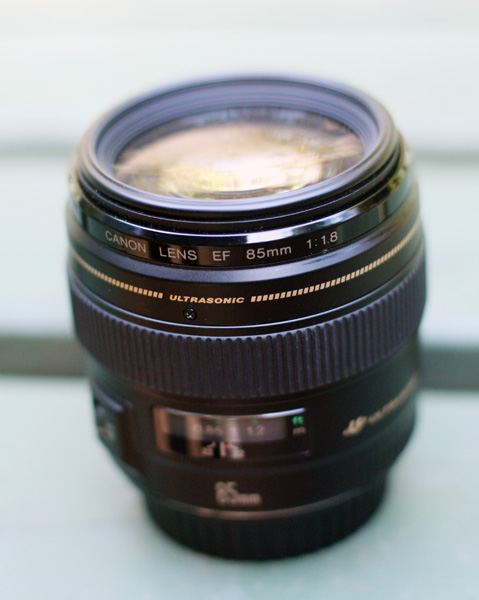
Canon 85mm lens

Another of my favourite lenses is the 85mm f/1.8. It’s an ideal portrait lens for owners of full-frame cameras. It’s also great for close-up photography with the addition of a 500D close-up lens. It’s a shame it doesn’t have IS, but that would push the price up. If you have deep pockets you can also consider the EF 85mm f/1.2L II USM lens, but bear in mind the wide f/1.2 aperture means it has a large front element (to let in the more light) and that makes the lens heavier and slower to autofocus.

Read more about this lens in my article How a Humble 85mm Lens Became My Favourite.

Canon 70-200mm zooms
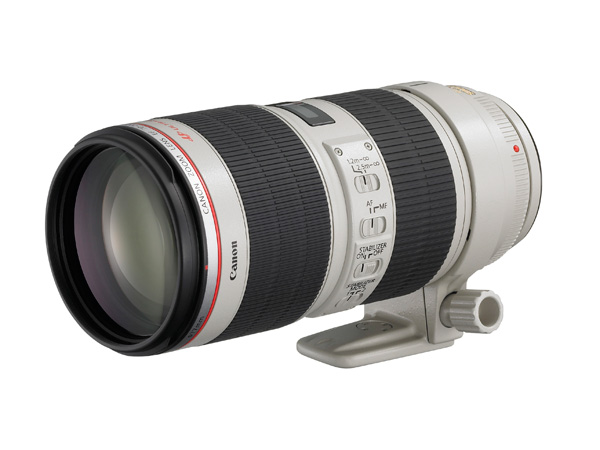
Canon 70-200mm zoom lens

EF 70-200mm f2.8L IS II USM

Canon has four 70-200mm zoom L series lenses. Two of these have maximum f/4 apertures and cost less. The other two have maximum f/2.8 apertures. For each aperture setting there is both a non-IS and an IS model. This gives you plenty of choice, for what is a very versatile focal length. The EF 70-200mm f/4L USM lens is Canon’s cheapest L series lens and a great option for anyone wanting to experience L series quality on a low budget. The EF 70-200mm f2.8L IS II USM (above) is the most expensive and comes with a collar so you can mount it on a tripod.

Canon 70-300mm f/4-5.6L IS USM
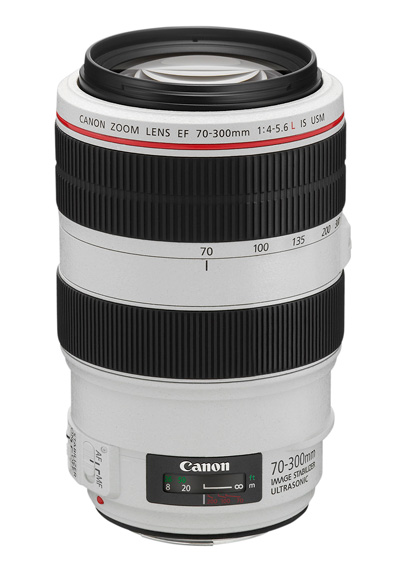
Canon 70-300mm zoom lens

Canon EF 70-300mm f/4-5.6L IS USM UD Telephoto Zoom Lens for Canon EOS SLR Cameras

If 200mm isn’t long enough for you then Canon’s trio of 70-300mm zooms may appeal. The only drawback of these lenses is the variable aperture, but it’s hard to avoid this along such a long focal length range. The EF 70-300mm f/4-5.6L IS USM is the most recent model, but also the most expensive. The EF 70-300mm f4/-5.6 IS USM lens is the least expensive and ideal for those on a tight budget.

The EF 70-300mm f/4-5.6 DO IS USM lens is an interesting alternative. DO stands for Diffractive Optics. The construction of the lens elements in DO lenses means they are smaller and lighter than their non-DO equivalents, making this a good option for photographers concerned with size and weight. In every other respect DO lenses are equivalent to L series lenses. Will Canon make more DO lenses in the future? I hope so, because they are a great idea. The only other DO lens in Canon’s range is the EF 400mm f/4 DO IS USM.

Hopefully that has given you a good overview of some of Canon’s more notable normal and telephoto lenses. It’s impossible to include every model, let alone those made by other manufacturers, but that’s where you come in. What normal or telephoto lenses have you purchased? How have they performed and what would you recommend? Let us know in the comments.


Understanding Lenses Part II: A Guide to Canon Normal & Telephoto Lenses

Understanding Lenses ebookMy ebook Understanding Lenses Part II will teach you how to get the most out of Canon’s normal and telephoto lenses. It contains a buying guide, takes a deep look at aperture and bokeh, and shows you how to focus accurately with telephoto lenses. It’s offered for a special price now on 40% off at Snapndeals for a limited time only.

The post A Buyer’s Guide to Canon Normal and Telephoto Lenses by Andrew S. Gibson appeared first on Digital Photography School.


Digital Photography School

 
Comments Off on A Buyer’s Guide to Canon Normal and Telephoto Lenses

Posted in Photography


Two Gizmos For Making Double Exposures

03 Mar
Extra photos for bloggers: 1, 2, 3

They say a picture is worth a thousand words. So, we did some math…

Turns out, a double exposure is worth two thousand words!

When you meld one image onto another, all of those extra words tend to run along the lines of, “Wow! Cool! Looks neat! I love it. How did you…?”

Sure, there are apps to fake double exposures and you can spend hours in photoshop or a darkroom (remember those?) creating ‘em.

But, we’re here to share two ways to make double exposures as you shoot, using reflective little Color Lens and Flash Filters and the magical Instax 90 Instant Camera.

Learn To make Double Exposures Two Ways*

*total value = 4,000 words

(…)
Read the rest of Two Gizmos For Making Double Exposures (373 words)


© laurel for Photojojo, 2014. |
Permalink |
No comment |
Add to
del.icio.us

Post tags:


Photojojo

 
Comments Off on Two Gizmos For Making Double Exposures

Posted in Equipment