RSS
 

Archive for March, 2014

Crowdsourced City: 14 Citizen-Directed Urban Projects

06 Mar

[ By Steph in Architecture & Cities & Urbanism. ]

Crowdsourced City Main

When urban planners and developers want to know what businesses local residents would like in their neighborhoods, where to put new bike lanes, or specific areas in need of revitalization, who better to turn to than the citizens themselves? Crowdsourcing urban planning puts the future of cities into the hands of the people in all sorts of unexpected ways, from custom-designing new downtown districts to identifying problem areas for cyclists and pedestrians.

SpaceHive: Crowdsourcing Civic Projects

Crowdsourced City SpaceHive

SpaceHive is a website that crowdfunds civic projects in England, with proposals ranging from neighborhood festivals to new performance spaces in disused urban areas. It’s similar to Kickstarter, but focusing exclusively on community improvement. One recent project, the Porty Light Box, renovates decommissioned red phone booths into light boxes that display local artwork and images.

Guerilla Bke Lanes

Crowdsourced City Bike Lanes

Where do cities need new bike lanes? Officials certainly get a clue when citizens take matters into their own hands and create their own guerilla bike lanes, as they have in cities like New York and Baltimore. A group of Manhattan cycling activists called Right of Way have taken matters into their own hands, spray-painting lines and bicyclist icons just as the real thing would look (except some of the icons have wings.) In several cities, including Seattle, those DIY efforts have become permanent.

Crowdsourced Commuter Buses

Crowdsourced City Buses

While the Rinspeed microMAX is just a concept, it’s a thoroughly intriguing one: a silent minibus that relies on data points like current traffic conditions, known choke points and other info to generate a straight shot from your pick-up location to your destination. A companion app for microMAX users would enable you to find a bus in your area with a free seat, find out how long it would take to get you to your desired stop, and call for it to pick you up. Being connected to the ‘cloud’ creates an efficient, flexible and convenient transport system without wait times, prior planning or detours.

Bristol Rising: Crowdsourced City Design for Connecticut

Crowdsourced Cities Bristol Rising

How could the city of Bristol, Connecticut improve and grow to best suit its residents’ needs? Officials have gone straight to the source with ‘Bristol Rising,‘ an interactive initiative to turn the city’s flagging downtown back into a thriving destination with “a vibrant, walkable, contiguous experience.” Residents are invited to upload their own ideas and join in on discussions at the website so developers can gauge exactly what the community wants.

Change By Us: Crowdsourcing NYC

Crowdsourced City NYC

A similar project asks New Yorkers, “How can we make our city a better place to live?” The community is invited to submit ideas at the Change by Us NYC website, where a network of city leaders reads and considers each proposal. Successful 2013 projects include a new community garden and greenhouse. Ideas include cleaning and repairing existing bike lanes, new pedestrian bridges, composting locations and discounted Citi Bike memberships for low-income residents.

Next Page – Click Below to Read More:
Crowdsourced City 14 Citizen Directed Urban Projects

Share on Facebook


[ By Steph in Architecture & Cities & Urbanism. ]

[ WebUrbanist | Archives | Galleries | Privacy | TOS ]


WebUrbanist

 
Comments Off on Crowdsourced City: 14 Citizen-Directed Urban Projects

Posted in Creativity


Distinctly evolved: Fujifilm X-E2 review

06 Mar

xe2_beauty.jpg

Fujifilm’s idea of a mid-range camera is a remarkably photographer-friendly affair, and the X-E2 is the latest example of that. It’s superficially similar to its predecessor, the X-E1, but adds the X-Trans CMOS II sensor that includes on-chip phase detection elements to allow continuous autofocus. It also has a nicer rear screen and built-in Wi-Fi, along with a host of small operational and feature tweaks. Is the X-E2 a photographic tool that lives up to the promise of its classic looks and control layout? Find out in our full review

News: Digital Photography Review (dpreview.com)

 
Comments Off on Distinctly evolved: Fujifilm X-E2 review

Posted in Uncategorized


5. März 2014

05 Mar

Ein Beitrag von: j0bra

© j0bra


kwerfeldein – Fotografie Magazin | Fotocommunity

 
Comments Off on 5. März 2014

Posted in Equipment


5 Most Common Mistakes in Wildlife Photography – and How to Avoid Them

05 Mar

Animals, especially wild ones, make such beautiful subjects that we cannot resist turning our cameras on them to capture images of these majestic creatures in their natural state.

Unlike a landscape, creatures are constantly in motion, and unlike most people, they can be pretty uncooperative when it comes to getting their picture taken. This can make for a lot of botched pictures. Here are a few tips on how to avoid some of the common pitfalls of wildlife photography.

1. A Tiny Subject

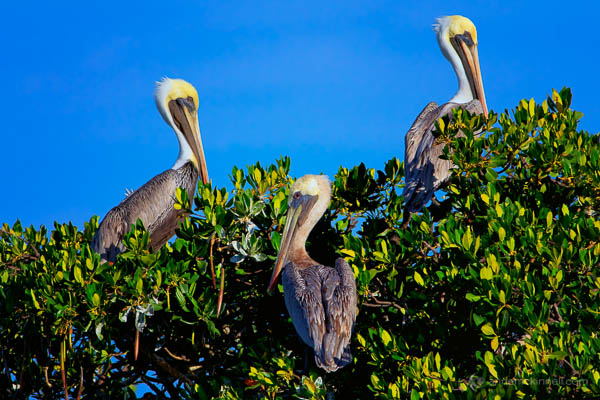
Three Brown Pelicans by Anne McKinnell

It’s tough to approach a wild animal – they are easily spooked. Because of this, many wildlife photos have more wilderness than wildlife, with the animal becoming a tiny speck in its environment. This can be effective in some situations, but for the most part you want the animal to be large enough in the frame to see the detail in its eyes. This is where a good telephoto lens can really help you out. Using a long focal length (over 200mm) will allow you to keep your distance while still filling the frame.

2. Blurry Image

Blur comes in many forms. Your entire image could be blurry due to camera shake; a problem which is magnified by the longer focal lengths needed for wildlife photography.

In landscape photography, using a tripod is a good technique to prevent camera shake, but a tripod is not as practical when photographing wildlife. Wildlife photography requires a more active shooting style – you’ll be moving around constantly – so unless you are using a lens that is too big to hold comfortably, forget the tripod. Also, because the animals are always in motion, you’ll need a fast shutter speed anyway. That leads me to the first method to combat camera shake blur: using a very fast shutter speed.

In landscape photography, you normally use a shutter speed that is at least 1/focal length of your lens. But usually that isn’t going to be fast enough when photographing wildlife because the animals are always in motion (even when they appear to be standing still). To avoid disappointment, you’ll need to use a much faster shutter speed to freeze both your own motion and the motion of the animal.

Here is my rule of thumb when photographing wildlife: if the animal appears to be still, use a shutter speed of 1/500th of a second. If the animal is moving, you’ll have to adjust the shutter speed based on how fast they are moving. I suggest a minimum of 1/1,000th of a second, or faster if the animal is moving faster.

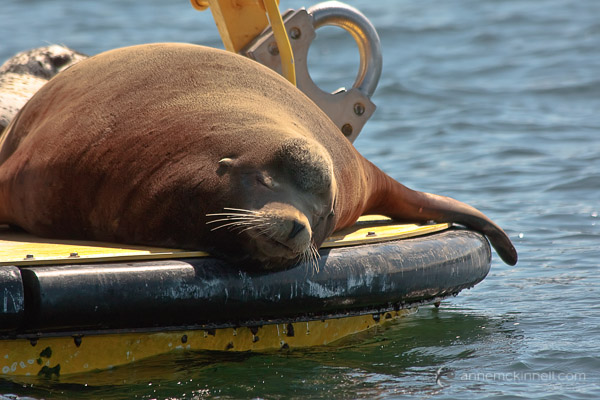
Sleeping Steller Sea Lion by Anne McKinnell

Using a lens with image stabilization will also help prevent camera shake blur. A lens with a wide maximum aperture, say f/2.8 or even f/4, will let more light in, allowing you to use a faster shutter speed. Likewise, a camera with low noise at high ISOs will let you turn up the sensitivity. All of these options will enable you to make faster exposures with better results.

Another type of blur is focus blur. This results from your camera being unable to focus, probably because your subject is moving and the AF motor gets confused. Some cameras and lenses have superior auto focus systems to others, but regardless of what you have, you can get the most out of it by setting it to continuous focus mode, usually called AF-C (Nikon) or AI Servo (Canon). This setting will track the subject’s movement in the frame and focus on it more quickly and accurately.

3. The Missed Moment

We’ve all been there. You see the perfect shot, frame it, and hit the shutter. But by the time the camera focuses and the exposure is made, the animal has moved and all you end up with is the second after the perfect shot.

There are two ways to avoid this heartbreak:

Anticipation

This is a skill that can only come with practice and a keen eye. If you can learn to see when the perfect moment is about to happen, rather than when it is happenning, you can hit the shutter right before the peak moment and cause the camera to snap at just the right time.

Orca by Anne McKinnell

Continuous Shooting

When animals are in motion, you’ll get the best chance at a good result by using continuous shooting mode (also called “drive mode” or “burst mode”). With this, you can take several images per second and choose the most successful.

Higher-end DSLRs and mirrorless cameras will have a much faster maximum shooting speed, but no matter which camera you have, there are a few things that will help get the highest continuous shooting rate.

One is a fast memory card – both SD (standard digital) and CF (compact flash) cards have a certain speed that they operate at, and a faster card will make sure that your camera doesn’t get bogged down trying to save the images.

The other is a fully-charged battery – as the juice drains, the camera can become sluggish, so it’s a good idea to keep an extra battery or two in your camera bag. For ultimate performance, you can buy a battery grip that fits on your camera. This holds two batteries at the same time for maximum speed.

4. Where Is Everyone???

Sometimes wild animals can be hard to find, and they’re not always where you want them to be. Before you can photograph them, you have to learn a few things about how to find them.

Know your animals

What types of animals live around you? Before you go out shooting, find out who they are, what they eat, when they sleep, and where they like to relax in between. If you’re photographing birds, research which ones are to be found in your area at which times of year. It’s also important to know how animals might react if, and when, they feel threatened – will they fight, or flee?

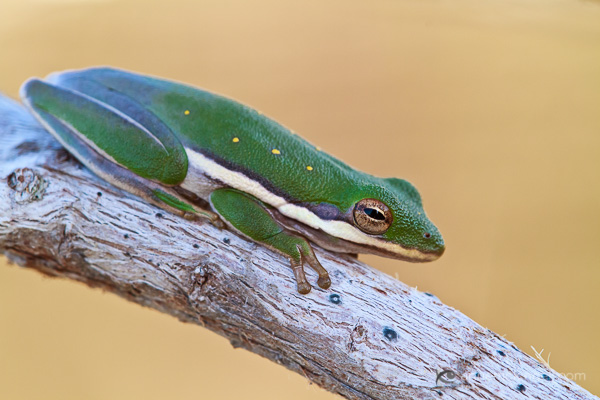
American Green Tree Frog by Anne McKinnell

Know the season

Some animals will be much more active at different times of year – particularly during autumn, as they rummage up enough food for winter, and in the spring when some animals come out of hibernation.

Camp out

I don’t mean overnight (unless you’re into that), but it’s often a very effective practice to find a popular area – probably somewhere with a source of water, food, shade or shelter – where animals like to congregate. Set your camera up on a tripod nearby, and disguise yourself among some trees or brush (some photographers go so far as to buy ,or build, a blind to hide their presence).

Be patient

Animals work on their own schedule, so don’t try to fit a shooting session in between other appointments. Great photos take time, and you must allow nature to unfold at its own pace. Many animals are easily frightened, so being quiet, still, and inconspicuous will help put them at ease.

5. Animal Attack!

We don’t call it “wildlife” for nothing – the biggest mistake you can make is accidentally getting mauled. Animals are not adjusted to polite society, and can be pretty rough customers if you catch them at the wrong time, or in the wrong way. They spend most of their waking lives foraging for food, and a spat over a meal can turn ugly, fast. Never get in the way of lunch, unless you want to take its place.

Don’t approach a wild animal directly, and if they see you, avoid looking them in the eye. This is usually a sign of aggression. If you need to get closer, keep low and move in a broad zig-zag pattern to avoid frightening the animal.

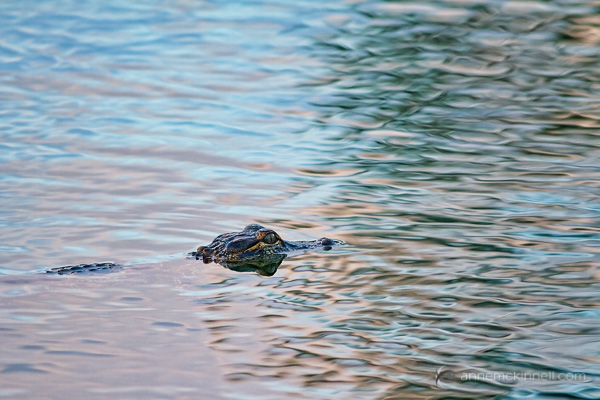
Baby Aligator by Anne McKinnell

Be aware of when mating season (or “running season”) is for the type of animal you’ll be photographing. Male mammals are full of testosterone at this time of year, and can be aggressive, violent, and very dangerous. Avoid photographing at these times. Similarly, find out when animals are likely to be giving birth and raising their young. We all know how risky it can be to get in between a mama bear and her cubs.

Whenever you’re dealing with wildlife, always remember that any creature can be dangerous when provoked, and it’s very important to treat animals and their habitat with the utmost care and respect.

For more tips on wildlife photography try these articles:

  • Manipulating Natural Light in Wildlife Photography
  • How Low Can you Go? An Illustration of Camera Angle for Wildlife Photography
  • Making Sharper Wildlife Photographs – [Part 1 of 2]
  • Making Sharper Wildlife Photographs – [Part 2 of 2]

The post 5 Most Common Mistakes in Wildlife Photography – and How to Avoid Them by Anne McKinnell appeared first on Digital Photography School.


Digital Photography School

 
Comments Off on 5 Most Common Mistakes in Wildlife Photography – and How to Avoid Them

Posted in Photography


The Ultimate Five Secrets to Better-Looking Photographs

05 Mar

All photographers want their snapshots to turn out extremely well. This means pictures that are sharp, aesthetically appealing and sure to impress. Of course, many photographers don’t consistently turn out this type of quality in their photographs. These days, so many people are also pressed for time that they don’t really have the time or patience to study the masters Continue Reading

The post The Ultimate Five Secrets to Better-Looking Photographs appeared first on Photodoto.


Photodoto

 
Comments Off on The Ultimate Five Secrets to Better-Looking Photographs

Posted in Photography


Die ungewöhnliche Welt vor meiner Haustür

05 Mar

Ein Beitrag von: Moritz Aust

Viele Menschen glauben, dass die Kamera das Bild macht. Das stimmt in gewisser Hinsicht auch, doch bei genauerem Überlegen fällt auf, dass der Verstand das Bild erschafft. Unsere Vorstellungskraft und unsere Kreativität lassen uns diese unwirklichen, faszinierenden Orte und Situationen kreieren.

Die Bilder zu dieser Serie sind durch den Wunsch entstanden, sich aus dem Alltag loszureißen und in eine Traumwelt einzutauchen. Die Fotografie erlaubt es mir, diesen Wunsch mit wenigen Mitteln zu erfüllen.

young visions © Moritz Aust

Ich entdeckte meine Leidenschaft für die Erschaffung dieser surrealer Bilder kurze Zeit nachdem ich begonnen hatte, mich genauer mit der Fotografie auseinanderzusetzen. Mich faszinierte es, zu sehen, dass man mit einer Idee, seiner Vorstellungskraft, einer Kamera und Nachbearbeitung solche Orte direkt vor seiner Haustür einfangen konnte.

sleeping farmer © Moritz Aust

Ich erforschte meine Umwelt, die plötzlich viel spannender wirkte und kreierte immer mehr dieser surrealen Bilder. Bald bemerkte ich, dass die Fotos, die ich aufnahm, etwas gemeinsam hatten: Sie spiegelten alle diese verdrehte, unwirkliche Welt wider. Deshalb beschloss ich, aus diesen Bildern eine Serie mit dem Titel „Nightmares & Fairytales“ zu erstellen.

Door In The Woods © Moritz Aust

Das Merkmal der Bilder dieser Serie sollte sein, dass sie irgendwie ungewöhnlich sind. Woher die Inspiration der Fotos kam, kann ich selbst nicht genau sagen, doch ich bin mir sicher, dass sie ihre Quellen hat. Nach meinen Erfahrungen ist es meist eine Mischung aus Gefühlen, Erlebnissen, dem Treffen von spannenden Personen und dem persönlichen Umfeld.

wrong world © Moritz Aust

Zu sehen, wie sich eine Szene, die anfangs noch schlicht und normal, aber trotzdem einzigartig wirkte, in einem neuen Gewand zeigt, fasziniert mich immer noch. Dieses Gefühl ermutigt mich, immer tiefer in meinen eigenen Verstand zu blicken und nach der nächsten Idee zu suchen.


kwerfeldein – Fotografie Magazin | Fotocommunity

 
Comments Off on Die ungewöhnliche Welt vor meiner Haustür

Posted in Equipment


Open-Source Street Store Offers Free Clothes for Homeless

05 Mar

[ By WebUrbanist in Design & Guerilla Ads & Marketing. ]

pop up store hangars

Donated boxes of right-sized clothing can be a boon for those who cannot afford another choice, but this clever approach empowers people in need to choose their own apparel.

pop up sidewalk homeless

pop up shoppers

The Street Store assistants set out flat-pack cardboard hangars, signs and stands along sidewalks and fences, encouraging people to drop off clothing. Volunteers also help passerby in need package what what they find, and those with something to give find a place to put their donations.

pop up helper volunteer

Though the project was started in Cape Town, South Africa, as a collaboration between M&C Saatchi Abel and the Haven Night Shelter Welfare Organisation, it is offered as open-source to applicants from around the world who wish to use the files and create their own  regional variant.

pop up shop volunteer

The open-air approach makes everything more accessible for both donating and recipient parties; it also renders indoor spaces and infrastructure redundant, enabling pop-ups to happen in various public spaces.

pop up cardboard elements

pop up street store

As for the first day’s effort in the project’s original city: “Over 1,000 homeless people visited our store that day. Each put together an outfit that they wanted. An outfit, that for many, was the first they had ever been able to choose for themselves.”

Share on Facebook


[ By WebUrbanist in Design & Guerilla Ads & Marketing. ]

[ WebUrbanist | Archives | Galleries | Privacy | TOS ]


WebUrbanist

 
Comments Off on Open-Source Street Store Offers Free Clothes for Homeless

Posted in Creativity


Fujifilm UK previews customized X-series cameras at TPS

05 Mar

x20b2.jpg

Fujifilm UK is preparing a new service allowing certain X-series cameras to be customized with a range of different colors and body textures. The company has shown customized cameras at The Photography Show this week in Birmingham, UK, and pages for an ‘X Signature’ service are live on its website, but some pages lead to errors and the company has not enabled purchases yet. Click through for more information.

News: Digital Photography Review (dpreview.com)

 
Comments Off on Fujifilm UK previews customized X-series cameras at TPS

Posted in Uncategorized


10 Ways to Improve Your Travel Photography Portraits

05 Mar

Last year I travelled all across South East Asia – a trip which not only expanded my personal horizon, but also helped to immensely improve my photography. At the beginning of my trip, my biggest struggle was taking good portraits. The problem wasn’t the lack of opportunities; I encountered incredible and the utmost photogenic scenes around almost every corner. Instead, it was that I just felt too shy or not confident enough to get close to my subject.

I had lots of excuses which might sound familiar to you: “I don’t want to disturb the moment”, “I don’t want to intrude on people’s privacy” or “It’s just a game of luck and chance anyhow”. It was frustrating and I knew that, despite all of the excuses, this was something I really had to work on. By lots or trial and error, and the help of some amazing photographers I met on the way, I gained some important insights on how to bring my people photography to a whole new level. I want to share these and hopefully help you overcome that awkward feeling and false reservation you have when photographing people.

Travel Photography Portraits 01

10 Ways to Improve Your Travel Photography Portraits

#1 Be ready

This is very basic and obvious, but so important. People photography is about brief moments, a glimpse which is normally not replicable. You are not doing landscape photography which leaves you with all the time you need. So have your lens cap off, have your camera switched on, be prepared to adjust settings and BE READY.

Travel Photography Portraits 06

Being ready to capture that one, special moment

#2 Get close

If you are unhappy with your portraits or if they looks boring, it is probably because you are too far away. I know it feels awkward to get really close to someone you don’t know, especially in a foreign country. It seems so much easier to break out your big lens, zoom in and just click away, hoping that your subject won’t notice you. Unfortunately this won’t work.

If you want to have crisp, sharp and extraordinary images which tell a story and leave your audience in astonishment, you have to overcome your shyness and get close. This will help to add more details on your subject’s face, increase sharpness and focus on only one or two elements. The viewer will automatically understand more about your image. Moreover, getting close will put you in control of things: the lighting, the background, the composition and the depth of field. These factors are so vital for a good portrait and so much easier to adjust when you are close to your subject.

Travel Photography Portraits escapology 11

Get close to your subject to control your image

#3 Practice approaching people

Travel Photography Portraits escapology 01

Learning to approach people with the right attitude – the secret of good portraits

You might think “That sounds great, but how do I get close to people?” This leads us to the biggest challenge in people photography, which has nothing to do with photography itself: dealing with people. Are you comfortable walking up to strangers, making small talk, then asking, “Can I take your picture?”

If not, the good news is, it’s something you can practice just like everything else in photography. It is all about your attitude and how you approach people. Get in contact, have a positive attitude, talk, and most importantly smile. Don’t be afraid of intruding on people’s privacy. Particularly in South East Asia the concept of privacy is totally different from ours in the West. Approaching strangers and asking very personal questions is considered perfectly normal. Open yourself and people naturally respond in the same manner. In short, don’t be shy, adapt to the local culture, get to know people, make friends and you will take better pictures.

#4 Learn the basics of the local language

How do you approach people if you don’t speak their language? I will let you in on a secret. It’s actually even easier to approach people if you DON’T speak the same language. It’s a great place to start since it is then not so much about WHAT you speak, but HOW you speak and the energy you give off. Learning a few words and phrases in the local language will go a long way to helping you approach people, and it doesn’t take much effort to learn. From my personal experience the six most important phrases you should learn beforehand are:

  • Hello, how are you?
  • My name is …?
  • I am from …?
  • What is your name?
  • Thank you!
  • Beautiful!

The last one will put a big smile on people’s faces after you have taken that nice portrait and show it to them. Get a small phrasebook. You can look up phrases when you need them or practice on longer bus rides. Ask your receptionist, taxi driver or local travel agent how to pronounce words. Don’t be afraid to make mistakes. It’s fun and will not only help to approach people, but also make your whole travel experience so much more worthwhile.

Travel Photography Portraits escapology 12

Knowing a few phrases in the local language can go a long way

#5 Smile – smile a lot!

Even if you don’t know any words or phrases, make sure to smile. A smile can go such a long way. If you are grumpy and angry because you are not getting your shots right, it will put people off and no one will want to go near you, and definitely won’t want to get their picture taken by you. When you come home from a photo walk, your mouth and cheeks should hurt from all the smiling.

Travel Photography Portraits 05

A smile can go a long way

#6 Take your time

Once you have made contact and established a good vibe, it is time to take your picture. Take advantage of all the “work” you have put in and take your time. It would be a shame to just hectically click away once or twice now. Be calm, think about the light, about what you want to emphasize (the eyes, the hands or the person itself) and about the background.

Since you are close to your subject now, you can control all of these things. Take a deep breath and try a couple of shots, maybe switch angles and try different things. By doing this, you will notice that your subject will also become more relaxed and get used to the camera. There is no need to rush. A rushed photo is usually never a good one.

Travel Photography Portraits 04

Waiting for the right moment is usually worth it

#7 Get moving

Reality can be quiet boring. There might be things in your scene that are boring or disturbing. We already talked about taking your time. Make use of it and arrange the scene to your needs, change angles, get moving. Don’t be lazy. You can eliminate things or include things just by moving around a little bit. Don’t just rely on the zoom.

Travel Photography Portraits 07

Move to create the image you had in mind

#8 Get a 50mm lens

What helped me to counter my laziness and actually get moving was the purchase of a 50mm prime lens. If you don’t have one in your bag yet, buy one. It is the one piece of equipment that boosted my creativity and the quality of my images almost instantly. You will not only learn to move more but also open your eye for new perspectives.

Travel Photography Portraits escapology 03

A 50mm lens to boost your creativity – give it a try

#9 Start with kids and people that are doing something

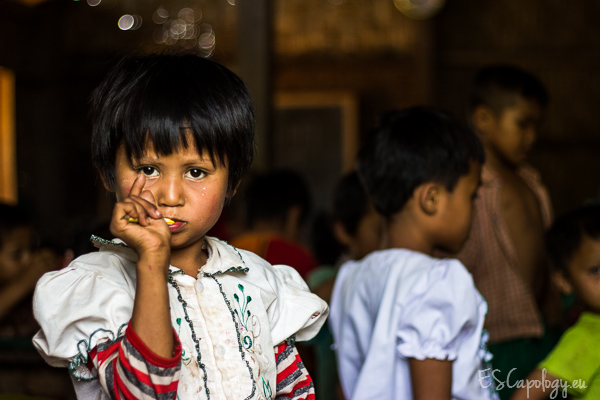
If you feel shy but are still willing to practice approaching people and getting close, start off with photographing kids and people that are doing something. Kids are easy to photograph. They usually love getting their picture taken, posing and never get bored doing so. I found it very rewarding in Asia but would suggest taking a more cautious approach in Western societies. Please always ask the parents first.

Shoot in busy areas or settings. People that are doing nothing will surely be looking at you. People that are doing something, can’t be bothered to look at you. When they are busy with their task, they will not care about you taking pictures. Look for traditional workshops or handicraft businesses. They usually make for great picture taking opportunities.

Travel Photography Portraits escapology 15

Occupied with traditional crafts – great picture opportunities

#10 Get out of the touristy areas

The touristic hubs are usually far from the country’s reality. At the same, time getting off the beaten track is usually not so difficult. Sometimes it just takes 15 minutes to find yourself in a small, local village. This is where you want to be as a photographer. You will meet real people who aren’t out to sell things. You will have more chances to interact, to practice your newly acquired language skills and take more authentic photographs. At the same time it will make for a much better travel experience than sticking to the “Lonely Planet Path”.

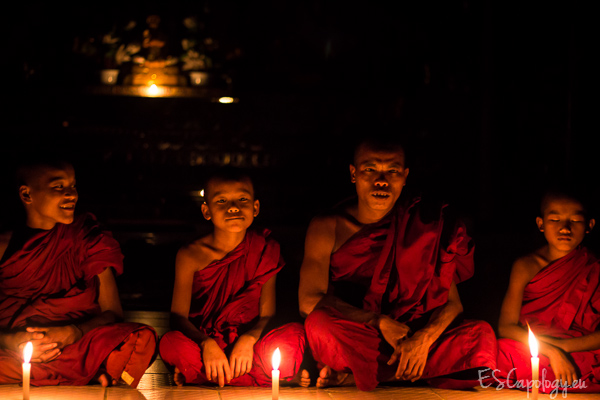
Travel Photography Portraits escapology 09

Hosted by monks in a monastery in Myanmar. No tour, no guide

All of this takes a little getting used to and practicing along the way. But it’s worth it. Please don’t just jam your camera in people’s faces when traveling abroad. It’s not nice and the pictures won’t be either. Take your time to interact with people, open up, get close and don’t forget to smile. This will make for great experiences, unforgettable memories and even better pictures.

Please share some of your favourite people photos with us in the comments and if you have another tips for photographing people, we’d love to hear them.

For more articles on travel and people photography check out these:

  • 6 Tips for Photographing People When Travelling
  • 5 Reasons Why Having People in Your Photos is a Good Thing
  • The Rewards of Photographing People When You Travel

The post 10 Ways to Improve Your Travel Photography Portraits by Philipp Dukatz appeared first on Digital Photography School.


Digital Photography School

 
Comments Off on 10 Ways to Improve Your Travel Photography Portraits

Posted in Photography


5 Preservation Puzzles: Famous Architecture Facing Threats

05 Mar

[ By WebUrbanist in Architecture & Cities & Urbanism. ]

historic preservation architecture activism

This year alone we have learned that a Frank Lloyd Wright house must be moved 1,000 miles to protect it from floodwater, a Le Corbusier chapel has been vandalized and a seminal structure by Micheal Graves may be razed. In a remarkable turnaround, the MoMA has also recently decided to save the entire facade of the American Folk Art Museum, but by dismantling and storing it indefinitely. There is nothing like the threat of utter annihilation to make one wonder: how do we choose what building we preserve, restore and ultimately save? Here are five hot-button buildings generating serious buzz, raising questions both within and beyond the architectural design community.

Frank Lloyd Wright House to be Moved & Reconstructed

frank lloyd wright preservation

First to Frank Lloyd Wright, whose work invariably makes headlines whenever it is at risk of destruction. Thanks to the intervention of the Crystal Bridges Museum (images by Tarantino Studio) in Arkansas, the Bachman Wilson House will be transported from its original location in New Jersey to a site on their campus.

frank lloyd exterior context

Its owners, Lawrence and Sharon Tarantino, put it on the market hoping for just such a buyer and after spending years restoring the home themselves. This remarkable move will save the structure itself by carefully deconstructing it, transporting its parts then rebuilding piece by piece in a new place.

frank lloyd wright interior

However, the process  is inevitably partial  and one has to wonder: how will relocating it change the nature of a home designed around a specific site many states away? Is regional architecture truly as portable as this solution implies, and what does it lose forever when taken out of its context?

Le Corbusier Chapel Broken Into, Robbed & Vandalized

romchomp building facade exterior

An unusual work by one of the world’s most famous architects, the Chapel of Ronchamp by Le Corbusier was reported vandalized earlier. Amid other damage and theft, the destruction of stained glass window drawn (and reportedly signed) by Corbu himself was deemed a “priceless” loss, the colored glazing irreparable.

ronchomp broken vandalized window

The building is a destination for tens of thousands of annual tourists. Its sculptural form reflects the architect’s philosophy that while Modernism may be appropriate for most architecture, spiritual structures are an exception.

ronchomp corbu interior space

The shocking break-in leaves open questions: how does one replace an irreplaceable window – with a copy of the original, something commemorating its loss or a new work entirely? And how does one protect against future defacement, particularly in a structure so often open to the public?

Next Page – Click Below to Read More:
5 Preservation Puzzles Famous Architecture Facing Threats

Share on Facebook


[ By WebUrbanist in Architecture & Cities & Urbanism. ]

[ WebUrbanist | Archives | Galleries | Privacy | TOS ]

WebUrbanist

 
Comments Off on 5 Preservation Puzzles: Famous Architecture Facing Threats

Posted in Creativity