RSS
 

Archive for March, 2014

Lowepro expands ‘Passport Series’ line of camera bags

07 Mar

PassportBackpack_Insert_RGB.jpg

Lowepro has announced a new ‘Passport Series’ of camera bags. In addition to the existing Passport Sling bag, the line now includes a backpack and messenger-style camera bag. Each bag has a removable and customizable camera compartment, internal zipped pockets and storage for a laptop or tablet. Learn more

News: Digital Photography Review (dpreview.com)

 
Comments Off on Lowepro expands ‘Passport Series’ line of camera bags

Posted in Uncategorized


Urban Islet: Nordic Nature Retreat Floats in London Canal

07 Mar

[ By WebUrbanist in Architecture & Public & Institutional. ]

wildlife wood finnish design

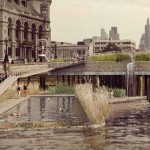
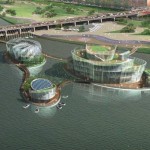
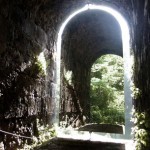
Referencing rocky Nordic island sanctuaries, this platform is designed to provide a place to relax and observe local wildlife in the heart of a bustling city. The prefabricated structure was lifted into the canal by crane and pushed into place by a tiny tugboat, all in a single day.

floating urban wildlife platform

Viewpoint was created for the London Wildlife Trust by Finnish architects of AOR. Of their inspiration: “For Finns, [small] islands are places of sanctuary, to relax the mind and get away from hectic city life. Viewpoint offers Londoners a chance to experience this escape on a secluded islet in the heart of the city.”  It is to be a permanent fixture of Regent’s Canal, located in Camley Street Natural Park.

floating islet concept context

wildlife platform floating london

As the architects alluded to, this minimalist approach and triangular architecture are modeled on the vernacular of traditional temporary dwellings found further north. Such residential retreats are situated on small islands and used for hunting and fishing excursions. Typically, these humble abodes are made using natural at-hand materials including tree bark, branches, leaves and mosses.

floating islet facade elevation

floating islet kings cross

Unveiled by the The Finnish Institute in London and The Architecture Foundation, the finished design is definitively Finnish, created with acoustics, human scale and tactile experiences in mind, and factoring in how materials will weather over time. The result features modest volumes and a warm wooden frame rising up from concrete and clad in Corten steel. In turn, this made-to-age material palette will increasingly blend the structure in with its surroundings.

Share on Facebook


[ By WebUrbanist in Architecture & Public & Institutional. ]

[ WebUrbanist | Archives | Galleries | Privacy | TOS ]


WebUrbanist

 
Comments Off on Urban Islet: Nordic Nature Retreat Floats in London Canal

Posted in Creativity


6. März 2013

06 Mar

Ein Beitrag von: Alexandra Höhn

Unbenannt © Alexandra Hoehn


kwerfeldein – Fotografie Magazin | Fotocommunity

 
Comments Off on 6. März 2013

Posted in Equipment


Find Out What It Takes To BeA Profesh Photographer

06 Mar

This is Margo. ->

She takes all the photos for the Photojojo Shop, like these. ->

She gets money (& snacks) for doing that, so that makes her a professional photographer!

We snuck a video camera into the photo studio at Photojojo HQ so you can watch her work … LIVE.

See just what a pro photog does all day.

How does she set up her lights? Where does she position the camera? What kind of snacks are those?

Watch Margo LIVE Today from 12-3pm PST

p.s. She’ll even stop working for a Q&A at 2:30 PST. Leave your questions for her on Facebook, Twitter or Instagram.


© laurel for Photojojo, 2014. |
Permalink |
No comment |
Add to
A Profesh Photographer”>del.icio.us

Post tags:


Photojojo

 
Comments Off on Find Out What It Takes To BeA Profesh Photographer

Posted in Equipment


CP+ 2014 interviews: What we learned

06 Mar

cpplusmain.jpg

Regular site visitors will have seen a series of interviews on dpreview over the past couple of weeks, during and after the CP+ show in Yokohama Japan. It’s always interesting to speak to the people in charge of the companies that make the products we love and this year, what was most telling was the consistency of the themes that came out of our conversations. Click through for a distillation of the major themes that emerged from our CP+ interviews.

News: Digital Photography Review (dpreview.com)

 
Comments Off on CP+ 2014 interviews: What we learned

Posted in Uncategorized


Der Traum von Fotografie

06 Mar

Ein Beitrag von: Friederike Schütze

Ich war immer fasziniert von der Fotografie. Mein Leben, die Menschen und Orte, an denen ich war, in Bildern festzuhalten, das war ein innerer Drang. Aber jeder Gedanke in meiner Jugend, Schritte in Richtung guter Fotografie zu machen, wurden sofort von folgenden Gedanken unterdrückt.

Ich war lange Zeit der Meinung, dass man eine Ausbildung zum Fotografen gemacht haben müsse, um gute Bilder zu machen. Vielleicht nicht verwunderlich, wenn man bedenkt, was bei Fotoshootings, die man im Fernsehen sehen kann, alles an Equipment und Personal aufgefahren wird.

Man kann ja schließlich auch niemanden operieren, nur weil man viel Emergency Room gesehen hat. Aus heutiger Sicht muss man darüber natürlich den Kopf schütteln und schmunzeln, aber damals war es für mich einfach so.

© Friederike Schütze

Ich hatte mich für eine akademische Laufbahn entschieden, habe mein Abitur gemacht, Chemie studiert und schreibe gerade meine Doktorarbeit. Tatsächlich Fotografie zu „lernen“ war für mich als Teenager nicht erreichbar und so wurde auch der Gedanke daran mit meinem Studium begraben.

Vor drei Jahren war ich dann auf der Hochzeit von Freunden und am Abend wurden die Bilder gezeigt, die die Hochzeitsfotografin tagsüber gemacht hatte. Was soll ich sagen: Mich hat es umgehauen. Man hätte jedes einzelne Bild problemlos in einer Zeitschrift abdrucken können, so perfekt und wunderschön waren sie.

Aber ich hatte die Fotografin gesehen. Sie hatte kein großes Equipment und kein Team, das jeden Gast perfekt ausgeleuchtet hätte. Sie hatte nur ihre Kamera. Und irgendwie hat diese Erkenntnis in meinem Kopf Wurzeln geschlagen und dieser alte Traum der Fotografie wurde wieder wach, fand immer neue Hoffnung, dass vielleicht auch ich gute Bilder machen könnte.


© Friederike Schütze

© Friederike Schütze

Warum es nicht einfach mal probieren, einfach nur für mich? Und das tat ich. Ich kaufte eine gebrauchte EOS 450D und machte mich mit ihr und den grundlegenden Prinzpien von Blende, Belichtungszeit und so weiter vertraut.

Dann, vor neun Monaten, nahm ich meine Freundin Katrin als Modell, ging mit ihr raus ins Reichenauer Schilf und versuchte mich an meinen ersten Portraitaufnahmen. Spielte mit Winkeln, Perspektiven, Sonnenlicht, ihrer Körperhaltung und ihrem Gesichtsausdruck.

Und dann traf es mich – der Moment, in dem einfach alles stimmt, man sich sein Bild erarbeitet hat, die perfekte Mischung aus Pose, Licht und Hintergrund. Ich muss immer noch lächeln, wenn ich daran denke. Es war ein großartiges Gefühl und ist es auch heute noch. In diesem Moment bin ich immer unendlich glücklich.

© Friederike Schütze

Es war für mich klar, dass ich unbedingt damit weiter machen musste. Ich fragte also Bekannte und Freunde, ob ich sie fotografieren dürfte und mit jedem Shooting wurde ich besser, probierte mehr aus und entwickelte mich.

Was mich an der Portraitfotografie besonders begeistert, ist, dass man nicht einfach nur etwas fotografiert, was ohnehin schon da ist. Man wird hinter der Kamera zum Regisseur und inszeniert sein Bild.

Ich lasse mich im Prinzip von meinen Modellen inspirieren. Überlege mir, welche Umgebung und welche Kleider und nicht zuletzt, welchen Bearbeitungsstil ich passend finde und wie ich diesen Menschen für mich interpretieren möchte.

© Friederike Schütze

Menschen einfach nur als schön oder hübsch zu zeigen, reicht mir nicht. Ich möchte Bilder erschaffen, die den Betrachter verharren lassen, die ihn innerlich irgendwo ansprechen. In meinen Bildern lasse ich die Schönheit meiner Modelle immer auch sanft und verletzlich wirken und schaffe so Nähe.

Über meinen eingangs erwähnten Gedanken, fotografieren kann man nur als Fotograf, lächle ich nun. Nicht, weil es nicht wahr wäre, dass man sehr vieles erlernen muss, um ein guter Fotograf zu sein, sondern weil ich damals das Wesentlichste nicht gesehen habe: Man braucht eine Kamera und ein gutes Auge, um gute Bilder machen zu können. Mehr nicht.


kwerfeldein – Fotografie Magazin | Fotocommunity

 
Comments Off on Der Traum von Fotografie

Posted in Equipment


Getty to allow embedding for ‘non-commercial use’ of images

06 Mar

image1.jpg

Getty Images has taken a major step towards addressing unauthorized image use by allowing low resolution embedding of images for no charge, with no watermark, on non-commercial ‘blogs and social media’. Admitting that combatting widespread unauthorized image use by the world’s Internet users is impractical, Getty is pitching the new embedding service, which is available for more than 35 million photographs as a legal alternative to image theft. Click through to learn more.

News: Digital Photography Review (dpreview.com)

 
Comments Off on Getty to allow embedding for ‘non-commercial use’ of images

Posted in Uncategorized


Invisible Borders: Mirrored Picket Fence Blurs the Lines

06 Mar

[ By Steph in Art & Installation & Sound. ]

Mirrored Fence Illusion 1

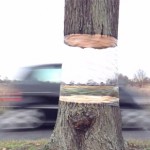
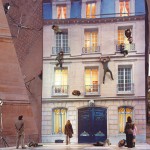
Mirrors typically represent a way of facing reality, but depending on where they’re placed, they can bend it to the point of surreality instead. Take, for example, this invisible fence, a striking illusion installed at the Storm King Arts Center by artist Alyson Shotz. Driving past it, you likely wouldn’t even notice it was there, though your eye might be caught by unusual glimmers – tricks of the light.
Mirrored Fence Illusion 2

Mirrored Fence Illusion 3

‘Mirror Fence’ is exactly as the title suggests; a reflective barrier in the shape of a picket fence that’s almost perfectly camouflaged in its environment. The illusion is so effective that you could probably walk right up to it, only realizing that the barrier exists when the reflection of your own legs comes into view.

Mirrored Picket Fence Illusion 4

Mirrored Picket Fence Illusion 5

Though her portfolio reflects a diverse range of shapes and media, Shotz unifies her work with a common aim to “give form to the invisible forces of nature.” Many focus on light itself, such as a sculptural examination of the dual nature of light (as it bears characteristics of both a particle and a wave) entitled Geometry of Light, and a digital animation called ‘Fluid State’ that captures an ocean of reflective spheres over a dawn-to-dusk cycle.

Mirror House Illusion

The installation calls to mind another recent project, ‘Lucid Stead’ by Phillip K Smith III, wherein an abandoned home in the desert was fitted with mirrors that make up doors, windows and long horizontal siding to create the illusion of ghostly floating wood.

Share on Facebook


[ By Steph in Art & Installation & Sound. ]

[ WebUrbanist | Archives | Galleries | Privacy | TOS ]


WebUrbanist

 
Comments Off on Invisible Borders: Mirrored Picket Fence Blurs the Lines

Posted in Creativity


Mobile World Congress 2014: the highlights

06 Mar

MWC2014_banner.jpg

2014 is still young but the largest show for mobile devices and technology – the Mobile World Congress in Barcelona – has just shut its doors. MWC is an annual showcase of all that’s new and trending in mobile technology, and we’ve been covering the big announcements at connect.dpreview.com. Now that the show is over, we’ve prepared a short article covering the highlights. Click through to read more. 

News: Digital Photography Review (dpreview.com)

 
Comments Off on Mobile World Congress 2014: the highlights

Posted in Uncategorized


Make a Photo Website with Lightroom and Koken

06 Mar

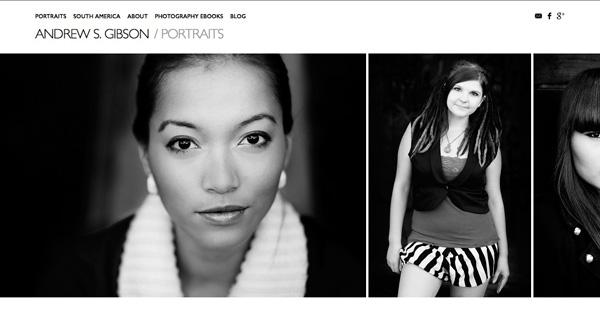
Photography website created with Koken

We’ve already looked at how you can use Lightroom Collections to organize your images and how to upload your photos directly from Lightroom to Flickr and 500px using Lightroom’s Publish Services.

But did you know that there’s a way to upload photos directly to your own photo website from Lightroom? Before I explain precisely how to do that let’s think about the advantages of such a method:

  • You can decide which images to add to your website while in Lightroom. Decision made, it takes only a few seconds to add them to the appropriate Published Collection and publish them to your website.
  • Removing images is just as simple, just remove them from the Published Collection.
  • You can add watermarks to your images in Lightroom. If you change your watermark design, it’s easy to republish all the photos with the new design.
  • You can upload photos to a private album on your website for someone else to view, without having to use the standard Lightroom Web module formatting.

This is where Koken comes in

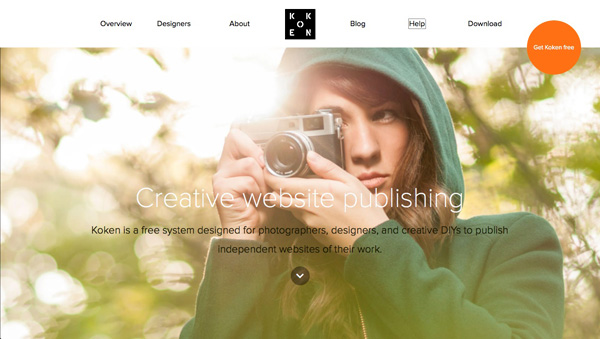
Interested? The software you need to do this is called Koken (rhymes with spoken). The best way to think of Koken is as WordPress for photographers. Like WordPress, it is a free CMS (content management system) and you need your own domain name and hosting plan to use it. But whereas WordPress can be adapted to all kinds of uses, Koken is designed to do one thing only: build websites for creative individuals with portfolios, such as photographers, artists and graphic designers.

Make a Photo Website with Lightroom and Koken

You can learn more by going to the Koken website, where you will also be able to download the free software and try it out if you have a domain name and hosting plan.

Koken website

But before you do, there are a few things you should know:

  • The main advantage of WordPress over Koken, for the purpose of creating a photography portfolio website, is that there are lots more themes available for WordPress. Koken, at the moment, has eight built-in themes (which you can see here). However, the themes in Koken are easier to modify, although you will need to be familiar with HTML and CSS to do so. You can also create your own Koken themes if you have the know how, and they are starting to appear on some of the websites that sell WordPress themes.
  • The main advantage of Koken over WordPress is that Koken integrates with Lightroom’s Publish Services, enabling you to upload photos directly from Lightroom. This is a huge benefit to Lightroom users.
  • You do not have to own Lightroom to use Koken. You can install the software and upload photos from your computer’s hard drive, just as you can in WordPress.

Koken close-up

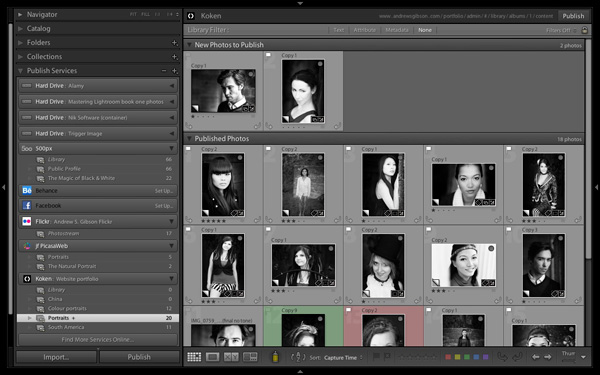
Here’s a closer look at the Koken interface. But first, let me show you how it works in Lightroom. As you can see in the screenshot below, you can create Published Collections containing the photos you want to use on your website. Lightroom lets you know if you have added new photos, or made changes to existing ones. Click the Publish button to update your website.

Lightroom interface

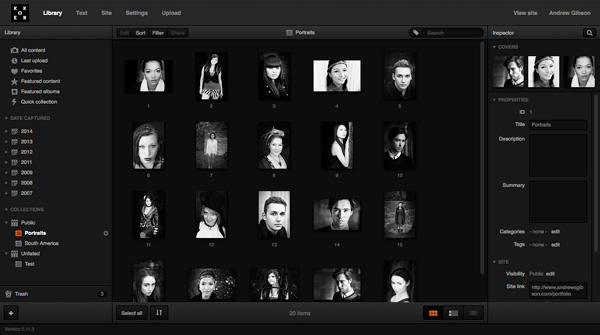
Then in the Koken interface (accessed through a web browser) you can view the photos, change title, description and keywords, and rearrange the order in which they are displayed.

Koken interface

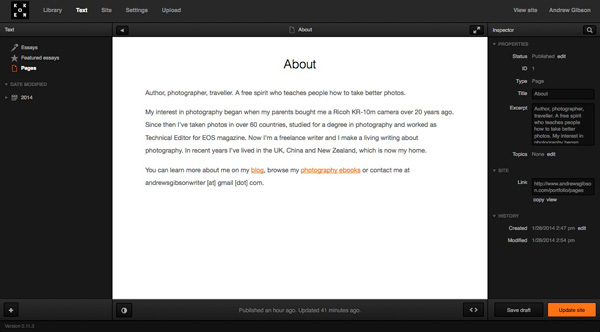
You can also create static pages (such as an About page) and blog entries (called Essays) in Koken:

Koken interface

The verdict

I’ve only used Koken for a short while, but I’m impressed by how easy it is to use, especially with Lightroom’s Publish Services. The exciting thing about Koken is that the software is in its early days – I’m sure the system will grow as the developers improve it and more themes become available.

To get an idea of the sort of thing you can do with Koken, you can check out my portfolio pages (created with a modified version of the Boulevard theme) and the Koken demo site to see the built-in themes in action.

For more Lightroom articles try these:

  • Why Lazy Photographers Should Use Lightroom Smart Collections
  • 3 Lightroom History Tips
  • Using Smart Previews in Lightroom 5
  • Make Lightroom Faster by Using DNG

Mastering Lightroom Book One: The Library Module

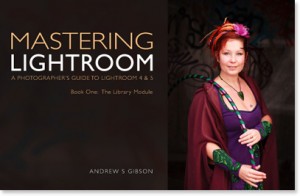
Mastering Lightroom ebookMy latest ebook Mastering Lightroom Book One: The Library Module is a complete guide to using Lightroom’s Library module to import, organize and search your photo files. You’ll learn how to tame your growing photo collection using Collections and Collection Sets, and how to save time so you can spend more time in the Develop module processing your photos.


The post Make a Photo Website with Lightroom and Koken by Andrew S. Gibson appeared first on Digital Photography School.


Digital Photography School

 
Comments Off on Make a Photo Website with Lightroom and Koken

Posted in Photography