Ein Beitrag von: Daniel Stark

It’s amazing how quickly things change. There was a time in the not-too-distant past when nobody really took camera phones all that seriously. I can even remember a heated debate about eight years ago in which a friend of mine– a seventh-generation photographer whose great grandfather photographed the emergence of New York City at the turn of the 19th century– said to me, “Listen– My camera doesn’t make phone calls, and my phone doesn’t need to take pictures.”
Now armed with the latest iPhone, an arsenal of photo apps, and an Instagram account, his tune has obviously changed. I think a lot of people have seen their attitudes towards “iPhoneography” change in recent years, so it’s only fitting that the accessory market for these amazing devices has evolved and grown right alongside those changing attitudes. As a result, we now have the ability to take what is already a pretty good camera and raise the creative bar.
Here’s a sampling of the best smartphone camera accessories currently available.

If you think that the pop-up flash on a DSLR is the most unflattering light source known to man, you’re close, but the flash on your smartphone is even worse. The Pocket Spotlight is designed to fix that, providing continuous lighting that you can either hand-hold or plug into your phone’s headphone jack. A full charge via USB will last about an hour. The light works well for both stills and video.
You use your phone for everything else these days, so why not use it to trigger your DSLR? One end of the cord plugs into your camera, and the other plugs into your phone. Download the free app and you’re good to go. Modes include: standard trigger, motion trigger, sound trigger, time-lapse, distance-lapse, face-detection trigger, customizable HDR, star trails, and more. Features vary somewhat between Android and iOS versions, so make sure to double-check if you’re looking for something specific. Individual components are available on Amazon, but check the website to make sure you get what’s right for your camera.

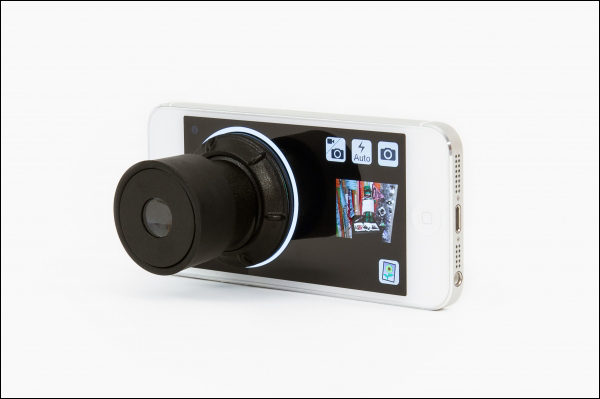
My biggest complaint about smartphone cameras is the inevitable glare on sunny days that keeps me from getting an accurate look at what’s in the frame. This handy viewfinder cuts the glare, as well as the trial and error.
The Olloclip 3-in-1 is now a 4-in-1. In addition to the fisheye, wide-angle, and 10x macro lenses, the newer version now includes a 15x macro as well. The 10x and 15x lenses have focal distances of approximately 18mm and 12mm respectively. The fisheye captures approximately a 180-degree field of view, and the wide-angle lens approximately doubles the field of view.

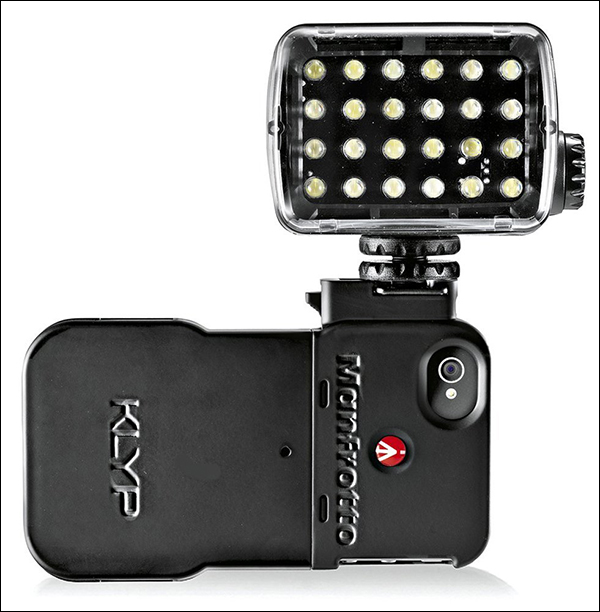
If there was a Swiss Army knife full of smart phone gadgets, this would definitely be part of it. The Klyp by Manfrotto (for iPhone 4/4s) is a continuous, soft, daylight-balanced LED panel which combines with a case that has a 1/4-inch thread adapter that will mount on most tripods. Rated at 20 lumens when placed three feet from a subject, the package also includes a free iOS app that lets you take photos by clapping your hands.
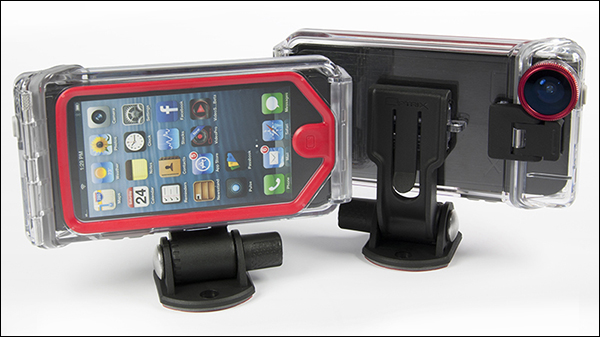
This tough iPhone 5/5s case from Optrix can handle a 30-foot drop or watery depths of up to 15 feet. With buttons and touch screens still fully functional under water, the three-element, all glass, super wide-angle lens adds a new level of creativity and availability for your iPhone camera.
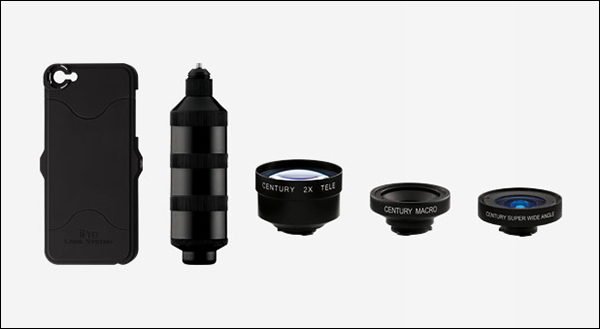
The latest iPhone lens kit from iPro has three lenses that twist on and off a hard, protective phone case. The macro, super wide-angle, and 2x telephoto all have a multi-layer coating that reduces lens flare.
Camera and lens in one? Pretty much. Your iPhone or Android device acts as a live viewfinder. Either attached to the phone or “off camera,” a wi-fi signal is established between the QX and the phone. Sony’s proprietary app gives the user control over white balance, exposure settings, zoom, and more. In addition to a manual zoom control, the QX100 has a 1-inch, 20.2 megapixel sensor, Zeiss lens, and a 1.8 aperture for low light and shallow depth of field. The compact QX10 offers a 10x optical zoom.

Do you have a favorite smart phone accessory that you can’t live without? Share it with us in the comments.
The post 8 of the Best Smartphone Camera Accessories by Jeff Guyer appeared first on Digital Photography School.
[ By Steve in Technology & Vehicles & Mods. ]

Where do obsolete trains go when they die? Many end up in railroad graveyards where these former station-stopping locomotives stay stopped and stationary.
 (images via: Nigel Tout and Crewcastrian)
Vic Berry’s Scrapyard was a Leicester, England landmark from 1973 to 1991 when it was destroyed in a massive fire set by unknown, presumably train-hating, arsonists. Specializing in asbestos removal, Vic Berry’s set a standard for large-scale industrial recycling while its more well-known claim to fame was an immense pyramid of 30 disused Class 25 and 27 locomotives that reached its greatest height and breadth in 1987.
 (image via: Nigel Tout)
Vic Berry’s Scrapyard’s reputation as a specialist in asbestos remediation was a double-edged sword. Firms eager to scrap old engines and passenger cars looked to the Leicester yard first, leading to a boost in business and a growing stockpile of non-rolling, asbestos-containing stock stored onsite.
 (images via: Leicester Mercury and Nigel Tout)
The worst thing that could happen was a large fire, and that’s exactly what DID happen in March of 1991. The blaze destroyed most of the yard’s stored stock and poisonous clouds of asbestos-infused smoke wafted across Leicester. The yard was subsequently closed and after a very long (approximately 5 years) and difficult cleanup, the site was redeveloped into the mixed use, residential and retail district of Bede Island.
 (images via: Daily Mail/Associated Newspapers Ltd. and Construction Photography, Rail Photo)
The ancient city of Thessaloniki, Greece is still thriving today, as is its train station. The trains, not so much… at least the older models dating back to the Steam Age when the city belonged to the Ottoman Empire. Why did these engines and coaches get the works? That’s nobody’s business but the Turks.
 (images via: Panoramio/Wolodymyr)
The Sudanese city of Shendi has long been a regional trading and transportation hub so it’s no great surprise to see it’s got a respectable train graveyard in its, er, backyard. There aren’t all that many trains sitting in situ in Shendi’s shifting sands but to their credit, the variety of abandoned locomotives includes both early and modern types. Kudos to Panoramio user Wolodymyr for documenting a site (and a sight) very few might otherwise be aware of.

The age of the railroad may be over, but the marks of these powerful transport systems are evident everywhere you go – as well as abandoned train and subway …
Click Here to Read More »»
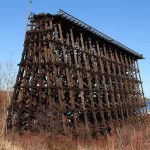
Durable by design and situated by necessity in difficult to access locations, train trestles are often all that remain when railroads are closed and abandoned.
Click Here to Read More »»

Beneath NYC’s City Hall sits an abandoned wonder: the opulent City Hall Station, which has sat in disuse since 1945. Now passengers can finally ride through.
Click Here to Read More »»


[ By Steve in Technology & Vehicles & Mods. ]
[ WebUrbanist | Archives | Galleries | Privacy | TOS ]

Red Penobscot 16 canoe on the Cache la Poudre River in Fort Collins, February 2014
This red Penobscot 16 from Old Town Canoes is a new addition to my paddling fleet. I got it from in Cheyenne. Right now, it is my only tandem boat, although, the Badfish SUP can accommodate two people.
This is the first boat bought as a photography prop. Now, I need to produce 50-100 saleable pictures to recover the cost. Red canoe on a calm lake with snowy mountains in a background comes to my mind. Maybe, Grand Teton or Clacier National Park? Well, after some abstracts shot in a garage, the first field photo sessions took place in February 2014 on the Poudre River in Fort Collins. There is up to 0.5 mile of calm or slow water behind a diversion dam accessible from the Kingfisher Point Natural Area near Nix Farm. This river section can be paddled even at a minimal river flow including winter time if it is not frozen.
You are welcome to check new paddling pictures to my stock photography portfolio. There are available for immediate download and licensing as royalty free images.
I will try to photograph other boats from my paddling fleet: kayaks, canoes, SUPs (stand up paddleboard) and a packraft. I am really waiting for some green color …
Related posts:
Waterproof Duffels, Canoe Paddle and Hat …
Carbon Fiber and Wood Canoe Paddles in Royalty Free Pictures

On February 18, 2014 Silverfleet Capital announced their plans to invest in Phase One. As happens in the photography industry this announcement sent the rumor mills into high gear. Loyal Phase One customers were worried that Phase One may be following the path of its competitor which is now run by a VC firm. Talk of changes and layoffs also were making the rounds. So, we felt what better way to get the right story than to go to the source. Kevin Raber caught up with Henrik Håkonsson CEO of Phase One, in Las Vegas last week at the WPPI show and had a chat with him on what this new investor means for Phase One.
FIND OUT MORE
Joe McNally is a name you have likely heard before. He’s a National Geographic photographer and a master of lighting. He’s also seemingly fearless, or a little bit crazy – doing things like photographing from the very tip (and I do mean TIP as in climbed up tiny ladders on a harness tip) of the worlds tallest towers, and other hair raising stunts.
I’ve seen Joe teach live and he’s as entertaining as he is informative. If you ever have a chance to go to one of his seminars, do it! He’s engaging and you’ll go away having had a lot of fun and learning a ton. I promise.
For today’s video I have two lighting tutorials by Joe. The first is on comparing sizes of the light source and how it effects the final image. He goes from a regular on camera flash direct from camera, to off-camera, to adding diffusers and softboxes. After each step he shows the resulting image. So if you are having a hard time grasping quality of light and how it is affected by the size of the light source – watch this, it should help.
So? Did you get some clarity from that? Hope so.
The second video has Joe deconstructing a recent shot he did, explaining how it achieved it using both the ambient light from the setting sun and flash.
  |
  |
  |
The post 2 Great Lighting Tutorials with Joe McNally by Darlene Hildebrandt appeared first on Digital Photography School.
Der Frühling ist da! Auch ganz pessimistische Menschen können es nicht leugnen, der Winter kommt sicher nicht mehr zurück und wir freuen uns über die langsam wärmende Sonne, die vielen Blüten überall und die nicht mehr ganz so griesgrämg guckenden Menschen in der Bahn. Wir lassen uns überraschen, was der Frühling noch Tolles bringt und zeigen im Fotospecial die wohl schönsten Frühlingszeichen: Kirschblüten.
Fotospecial: Kirschblüten
Flickr


500px


Deutschsprachig
• Beim NDR gibt es einen sehenswerten Filmbericht über eine Fotografin, die in Hamburg Esso-Häuser und deren Bewohner dokumentiert.
• Das Magazin der Süddeutschen Zeitung interviewte Julia Unkel zu ihren blutlosen Bildern von Schlachthöfen.
• Ein Krefelder Fotoladen schließt nach 25 Jahren und macht seinen Ärger über die Online-Konkurrenz und undankbare Kundschaft Luft.
• Ein kleines Tutorial über einfaches Haarefärben in Photoshop.
• Ihr wolltet schon immer einmal Eure Fotos mit Instagram-Effekten sehen? Das geht auch mit Photoshop und diesen Hipster-Tipps.
• Na, wie wärs mit einem Kameratattoo als Arschgeweih?
International
• Photoshop-Künstler transformieren ein Fotomodell in… ach, lasst Euch überraschen.
• Indiens heilige Männer in sehr ausdrucksstarken Portraits.
• Sehr schöne Landschaften des Amerikaners Mason Cummings.
• Wenn man mit dem Mond spielen könnte …
• Nicht wirklich erstaunlich, aber interessant zu sehen: Auch Fashionbilder wiederholen sich.
• Manchmal wären wir gern Mäuschen, zum Beispiel in der Marketingabteilung von Leica. Dann könnten wir ergründen, wie es zu dieser Special Edition kam: Playboy trifft auf Hello Kitty.
• Bilder von Getty Images können nun kostenfrei benutzt und auf Webseiten eingebettet werden. Die Fakten findet Ihr bei The Verge.
• Von Elliot Erwitt gibt es ja selten etwas zu hören. 12 sehr gute Tipps (bis vielleicht auf den letzten) zur Straßenfotografie sind hier zu lesen.
• SLR Lounge stellt eine App fürs iPhone und iPad vor, mit der die Grundlagen der Fotografie zu erlernen sind.
• Der Horrorfotograf J. Hoffine inszeniert seit Jahren Kindheits-Albträume sehr glaubwürdig. Übrigens: Es sind seine eigenen Kinder in den Bildern.
• Kennt Ihr schon den Blog des Fotomuseums Wintherthur? Wenig Bilder, aber viele spannende Texte – eine wahre Fundgrube!
Neuerscheinungen und Tipps vom Foto-Büchermarkt

• Erwin Blumenfeld gehörte zu den gefragtesten und bestbezahltesten Modefotografen seiner Zeit. Vogue, Harper’s Bazaar, Cosmopolitan und LIFE waren seine Auftraggeber. Für das Buch „Erwin Blumenfeld. Studio Blumenfeld, Color, New York, 1941-1960“* wurden die Originaldias aus dem Archiv geborgen und die Farben akribisch rekonstruiert.
• „Parallele Gegensätze“* von Karl Lagerfeld zeigt dessen schier grenzenlose kreative Tätigkeit in allen ihren Facetten: Mode, Zeichnungen und Fotografien, Filme und Bücher, Produktdesign, Werbung. Das Buch ist bei Steidl erschienen und für 18 € erhältlich.
Wettbewerbe
• Noch bis morgen könnt Ihr Euch für die erste Ausstellung des Magazins Der Greif mit zwei Bildern bewerben.
Zitat der Woche
What we see changes what we know. What we know changes what we see.
Jean Piaget –
Mehr Zitate
Videos
Martin Parr spricht über den Einfluss, den Tony Ray-Jones auf seine Arbeit hatte.
Kennt Ihr schon die mächtigen Automatikfilter für Photoshop? Dieses Kurztutorial erläutert, was sie können.
* Das ist ein Affiliate-Link zu Amazon. Wenn Ihr darüber etwas bestellt, erhalten wir eine kleine Provision, Ihr bezahlt aber keinen Cent mehr.

When you’re an inventor, you get to put your name on whatever it is you invent. That’s the rule. Hence, the RockSolid Stubilizer. Dreamed up by extreme sports junkie Stuart Smith, the Stubilizer – a GoPro-compatible, plug-and-play image stabilizer – is currently seeking funding through Kickstarter to reach production. The Stubilizer uses brushless motor gimbal technology to minimize shake on up to three axis. Learn more
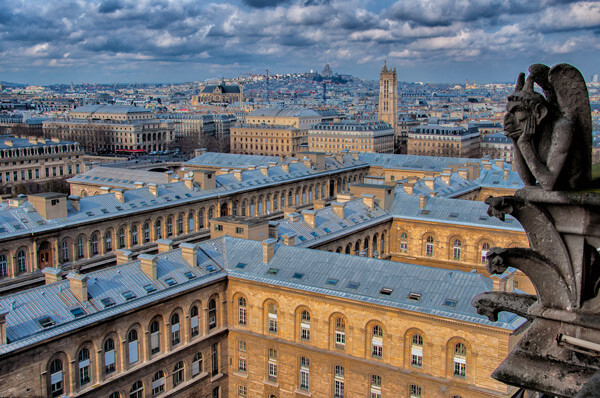
This has probably happened to all of us. We’ve just come back from an exciting trip and want to share all the wonderful moments with our friends and family. But after a brief moment we seem to be the only ones still enjoying the picture-show. Everyone else has quickly lost interest.
So what can we do to stop putting people to sleep with our vacation photos?
Here are some tips to help you take vacation photos that everybody will love. It’s easier than you might think, and it definitely doesn’t require expensive equipment. Keeping in mind some basic rules, you can take stunning images even with your mobile phone.
Let me take you to Paris and show you how with these 10 ways to improve your vacation photos:
It often happens that you get to a beautiful place and start photographing right away. But wait. Unless it’s a sunset or fast moving group of people, nothing is going to run away from you. Instead take your time to wander around a little bit sucking up the atmosphere.
Here’s an example. Last month I went to Paris. When I got off the metro and the Eiffel Tower appeared, I was immediately tempted to take a picture. Actually everybody around me started shooting right away.
I decided to stroll around first. In my mind I was framing, but I left my camera in the bag. This slow approach helped me to get a feeling for the place and to figure out what it was that I wanted to capture.
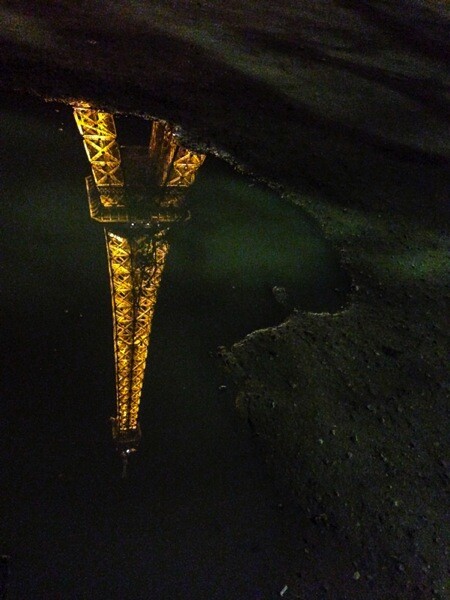
Avoid the obvious. When everybody is looking in one direction, look the other way. You may be surprised what you’ll find: impressive reflections, for example.
This is a great way to show a familiar sight in a new light – such as the Eiffel Tower. The giant monument can be seen from almost every point in downtown Paris. It is reflected in car windows or in water puddles at night.
The distortions add a sense of humour or even mysteriousness. Those viewing the image can quickly identify what’s in the photo, yet the unfamiliar perspective puzzles them.
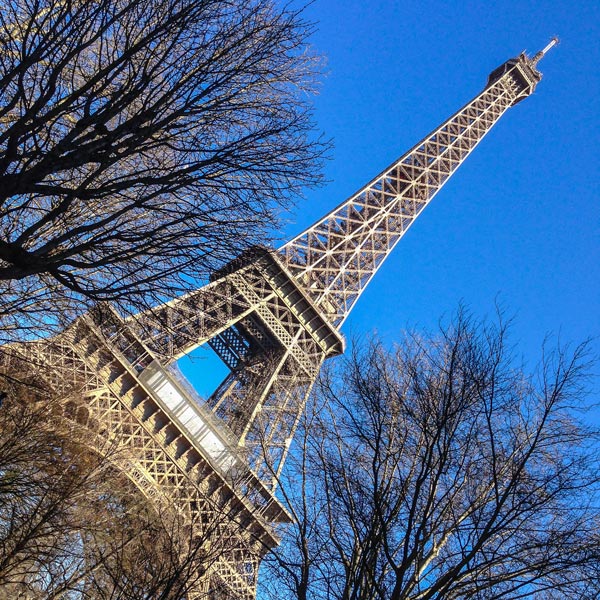
When taking a picture of a sunset, the horizon should be straight. But when it comes to buildings, it’s perfectly all right to tilt your camera to create a new angle. Don’t be afraid, not everything has to be placed perfectly aligned in the center of the frame.
Just don’t do it part way. If you opt for an uncommon perspective, do it all the way. That is to say let the observer understand that you tilted the camera on purpose, and that the building is not accidentally inclined either to the left or right.
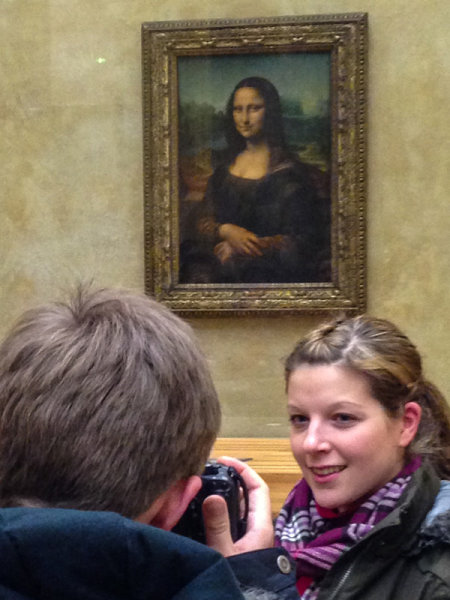
When sightseeing we are never alone. There will always be other tourists around. Thus getting a clear shot with no one in the picture is often impossible. What you can do instead is to incorporate other people into your composition.
It’s actually quite a lot of fun to photograph other people taking pictures. You add another story and layer to your images: a picture within a picture.
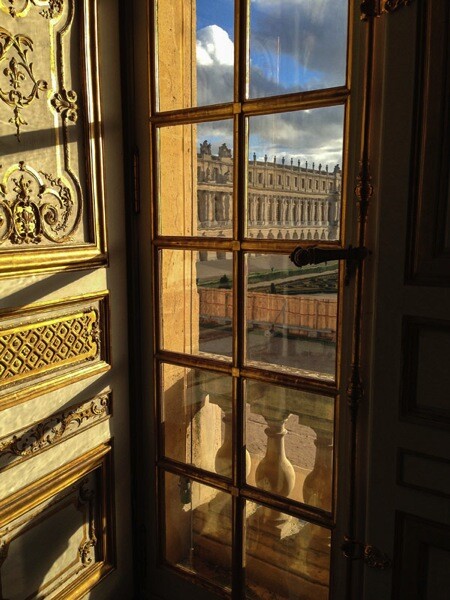
Holes, doorways or windows are perfect elements to use as other frames within the frame of your camera. This way you can add another dimension and more depth to your images making them appear almost three-dimensional.
But, that’s not all. Light shining through a window with its reflections and shadows is visually pleasant. And peaking through a window subconsciously suggests some mystery and being able to witness something from a hidden point of view that maybe wasn’t meant for our eyes to see.
Look out for lines and patterns that can be used to lead the eye of the observer and make your picture more dynamic, like this winding staircase (below), for example. The eye gets hooked on the left top corner and follows the stair railing as it curls towards the center on the right.
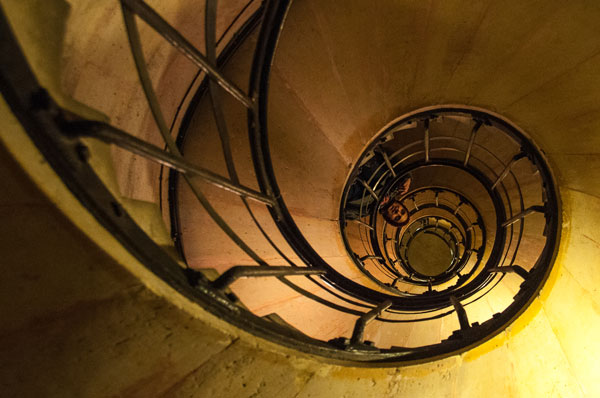
Lines are a simple, yet very powerful tool, of photographic composition that make images more interesting and engaging.
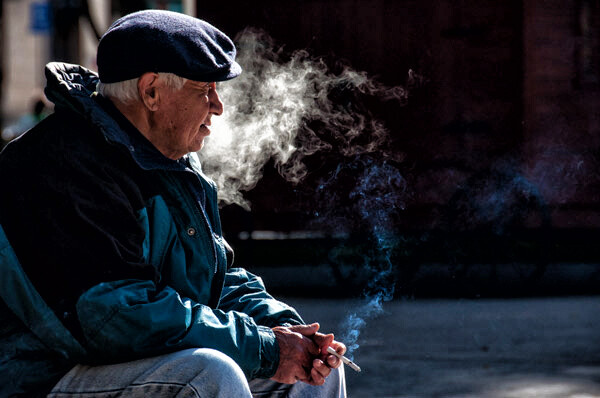
Photography is painting with light. So the quality of light is very important. Bright sunlight at noon, with its harsh shadows, is different from the soft tones of a sunset. Be aware of the different emotions that can be evoked by light and use it as a tool to create strong effects.
With backlighting you can create interesting silhouettes, for example, as can be observed in this image of a monument (below). The foreground is heavily underexposed. There are no details in the monument or the tree. Everything is stripped down to its basic shape and form, yet still allowing you to identify at first glimpse what kind of scenery is documented in the image.

One common mistake is to incorporate too many elements in one frame. A panoramic shot is great to give an overview of a place. But in general it’s more effective to clean up your photos. Keep it simple.
Simplicity of the frame helps the human mind to better process the information – faster and more efficient than if the observer is confronted with an overloaded image.
Ask yourself: What do I want to say with this picture? Then throw out all the elements that are not important to the statement you wish to express.
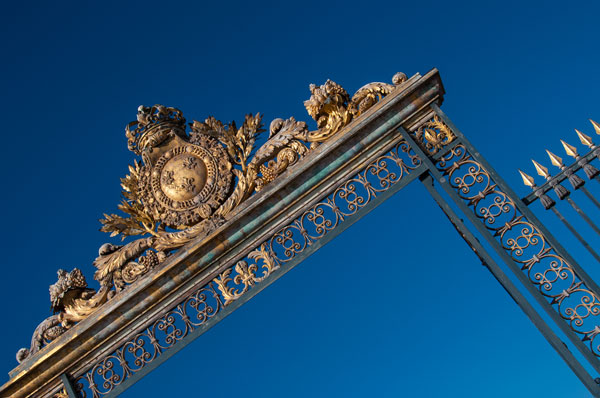
Zoom in. Sometimes it’s difficult to capture everything that’s unfolding in front of you. When I was standing in front of the castle of Versailles I was overwhelmed by its pure magnitude. The big courtyard leading up to the main entrance, and the impressive long stretched building in the back. What to make of a situation like that photographically?
A good way to resolve a panorama like that is to focus on details. As hard as I tried I couldn’t get a clean shot of the golden gate and the castle. There were either some other tourists taking picture or all the elements were overlapping each other.
How many pictures do you have standing rigid in front of an important building, or beautiful landscape? There’s nothing wrong with the typical “I-have-been-there” shot. But it’s more fun to spice it up a little bit.
Interact with your surroundings, create unusual perspectives and use your imagination. Not just you, but your friends and family back home will also enjoy looking at your next vacation pictures.

Do you have other tips for better vacation photos? If so please share in the comments below.
The post 10 Ways to Improve your Vacation Photos by Kai Behrmann appeared first on Digital Photography School.
