RSS
 

Archive for February, 2014

The Most Important Do’s and Don’ts of Portrait Posing You’ll Ever Read

03 Feb

Have you ever seen those photographers whose portfolios have so so many amazing portraits? You look at all of their pictures, wondering how they do their magic. They must have “great subjects” or work with people that aren’t camera-shy like your friend. The truth is that great portraits aren’t about the models or how photogenic or “picture-perfect” they are, but Continue Reading

The post The Most Important Do’s and Don’ts of Portrait Posing You’ll Ever Read appeared first on Photodoto.


Photodoto

 
Comments Off on The Most Important Do’s and Don’ts of Portrait Posing You’ll Ever Read

Posted in Photography


2013 Gear in Review

03 Feb

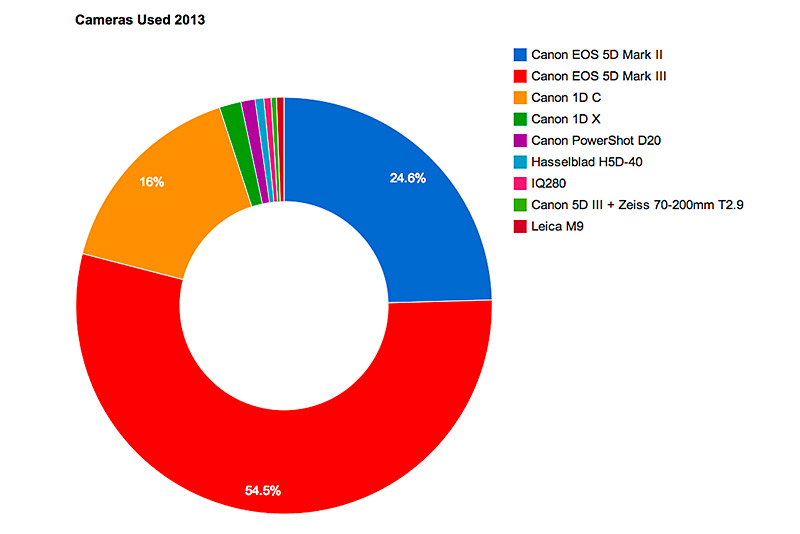
On a whim I decided to look back on my collective work in 2013 and see what gear I used most. Historically I’ve avoided doing this as my gear bag is never very deep. This past year though I took advantage of some perks at BorrowLenses.com where I could experiment with a variety of gear, gear that under normal circumstances would be too costly to buy. So what gear did I fall back on using more and more?

Here are the camera bodies I used through out 2013:

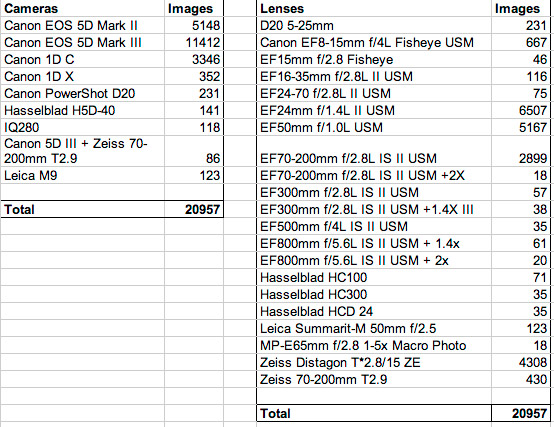
Here are the lenses I used through out 2013:

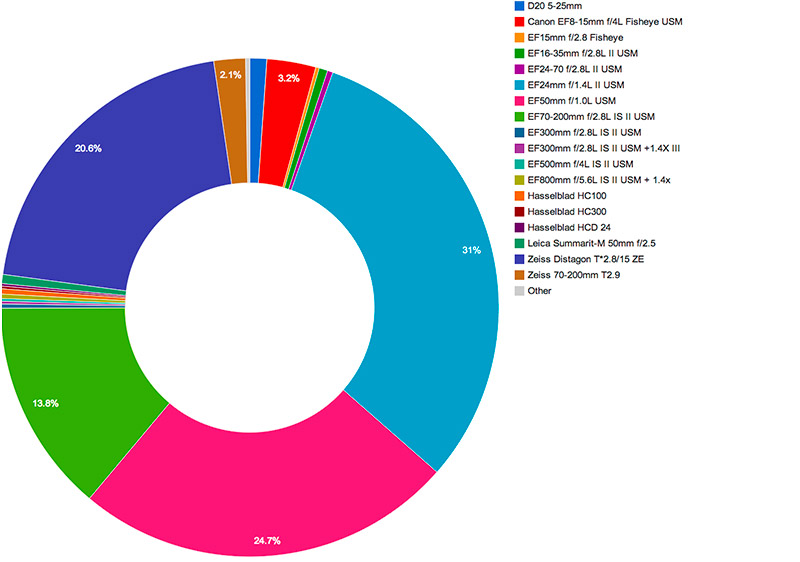
Here are the hard numbers for both lenses and cameras use in 2013:


What It All Means

I shot a lot of timelapse sequences this year hence the high image count, but I still took the time to take some meaningful still photos. Not to mention I also took the time to enjoy family photography with a waterproof Canon D20 point and shoot.  Clearly I’m a Canon shooter, but I’m not necessarily in love with only Canon lenses. Over the course of the year I’ve come increasingly fond of the Zeiss Distagon f/2.8 15mm lens due to its overall sharpness, minimal distortion in the corners and it’s predictable hard stop for infinite. If I didn’t have access to the lens I’d buy it, but if buying it is not in your budget either then it’s well worth renting the Zeiss 15mm at BorrowLenses.com. The Canon 5D III (which I rent multiple units of per shoot) has become my workhorse camera, but I still own the 5D Mark II. You’ll likely see a trend where I used fast lenses the most (f/1.0 and f/1.4) and this is because I’ve been working on an astrolandscape project where I need to capture a lot of light while minimizing exposure times.  The Canon 24mm f/1.4 has been a great lens to use as it is both fast and well suited to a classical landscape look. My Canon 50mm f/1.0 continues to be my go to fun lens both for family, travel and even an occasional astrolandscape photograph. I tried my hand at some more exotic equipment including the Leica M9 rangefinder and Hasselblad medium format cameras. I was not a fan of the M9 mostly because the sensor is not well suited to low light photography creating super noisy images. The Hasselblad 4HX + IQ280 back was an exotic combination I’d love to revisit using, but will have to wait for a specific project. The combination of broad dynamic range and high resolution opened my eyes to a completely different realm of photographic possibilities.  The brief glimpse into the world of exotic photography equipment was fun, but I’m still most productive and financially solvent in the 35mm DSLR world. We’ll have to see what comes of my gear use in 2014.

Copyright Jim M. Goldstein, All Rights Reserved

2013 Gear in Review

The post 2013 Gear in Review appeared first on JMG-Galleries – Landscape, Nature & Travel Photography.


Related Stories

  • 2013 Gear in Review – Enclosure
  • FLight Pollution
  • FLight Pollution – Enclosure
Feed Ads by FeedBlitz
powered by ad choices


JMG-Galleries

 
Comments Off on 2013 Gear in Review

Posted in Equipment


Zeremonien der Wahrheit

03 Feb

Ein Beitrag von: Aline Vater

Ein Mann in gestreiftem Pyjama hebt die rechte Hand zum Soldatengruß. Ein zweiter stiehlt eilig diese Pose und schaut mit weit aufgerissenen Augen in die Kamera. Daneben ein unbeteiligter und ein verlorener Blick. So sehen verwundete Krieger aus.

Giampiero Assumma, geboren 1969, ein Fotograf aus Neapel, hat dieses Bild der vier Männer gezeichnet, die er über den Zeitraum von mehreren Jahren in einem von sechs Psychiatrien für Kriminelle in Italien portraitiert hat. Die Serie „The Lower World“ skizziert ein archaisches und poetisches Bild einer Dimension psychischer Erkrankungen.
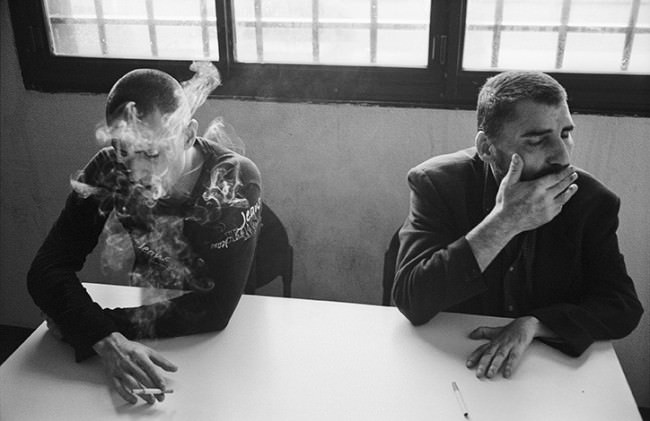
The Lower World © Giampiero Assumma

Sie hinterfragt auch den Umgang mit psychisch kranken Insassen in Italien. Aber nicht nur ein politisches, sondern vor allem ein persönliches Interesse treibt ihn dabei an. Assumma möchte mit visuellen Mitteln erkunden, was wir unter Wahnsinn verstehen.

Daher ist seine fotografische Arbeit auch eine Studie über emotionale Zustände des Menschen, die uns einen oder voneinander abgrenzen können. Ein Blick, der stets das Besondere und Einzigartige eines jeden Menschen herausarbeitet, ohne dabei den Portraitierten ihre Würde zu nehmen.
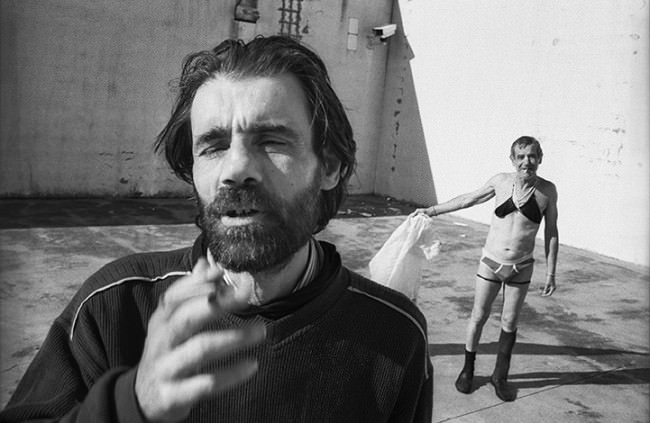
The Lower World © Giampiero Assumma

Dieses reife Verständnis für die Psyche des Menschen verdichtet sich in Kombination mit kunstvoll gezeichneten Licht- und Kontrastsetzungen zu einer eigenen analogen Ästhetik. Giampiero Assummas Schwarzweißbilder leben von einer paradoxen Mischung aus Empathie für und Distanzierung zu den Dargestellten.

Die Serie reiht sich nahtlos in das fotografische Werk von Giampiero Assumma ein, das die Themen Wahnsinn, Religion und Rituale umstreift. Er berichtet, dass die „Extreme“ der menschlichen Existenz, die er in seiner Arbeit portraitiert, Wesentliches darüber aussagen, wer wir sind und was uns antreibt. Durch das Erkunden der Vielfalt menschlicher Erfahrungen hinterfragt er die gängige Definition von Normalität.
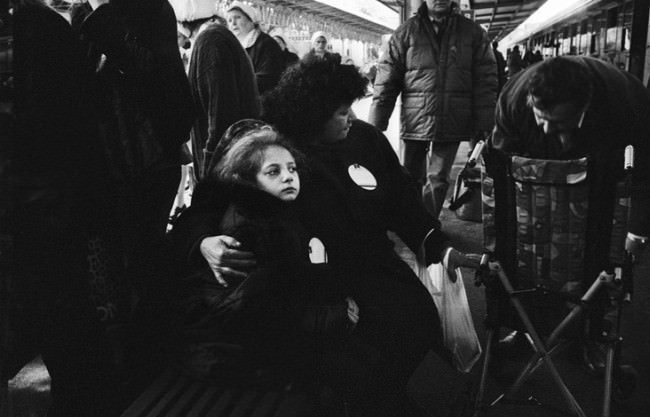
Lourdes © Giampiero Assumma

In seiner Serie „Lourdes“ begleitete er Menschen mit Behinderung auf ihrer Reise in einen der weltweit am meisten besuchten Wallfahrtsorte im Süden Frankreichs. Der Wunsch nach Wunderheilung und Erlösung fasziniert ebenso wie die Wirkung von Glauben und Gemeinschaft.

Aus soziologischer Perspektive betrachtet, ist „Lourdes“ eine Arbeit über die Bedeutung von Leiden als ein überdauerndes Moment menschlicher Existenz, das in der Religion als metaphysische Chance zur Flucht begriffen werden kann.
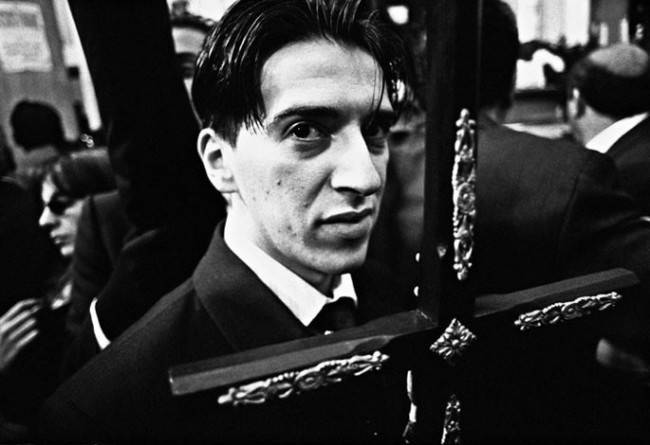
Misteri © Giampiero Assumma

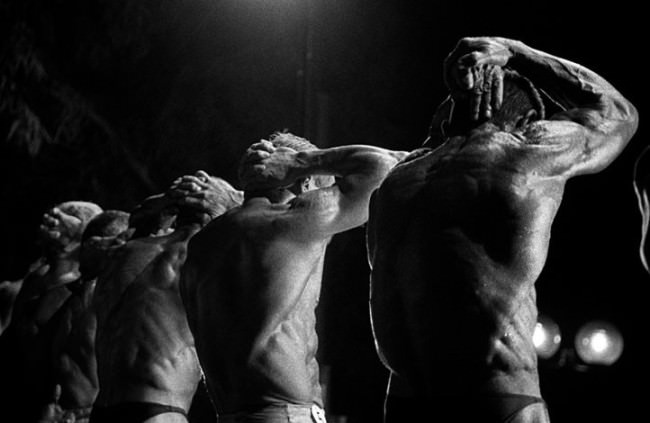
In seiner Serie „Bodybuilder“ hat Giampiero Assumma Menschen portraitiert, die ihren Körper zu Kunstobjekten stilisieren. Diese Art der menschlichen Entfremdung stellt einen weiteren Schritt zur visuellen Erforschung des Zusammenspiels emotionaler und physischer menschlicher Extreme dar.

Die maschinenartigen Körper wirken fast entmenschlicht, würde man die Intention hinter der Deformation nicht leise erahnen. Ähnlich wie die Pilgerreisenden begeben sich die Bodybuilder auf eine Suche nach dem Sinn ihres Daseins, mit dem wesentlichen Unterschied, dass diese Sinnsuche für den Einen in der Erlösung durch göttlichen Zuspruch und für den Anderen in der Hoffnung auf Anerkennung durch Abgrenzung im Wettkampf besteht.
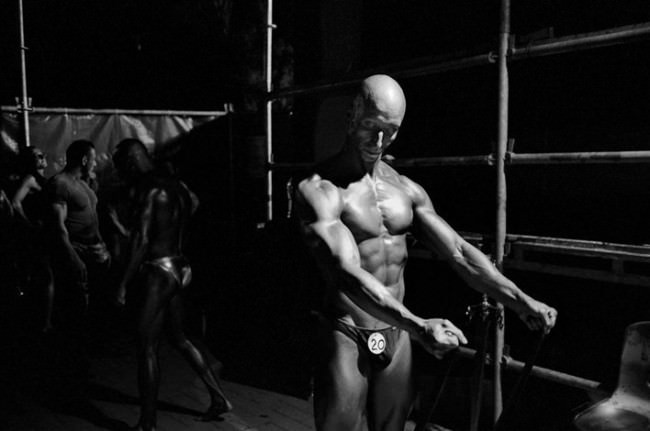
Bodybuilder © Giampiero Assumma

Bodybuilder © Giampiero Assumma

Giampieros fotografischer Blick verdeutlicht, dass Kunst nicht nur ein direkter Weg zu essentiellen Fragen des Lebens sein kann, sondern sie schafft auch Raum für eine Sensibilität, die sich im Zuge alltäglicher Abläufe unter der Oberfläche versteckt hält. Er konkretisiert diese Idee mit folgenden Worten:

Wenn die Fotografie ein Spiegel unserer Zeit ist, so geht es in der fotografischen Arbeit darum, dieses Bild genau zu erkunden, zu schauen, was dahinter lauert und den Spiegel notfalls zu zerbrechen. Kunst ist der direkteste Weg, um sich selbst und Andere zu erreichen.
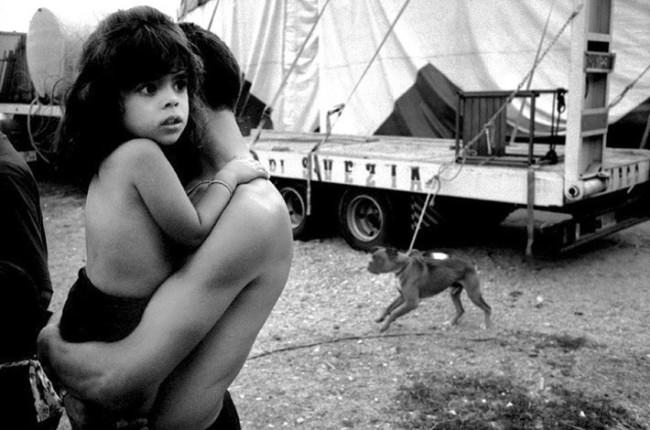
Little Circus © Giampiero Assumma

Vor dem Hintergrund dieser fotografischen Überlegungen ist es umso überraschender, wenn man erfährt, dass Giampiero vormals einen medizinischen Beruf wählte, um die Tradition seiner Familie fortzusetzen. Erst vor einigen Jahren entschied er sich bewusst dazu, einen eigenen Weg fernab von vorstandardisierten Lebensentwürfen zu gehen.

Dieser Mut zur eigenen Stimme spiegelt sich in seiner Sicht auf ‚das Andere‘ wider. Nicht wertend, sondern wertschätzend und beschreibend berichtet er von den Menschen auf seinen Bildern, die Mut zum Anderssein beweisen.
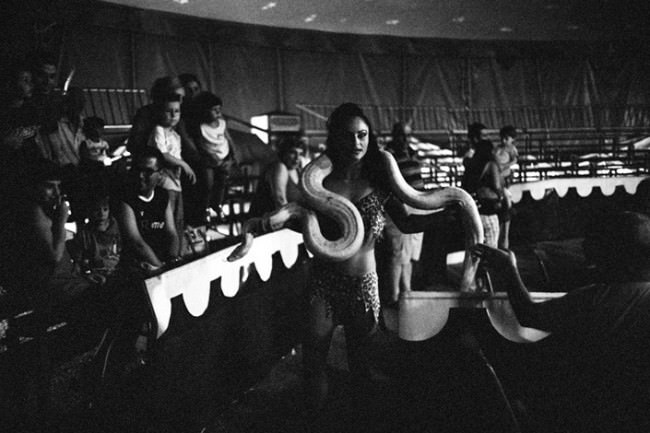
Little Circus © Giampiero Assumma

Was mich bei meiner ersten Begegnung mit Giampiero auch überraschte, war nicht nur sein reifer psychologischer Blick auf die Welt, sondern vor allem die unprätentiöse Art, von seiner Arbeit zu berichten. Tatsächlich ist einer seiner Sätze mir wohl am schärfsten im Gedächtnis geblieben:

Ein großes Problem vieler Künstler ist, dass sie sich selbst zu wichtig nehmen.

Man spürt, dass der Zuspruch Anderer keine zentrale Bedeutung für ihn hat, sondern dass es ihm viel mehr um Wachstum und Erkenntnis geht, die er gern mit denen teilt, die sich dafür interessieren. Giampiero Assumma lebt und arbeitet derzeit in Berlin.

Mehr von Giampiero Assumma kann man auf seiner Webseite sehen und auf Facebook. Wer eher den haptischen Genüssen frönt, dem seien die folgenden Publikationen ans Herz gelegt:

Assumma, G. (2002). A Lisbona. Napoli: Edbye. 30 Seiten
Assumma, G. (2003). Tempo Luogo Metallo. Edizioni banca idea. 128 Seiten.
Assumma, G. (2003). Tracce di Luce. 24 Ore Cultura. 96 Seiten


kwerfeldein – Fotografie Magazin
 
Comments Off on Zeremonien der Wahrheit

Posted in Equipment


Guerrilla Upcycling: Public Furniture Made of Parisian Trash

03 Feb

[ By WebUrbanist in Art & Street Art & Graffiti. ]

guerilla art paris france

As darkness descends these guerrilla activists hit the streets, not to protest or graffiti but to build and install community infrastructure from the discarded roadside scraps of Paris, France.

guerrilla street furniture build

guerilla seating space

Chapitre Zero is a project led by Duccio Maria Gambi and Mattia Paco Rizzi, furniture designers with a higher purpose in mind for the urban refuse they find, but with no license from the city to install their de facto illegal creations.

guerilla mixed bench chair

guerilla bent wood seats

The evolving  team of nocturnal participants uses leftover palettes, old doors and other pieces of wood to shape seats and tables which they deploy into carefully-chosen spaces, leaving local residents to wake up surrounded by useful surprises

guerrilla urban public construction

guerilla shaded chair design

Their process has evolved over time, from prefabricating their pieces to working onsite with portable power tools to build with whatever waste is at hand, bending, fastening, screwing and nailing as they go.

guerrilla scrap wood chair

guerilla palette love seat

This trash-taking approach naturally requires a degree of planning and preparedness but also a sense of the impromptu – much like other forms of ad hoc guerrilla street art.

guerilla street seat use

guerilla recycled community zone

If there is a twist to this particular tale, though, perhaps it is as follows: you can get away with a great deal in public if you seem to be doing something to improve the context you are working within. For their part, the community has responded warmly, throwing impromptu picnics, meetings and birthday parties in these unexpected new spaces.

Share on Facebook


[ By WebUrbanist in Art & Street Art & Graffiti. ]

[ WebUrbanist | Archives | Galleries | Privacy | TOS ]


WebUrbanist

 
Comments Off on Guerrilla Upcycling: Public Furniture Made of Parisian Trash

Posted in Creativity


Essential Gear for the Landscape Photographer

03 Feb

Essential gear landscape photographer 06

A great landscape photo can capture the imagination and inspire the soul. It brings a static scene to life and reminds us why we’re drawn to nature’s cathedrals. And while you can clearly envision the kind of picture you’d like to make of your favorite vista, what may not be as clear is the gear that is essential to taking a great landscape photograph. So, let’s talk about that.

My list of essential gear for the landscape photographer . . .

What is the must-have equipment for capturing awesome landscape photos?

Camera body

We’ll begin with your camera body. Any camera will do for making a shot to share on Facebook. But to elevate your landscape game to the next level, it is essential to use a camera body that allows you to get off Auto and start shooting in Aperture Priority.

One of the keys to a great landscape photo is having tack sharp focus throughout your depth of field. In other words, everything from the leaf in the foreground to the distant mountain range should be in clear focus. To achieve this, you need to shoot at a focal ratio offering great depth of field. Shooting in aperture priority allows you to choose the right focal ratio for the scene. Something in the range of f/8 to f/16 should produce images with good depth of field and crisp focus throughout.

Another setting you’ll be able to select in Aperture Priority is ISO. This is the sensitivity of your camera’s sensor to light. Shooting with a low ISO delivers cleaner images having less noise or graininess. For better landscapes, try to shoot as close to your camera’s base ISO (100 or 200) as possible.

The combination of a large focal ratio (f/8 or higher) and a low ISO (100 or 200) means longer exposures will be needed to make a good image. If you shoot landscapes at midday when the sun is high in the sky, there is more than enough ambient light to make a good image with very short exposures. But truly dramatic landscapes, the kind you’re after, are typically captured in very different lighting conditions.

Essential gear landscape photographer 02

Many great landscape photos are taken during the golden hour; that all-too-brief window of time at sunrise or sunset when dramatic lighting paints the scene. Cloudy skies also add an element of drama which can transform a so-so view into a stunning image. Under such conditions, the available light is much lower and this creates the need for our next piece of essential kit: a photographic tripod.

Tripod

A tripod provides a stable platform for your digital camera. It allows you to take the time to carefully compose a shot and then lock down your camera in that position. Since you’ll be shooting in low light conditions, using a large focal ratio and low ISO, the length of the exposure needed to capture the scene will be fairly long. Too long to steadily handhold the camera. Mounting your camera on a tripod will keep it steady during very long exposures that record amazing detail.

Essential gear landscape photographer 05

Lenses

Of course, one of the most important pieces of equipment for a photographer is the lens through which a scene is captured. For landscape photography, your most versatile lens will be a wide angle. These are short focal length lenses that deliver wide, true fields of view. That wide field of view allows greater flexibility in composing a shot encompassing the full grandeur of a landscape. I recommend a minimum focal length of 12mm for APS-C bodies (cropped sensor) and 18mm for full-frame cameras.

Fortunately for your wallet, this does not need to be a fast lens which are designed to have focal ratios of f/2.8 or faster. They are consider fast because their large apertures collect enough light to keep exposures brief, even in low light conditions. Large apertures demand a large front lens element, which comes at a steep price. And while the performance can be well worth the investment, many photographers simply don’t have room in their budgets for such a purchase. Since you’ll be shooting at f/8 or greater, a lens with a maximum focal ratio of f/4 should more than meet your needs.

Essential gear landscape photographer 04

Filters

Let’s talk briefly about filters. They can be a great tool for the landscape photographer. Among the most useful are graduated neutral density (GND) filters and variable polarizing filters. However, as useful as filters can be, I don’t consider them essential gear. In the right lighting, filters are unnecessary. In situations where a GND filter would be of use, it’s often possible to compensate for significant differences in brightness in your photo editing software of choice. In short, filters are useful but not absolutely necessary.

Essential gear landscape photographer 01

Yourself

The last piece of essential gear we’ll discuss is, you. Your eye for composition is the most important asset in your photographer’s tool kit. Your ability to recognize good light is essential. If you look at a scene and your inner voice is saying, “Ooh, that’s cool,” that’s a good sign the lighting is outstanding. Listen to that inner voice, stop and compose a shot.

Walk around the scene. Look for a foreground element to include in the composition. One of the biggest challenges of landscape photography is conveying a sense of scale. Including a foreground element helps immensely. A bush, leaf, rock or person provides a sense of scale for the rest of the image. It also helps simplify the scene, making the resulting image more approachable to the viewer.

Essential gear landscape photographer 03

Summary

With a keen eye for composition, a camera body allowing you to shoot in Aperture Priority, a solid tripod and a sharp wide angle lens, you can take your landscape photography to the next level. Your images will convey the magic you felt while standing amidst a grand scene. The resulting “oohs” and “aahs” will be the reward feeding your satisfaction as a landscape photographer.
Now, get out there and shoot some great landscapes!

The post Essential Gear for the Landscape Photographer by Bill Ferris appeared first on Digital Photography School.


Digital Photography School

 
Comments Off on Essential Gear for the Landscape Photographer

Posted in Photography


2. Februar 2014

03 Feb

Ein Beitrag von: Thomas Lieser

© Thomas Lieser


kwerfeldein – Fotografie Magazin

 
Comments Off on 2. Februar 2014

Posted in Equipment


Out Of Services: 8 More Amazing Abandoned Churches

03 Feb

[ By Steve in Abandoned Places & Architecture. ]

abandoned churches
Abandon faith all ye who enter here… and in the case of these 8 amazing abandoned churches, don’t even bother entering as faith, hope & charity left long ago.

Spaca Moskalyk – Alberta, Canada

abandoned Spaca Moskalyk Ukrainian Catholic church Alberta Canada(images via: Darren Kirby, John Lucas, Edmonton Journal and Ray van der Woning/Photographi-ca)

The Transfiguration of Our Lord Ukrainian Catholic Church (known as Spaca Moskalyk), located in northern Alberta, Canada, was built in 1924 and stands 20 meters (about 66 feet) tall. The wood-framed and partially boarded-up building is definitely showing its age and the unstable soil below isn’t helping. By October of 2011, concerns about the church’s safety and estimated costs of $ 400,000 to $ 775,000 to rectify the problems forced parish members to consider the most economical solution: salvaging anything useful and burning the gutted church to the ground.

abandoned Spaca Moskalyk Ukrainian Catholic church Alberta (image via: Hong Kong Photographic)

Publicity over the plight of Spaca Moskalyk has (as of December 2013) postponed its fiery fate several times while kinder options are entertained. Meanwhile, photographers alerted to the possible loss of an historic icon of western Canada’s pioneer spirit have rushed to preserve the site’s oft-haunting beauty. One of these is Flickr user Randall van der Woning whose image appears above.

St Remigius’ Church – Testerton, England

abandoned St Remigius' Church Testerton England overgrown (images via: Geograph, Adrian S Pye and Norfolk Churches)

Norfolk in eastern England is home to a remarkable number of severely overgrown and abandoned (obviously) churches. Some, like St Remigius’ Church in Testerton, are all that remains of medieval villages themselves abandoned in the chaotic time of the English Reformation almost 500 years ago. A curious parallel can be made with rediscovered Mayan cities long-overtaken and disguised by jungle vines and vegetation; surprising indeed considering these relics are located within a reasonable drive out of London!

Abandoned Church – Bidong Island, Malaysia

abandoned church Bidong Island(images via: I Am Bidong, Neil Ta and Ee Lin Wan)

Between 1975 and 1991, the tiny (1 square kilometer) Malaysian island of Pulau Bidong became a transit camp for refugees from the Vietnam War. As many as 250,000 “boat people” passed through so-called “Hell Island” and the population peaked at a staggering 40,000! In 1991 the camp was closed, with the last 9,000 or so refugees forcibly repatriated to Vietnam.

Pulau Bidong abandoned church (image via: HENG FU MING)

While Malaysian authorities have allowed nature to gradually restore the island to its original state, many reminders of the refugee era remain. Flickr user HENG FU MING brings us the eerie image above of a ramshackle yet lovingly crafted church slowly moldering away in the tropical heat and humidity.

Next Page – Click Below to Read More:
Out Of Services 8 More Amazing Abandoned Churches

Share on Facebook


[ By Steve in Abandoned Places & Architecture. ]

[ WebUrbanist | Archives | Galleries | Privacy | TOS ]


WebUrbanist

 
Comments Off on Out Of Services: 8 More Amazing Abandoned Churches

Posted in Creativity


One Light Portraits – Advanced Set Ups

02 Feb

Ione-light-portraits-reflectorsn keeping with our portrait theme this week is a video that goes over some great ideas for making one light portraits, using some advanced set ups. Keep in mind this is great if you only have on light and don’t want to invest in a more. The reflectors he’s using can be purchased relatively inexpensively, as can the mirrors. Probably the thing you’ll need to do this type of technique is more light stands and some clamps.

Just ignore the plug for the light crane or light boom at the end of the video. That is more applicable if you are doing video with your DSLR.

I think there’s some really great tips in there. Watch it a couple times to catch them all. When I used to do commercial tabletop product photography many moons ago, I used a lot of small reflectors, silver cards and mirrors. You’d be amazed at what you can use to manipulate light and create some great images. You don’t have to spend a lot of money on three and four light set ups if you get a little creative with your DIY techniques.

For more reading on portrait lighting and DIY try these:

  • 6 Portrait lighting patterns every photographer should know
  • The Basics of a One Light Setup: A Lighting Tutorial
  • 4 Tips for a Perfect White Background in High Key Photography
  • Portrait Tutorial Feast – Best of dPS 2013

Links to check out some of the gear mentioned in the video:

  • Alzo Easy Frame Diffuser & Reflector Kit- 40 Inch Metal Frame with Handle Incl. 1 Diffuser, 1 Silver – 1 Gold Reflector (not exactly the one he used but you get the idea)
  • Photoflex Silverdome NXT, Medium Softbox, 24″ x 32″ x 17″.
  • Spider Pro SCS -Single camera System Camera Holster

The post One Light Portraits – Advanced Set Ups by Darlene Hildebrandt appeared first on Digital Photography School.


Digital Photography School

 
Comments Off on One Light Portraits – Advanced Set Ups

Posted in Photography


browserFruits Februar, Ausgabe 1

02 Feb

Gerüche, Farben, Gefühle – Inspiration kann man aus so vielen Dingen ziehen. Andere Künstler und ihre Werke, aber auch das alltägliche Leben schenken uns immer wieder erstaunliche Eingebungen und formen neue Ideen in unseren Köpfen. Meist ganz unbewusst. Umso spannender ist es, wenn man beginnt, darüber zu reflektieren. Woher kommt eine Idee und wieso habe ich sie gerade jetzt? In welcher Situation entstand dieses Foto und was war dafür verantwortlich? Vielleicht war ja auch eine unserer sonntäglichen Linksammlungen Schuld an so mancher Eingebung?


Fotospecial: Kinderspiele

Flickr

500px


Deutschsprachig

• Der Fotograf Peter Lindbergh im Interview mit dem Schweizer Tagesanzeiger über die Darstellung von Frauen.

• Spiegel Online zeigt die Gewinnerbilder des Wettbewerbs „Rückblende“, dem deutschen Preis für politische Fotografie und Karikatur.

• Yun-Fei Tou aus Taiwan fotografiert Hunde, kurz bevor sie eingeschläfert werden. Gute und gleichzeitig traurige Tierportraits.

• Jennifer Wettig war in Hong Kong unterwegs und hat einige Straßenaufnahmen mitgebracht.

• Tipp: Eric Kim wurde letztes Jahr von Spiegel Online zu seiner Arbeit als Straßenfotograf interviewt.


International

• Noch einmal etwas für Star-Wars-Fans: Vesa Lehtimäki inszeniert die neuen Star-Wars-Modelle von LEGO fotografisch und filmreich, sehr stimmungsvoll.

• Matt Rainwaters hat eine Portraitserie mit seltsamen und beeindruckenden Bärten aufgenommen.

• Die besten Nachrichtenbilder der Proteste in der Ukraine.

• Ihr sucht nach einer schönen Fotolocation? Hier gibt es eine Liste der beeindruckendsten Plätze der Welt. Deutschland ist gleich zwei Mal dabei.

• Und noch eine Liste: Die besten Fine-Art-Portrait-Fotografen.

• 100 Jahre Zeitreise zurück: Obwohl es 1909 noch keine Farbfilme gab, dokumentierte Prokudin-Gorskii (1863-1944) Russland in Farbe.

• Schöne Selbstportraits vor beeindruckenden Landschaften von Paul Zizka.

• Mikroskopkunst: Arrangements mikroskopischer Algen.


Neuerscheinungen und Tipps vom Foto-Büchermarkt

Buchtipps

• Der Bildband „Minutes to Midnight“* von Trent Parke verspricht 90.000 km Abenteuer quer durch Australien. Ursprünglich für 38 € erhältlich, war er kurz nach Erscheinen bereits vergriffen und wird nun für 100 € angeboten. Einen Einblick ins Buch gibt es beim Verlag Steidl selbst.

• Christopher Cappzziello setzt sich im Fotobuch „THE DISTANCE BETWEEN US“* mit der Behinderung seines Zwillingsbruders auseinander, den er 10 Jahre lang mit seiner Kamera begleitete. Das vielfach ausgezeichnete Buch ist für 59 € erhältlich.


Wettbewerbe

• Die Unlimited Grain Gallery hat einen Wettbewerb gestartet. Die Teilnahmegebür liegt bei 40 €. Einsendeschluss ist der 14. April 2014.

• Habt Ihr ein bisher unveröffentlichtes Fotobuchprojekt? Dann reicht es doch bis zum 15. Februar in diesen Wettbewerb ein und vielleicht wird es simultan von 5 großen Verlagen europaweit veröffentlicht.


Zitat der Woche

Natürlich wird es immer diejenigen geben, die nur auf die Technik schauen und fragen wie, während andere, neugieriger Natur, fragen werden warum. Persönlich habe ich immer Inspiration vor der Information bevorzugt.

Man Ray –

Mehr Zitate


Videos

Kennt Ihr Lara Zankoul? Wie ihre halben Unterwasseraufnahmen entstanden sind, könnt Ihr in diesem Making-Of-Video sehen.


The Sunday Times – Icons. Eine Verbeugung vor den ikonischen Bildern der Pop-Kultur, die im Moment die öffentliche Wahrnehmung prägen. Und direkt danach das ebenso beeindruckende Making Of – anschauen!


* Das ist ein Affiliate-Link zu Amazon. Wenn Ihr darüber etwas bestellt, erhalten wir eine kleine Provision, Ihr bezahlt aber keinen Cent mehr.


kwerfeldein – Fotografie Magazin

 
Comments Off on browserFruits Februar, Ausgabe 1

Posted in Equipment


SmugMug Films: Pulse-pounding aerial photography

02 Feb

Smugmug.jpg

SmugMug, the online photo storage and sharing site, has an all-new video series that gives a glimpse into the lives of pro photographers and their work. It’s a behind-the-lens look at people who follow their passions in photography. SmugMug aims to highlight a different photographer every two weeks for the rest of 2014. Learn more

News: Digital Photography Review (dpreview.com)

 
Comments Off on SmugMug Films: Pulse-pounding aerial photography

Posted in Uncategorized