RSS
 

Archive for February, 2014

Humans of New York: Behind the scenes with Brandon Stanton

09 Feb

HONY.jpg

Photographer Brandon Stanton’s Humans of New York Project has been around for a few years now and has been featured in media quite a bit. The latest video of Stanton, made for Facebook’s 10th anniversary, is a revealing look at how he interacts with his subjects. He’s jovial. He’s conversational. But most of all, he’s human – and it shows through in his images. See video

News: Digital Photography Review (dpreview.com)

 
Comments Off on Humans of New York: Behind the scenes with Brandon Stanton

Posted in Uncategorized


A Concise Guide to Choosing a New Lens

09 Feb

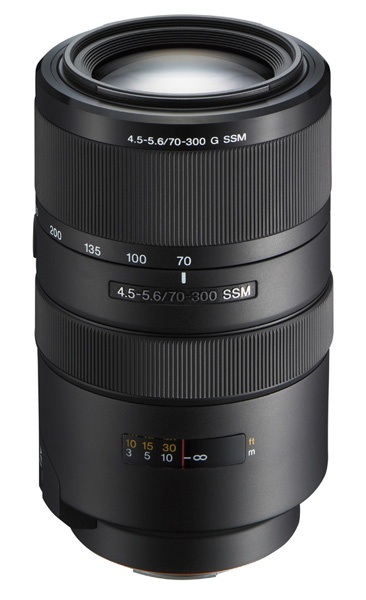
Sony zoom lens

I think it’s fair to say that most photographers buy a kit lens with their first camera. It’s a good place to start, as despite the limitations, a good one is versatile (an idea I explored in my article Why Your Kit Lens is Better Than You Think).

But, however well a kit lens performs in the right hands, at some point you will ask yourself what lens you want to buy next. Or, you might already own more than one lens and be wondering if a new one may improve your photography. I am going to help you answer these questions by outlining some of the things you need to think about when choosing a new lens.

You may find it helpful to think of lenses in categories rather than specific focal lengths. That’s because the field-of-view of a specific focal length depends on the size of your camera’s sensor (learn why in our article Crop Factor Explained).

The benefit of considering lenses this way is that each type suits certain subjects. If you are into landscape photography, for example, then a wide-angle lens of some sort is essential. If you photograph sports, then it is difficult to do without a telephoto lens.

By the way, if you follow the links in the article you will see plenty of photos taken with these lens types.
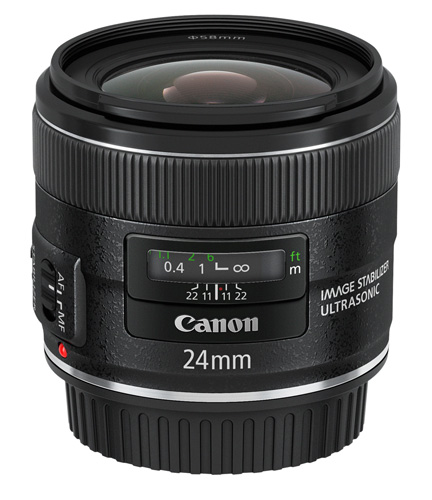
Canon 24mm lens

Wide-angle lenses

A good definition of a wide-angle lens is one with a focal length shorter than the diagonal measurement of your camera’s sensor (or negative if you have a film camera).

The idea of measuring the diagonal is a useful one for understanding the relationship between sensor size, focal length and field-of-view.

Let’s look at a specific camera to see how that works: the EOS 70D. The corner to corner distance of the sensor is approximately 27mm:
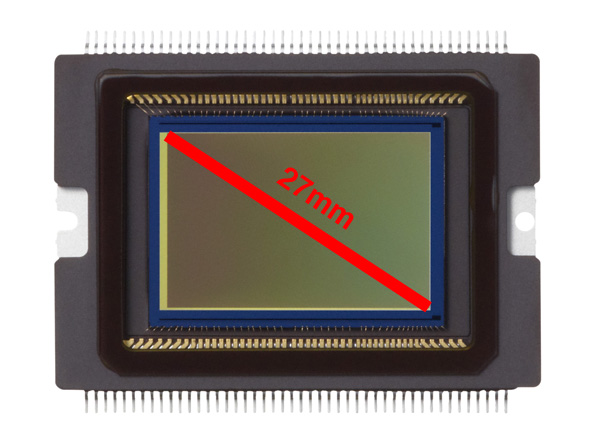
Canon EOS 70D CMOS sensor

From that figure, you can say that any focal length shorter than around 25mm is a wide-angle lens.

Wide-angle lenses are used for subjects like landscape photography and environmental portraiture. My article 7 Ways to Get More Out of a Wide-Angle Lens explores the use of wide-angle lenses in more detail.
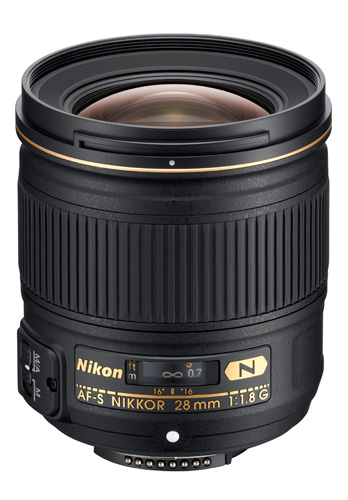
Nikkor 28mm lens

Normal lenses and short telephoto primes

A normal lens is a prime lens with a focal length similar to the diagonal measurement of your camera’s sensor.

In the example of the EOS 70D used above, a 28mm prime lens is a normal lens. A 50mm lens is considered normal for full-frame and 35mm film cameras (despite the diagonal measurement being 42mm – these things are often approximations).

A short telephoto lens is one with a focal length slightly longer than the diagonal measurement of the camera’s sensor.

Normal lenses and short telephoto primes are ideal for portraits, some types of landscape photography, and for close-up photography. Being primes, they have much wider maximum apertures than zoom lenses. This helps limit depth-of-field and create images with lots of beautiful bokeh. It also helps you take photos in low light.

Learn more about the versatility of these lenses by reading these articles Why a 50mm Lens is your new best friend and How A Humble 85mm Lens Became my Favourite.
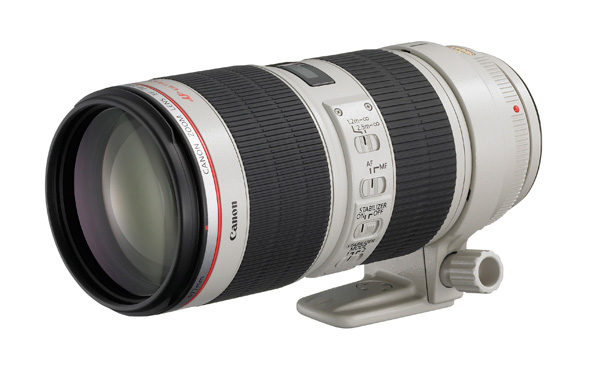
Canon 70-200mm zoom lens

Telephoto lenses

This category includes focal lengths from around double the diagonal measurement of your camera’s sensor and upwards.

There are two main reasons to use a telephoto lens. The first is for the compressed perspective they provide to pick your subject out of the background. Portrait and fashion photographers often use them for this reason.

The other is that you need a telephoto because you are photographing something that you can’t get physically close to. This includes subjects like wildlife and sports.
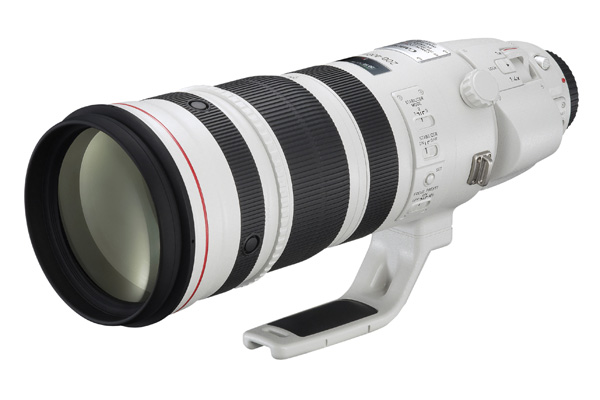
Canon 200-400mm zoom lens

Super Telephoto lenses

These are the large telephoto lenses you often see photographers using at major sporting events. With focal lengths of 300mm and upwards, you will probably want to buy one of these if you are serious in any way about sports or wildlife photography. Be warned – many of these lenses are also super expensive. The new Canon 200-400mm zoom (pictured above) retails for over $ 11,000. Ouch!
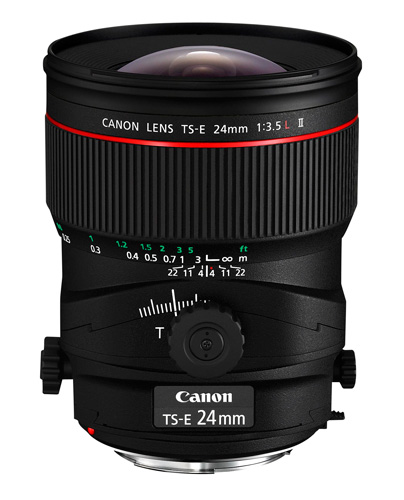
Canon 24mm tilt-shift lens

Specialty lenses

The final category includes other types of lens that you would probably only buy if you really wanted to use them, as they are specialty items, and some of them are pricey. They include macro, fisheye and tilt-shift or perspective-control lenses.

Other factors

Once you have decided which category of lens you are interested in, it’s time to consider other factors:

Image quality: You can say a lens has good image quality if it gives you sharp, contrasty images free from chromatic aberrations, colour fringing and barrel distortion from corner to corner at all aperture ranges of the lens.

No lens is perfect. There is no such thing as the lens that I just described. But good quality lenses come close. Generally speaking, the more you pay for a lens the better the image quality.

You may be wondering how to evaluate the image quality of a lens you don’t actually own. One tip is to read plenty of reviews, including the ones on the sellers’ websites, personal blogs and on Digital Photography School. DxO Mark has tested lots of lenses and posted the results on their website. You will soon get a feel for what people think about a particular lens.

Build quality and weatherproofing: These could be important if you subject your lenses to any kind of rough treatment or want to shoot in adverse weather conditions. The higher end lenses in each manufacturers’ range are the ones that have the best build quality and weatherproofing.

Another benefit of weatherproofed lenses is that they let less dust into your camera to get on the sensor.

Budget: Also important, for fairly obvious reasons. If you’re on a tight budget, consider buying prime lenses rather than zooms. You can get great image quality from relatively inexpensive prime lenses, much better than you would from zoom lenses in the same price range.

You could also consider buying second-hand (our article An Introduction to Buying Used Lenses will help).

Bear in mind that good quality glass should last you a long time. The life span of lenses surpasses that of most cameras. In the words of Sir Henry Royce: “The quality is remembered long after the price is forgotten.”

How many lenses do you need? I prefer to take the simple approach to photography and that includes equipment. The more gear you have, the more it weighs if you carry it all around in one go, and the more it costs to insure. I currently own four lenses and, depending on the subject, I take two lenses with me at the most on a shoot.

Your view

That’s my approach, what’s yours? How many lenses do you own? What are your favourite lenses and what are your recommendations for choosing a new lens? Do you buy new or second-hand? Let us know in the comments. It will be interesting to hear what our readers have to say.

Understanding Lenses ebooks
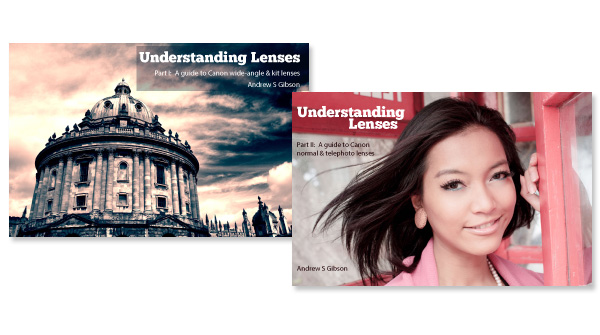
Understanding Lenses ebook bundle

My ebooks Understanding Lenses Part I and Understanding Lenses Part II will help Canon EOS owners decide what lenses to buy for their cameras. They are both filled with lots of tips to getting the most out of your Canon lenses. Click the links to learn more.

The post A Concise Guide to Choosing a New Lens by Andrew S. Gibson appeared first on Digital Photography School.


Digital Photography School

 
Comments Off on A Concise Guide to Choosing a New Lens

Posted in Photography


Your Complete Guide to Outdoor Photography – Part One

09 Feb

Outdoor photography encompasses a whole host of genres, like:  landscapes, nature, macro, wildlife and even low-light, thus it can be the perfect opportunity to try new techniques and compositions that are outside your traditional comfort zone.  So while you might have set off to capture some fascinating vistas, you might stumble upon a collection of unusual looking fungi and want to photograph that too, which is great as long as you’ve packed the right kit. The key here is preparation, because once you’re out in wild it can be a long trek home if you’ve forgotten something. Whatever you’re heading outdoors to capture, here are a few things to consider before you leave.

Guide to Outdoor Photography

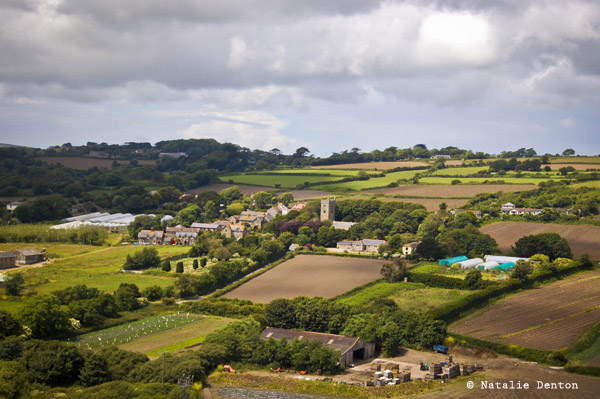
Farm landscape England rural Natalie Denton

Backpack

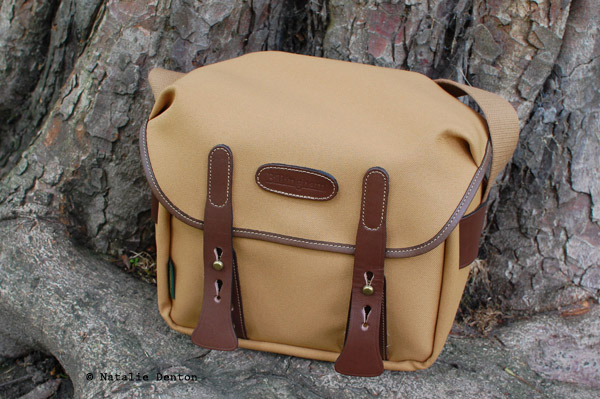
If you plan on packing everything, including the kitchen sink you’ll need to invest in a large, lightweight yet hard-wearing backpack, ones with Velcro padded dividers are a great choice if you’re planning on packing a selection of cameras and lenses. Ideally waterproofed ones are favourable, for obvious reasons and you’ll be thanking yourself later if you’ve bought one with soft, broad shoulder straps.

Billingham camera bag Natalie Denton

Accessories

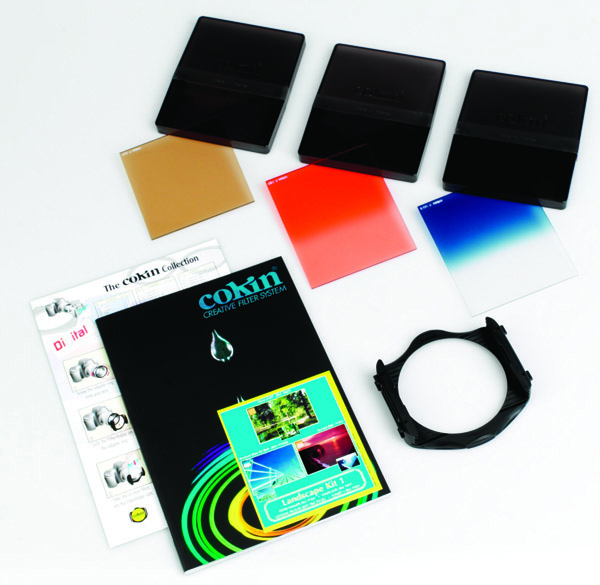
Bags with zippable pockets will ensure you don’t lose your keys and wallet in the wilderness, but they are also great for securing smaller accessories such as memory cards; a handful ranging in capacity, a lens pen and cloth; for smudge-free glass, spare batteries or battery unit, and a selection of filters. It’s also a good idea to carry some small change with you in case you need to use a pay phone, toilets or parking.

Cokin Landscape Kit filter set

Tripod

For most of the subjects that outdoor photography encompasses, a tripod will be necessary. Select a lightweight one such as one made of carbon-fibre, which is not only lighter to carry than most aluminium ones, but is much more rugged and durable. Opt for one that has a low minimum height (i.e. one where the central column doesn’t prevent you from getting down low enough to capture land-level macros).

Lenses

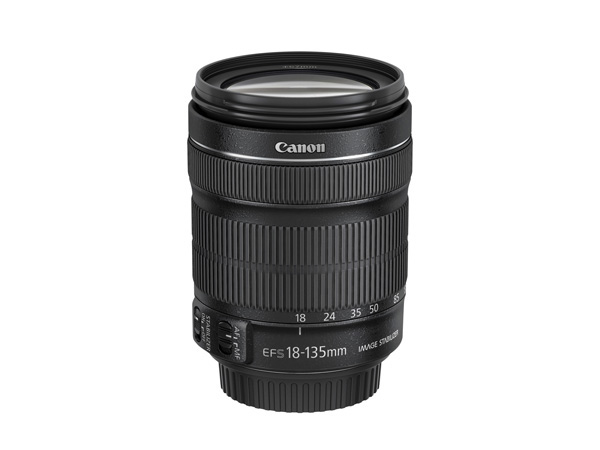
A good selection of lens covering a range of focal lengths will ensure you’re covered whatever the subject, from wide-angle focal lengths for landscapes to telephoto reaches for wildlife. If you’re budget doesn’t allow such luxury than you might want to consider a zoom lens for varying between all focal lengths, and perhaps one sharp prime lens for ensuring macros and nature subjects are captured in stunning life-like detail.

Canon LENS EF-S 18-135mm IS STM FRA w CAP 

Plastic bags

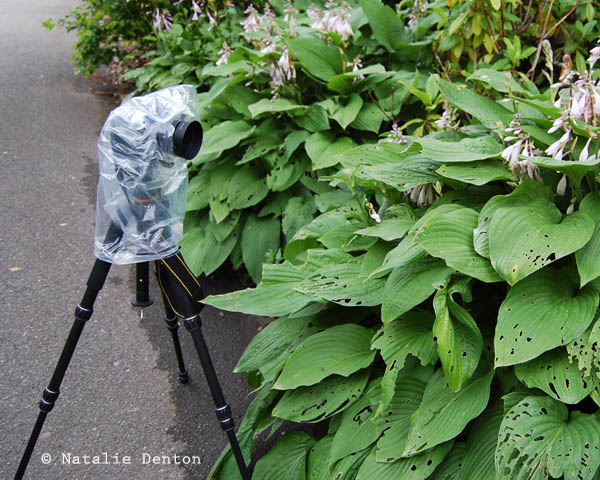
The all important plastic bag, in fact pack a couple. Never has one item been so useful to the outdoor photographer, and what’s more, they are incredible versatile, take up practically no space and most importantly – are free! If you’re caught in an unexpected downpour pull it over your camera, poke a hole in the bottom and slid the lens through the hole, then make a seal with your lens hood from the outside – et voila a waterproof camera shield. Want to lie down to get a close up of those flowers but the meadow is muddy? Lay down a line of plastic bags to stop you’re clothes getting wet and dirty. Want to shoot a long exposure landscape but the wind is blowing the tripod? Collect a few rocks or stones in your bag and attach it to the tripod’s centre column. There are 101 uses for a plastic bag, if not more!

Plastic bag for protecting camera in the rain Natalie Denton

Unless you’re a Bear Grylls (adventurer) type and are used to fending for yourself in the wild, it’s wise to take a few precautionary measures before you leave home, especially if the location you are heading to is dangerous, isolated or you are planning on going at night. These may seem like some obvious precautions, but actually it could make the difference between life and death.

Phone

iPhone 4 Apple

Ensure the battery on your phone is fully charged and to stop it draining in the cold keep it somewhere warm, like close to your body such as an inside jacket pocket. It’s a good idea to put a few helpful apps on your Smartphone too if you can such as Maps, Compass, First Aid, Find My Phone – in case you become lost or injured, plus photography relevant apps such as an app that tells you of your location’s sunset/sunrise times, one that can work out hyperfocal distances or even act as a light meter.

Tell a friend

Tell at least one person where you are going, the route you’ll be taking and when you expect to return. Perhaps offer to text or call them when you arrive at your location and also when you are on your way home again, just to put their mind at rest.

Road worthy

Double check your vehicle is topped up with gas and oil, and that the tires are correctly inflated and are in a good condition. If you are travelling some distance, or off the beaten track, it is a good idea to carry a small amount of fuel in a jerry can, to get you to the next gas station. Check the lights are working and pack a couple of spares. Keep a copy of your breakdown details just in case, but minimise the need of having to call someone out by having a spare tire and jack in your trunk.

Weather forecast

Check the weather forecast before you go to avoid adverse conditions (unless this is what you’re after) and wear/pack the appropriate clothing. Depending on the type of climate you are working in you may want to consider packing a few extra items in the trunk too, such as; a change of clothes and shoes, a blanket, spade/snow shovel, flask of hot tea/coffee, food, water, and sunscreen. A First Aid Kit and flashlight may also come in useful.

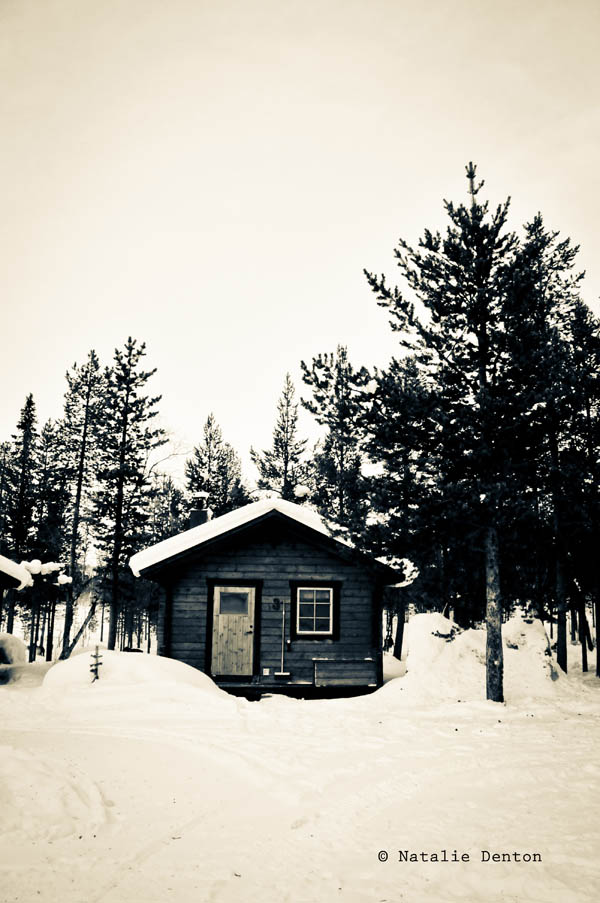
Lapland cabin snow Natalie Denton

What to wear

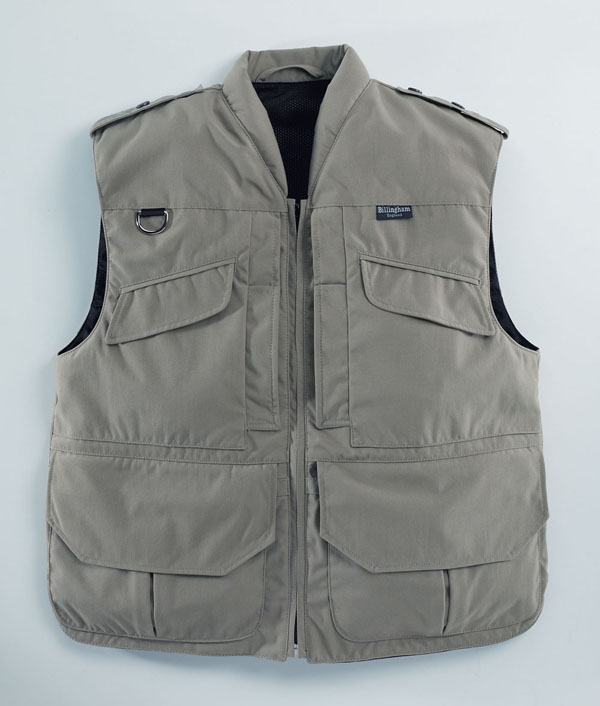
Comfort and safety is the name of the game here rather than looking like a trendsetting explorer. A pair of hard-wearing hiking boots, or shoes with ankle-support, will keep your feet and legs as comfortable as possible when trekking over long distances. Consider the weather and dress appropriately so; waterproof clothing if it’s raining, thermals and insulated clothing if it snows light, bright cottons if it’s hot. Clothing with plenty of pockets is always a bonus as they are ideal and convenient place for keeping lens caps, cards, filters and cloths at arm’s reach. A hat is surely obligatory if it’s super cold or super sunny out, so opt for an insulated woolly one, or a wide brimmed white one respectively. If you’re venturing out after dark and are near roads or highways be sure to wear reflective or bright clothing so that you stand out, warning drivers to veer round you.

Billingham photovest

Read part 2 of our complete guide for tips, tricks and techniques for shooting on location and editing advice, coming tomorrow.

The post Your Complete Guide to Outdoor Photography – Part One by Natalie Denton (nee Johnson) appeared first on Digital Photography School.


Digital Photography School
 
Comments Off on Your Complete Guide to Outdoor Photography – Part One

Posted in Photography


End of the Line: Exploring Unseen Terminal Subway Stations

09 Feb

[ By WebUrbanist in Art & Photography & Video. ]

end of the line

Bustling hubs give way to spindly spokes, infrequently taking locals to particularly distant destinations and often entirely unseen by tourists and other travelers. In the city business or pleasure and lost your way? Sorry, last stop, folks – everybody out.

German video journalist Janosch Delcker has created two short documentaries (End of the Line parts 1 and 2) exploring the terminal points of public transit lines in Berlin and New York, respectively. These locations are off the beaten path for most urbanites, and are primarily known as end stops that indicate you are taking the train in the right direction.

His short films are simple documentaries of the mundane, harshly-lit reality of unloved subway tunnels, stops and stations far from metropolitan centers. Per Pop-Up City, “Delcker’s short, atmospheric documentaries draw upon French anthropologist Marc Augé’s concept of the ‘non-place’ — ‘a space which can not be defined as relational, or historical, or concerned with identity’.” Beyond impersonal spaces, though, Delcker’s urban work also features personal stories:

In his Urban Observations series, Deckler features “A drag performer, a cartoonist, a curator, a filmmaker, an author and a painter.” The series “followed 6 artists through New York City and 6 through Berlin. Each one has a story to tell. Each one has a past. Each one has dreams.”

“The 12 videos of the series form a mosaic; a portrait of New York City and Berlin in the age of recession. Episodes of Urban Observations were screened at festivals and events in Berlin, London, and New York City. The series was awarded with the 2012 Mulert Award on Mutual Understanding.”

Share on Facebook


[ By WebUrbanist in Art & Photography & Video. ]

[ WebUrbanist | Archives | Galleries | Privacy | TOS ]


WebUrbanist

 
Comments Off on End of the Line: Exploring Unseen Terminal Subway Stations

Posted in Creativity


8. Februar 2014

09 Feb

Ein Beitrag von: Sebastian Schlueter

zebrastreifen, laufen, fuesse, beine


kwerfeldein – Fotografie Magazin

 
Comments Off on 8. Februar 2014

Posted in Equipment


Elinor Carucci – Mother

08 Feb

Das Wort „Mutter“ passt so wenig zu mir, wie, ja wie eigentlich? Jedenfalls konnte ich mir als Kind schon nicht vorstellen, Mutter zu sein und auch jetzt hat sich daran absolut nichts geändert.

Ein Großteil meiner alten Freunde aus Kindertagen haben nun selbst Kinder. Und ich finde es schön, sie ab und an mal zu besuchen, bin fasziniert, wie schnell sich ihre Kinder entwickeln und wie sie die Welt wahrnehmen. Aber genauso sehe ich auch ihren Egoismus, ihr beharrliches Auftreten, wenn die Mutter mal Nein sagt oder nicht sofort zur Stelle ist.

Da kann aus dem einen oder anderen Kind schon einmal ein schreiendes, kreischendes, Rotz spuckendes und unausstehliches Etwas werden, dass ich nur die Flucht ergreifen möchte und – ha! – leise „Mama“ wimmere. Dennoch lag jetzt dieses Buch hier. Mein Freund schaute mich kritisch an, als er es sah. Ich konnte ihm ansehen, was er dachte: „Ist die jetzt verrückt geworden?“

Bin ich natürlich nicht. Ich hatte über Elinor Caruccis Arbeit „Mother“ gelesen und irgendetwas fesselte mich daran, schlug Brücken zu mir und ließ mich das Buch bestellen.

Carucci portraitierte über zehn Jahre lang ihre beiden Zwillinge. Nach der Geburt erlebte sie, so heißt es im Pressetext des Verlags Prestel, heftige Stimmungsschwankungen.

Elinor Carucci, Mother

Elinor Carucci, Mother

Und das konnte ich selbst als Nicht-Mutter sehr gut verstehen. Allein der Gedanke, seinen Egoismus-Horizont zu verlassen und für zwei schutzbedürftige Menschen immer und immer verfügbar zu sein, verantwortlich für ihr Wohl, das lässt doch das Gebilde, das Du von Dir selbst und Deiner Umgebung hast mehr als schwanken, oder nicht?

Und das war es, was mich fesselte. Die Aufrichtigkeit ihrer Motivation, zu fotografieren, das Verstehen einer unfassbar schönen, aber auch alles verändernden Tatsache.

Elinor Carucci, Mother

Elinor Carucci, Mother

Es sind intime Fotografien, die nichts beschönigen. Da ist beispielsweise das Bild ihres Körpers nach der Geburt mit Kaiserschnitt oder ihr Selbstportrait mit verheulten Augen. Aber genauso zeigt sie die Zuneigung, das Umarmen, An-die-Hand-Nehmen oder das Bürsten des Haars. Wir sehen die Kinder beim Spielen, Raufen, Zanken oder Nasenbluten.

Aber nah dran und das alles in einer klaren Sprache. Klare Linien und ein wunderbares Spiel mit Licht und Schatten.

Elinor Carucci, Mother

Mein Fazit ist: Wer ungeschönte und doch eine klare und emotionale Bildersprache mag und das Mutterdasein als das sieht, was es ist – nämlich liebevoll und doch schmerzlich zugleich – dem sei das Buch wärmstens ans Herz gelegt.

Informationen zum Buch:

Elinor Carucci: „Mother“
Hardcover
24,9 x 28,7 x 2 cm
Prestel-Verlag
144 Seiten
in englischer Sprache verfasst
39,70 Euro


kwerfeldein – Fotografie Magazin

 
Comments Off on Elinor Carucci – Mother

Posted in Equipment


2014 Sony World Photography Awards finalists revealed

08 Feb

1e593807-c542-471d-9b50-2ffd6bffdd76-620x413.jpeg

The shortlist for the Sony World Photography Awards has been announced in the Professional, Open, and Youth categories. Photographers from 166 countries submitted nearly 140,000 images, the highest number of entries in the awards’ seven year history. The winners of the Open and Youth categories will be announced on March 18. Professional category winners will be announced April 30. See gallery

News: Digital Photography Review (dpreview.com)

 
Comments Off on 2014 Sony World Photography Awards finalists revealed

Posted in Uncategorized


500px ‘Prime’ is a licensing marketplace with 30% cut for photographers

08 Feb

Screen_Shot_2014-02-07_at_5.47.28_PM.png

Photo-sharing site 500px has launched ‘Prime’ a licensing service that it is describing as ‘the world’s most intelligent marketplace’ with fees that start at $ 250. Interestingly, the company is also claiming that the photographer will get 30% of every fee for a licensed image, no matter ‘how it is bought, who buys it, or under what license’. Click through for more details. 

News: Digital Photography Review (dpreview.com)

 
Comments Off on 500px ‘Prime’ is a licensing marketplace with 30% cut for photographers

Posted in Uncategorized


7 February, 2014 – The Phase One IQ250 CMOS Fully Realized

08 Feb


The NEW Phase One IQ250 has received a lot of press in the last few weeks.  We had a chance to work with this new back as well as share it with a number of participants on our recent Antarctica workshop. Look for an article on how it performed soon. Today, Doug Peterson of Digital Transitions shares a behind the scene look at what it took for Phase One to bring this new CMOS chip back to market. Read Doug’s article – The Phase One IQ250 CMOS Fully Realized.


The Luminous Landscape – What’s New

 
Comments Off on 7 February, 2014 – The Phase One IQ250 CMOS Fully Realized

Posted in News


Nokia Lumia 1520 camera review

08 Feb

3212278645.jpg

The Nokia Lumia 1520 runs the Windows Phone operating system and offers high-end specs all-around. The device is powered by a Qualcomm Snapdragon 800 quad-core processor and ships with 2GB of RAM but it’s the camera specs that should make the 1520 an appealing option for mobile photographers. The PureView branded camera combines a 1/2.5-inch 20MP BSI CMOS sensor with a F2.4 lens and optical image stabilization. How does it perform as a camera? Read our in-depth review to find out.

News: Digital Photography Review (dpreview.com)

 
Comments Off on Nokia Lumia 1520 camera review

Posted in Uncategorized