RSS
 

Archive for February, 2014

DIY: Valentine Photo Cards

10 Feb
Extra photos for bloggers: 1, 2, 3

Roses are red.
Violets are blue.
Listen up and we promise
Your sweetie will love you!

This year, you could go and buy a generic Valentine’s Day card or you can use your own photos and a bit of cutting know-how to make an even better one.

Valentine Photo Cards are a sweet way to personalize your message and show your sweetheart that you have gone the extra mile.

Go get your craft knife and repeat after us: Hallmark Schmallmark.

Learn How to Make Your Own Photo Valentine Cards

(…)
Read the rest of DIY: Valentine Photo Cards (242 words)


© Erika for Photojojo, 2014. |
Permalink |
No comment |
Add to
del.icio.us

Post tags:


Photojojo

 
Comments Off on DIY: Valentine Photo Cards

Posted in Equipment


Von der Inspiration des Alltäglichen

10 Feb

Can Dagarslani ist ein junger Fotograf aus Istanbul, der mich mit seinen ungewöhnlichen Fotografien schnell gefesselt hat. Auf seinen Bildern sieht man meist junge Frauen, wie bei vielen anderen Fotografen auch. Spannend und besonders werden seine Bilder durch spezielle Posen der Modelle und Cans Ideen.

Ich habe lange überlegt, wie ich seinen Bilderstil beschreiben soll, er lässt sich einfach nicht in Worte fassen. Surreal ist nicht ganz richtig, denn die Motive sind durchaus real, oft nur etwas absurd, aber genau daran bleibe ich hängen. Teilweise sind sie schön, oft auch nur spannend oder komisch.

© Can Dagarslani

© Can Dagarslani

Can studierte an der Mimar Sinan University of Fine Art in Istanbul Architektur, war jedoch nicht glücklich damit.

Mein Interesse an der Fotografie entstand nicht aus Neugier, sondern aus einem inneren Bedürfnis heraus. Es war eine Flucht, durch Emotionen hervorgerufen, denen ich mir zunächst gar nicht bewusst war. Mit der Architektur war mein Leben hektisch und stressig. Die Ereignisse trafen mich und waren auch so schnell wieder verschwunden, wie sie kamen. Mit der Fotografie, den Szenen aus Licht und Farbe kam ich wieder ins Jetzt.

Mit seinen Bildern möchte Can den Betrachter überraschen, ihn etwas fühlen lassen.

Das alltägliche Leben inspiriert mich am meisten. Die Lichter, die mich jede Stunde des Tages erhellen, sind die Farben von Objekten und die Form des menschlichen Körpers. Das sind die Grundlagen meiner Fotografien.

© Can Dagarslani

© Can Dagarslani

Gleichzeitig betrachtet Can die Fotografie und Kunst aber auch kritisch und schrieb mir, wie sehr ihm die heutige Kunstszene und ihre Nähe zum Markt stört.

Das Verständnis der postmodernen Kunst verursacht heftige Diskussionen und Verwirrung darüber, was Kunst ist und was nicht. Der Künstler mit spirituellen Überzeugungen wurde vom Künstler, der stark mit den Anforderungen des Marktes verbunden ist, ersetzt.

Deshalb ist für ihn die Fotografie weder ein Job noch ein Hobby. „Es ist das etwas, das mir eine Gänsehaut macht.“

~

Cans Bilder findet Ihr auf Flickr, Behance und Tumblr.


kwerfeldein – Fotografie Magazin

 
Comments Off on Von der Inspiration des Alltäglichen

Posted in Equipment


Valentine’s Day Photography Tips to Color You Red With Passion

10 Feb

Ah, amore. That’s what Valentine’s Day is all about, at least nominally. So whether you believe in love, don’t or just think it’s something that Hallmark made up to sell more cards, one thing can’t be denied. The occasion makes for a brilliant photography opportunity. It’s true! Valentine’s Day allows for all sorts of unique and interesting photography because there’s Continue Reading

The post Valentine’s Day Photography Tips to Color You Red With Passion appeared first on Photodoto.


Photodoto

 
Comments Off on Valentine’s Day Photography Tips to Color You Red With Passion

Posted in Photography


Sigma unveils radical DP2 Quattro with re-thought ~19.6MP Foveon sensor

10 Feb

sigma-dp2-quattro.png

Sigma has revealed the next generation of its DP series of APS-C sensor, fixed focal length cameras, with the DP2 Quattro. The latest, 45mm-equivalent, model features dramatic styling and a fundamental re-think of the company’s Foveon multi-layer sensor design. The Quattro sensor still uses three layers to detect color information but now only captures its full, 19.6 million pixel resolution in the top layer, with lower two layers capturing 4.9MP of information each. The sensor will also appear in 28mm and 75mm equivalent DP1 Quattro an DP3 Quattro models.

News: Digital Photography Review (dpreview.com)

 
Comments Off on Sigma unveils radical DP2 Quattro with re-thought ~19.6MP Foveon sensor

Posted in Uncategorized


Rapid Packing Container: Students Reinvent Cardboard Box

10 Feb

[ By WebUrbanist in Design & Products & Packaging. ]

rapid easy fast box

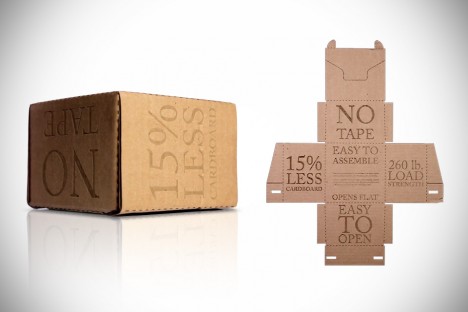
Faster, leaner and just plain better, this ingenious resign reduces wasted cardboard, eliminates excess tape and is also more convenient to build, open and store than traditional shipping boxes.

rapid-box-assembly

Fully reversible for easy reuse, this patent-pending creation is the product of two Cooper Union student collaborators, Henry Wang and Chris Curro, undergraduates in the Albert Nerken School of Engineering.

rapid-box-construction-desi

The Rapid Packing Container deftly address a long series of shortcomings, showing that even something so taken for granted as the cardboard box can benefit from serious improvement.

rapid easy folding box

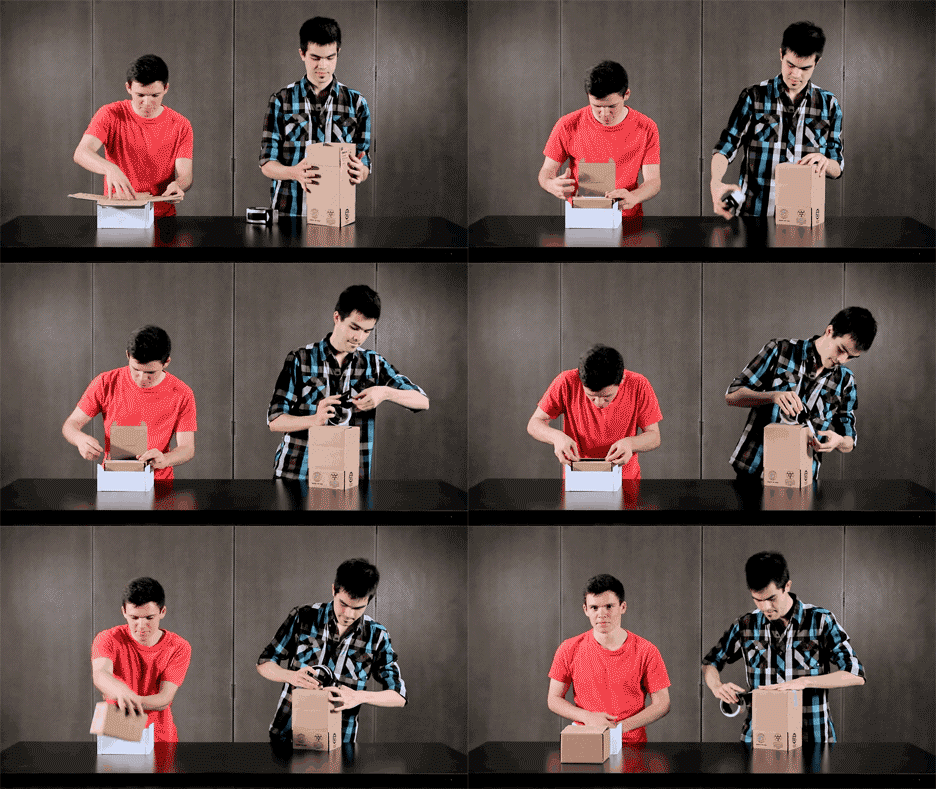
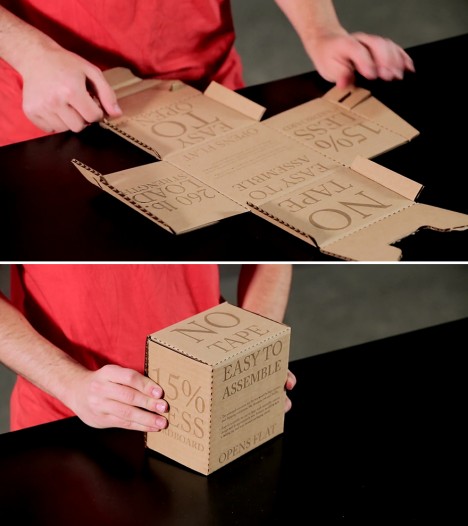
Instead of pulling the unfolded box from a shelf then manually taping together various sides and flaps, shippers can simply press the flattened version of the RPC into a box that folds it for them. After removing a single strip of paper, a minimal amount of exposed adhesive does the rest. Instead of unnecessarily overlapping layers of cardboard, or using tape to support weight, the built-in corrugation and interlocking folds provide for essential structural needs all while using less material.

rapid assembly cardboard box

The end-user experience is also refreshingly clean and simple – instead of cutting through copious amounts of tape, recipients can push a tab to open the box and watch it unfold in front of them. If there is branding or shipping data on the exterior, that set of exposed sides can be flipped, folded and bent back into the hidden interior. Of course, only time and rigorous testing will tell whether this radical reinvention can disrupt entrenched industrial design standards.

Share on Facebook


[ By WebUrbanist in Design & Products & Packaging. ]

[ WebUrbanist | Archives | Galleries | Privacy | TOS ]


WebUrbanist

 
Comments Off on Rapid Packing Container: Students Reinvent Cardboard Box

Posted in Creativity


Your Compete Guide to Outdoor Photography – Part Two

10 Feb

Continued from Part One of your guide to outdoor photography. Once you’ve arrived at a good shooting spot it’s time to begin.

Shooting mode
shooting modes outdoor photography

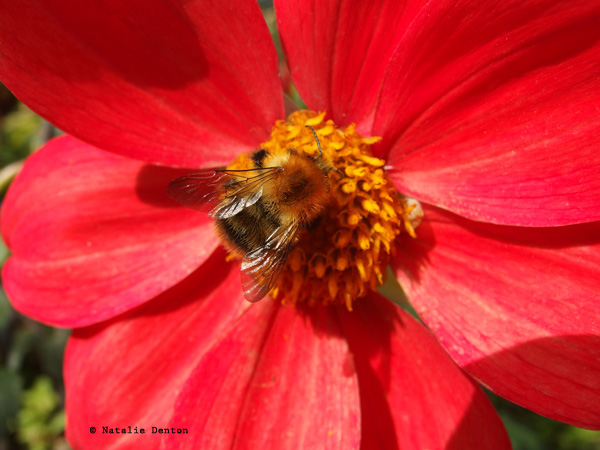
As outdoor photography incorporates a wide selection of genres you’ll find Manual mode will offer you the most flexible and convenient grounds for setting and changing values on the go. But Manual mode isn’t for everyone, so if you’re not feeling confident enough yet, try using a semi-manual mode. Aperture Priority is great if you want to control the depth of field of your image, for example if you want the majority of the scene to be sharp and in focus. This is helpful when you’re shooting a landscape for example, simply plump for a smaller aperture (larger number) such as f/11. However if you want to soften the area around the subject, to focus attention on one part of the scene or subject; such as the centre of a flower or the tip of a mushroom, then you’re better off using a larger aperture (smaller number) such as f/5.6.

Shutter priority is ideal for long exposure landscapes when you want to incorporate some ‘movement’ into the frame, for example clouds travelling across the sky, a river flowing down stream or tree branches swaying in the wind. Opt for a slow shutter speed here (but use a ND or polarizer filter if it’s a particularly bright day so that you don’t risk overexposing). If you want to freeze a subject on the other hand, a wild animal for instance, then dial in a fast shutter speed to avoid blur.

Shoot in RAW if your camera permits, as this will allow greater ability to perfect colours, details and exposure post-shoot.

Avoid camera shake

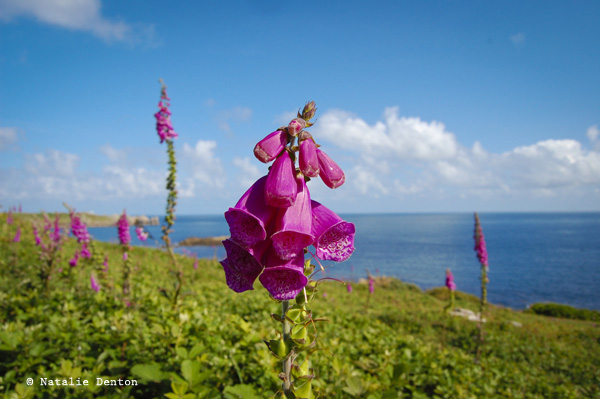
Using a long exposure means keeping the shutter open for a lengthy period of time, and the slightest knock during this window can result in detrimental camera shake. The first step is to use a tripod or rest your camera on something sturdy such as a wall or bench. Then with your shot composed the next step is to fire the shutter using a remote control rather than pressing the button; as even the lightest of touches can result in the camera moving. Wireless and tethered controls are available, and many contemporary cameras can be fired using a Smartphone or tablet. Alternatively you can program the self-timer to start the exposure. If it’s windy, or you are particularly heavy-handed, then set a longer timer to give the tripod and the attached camera enough time to reset to a stationery position.
Scilly Isles pink foxglove Natalie Denton

Saving power

If you’re out for the day, or a very long period, but don’t have a spare battery, always consider ways to save power. For starters, if it’s cold out, keep the camera insulated when not in use; wrapped in a spare sweater in the bag, inside your jacket or even under your arm. Avoid using LiveView and rather than use in-camera editing wait until you return home to edit. Minimize the time you spend reviewing shots in Playback mode and use the histogram to nail exposure. It always seem tempting to delete frames on location, particularly if you’re waiting for something to appear (e.g. wildlife, sunset, stars etc) but you’re better off saving the battery for photographing. What’s more – something that seems unworthy on the camera’s LCD may offer some redeeming features on a larger computer screen.

Time of day

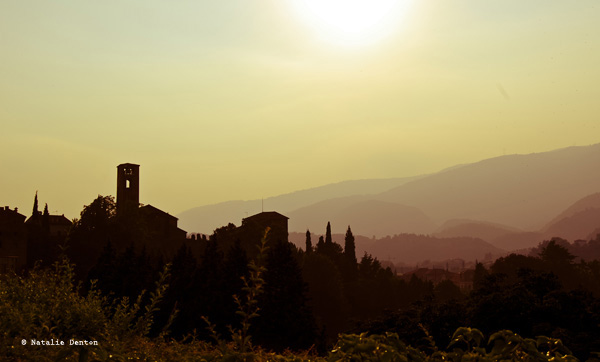
Sunrise and sunset can make for some truly arresting images. In order to capture the golden-flame light in all its glory you’ll need to arrive at your shooting location approximately an hour and a half before the actual event. Use half an hour to prepare your kit; attach the right lens, secure your camera on the tripod, decide on the composition, ensure the horizon is straight using the in-camera spirit level (if your camera has one) and program the desired values. If you’re using a tripod, turn the lens’ image stabilisation switch to off; and opt for a suitable ISO (ideally between ISO 200-800).

The best light is born an hour before sunrise and an hour before sunset, which is why you need to be there early – once the sun has risen or set the vibrancy of hues diminish, so enjoy the 60 minute build up with its soft caressing light, and capture the ever-changing colours of the sky and its effect on the land below. To add some extra punch to those tones try using a ‘cloudy’ white balance option for pumped up reds, oranges and yellows.

The great outdoors can offer up some wonderful subjects for night photography, and by using a long exposure the light of the moon will paint in the elements of your scene. Alternatively, if there is no moon or nearby light source, use a flashlight or even the beam from your phone. Simply compose the scene, opt for Bulb mode to keep the shutter open as long as you need, and flick the beam over the nearby subjects; such as a tree, boulder, hay bale, truck, etc. Move the beam smoothly and steadily, trying not to hold it in one place for too long. When you are finished painting with light, simply end the exposure and review the result.
Italian sunset landscape Natalie Denton

Editing

The hard work has been done and now you’re home with a collection of charismatic captures. While many of them are probably perfect straight out the camera, there might be a few ways you can inject a little extra interest into those not quite up to scratch. Here are a few suggestions for adding the ‘great’ into your great outdoors images.

Colours

Editing suites are fantastic for turning the bland into the beautiful; and if you’ve captured your images as RAW files, there’s even more scope for success. Make sure your screen is probably calibrated so that the colours you see onscreen are presented as the same as the ones you’ve photographed.

The majority of editing software will offer an automatic colour correction tool which is great if you feel the colour values are a little off and unrealistic. Usually you will be able to click on a white area of the image and the software will use this as a reading to change the colours in the image. You can do this manually by offsetting hues. For instance, should you feel the tones are looking a little cold, then warm them up by scaling up the yellow.

If you feel your image would benefit from some vivacious colouring, ramp up the power of the hues using the suite’s saturation slider, this works well for flower meadows or landscapes of patchwork-quilt fields. Just be careful not to go too far as it can start to look unrealistic and garish. Likewise you can pull the saturation back to make an image appear more sombre or stark, ideal for winter shots for example.
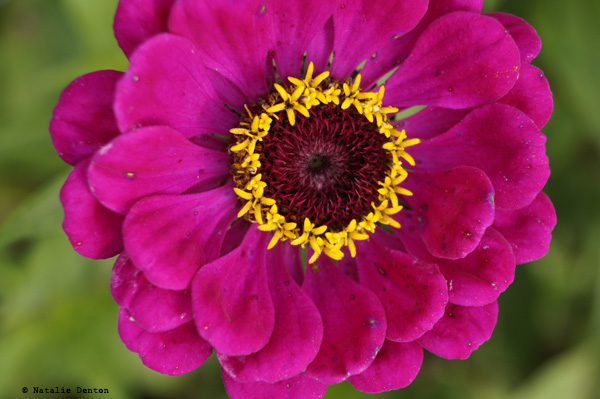
pink flower macro Natalie Denton

Blemishes

Dead pixels, lens spots and smudges can totally distract attention away from the main focus of your picture.  The good news is they are easily rectified. Many suites like Photoshop, Elements and Lightroom offer users the ability to clone out errors. In Photoshop you simply select the Clone tool, hold down Alt and click on an area you wish to copy (i.e. identical colour and shade – the more similar it is the better it will blend in). Next move the cursor to the offending spot and click again. This will cover up the spot and most people won’t be able to notice.

Noise

Most new cameras shoot to sensitivities of ISO 25,600 (or higher), with noise making an appearance as late as ISO 6400, providing better support for low-light, night and sports enthusiasts. For those who aren’t endowed with the market’s latest launches it might be wise to administer some noise reduction software if you’ve shot at high sensitivities and noise is visible. Noise-reduction software plug-ins (add-on features that can be used within your editing suite such as Noise Ninja, Topaz deNoise or Neat Image) are fantastic. After a few simple steps the noise can be muted without over-softening the main subjects within the picture.

Composition

We’ve all been there – you’ve spent ages composing the frame in the field, only to return home to find it falls flat. Composing images effectively takes time and practice or a good eye and natural talent, but there are a few ways to enhance the composition post-shoot. The first is to bring up the thirds grid while editing. Crop into the frame so that the interesting part of the frame or the main subject lies on one of the intersecting points or lines, this will get rid of unwanted negative space and force the eye onto the subject. You can also crop out areas of the frame that clutter the image, thus directing the viewer’s focus onto the important elements. Lock the aspect ratio to ensure the proportions of the image stay the same – especially if you intend to print it.
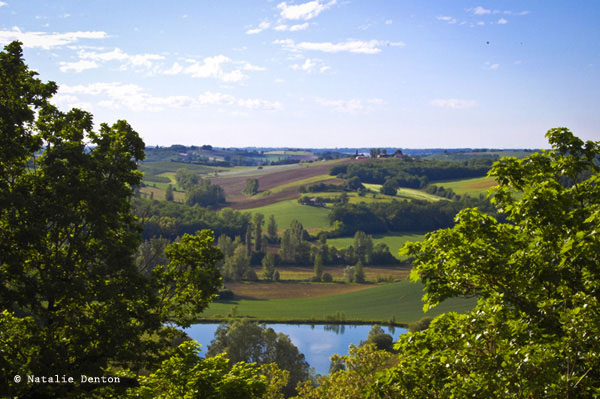
French landscape fields rural Natalie Denton

Exposure

Tools such as Photoshop’s Curves can help photographers correct slightly over or underexposed frames. Using Curves lift the line one third of the way from the top to reveal details shrouded in shadow or drag the line one third from the bottom down to bring edge back details blown out by overexposing.
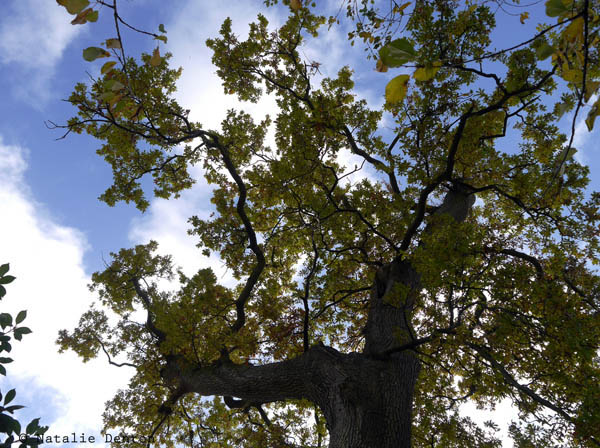
widen dynamic range correct exposure tree Natalie Denton

Black & White

Want to make your images more moody and deep? Simply desaturate them and heighten the contrast. Yes it’s as easy as that; drag the saturation slider down so that all traces of colour vanish from the frame and increase the contrast or tweak using Curves, so that the blacks are richer and the whites are brighter.
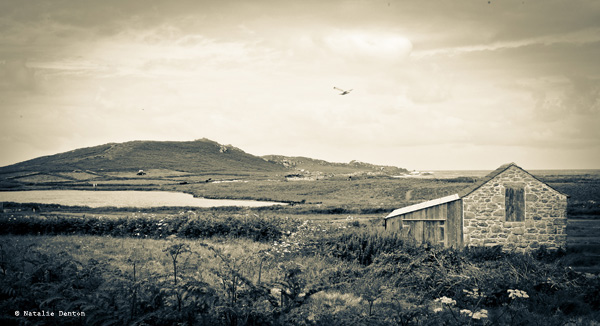
Cornish fallen down cottage Natalie Denton

Save and print

Today’s digital camera sensor’s usually pack an insane amount of megapixels, which means you can print your images at a larger size and still maintain a high resolution quality. Therefore if you want to print your outdoor scenes in all their glory, print using the resolution you shot it at. Alternatively if you intend to share your frames online – either of a social network or your own website reduce the size to 72dpi for quick and easy uploading and viewing. In Photoshop you can do this simply by heading to ‘Image’ on the Menu Bar and then ‘Image Size’ from the drop down menu and change its resolution to 72dpi (and a smaller size in pixels as well for online sharing)

Now we’ve explored the majority of considerations you need to make when pursuing outdoor photography you’ve got no excuse to give it a try. Maybe you have some tips and techniques of your own you’d like to tell us about? We’d love to see them, so please share them here for your fellow photographers to see and try!

The post Your Compete Guide to Outdoor Photography – Part Two by Natalie Denton (nee Johnson) appeared first on Digital Photography School.


Digital Photography School

 
Comments Off on Your Compete Guide to Outdoor Photography – Part Two

Posted in Photography


9. Februar 2014

10 Feb

Ein Beitrag von: Sandra Drljaca

© Sandra Drljaca


kwerfeldein – Fotografie Magazin

 
Comments Off on 9. Februar 2014

Posted in Equipment


Pawn Scars: 10 Closed & Abandoned Pawn Shops

10 Feb

[ By Steve in Abandoned Places & Architecture. ]

closed and abandoned pawnshops
Pawn shops and pawnbrokers typically thrive in economic downturns so how tough must the times be when even pawn shops throw in the towel?

Sold Out, Shut Down & Forgotten

abandoned pawnshop (image via: A City Of Gold)

Urban explorer and talented photographer iamrobbiejones captured the essence of a down-on-its-luck, abused and abandoned pawnshop in the striking image above. The photo in its sobering entirety can be viewed at the artist’s Instagram page, which admirably offers no hint of the closed pawnshop’s name or location.

Post-apocalyptic Pawn

Sam's Loans closed pawnshop Corktown Detroit (images via: Fireplace Chats and BBC World Service)

Sam’s Loans was a fixture of Detroit’s Corktown neighborhood through good times and bad. Opening in 1920, the three-story brick building gradually grew garish with painted and stenciled come-ons enticing Corktowners to cash in their valuables while the going was good.

Sam's Loans closed pawnshop Corktown Detroit (image via: Deano Around The World)

When the going gets tough, the tough get going and after 86 years in the pawnbroker biz, Sam decided he’d be going… out of business, that is. Besides the red-printed posted notice of retirement, one of the last additions to the cluttered exterior was a sign advertising “Pawn License For Sale”. That was in 2006 and years later there have been no takers. Full credit to Deano for the ominous and eerie image of Sam’s Loans posted a mere month before press time.

Flat Broke In Flatbush

Church Avenue pawn shop Flatbush New York(images via: Messy Nessy Chic, Barbara Snow and Fading Ad Blog)

The Church Ave. Pawn Shop in Flatbush, one of Brooklyn’s historic communities, occupied a majestic and reserved multistory building that was originally a bank. The transition from a bank to a pawnshop graphically illustrates the decline of this and many other inner city neighborhoods. Nothing against pawn shops and pawnbrokers, but this type of business is often one of the last to successfully operate in urban areas sinking towards the lowest level of decay.

Hong Kong Pawn

closed Hong Kong pawnshop Fu Yan Street Kwun Tong(image via: StrippedPixel.com)

Pawnshops are plentiful in Hong Kong where they often take on the functions of a neighborhood bank. To find a closed and abandoned pawnshop in urban Hong Kong is a rarity; the shop above is located on Fu Yan Street in Kwun Tong, an old and decrepit neighborhood slated for wholesale redevelopment.

Next Page – Click Below to Read More:
Pawn Scars 10 Closed Abandoned Pawn Shops

Share on Facebook


[ By Steve in Abandoned Places & Architecture. ]

[ WebUrbanist | Archives | Galleries | Privacy | TOS ]


WebUrbanist

 
Comments Off on Pawn Scars: 10 Closed & Abandoned Pawn Shops

Posted in Creativity


Organizing Images in Lightroom 5

09 Feb

Another great video right from Adobe Lightroom expert Julieanne Kost on how to organize your images inside Lightroom 5. This is one of those “non-sexy” things that you really need to know and understand or Lightroom can get really confusing for you. Watch as she explains how to move files, create new folders and get organize, all right inside Lightroom!

Organizing Images in Lightroom 5

For more on Lightroom check out these:

  • How to Add an Opacity Slider to Lightroom Develop Presets with The Fader Plug-In
  • Lightroom How To – One Tip and One Trick
  • A Concise Guide to Lightroom Develop Presets
  • How to Upload Photos to Flickr and 500px using Lightroom 5

The post Organizing Images in Lightroom 5 by Darlene Hildebrandt appeared first on Digital Photography School.


Digital Photography School

 
Comments Off on Organizing Images in Lightroom 5

Posted in Photography


browserFruits Februar, Ausgabe 2

09 Feb

Wir haben unser Magazin verbessert und einige kleine Designneuerungen für Euch. In jedem Genre seht Ihr jetzt viel mehr Artikel auf nur einer Seite, nämlich genau 15. So findet Ihr schneller und übersichtlicher Artikel, die Euch weiterhelfen können. Schaut Euch das doch gleich mal an, zum Beispiel im Genre Reportage. Ihr könnt auch Eure Lieblingsgenre einzeln als RSS-Feed abonnieren. Scrollt dazu auf der jeweiligen Genreseite ganz nach unten, dort findet Ihr den Link.


Fotospecial: Affen

Flickr

500px


Deutschsprachig

• Was passiert, wenn eine Fotolocation zu bekannt wird, hat Dariusz dokumentiert.

• Der Fotograf Theron Humphrey portraitierte auf seinen Reisen quer durch die USA immer wieder Maddy, seinen Hund, der erstaunlicherweise genau da bleibt, wo man ihn hinstellt.

• Steffen „Stilpirat“ Böttcher ist in Israel unterwegs und zeigt bereits einige beeindruckende Bilder.

• Richtig schön kalte und neblige Waldbilder haben wir hier entdeckt.


International

• Julia Gunthel ist wahnsinnig flexibel und zeigt akrobatische Posen als Sekretärin.

• Das sind die Fotos der Finalisten der Sony World Photography Awards.

• Dieser Tumblr sammelt Selbstportraits mit Fremden. Vielleicht ein kleiner Anreiz, mal mutiger zu werden.

• Synchronschwimmen kann wunderschön sein: Zu sehen sind auf diesen Bildern nur See und Beine, aber das reicht vollkommen.

• Wolltet Ihr auch schon einmal wissen, wie Eure Kinder in bestimmten Berufen aussehen würden? Vater und Fotograf Malo hat es ausprobiert und seine kleine Tochter in schönen Bildern inszeniert.

• Da die Ukraine derzeit immer wieder im Gespräch ist: So sah die Ukraine 1942 aus – und zwar in Farbe.

• Falls Euch Sebastião Salgado kein Begriff ist, findet Ihr hier Einblick in das Ausmaß seines kreativen Schaffens.

• Mensch oder Tier? Beides.

• Seung Hoon Park setzt Filmstreifen wieder zusammen und erschafft so großartige Fotos aus Fragmenten.

• Dariusz Klimczak erschafft wunderbar surreale Bilder.


Neuerscheinungen und Tipps vom Foto-Büchermarkt

Buchtipps

• „Photography Q&A: Fragen und Antworten aus dem Alltag eines Fotografen.“* Der US-Fotograf und Blogger Zack Arias beantwortet im Buch 100 Fragen, die Leser seines Blogs ihm gestellt haben. Diese Fragen umfassen sämtliche Aspekte der Fotografie und des Fotografie-Business: Motivation, Marketing, Visionen, Preisgestaltung, Markenbildung, Licht, Modelle, Work-Life-Balance, Technisches und vieles mehr.

• „Der Gang der Dinge: Welche Zukunft haben photographische Archive und Nachlässe“*: Wo und wie kann mein künstlerisches und schriftliches Archiv für kommende Generationen sicher aufbewahrt, erschlossen und zugänglich gemacht werden? Die Deutsche Gesellschaft für Photographie geht dieser Frage nach.


Wettbewerbe

• Der Greenpeace Photo Award 2014 sucht professionell Fotoschaffende, die mit offenem Blick durch die Welt gehen und das Thema Umwelt ideenreich und frisch ins Bild setzen. Einsendeschluss ist der 15. April 2014. Amateure und Studierende sind vom Wettbewerb ausgeschlossen.


Zitat der Woche

Ich erlebe eine schreckliche Klarheit in den Momenten, in denen die Natur so schön ist. Ich bin mir nicht immer meiner selbst bewußt, und die Bilder kommen wie im Traum.

Vincent van Gogh –

Mehr Zitate


Videos

Wichtiges Interview: Don McCullin spricht darüber, wie er als Mensch zu seinen Bildern steht.


Ihr erinnert Euch sicher auch noch an den Sprung von Felix Baumgartner aus der Stratosphäre zurück zur Erde. Dabei hatte er sieben GoPro-Hero2-Kameras am Körper, deren beeindruckendes Material hier zu sehen ist.


„Ruby“ ist das beeindruckende Stop-Motion-Video der Make-up-Künstlerin Emma Allen, für das sie sich selbst ganze fünf Tage lang schminkte und fotografierte. Wow!

* Das ist ein Affiliate-Link zu Amazon. Wenn Ihr darüber etwas bestellt, erhalten wir eine kleine Provision, Ihr bezahlt aber keinen Cent mehr.


kwerfeldein – Fotografie Magazin

 
Comments Off on browserFruits Februar, Ausgabe 2

Posted in Equipment