Ein Beitrag von: Henrik Hansen

kwerfeldein – Fotografie Magazin
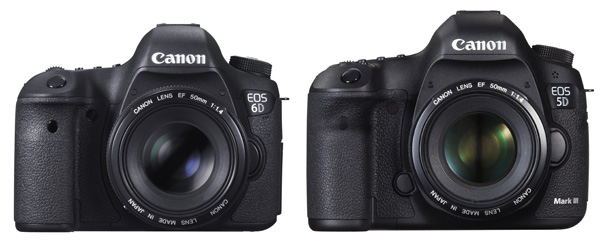
Now that Canon has two semi-professional full-frame cameras, the EOS 5D Mark III and EOS 6D, naturally photographers wonder which is the best model for them. As a former Technical Editor of EOS Magazine (the best magazine Canon owners could possible buy) I would like to share my insights.
But first, if you’re in the market for a full-frame EOS camera, let’s not forget the top of the range EOS 1D-X. This is a high-end, professional camera with a price tag to match. It’s big and heavy and built for the demands of a professional photographer’s life. Most photographers don’t need this much camera, but it’s interesting to look at because its size and price put Canon’s other full-frame cameras into perspective. Here’s a photo:

EOS 1D-X
Big, right? The body alone weighs 1340 grams (nearly three pounds) and will set you back nearly $ 6800 USD+tax if you buy it from B&H Photo Video. The weight and price alone mean this camera isn’t suitable for most non-professional photographers, leaving Canon’s other full-frame models, the EOS 5D Mark III and EOS 6D, as the available choices.
Let’s compare – Canon 5D MarkIII vs the Canon 6D
Let’s start by looking at what could be the deciding factor for some people – price. The EOS 5D Mark III costs around $ 3299. The EOS 6D is $ 1500 less expensive at $ 1799 (body only prices). That’s a huge difference, so why would anyone choose the 5D Mark III over the 6D? Let’s take a look.
I own an EOS 5D Mark II and I can tell you that it gets heavy when I carry it around all day. If you’re planning to carry a camera on a strap over your shoulder for hours at a time, then it makes sense to buy the lighter model, and use light lenses (such as the EF 50mm f1.4 lens in the photo below).
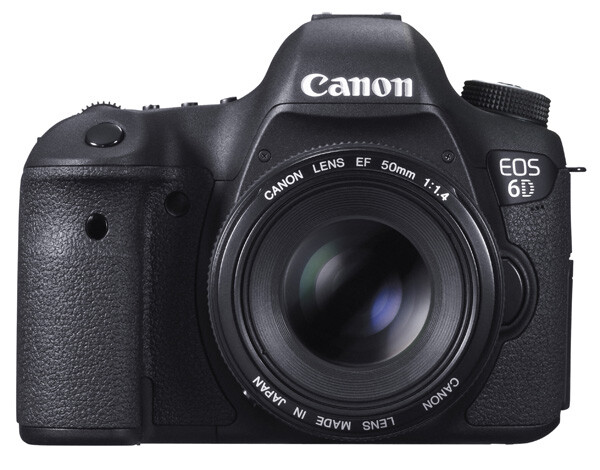
EOS 6D with EF 50mm f1.4 lens
On the other hand, if you are a landscape photographer, keep the camera mainly in the studio, or just take it with you on location and use it for a couple of hours then pack it away again, the weight probably makes no difference.
Bottom line: If size and weight are critical, then go for the EOS 6D. But not before considering autofocus performance!
Autofocus performance is the major difference between the two cameras. It is a big factor if you are into photographing sports, action, portraits or any moving subject.
Cross-type AF points are more sensitive, and therefore focus more accurately, than other AF sensors. This is especially important if you work at wide apertures (i.e. between f1.0 and f2.8) as depth-of-field is so narrow at these settings.
As an example, let’s look at how it works with portrait photography. Imagine that you’re taking a portrait of someone with an 85mm lens set to f1.8. Accurate focus is critical as depth-of-field is very narrow at this setting – you may have less than an inch of sharpness to play with. The normal way to focus in this situation is to use the AF point closest to the model’s eye. The photo below shows how this works by overlaying a diagram of the EOS 6D’s AF array over a portrait. The single cross-type AF point in the centre is shown in green, and the AF point the photographer would have to use is in red:

You can see the problem right away. As the only cross-type AF point is in the centre, you can’t use it to focus unless the model’s eye is also in the centre of the frame. You have to use one of the less sensitive, and therefore less accurate, AF points at the edge of the array.
With the EOS 5D Mark III the story changes. With up 41 cross-type AF points available (shown in red), it is far more likely you will find one to cover the model’s eye. The end result is that you will get more in-focus photos.

You can learn more about the autofocus of the EOS 5D Mark III in my article Understanding EOS Autofocus: The EOS 5D Mark III and EOS 1D-X
Bottom line: If autofocus performance is critical, then (budget allowing) go for the EOS 5D Mark III.
This is another major difference between the two cameras. However this time, and somewhat counter-intuitively, it is the EOS 6D that has the features and the 5D Mark III that does not.
Bottom line: If you need GPS or Wi-fi, then buying the EOS 6D will save you a lot of money.
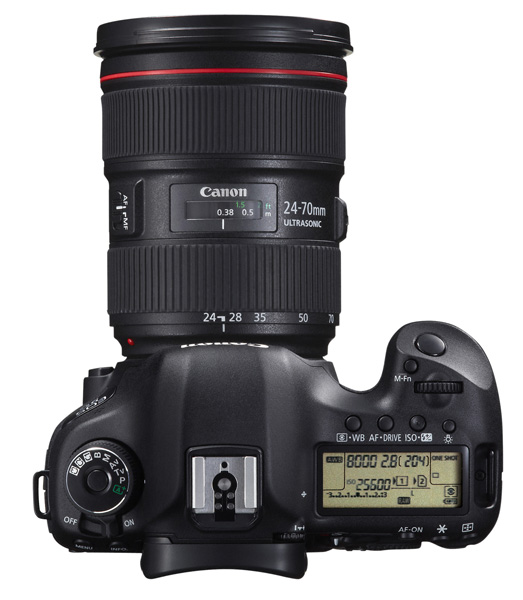
EOS 5D Mark III with EF 24-70mm f4 lens
One benefit of dual card slots is speed. CF cards are faster, which helps give higher burst speeds and assists with recording movies.
Another is security. You can set the EOS 5D Mark III to save photos to both the CF card and SD card slots at the same time, giving you a back-up in case one fails. Bear in mind it will slow the camera down as it takes longer to write a file to two cards, but it may give you peace of mind on important shoots. I imagine wedding photographers will greatly appreciate this feature.
Having said that, if you look after your memory cards, and buy a reputable brand, they are highly unlikely to fail. Most memory card failures are the result of corruption caused by user error, such as removing a card from a reader while the computer is writing to it.
Bottom line: If dual card slots matter to you, then you need the EOS 5D Mark III.
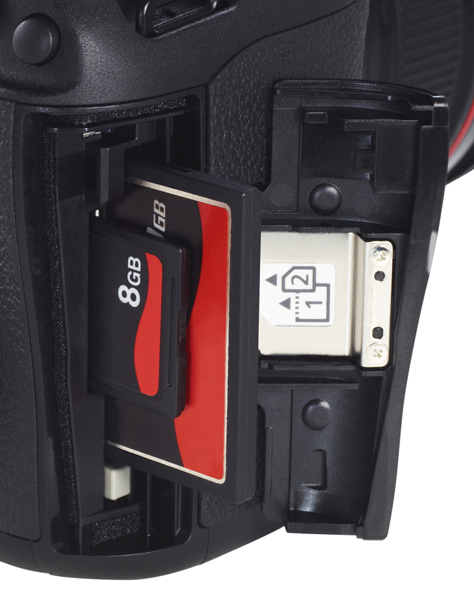
The dual card slots of the EOS 5D Mark III.
There are lots of minor differences between the two cameras, so I’ve provided some links to in-depth reviews so that you can get more information before making a purchasing decision. You’ll also see some photos taken with both models. In the meantime, if you own or have used either of these cameras, why not tell us what you think in the comments. Why did you choose one or the other, and do you think you made the best choice?
My ebook Understanding EOS is written for photographers who want to learn to get the best from their EOS cameras. Click the link to learn more.
The post Review: Comparison Canon 5D MarkIII vs the Canon 6D by Andrew S. Gibson appeared first on Digital Photography School.
Getting married but unsure of what kind of wedding photography you want? Flicking through various online galleries, websites, and blogs for inspiration? Never dealt with a professional photographer and not sure of what questions to ask? We profile the top ten wedding shots every Bride should have. From the wedding morning excitement, to when you finally say ‘I do’. We Continue Reading
The post Infographic: 10 Must-Have Wedding Shots for Every Bride appeared first on Photodoto.

creativeLIVE is hosting a five-day course on the fundamentals of digital photography presented by John Greengo. The course is free to watch live, and runs through tomorrow, Jan 24th. Some of you may remember John as one of the expert photographers that contributed to our Cyber Monday ‘DPReview Live’ broadcast. Click through for a link to the course at creativeLIVE.
News: Digital Photography Review (dpreview.com)
Ich möchte Euch ein Buch über Fotografie vorstellen, das über 250 Seiten hat, in dem aber nur 19 Fotos abgebildet sind. Wer zurecht erst einmal findet, dass das etwas mager klingt, sei beruhigt: Beim Lesen entstehen unendlich viele Fotos im eigenen Kopf.
Was ist das nun für ein Buch? Es handelt sich um „Bilder lernen laufen, indem man sie herumträgt“*, geschrieben von Deutschlands einzigem professionellen Daumenkinographen Volker Gerling. Im Jahr 2012 habe ich ihn bereits interviewt. Damals endete unser Gespräch damit, dass Volker sagte, er arbeite gerade an einem Buch über seine Wanderschaften.


Hier ist es nun, wenn man so will. Das vorliegende Buch ist in weiten Teilen das Tagebuch, das Volker Gerling auf seiner ersten Wanderschaft von Berlin nach Basel geführt hat. Versehen mit einigen nachträglichen Anmerkungen und Einzelbildern aus Daumenkinos, die an verschiedenen Stellen erwähnt werden.
Nachdem Volker im Sommer 2002 bereits monatelang den Menschen auf den Straßen und Plätzen Berlins seine Daumenkinos als Wanderausstellung auf seinem Bauchladen gezeigt hatte, beschloss er, im Sommer 2003 auf Wanderschaft zu gehen. Sein Plan für dieses dreimonative Vorhaben: Von Berlin über Leipzig, Regensburg und München nach Basel reisen. Zu Fuß, ohne Geld. Unterwegs neue Daumenkinos machen.
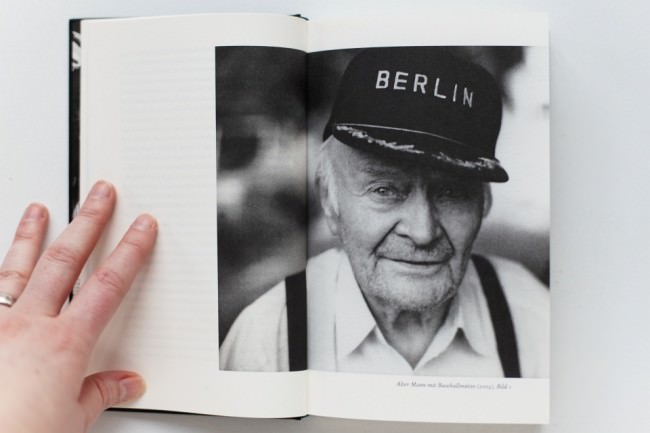
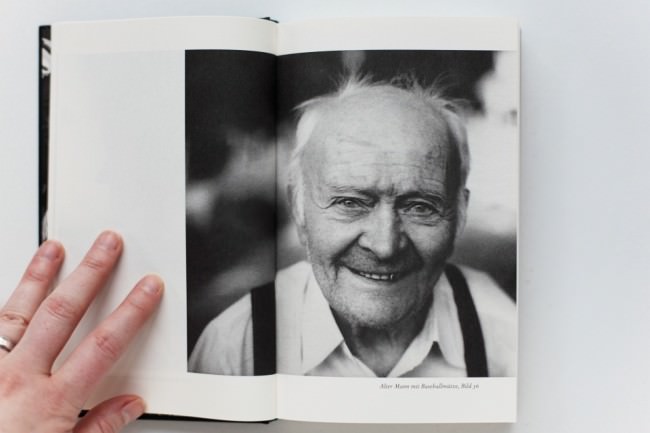
Anfangs läuft er zwar euphorisch, aber auch etwas ängstlich, was ihn erwarten wird, los. Relativ schnell ist er erschöpft, weil er an das stundenlange Gehen mit dem Gepäck noch nicht gewöhnt ist. Doch schnell macht er die ersten Begegnungen mit gastfreundlichen, interessanten oder auch einfach nur seltsamen Menschen. Sie geben ihm Verpflegung mit auf seine Reise und während sie seine Daumenkinos durchblättern, kann er das Leuchten und die Faszination in ihren Gesichtern beobachten.
In 36 Kapiteln kann man Volkers Reise nachvollziehen und immer mal wieder auf das hintere Vorsatz blättern, auf dem die Route quer durch Deutschland abgebildet ist. In jedem Kapitel hat mich immer wieder aufs Neue erstaunt, was für Begegnungen er hat. Wie viele Menschen neugierig auf diesen fremden Mann sind, ihm ihre Geschichten erzählen oder ihm einfach mit etwas Wasser aushelfen.
Manchmal ist er auch allein, zweifelt an allem und steigt einmal sogar als Tramper für ein paar Kilometer in ein Auto. Diese Spritztour endet aber mit dem Gefühl, dem eigenen Ich zu schnell vorausgeeilt zu sein und nun erst einmal warten zu müssen, bis man vollständig an Ort und Stelle ist. Wenn man monatelang zu Fuß unterwegs ist, bewegt man sich in einem ganz anderen Tempo.

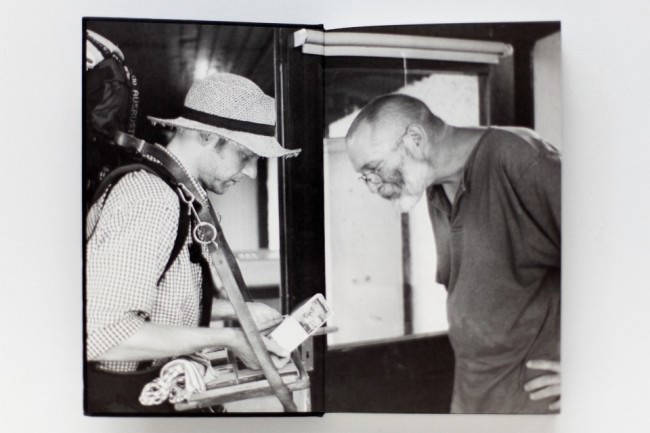
Warum beschreibe ich das hier alles, obwohl es nur wenige Fotos zu sehen gibt und es auch nicht darum geht, eine Anleitung zum Fotografieren zu lesen? Weil der Blick in Volkers Tagebuch meiner Meinung nach für mein fotografierendes Ich viel wertvoller ist als jede normale Anleitung und jeder Fotoband es sein könnte.
Man erfährt einige der innersten Gedanken von jemandem, der sich für ein paar Monate der Welt relativ schutzlos ausgeliefert hat, um ihr seine Fotos zu zeigen. Seine Fotos, die in den Händen der Betrachter zu kleinen Filmen werden, zu Ausschnitten des Lebens, die sich beliebig wieder und wieder sehen oder auch anhalten oder ganz langsam, Bild für Bild, betrachten lassen.
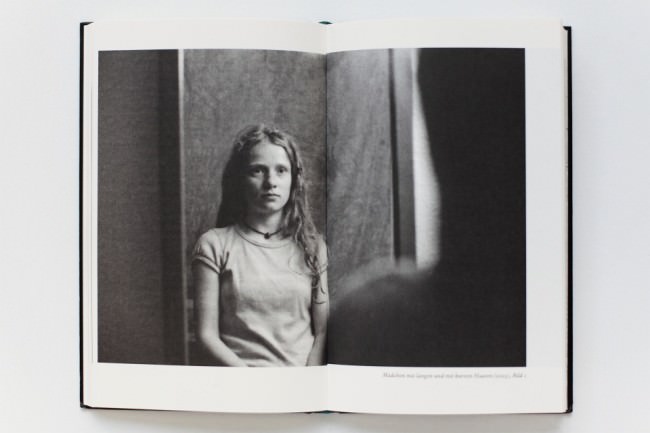
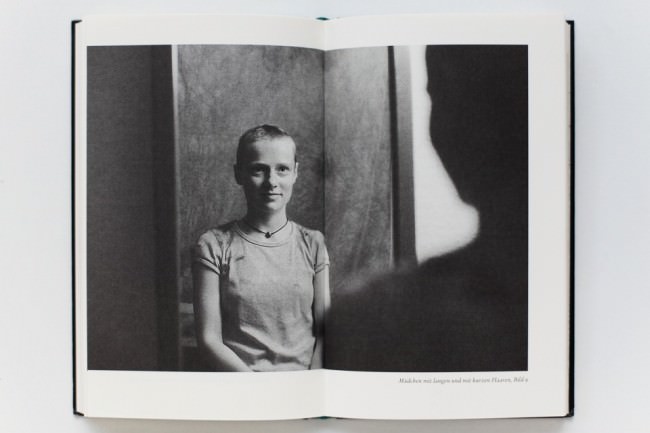
Hier erfahre ich aus erster Hand, wie anstrengend, aber auch wunderschön – für sich selbst ebenso wie für die Menschen, die man trifft – es sein kann, sich ganz seinen Bildern zu verschreiben und der Aufgabe, sie anderen zu zeigen.
Volker hat für sich beschlossen, dass es das Beste für ihn und seine Bilder ist, mit ihnen auf Wanderschaft zu gehen. Mich regt die Lektüre seiner Erfahrungen also dazu an, mich zu fragen, was das Beste für mich und meine Bilder ist. Wie sollten sie entstehen? Wie sollte ich sie der Welt zeigen? Und muss ich dafür vielleicht auch einfach mal aus meinem bequem eingerichteten Alltag heraus?
Was aus dieser Überwindung, dem Schritt hinaus, entstehen kann, erfährt man im Epilog zur Wanderschaft. Dem möchte ich hier natürlich nicht vorgreifen, nur soviel: Die Begegnungen und Begebenheiten seiner ersten Wanderschaft wurden zu den Ausgangspunkten neuer Wanderungen und Treffen mit Fremden nach vielen Jahren. Verbindungen zwischen Vergangenheit und Zukunft.


Wem kann ich „Bilder lernen laufen, indem man sie herumträgt“ nun besonders empfehlen? Allen, die sich manchmal fragen, ob Bildermachen allein schon alles ist. Allen, die manchmal das Gefühl beschleicht, dass ihre Bilder nicht allein vom Tutorialslesen besser werden. Allen, die sich für die Geschichten und Gedanken hinter Bildern interessieren.
Informationen zum Buch
„Bilder lernen laufen, indem man sie herumträgt“*
Autor: Volker Gerling
Verlag: Metrolit
Seiten: 256
Abbildungen: 20, schwarzweiß
Sprache: Deutsch
Maße: 21 x 12,8 x 2 cm
Einband: Hardcover, gebunden
Preis: 18,99 €
* Das ist ein Affiliate-Link zu Amazon. Wenn Ihr darüber etwas bestellt, zahlt Ihr keinen Cent mehr, wir erhalten aber eine kleine Provision.
kwerfeldein – Fotografie Magazin

When the Nokia Lumia 1520 was launched in October 2013 it was the first smartphone to offer Raw image capture. Now the same feature was recently added to the older model Lumia 1020. Our partners at DxOMark have put the Lumia 1020 through its Raw-based sensor testing. The results are worth checking out. Learn more on connect.dpreview.com.
News: Digital Photography Review (dpreview.com)

Last week, Fujifilm teased a new, apparently high-end X-series camera. Inevitably this has lead to a flurry of new rumors, much speculation about the camera’s specification, and now a slew of product photographs courtesy of Japanese site digicame-info.com, apparently showing an ‘X-T1’. At this point, we’re not sure whether Fujifilm will have anything new to announce when the camera finally gets officially launched. Click through for a taste of what’s (probably) coming up.
News: Digital Photography Review (dpreview.com)

We’ve come to the end of another week here at dpreview, and as our thoughts drift to weekend shooting opportunities, it’s time to take things a little less seriously. Aaron Johnson’s comic strip ‘What the Duck’ is just the thing, taking a gently satirical look through the lens of a photographically inclined waterfowl. You can find it published here (and in our newsletter) every week; we hope you enjoy it, and your weekend.
News: Digital Photography Review (dpreview.com)

Ricoh has released firmware version 3.00 for its GR compact camera. The list of updated features includes two options for folder name settings, ability to develop RAW images in different aspect ratios, and customization to assign various AFL Focus Settings to the AF button when the AF function switching lever is set to AEL/AFL (previously only Spot AF was available). Get the update
News: Digital Photography Review (dpreview.com)
Earlier I shared 35 stunning night photography images. I hope you got inspired by them because now it’s your turn!

By Simon & His Camera
This week’s challenge is night photography!
There are so many things you can do at night including:

By Justin Brown

By jason
The possibilities go on and on so you have no excuse for lack of subject matter or ideas. So grab your tripod (you’ll need it), your remote trigger, and a friend (helps if you’re light painting and is infinitely more fun than by yourself) and head out into the night to take some photos.
Check out these articles:

By Bill Dickinson

By Adrien Sifre
Once you’ve taken your ‘night photos we’d love to see them in comments below. Simply upload your shot into the comment field (look for the little camera icon in the Disqus comments section as pictured below) and they’ll get embedded for us all to see or if you’d prefer upload them to your favourite photo sharing site and leave the link to them.
The post Weekly Photography Challenge – Night Photography by Darlene Hildebrandt appeared first on Digital Photography School.
You must be logged in to post a comment.