RSS
 

Archive for November, 2013

23 November, 2013 – Free C1 Training Video Offer

24 Nov

Phase One has announced  that this weekend, the first 50 people to complete a purchase of a Capture One Pro 7 single user license in the Phase One online store will receive an unique voucher code to use at Luminous-Landscape, which grants a 100% discount on the tutorial a – USD $ 60 value.


The Luminous Landscape – What’s New

 
Comments Off on 23 November, 2013 – Free C1 Training Video Offer

Posted in News


Rare 1932 Leica fails to set record at Hong Kong auction

24 Nov

goldleica.jpg

A rare Leica camera has been sold at auction in Hong Kong for around $ 620,000 (~£380,000). The gold-plated 1932 Leica Luxus II is one of only four ever made, and comes in a crocodile skin case. The camera was expected to raise around $ 1.2 million at auction, but ultimately sold for around half of that amount. Learn more

News: Digital Photography Review (dpreview.com)

 
Comments Off on Rare 1932 Leica fails to set record at Hong Kong auction

Posted in Uncategorized


Weather – Weekly Photography Challenge

24 Nov

This week your photography challenge is to capture the weather, good or bad!  Too many photographers pack up their gear when the weather turn inclement but some of the most spectacular images can be had in less than ideal conditions.

weather-photography-challenge-02

I noticed this big thundercloud rolling over the prairies from a shopping mall parking lot. I used the sign in the shot and capture the streaming rays of the last of the sun.

Keep in mind weather is ALL kinds of conditions including a lovely sunny day, or a bitter cold winter frost. So wherever you live in the world you do have some kind of weather. Give yourself a challenge to show it and use it to your best advantage and share your images.

Don’t be afraid to get out and get dirty, just make sure your gear stays dry!

weather-photography-challenge-01

This is a closer version of the same storm, minutes later. The sun just hitting the horizon made for dramatic lighting. The lighting that happened 10 minutes later was also pretty dramatic! People were shooting this with their ipads in the parking lot out their car windows.

Related articles that might help you get idea

  • How to photography dramatic clouds at sunset
  • The Yukon’s Northern Lights – behind the scenes
  • Include Clouds in your Landscape

The thing with storms and crazy weather is you have to be ready. I had  my camera and tripod in the car with me so was able to capture these images. “They” say (they say a lot don’t they?) that the best camera is the one you have with you. So even if it’s your Smart phone, grab some shots. Better yet carry your camera with you, always, and be ready.

Once you’ve taken your ‘weather’ shots we’d love to see them in comments below. Simply upload your shot into the comment field (look for the little camera icon in the Disqus comments section as pictured below) and they’ll get embedded for us all to see or if you’d prefer upload them to your favourite photo sharing site and leave the link to them.

If you tag your photos on Flickr, Instagram, Twitter or other sites with Tagging tag them as #DPSWEATHER to help others find them. Linking back to this page might also help others know what you’re doing so that they can share in the fun.

Also – don’t forget to check out some of the great shots posted in last week’s  Show us your Gear challenge – there were some fantastic shots, many self portraits, submitted.

Happy shooting and have a great weekend!

Cheers,

Darlene-1-250x130


Post originally from: Digital Photography Tips.

Check out our more Photography Tips at Photography Tips for Beginners, Portrait Photography Tips and Wedding Photography Tips.

Weather – Weekly Photography Challenge

The post Weather – Weekly Photography Challenge by Darlene Hildebrandt appeared first on Digital Photography School.


Digital Photography School

 
Comments Off on Weather – Weekly Photography Challenge

Posted in Photography


Lomography Belair: Das seriöse Spielzeug

23 Nov

Als im letzten Dezember die Lomography Belair X 6-12 angekündigt wurde, herrschte in gewissen Kreisen eine kribbelige Aufregung. Zugegeben, man weiß bei lomografischen Kameras nie genau, was einen erwartet und wie der Balanceakt zwischen Plastiktrash und charmanten Effekten ausfällt, aber der Gedanke an Mittelformatfotos im Breitbildformat von 6×12 hat mich auch sofort gereizt.

Während ich noch ein paar Monate auf die Gelegenheit warten musste, eine Belair für kwerfeldein testen zu können, stapelten sich in der Lomography Community die nur mäßig begeisterten Reviews. Dass viele der Plastikknipsen ihre speziellen Eigenheiten haben, kennt man ja schon, aber bei dem stolzen Preis hatten die meisten etwas anderes erwartet.

Wobei sie neben einer dem Preis entsprechenden Qualität wohl vor allem eins erwartet haben: Dass auch die Belair wieder ein Schätzchen für den totsicheren Schuss im Vorbeigehen und aus der Hüfte ist. Aber weit gefehlt, denn riesiges Mittelformat heißt vor allem auch, dass der Schärfebereich selbst bei – im Vergleich zum Kleinbild – totsicheren Blenden von f/8 und aufwärts ziemlich schmal ist.

© Aileen Wessely© Aileen Wessely

Vor allem die Frage, wie man unter diesen Umständen sinnvoll fokussieren kann, treibt seitdem die Belair-Besitzer um, die trotz dieser Schwierigkeit und anderen technischen – nennen wir es mal: – Unzulänglichkeiten einfach nicht die Finger von ihr lassen können.

Durch diese Berichte, die ersten veröffentlichten Tipps und Tricks sowie meinen eigenen Erfahrungen mit der Kodak Junior, die ähnlich schwer zu fokussieren ist, war ich also schon vorgewarnt, als die lang erwartete Belair endlich zum Testen bei mir eintraf.

© Aileen Wessely© Aileen Wessely

Ursprünglich hatte ich die Idee, den ersten Film ganz naiv zu belichten, als wüsste ich von nichts. Da ich aber wie gesagt nicht ohne auch praktische Vorkenntnisse war, warf ich die Idee über Bord, las fleißig Reviews und Tipster in der Lomography Community und setzte direkt einige davon beim ersten Testfilm um: Ein Pappschnipsel eingeklebt zur Vermeidung locker aufgewickelter Filme und eine Entfernungskarte zum Fokussieren, angepasst auf meine persönliche Armlänge und Augenabstand.

Letztere funktioniert sehr gut, wenn man sie unter den gleichen Bedingungen herstellt wie man sie auch einsetzt. Ich hatte leider zuhause im T-Shirt gemessen und stellte unterwegs mit Jacke und Rucksack auf dem Rücken fest, dass meine ausgestreckten Arme nun näher am Körper waren. Aber deswegen heißt es ja auch „Testfilm“.

© Aileen Wessely© Aileen Wessely

Als größeres Problem identifizierte ich nach der Entwicklung des ersten Films den Parallaxenfehler des Suchers. Da ich bisher fast ausschließlich mit Spiegelreflexkameras gearbeitet habe, war für mich neu, was viele andere sicher schon von ihren Kameras kennen. Ich musste also erst ein Bauchgefühl dafür entwickeln, bei welcher Entfernung ich den Aufnahmewinkel wie stark korrigieren muss, damit die abgebildeten Objekte oben nicht angeschnitten werden und unten nicht mehr als gewünscht zu sehen ist.

Davon abgesehen war ich mit den Bildern des ersten Films (inklusive unbeabsichtigter Doppelbelichtung) soweit zufrieden. Also nahm ich die Belair für ein Wochenende nach Utrecht mit und ging direkt zum Panoramaformat 6×12 über. Das Format 6×9 kenne ich schon von meiner Kodak Junior und mit dem altbekannten Seitenformat 2:3 finde ich es am wenigsten spannend.

© Aileen Wessely

Den zweiten Film (im Panoramaformat nur sechs Bilder!) füllte ich am Samstag, aber ich hatte nur wenig Zeit und meine Stimmung war mittelmäßig, was man der Motivwahl und den Ergebnissen ansieht. Zum Glück war das dank des tollen Wetters am Sonntag anders und so konnte die Belair an der Oudegracht zeigen, was sie kann.

Besonders für Panoramen im Hochformat finde ich das Format großartig, erst recht im Zusammenspiel mit den am Mittelformat schön weitwinkligen 58mm einer der zwei verfügbaren Brennweiten. Neben dem auszugleichenden Parallaxenfehler muss man aber auch darauf achten, den Bildausschnitt im Sucher nicht zu knapp zu komponieren. Er zeigt nach links und rechts wohl etwas mehr als dann tatsächlich auf dem Film landet.

© Aileen Wessely© Aileen Wessely

Nachdem ich mit den Eigenheiten der Belair halbwegs vertraut zu sein schien, entwickelten sich beinahe automatisch Ideen für konzeptuellere Kleinserien im Format 2:1 in meinem Kopf. Das extreme Format schien mir förmlich nach Architektur, nach strenger Bildaufteilung, Symmetrie zu schreien. Aber auch Landschaften schienen mir passend.

Also zog ich los und klapperte für einen Film einige U-Bahnhöfe und für einen anderen den nahegelegenen Stadtwald ab, um Langzeitbelichtungen zu machen. Das Problem mag auch gewesen sein, dass ich weder den richtigen Dreh raus hatte, um die Menschenmassen in amorphe Ungetüme zu verwandeln, noch dass sich im Wald ein Lüftchen regte, das an überhaupt einem Ast gezerrt hätte.

© Aileen Wessely

Die größeren Probleme beim Betrachten der Bilder waren dann aber erneut der Parallaxenfehler, der all meine Symmetrieversuche vereitelte und die eher mäßige Eignung der Belair für Langzeitbelichtungen aufgrund ihrer Verarbeitung. Da sich der Auslöser am ausgezogenen Verschluss befindet, wackelt die ganze Kamera bei der Betätigung etwas. Das sieht man dann leider.

Passend zu den Wechselobjektiven gibt es auch Wechselsucher. Durch einen Dreh um 90° wird der Sucher fixiert. Allerdings rastet er nicht fest ein, weshalb es mir immer wieder passiert ist, dass er nicht exakt gerade nach vorn ausgerichtet war. So kam auf einigen Bildern zum Parallaxenfehler verikal noch ein Schwenkfehler horizontal.

© Aileen Wessely© Aileen Wessely

Die Sache mit der Architektur, Symmetrie und durchkomponierter Bildaufteilung im schönen Format 2:1 ließ mich noch nicht los. Einen letzten Versuch unternahm ich hier: Doppelbelichtungen von jeweils dem gleichen Motiv, aber kopfherum. Natürlich wieder Parallaxenfehler auf unterschiedliche Entfernungen ausgleichen.

Letzteres gelingt mir einfach nicht so gut, wie es meine Motivideen bräuchten, auch wenn es besser wird. Dafür klappt das Schätzen der Entfernung immer besser, sodass die Schärfe nicht mehr so heftig daneben liegt wie bei meinen ersten Filmen.

© Aileen Wessely© Aileen Wessely

Inzwischen gibt es zwar auch ein fertiges 35mm-Back zu kaufen, mit dem man komfortabel Kleinbildfilme in der Belair belichten kann, aber bevor diese Möglichkeit bestand, kamen die ersten schon darauf, es mit Hilfe von etwas Pappe zu machen, die die Kleinbilddose im Inneren der Kamera an ihrem Platz hält.

Dazu noch etwas Pappe, die von außen das Zählfenster gegen einfallendes Licht schützt und vor dem Loslegen „Klicks zählen“, um nach Gehör in etwa die richtige Menge Film nach jeder Auslösung weiterzuspulen. Ich entschied mich für einen Diafilm, der nach Crossentwicklung einen grauen Träger bekommt und so für mich sehr einfach zu digitalisieren wäre.

© Aileen Wessely

In der folgenden Zeit trug ich die Belair zur Abwechslung eher im Alltag mit mir herum und hielt Ausschau nach Motiven, die farblich ansprechend und für das extreme Panoramaformat von 3:1 interessant sein könnten.

Zum auszugleichenden Parallaxenfehler und eventuell verdrehten Sucher kam nun noch die Herausforderung, mich im Sucher auf das mittlere Drittel zu konzentrieren, in dem etwa der Kleinbildfilm liegen würde. Ich hatte eigentlich gedacht, dass das nur schief gehen kann.

© Aileen Wessely

© Aileen Wessely

Aber, Überraschung: Der Kleinbildfilm gehört zu meinen Belair-Filmen mit der besten Ausbeute. Klar, muss man mögen: Extremes Panoramaformat mit Sprockets, den Aufschriften am Filmrand und seltsamen Farben von der Cross-Entwicklung.

Aber bis auf wenige Aufnahmen sitzen der Bildausschnitt und die Schärfe. Ich kam also langsam wirklich in Fahrt. Das Gespür für die Belair entwickelte sich, der bisher immer wieder etwas vorhandene Frust wich mehr und mehr der Freude an den Ergebnissen, die zusehends funktionierten.

© Aileen Wessely

© Aileen Wessely

Zum Abschluss wollte ich noch ein ganz andersartiges Projekt mit der Belair umsetzen. Portraits sollten es werden und da ich nun einige Schwierigkeiten im Umgang mit ihr kannte, war klar, dass ich die Szene vor einem Stativ mit ausgemessener Entfernung aufbauen wollte.

Es durfte also ruhig in einem Zimmer sein, längere Belichtungen wären kein großes Problem. Nun keine strengen Linien mehr, sondern das Gegenprogramm: Zum verträumten Seitenlicht auch ein verträumtes Outfit und Styling sowie ums Objektiv etwas Folie für einen Wischiwaschi-Effekt ringsrum.

Die Idee, die mir hier erst kam, hätte ich früher vielleicht gut gebrauchen können, um dem Parallaxenfehler Herr zu werden: Vorm Einlegen des Filmes setzte ich eine milchige Plexiglasscheibe an die Rückseite der Belair, auf der sich nun (im Dunkeln, also Tuch drüber) das exakte Bild abzeichnet, wenn man die Blende öffnet. So konnte ich mein Modell X. also schön mittig im Bild ausrichten.

© Aileen Wessely© Aileen Wessely

Wenn ich mir also irgendwann eine eigene Belair kaufe – und ich bin geneigt – dann werde ich als erstes den Aufbau mit Stativ und Plexiglas wiederholen und mir mit einem für verschiedene Entfernungen abgemessenen Testaufbau die Abweichung zwischen Sucher und tatsächlichem Bild ansehen.

Damit sollte es möglich sein, sich Notizen zu machen, mit denen man unterwegs einen besseren Anhaltspunkt erhält, wie stark das Sucherbild abweichen muss, damit es passt. Also, Parallaxenfehler: Ha!

Belair X 6-12 Trailblazer © Lomography

Den Anblick der Belair habe ich Euch bisher vorenthalten: So kann sie aussehen. Aktuell sind die drei Modelle „City Slicker“, „Jetsetter“ und „Trailblazer“ lieferbar. Hier sehr Ihr letzteres.

Mein Fazit nach neun Filmen und viel Ausprobieren: Während das Prinzip des gekonnten Huftschusses auf einer Party bei vielen anderen lomografischen Spielzeugen ohne Zweifel funktioniert, muss die Belair sich deutlich anders einordnen und hängt so etwas zwischen zwei Stühlen.

Der Preis, die Bildanzahl pro Film, die schmale Schärfeebene und die recht lange kürzeste Belichtungszeit sprechen dafür, Aufnahmen genau zu planen und dabei möglichst auch ein Stativ zu verwenden. Andererseits zwingen einige Teile der Verarbeitung und technische Eigenheiten einen geradezu, zu tricksen, zu experimentieren und ein sehr speziell auf diese Kamera geeichtes Bauchgefühl zu entwickeln.

Geeignet scheint mir die Belair also vor allem für Menschen, die den Ehrgeiz, die Geduld und den Geldbeutel dafür aufbringen, diese kleine Zicke beherrschen zu lernen. Zugegeben, das ist eine wirklich überschaubare Zielgruppe, aber diese wird auf der Höhe der Lernkurve dann auch mit feinen Bildern belohnt.

~

Lomography Belair X 6-12

Kameratyp: Ausziehbare Balgenkamera
Filmtyp: Mittelformat (120) im Format 6×6, 6×9 oder 6×12
Objektiv: Wechselobjektive 58mm und 90mm
Sucher: aufsteckbare Wechselsucher für 58mm und 90mm
Blende: f/8 oder f/16
Batterie: 2 x 1.5V (2 x LR44)
Modus: Zeitautomatik, ohne Batterie 1/125 s oder Bulb-Modus
Fokus: manueller Zonenfokus: 1 m, 1,5 m, 3 m und unendlich
ASA-Einstellung: manuell: 50, 100, 200, 400, 800, 1600
Filmtransport: manuell über Zählfenster
Blitz: Blitzschuh-Anschluss vorhanden
Stativanschluss: 1/4 ”
Lieferumfang: Kamera, zwei Objektive, zwei Sucher, drei Filmformatmasken
Preise: 249 € (City Slicker), 299 € (Jetsetter), 349 € (Trailblazer)
Zusatzausstattung: Belairgon-Objektive 90mm und 114mm, 35mm-Rückteil


kwerfeldein – Fotografie Magazin

 
Comments Off on Lomography Belair: Das seriöse Spielzeug

Posted in Equipment


Working with a Second Shooter – Legal Ins and Outs

23 Nov

The Importance of Being or Having a Second Shooter

second-shooter-event-photography-02

If you have ever done any kind event photography, weddings in particular, you already know how important it is to hire a second shooter. You’re trying to adequately photograph hundreds of people, often in multiple locations in the same venue. You’re good, but you’ve yet to master the finer points of time travel and being in two places at once. Similarly, if you’re still looking for your way into professional event photography, you already know how important it is to be a second shooter. This is your chance to learn from someone who has already walked in your footsteps. It is the opportunity to hone your skills, connect with a mentor, establish relationships, and start building your portfolio.

Ownership of the Images

But who owns the second shooter’s photographs?

Common sense would dictate that if I am contracted to shoot an event, all of the photos taken by me or anyone working for me fall under my copyright, and therefore belong to Guyer Photography. One of the main things I learned in 14 years of practicing law, however, is that contractual situations are rarely ever common, and are often devoid of sense.

“Whoa. Hold On. Did you just say, ‘contract?’”

Yes, but relax, we’ll come back to that in a minute.

For now, it’s important to know that copyright law makes two facts abundantly, and undeniably clear. First, an image is copyrighted from the moment the shutter clicks. I’m not going to get into copyright registration  in this article, except to say that registration is not necessary for copyright protection to take effect. Compose, focus, click, done. Copyright protection. That’s it. Just like magic. It is the second fact, though, that creates a potential problem for photographers and their second shooters. Not only does the copyright spring to life  at the very moment of capture, but the copyright actually belongs to the photographer who presses the button.

I’m going to go get myself a snack while you ponder the ramifications of that point.

guyer-photography-second-shooter-copyright-1

Okay, so by now you’re thinking about your images showing up on your second shooter’s website and the value of those images deflating like a hot air balloon in a thunder storm. But, have you also considered that if the second shooter owns the image they may also be able to prevent you from sharing, blogging, posting, tweeting, advertising, marketing, printing,  or doing anything with it other than passing it along to the client? There are so many ways that this copyright ownership technicality can take an otherwise great working relationship and turn it sideways if you aren’t careful. It’s a scary proposition, but it’s a minefield which can be easily avoided if you just take a few simple steps to protect yourself.

Put it in Writing

Most photographers who hire second shooters, do so on a job-by-job basis. They are there to do what you need them to do, when you need them to do it, but technically they are independent contractors, not employees. As such, having a contract in place is essential. A photography work for hire contract will cover everything from copyright and compensation, to confidentiality and liability.

Copyright – Retain It, But Be Fair

This is going to be the most important paragraph in the entire contract. Here is where the photographer stakes their claim to the copyright of all images taken by their second shooter in the course of photographing the event. The language must be clear that the photographer retains all copyrights associated with the second shooter’s images. If your contract contains nothing else, make sure it contains this copyright protection. Without it, it’s your second shooter who owns the images outright, not you.

This is also where the photographer may choose to outline what rights, if any, the second shooter has to those images. I may choose, for instance, to allow the second shooter to use his or her photos in a print portfolio but not on a website. Or, I might tell them they can have unrestricted use of the images, but not until six months after the wedding date. Another option might be to let them use the images on their website, as long as it bears a credit line that reads “Photographed for Guyer Photography.” You can come up with any set of conditions you feel to be reasonable, but you are also well within your rights to explicitly state that they cannot use the photos ever, for any reason. Obviously, this is an extreme example and I do not recommend it. A good second shooter works hard and should have something to show for it.  They also have their own communities in which they share their experiences and opinions. If word gets out that you aren’t letting your second shooters use their images, good luck finding any who want to work with you down the road.

You are in business for a reason, and giving away your copyright is not that reason. As outlined below, there are other important elements to the contract, but getting the ownership question answered early and clearly is crucial to the survival of your business.

guyer-photography-second-shooter-copyright-2

The Relationship

It is important to clearly state that the second shooter is not an employee, but an independent contractor. If they are an employee, you could be responsible for liability issues, as well as insurance and taxes. Any one of these could push you into a variety of financial pitfalls. Be clear, and spell it out. Leaving it open to interpretation will only lead to headaches down the road.

Compensation

This is pretty basic. You have to make sure that the contract properly reflects whatever compensation you’ve negotiated with your second shooter. Be specific. If you are paying them a flat rate for the entire job, indicate that in the contract. If you are paying them hourly, make it clear what the rate is and how many hours you plan to cover, as well as an agreed-upon rate for overtime. Events rarely stick to a schedule and often run longer than expected. If you are contractually bound to pay for six hours, plan for what happens when the reception is still going strong at six and a half hours. You don’t want to be negotiating this while you’re waiting to get the shot of the bride and groom leaving. This is also the section of the contract where you need to cover expenses like parking, meals, travel, etc.

Gear

This is the perfect place to spell out what gear you expect your second shooters to have with them when they show up at the venue. Whenever I hire a new second shooter, one of the first things I do is email them a complete list of my gear and ask them to send me a complete list of theirs. By detailing what is expected of them up front, I avoid unpleasant surprises on the day of the wedding.

Delivery Schedule

Some photographers put delivery schedule in the contract, and some don’t. I put it in, not because I feel the need to tell you how much time you have to get your images to me after the event, but to make sure you understand that I will hide your car keys in the bushes if need be to ensure you go absolutely nowhere before clearing your memory cards onto my laptop. I realize this comes off a bit harsh, but there are practical reasons behind it. First, I was burned once and had to refund an entire wedding because the second shooter lost an important memory card. Second, unless the second shooter is going to be editing the images, there’s really no reason to wait.

second-shooter-event-photography-01

Liability

As long as you’re getting everything else in writing, why not take a few lines to address what happens when your second shooter breaks your equipment, or gets broken himself. What unforeseen expenses are you willing to take on and which will you make certain he understands are his personal responsibility?  If you don’t deal with it as a possibility in the contract, it will be too late to deal with it as a reality in the emergency room.

Confidentiality and Non-Compete Clauses

I was extremely lucky when I started out in this business. I found amazing photographers who were generous with their time, knowledge, and gear. I believe in giving back and paying it forward. If you work for me as an assistant or second shooter there is virtually nothing I won’t share with you. I’ll answer your questions, make suggestions, offer critique, and tell all my friends about you, to help get you more work. I’ll do all of that and more, right up until that moment when you break my confidence. My event is not the time or place for you to be handing out your freshly printed business cards. When you meet your friends for drinks after the job do not discuss my prices, my marketing materials, or even this contract. You’re looking for your place in this profession and I want to help. Look out for me and I’ll look out for you.

Ideally, you and your second shooter should be able to view this contract as a mere formality. If you can’t, you may not be right for each other. But if you can, the two of you could be on your way to a long, mutually beneficial relationship. Honest and open communication of expectations is an important two-way street. Nobody wants to train a new second shooter every time an event comes along. You want someone in your corner who has your back and knows how you want things done. As much as you may like and respect your second shooter, you both need to get on the same page and make sure that reasonable expectations are met, particularly and most importantly when it comes to ownership of the photos.


NOTE: The advice in this article and the accompanying sample contract is based on my experience as a professional photographer and does not constitute legal advice. While the principles discussed are widely applicable, every jurisdiction is different and you should consult a local attorney for specific legal advice. – JJG

Editors note: Please keep in mind this article is the writer’s opinion on how to handle this issue. I’m sure each photographer has a different approach to hiring second shooters. If you have any suggestions or comments please add them below and let’s have a discussion. 

Post originally from: Digital Photography Tips.

Check out our more Photography Tips at Photography Tips for Beginners, Portrait Photography Tips and Wedding Photography Tips.

Working with a Second Shooter – Legal Ins and Outs

The post Working with a Second Shooter – Legal Ins and Outs by Jeff Guyer appeared first on Digital Photography School.


Digital Photography School

 
Comments Off on Working with a Second Shooter – Legal Ins and Outs

Posted in Photography


What to buy and why: Enthusiast interchangeable lens cameras

23 Nov

EnthusiastILC_2.jpg

The holidays are a great time to take pictures — and they’re a great time to get a camera for yourself or for a loved one. With more than 50 cameras going through the hands of the DPReview team over the year, we’ve seen it all (or so we think). Based on our collective knowledge we hope this guide will help you make an informed decision on which camera will fit your needs. In part 1, we look at enthusiast interchangeable lens cameras.

News: Digital Photography Review (dpreview.com)

 
Comments Off on What to buy and why: Enthusiast interchangeable lens cameras

Posted in Uncategorized


Secular Conversion: Historic Chapel Turned Modern Library

22 Nov

[ By Steph in Architecture & Public & Institutional. ]

Historic Chapel Modern Library Renovation
A beautiful old chapel in the Italian town of Lonate Ceppino has been transformed into a modern library with a  perforated aluminum tower that adds to the building without compromising its historic character. Italian architects DAP studio restored the traditional architectural features of the Oratory of San Michele before converting it for a new use with the sleek white extension.

Historic Chapel Modern Library Renovation 2

Historic Chapel Modern Library Renovation 4

The new two-story volume stands off to one side of the original structure, connected via stairways. The top part tapers inward to allow for the preservation of the chapel’s overhang. The new volume contains bathrooms, archives and technical systems, while the bright open spaces of the church hold the books.

Historic Chapel Modern Library Renovation 5

Where one building is solid and opaque, the other is translucent, shimmering in the sunlight. The small volume connecting the chapel and the extension features a glazed roof to let in more sunlight without substantially altering the architecture of the historic structure.

Historic Chapel Modern Library Renovation 3

This library is hardly alone in making creative use of old churches, monasteries and temples. Check out the incredibly grand ‘Waanders In de Broeren’ 15th-century Dominican church-turned-library, and many other religious-to-secular conversions.

Share on Facebook


[ By Steph in Architecture & Public & Institutional. ]

[ WebUrbanist | Archives | Galleries | Privacy | TOS ]


WebUrbanist

 
Comments Off on Secular Conversion: Historic Chapel Turned Modern Library

Posted in Creativity


22. November 2013

22 Nov

Ein Beitrag von: Andrea Peipe

Andrea Peipe


kwerfeldein – Fotografie Magazin

 
Comments Off on 22. November 2013

Posted in Equipment


10 Tips to Motivate You out of a Photography Rut

22 Nov

Are you stuck in a rut?

Have you reached a point where all your photos start to look the same? Feeling uninspired? Or maybe you haven’t gone shooting for a while at all?

It happens to us all now and then, kind of like writer’s block. When we get too comfortable with what we do, we get into a routine and everything starts to look the same. This is why it’s important for artists to break out of our own molds from time to time.

photography rut and motivation Prairie Dog, Devils Tower National Monument, Wyoming, by Anne McKinnell

Prairie Dog, Devils Tower National Monument, Wyoming.

To help motivate you out of your photography rut, here are some of the best ways to get your creative juices flowing.

10 Tips to Motivate You out of a Photography Rut

#1 Explore other art forms

First of all, just remind yourself that it’s okay to think about something other than photography for a little while! Allowing your mind to take some time off will relieve the stress and tension that builds the scaffolding for creative blocks. Instead, devote some time to exploring other art forms to feed your creative soul – go watch a play, listen to music, check out a museum, or read some poetry. All of these experiences feed the muse, where they become thoughts, which associate with other thoughts, to then become new ideas.

photography rut motivation - The Museum of Man, Balboa Park, San Diego, by Anne McKinnell

Museum of Man, Balboa Park, San Diego

#2 Look at other artists’ work

But how do you know what to do, if you’ve never done it before? For inspiration, see what other people are doing. Look at pictures from other visual artists that you admire, or find a photography exhibit at a local gallery or museum. Go to the library and flip through photo books. Absorb as much as you can. Which photographers do you like best? What is it that you like about each of them, and what do they all have in common? Think about how each photograph was created and ask yourself: which direction is the light coming from? What focal length, aperture, and shutter speed do you think were used?

#3 Look at your own work

Open up your boxes and folders of old photos – the older, the better! As you look over them, think about how you’ve progressed as a photographer. With each photo, ask yourself what you would do differently if you were taking it now, with all you’ve learned since that time. Be honest with your self-critique; admit to yourself when something doesn’t work out, but be sure to congratulate yourself when something does. Feelings of accomplishment build your confidence to create new things.

#4 Try a new style

There are many styles of photography – portraiture, nature, street, abstract… the list can go on and on. If you’re getting too embedded in your usual style, step out of it and try something completely different. If you usually photograph people, photograph animals or still life instead. If you’re into landscapes, you could try your hand at street or architecture photography. You could even shoot exclusively in black and white for a while. Just do something you’ve never done before!

Try some new processing techniques too!

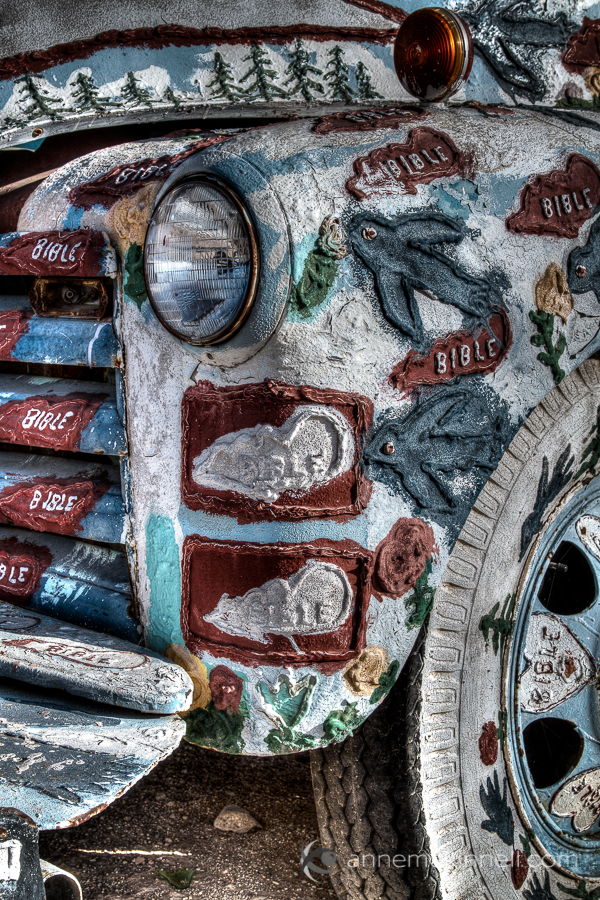
photography rut motivation - Anne McKinnell

Car decorated with bible quotes at Salvation Mountain, California.

#5 Re-create an image

If you find an image (either yours or someone else’s) that really interests you, grab your camera and do your best to emulate it. Look closely at the settings, lighting, depth of field, degree of blur (or lack thereof), the camera’s angle of view, and try mimic it with the tools and locations you have at your disposal. This is a fun and educational exercise that really gets the blood flowing through your creative brain.

#6 Take a class

Talking to others about photography can do wonders to rekindle your passion; seek out other photographers and try to connect with them. This could mean taking a recurring class, a one-day workshop, or joining (or creating) a local photography club. The artistic critique – the practice of discussing your work, as well as the work of others in a group setting – offers so many new opportunities to see things from differing points of view. Feedback, whether strictly positive or even constructively helpful, is very nourishing to the creative spirit.

#7 Borrow some new equipment

Having a new toy to play with can spark all sorts of ideas and inspiration in your imagination. If you are lucky enough to have a fellow photo friend who happens to shoot with the same kind of camera that you do, maybe you can share lenses or other accessories (flashes, etc.). You can also check with your local camera store about renting lenses and camera bodies, or borrow through a reputable online lens rental agency.

On the other hand, if you want to go lo-fi instead, you could opt to get your hands on a 35mm camera (they’re everywhere – try a thrift store) and some film (yes, they do still make it). Limiting yourself to the 36 shots per roll forces you to think about each frame more carefully, and is a completely different way to approach photography.

photography rut and motivation Bicycle with flat tire and Mardi Gras beads in New Orleans, by Anne McKinnell.

The effects in this image of a bicycle’s flat tire were achieved using a Lensbaby.

#8 Offer your services

If the opportunity arises, volunteering your time and skills for a good cause is a great way to challenge yourself and help others. You could run a photo booth at a local fundraiser or offer to take portraits of your friends and family, and there are countless charity organizations that would jump at the chance to have their fundraisers and other efforts documented.

#9 Get a new perspective

Look at the world from a different point of view. This can be as simple as getting up high – on a ladder, a building, or anything else – or down low, by crawling on your knees and belly to get a worm’s-eye shot. But it can also mean a more dramatic change, such as altering your surroundings all together. Try finding a brand new location to shoot in, whether that location is just another neighbourhood or whether you’d prefer to…

#10 Take a trip

This is, of course, my personal favourite way to keep my outlook fresh.

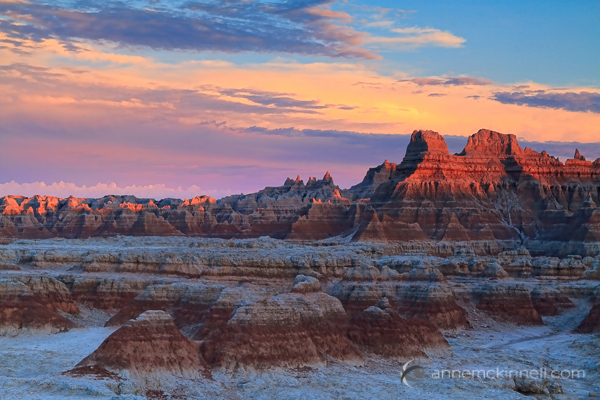
Sunset at Badlands National Park, South Dakota, by Anne McKinnell.

Sunset at Badlands National Park, South Dakota.

Going to a completely new place lets you view the world with fresh eyes and renewed wonder, and lets you see all the little details that get glossed over when you’re accustomed to the place you’re in. For me, traveling and photography are almost inseparable.

Creative ruts and blockages happen, but sometimes it’s our own hesitation that makes them seem so daunting. A lot of the time, all we need to get over that wall is to try jumping on a trampoline instead!

Post originally from: Digital Photography Tips.

Check out our more Photography Tips at Photography Tips for Beginners, Portrait Photography Tips and Wedding Photography Tips.

10 Tips to Motivate You out of a Photography Rut

The post 10 Tips to Motivate You out of a Photography Rut by Anne McKinnell appeared first on Digital Photography School.


Digital Photography School

 
Comments Off on 10 Tips to Motivate You out of a Photography Rut

Posted in Photography


Holiday gift guide for the mobile photographer

22 Nov

2013.png

‘Tis the season for holiday gift guides, including for the mobile photography fanatic in your life. We’ve got gifts for the Instagram enthusiast, serial smartphone documentary photographer and the DSLR-turned-mobile photography convert. See our extensive smartphone photography gift guide on connect.dpreview.com.

News: Digital Photography Review (dpreview.com)

 
Comments Off on Holiday gift guide for the mobile photographer

Posted in Uncategorized