RSS
 

Archive for September, 2013

Need the speed? Sigma 18-35mm F1.8 DC HSM in-depth review

02 Sep

18-35-news.png

Sigma’s 18-35mm F1.8 DC HSM has generated a lot of excitement since its announcement in April, as the fastest zoom ever made for SLRs. Designed for use on APS-C / DX format cameras, it offers a 28-54mm equivalent zoom range, and promises similar depth of field control to an F2.8 zoom on full frame. But can an F1.8 zoom really work? Read our detailed review to find out.  

News: Digital Photography Review (dpreview.com)

 
Comments Off on Need the speed? Sigma 18-35mm F1.8 DC HSM in-depth review

Posted in Uncategorized


Fotografie und Social Media – muss das sein?

02 Sep

Vor Kurzem hatten Sebastian und Martin eine kurze Unterhaltung auf Twitter: Martin fragte, ob er in Zukunft Fotos, die er mit der Fuji macht, auf Instagram posten solle. Sebastian meinte, er solle seinen Instagram-Account löschen. Die Diskussion um Instagram, Social Media-Plattformen, Fotografie (und deren Meta-Ebene) führen sie hier nun fort.

Sebastian: Lösch Deinen Instagram-Account.

Martin: Nein. Warum sollte ich?

Sebastian: Weil Du Fotografie magst. Ich finde, Instagram kann man nicht wirklich benutzen, wenn man Fotografie mag. Es ist eine unendliche Suppe an einheitlich brutal zurechtgefilterten und sehr oft auch belanglosen Fotos.

Martin: Das kommt drauf an, wem man folgt. Wie überall.

Sebastian: Ja, bestimmt. Aber ich rede ja auch nicht von der persönlichen Nutzererfahrung. Sondern vom generellen Problem, dass solche Dienste Fotografie entwerten. Drück auf’s Knöpfchen, mach Dein Bild hübsch mit dem Retro-Style, den jeder mag und lass Deine Bilder wie die von jedem anderen aussehen.

Martin: Ich finde nicht, dass diese Dienste entwerten. Denn das Ziel von Instagram ist nicht in erster Linie, großartige Fotografie zu unterstützen, sondern es ist in erster Linie sozial. Das heißt: Wir teilen unser Leben. Und somit all die Dinge, die unser Leben betrifft. Und das posiert nicht. Es ist nicht technisch perfekt. Es ist, wie es ist. Und das mag ich daran.

Sebastian: Lustigerweise würde ich genau das als Argument gegen Instagram ins Feld führen. Die Plattform und ihre Nutzer haben überhaupt kein Interesse an Fotografie, sondern nur daran, sich gegenseitig Bildchen von ihrem Essen und ihren Haustieren zu zeigen. Deswegen kann ich im Gegenzug Plattformen wie 500px und Behance gar nicht hoch genug schätzen. Was benutzt Du denn überhaupt für Internetplattformen und Tools, um Deine Bilder zu zeigen, zu bearbeiten und so weiter?

Martin: Bisher habe ich mit dem iPhone auf der Straße fotografiert. Diese Bilder habe ich in meine „Zentrale“ Tumblr eingestellt und von dort zu Flickr (da bin ich seit 2005), Facebook, 500px und auch Instagram geleitet. Bearbeitet habe ich meine Fotos kaum, nur ein wenig mit Snapseed geradegerückt, Helligkeit und Kontraste angepasst. Fertig.

Sebastian: Bei Facebook und Twitter poste ich inzwischen auch öfter mal Bilder (meist mit Links auf die kompletten Serien anderswo) und bei Tumblr so übrig gebliebenes Zeug. Aber recht widerwillig, wie ich zugeben muss. Ich empfinde es als entwertend, wenn man seine Sachen x Mal in verschiedene Streams irgendwie reinkippt, um da Leute zu erreichen. Ein eigenes Blog oder eine Galerie auf einer Plattform hat doch irgendwie mehr Stil. Ein Bild bei Facebook ist in fünf Minuten untergangen in einem endlosen Stream aus Kram.

Martin: Wieder „nein“. Auf Flickr bin ich, seitdem ich fotografiere und es gibt einige Leute, die dort meinem fotografischen Prozess folgen. Auf Facebook sind einige Freunde und Künstler, deren Meinung ich sehr schätze – und die auch hin und wieder kommentieren. Bei Instagram gibt es eine wachsende Zahl ambitionierter Straßenfotografen, die mit dem iPhone versuchen, das Beste herauszuholen.

Absolute Augenweiden sind da dabei und die sehe ich sonst nirgendwo. Würden wir alle unser eigenen Süppchen kochen, wäre es vielleicht origineller, aber das ist mir nicht in erster Linie wichtig. Ich möchte dort sein, wo die Leute sind, die mir wichtig ist. Deswegen poste ich eher selten auf Google+. Dort kenne ich von den 15.000 Followern vielleicht 10.

Sebastian: Aber das heißt im Endeffekt: „Ich gehe dahin, wo die Leute sind und reibe ihnen permanent meine Bilder unter die Nase.“ Ich könnte mir das niemals antun. Dazu kommen dann noch diese ekelhaften Bewertungsfunktionen auf allen Plattformen und die Tatsache, dass künstlerische Sachen nun einmal von der Masse deutlich weniger geschätzt werden als derber Kitsch (ganz normales Phänomen).

Wenn ich bei Facebook ein sinnloses Katzenbild poste, das ich mal so nebenbei gemacht habe und es 200 Likes bekommt und das aufwändige Naturfoto dann unbeachtet durchflutscht, dann merke ich immer, dass das eigentlich nicht die richtige Herangehensweise für mich ist. Ich finde, da ist das eigene Süppchen, das auch dann genau die Leute anzieht, die sich wirklich genug interessieren, um aktiv danach zu suchen, deutlich lohnender.

Martin: Für mich gibt es hier keinen Endeffekt – dafür ist das Thema zu fluide und verändert sich ständig. „Unter die Nase reiben“ finde ich eine interessante Definition, jedoch führt mich das wieder an den Beginn: Wer meine Fotos mag, darf mir folgen. Wer das Gefühl hat, Fotos unter die Nase gerieben zu bekommen, geht von allein. Finde ich gut und okay.

Und zu einem reifen Interpretationsprozess gehört auch, dass ich einschätzen kann, was ein Like bedeutet. Meine Fotos sind weder auf Instagram noch in anderen Netzwerken großartig erfolgreich. Ich bin es gewohnt, dass Katzenfotos mehr Likes bekommen. Doch die Bedeutung eines Likes ist abhängig davon, vom wem er kommt. Wenn mein Bürokollege Egon von Euwensz ein Foto mag, ist das für mich sehr wertvoll. Der würde meine Fotos gar nicht sehen, wenn ich sie bloggen würde. Weil er keine Blogs liest. Ist auch kein Problem für mich.

Sebastian: Zum ersten Punkt: Da müssen wir wohl zwei Sachen unterschieden – so reine Portfolio-Plattformen oder Facebook-Pages, bei denen der Nutzer selbst entscheidet im Sinne von „Ich abonniere das mal, weil es mir gefällt“, da stimme ich absolut Deiner Meinung zu.

Schwierig wird es bei richtigen Social-Media-Plattformen, bei denen eben das „social“ im Vordergrund steht. Dort ist man ja grundsätzlich mit Leuten aus völlig verschiedenen Kontexten als Privatperson verbunden, die eben teilweise auch gar nichts mit Fotografie zu tun haben. Und genau dort wird es irgendwann penetrante Eigenwerbung, wenn man so agiert.

Zu einem reifen Interpretationsprozess bezüglich Favs, Likes und dem Kram gehört anders herum meiner Meinung nach aber auch, dass man akzeptiert, dass man sich Feedback grundsätzlich schwer entziehen kann. Wenn Dir jemand dumme Kommentare unter Deine Bilder schreibt, kannst Du das nicht „unlesen“, genausowenig wie Du Dich dem entziehen kannst, wenn eines Deiner Bilder auf solchen Plattformen plötzlich „viral“ ist.

Ich glaube, das ist auf Dauer sehr fatal für den eigenen Schaffenprozess, jedes einzelne Bild immer sofort einer Öffentlichkeit zur Bewertung hinzuwerfen. Und das ist auf Facebook, Twitter und Instagram ein viel größeres Thema als auf dem eigenen Blog, wo es solche Mechanismen eben nicht gibt.

Martin: Das mit der Bewertung sehe ich anders. Ich zeige meine Fotos nicht, damit sie bewertet werden. Das war mir zu Beginn sehr wichtig, heute ist mir das nahezu egal. Ich zeige, was ich tue. Wenn das jemandem gefällt, schön. Wenn nicht, auch okay. Und wenn jemand sagt BUUUUUH, sehr gut. Dann habe ich einen Nerv getroffen. Passt für mich. Und in einem Netzwerk, bei dem mich jemand mit Eigenwerbung zuballert, kann ich ohne Probleme entfolgen, entfreunden, was auch immer. Das mache überhall. Kein Problem.

Sebastian: Ich zeige meine Bilder auch nicht, damit sie bewertet werden, ganz im Gegenteil, ich will sie im Netz ganz neutral ausstellen. So sind Facebook, Instagram und Konsorten aber nicht konstruiert. Die gewichten Inhalte nach Bewertung und heben sie hervor oder blenden sie entsprechend aus, denn die wollen ja, dass die Masse massenkompatibles Zeug anguckt und klickt und entsprechend wiederkommt, weil sie dort gut unterhalten wird. Und dann wird das noch extrem mit Dir als Person verknüpft, das heißt, das Bild an sich steht in keiner Weise irgendwo im Fokus.

Die Wirkung nach außen kommt zuletzt noch obendrauf und ist vielleicht sogar das größte Problem. Stell Dir vor, Du liest ein Buch oder gehst in eine Ausstellung und auf jeder Buchseite stehen irgendwelche Leserkommentare von Freunden des Autors unter dem Text oder neben den Bildern hängen Like- und Dislike-Anzeigen von den Arbeitskollegen des Künstlers. Etwas Scheußlicheres kann ich mir überhaupt nicht vorstellen; das macht jede eigene Interpretation und Beschäftigung mit Kunst kaputt. Deswegen deaktiviere ich überall dort, wo es geht, diese Sachen.

Martin: Instagram hebt meine Fotos nicht hervor, wenn sie mehr Likes haben als sonst. Und falls das irgendwann mal kommen sollte (mit „popular“ war es schonmal da), freut es mich, wenn es vorkommt, genauso wie Explore auf Flickr. Was für Dich hier ein Problem ist, ist für mich keines.

Außerdem: Wenn auf instagramm nur Bullshit-Bilder landen (was wie gesagt schwer davon abhängt, wem Du folgst), dann ist das nur noch mehr ein Grund, gute Fotos zu zeigen. Außerdem sage ich da frei nach Martin Parr: Du kannst nur wissen, was gut ist, wenn Du genügend Scheiße gesehen hast. Durch das ansehen schlechter Fotos kann man jede Menge lernen.

Sebastian: Den letzten Satz würde ich direkt umdrehen: Du kannst nur besser werden, wenn um Dich herum Leute und Bilder sind, die besser (vielleicht ist „erfahrener“ das bessere Wort, ich mag bei Fotografie nicht so gern von besser und schlechter reden) als Du selbst sind.

Wenn Du hingegen ständig Lob bekommst, weißt Du gar nicht, ob Du vielleicht der Einäugige unter den Blinden bist. Soziale Netzwerke, die Bilder berurteilen, sind mir jedenfalls höchst suspekt. Kunst ist ja nun keine Demokratie, in der eine Abstimmung funktioniert, die anzeigt, was die meisten Leute mögen. Oder siehst Du das anders?

Martin: Auf gar keinen Fall. Und Likes sagen nichts darüber aus, ob ein Foto gut oder schlecht ist. Sie sagen nur aus, dass es ganz vielen oder vielleicht nur einer Person gefällt. Die Gewichtung, was man dem beimisst, ist wohl das Entscheidende. Aber das pure Zeigen an sich finde ich nicht falsch, sondern wichtig. Warum bist Du eigentlich noch auf Facebook?

Sebastian: Kommunikation, auch Gruppen zu Fotografie und schlussendlich wohl auch das pure Zeigen der eigenen Arbeit. Darauf können wir uns ja offenbar einigen, auch wenn das so ein Sisyphos-Ding ist, das direkt wieder ins Niemandsland ruscht, weil niemand alte Facebookpostings liest.

Nochmal: Es ist ja egal, wie viel Gewichtung man Kommentaren und Likes beimisst. Spätestens durch andere lesende Personen und nach außen durch das System bekommt es Gewichtung. Gerade Facebook zeigt Dir ja oft nur „important posts“ von Deinen Kontakten überhaupt erst an, die durch diese Zahlen bestimmt werden. Und Du kannst ja nicht leugnen, dass Klickzahlen sogar auf vermeintlich seriösen Nachrichtenseiten die Messgröße sind, sich das fortsetzt auf alle diese Plattformen und inbesondere auch Bilder stark betrifft.

Martin: Das stimmt. Jedoch zeigt mir Instagram nicht nur „important posts“ an, sondern alle, denen ich folge. Zurück zum Thema: Die Demokratisierung der Fotografie hat eine Seite, die nicht allen Fotografen gefällt. Leute fotografieren ihr Essen, ihr Essen und … ihr Essen. Dass das vom anspruchsvollen Standpunkt gesehen nicht besonders wertvoll ist, will ich gar nicht widerlegen.

Jedoch das ganze Netzwerk dafür zu verteufeln, ist für mich keine besonders effektive Strategie. Da zeige ich lieber Fotos, die ich aus dem iPhone herausholen kann – und bewege vielleicht auch andere, es mir gleich zu tun. Übrigens gibt es viele Leute (und Freunde), über die ich auf Instagram viel mitbekomme. Das schätze ich sehr. Mit und ohne Anspruch. Allein deshalb würde ich nie auf die Idee kommen, meinen Account zu löschen.

Sebastian: Ich will ja auch gar nicht das ganze Netzwerk verteufeln, sondern eher diese „Ich geh da als ernsthafter Fotograf hin und zeige meine Bilder“-Seite hinterfragen bzw. fragen, ob sie wirklich sinnhaft ist. Als Portal für Katzenbilder und Fotos von Essen kann ich Instagram bequem ignorieren. Aber wie gehst Du mit der Vermischung um? Da stehen dann Deine Fotos neben verwackelten Urlaubsbildern, verschwinden im Stream, weil keiner zurückscrollt und alte Postings anguckt und Du weißt auch nie, ob Du jetzt für Freunde ein Privatbild oder für Follower ein ernsthaftes Foto einstellen sollst oder ob das nicht alles eh dasselbe ist. Es entwertet doch ein bisschen das eigene Tun.

Martin: Ehrlich gesagt habe ich darüber noch nie nachgedacht, egal in welchem Netzwerk. Denn selbiges findest Du auf Flickr, Deviantart, egal wo. Es gibt immer Tendenzen, zu denen ein Netzwerk neigt, aber nie 100% gleiche Fotos. Und wenn Du mein Blog abonnierst, verschwinden meine Postings genauso im Feed-Stream wie sonstwo auch. Ich sehe hier einfach keinen Unterschied.

Dazu kommt: Das iPhone als Kamera wird von immer mehr Menschen ernsthaft benutzt. Und das Netzwerk, das für diese Fotos gemacht ist, heißt instagram. Denn da werden zu 98% Smartphone-Bilder gepostet. Was auch der Grund ist, warum ich meine Fotos von der Fuji nicht dort zeigen werde. Dafür ist das Netzwerk nicht gemacht.

Sebastian: Also siehst Du ja offenbar doch einen Unterschied, wenn Du sagst, dass Du Deine Bilder von der Fuji nicht bei Instagram reinstellen würdest. Das Netzwerk sagt ja nirgendwo ausdrücklich „hier nur Smartphone-Bilder posten“. Instagram, Facebook und Twitter sind meiner Ansicht nach einfach mehr Social Networks, die für Unterhaltung und Kommuikation gemacht wurden. Dazu gehören dann natürlich auch Fotos, aber man sollte sich fragen, ob man Teil dieser sich endlos drehenden Unterhaltungsmaschine sein will.

Flickr, Deviantart und 500px sind für mich eher Netzwerke, auf denen Bilder ausgestellt werden. In ersteren geht es mehr um die Personen und ihre Verbinungen, in der zweiten Kategorie eher um die Bilder. Ich würde sagen, dass es von Vorteil ist, wenn man sich diese Unterschiede klar macht und genau überlegt, wo man seine Bilder überall reinwirft.

Martin: Den Unterschied mache ich deshalb, weil Instagram explizit aus dem Mobilen geboren und für’s Mobile gemacht ist. Das ist der Rahmen. Und Fotos vom iPhone sind für mich dort auch gut aufgehoben. Das ist auch der Grund, warum ich die Fuji-Fotos dort nicht poste. Ich respektiere das ungeschriebene Gesetz, dass dort nur Handy-Fotos gepostet werden. Außerdem glaube ich, dass es völlig egal ist, wo ein Foto zu sehen ist, wichtig ist, dass es überhaupt sichtbar gemacht wird. Ob das nun in einem Café, einer Kneipe oder einem Hochglanzmuseum ist. Das ist nur der Rahmen. Der Inhalt ist, was zählt.

Sebastian: Vor nicht allzu langer Zeit war mein Gedanke auch immer: Vergiss das Medium, nur der Inhalt zählt und das, was Du daraus machst. In Bezug auf verschiedene Netzplattformen würde ich inzwischen aber hinzufügen: Aber manche Kanäle begünstigen sehr stark bestimmte Inhalte und man muss gucken, wo man wirklich reinpasst. Also lösch endlich Deinen Instagram-Account.

Martin: Nein. Warum sollte ich?


kwerfeldein – Fotografie Magazin

 
Comments Off on Fotografie und Social Media – muss das sein?

Posted in Equipment


Ilford opens US lab to meet demand for black and white film development

02 Sep

Ilford-Photo-Lab-BWsq.jpg

While digital has truly swamped film for most common purposes, demand for black and white film development and printing is sufficient that ILFORD has expanded its processing and printing service to include a mail-order lab in San Clemente, California. Unlike most local labs, ILFORD’s service offers black and white printing on silver gelatin photo paper.

News: Digital Photography Review (dpreview.com)

 
Comments Off on Ilford opens US lab to meet demand for black and white film development

Posted in Uncategorized


Goldfish all gone? Turn that empty tank into an underwater housing

02 Sep

undewater-tank.png

If you have a digital SLR and don’t want to blow two grand on an underwater housing, check out the alternative the folks at Digital Camera World came up with. Just put your camera into a clean fish tank, attach a remote shutter release cable, lower the tank into the water, and fire away. Naturally, this only works in calm water, so don’t take it into the ocean unless you fancy buying a new camera. Details and a photo after the link.

News: Digital Photography Review (dpreview.com)

 
Comments Off on Goldfish all gone? Turn that empty tank into an underwater housing

Posted in Uncategorized


Black-and-white images capture the power of summer storms

02 Sep

Mitch-Dobrowner_Arm-of-God.jpg

Summer in North America means severe weather for much of the continent. Powerful storms are accompanied by unusual cloud formations, signs of the violent atmospheric conditions that spawn turbulent weather. Photographer Mitch Dobrowner and guide Roger Hill have spent the past few summers traveling the US chasing storms, and creating stunning black-and-white images in the process. Click through to see some of these gorgeous photos of some ugly weather.

News: Digital Photography Review (dpreview.com)

 
Comments Off on Black-and-white images capture the power of summer storms

Posted in Uncategorized


100 Clever Digital Photography Ideas [Book Review]

02 Sep

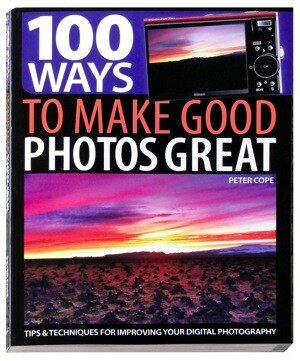
100 Ways to Make Good Photos GreatSometimes you need more than a guide to specifics in using a digital camera for ambitious image making. It is possible to overload your brain with info on lenses, lighting, camera controls and the rest of the tech jungle.
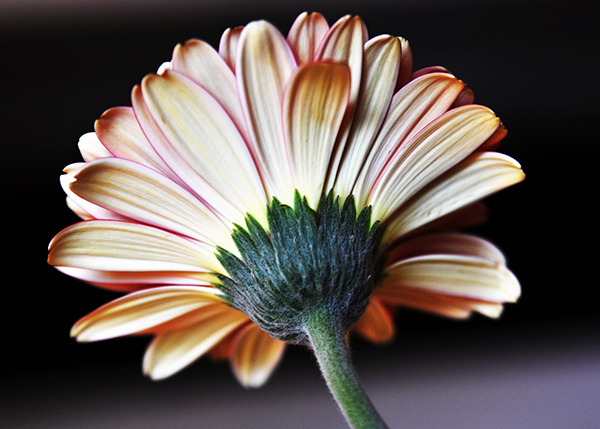
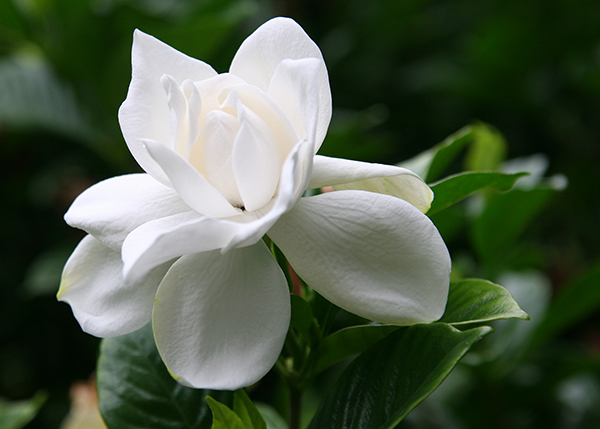
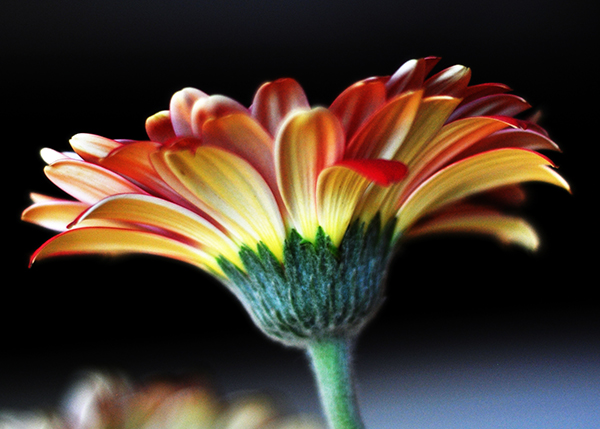
Sometimes it’s better to just look behind the curtain and pick up some tips on how to make good photos great. As the book says!

Author Peter Cope makes the point early in the book that during the 2012 London Olympics ‘exciting, emotional and iconic images flashed around the world …’

He observes that ‘What made these images unique and different from those that press photographers’ captured was that most came from amateur or casual photographers … grabbed shots ‘taken on a purely opportunist basis.’

Little thought went in to these ‘point and shoot’ pictures, much as they may have been enjoyed. But sometimes we need more: photos rather than snaps. Cope’s book sets out to help you not only shoot technically excellent photos but to create images that have something to say. The layout of the book is ideal for the purpose: for one thing, the size is enough to accommodate large pictures along with concise blocks of text that explain the issues.

For example, the page on red eye from flash suggests ways to avoid the dreaded issue: increase the ISO; use an external flash unit; and — last resort! — remove it in post.

Similarly, with the chapter on how to conceive great landscape photos which, after people, are possibly the most photographed subjects there are!

Cope’s tips go this way: great landscape photos should be in sharp focus from the nearest point to the most distant; follow the rules of composition closely, including the rule of thirds; use lead in lines to draw peoples’ attention to the landscape’s main subject; shoot at different times of day; watch the effect of weather on the scene; use polarising or graduated filters.

You won’t find much specific techy stuff in the book, except for a few pages on such matters as lens choice, exploiting your camera’s aperture controls, mastering ISO settings, astro photography, macro photography and then there’s a longish section on software manipulation. Most of the book is encouraging, handholding help.

The techy section also includes includes optimum ways in successfully sharpening an image, using ‘auto fixes’ such as auto enhance, auto tone and auto levels. Some will shy away from such easy fixes but, in Cope’s view, if the ‘adjustment works and delivers a great image’ — use it.

Within its pages are chapters on a whole variety of people photography, along with subtle suggestions on how to deal with human subjects. Like: shoot plenty of shots of children … they move fast! And, when shooting people at work, shoot fast! In straight portrait photography, establishing eye contact can establish a strong connection or sometimes be unsettling.

There are also whole pages devoted to ideas like ‘transplanting’ a whole sky, creating scenes that might otherwise not exist … if it were not for the magic of our old friend Photoshop!

An excellent publication that’s highly readable just as a book or as a complete reference guide.
Oh and it would make an excellent ebook that you could take with you on a shoot!

Author: P Cope.
Publisher: David & Charles.
Distributor: Capricorn Link.
Length: 144 pages.
Size: 25x19x11mm.
ISBN 1 4463 0300 9.
Price: Get a price on 100 Ways to Make Good Photos Great

Post originally from: Digital Photography Tips.

Check out our more Photography Tips at Photography Tips for Beginners, Portrait Photography Tips and Wedding Photography Tips.

100 Clever Digital Photography Ideas [Book Review]


Digital Photography School

 
Comments Off on 100 Clever Digital Photography Ideas [Book Review]

Posted in Photography


How to Photograph Flowers

01 Sep

I know what you’re thinking.  “Flowers?  Really?  Didn’t he just write about shooting football?”  As a matter of fact, I did.  I shoot lots of different things– a statement which frustrates the hell out of business mentors and advisers who like to talk about branding, creating your niche, and attracting the right kind of client.  And they’re right.  After all, clients want to know that you do precisely what they need you to do seven days a week and twice on Sunday.  Makes sense.  But I was a lawyer for fourteen years.  Photography was my hobby for a long time before I ever even thought of trading in my briefcase for a camera bag ten years ago.  So, yes.  We’re going to talk about photographing flowers– in many ways the ideal subject.  Flowers are pretty, but they don’t require a hair and makeup team on set.  They are neither moody nor volatile, and never cop an attitude.  They don’t require a specific brand of expensive water secretly bottled straight from a hidden stream in Madagascar, and they are never late for a shoot.  Never.

But seriously.  I love shooting flowers.  My wife is actually convinced that I buy them for myself and not her anymore.  She’s (mostly) wrong, but I do take advantage of them while I can.  As with so much of what we do in photography, there are at least two ways of going about this–  ridiculously expensive or affordable.   Guess which way we’re going.

dPS Flowers-001

IT’S NOT AS EASY AT IT LOOKS

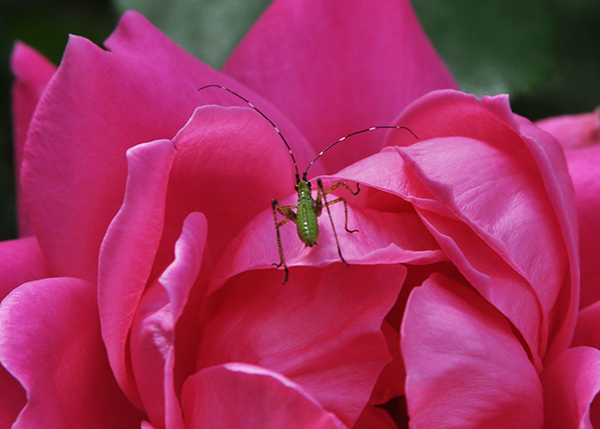
“How can it not be as easy as it looks?” you’re asking.  They just stand there perfectly still.  Get them near the light, push the button, we’re done, right?  Not so fast.  I was at a seminar one time where  Joe McNally said,  “If you want to take more interesting pictures, you need to stand in front of more interesting stuff.”  While I would never (EVER) presume to improve upon his wisdom, my own personal addendum to this guideline is, “But if you’re not going to stand in front of more interesting stuff, at least pick a more interesting angle.”  Six of us can stand around in a circle over the same flower, shoot straight down at it, and end up with six almost identical photos.  Boring, right?  Of course it is.  If you are going to stand an average distance from something, shooting it at an average angle with average camera settings, you are going to get average photos.  Personally, I’d rather not settle for average.  So get down low.  Shoot across it.  Shoot under it.  I actually really like photographing flowers from behind.  It’s not a mortal sin if you take that straight-down-the-middle shot.  No long arm of a photography god is going to descend from the heavens and snatch your camera away.  But promise me that once you take that straight-down-the-middle shot and get it out of your system, you’ll get down on your knees, or into a chair, or on your back, or anywhere else you need to be in order to achieve that interesting angle.

dPS Flowers-005

THE GEAR

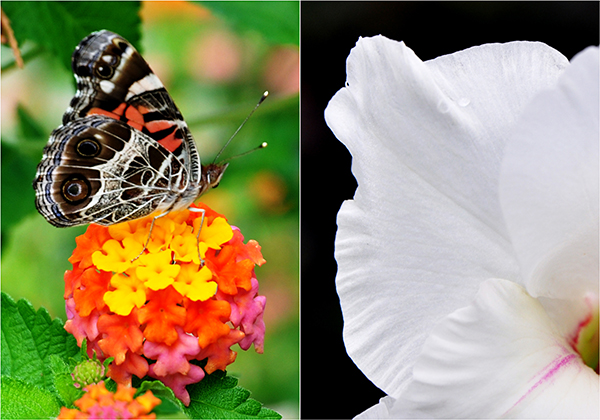
You’ll see some macro photographers really go all out on these images.   While a really good macro lens or a tripod with an inverted center column can help create some truly stunning images, they aren’t always necessary.  Regular zooms can serve you just as well.  Every photo in this article was taken hand-held with one of three lenses: Nikon 24-70mm f/2.8, Nikon 18-70mm f/3.5-4.5 (GASP! A kit lens!), or my iPhone.  Never underestimate the value of a tripod for this kind of work.  I don’t often use one because I tend to have pretty steady hands, but having a tripod on hand is never a bad thing.  Nature tends to provide some pretty great backgrounds, but isolating a single flower on a black or white background can often make for some very compelling images.  A yard or two of black velvet from a fabric store or a poster-size piece of white foam core from an office supply store are simple, effective, and very budget-friendly options for getting that high-contrast look, indoors or out.  You could waste a lot of time creating these backgrounds in Photoshop, by why would you when the in-camera solution is so much easier?  The last piece of gear you’ll find useful is very high-tech.  A spray bottle with water will let you fake that just-rained-on look.  Just make sure it’s set to a fine mist, rather than a full spray.

dPS Flowers-002

START SHOOTING

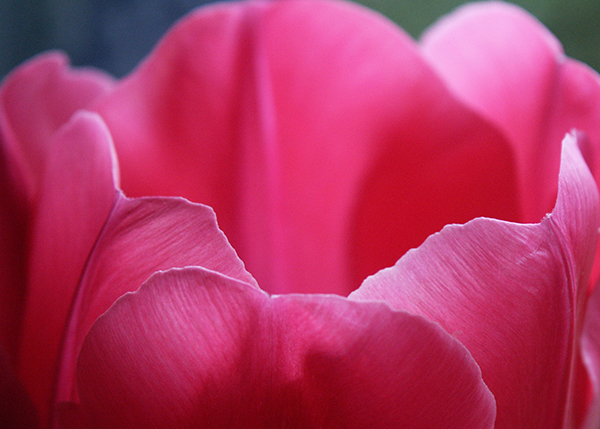
As with any photo, finding the right angle only gets you halfway there.  Don’t forget everything you know about composition.  The usual considerations– Rule of Thirds, negative space, balance, etc.– all still come into play.  One of the advantages of a regular zoom lens over a macro is that by filling the frame with your flower subject, it becomes that much easier to blur out your background.  Start by focusing on one particular flower or a small cluster of flowers in the arrangement.  As you lock focus you will see the depth-of-field effect in your viewfinder.  Make sure that you don’t overdo it on the DOF.  Depending on your composition and camera settings, you could easily blur out your foreground.  Start with your widest aperture. but make sure you try several different combinations of aperture and shutter speed.  Your model is not going to get bored and give you a hard time.  Take advantage of this chance to achieve the look you want.  Remember that sometimes the whole is not always as interesting as its individual parts.  Focus in on details and textures.  Make it interesting.

dPS Flowers-003

HOW AND WHEN TO LIGHT IT — INDOORS AND OUT

Ultimately, diffused natural light is always at the top of my wish list.  Direct sunlight is going to blow out the subtleties and textures you’re trying so hard to capture.  As with all indoor lighting, time is less of an obstacle than when you shoot outside.  Outdoor light doesn’t care if you are photographing flowers, portraits, or a football game.  Light is light and its properties don’t change.  Just like we get the best portrait and landscape light right after the sun comes up and just before it goes down, the same goes for flowers.  We really want that soft, beautiful light to enhance these images, not overpower them.  For that, nothing beats an overcast or cloudy day– Mother Nature’s very own soft box.  For inside, use the biggest window you can find.  The side-lighting it provides will add more dimension than flat lighting from above the flower.  Whatever you do, experiment with your light.  Pay attention to where it falls and the shadows it creates.  You can also be sure that patience and time spent here will dramatically benefit your portrait work as well.

DCF 1.0

TAMING THE WIND

As much as I try to never take my camera out of Manual mode, an argument can be made that exposure modes are there for a reason.  This would be one of those.  When shooting outside, even the slightest breeze can give you fits.  Try switching you camera into shutter priority mode and dial in a shutter speed of 1/250 or faster.  The fast shutter speed should negate the effects of the breeze.  I’m not a huge fan of exposure modes and relinquishing control of my settings (one reason why we’re not talking about your camera’s macro setting in this article), but this is a simple and effective way to remove one of the obstacles in your path.

dPS Flowers-007

POST PROCESSING

My philosophy on editing these images is the same as my approach to portraits.  If you read my post on Basic Skin Smoothing in Photoshop, you know that when people look at my photos I want them to say, “That’s a beautiful ______,” not “Wow, nice editing.”  A slight levels adjustment and contrast bump should really be all they need.  Anything much stronger than that is going to come dangerously close to wiping out the texture and any of the natural feel to the overall image.

dPS Flowers-004

Now go buy some flowers and let me know how it goes.

Post originally from: Digital Photography Tips.

Check out our more Photography Tips at Photography Tips for Beginners, Portrait Photography Tips and Wedding Photography Tips.

How to Photograph Flowers


Digital Photography School

 
Comments Off on How to Photograph Flowers

Posted in Photography


Scanning The Skyline: 10 Bizarre Barcode Buildings

01 Sep

[ By Steve in Architecture & Cities & Urbanism. ]

barcode buildings
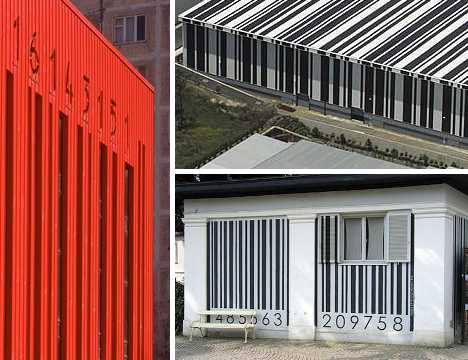
You’re gonna need a bigger scanner. These 10 larger than life Universal Product Barcode emblazoned buildings epitomize the digitization of modern society.

Middelburg, Netherlands, by Hercuton

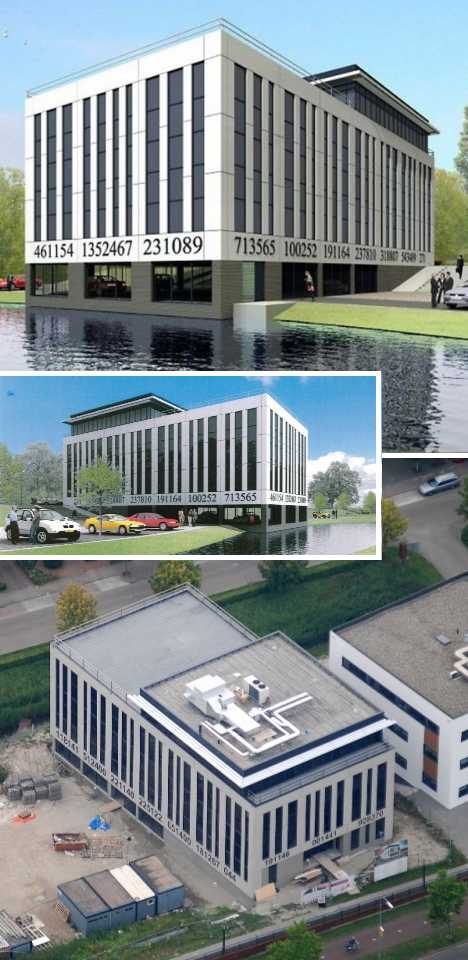
Barcode Building Middelburg Netherlands Hercuton(images via: Bouwgroep Peters BV)

The plainly-named Barcode Building is one of the newest (completed 2011) large structures in the very old city of Middelburg, the Netherlands. Architects of the Dutch design & build organization Hercuton were charged by their client with creating a building that not only looked modern, but both the layout and infrastructure had to reflect today’s environmentally-friendly aesthetic.

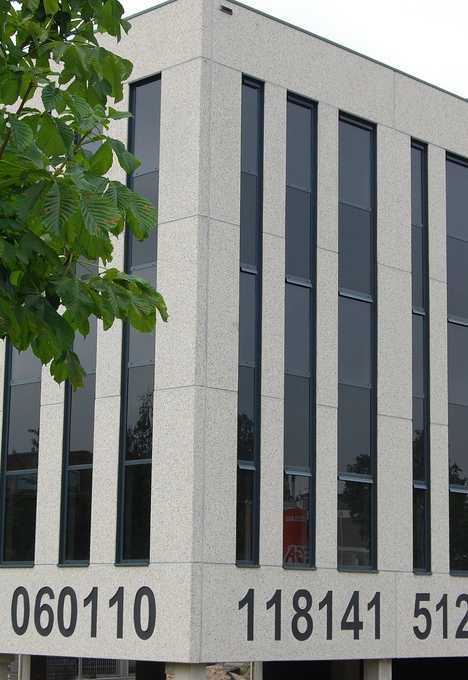
Barcode Building Middelburg Netherlands Hercuton(image via: Henk Kosters)

The white walls of the Barcode Building are broken up by vertical strips of tinted window glass that extend from the top of the four-story structure down to the open parking garage beneath the building at street level. The use of random six-digit numbers beneath each stack of three windows reinforces the illusion of a giant barcode while adding visual interest to the structure as a whole.

Shtrikh Kod Building, St. Petersburg, Russia

Shtrikh Kod Building barcode St. Petersburg Russia(images via: Eikongraphia)

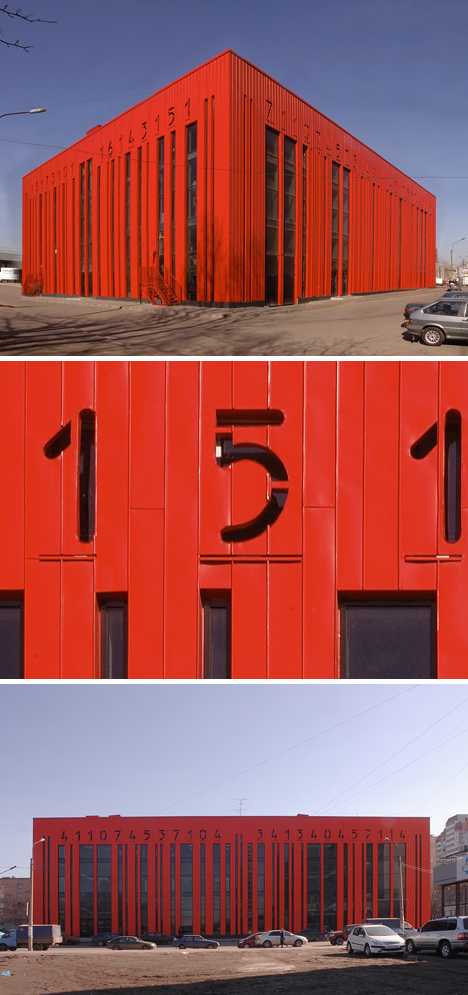
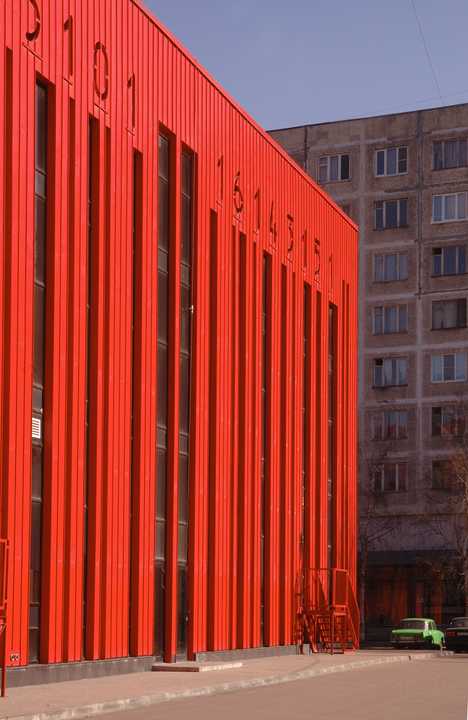
Shtrikh Kod means “Barcode Building” in Russian, which is appropriate since there’s really no other way to describe it. The edifice, located in historic St. Petersburg, was designed by Vitruvius & Sons Studio and it was completed in 2007.

Shtrikh Kod Building barcode St. Petersburg Russia(image via: Eikongraphia)

Kudos to photographer Alexey Naroditsky for capturing the stark yet striking exterior of the Barcode Building. It should be noted that one of the commenters at the Eikongraphia website where Naroditsky’s images are on display opined that “The facade’s hue is close to that of the red 633nm laser light commonly used in bar code scanners.” Coincidence?

Melbourne Theosophical Society, Melbourne, Australia

Melbourne Theosophical Society bookshop barcode (images via: Jodi and Bo Virkelyst Jensen)

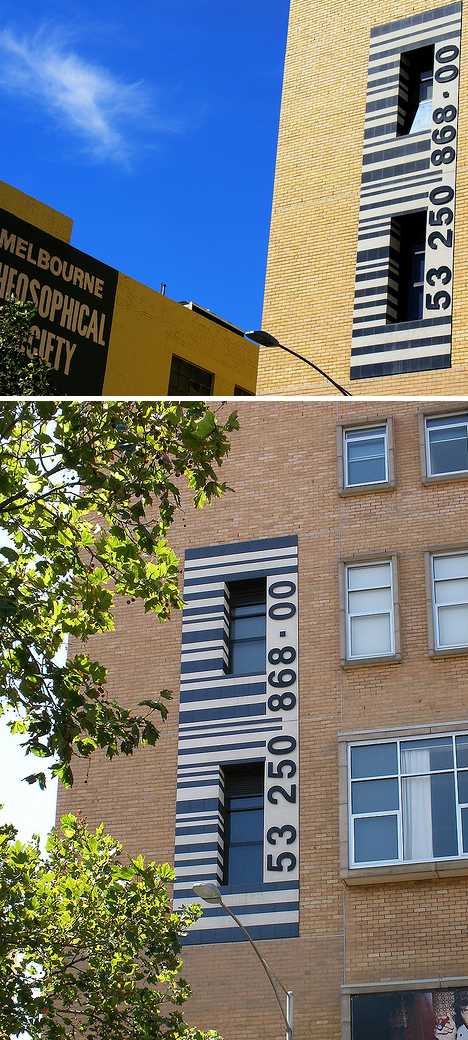
The Melbourne Theosophical Society Bookshop & Library at 126 Russell Street appears much like any other mid-century yellow brick building except for one thing… an odd inset space on the facade that holds a barcode! The roughly two-story tall barcode encompasses a pair of windows and would seem to be a later addition to the building. Why is it there and what does it mean? That’s a rather theosophical question best left for others to wrestle with.

Recall Information Centre, Greystanes, New South Wales, Australia

Recall Information centre warehouse Sydney Australia barcode (images via: Lysaght, Blue Scope Steel and Specifier)

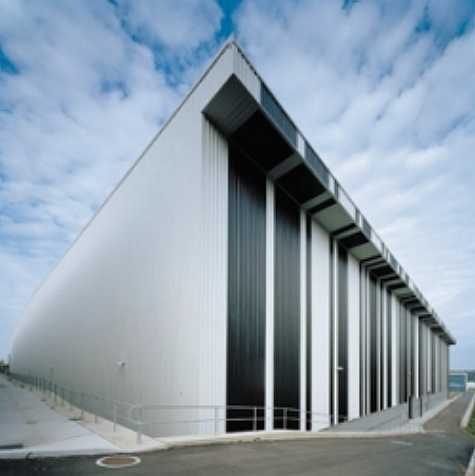
Staying in the antipodes for the moment, we present an uncharacteristically lively warehouse designed by Thierry Lacoste from Lacoste + Stevenson Architects. Built for the Recall company to store nearly four and a half million archive boxes of corporate records, the building’s exterior is made from 21,000 square meters od steel cladding sourced from BlueScope Lysaght.

Recall Information Centre Sydney barcode building(image via: Specifier)

“Barcodes are at the center of everything which Recall does,” explains Thierry Lacoste. “That was the first consideration, then there was the challenge of how to handle a very big wall area. We decided on the barcode theme to break up its visual impact then worked on a couple of ideas before we finally specified a pattern which is actually Recall’s Australian Business Number as a barcode.” Recall operates 250 state-of-the-art information centers around the world but only one sports the Greystanes center’s wild barcode exterior graphics.

Next Page:
Scanning The Skyline 10 Bizarre Barcode Buildings

Share on Facebook


[ By Steve in Architecture & Cities & Urbanism. ]

[ WebUrbanist | Archives | Galleries | Privacy | TOS ]


WebUrbanist

 
Comments Off on Scanning The Skyline: 10 Bizarre Barcode Buildings

Posted in Creativity


browserFruits September #1

01 Sep

Unser Fotospecial ist uns mit dem Thema „Abschied“ etwas düster geraten, aber keine Angst, uns geht es gut und wir bleiben Euch erhalten. Ebenso wie die sonntäglichen browserFruits. Guten Appetit. Apropos Appetit: Wir suchen wieder neue Beiträge für unsere Serie „Augenschmaus“. Du hast Foodfotos von einem Rezept, das genauso lecker ist wie die Bilder? Dann her damit.


Fotospecial: Abschied

Flickr

500px


Deutschsprachig

• „Generation Trauma“ heißt die bedrückende Fotoserie von Ruben Neugebauer und Björn Kietzmann. Sie zeigt, wie besonders Kinder unter dem Krieg in Syrien leiden.

• Laura Zalenga gewinnt das Flare Photo Battle. Hier könnt Ihr noch einmal alle Wettbewerbsbilder von ihr auf einem Blick sehen.

• Das Problem von Stockfotos wird dann deutlich, wenn die NPD, die FDP und ein Quarkhersteller dasselbe Foto für ihre Werbung nutzen.

• Einen sehr ausführlicher Artikel zur Fotografie im Amerikanischen Bürgerkrieg haben wir bei der FAZ gefunden.

• Sehr schöne Bilder hat Marie Hochhaus da für das Lookbook für Élise Hameau gemacht.

• Fliegt Ihr oft? Nina Katchadourian macht auf Langstreckenflügen Kunst aus den vorhandenen Utensilien. Vielleicht inspiriert sie Euch ja auch.


International

• Der Südkoreaner Myoung Ho Lee verwandelt Bäume in wahrlich einzigartige Kunstinstallationen.

• „The Untouchables“ ist eine Fotoserie für Kinderrechte. Der Fotograf Erik Ravelo weiß, wie man schockiert und wachrüttelt.

• Anka Zhuravleva erzählt eine süße Geschichte aus dem Zirkus.

• Falls Ihr noch nach Filmen mit oder über Fotografen sucht, hier ist schon einmal eine Liste mit zehn empfehlenswerten Filmen.

• Vivian Maier fotografierte auch in Farbe. Wusstet Ihr das?

• 4425 Kameras besitzt dieser Fotograf. Falls Ihr das überbieten könnt, ist Euch der Weltrekord sicher.

• Unter dem Titel „Architecture of Density“ zeigt iGNANT die beeindruckenden Aufnahmen des deutschen Fotografen Michael Wolf aus Hong Kong.


Neuerscheinungen und Tipps vom Foto-Büchermarkt

buchtipp

• „Photographs not taken“* ist kein Fotobuch im klassischen Sinne, sondern eine Sammlung von Essays über gesehene, aber nicht gemachte Bilder. Eine Reihe von Fotografen schildern hier jeweils ihre Gedanken zu einzigartigen verpassten Momenten.

• Wer meint, der viel kritisierte Bruce Gilden hätte keine Empathie und würde immer auf dieselbe Weise fotografieren, sollte diese Besprechung des Buchs „Haiti“* gelesen haben. Dringende Lese-Empfehlung, da im Artikel das Thema Bildkompostion eingängig behandelt wird.


Wettbewerbe

• Bei der „Driven Creativity Competition“ von G-Technology könnt Ihr Eure kreativsten Bilder einreichen und 5000 € sowie ein G-DOCK ev gewinnen. Hier entlang zur kostenlosen Teilnahme.

• Das Umweltbundesamt sucht bis zum 30. September Bilder, die Stadt und Umweltschutz, Urbanität und Lebensqualität miteinander verbinden. Der Titel des Wettbewerbs lautet „Stadt im Sucher“. Aber Achtung: „Jeder/jede Teilnehmer/in räumt dem Umweltbundesamt die räumlich, zeitlich und inhaltlich unbeschränkten, nicht ausschließlichen Nutzungsrechte ein.“


Videos

Bruce Gilden fotografierte in Derby und dieses Video zeigt, wie er auf der Straße arbeitet.


Das ist Gold, liebe Fotografen: Henri Cartier-Bresson zeigt seine Bilder und spricht über den entscheidenden Moment.


Ausstellungen

Harald Hauswald
Zeit: 5. Juli – 22. September 2013 (verlängert!)
Ort: Leonhardi Museum Dresden
Link

Axl Klein – ZORN
Zeit: 4. September – 4. November 2013
Ort: Michael-Horbach-Stiftung, Wormser Straße 23, 50677 Köln
Link

Robin Maddock: OUR KIDS ARE GOING TO HELL
Zeit: 7. September – 3. November 2013
Ort: Forum für Fotografie, Schönhauser Straße 8, 50968 Köln
Link

Blaise Reutersward – Aktstudien und Deutsche Landschaften
Zeit: 24. August – 12. Oktober 2013
Ort: CWC GALLERY, Auguststraße 11–13 , 10117 Berlin
Link

Loredana Nemes, Winter / Hoerbelt & Cao Guimaraes
Zeit: 07. September – 9. November 2013
Ort: Galerie Anita Beckers, Frankenallee 74, 60327 Frankfurt/Main
Link

DEUTSCHLANDREISE – 5. Fotofestival
Zeit: 14. September – 10. November 2013
Ort: ZEPHYR – Raum für Fotografie, C4 9b, 68159 Mannheim
Link

WORLD PRESS PHOTO 13
Zeit: 6. September – 13. Oktober 2013
Ort: WestLicht, Westbahnstraße 40, 1070 Wien
Link

Mehr aktuelle Ausstellungen


* Das ist ein Affiliate-Link zu Amazon. Wenn Ihr darüber etwas bestellt, erhalten wir eine kleine Provision, Ihr bezahlt aber keinen Cent mehr.


kwerfeldein – Fotografie Magazin

 
Comments Off on browserFruits September #1

Posted in Equipment


1. September 2013

01 Sep

Ein Beitrag von: Tanja Deuß

© Tanja Deuß


kwerfeldein – Fotografie Magazin

 
Comments Off on 1. September 2013

Posted in Equipment