RSS
 

Archive for September, 2013

Recommended Reading: Move Forward With Social Media

03 Sep
Move Forward With Social Media

Move Forward With Social Media

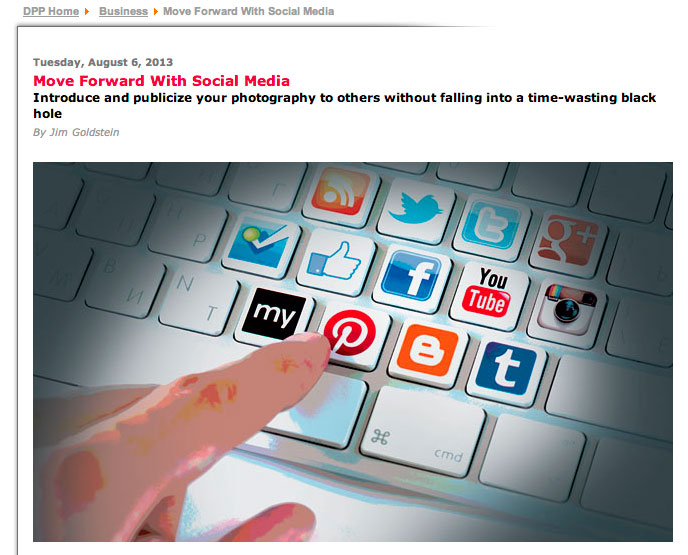
Curious how to leverage social media to gain exposure of your photographic work while saving a little time? In the latest issue of Digital Photo Pro magazine I cover this and more in my latest article, “Move Forward with Social Media”. As a bonus I include a web site comparison to help you weight the pros and cons of taking part in each site. Check out the article:  Move Forward With Social Media – Introduce and publicize your photography to others without falling into a time-wasting black hole


Also if you’ve missed my other Digital Photo Pro articles you can find them here:

  • Search Engine Optimization 
  • Social Media & ­­­­­Copyright
  • Social-Media Marketing Essentials
  • Creative Commons
  • PLUS Coalition Standardized Licensing Codes
  • How I Evaluate Terms of Service for Social Media Web Sites – Google+ (my blog)
  • Evaluating Terms of Service Documents: Resources (my blog)

More of my articles on Social Media for Photographers

Copyright Jim M. Goldstein, All Rights Reserved

Recommended Reading: Move Forward With Social Media

The post Recommended Reading: Move Forward With Social Media appeared first on JMG-Galleries – Landscape, Nature & Travel Photography.


Related Stories

  • Recommended Reading: Move Forward With Social Media – Enclosure
  • Talking Lightroom & Photography
  • Talking Lightroom & Photography – Enclosure
Feed Ads by FeedBlitz
powered by ad choices


JMG-Galleries

 
Comments Off on Recommended Reading: Move Forward With Social Media

Posted in Equipment


Back to the future: ten one-of-a-kind cameras from the 21st century

03 Sep

v570-front-trans.png

At the turn of the 21st century, consumer digital cameras really took off. Technology was evolving at an incredible pace, and camera makers came up with features that we now take for granted, most notably live view on DSLRs. There were plenty of unique ideas going around, as well. Some were genuinely useful, while others may leave you scratching your head. In this article, DPReview’s Jeff Keller takes a look at ten cameras that have stood out over the last thirteen years.

News: Digital Photography Review (dpreview.com)

 
Comments Off on Back to the future: ten one-of-a-kind cameras from the 21st century

Posted in Uncategorized


Als die Kunst nach Abertillery kam

03 Sep

Ein Beitrag von: Kicktplate Project

Dies ist die Geschichte von Dafydd und Zosia, die sich trauten, einer Idee Raum zu geben und einem kleinen und verschlafenen Ort in Wales etwas Kostbares schenkten.

Im August hatte ich das erste Mal Kontakt mit Dafydd und Zosia. Sie fragten mich, ob ich Lust hätte, vier Bilder meiner Serie „Metamorphose“ in einer kleinen Galerie in Wales zu zeigen.

Nach und nach erfuhr ich immer mehr über die Hintergründe dieser Anfrage und fand allein die Idee und die Energie, die beide in ihr Projekt steckten so wärmend, das ich sie um ein Interview bat, um sie Euch heute hier vorstellen zu können.
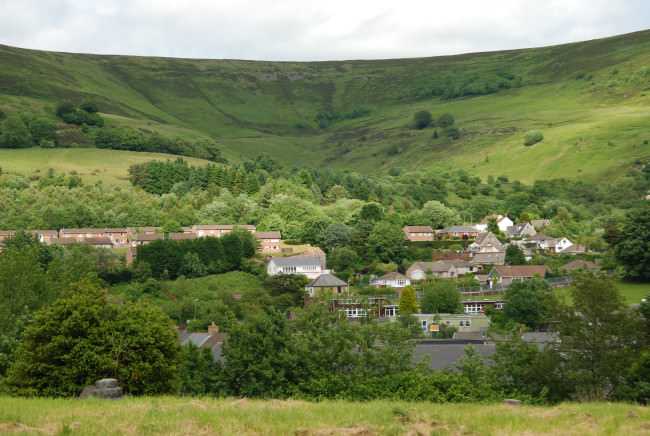
aussicht © Kickplate Projekt
eine Stadt mit guter Aussicht

Wer oder was ist das Kickplate-Projekt? Erzählt ein wenig über die Hintergründe.

Wir sind Dafydd und Zosia, autodidaktische Fotografen, die das Kickplate-Projekt im Juli dieses Jahres als Kunstkollektiv gegründet haben.

Wir haben uns vor vier Jahren in Neapel, in Italien getroffen und sind seitdem mindestens ein Dutzend Mal umgezogen. Nachdem wir zwei Jahre in Polen und Italien lebten und rumgereist sind, sind wir nach Abertillery, Dafydds Heimatstadt in den Valleys, einer Region im Süden von Wales, zurückgekehrt.

Aus persönlichen und ökonomischen Gründen waren wir zu dieser Zeit auch ziemlich aufgeschmissen. Das Leben in einer post-industriellen Stadt, die außer schönen Aussichten nicht viel zu bieten hat, kann ziemlich langweilig und überwältigend sein. Wir vermissten die Dinge, die wir so genossen hatten, als wir in den großen Städten gelebt hatten: Zu Ausstellungen gehen und mit anderen Menschen interagieren.

Wir hatten schon immer davon geträumt, eine Kurzzeit-Galerie zu haben, aber wir hatten nie in Erwägung gezogen, sie hier umzusetzen. Und als wir dann eines Tages Ende Juni durch die Stadt gingen, sahen wir es – einen kürzlich aufgegebenen Friseursalon.

So begann das Kickplate-Projekt als Kurzzeit-Galerie in einem ehemaligen Friseursalon in Wales – sie hat ihren Namen von den Metallplatten, die immer noch an ihrem Platz sind und an die Vergangenheit unserer Galerie erinnern.
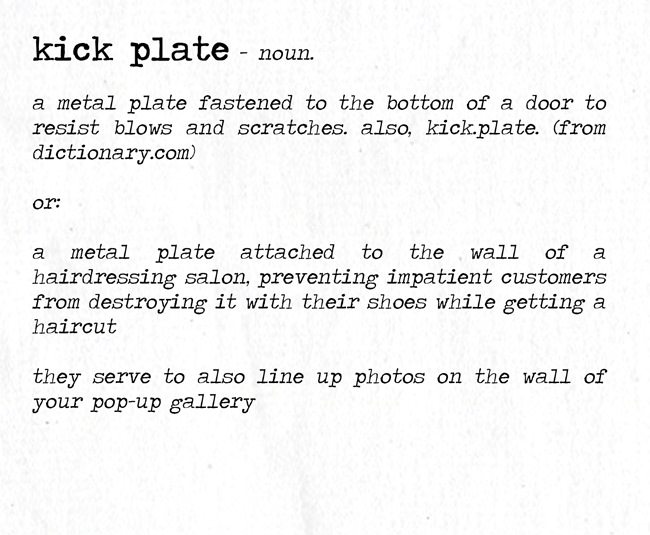
kickplate

Kickplate: Stoßblech – Substantiv. Eine am unteren Ende von Türen angebrachte Metallplatte gegen Stöße und Kratzer.

Oder: Metallplatten, die an den Wänden von Friseursalons angebracht sind, um zu verhindern, dass ungeduldige Kunden die Wände mit ihren Schuhen zerstören, während sie ihren Haarschnitt bekommen.

Sie dienen auch dazu, Fotos an der Wand unserer Kurzzeit-Galerie aufzureihen.

Unser Ziel ist es, qualitativ hochwertige internationale Fotografie an einen Ort zu bringen, der keine ständige Galerie besitzt. Zu zeigen, dass Kunst nicht einer sozialen Gruppe vorbehalten ist und neue Künstler zu fördern.

Erzählt uns doch auch noch ein wenig mehr über Euch selbst. Wer seid Ihr?

Wir wurden beide an entgegen gesetzten Enden des Jahres 1984 geboren, aber etwa auf dem gleichen Breitengrad.

Dafydd kommt aus Wales und hat als Grafikdesign-Praktikant, Verwalter einer Putzfirma, eines Finanzunternehmens und des Gesundheitsdienstes, sowie als Englischlehrer, Korrekturleser, Hostel-Rezeptionist sowie autodidaktischer, experimenteller Fotograf gearbeitet. Nun ist er nur noch ein experimenteller Fotograf und Kamera-Bauer und hofft, dabei auch zu bleiben. Er hat in Polen und Italien gelebt, ist aber kürzlich in sein Heimatland zurückgekehrt.

Dafydd hat vor ein paar Jahren begonnen, analoge Fotos zu machen und seitdem einige Kameras umgebaut. Etwa hat er eine Holga in eine doppelseitige Kamera mit einer Lochkamera auf der Rückseite verwandelt, zwei Großformat-Fachkameras gebaut und arbeitet an seiner dritten. Er genießt es, neue Techniken auszuprobieren und hat am (vielleicht ersten) Polaroid-Filmtausch mit einem österreichischen Fotografen teilgenommen.

Außerdem hat er an „Pray for Japan by the 101“ teilgenommen, einem Projekt, das Geld für die Tsunami-Opfer in Japan sammelt. Eines seiner visuellen Gedichte war Teil eines Buches von Hanan Kazma. Im Jahr 2012 hat Dafydd sein erstes Buch, „peculiar truths“, veröffentlicht.
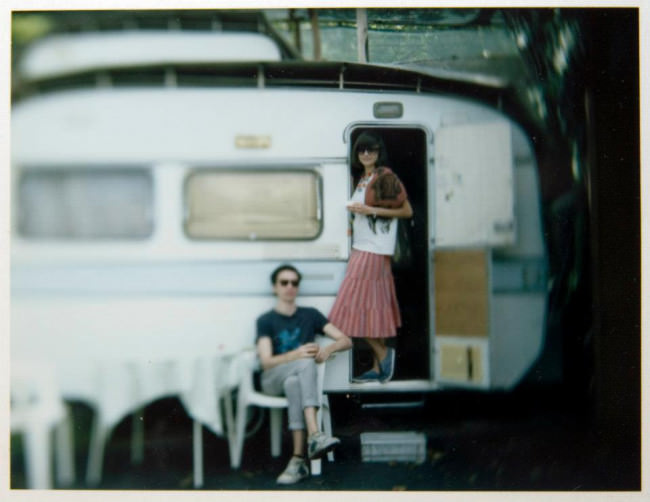
z and d © Kickplate Projekt
Dafydd und Zosia

Zosia Krasnowolska kommt aus Polen, ist studierte Kulturwissenschaftlerin, Übersetzerin, Filzerin und lebenslang Kamerasüchtige. Sie arbeitet fast ausschließlich mit abgelaufenem Film oder solchem aus dem Supermarkt und benutzt meistens ihre Lieblingskamera, eine Praktica mtl50.

Zosia dokumentiert leere Räume, das Vergehen der Zeit und den Ausdruck der Persönlichkeit von Menschen in eingeschränkten räumlichen Grenzen. Das Format, das sie dabei bevorzugt, sind „natürliche Diptycha“, also ein Bild, das aus zwei aufeinanderfolgenden Bildern desselben Filmstreifens besteht – manchmal geplant, manchmal zufällig.

Zosia ist besonders interessiert an Feminismus und Frauenrechten. Im letzten Jahr nahm sie an „The Interpersonally Happy“ teil, einem Projekt, das ins Leben gerufen wurde, um das Bewusstsein für häusliche Gewalt zu schärfen
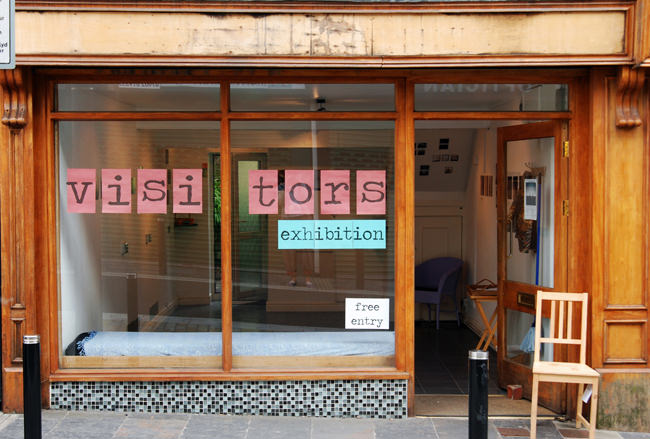
gallery outside © Kickplate Projekt
Blick von der Church Street in die Galerie

Die einzige Galerie in einer Stadt. Wie genau sieht das Konzept des Kickplate-Projekts aus?

Für uns ist das Kickplate-Projekt ein Weg, um gegen die Kleinstadt-Langeweile zu kämpfen, die Zielgruppe von Kunst in Frage zu stellen und dieses Publikum zu erweitern. Kunst direkt in die Leben und Gemeinden der Menschen zu bringen, denen in der Vergangenheit gesagt wurde, dass Kunst nichts für sie ist.

Wir glauben stark an die Wichtigkeit des alltäglichen Kontaktes mit Kunst und glauben, dass es das Leben der Menschen bereichert, ihre Sensibilität schärft und ihnen dabei hilft, unterschiedliche Aspekte der Existenz zu erfahren. Besonders in einer post-industriellen Stadt, der sonst eine ständige Galerie fehlt.

Kunst ist im Vereinigten Königreich sehr elitär geworden. Im Bezug darauf, wer ein Künstler werden kann ebenso wie darauf, für wessen Augen Kunst gemacht ist. Wir denken, das ist falsch und führt nirgendwohin – außer in die Auktionshäuser!

Von Kunstgalerien sollte nicht erwartet werden, Geld zu machen, um öffentlich gefördert zu werden, das widerspricht der ganzen Idee von öffentlicher Förderung. Das ist ein sehr ernstes Problem in einer Zeit, die geprägt ist von einer Sparpolitik, die darauf ausgerichtet ist, die Uhr ein paar hundert Jahre zurückzudrehen.

Was habt Ihr bereits erreicht und was ist in Zukunft geplant?

Bis jetzt haben wir zwei internationale Fotoausstellungen organisiert.

„Visitors“ präsentierte acht Künstler aus Litauen, dem Libanon, Frankreich, Österreich, Ungarn, Polen und Wales, die eine breite Palette von Stilen und Techniken der Fine-Art-Fotografie zeigten.

„behind her ‚I’s“, das wir am 3. August eröffneten, zeigt Bilder von Frauen, aufgenommen von fünf Fotografinnen aus Georgien, dem Libanon, Deutschland und Kaliningrad. Es ist darauf ausgerichtet, der Art, wie Frauen normalerweise in den Medien und Künsten portraitiert werden, etwas entgegenzusetzen.

Wir planen, in diesem Raum mindestens drei weitere Ausstellungen zwischen September und Dezember abzuhalten und versuchen im Moment, dafür eine Finanzierung zu erstellen – bisher haben wir alle Kosten selbst getragen.
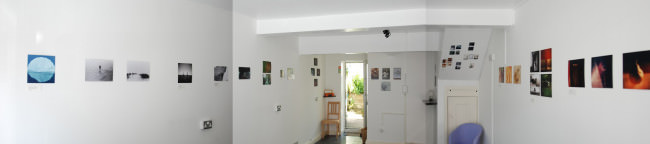
visitors panorama © Kickplate Projekt
Panorama der Ausstellung „Visitors“

behind her Is © Kickplate Projekt
Panorama der Ausstellung „behind her ‚I’s“

Wegen des nomadischen Charakters unseres Lebensstils und der relativ zeitgenössischen Natur der Galerie würden wir das Kickplate-Projekt gern auch an andere Orte bringen, wobei Neapel und Warschau die nahegelegendsten Stationen sind – aber wir sind gespannt, Deine Vorschläge zu hören! Wir hoffen, dass das, was wir bisher getan haben, eine nachhaltige Auswirkung auf die lokale Gemeinde sowie die kulturelle Politik hat und dass es ähnliche Initiativen in der Zukunft ermutigen wird.

Wie und wo sucht Ihr nach Künstlern für Eure Galerie?

Wir haben versucht, Leute über Online-Plattformen zu finden, wir haben auch Online-Galerien und Fotoprojekte durchsucht, die wir interessant finden. Wir arbeiten auch mit Mundpropaganda, den Empfehlungen von Künstlern, die wir kennen. Wir mögen es besonders, Künstler zu finden und auszustellen, die anders vielleicht nicht die Chance gehabt hätten, ausgestellt zu werden, weil sie ihre Fotos vielleicht in einer sehr ungewöhnlichen Art herstellen.

Wir versuchen, Künstlern die Möglichkeit zu geben, die Hürde zu umschiffen, dass man „ausgestellt haben muss, um ausgestellt zu werden“, eine wirklich bizarre Schwelle, die die meisten Kunstanstalten aufrecht erhalten.
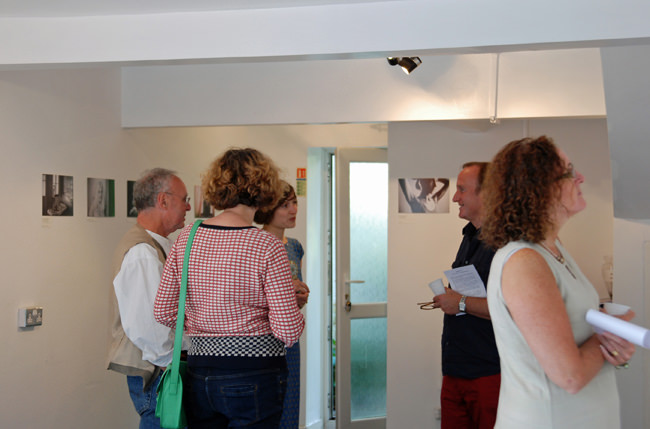
Besucher © Kickplate Projekt
Neugierde und reges Interesse zeigten die Besucher der Ausstellung.

Wir glauben daran, dass man, um bedeutsame und qualitativ hochwertige Kunst zu machen, nichts Künstlerisches studiert haben muss. Eine Idee, die sich, trotz der Existenz zahlreicher berühmter Gegenbeispiele, immer noch hartnäckig in der Kunstwelt hält.

Aus dem selben Grund sind wir auch keine großen Freunde davon, die Künstler Statements schreiben zu lassen. Wir glauben, dass gute Kunst für sich selbst sprechen kann – außer, ein Kommentar ist Teil des Projektes. Das heißt, wir hören gern zu, aber wir zwingen nicht jeden dazu, einen Kommentar zu seiner ihrer Arbeit abzugeben, wenn er es nicht möchte – das ist doch immer noch die Aufgabe von Kunstkritikern!

Ebenfalls aus diesem Grund denken wir auch nicht, dass Fotos immer in Form von Serien kreiert werden müssen – wir sind vollkommen glücklich damit, Einzelbilder zu betrachten. Wir würden gern Künstler aus Ländern finden, die künstlerisch übersehen werden oder im Westen unterrepräsentiert sind.

Zum Abschluss erzählt uns noch ein wenig über die Resonanz Eurer Besucher. Wie fielen ihre Reaktionen im Speziellen aus?

Die Reaktionen waren überwältigend positiv. Abgesehen von guten Rezensionen haben wir Geschichten über fotografische Erfahrungen, Lieblingskameras und Familienfotos gehört – und wir wurden umarmt! Viele Menschen waren überrascht und sagten, dass es Zeit war, eine Fine-Art-Ausstellung in Abertillery zu sehen.

Die zentrale Lage unserer Galerie macht es der breiten Öffentlichkeit zugänglich und während einige Leute am Anfang scheu waren, wurde ihre Neugier doch bald offensichtlich. Wir haben keine Rezeption, daher war es offensichtlich, dass die Ausstellung kostenlos zu sehen ist und es fühlte sich einfach wie ein weiterer Laden auf der Straße an. Viele Besucher kamen mehr als einmal wieder, um sich ihre Lieblingsfotos anzusehen. Wir waren froh, zu sehen, wie die Menschen auf die sehr unterschiedliche Auswahl der Fotos reagierten, was interessant für beide Seiten war.
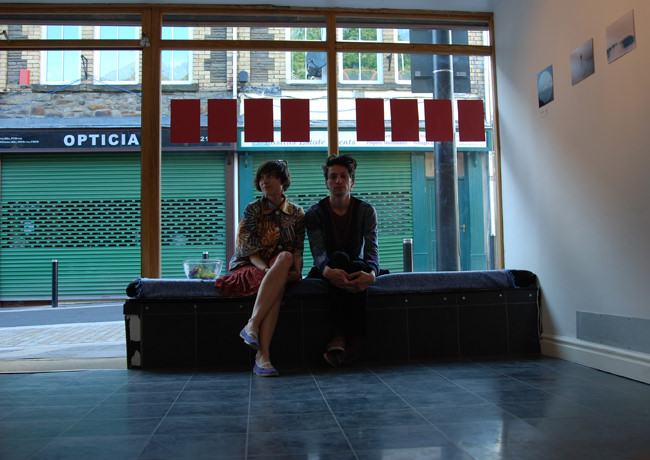
opening 7 © Kickplate Projekt

Ich danke Zosia und Dafydd für ihre Zeit und Geduld. Ich hoffe, dass ihr Projekt eine Zukunft hat und andere ermutigt, Ähnliches zu realisieren oder solche Projekte zu unterstützen.

Wer das Kickplate-Projekt unterstützen möchte, ist herzlich eingeladen bei der Kickstarter-Kampagne des Projektes vorbeizuhuschen.


kwerfeldein – Fotografie Magazin
 
Comments Off on Als die Kunst nach Abertillery kam

Posted in Equipment


Photographing A Same-Gender Wedding or Ceremony

03 Sep

Recently there has been several big changes in the way the US handles same-sex marriage.  Now, I don’t write about politics, which I think is lucky for all of us in the same way that I don’t cook is lucky for the people I live with.  I write about photography and people.  I also don’t make predictions about laws and the world, mainly because I’m not sure what I’m going to have for dinner tonight and as I write this, it’s almost 8pm (cereal is always a safe bet at this point though), but I will say this: as same-gender marriage becomes more accepted and recognized, the need for photographers who will happily and professionally photograph these weddings as they would any other, will increase.  And I hope to be one of the first photographers in my area a couple thinks of for these jobs.

IMG_3782b

I have been lucky enough to photograph several same-sex weddings and commitment ceremonies.  For this article, I will be referencing the beautiful wedding of Jeremy and Randy, who when I asked, were thrilled to allow me to show their images.  I met these wonderful men because Jeremy’s mother placed a hefty bid on a “photography event” that I had donated to a non-profit for their annual fundraiser auction.  I had no idea what would be the outcome and I couldn’t have been more thrilled that this lovely woman won my random donation that to be honest, I got a little bullied into.  I was certain that I would end up photographing some D list celebrity in the famous mountain town where I donated the “prize” and often worked in.  Or maybe that I would be asked to do something crazy and/or scary and have no way to back out.  Like a scuba diving photo shoot.  (I’m terrified of scuba diving.  I think.  I’ve never actually tried.  But I certainly don’t want to.)

Instead I ended up fourteen thousand feet above sea level on a beautiful September day.  I hauled up the cake and live butterflies awaiting their ceremony release who I talked to the whole 30 minute drive, telling them that all would be well and shhhh, shhhhhh…….your wing flapping is making me nervous!.  But that’s another article I may write someday titled “Hauling Live Previously Frozen Butterflies Is Not For The Weak Of Heart”.  Anyway…..I am a photographer that proudly photographs same sex weddings and unions.  I am not gay myself.  I am not some crazy liberal (well, maybe a little).  I am a person who believes that when any two adults love each other and want to announce that and celebrate it and make promises in front of their friends and families and perhaps feed us all cake in the meantime, that’s a pretty special thing that needs to be documented.  And if you’ll have me, I’m thrilled to be the one to do it.

Here are six tips for photographing a same-gender wedding or ceremony:

 IMG_2824b

IMG_2847b

1. It isn’t any Different

It’s two people that love each other.  And if you signed up for this, it’s like any other wedding you’ve ever done or been to.  Simple as that.  Show up, do your job, eat cake.  If there is even a small part of you that doubts you can do this (beyond the normal doubt that many of us photographers have at any given moment), pass on the job and allow a photographer that can to do it.

IMG_2870b

IMG_2840b

2. Find your Groove

Okay, I lied.  It’s a little different.  Only because we have been programmed to think that it’s different.  The truth is, it may take you a bit to figure out the specifics.  But you will.  I’m as open-minded as they come and truly believe we should be allowed to love (and marry) whoever we want.  None of this changes the fact that I only have a few gay friends, most of which aren’t close friends, and all of which I haven’t been around them and their romantic partner or dating life much.

So while it doesn’t bother me a bit, seeing romantic gestures between two people of the same gender is still a somewhat unfamiliar concept to me.  But here is the other truth: I’m not a sappy person by nature and witnessing public displays of affection between any two people makes me a little nervous.  At any wedding I photograph, there is a moment of dread realizing that I will be watching kissing and non-stop declarations of love all day.  In all fairness, this may be because I am a cynical single person.  And my therapist may have mentioned something about intimacy issues.  I assume that’s mainly because I’m perfect in every other way and she had to make something up to prolong the relationship.  At any wedding, at some point I am able to brush off the cynicism and give in to the beauty of two people pledging to each other.

IMG_3050b

IMG_2831b

3. Realize the Gravity of what you’re Doing

You will likely never shoot a ceremony or event where you are more appreciated.  I asked Jeremy what the difference is when hiring a photographer for a same-sex wedding; I fully expected to get back a response about how I needed to realize that it wasn’t any different.  

Instead, he told me this:  ”The act of asking a photographer to do my wedding was in itself anxiety-provoking. I wasn’t worried about them being booked already, but rather of them not approving of my wedding at all! A wedding can be even MORE emotional for same-sex couples, because chances are at some point in their lives they were sure this day would never be possible.” Weddings are a great deal of pressure, but at a same-gender ceremony you have the added bonus of being pre-approved. Just by being happy to do it, you have made the couple incredibly happy. The images you take are beyond the wildest dreams of the couple because they likely haven’t thought their wildest dreams are possible.

IMG_3688b

IMG_3669b

4. Find out the Details Beforehand

At most of the weddings I have shot, I have done nothing more than exchange a few emails with the couple and possibly taken engagement photos. There aren’t a lot of odd pieces of a wedding that I haven’t seen after having shot so many; divorced parents, possible drunk relatives, non-traditional requests, a roomful of unclothed bridesmaids, rain, unclothed bridesmaids in the rain.…..I’ve seen it all. Though in this situation, I want to know if there are specific relatives that I maybe need to be aware of.

For example, both of Jeremy’s grandfathers are extremely conservative and yet showed up to the wedding anyway after saying that they wouldn’t. This created a very emotional piece for everyone who was aware. You can’t prepare for every possible situation, but get as many details as you can beforehand. It’s more prep work, but it will serve you well in the long run.

IMG_3885b

IMG_3887b

5. Educate Yourself

Many same-sex weddings don’t adhere to traditional wedding outlines. Know beforehand if there will be anything specific happening in their ceremony that might be important. There many be similarities, but there is often an entire separate set of emotions that happen. Know in advance that this is more than just a wedding day; this is a celebration that most thought never could happen.

IMG_3712b

6. You mustn’t Worry about it!

I spend most days worried that at some point, I’m going to make an idiot out of myself. This is because most days, at some point, I make an idiot out of myself. At a same-gender weddings I worry quite a bit that I am going to put my foot in my mouth and say something insulting that I in no way meant insulting. If I ever have, and I seriously wouldn’t put it past me, no one has ever mentioned it. This tells me two things:

  1. that it’s possible people are just used to my flavor of obnoxiousness at this point, and…
  2. there is room for a bit of putting your foot in your mouth. While plain out rudeness is of course unacceptable, if you slip-up don’t stress about it.

My grandmother used to always say “You worry too much! You mustn’t worry about it!”.

She also used to say “All the beautiful clothes in your closet and that is what you decided to wear?”, but I prefer to concentrate on the good things.

Be sensitive to the event, but chances are if you got this far into in, it’s for good reason. At this wedding, I accidentally referred to Jeremy as the bride several times. And each time he teased me that he was likely the worst Bridezilla I’ve ever come across.

He wasn’t. Not even close.

Post originally from: Digital Photography Tips.

Check out our more Photography Tips at Photography Tips for Beginners, Portrait Photography Tips and Wedding Photography Tips.

Photographing A Same-Gender Wedding or Ceremony


Digital Photography School

 
Comments Off on Photographing A Same-Gender Wedding or Ceremony

Posted in Photography


Macro to Micro: Intricate Paper Cut Art Inspired by Nature

03 Sep

[ By Steph in Art & Sculpture & Craft. ]

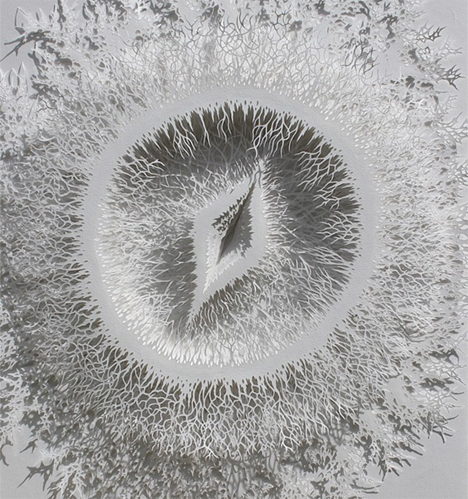
Rogan Paper Cut Art 1

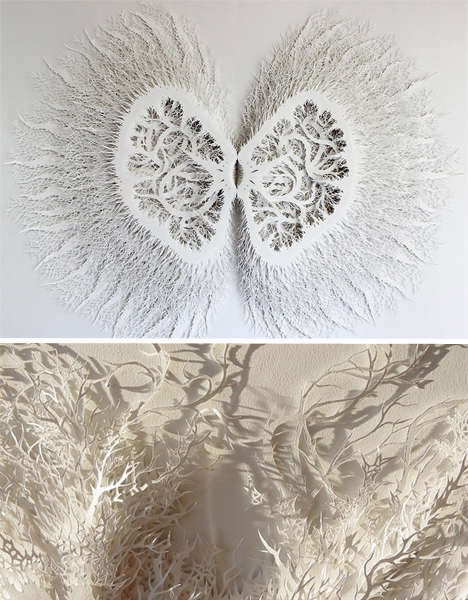
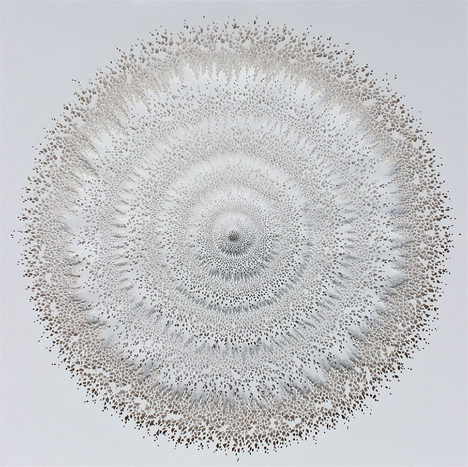
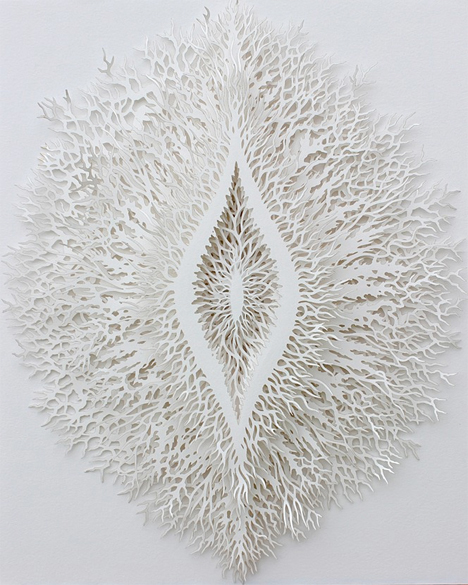
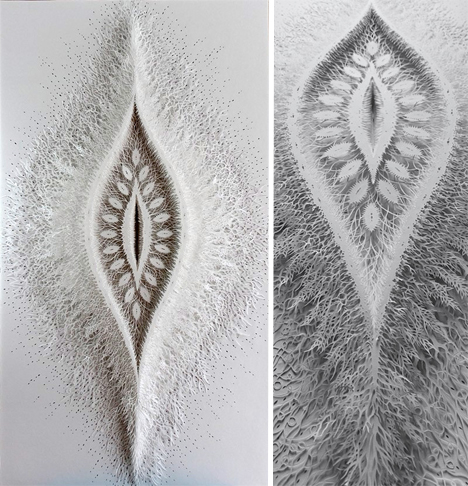
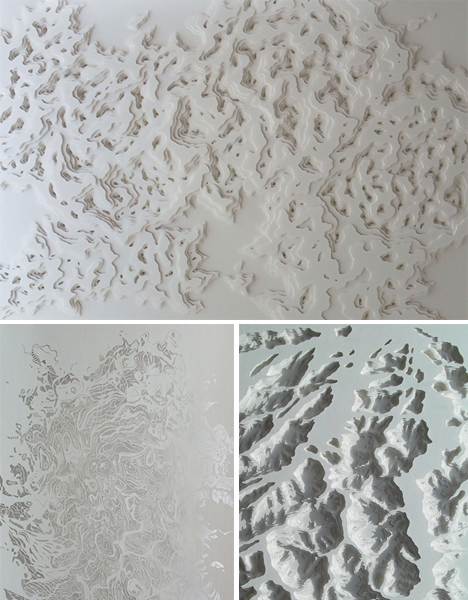
What starts as a scientific study takes on a life of its own, guided only by the imagination of artist Rogan Brown as he transforms a sheet of paper into a masterful sculpture with thousands of tiny incisions. Rogan takes his inspiration from natural organic forms, mineral and vegetal, ranging from microscopic individual cells to large-scale geological formations.

Rogan Paper Cut Art 7

Each of these sculptures is incredibly time-consuming, with a single work sometimes taking more than five months to complete. Rogan starts with a pattern that catches his eye, carefully observing his chosen inspiration and creating ‘scientific’ preparatory drawings. But then, as he states, “everything has to be refracted through the prism of the imagination, estranged and in some way transformed.”

Rogan Paper Cut Art 3

Rogan Paper Cut Art 2

The artist sees the very long, arduous process of not only allowing his imagination to take over the work in a natural way but actually making those precision cuts in paper as an essential element of the work. “The finished artifact is really only the ghostly fossilized vestige of this slow, long process of realization.”

Rogan Paper Cut Art 4

Rogan Paper Cut Art 5

The complexity of Rogan’s work calls to mind the papercut art of Tomoko Shioyasu, whose own nature-inspired paper tapestries based on the structure of cells can measure as large as twelve feet high and eight feed wide.

Share on Facebook


[ By Steph in Art & Sculpture & Craft. ]

[ WebUrbanist | Archives | Galleries | Privacy | TOS ]


WebUrbanist

 
Comments Off on Macro to Micro: Intricate Paper Cut Art Inspired by Nature

Posted in Creativity


2. September 2013

03 Sep

Ein Beitrag von: Andreas Krone

Invitation © Andreas Krone


kwerfeldein – Fotografie Magazin

 
Comments Off on 2. September 2013

Posted in Equipment


When to Stop Being a Photographer and Start Being a Photo Editor

03 Sep

At some point, every photo shoot comes to an end.  Every portrait session, cookbook shoot, family vacation, ad campaign, college graduation, wedding, and photo essay eventually gets to the point when it’s time to put the camera down and see what you’ve got.  Congratulations–  You’ve just become a photo editor.  To be clear, I’m not talking about correction or manipulation in Lightroom, Photoshop or any of the other image editing software packages available.  I’m talking about the task of sitting down with the 367 images that you’ve just downloaded and being able to look at your own work with an objective, critical eye, and whittle them down to your best work.  Truthfully, this is one of those benchmark qualities that defines the term “professional photographer.”  Some people define the term based on the gear, while others base it on whether you are paid for your photography (and if so, how much).  For me, I define it in large part based on the photographer’s ability to at least temporarily sever their emotional tie to the work and realize that they shouldn’t be uploading ten images of the same sunset to their Flickr or 500px accounts simply because the angle is ever so slightly different in each.

I first learned this lesson several years ago when I started out as a second shooter for a high-end wedding photographer.  I showed up at the studio one Monday morning after a big weekend wedding, all excited to help with The Culling.  The preliminary critique the night of the wedding had been very positive, so I was feeling good.  Until we started going through the images.  “You’re deleting THAT one?  Seriously?  Wait a minute– what was wrong with THAT one!?!”  By the time we were done I was seriously questioning my new career choice.  My boss tried explaining that when the bride started going through the proofs she was going to get overwhelmed (and not in the good way) by having so many similar photos, that picking her favorites and placing an order would be an insurmountable task.  There wasn’t enough that was different about them.

As much as I didn’t want to admit it, he was right.  I hate it when that happens.

The bottom line was that the bride really didn’t need five 3/4 portraits with varying degrees of tilt when two– MAYBE three– would more than suffice.  The point of the lesson was learning to edit yourself by thinking like a client.  It’s a lesson I’ve tried carrying with me on every assignment since.  Think about it like this– have you ever had to sit through a three-hour marathon session of being forced to look at each and every photo your best friend took on their summer vacation?  Of course you have.  We’ve all been there.  How much better would it have been if they had edited themselves down to their twenty best?  See where I’m going with this?

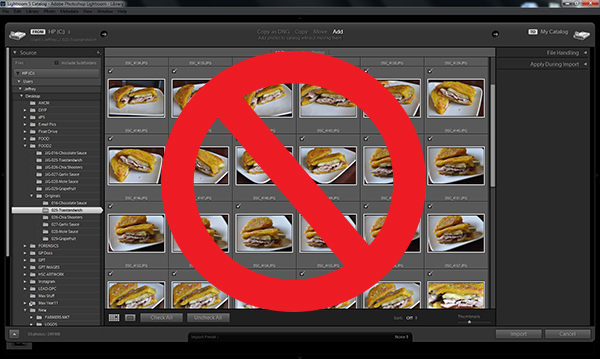
This was a Lightroom import from last week while I was shooting the last four dishes of the thirty I’d been commissioned to shoot for an upcoming cookbook.  I seriously overshot this one.  The screen capture only shows 24 of the 39 frames I shot of a sandwich.  Thirty-nine frames of a sandwich!  Not only do I not want the client to have to go through that many images to select the one that will go in the book, I don’t want them knowing that it took me 39 frames to take a picture of a sandwich!  Knowing how to edit yourself is crucial.  Unfortunately, not enough photographers learn how to do it well.

Editing-001-copy

The rule of thumb here is not to only show your best.  It’s to show the best of your best.  If I’ve taken 100 photos, chances are that maybe 50 go in the “selects” folder.  Of those 50, maybe 30 are really good.  Keep cutting your numbers in half as you move from “really good” to “THAT’S what I’m talking about!”  If I’m your client, I’ve already spent considerable time and money in hiring you.  I know you’re good.  Show me just how good you are by not wasting my time and showing me your best.  As soon as you can take your own emotions out of the equation you’ll be thinking like a photo editor and will be much better prepared to present only your best work, whether the client is a bride, a band, or a book publisher.  (As a side note, the same advice applies to entering photography competitions.  Think like the judge, not the photographer).

I see some you nodding your heads, but some of you are still skeptical.  “I got up at 3:00 in the morning to get to the location and set up just in time to see the sun come up over the crest of the mountain…”  Stop right there.  Rule #1 of critique with my photography students is “No talking once your photo is up on the screen.  The old cliche that every picture tells a story is true, but you need to let the picture tell it.  I don’t care about how difficult it was to get the shot or that you were happy/depressed/angry/indifferent when you took it.  While the result always matters,  you can’t necessarily say the same for the back story.  Save the stories for when you write your book some day.  For now, the work needs to speak for itself.

Learning to edit yourself pays dividends across the board.  If you are a professional photographer, your clients will appreciate both your quality and professionalism.  Professionals, hobbyists, and enthusiasts can not only get better at selecting the cream of the crop, but can also eventually start mentally editing themselves before they even push a shutter button.  Digital has made it easier than ever to walk away from a shoot with several hundred images.  That’s great, I suppose, but why create so much extra work for yourself?  Learn to think like a photo editor and all that extra work goes away.


Post originally from: Digital Photography Tips.

Check out our more Photography Tips at Photography Tips for Beginners, Portrait Photography Tips and Wedding Photography Tips.

When to Stop Being a Photographer and Start Being a Photo Editor


Digital Photography School

 
Comments Off on When to Stop Being a Photographer and Start Being a Photo Editor

Posted in Photography


Rebellious Portrait Photography That Goes Against the Grain Like You Wouldn’t Believe

03 Sep

The world’s major fashion magazines are plump with advertising images of the size-zero models, with their flawless complexions and perfect bone structures. Much to the everyday girl’s dread, these images can also be found pretty much everywhere, especially in portrait photography. However, imagine for a moment if these models weren’t perfect? Would the images have a greater impact? Would people Continue Reading

The post Rebellious Portrait Photography That Goes Against the Grain Like You Wouldn’t Believe appeared first on Photodoto.


Photodoto

 
Comments Off on Rebellious Portrait Photography That Goes Against the Grain Like You Wouldn’t Believe

Posted in Photography


Blickfang: Hitlers Badewanne

03 Sep

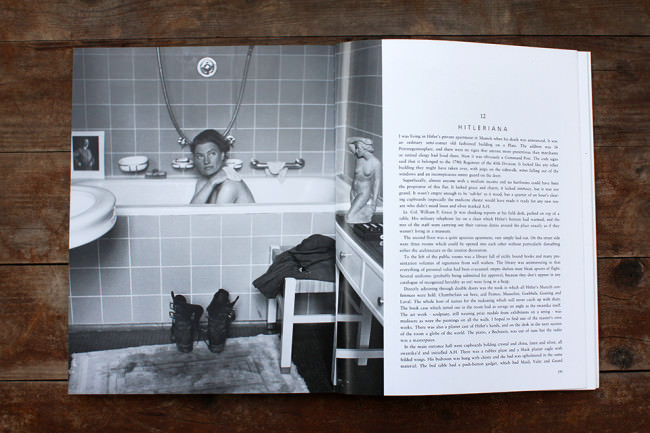
Lee Millers wohl eigenartigstes Foto ist das Bild in Hitlers Badewanne. Zusammen mit dem Live-Reporter David Sherman und einigen Soldaten erlebte sie das Kriegsende 1945 in Hitlers Wohnung in München.

Das Nutzen von Hitlers Badewanne ist wohl neben dem rein praktischen Akt vor allem ein symbolischer. Lee Miller selbst kommentierte das Foto später in einem Radiointerview: „Ich nahm ein anderes seltsames Bad, als ich den Schmutz des Konzentrationslagers Dachau in Hitlers eigener Münchner Badewanne abwusch.“

David Sherman machte ein Foto von diesem Bad. Lee Miller sitzt in der Wanne, sieht über den Wannenrand und wäscht sich mit einem Lappen über die Schulter. Die schweren Stiefel stehen vor der Badewanne, die helle Badematte ist schmutzig. Auf dem nebenstehenden Tischchen steht eine nackte Frauenbüste. Das Portrait Hitlers am Badewannenrand ist vermutlich ein Arrangement der beiden Fotografen.

© Lee Miller

Da die eingezogenen Männer ersetzt werden mussten, waren Frauen als Journalistinnen oder Kriegsberichterstatterinnen im Zweiten Weltkrieg keine Seltenheit mehr. Lee Miller wurde vom Verlag Condé Nast bezahlt. Ihre Bilder und Texte wurden sowohl im britischen als auch amerikanischen Frauenmagazin Vogue publiziert. Der Bildband „Lee Miller’s War“*, aus dem dieses Foto stammt, gibt Einblick in ihre Arbeiten 1944 – 1945 mit vielen Begleittexten, Briefen und eigenen Aufzeichnungen.

* Das ist ein Affiliate-Link zu Amazon. Wenn Ihr darüber etwas bestellt, erhalten wir eine kleine Provision, Ihr bezahlt aber keinen Cent mehr.


kwerfeldein – Fotografie Magazin

 
Comments Off on Blickfang: Hitlers Badewanne

Posted in Equipment


Leisure in the Sky: 13 Elevated Railway + Rooftop Parks

02 Sep

[ By Steph in Architecture & Cities & Urbanism. ]

Elevated Parks Main

In cities where highways and high-rises have taken up virtually every square foot of real estate there is to be had, lush parks, pedestrian walkways and bike paths can be hard to come by. That’s why, in many cities, supporters of public green space are starting to look up, and they’re reclaiming and rehabilitating abandoned infrastructure in the process. New York City’s The High Line has inspired cities across the world to consider disused railways and viaducts as elevated parks, and rooftop recreation spots are increasing in popularity, too.

The High Line, New York City

Elevated Parks High Line NYC

A rail track that was decommissioned in 1980, standing in disrepair as an eyesore for decades, is now one of New York City’s most popular attractions after its transformation into an elevated park. The High Line is a one-mile section of the former New York Central Railroad spur called The West Side, running along the lower west side of Manhattan, offering views of the city and the Hudson River along with walkways, naturalist plantings, and spots to rest. Its revitalization has spurred development in neighborhoods that lie alongside it.

Namba Parks, Osaka

Elevated Parks Osaka

Eight levels of sloping parks full of trees, cliffs, boulders, lawns, streams, waterfalls and outdoor terraces gradually wind up the rooftop of a lifestyle center adjacent to a 30-story tower in Osaka, Japan. Namba Parks provides greenery and recreation space in a city full of concrete, where nature can be difficult to access. Spaces carved from this rooftop space down to the bottom level of the building create artificial ‘canyons’ for natural lighting.

Promenade Plantee, Paris

Elevated Parks Paris

Promenade Plantee is the elevated park that started it all, predating the High Line by nearly twenty years. It was built along Paris’ elevated Viaduct des Arts, which supported the Vincennes Railway from 1859 to 1969. The arcades under the viaduct were converted into art galleries and artisan workshops.

QueensWay Park on the Long Island Railroad, New York

Elevated Parks Queensway

The QueensWay project has been a controversial proposal, because although additional public green space would be a great thing for the residents of the Queens borough of New York City, many people feel that restoring the rail line to underserved areas would be even more beneficial. Nonetheless, the plan is moving forward, with a 3.5-mile section of decommissioned railway set to become a park.

Next Page:
Leisure In The Sky 13 Railway Rooftop Parks

Share on Facebook


[ By Steph in Architecture & Cities & Urbanism. ]

[ WebUrbanist | Archives | Galleries | Privacy | TOS ]


WebUrbanist

 
Comments Off on Leisure in the Sky: 13 Elevated Railway + Rooftop Parks

Posted in Creativity