RSS
 

Archive for September, 2013

Unsichtbar

04 Sep

Ein Beitrag von: Martin Gommel

Vor ein paar Wochen kam mein Bürokollege Denis Holzmüller zu mir und fragte mich, ob mir der Name Rex Hohlbein etwas sage. Er habe einen Radiobericht über den Fotografen gehört, der Obdachlose fotografiere und unterstütze. Ich war sofort begeistern von Rex’ Philosophie und seinen fotografischen Arbeiten. So kam eines zum anderen und nach regem E-Mail-Austausch fand ein Interview statt, das im Folgenden zu lesen ist.

Hey Rex. Warum fotografierst Du Obdachlose?

Menschen, die ein Zuhause haben, sehen die ohne Zuhause nicht, sondern nur das negative Stereotyp und diese Blindheit hält uns davon ab, in Kontakt mit unserer Empathie zu sein. Sie erlaubt uns, eine andere Person zu entmenschlichen, um ihr Leiden nicht zu spüren. Ohne die Verbindung zum Gefühl wird es einfach, an denen, die leiden, vorbeizugehen.

Ich hoffe, dass meine Fotos ungeachtet der Umstände die Schönheit jeder Person zeigen. Ich möchte mit der einfangenen Schönheit die negativen Meinungen über Obdachlose abbauen und eine menschliche Verbindung herstellen.

Frankie © Rex Hohlbein

Interessant. Hast Du von Leuten Rückmeldungen bekommen, die ihre Meinung über Obdachlose überdacht haben?

Es ist ein langsamer Prozess, Perspektiven zu verändern, die in der Kultur und tief in unserer Person eingebettet ist. Aber ja, ich höre jeden Tag wunderbare Geschichten der Veränderung von Menschen, die sich zuvor niemals Obdachlosen genähert hätten, wie sie Obdachlose sehen und mit ihnen interagieren.

Jede Person muss für sich selbst beantworten, wie oder wo sie dem Problem der Obdachlosigkeit ins Gesicht sehen will. Als Minimum sollten wir jeder Person Würde und Respekt zeigen und sie wissen lassen, dass wir sie sehen und mit ihnen empfinden.

Um diesen Prozess der Kenntnisnahme leichter zu machen, bitten wir auf Facebook: „Sag einfach hallo“, einen Augenkontakt herzustellen oder einfach zu lächeln und zu sagen „ich sehe dich“.

Wenn jeder von uns eine Verbindung herstellt, wird der Prozess des Heilens sowohl der Person auf der Straße, als auch des Vorrübergehenden, in Gang gesetzt.

Matt © Rex Hohlbein

Wie gehst Du auf Menschen ohne Obdach zu?

Ich möchte den Menschen mit der Idee begegnen, einen neuen Freund zu treffen, die Kamera bleibt in der Tasche. Ich möchte nur ein Bild machen, wenn sie das wollen. Ich glaube, dass es bei allen Portraits wichtig ist, dass die Person, die fotografiert wird, Teil des Prozesses sein möchte, das kann man in den Fotos spüren.

Ich frage nur, ob ich sie fotografieren darf, wenn genügend Verbindung hergestellt wurde und es sich natürlich anfühlt. Weiter ist es für mich in diesem Projekt wichtig, dass die Person direkt in die Kamera sieht, denn so muss jemand, der das Foto ansieht, ebenfalls in die Augen der Person sehen, die obdachlos ist.

Wenn du jemandem in die Augen siehst, wird das ein Austausch zwischen zwei Menschen, ganz anders, als jemanden anzusehen, der nicht zurückschaut – und das ist mehr wie das Studieren oder Beobachten einer Person.

Rod © Rex HohlbeinWing © Rex Hohlbein

Das hört sich nach harter Arbeit an. Was hat Dich inspiriert, diesen Weg zu gehen?

Für mich ist es keine harte Arbeit. Es fühlt sich gut an, so viele interessante und schöne Menschen zu treffen. Und es hört sich an wie ein Klischee, aber diese Arbeit hat mein Leben verändert. Ich arbeite seit 26 Jahren als Architekt und muss sagen, dass das viel härtere Arbeit ist.

Ich starte jetzt eine nicht-kommerzielle Organisation, um mit den Menschen auf der Straße weiterzuarbeiten, ihr Name wird „Facing Homelessness“ sein. Wir sind eine kleine Gruppe und haben jetzt gerade den Entwurf der Regierung zur Bestätigung vorgelegt. Wenn das alles offiziell wird, werde ich meine Zeit in der Architektur auf 25% reduzieren und den Rest meiner Zeit „Facing Homemelessness“ widmen.

Ganz am Anfang kam die Inspiration direkt von den Leuten auf der Straße. Die Echtheit und Offenheit der Menschen, die ich traf, bewegte mich. Damals traf ich einen Künstler namens Chiaka. Er schlief außerhalb meines Büros in einem Wagen. Es war immer noch dunkel und so sagte ich ihm, dass er nach dem Aufwachen gern auf einen Kaffee hereinkommen und falls nötig das Bad benutzen könne.

Als er dann hereinkam, fragte er mich, ob ich eine Geschichte, die er gerade für ein Kinderbuch schrieb, hören wolle. Natürlich. Als er las, fing ich zu weinen an, so schön war es. Ich sagte zu ihm: „Ich möchte Dir helfen, Deine Geschichte zu veröffentlichen, Deine Botschaft der Liebe ist wirklich etwas wert.“ Danach fragte ich ihn, ob er die Hütte draußen benutzen wolle, um seine Kunst-Sachen aufzubewahren und dort zu schlafen, wenn das Wetter schlecht ist.

Ronnie © Rex Hohlbein

Um eine lange Geschichte kurz zu machen: Er blieb dort ungefähr vier Monate. Jeden Morgen kam er mit den Bildern, die er am Vortag gemacht hatte, herein. Ich fotografierte sie ab und stellte seine Werke auf eine Facebook-Seite, die ich für ihn erstellt hatte.

Eines Morgens las ich auf der Chiaka-Seite, dass eine Frau geschrieben hatte, Chiaka sei ihr Vater. Dann schrieb ihre Schwester: „Ja, das ist unser Papa!“ Auf einmal waren Chiakas Schwestern auf der Seite und sagten alle hallo.

Als Chiaka hereinkam und ich ihm die Sachen vorlas, fing er an, unkontrolliert zu weinen. Er hatte seine Töchter zehn Jahre zuvor verlassen, verschwand einfach, an einer psychischen Krankheit leidend.

Er sah mich an und sagte: „Ich muss heimgehen.“ Ich sprach am Telefon mit einer seiner Schwestern und sie kaufte eine Fahrkarte für ihn. Er verbrachte die Nacht an unserem Haus, um 4 Uhr morgens fuhr ich ihn an den Flughafen und sagte „Goodbye“ zu einem Fremden, der ein sehr guter Freund geworden war. Diese Freundschaft hatte einen großen Einfluss auf mich.

Am nächsten Tag entschied ich, dass ich eine weitere Seite für Leute auf der Straße starten würde: Homeless In Seattle.

Dinkus © Rex HohlbeinMark © Rex Hohlbein

Sehr bewegend. Ich denke, dass Du sehr viele herzzerreißende Geschichten mitbekommst. Wie gehst Du mit all dem um?

Ja, da sind schon sehr viele Emotionen involviert. Manchmal war das auch recht schwer, aber es ist immer echt und bedeutend. Die Bedeutsamkeit ist Teil der Schönheit und macht es sehr lohnenswert. Meistens muss ich mich selbst daran erinnern, dass dieses Projekt niemanden verändern oder „richtig“ machen soll. Ich komme nicht mit Lösungen.

Ich schaue nur nach Schönheit, um zu helfen, wie wir das größere Problem der Obdachlosen sehen. Dadurch, dass ich keine Veränderung erwarte, bin ich teilweise emotional geschützt. Die meisten ziehen sich zurück, wenn sie merken, dass jemand ein anderes Motiv, eine Agenda hat.

Wenn Du raus gehst, mit dem einzigen Interesse, Freund zu werden, dann verändert das die Beziehung vom Helfen oder „Fixen“ hin zu einer Erfahrung, bei der beide Individuen etwas davon haben.

Das glaube ich sofort. Wie reagieren die meisten Menschen auf eine Kamera?

Das war eine der Überraschungen für mich. Denn fast jede Person, mit der ich Zeit verbrachte, wollte, dass ich sie fotografiere. Ich denke, dass dies damit zusammenhängt, dass sie sich in unserer Gesellschaft unsichtbar fühlen. Wenn jemand ein Foto von ihnen macht, ist das der Beweis dafür, dass sie da sind und gesehen werden.

Ich habe eine große Wand im Büro, auf der ich von jeder Person ein kleines Foto habe. Viele kommen mit ihren Freunden herein, um ihnen das Portrait zu zeigen und oft sagen die Freunde dann zu mir: „Kannst Du mich fotografieren? Ich wäre gern an der Wand.“

Denkus © Rex Hohlbein

Was waren oder sind die größten Schwierigkeiten in diesem Prozess?

Bisher gab es recht wenig Schwierigkeiten. Wenn, dann waren sie unwesentlich und hatten mehr damit zu tun, wie das Projekt mein Leben verändert hat.

Verständlich. Welche Pläne hast Du für die Zukunft?

Momentan ist „Facing Homelessness“ im Entstehungsprozess, womit wir ein größeres Publikum erreichen können. Ich habe außerdem eine Tochter, die gerade ihr Studium in Architektur abgeschlossen hat und wir hoffen, in ein paar Jahren eine neue Architektur-Firma zu gründen.

Meine Zukunft ist also unsicher. Ich weiß, dass die Erfahrung mit Obdachlosen mich auf eine wundersame Weise verändert hat und immer ein Teil von mir sein wird, gleichgültig, was ich in der Zukunft tun werde.

Ich danke Dir, Rex, und wünsche Dir viel Erfolg!


kwerfeldein – Fotografie Magazin

 
Comments Off on Unsichtbar

Posted in Equipment


Discover the Secrets of Beautiful Portrait Lighting

04 Sep

NewImageToday I’m excited to announce the launch of a new dPS eBook – Portraits Lighting the Shot – by Gina Milicia.


In January of this year we released a brand new Portraits eBook called Portraits: Making the Shot.

It was an ebook written by renowned Aussie celebrity portrait photographer Gina Milicia on the basics of how to shoot amazing portraits that reflect the true character of your subject.

The overwhelming response from readers of the eBook was that Gina had created a valuable resource that was helping thousands of photographers to improve their portraiture – but they wanted more.

One of the biggest requests that we’ve received since releasing ‘Making the Shot’ was for some teaching on ‘Lighting’ portraits.

Using light effectively can be the difference between a portrait that captures the true spirit of your subject and one that simply records a moment.

Based upon this feedback we immediately began work with Gina to create a guide to lighting portraits.

I’m pleased to announce that it is ready for you to download today at a limited time Early Bird price of just $ 14.99 (25% off).

What’s Covered in This eBook?

  • The Rules:  The ten golden rules to to live by (when lighting a portrait).
  • The Gear:  The gear you need, might need and actually don’t need.
  • The Way:  How to ‘see’ the light, by using the ‘force’ in a non nerdy way.  This section is GOLD.
  • The Style:  Understand Gina’s style, but importantly how to use all your new skills to create your own.
  • Troubleshooting:  How to handle those tricky lighting scenarios.
  • Building the shot:  Build your shot, one light at a time

Get full details on this valuable new eBook here or buy it directly by clicking the Download it Now button below.

jQuery(document).ready(function(){
jQuery(“a.lightbox-54528″).colorbox({className: ‘dark id54528’, onLoad: function() { jQuery(‘.id54528 #cboxClose’).css(‘display’, ‘block’); }, fixed: true, initialWidth: 500, initialHeight: 100, inline:true, width: 650, href:”div.lightbox-54528”});
});

download_it_now_lighting

jQuery(document).ready(function() { jQuery(‘div.lightbox-54528:gt(0)’).remove(); });// < ![CDATA[ // < ![CDATA[ // < ![CDATA[ function EJEJC_lc(th) { return false; } // ]]>

Post originally from: Digital Photography Tips.

Check out our more Photography Tips at Photography Tips for Beginners, Portrait Photography Tips and Wedding Photography Tips.

Discover the Secrets of Beautiful Portrait Lighting


Digital Photography School

 
Comments Off on Discover the Secrets of Beautiful Portrait Lighting

Posted in Photography


Swiss-Army Bathroom: Spine-Inspired Space-Saving Design

04 Sep

[ By WebUrbanist in Design & Fixtures & Interiors. ]

space saving bathroom design

Like a giant-sized Swiss Army knife, this narrow column unfolds to reveal everything your bathroom could need – a NASA-worthy, space-age modular design idea.

spiral unfolding bathroom design

A water-transmitting ‘spinal cord’ connects independently-rotating ‘vertabrae’, each of which includes a core function, from shower heads and cisterns above to storage in the middle and basins and toilets below.

space saver spinal bathroom

The combined system mounts to the ceiling and floor to form single set of pivot points, providing stability for the spiraling functions in between and a single simple pair of inflows and outflows.

space bathroom design specs


From Design Odyssey: “The Vertebrae was designed by Paul Hernon and it basically incorporates a toilet, a sink, a water cistern and two showers into an 8 foot tall compact steel column that can be folded up when not in use.

space rotating modular bathroom

As for the intention: “It was designed for those living in a small cramped apartment who might not have the room for a bathroom with all the amenities they would like. Each module is hand crafted from 3mm aluminum with polished hand welded seams.”

Share on Facebook


[ By WebUrbanist in Design & Fixtures & Interiors. ]

[ WebUrbanist | Archives | Galleries | Privacy | TOS ]


WebUrbanist

 
Comments Off on Swiss-Army Bathroom: Spine-Inspired Space-Saving Design

Posted in Creativity


3. September 2013

04 Sep

Ein Beitrag von: Chris Zielecki

© Chris Zielecki


kwerfeldein – Fotografie Magazin

 
Comments Off on 3. September 2013

Posted in Equipment


Setting The Mood By Adjusting Your White Balance

04 Sep
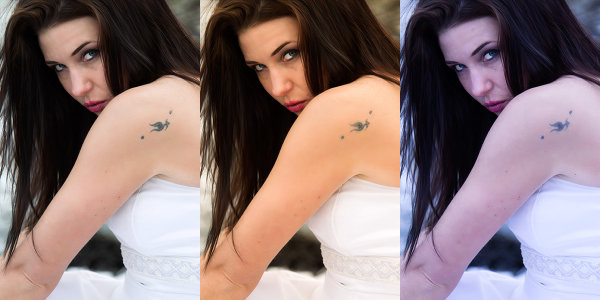
This set of images was taken from a RAW file, with the white balance adjusted using Kelvin white balance in Adobe Camera Raw. The first image was set to Auto in camera. The middle shot was warmed up by setting the white balance to 7500°K, and the third shot was cooled off by setting the white balance to 4000°K. EOS-1D Mark IV with EF 24-105 f/4L IS. 1/200, ISO 100, f/4.

This set of images was taken from a RAW file, with the white balance adjusted using Kelvin white balance in Adobe Camera Raw. The first image was set to Auto in camera. The middle shot was warmed up by setting the white balance to 7500°K, and the third shot was cooled off by setting the white balance to 4000°K. EOS-1D Mark IV with EF 24-105 f/4L IS. 1/200, ISO 100, f/4.

Photographers often deal with a variety of light sources, each of which has it’s own color cast.  When compared to daylight in the middle of the day, tungsten lighting, like that which comes from traditional incandescent bulbs, looks yellow.  Standard fluorescent lighting looks green.  Light in shade, or on a cloudy day will have a bluish cast compared to midday sun.  These color casts are referred to as the color temperature of the light.  Color temperature is measured in degrees Kelvin.  To beginners, color temperature will appear to be a bit backwards.  From 2000°K to about 3000°K are warm tones, and above 5000°K are cooler tones, getting progressively more bluish as the color temperature goes higher.  Midday sun tends to be at around 5500°K – 6000°K, while the sun at the horizon is warmer, at about 5000°K. Overcast daylight will be around 6500°K, and shaded daylight will be around 7000°K.

In this landscape shot, The first shot was processed using the Auto white balance setting, which chose 7500°K.  The second shot was processed to a much cooler tone at 4500°K, and the last shot was processed setting the Kelvin white balance at 11250°K.  EOS-1D X, EF 14mm f/2.8L II. Exposure: 0.5", f/16, ISO 200.

In this landscape shot, The first shot was processed using the Auto white balance setting, which chose 7500°K. The second shot was processed to a much cooler tone at 4500°K, and the last shot was processed setting the Kelvin white balance at 11250°K. EOS-1D X, EF 14mm f/2.8L II. Exposure: 0.5″, f/16, ISO 200.

Thankfully, today’s digital cameras have a tool to correct for the different color casts created by the various light sources we encounter.  For beginners, using the Auto White Balance setting is an excellent start. The camera will try to neutralize the color cast caused by different light sources and give the image a pleasing balance. However, while a neutral color balance is often desirable, there are times when as artists, we may want to use the white balance tool to creative effect.

You can choose what kind of mood you want to set before shooting if you like, by choosing a preset white balance. Most cameras offer Auto, Daylight, Cloudy, Shade, Fluorescent, Tungsten, Flash, Custom, and Kelvin temperature white balance settings.  These settings will neutralize the color cast from the light source they are designed for. For instance, Fluorescent neutralizes the greenish cast given off by fluorescent light.  Custom white balance is a user defined setting where you tell the camera what in the scene should be white, and the camera corrects to make it so. Finally, the Kelvin white balance setting allows you to choose the color temperature of the light source you are shooting in.  If you choose to use the presets in lighting other than what they are designed for, your image will be warmer or cooler, depending on your setting and the available light.

For all of those settings, the camera is simply looking to make white look white.  While that may be what you want, by intentionally setting a different white balance, you can add to the mood.  Choosing  Shady or Cloudy white balance will warm up your image, and choosing tungsten will cool your image. This type of thing is done constantly in movies and television shows to help set the mood.  Photographers as well choose their white balance to set the mood.  A cooler color cast gives the image a colder, harsher feel, while a warm color cast is generally seen as inviting.

If you shoot only JPEG, you’ll be stuck with whatever white balance you had selected at the time of shooting, so if you want to change the mood by adjusting your white balance, you’ll have to choose to do this beforehand.  However, if you shoot RAW, the white balance can be adjusted after the fact, using whichever RAW converter you choose.  You’ll be able to choose from the presets that are loaded in the camera, click in the image to determine what color should actually be white, or you can simply select Kelvin white balance, and using a slider, adjust the white balance in degrees Kelvin and see what the different color temperatures look like.

By taking control of the white balance, you give yourself another tool that can alter the mood of your images and allow you to better communicate what you want to say with your image.  Not every image will benefit by shifting the white balance setting, and there will be some photographers who will be adamant that you should always shoot to the “correct” white balance.  As the artist, this is your time to exercise your creative license and do what feels right to you.

Post originally from: Digital Photography Tips.

Check out our more Photography Tips at Photography Tips for Beginners, Portrait Photography Tips and Wedding Photography Tips.

Setting The Mood By Adjusting Your White Balance


Digital Photography School

 
Comments Off on Setting The Mood By Adjusting Your White Balance

Posted in Photography


4 September, 2013 – Kenyon Labs Gyro Stabilizer

04 Sep

There are situations where even the best in-lens or body stabilization isn’t enough. What to use? In today’s featured review Neal Ratoul explains the Kenyon Labs Gyro Stabilizer.

"Having been to Antarctica with Michael and Kevin, I would say after having traveled the world and shot nearly my entire life as an exhibiting photographer,  it was one of my highlights in my life and I talk about it, all the time.  The images and experience of seeing something visionary and nearly extinct from the world, to see and experience the wildlife and scenery that does not fear humans is amazing.  The images I shot there won me two Smithsonian awards and nearly 18 other international awards". – Tim Wolcott

 Find Out More Now
These Expeditions Will Sell Out Quickly. They Always Do


The Luminous Landscape – What’s New

 
Comments Off on 4 September, 2013 – Kenyon Labs Gyro Stabilizer

Posted in News


Microsoft to acquire Nokia’s smartphone business

03 Sep

Screen_Shot_2013-09-03_at_10.54.11_AM.png

Microsoft is moving forward with a deal to purchase Nokia’s Devices and Services business for $ 7.2 billion USD (€5.44 billion EUR). The Finnish hardware maker’s mobile phone division has been struggling since the dawn of the smartphone era, recently reporting a $ 150 million revenue loss even after surging sales of its Lumia line of Windows Phone 8 smartphones. For Microsoft, the acquisition is an opportunity to unify its mobile brand. Click through for more details on connect.dpreview.com.

News: Digital Photography Review (dpreview.com)

 
Comments Off on Microsoft to acquire Nokia’s smartphone business

Posted in Uncategorized


On Assignment: Don’t Deny the Obvious

03 Sep

We give a lot of attention to light mods around here: big ones, little ones, hard ones, soft ones, umbrellas, soft boxes, grids and the like. But sometimes the best light mod is no light mod at all — especially indoors, with neutral walls.

In that environment, often the smart choice is just to stick your bare speedlights on stands and go.

Read more »
Strobist

 
Comments Off on On Assignment: Don’t Deny the Obvious

Posted in Photography


Indoor Skydiving Inside Concrete Silos & Cargo Containers

03 Sep

[ By WebUrbanist in Architecture & Offices & Commercial. ]

converted concrete skydiving center

Take your pick between a pair of once-abandoned silos: one lets you explore nearly 100 vertical feet of underwater space with hidden caverns, while the other suspends you in virtual free fall, riding air currents in a cylindrical wind tunnel.

converted cargo shipping containers

While those two primary volumes form the core experience of this conversion project, a series of shipping containers (stacked ten stories high) surrounding these structures will provide support and circulation spaces. Warsaw studio Moko Architects aims to start construction in just over one year on this ambitious project, set in the city’s industrial district.

converted concerete silo section

The modified cargo containers additions are designed to contain offices, shops, a cafe and hostel as well training rooms or sports outfitters for visitors. These stacked  attachments will be form a dynamic array and be connected via staircases spanning between the central cylinders. As they slip past one another in space, outdoors decks are formed organically as well on various roof levels within the vertical design configuration.

Next Page:
Indoor Skydiving Inside Concrete Silos Cargo Containers

Share on Facebook


[ By WebUrbanist in Architecture & Offices & Commercial. ]

[ WebUrbanist | Archives | Galleries | Privacy | TOS ]


WebUrbanist

 
Comments Off on Indoor Skydiving Inside Concrete Silos & Cargo Containers

Posted in Creativity


DxOMark tests Canon EOS 70D sensor and lenses

03 Sep

DxOMark-logo-520.jpg

Our friends and collaborators over at DxOMark have been looking at the Canon EOS 70D, and testing out how its innovative 20.2MP ‘Dual Pixel AF’ image sensor measures up in terms of RAW image quality. They’ve also looked at how Canon’s three currently-available STM lenses score on this latest mid-range SLR, as the start of a larger multi-part lens recommendation article for the camera. Click through for links to these and DxOMark’s other recent reviews, including tests of the Sony Cyber-shot RX1R. 

News: Digital Photography Review (dpreview.com)

 
Comments Off on DxOMark tests Canon EOS 70D sensor and lenses

Posted in Uncategorized