RSS
 

Archive for September, 2013

IFA roundup: What’s new in mobile photography tech

14 Sep

note3.JPG

Following the major mobile technology exhibition IFA in Berlin this week, we’ve got a roundup of some the most interesting photocentric tech we tested during the show. From the newest version of Samsung’s Galaxy Note III to an innovative camera phone from Acer with an actual ring flash, manufacturers are paying special attention to the imaging abilities of mobile devices. Take a look at what caught our eye at IFA on connect.dpreview.com.

News: Digital Photography Review (dpreview.com)

 
Comments Off on IFA roundup: What’s new in mobile photography tech

Posted in Uncategorized


Panoramic Rainbow: Circular Space Spans Color Spectrum

14 Sep

[ By WebUrbanist in Architecture & Public & Institutional. ]

rainbow panoramic walkway design

Rainbows on the horizon are impossible to approach, let alone pass through – they flicker and fade like phantoms, except in the case of this iconic space.

rainbow museum roof path

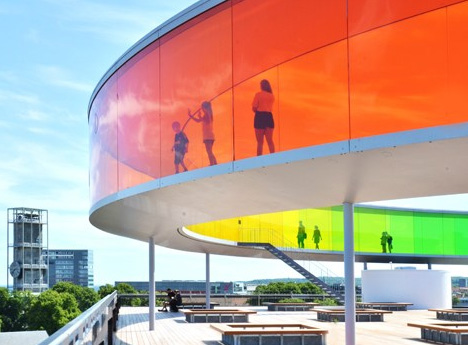
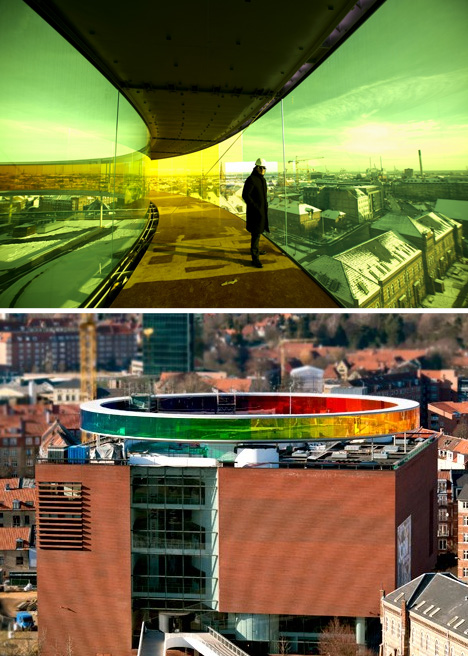
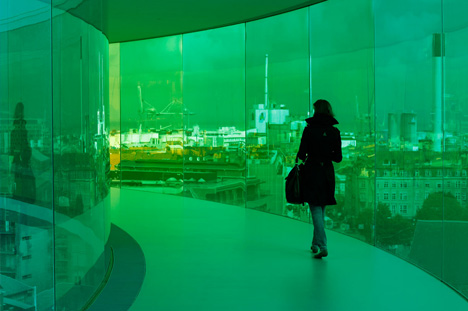
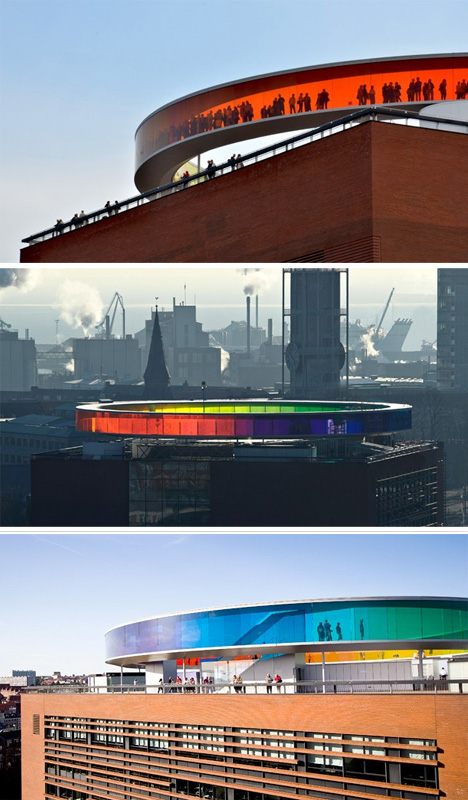
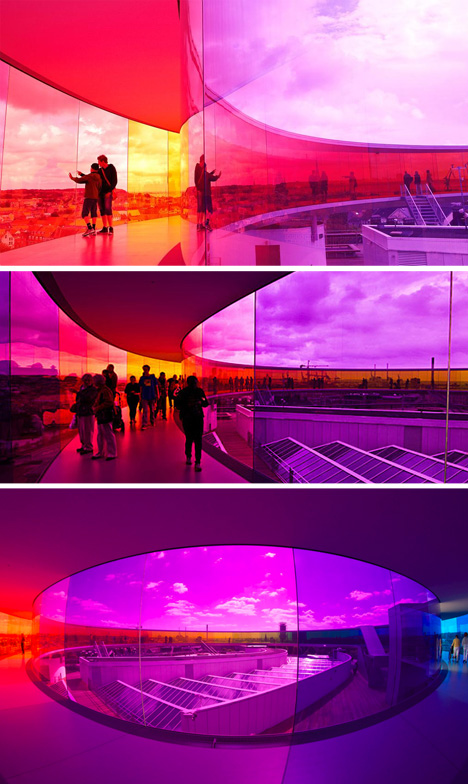
Your Rainbow Panorama by Olafur Eliasson is an enclosed circular walkway that sits atop the ARoS Aarhus Kunstmuseum in Denmark. Its colored glass spans from floor to ceiling and rotates visitors through five hundred feet of color, looping them through a rainbow of panoramic city views.

rainbow roof red orane

rainbow roof blue teal

rainbow roof green yellow

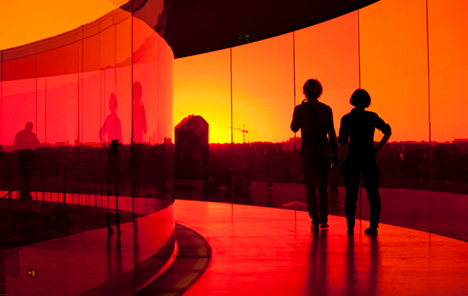
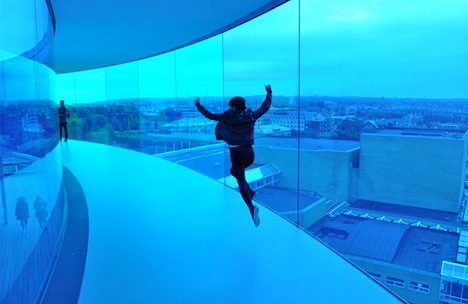
The experience of walking along this 500-foot path is at once reductive and complex. At each step, the city outside becomes a monochromatic landscape, filtered through the lens of single slices of color that rotate as you move.

rainbow rooftop viewing platform

From outside, the raised structure forms a bright beacon within the city, a recognizable icon thanks to its combination of round shape and vibrant color. As this project illustrates, powerful architecture can be about more than structure, building and void – it is also about shaping experience through color and light.

rainbow spectrum walking experience

According to its Danish-Icelandic designer, it is “a space which virtually erases the boundaries between inside and outside – where people become a little uncertain as to whether they have stepped into a work or into part of the museum. This uncertainty is important to me, as it encourages people to think and sense beyond the limits within which they are accustomed to moving.”  In the end, is it an gallery space, a viewing platform, a permanent art installation … or does it perhaps span a spectrum of spatial definitions as well as colors?

Share on Facebook


[ By WebUrbanist in Architecture & Public & Institutional. ]

[ WebUrbanist | Archives | Galleries | Privacy | TOS ]


WebUrbanist

 
Comments Off on Panoramic Rainbow: Circular Space Spans Color Spectrum

Posted in Creativity


Eine farbgewaltige Liaison

14 Sep

Dies ist die Geschichte einer Liaison zwischen Malerei und Fotografie, zwischen analog und digital, die in häufig auftretender Konkurrenz zueinander existieren. Fast wäre es nicht dazu gekommen, aus Zeitmangel und Kapazitätsauslastung. Aber glücklicherweise waren die Umstände gnädig und ich kann die nun folgende Geschichte erzählen.

Zunächst sind da Schall & Schnabel, hinter denen sich die Fotografen Pierre Horn und Eileen Huhn verbergen, die mit Modefotografie ihr Geld verdienen. Und Diana Wehmeier, Kunststudentin und Malerin aus Dresden.

Beide arbeiten unabhängig voneinander an einem ähnlichen Thema. Pierre und Eileen arbeiten in ihren Werken gern mit analogen und digitalen Prozessen, bringen eine malerische Komponente in ihre Bilder und überblenden Bereiche in ihren Bildern.

Diana möchte mit Hilfe von Störungen und Lichtern in ihren Portraits die digitalen Ebenen, die Technisierung, die uns umgibt und unmittelbar in unsere Beziehung eingreift, malerisch mit Ölfarbe, Lack, Acryl und Spray darstellen.

2012 lacquer & oil on canvas 120 x 70 cm © Diana WehmeierINTERFERENZ 2013 oil on canvas 120 x 70 cm © Diana Wehmeier

Ölgemälde von Diana Wehmeier

Die erste zaghafte Annährung beider erfolgte, als Diana Wehmeier Pierre Horn während eines literarischen Abends in Dresden ansprach, nachdem sie erfuhr, dass er Fotograf sei. Sie steckte ihm die Visitenkarte zu und erzählte ihm vom Plural-Projekt, einer Ausstellung, die dieser Tage angelaufen ist, in der verschiedene Kunstrichtungen und Wissenschaften miteinander arbeiteten.

Pierre besuchte daraufhin einige Wochen später Diana in ihrem Atelier, um ein Künstlerportrait für sie und ihren Katalog anzufertigen. Nach sechs Stunden entstand das Portrait, das seiner Meinung nach eine Annäherung zwischen ihrer Malerei und der Fotografie, wie Schall & Schnabel sie sich erarbeitet hatten, darstellte.

Während unseres Shootings entsponn sich dann bereits die Idee, andere Menschen zu bemalen und daraus ein längerfristiges Projekt zu machen. Das Plural-Projekt als Plattform drängte sich förmlich auf.

Und so vereinen sich Malerei und Fotografie, spielen miteinander so sehr, dass sie ineinander verschmelzen und die Wahrnehmung verändern, gleichzeitig die Vorurteile der sich konkurrierenden Medien verschwinden lassen.

© Schall & Schnabel© Schall & Schnabel

Skinwalker, Ergebnisse der Zusammenheit von Diana Wehmeier und den Fotografen Eileen Huhn und Pierre Horn

Es ist, als würden die sonsthin statischen Sujets von Diana aus dem Bild heraustreten, agieren, lebendig. Ein Shooting mit einer Tänzerin oder einem Tänzer dauert etwa eineinhalb Stunden oder länger. Diana bemalt während des Fotografierens weiter den Menschen und die Leinwand dahinter und Eileen und ich bringen verschiedene Materialien zum Einsatz, um verschiedene Störfaktoren zu erhalten. Geplant ist es, eigentlich noch stärker eine Räumlichkeit mit in die Bilder hineinzuarbeiten.

Dass diese Zusammenarbeit beide Seiten zutiefst beeinflusst hat und sowohl die fotografische Arbeit von Schall & Schnabel, als auch die künstlerische Arbeit Diana Wehmeiers verändern wird, steht außer Frage. Das zeigt wieder einmal, dass intermediales Arbeiten verbindet und sich die Gräben zwischen Malerei und Fotografie, analog und digital langsam schließen.

~

Und wer sich nun selbst von den Arbeiten überzeugen möchte, ist eingeladen, am 28. September 2013 im Atelierhof Kreuzberg, Schleiermacherstr. 31-37, 10961 Berlin, ab 18 Uhr vorbeizuschauen und beim Entstehen der Bilder im Rahmen des Plural-Projekts Zeuge zu sein.

Artikelbild: Making of mit Diana Wehmeier und Tänzerin © Schall & Schnabel


kwerfeldein – Fotografie Magazin

 
Comments Off on Eine farbgewaltige Liaison

Posted in Equipment


Speedlight Lit Portraits: Weekly Photography Challenge

14 Sep

This week we’re continuing our themed challenges in the Portraits Direction to celebrate the launch of our Portraits: Lighting the Shot eBook by pursuing the theme ‘Speedlight Lit Portraits’.

Answer Me

So your challenge is to shoot and share a portrait image that is lit using a speed light flash (or more than one if you want to go that direction). While this might limit participation by some Speedlights are the most common type of lighting among our readers so hopefully it’s accessible to a lot of you.

Gina covers a lot of techniques that will be useful for you on this front in her eBook but whether you’ve got it or not we’d love to see your attempts shared in comments below!

Once you’ve taken your ‘Available Light’ photos, upload your best ones to your favourite photo sharing site either share a link to them even better – embed them in the comments using the our comments tool to do so.

If you tag your photos on Flickr, Instagram, Twitter or other sites with Tagging tag them as #DPSSPEEDLIGHT to help others find them. Linking back to this page might also help others know what you’re doing so that they can share in the fun.

Also – don’t forget to check out some of the great shots posted in last weeks Available Light Portraits challenge – there were some great shots submitted.

Post originally from: Digital Photography Tips.

Check out our more Photography Tips at Photography Tips for Beginners, Portrait Photography Tips and Wedding Photography Tips.

Speedlight Lit Portraits: Weekly Photography Challenge


Digital Photography School

 
Comments Off on Speedlight Lit Portraits: Weekly Photography Challenge

Posted in Photography


What The Duck #1435

14 Sep

wtdlogo_big.jpg

We’ve been fans of Aaron Johnson’s comic strip ‘What the Duck’ for years. ‘WTD’ is one of the best satirical comic strips in the world, and it’s published here every week, as well as being included in our weekly newsletter. Barbed, topical and always amusing, we hope you enjoy WTD as much as we do. 

News: Digital Photography Review (dpreview.com)

 
Comments Off on What The Duck #1435

Posted in Uncategorized


13. September 2013

14 Sep

Ein Beitrag von: Tobias Scheck

© Tobias Scheck


kwerfeldein – Fotografie Magazin

 
Comments Off on 13. September 2013

Posted in Equipment


Getting Great Portraits At Sunset

14 Sep
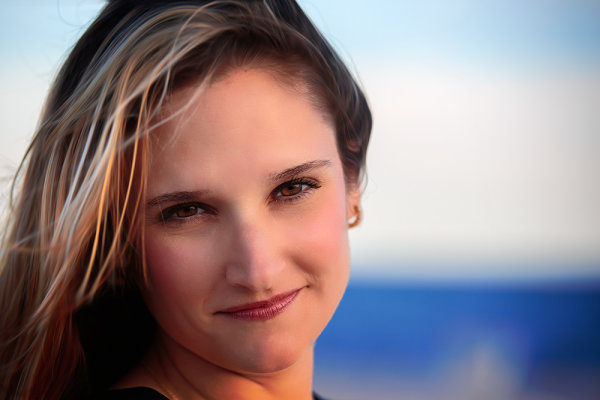
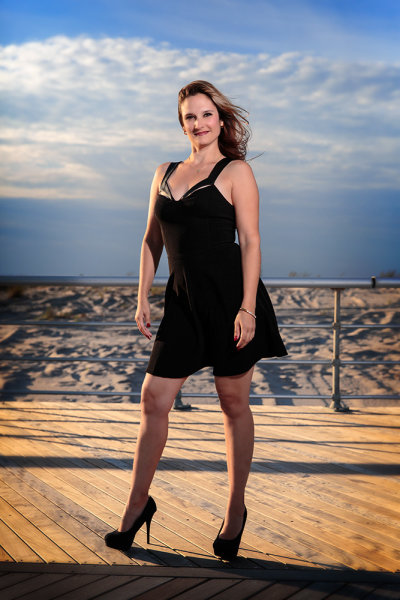
As the sun dipped down I was able to completely remove the flash and use the sun as my main light source, with no fill. I simply moved around my subject, asking her to turn her head a little so I could see the changes in the light on her face, and position her so that the light was the most pleasing.  EOS 5D Mark III, EF 70-200 f/2.8L IS II. ISO 100, f/2.8, 1/250.

As the sun dipped down I was able to completely remove the flash and use the sun as my main light source, with no fill. I simply moved around my subject, asking her to turn her head a little so I could see the changes in the light on her face, and position her so that the light was the most pleasing. EOS 5D Mark III, EF 70-200 f/2.8L IS II. ISO 100, f/2.8, 1/250.

I try to take advantage of natural light for shooting portraits whenever I can.  It’s important to recognize the ways different types of natural light affect your images.  A few months ago I wrote about shooting portraits in midday sun.  This past week I was approached by a close friend who wanted a portrait taken.  After discussing ideas, we decided the beach at sunset would be our setting. Sunset can be as problematic as midday sun for a variety of reasons.   As sun dips lower in the sky, the light gets softer as atmospheric haze diffuses it. In addition, the color temperature warms up, giving a nice warm glow to your scene. However, even an hour before sunset, the light can still be harsher than preferred, casting odd shadows, or creating a harsh backlight. Using flash as fill can help, but as the sunlight takes on a warmer tone, the flash will appear to be too blue. So how do we solve these issues?

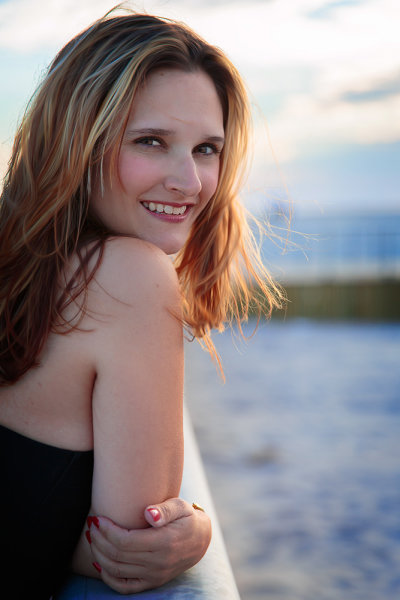
This was one of the first shots taken, on the boardwalk at the beach.  The sun was harsher than I wanted so opted to use wireless flash.  I positioned my friend with the sun at her back and over her right shoulder, and the flash to her front left.  I also had the flash set to high speed sync. I then set the flash to E-TTL, with flash exposure compensation set to even.  I set the camera's exposure compensation to -1, in Aperture Priority.  Doing this lessens the sun's impact on the image, helps darken the sky, and the background overall. Exposure was ISO 100, f/4, 1/4000.

This was one of the first shots taken, on the boardwalk at the beach. The sun was harsher than I wanted so opted to use wireless flash. I positioned my friend with the sun at her back and over her right shoulder, and the flash to her front left. I also had the flash set to high speed sync. I then set the flash to E-TTL, with flash exposure compensation set to even. I set the camera’s exposure compensation to -1, in Aperture Priority. Doing this lessens the sun’s impact on the image, helps darken the sky, and the background overall. Exposure was ISO 100, f/4, 1/4000.

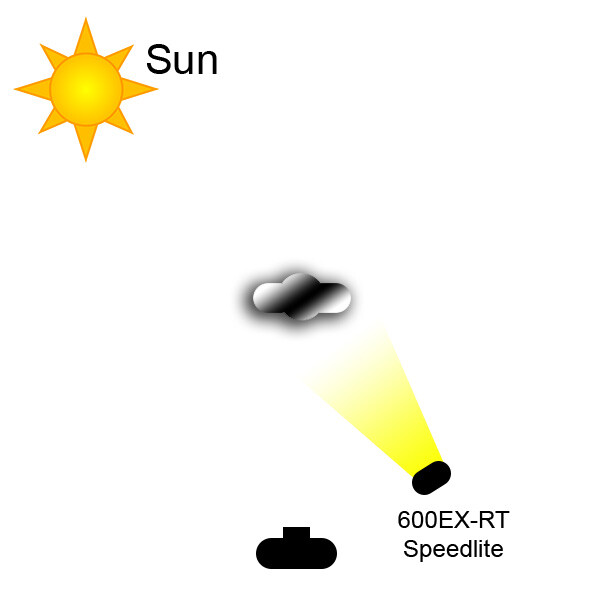
Let’s deal with the harsh light, an hour or so before sunset first.  First, as I mentioned in my earlier post, you can use a scrim or reflector and modify the sunlight that way.  However, this time it was just me and my friend, so I had no one to hold the scrim or reflector and the wind on the beach was too gusty to risk putting the reflector on a stand. I had to use flash.  I was able to use off-camera flash, wirelessly.  I was shooting a Canon EOS 5D Mark III with an ST-E3 wireless flash transmitter mounted to the camera’s hot shoe. I used a 600EX-RT speedlite off camera, mounted on a lightstand.  Again, due to the wind, a softbox or umbrella was out of the question, so I left the flash bare.  There are several ways to compensate for the cooler color temperature of the flash.  You can use what’s known as a warming gel, or CTO (color to orange) gel, on the flash to match the temperature of the sunset.  This is fairly simple solution.  The other solution is simply to set your white balance for the flash, which will have two effects.  One, it will warm the illumination from the flash.  Second, it will warm the sunset light even more, which can be quite pleasing if not overdone.

As the sun dipped down I wanted to turn the flash off and go for a more natural look. The light was still a bit harsher than I wanted so I started shooting backlit. I tried some fill flash, but the light was casting unflattering shadows and not meshing well with the available lighting. Turning the flash off, I positioned my subject so she was facing away from the sun, but had some sand in front of her that reflected enough light back into her face to create some soft catchlights in the eyes.

Finally, the sun dipped down and softened enough that I could ask my subject to look directly into it. This creates a soft, warm look on the face with nice shadows.  Pay attention to how the light falls on your subject when doing this. Ask your subject to slowly turn her head so you can see how the light on her face changes as she does so.  This will give you an idea of how you want her to pose, using the sun as a point of reference for her positioning. The shot in question is the first image in the article.  I also used this technique in the last image, for a wider shot.

Another way to deal with the harsh sun is to shoot backlit. I had tried some fill flash on this shot but it just didn't look the way I wanted it to. The flash caused the noise to cast an unnatural shadow that I found unflattering. I turned the flash off and positioned her so the sand created some fill in her face.  EOS 5D Mark III with EF 24-70 f/2.8L II. ISO 100, f/2.8, 1/400.

Another way to deal with the harsh sun is to shoot backlit. I had tried some fill flash on this shot but it just didn’t look the way I wanted it to. The flash caused the noise to cast an unnatural shadow that I found unflattering. I turned the flash off and positioned her so the sand created some fill in her face. EOS 5D Mark III with EF 24-70 f/2.8L II. ISO 100, f/2.8, 1/400.

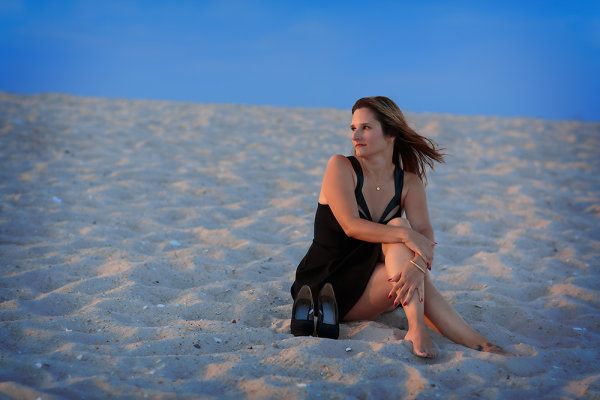
This was one of the last shots of the day.  The beach was nearly empty and I wanted to use the texture of the sand, the deep blue of the sky, and the red glow of the sun to create a graphically strong image. I positioned her so that if she turned her head her face would be lit by the sun and the sun would create a rim of light on her side. EOS 5D Mark III with EF 85mm f/1.2L II. 1/320, f/2.8, ISO 100.

This was one of the last shots of the day. The beach was nearly empty and I wanted to use the texture of the sand, the deep blue of the sky, and the red glow of the sun to create a graphically strong image. I positioned her so that if she turned her head her face would be lit by the sun and the sun would create a rim of light on her side. EOS 5D Mark III with EF 85mm f/1.2L II. 1/320, f/2.8, ISO 100.


Quick lighting diagram for the shot using off camera flash.

Quick lighting diagram for the shot using off camera flash.

Post originally from: Digital Photography Tips.

Check out our more Photography Tips at Photography Tips for Beginners, Portrait Photography Tips and Wedding Photography Tips.

Getting Great Portraits At Sunset


Digital Photography School

 
Comments Off on Getting Great Portraits At Sunset

Posted in Photography


Canon releases sample video from high-sensitivity full frame CMOS sensor

13 Sep

sep12b.jpg

Canon has released a short video produced with a unique full frame CMOS sensor. Announced in March, it’s a sensor dedicated to extreme low light video recording with unusually large pixels. The test subject? A group of Yaeyama-hime fireflies on Japan’s Ishigaki Island. Click through to read more.

News: Digital Photography Review (dpreview.com)

 
Comments Off on Canon releases sample video from high-sensitivity full frame CMOS sensor

Posted in Uncategorized


Chaos Reborn: Kowloon Walled City Rebuilt as Arcade

13 Sep

[ By Steph in Global & Travel & Places. ]

Kowloon Walled City Arcade 1
Kowloon Walled City, the lawless metropolis just outside Hong Kong, was evacuated and destroyed – but there is still one place in the world where it can be experienced almost as it really was, in a safer and more sanitized setting. Visitors to the Kawasaki Warehouse Amusement Game Park located between Tokyo and Yokohama can slip into those dark, virtually airless passages long after their disappearance to get a sense of what it must have been like to live in a packed dystopian city run by the mob.

Kowloon Walled City Arcade 2

David of Randomwire visited Kawasaki to get a glimpse of it himself, revealing a recreation that takes you from a faux-rusted factory exterior into dingy alleyways modeled on those of Kowloon. David describes it as “grimy, devoid of sunlight and complete with a soundtrack to match.”

Kowloon Walled City Arcade 3

Many of the items found within these halls, including the signs, are based on those that can be seen in old photos and videos of the city. Gambling dens and illegal services of all varieties can be seen just beyond hazy panes of glass. See lots more photos in large sizes at Randomwire.

Kowloon Walled City Arcade 4

The real Kowloon Walled City was once packed with at least 50,000 inhabitants in just 6.5 acres, full of refugees, squatters and those looking to evade the law. After its demolition in 1993, it became the site of a vast park full of gardens, ponds and trails.

Share on Facebook


[ By Steph in Global & Travel & Places. ]

[ WebUrbanist | Archives | Galleries | Privacy | TOS ]


WebUrbanist

 
Comments Off on Chaos Reborn: Kowloon Walled City Rebuilt as Arcade

Posted in Creativity


Augenschmaus: Tofusalat

13 Sep

Ein Beitrag von: Marcel Pommer

Preisfrage: Was nimmt der Veganköstler, wenn er Milch, Käse oder irgendetwas Tierisches ersetzen will? Tofu natürlich. Oh, mein Gott. Als gäb’s etwas Langweiligeres und Faderes als Sojaprodukte! (Dass das oft, aber eben nicht immer richtig ist, zeige ich demnächst am Beispiel von Tempeh, der göttlichsten Form der Sojabohne.)

Tofu hat aber zwei wundervolle Eigenschaften: Es gibt ihn in allen möglichen Konsistenzen und er saugt jeden Geschmack, in dem er gebadet wird, gierig auf. Ähnlich wie Huhn und anders als Kuhmilch-Mozzarella, der nach gar nichts schmeckt und auch nicht zu Geschmack zu bewegen ist.

Dem geneigten Nichtveganer sei hier noch einmal dringend empfohlen, Büffelmozzarella bitte nicht als „zu teuer“ zu deklarieren. 99 Cent für nichts ist definitiv teurer als 3 € für etwas, das, zugegebenermaßen, ziemlich lecker ist.

Hier geht’s aber nicht um Büffel, sondern um Rauch. Räuchertofu nämlich. Der schmeckt alles andere als fad und mit dem richtigen Schnitt geradezu fein.

© Marcel Pommer© Marcel Pommer

Portionen: reicht als Vorspeise für vier Personen
Zeit: 10-15 Minuten (je nachdem wie schnell man den Tofu schneidet)

Zutaten

Einige Rispentomaten *
1/2 Block Räuchertofu **
1 Bund Rucola
1 Schalotte, sonst vielleicht eine kleine rote Zwiebel
frischen Thymian
1 TL Estragon
5 EL Olivenöl, ihr wisst schon
4 EL dunkler Balsamico oder ein anderer leckerer Essig Eurer Wahl
1 EL Agavendicksaft
Salz

* Ich habe noch nicht herausgefunden, wie man leckere Tomaten beim Einkauf erkennt. Fest und wenig wässrig ist nicht immer gleich aromatisch. Es bleibt ein Glücksspiel.

** Edeka und Rewe führen brauchbare Qualität, der bröselige Tofu von Alnatura ist eine Katastrophe. In Berlin empfehle ich rundweg den Tofu von Soy Rebels, der ist mit Worten kaum zu beschreiben!

© Marcel Pommer

Zubereitung

Auf dem gewaschenen und vollständig abgetropften Rucola verteilen wir, ganz traditionell, abwechselnd Tomaten und Tofu. Und hier ist das Wichtige: Den Tofu bitte hauchdünn schneiden. Das gelingt nur mit einem sehr schmalen, idealerweise geriffelten Messer und langsamen Bewegungen.

Ein Käsemesser – so eines mit Aussparungen – ist dafür perfekt geeignet. Das Messer muss beim Schneiden durch die Scheibe durchscheinen und die Scheibe muss wabbelig sein. Das ist auch gleich eine gute Meditationsübung.

Über diese Schichtung wird die kleingewürfelte Schalotte oder Zwiebel verteilt, dann eine gute Portion frischen Thymians (ich mag auch getrocknete Minze sehr gern dazu) und einige Prisen Salz.

Die Vinaigrette wird angerührt aus ungefähr gleichen Teilen Olivenöl und Balsamico (hier möge ein jeder seine Balance finden), einem Zehntel Agavendicksaft und einem Teelöffel Estragon. Ich habe nichts gegen Kristallzucker, aber worin soll der sich hier auflösen? Die Süße braucht es aber unbedingt, damit setzt man dem Essig und den Zwiebeln etwas entgegen.

Mein persönlicher Favorit ist Schokoladenessig, da kann man dann auch die Hälfte des Agavensaftes weglassen. Gut, die Vinaigrette darübergegossen und – ups – schon fertig. Naja, noch fotografieren – ich will aber essen! Gut, dass der Salat noch ein Paar Minuten zum Einwirken braucht.

© Marcel Pommer

Fotorezept

Geschirr vom Flohmarkt, eine Tischdecke, die ebenfalls Appetit macht. Die einzelnen Zutaten geordnet arrangiert und bei natürlichem Licht und bedecktem Himmel fotografiert. Zum Schluss noch die Abfälle – ganz schön wenig; gut, oder? – nett angeordnet und fertig.

~

Du hast auch ein leckeres Rezept und die passenden Food-Fotos dazu, die einem das Wasser im Munde zusammenlaufen lassen? Dann werde einfach selbst Teil von „Augenschmaus“!


kwerfeldein – Fotografie Magazin

 
Comments Off on Augenschmaus: Tofusalat

Posted in Equipment