RSS
 

Archive for September, 2013

House of Glass: Cabin Facade from Antique Window Frames

16 Sep

[ By WebUrbanist in Architecture & Houses & Residential. ]

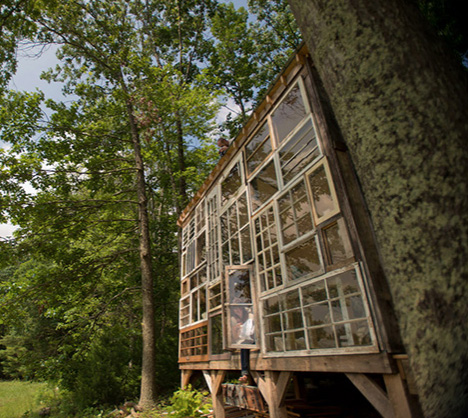
house glass front facade

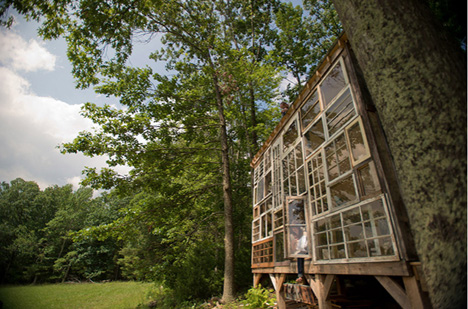
On an unusual kind of cross-country road trip, this couple visited garage sales, antique dealers and added these to other roadside finds, all toward the quest of assembling an an eccentric collection of windows for a unique dream home.

house of glass

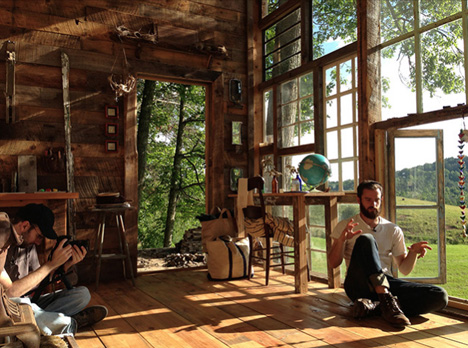
house glass room interior

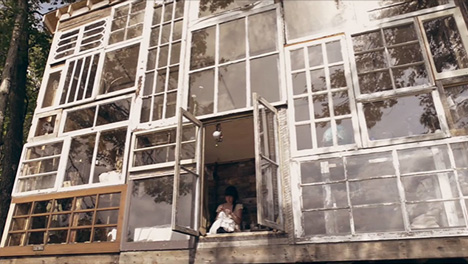
Creators Lilah Horwitz and Nick Olson are, respectively, a designer and photographer, but with a common architectural vision of a home where one whole facade would be made of windows. The goal: let sunsets illuminate the structure’s entire interior space, creating a multitude of views, wood-framed through artfully arranged window openings.

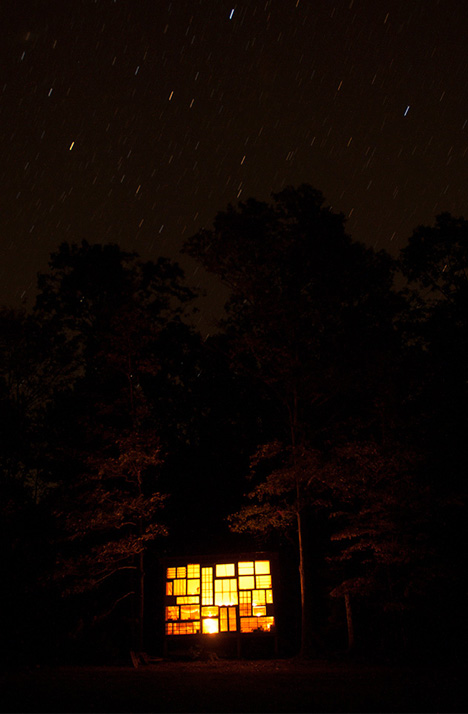
house glass night view

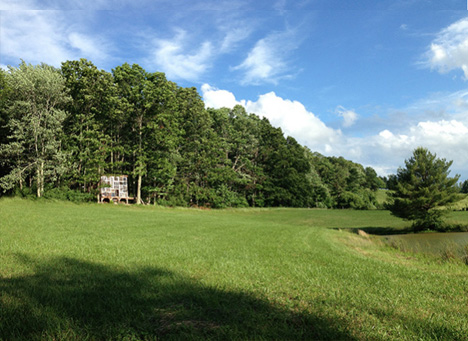
The result sits on the sunny hills of West Virginia, a rustic-style cabin in which the front-facing fenestration is the dominant design feature. The assemblage reflects their personalities – the hands-on approach Olson takes with his camera and images, and the landscaping and fashion experience of Horwitz.

house glass hill context

house glass exterior view

In turn, Matt Glass and Jordan Wayne Long interviewed the couple for a short seven-minute film on Half Cut Tea. The result shows the pair of creatives but also the context of their creation via shots of the surrounding landscape and entry path as well as the dwelling itself by daylight and at night.

Share on Facebook


[ By WebUrbanist in Architecture & Houses & Residential. ]

[ WebUrbanist | Archives | Galleries | Privacy | TOS ]


WebUrbanist

 
Comments Off on House of Glass: Cabin Facade from Antique Window Frames

Posted in Creativity


Accessory review: Vanguard Up-Rise 33

16 Sep

33-front.jpg

With a smart look and clean design, the Vanguard Up-Rise 33 stands out from the pack. Capable of holding a small to medium DSLR, the Up-Rise 33 also expands to allow room for a 13-inch notebook computer, or contracts if you have less to carry. It has served as a good commuter companion for one of our reviewers for about eight months. Read how it performed in his review.

News: Digital Photography Review (dpreview.com)

 
Comments Off on Accessory review: Vanguard Up-Rise 33

Posted in Uncategorized


15. September 2013

16 Sep

Ein Beitrag von: Geronimo Schmidt

Drei Zinnen © Geronimo Schmidt


kwerfeldein – Fotografie Magazin

 
Comments Off on 15. September 2013

Posted in Equipment


16 September, 2013 – Olympus OM-D E-M1 Field Report from Paris

16 Sep

Micro Four Thirds is heating up. Panasonic’s GX7 has a lot of people excited, but last week Olympus announced the OM-D E-M1, its latest flagship camera.

I have received a review sample, just prior to my leaving for a week-long vacation in Paris, France. The E-M1 will therefore be the subject of a daily blog here on this site. Check in every day for updates.

"Having been to Antarctica with Michael and Kevin, I would say after having traveled the world and shot nearly my entire life as an exhibiting photographer,  it was one of my highlights in my life and I talk about it, all the time.  The images and experience of seeing something visionary and nearly extinct from the world, to see and experience the wildlife and scenery that does not fear humans is amazing.  The images I shot there won me two Smithsonian awards and nearly 18 other international awards". – Tim Wolcott

 Find Out More Now
These Expeditions Will Sell Out Quickly. They Always Do


The Luminous Landscape – What’s New

 
Comments Off on 16 September, 2013 – Olympus OM-D E-M1 Field Report from Paris

Posted in News


Is It Safe? Nine Creepy Abandoned Dentist Offices

15 Sep

[ By Steve in Abandoned Places & Architecture. ]

abandoned dentist offices
These nine creepy abandoned dentist offices feature chairs even a weary marathon man wouldn’t sit on. Listen to your inner drill sergeant, this will hurt a bit!

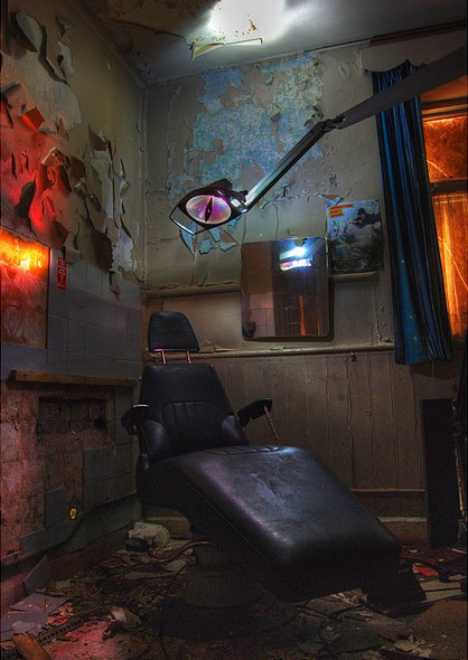
Adel Reformatory, England

Adel Reformatory abandoned dentist chair(image via: Mexico75)

The Adel Reformatory in Leeds, England opened in 1857 and parts of the complex were still being used until 2004. One hopes the drab, dreary and debris-cluttered dentist office above was abandoned as early as possible. Kids, stay in school… but not a reform school, and especially not if you have a toothache.

Adel Reformatory Leeds abandoned dentist office(images via: Mexico75)

Kudos and congrats to Flickr user Mexico75 for not only capturing the decrepit Adel Reformatory dentist office but for lighting it in such a way that promises unimaginable doom to anyone brave (or foolish) enough to sit in that chair.

Le Palace d’Anfa Hotel, Morocco

Le Palace d'Anfa Morocco abandoned dentist office chair(image via: TripAdvisor.fr)

There’s nothing worse than having a dental emergency while traveling in a strange foreign land, amiright? There are degrees of “worse”, however, and the de facto dental office just next to the gym at the Le Palace d’Anfa Hotel in Casablanca, Morocco takes that degree right off the dial. As for the Le Palace d’Anfa Hotel itself, TripAdvisor recommends tourists “avoid this hotel” regardless of the status of their teeth.

Maison De Cerf, Belgium

dentist Maison de Cerf Belgium abandoned(images via: Day Of The Dead)

This abandoned dentist’s house in Belgium doesn’t look too bad, though one can be certain it’s never going to look any better than this. Located in the home’s working basement, the office appears to have been left suddenly and in great haste by the owner, who never bothered to return for his equipment or teeth molds.

dentist Maison de Cerf abandoned Belgium(image via: Day Of The Dead)

The reclining dentist’s chair was obviously designed for comfort and support but as we all can attest, true relaxation in this situation requires plenty of novocaine and nitrous oxide. One thing’s for certain, a trip to this or any dentist is never “boring”… unless you’ve got a cavity that needs attention, that is.

Next Page:
Is It Safe Nine Creepy Abandoned Dentist Offices

Share on Facebook


[ By Steve in Abandoned Places & Architecture. ]

[ WebUrbanist | Archives | Galleries | Privacy | TOS ]


WebUrbanist

 
Comments Off on Is It Safe? Nine Creepy Abandoned Dentist Offices

Posted in Creativity


6 Tips for Creating Unique and Emotion Filled Wedding Photos

15 Sep

A post by wedding photographer Susan Stripling – one of the course presenters in this weeks Creative Live Photo Week – an event that showcases teaching by 50 photographers across 3 tracks including Weddings and Family.

The best wedding photographers know how to create not only beautifully composed images, but also the moments of emotion and connection at the core of every dynamic wedding story. Focusing on capturing these unique, organic moments allows you to tell a story that’s true to the couple you’re working with. Here are some tips for finding and capturing the images that keep a wedding story dynamic and fresh.

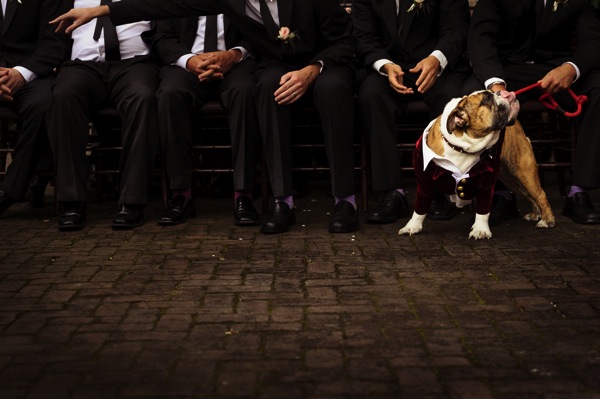
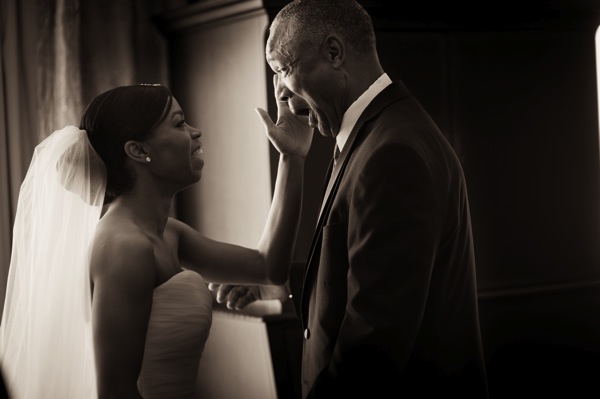
Wedding photography emotion

1. Build the Right Relationship with the Right Client

It’s important to assess whether a client is the right match for your photography style and the stories you’re good at capturing. When you’re consulting with clients, ask questions about what exactly they want, and consider whether you’re prepared to offer the services they want. Once you’ve decided to work with a couple, cultivate a positive, communicative relationship. You don’t have to be best friends with every couple that you shoot, but a basic level of trust helps clients to be themselves on the wedding day. The more comfortable they feel with you, the more moments you’ll be invited to shoot.

2. Be Prepared

To capture unique moments, preparation is essential. Before you show up to shoot a wedding, think through the choices you’ll make about gear, lenses, equipment, and lighting. It’s inevitable that plans will change on the day of the wedding, and that’s okay. Being prepared doesn’t mean you have to be inflexible.

Wedding photography emotion 1

3. Check your Composition

If an image is too soft or technically imperfect, you can’t share it with clients. A poor image of a great moment is essentially the same thing as no image at all. Remind yourself of the basics both before and during a shoot. Be mindful of focusing and recomposing with the f-stops you choose, and make sure your shutter speed correlates with the lens you’re using.

4. Be aware of the Background

Nothing spoils a dynamic image more than a random person wandering through the background or an angle that makes everyone in the room look like they have lampshade hats on. Don’t just focus on the subjects of each image – focus on the entire frame.

Choose backgrounds that either enhance an image or that are clean and simple. For example, you might decide to photograph rings against the background of other sparkly jewellery the bride plans to wear. Or you might decide that it’s better to have a clean, simple background instead.

Wedding photography emotion 2

5. Challenge Yourself

When I’m photographing a wedding, I like to challenge myself to see how many unique moments I can capture in one single frame. This allows me to tell stories that are more complex. I might be able to catch the mother of the bride’s reaction as the bridesmaids help her daughter into her dress, or I might capture the flower girls dancing along to a couple’s first dance.

If you’re telling multiple stories in a single frame, each aspect of the story has to be dynamic and engaged. Make sure everyone in the frame is doing something interesting; no couple wants an image from their wedding day where half the people look bored. Know when to focus on a single, super-impactful image instead.

6. Watch and Wait

Watch for shots that both capture a unique moment and help advance the overall wedding story you’re telling. The balance between patient and proactive can be hard to strike, but it’s important.

Create a calm atmosphere and be a chilled presence – don’t constantly have cameras in people’s faces and shutters consistently going off. When a moment starts developing, be assertive about getting the shot you need, but find a way to do so without being intrusive.

Give the couple space to emote, but also be aware that some people might not be outwardly emotional, and that’s okay too. Capture the couple as they are, without trying to force specific moments, reactions, or feelings.

For more wedding photography tips, check out Susan’s upcoming creativeLIVE course during Photo Week which starts on Monday.

Photoweek logo

Susan Stripling is a world-renowned wedding photographer. She has won some of the photography industry’s most prestigious honors including 1st place in WPPI’s Wedding Photojournalism category and the Grand Award for Photojournalism. Susan has photographed weddings all throughout the US, the Caribbean, South America, Finland, France, and the Bahamas.

Post originally from: Digital Photography Tips.

Check out our more Photography Tips at Photography Tips for Beginners, Portrait Photography Tips and Wedding Photography Tips.

6 Tips for Creating Unique and Emotion Filled Wedding Photos


Digital Photography School

 
Comments Off on 6 Tips for Creating Unique and Emotion Filled Wedding Photos

Posted in Photography


browserFruits September #3

15 Sep

Der Herbst steht vor der Tür. Der Wind pfiff vielerorts schon durch die Straßen und die ersten welken Blätter finden sich dort auch. Und mit unserem Fotospecial gehen wir noch einmal in uns, träumen von den schönen Sommertagen und beschwören all die angesammelten Erinnerungen in uns herauf.


Fotospecial: Schlaf

Flickr

500px


Deutschsprachig

• Entlang der Seidenstraße von Berlin nach Astrachan war Lena Reinhard unterwegs. Hat fotografiert und einen feinen Reisebericht verfasst.

• Politikerinnen-Portraits: Der Fotograf Joachim Baldauf fotografierte und gab ihnen Raum für Weiblichkeit.

• Das C/O Berlin öffnet bald wieder seine Tore und zeigt die Abschlussarbeiten der Ostkreuzschule mit einem Blick in das neue Künstlerviertel Charlottenburg.

• Alle reden über das Stinkefinger-Bild von Peer Steinbrück. So entstand das Foto.


International

• Auf Street Photographers fanden wir das grandiose Portfolio des Brasilianers Fábio Costa.

• Ist Fotografie die neue Universalsprache? Wired im Gespräch mit Buchautor Marvin Heiferman.

• Wusstet Ihr, dass Vivian Maier 8mm-Filme aufgenommen hat? Nein? Und Ihr wollt auch gleich was sehen? Dann hier entlang.

• Die großartigen Fotos von Frank Larson (1896-1964) waren 45 Jahre lang unentdeckt. Schaut sie Euch an und staunt.

• Wer glaubt ernsthaft, man hätte früher Fotos nicht bearbeitet? Hier eines Besseren belehrt werden.

• Lustige Vergleiche zwischen berühmten zeitgenössischen Personen und ihren vermeindlichen historischen Doppelgängern.

• Nichts für Portraitfotografen: Wie sich mit Hilfe eines Photoshop-Scripts Menschen ganz einfach aus Bildern entfernen lassen.

• Lust auf qualifizierte Kritik an den eigenen Fotos? Ergreift die Gelegenheit: Jörg M. Colberg, Alice Rose George und Ann-Christin Bertrand laden ein zur (kostenlosen!) Conscientious Portfolio Competition.

• Wo einst Menschen wohnten, machen sich’s jetzt Tiere gemütlich. Kai Fagerström fotografierte die neuen Bewohner eines verlassenen Hauses im Wald.


Neuerscheinungen und Tipps vom Foto-Büchermarkt

buchtipps

• Seconds2Real empfehlen den Bildband „Berlin 140°“* des Straßenfotografen Frank Silberbach. Zur Erinnerung: Roberts Interview mit Frank, 2012.

• Frank Kunert kennt Ihr noch, oder? Seinen neuen Bildband „Wunderland“* mit 24 neuen kleinen Welten möchten wir Euch sehr ans Herz legen. Auch Frank Kunert hatten wir Euch schon vorgestellt.


Wettbewerbe

• CreativeLIVE sucht anlässlich seiner Photo Week Euer bestes Bild in den Kategorien Hochzeit, Portrait, Commercial und Licht. Teilnehmen könnt Ihr jedoch nur über Facebook. Einsendeschluss ist der 18. September.


Videos

Trent Parke dürfte Euch ja mittlerweile bekannt sein. Es folgt ein etwas antiquiertes Video über ihn und seine Frau, die zusammen ein Traumleben führen.


Ausstellungen

„CALIFORNIA“ – MARCUS FELIX HOFSCHULZ
Zeit: 24. August – 27. September 2013
Ort: Galerie STP, Lange Straße 21, Greifswald
Link

Kay von Aspern – Randnotizen
Zeit: 14. August – 5. Oktober 2013
Ort: Leica Galerie Wien, Walfischgasse 1, Wien
Link

Claudio Hils – Abseits
Zeit: 16. August – 6. Oktober 2013
Ort: Zeppelin Museum Friedrichshafen, Seestraße 22, Friedrichshafen
Link

Margriet Smulders – Blumen
Zeit: 13. September – 10. Oktober 2013
Ort: Galerie Joranow, München
Link

Mut zur Schönheit – Jasmund – Arno Schidlowski
Zeit: 14. September – 26. Oktober 2013
Ort: Galerie Jo van de Loo, Theresienstraße 48, München
Link

Eugenio Recuenco – Märchenwelt
Zeit: 31. August – 16. November 2013
Ort: CWC Gallery, Augusttraße 11-13, Berlin
Link

14 Fotografen der Agentur Ostkreuz Ostkreuz: Westwärts. Neue Sicht auf Charlottenburg
Zeit: 20.Septmber – 24. November 2013 , Eröffnung: 19.09.2013 – 19:00
Ort: C/O Berlin Hardenbergstr. 22-24, Berlin
Link

Mehr aktuelle Ausstellungen


* Das ist ein Affiliate-Link zu Amazon. Wenn Ihr darüber etwas bestellt, erhalten wir eine kleine Provision, Ihr bezahlt aber keinen Cent mehr.


kwerfeldein – Fotografie Magazin
 
Comments Off on browserFruits September #3

Posted in Equipment


How I Shot It: Food Photography

15 Sep

A post by freelance commercial and editorial photographer, food stylist & writer -Andrew Scrivani – one of the course presenters at next weeks Creative Live Photo Week.

8C5A4826

In food photography, most of the time, the art direction we receive is pretty straightforward. I like to start by discussing the color palette of the piece. The season of the year can certainly influence how I approach the shoot. A regional theme or ethnicity that needs to shine through the images may also drive the selection of the propping, table surfaces, linen, and extra food items that may appear on the set. These are the sort of discussions I have when shooting food photos that tell the story of a particular recipe, a certain ingredient, an event, or the style of a particular chef.

I have said in the past that food photography has two concurrent compositions. The first is the food itself. What the food is, where it comes from, and how it is prepared and plated is the first part of the equation. The other is the frame that you put that food in: propping, setting, and scene. The combination of these two should allow you tell the story that you intended to tell.

8C5A5179 1

Occasionally, I get asked to flex a little mental muscle and make food pictures that go above and beyond these traditional elements. The images I am focusing on here did not begin with a food story, so to speak. They started with an abstract concept, an idea of how to illustrate the crossroads between food and beauty. We needed to illustrate how certain foods are part of your “beauty tool kit” — like make-up brushes, tweezers, eyelash curlers, etc.

8C5A4879 1

The art director and I sat at a table with a pad and pencil and started to scribble notes and sketches on what we could do with pomegranates, tweezers, raw fish, makeup brushes, coconut water, edamame, eyelash curlers, and “grass fed” beef. Several of these came together in flashes and ‘aha’ moments as we paired a tweezer with an open pomegranate and placed the soy bean pod in an eyelash curler.

The fanned-out tails of the fish and the makeup brushes made for a natural juxtaposition that was really pleasing to the eye and avoided reminding you of a dead fish. We also felt really confident that we could show a beautiful Porterhouse on a bed of grass to underscore to its grass-fed origin.

IMG 4719

We hit a stumbling block with one of the items that was essential to the story but exceptionally hard to fit into our established theme. We had to show that coconut water was part of this “tool kit.” Coconut water, having no real color or texture, was difficult to pair with any of the beauty items. So, since we had maintained a consistency with the rest of the images by using a piece of hot-rolled steel as our table surface to give a little nod to the industrial notion of “tools” we felt that the thread was strong enough to not include an actual tool. The second part was trying to avoid shooting any packaging of a commercially available coconut water and not doing the obligatory “coconut-with-a-straw shot.”

8C5A5162

The final result was arrived upon in this shot where after draining off the water from a fresh coconut, I smashed the shell with a hammer and used the shards as design elements in an overhead shot. The idea here was to show a dramatic and striking composition that really hit home the idea that these foods, included in your beauty regimen, are powerful partners in looking and feeling your best.

The overall message here is that whether you are trying to tell an obvious story, or one that requires a little bit of imagination, every single visual detail should contribute to the story the photos convey. The reader shouldn’t have to read a single word to understand the story the photos are telling.

For more food photography tips, check out my blog and my upcoming creativeLIVE course during Photo Week which starts on Monday.

Photoweek logo

Andrew Scrivani is a New York based freelance commercial and editorial photographer, food stylist & writer. Andrew’s work has been seen in magazines and newspapers worldwide including, The New York Times, Eating Well Magazine, La Cucina Italiana, The Wall Street Journal and Newsweek. His work is also currently featured in international advertising campaigns by Red Lobster and Sargento Cheese.

Post originally from: Digital Photography Tips.

Check out our more Photography Tips at Photography Tips for Beginners, Portrait Photography Tips and Wedding Photography Tips.

How I Shot It: Food Photography


Digital Photography School

 
Comments Off on How I Shot It: Food Photography

Posted in Photography


All About Flash [Book Review]

15 Sep

All About FlashIf there’s one thing that flummoxes many of us, it’s flash. Onboard or off camera.

Mark Cleghorn’s book gives away the techniques he’s learned over the course of nearly 30 years as a photographer, well-known in Europe and the US.

Beginning with a single on-camera flash effectively and creatively, then moving all the way up to four or more units in multiple wireless groups, he describes how to shoot the best images possible in a variety of situations.

He outlines the methods in minimising distracting details in an image with a single flash; he shows how to diffuse and spread the light by using a number of flash accessories; then, a method of illuminating the background with a second flash; described is an unusual ‘sandwich’ trick with two flash units pointing towards each other; finally, a method of establishing a basic studio set up on location using only three accessory flash units.

Some photographers begin sweating and shaking at the slightest talk of using flash. The trick is to use flash for the right reasons and with the right approach. The approach is to use it for the right reason, not out of habit!

Early on in the book a question is posed: is flash really necessary? Now that top end DSLR cameras can capture high quality images at high ISO settings, with fast lenses, image stabilisers and slow shutter speeds, we can shoot almost round the clock both outdoors and indoors.

Despite this benefit, you still need quality light of the right quality and appropriate strength pointed in the right direction. That is not to say that tonnes of light will answer the need.

As Cleghorn says: ‘I have always had to control the light in some way, whether to increase the amount to record an accurate skin tone, or perhaps to use a desired aperture setting to control the depth of focus.’ His underlying message is ‘control’. Which is right about where most budding, ambitious photographers go wrong.

Then, the question is posed: what is flash good for?

Most will use it as a fill light, which is arguably the best use of onboard flash illumination; this is optimised further if you can lower/lift the flash’s output.

Some will use flash as a key light, some will use it as a catch light for the eyes and others will deploy flash as means of separating the planes in a subject, to lift background information, create a mood of drama, add an accent or introduce modeling into the subject.

Then there are the special talents of flash that no other lighting can rival: one is to freeze motion, with or without the use of first or second shutter curtain sync.

Another use is to add light to a scene where there is no other light, by bouncing it off a wall or ceiling or by taking the flash off camera and increasing the amount of shadow in the image.

Types of flash are listed: all the way from portable accessory units to portable strobes and all the way up to powerful (and not so portable) studio strobes.

More topics: how flash works; output consistency of different units; the role of ISO, lens aperture and shutter speeds.

A subject which often baffles many is the role of a flash meter. These can accurately measure the balance between ambient light and flash output. Cleghorn emphasises that he has used a meter throughout his career and, while he has changed cameras and flash units over the years, use of a meter has remained constant.

The book moves onto info on using wireless flash, the role of accessories such as umbrellas, soft boxes, bounce cards, gels etc.

There are ample illustrations throughout, making the book a rare beast on the photographic bookshelf.

Top book for a tricky subject.

Author: M Cleghorn.
Publisher: Pixiq.
Distributor: Capricorn Link.
Length: 112 pages.
Size: 28x22x10mm.
ISBN: 13 978 1 4547 0244 3.
Price: Get a price on All About Flash at Amazon.

Post originally from: Digital Photography Tips.

Check out our more Photography Tips at Photography Tips for Beginners, Portrait Photography Tips and Wedding Photography Tips.

All About Flash [Book Review]


Digital Photography School

 
Comments Off on All About Flash [Book Review]

Posted in Photography


14. September 2013

14 Sep

Ein Beitrag von: Feldman_1

Staatsbibliothek Stuttgart © Feldman_1


kwerfeldein – Fotografie Magazin
 
Comments Off on 14. September 2013

Posted in Equipment