RSS
 

Archive for September, 2013

17 September, 2013 – Olympus E-M1 Field Report Undate

17 Sep

My field report on the Olympus OM-D E-M1, in the form of a daily blog, has just been updated.

"Having been to Antarctica with Michael and Kevin, I would say after having traveled the world and shot nearly my entire life as an exhibiting photographer,  it was one of my highlights in my life and I talk about it, all the time.  The images and experience of seeing something visionary and nearly extinct from the world, to see and experience the wildlife and scenery that does not fear humans is amazing.  The images I shot there won me two Smithsonian awards and nearly 18 other international awards". – Tim Wolcott

 Find Out More Now
These Expeditions Will Sell Out Quickly. They Always Do


The Luminous Landscape – What’s New

 
Comments Off on 17 September, 2013 – Olympus E-M1 Field Report Undate

Posted in News


Sky Bridges: 14 Aerial Structures that Span Skyscrapers

16 Sep

[ By Steph in Architecture & Cities & Urbanism. ]

Skybridges Main

Soaring above the city streets, spanning towering skyscrapers or simply providing links between buildings at lower heights, skybridges often host gardens, observation decks and even swimming pools. More than just indoor bridges, they’re spaces from which to take in views of cities around the world, from Singapore to Copenhagen.

Marina Bay Sands Skypark, Singapore

Skybridges Marina Bay Sands 1

Over 650 feet above the streets, a sky park stretches between the towers of the Marina Bay Sands Hotel in Singapore, offering one of the world’s most spectacular infinity pools, which seems to pour over into the cityscape. The two-acre skylark also includes a garden, jogging paths, spas and ‘floating’ crystal pavilions. It’s cantilevered 230 feet at one end, twice the length of a Boeing 747 jumbo jet.

Copenhagen Harbor LM Project

Skybridges Copenhagen LM 1

Skybridges Copenhagen LM 2

Designed as a gateway to the city of Copenhagen, Steven Holl’s Harbor LM project features a skybridge between two skyscrapers hovering over the water. The skybridge features prow-like public deck looking out onto the harbor, painted in bright orange and yellow to reflect off the surface of the water at night.

Bahrain World Trade Center

Skybridges Bahrain WTC

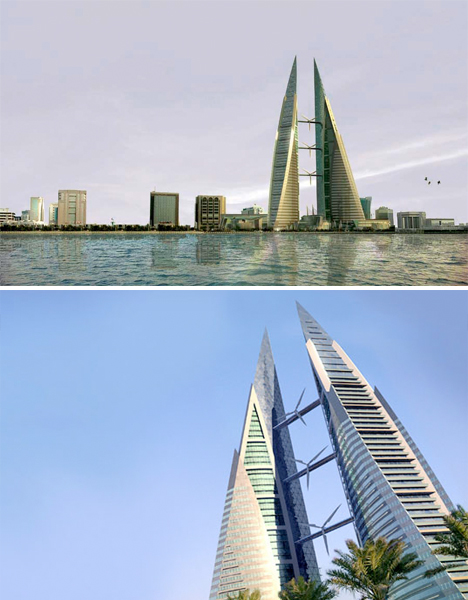
Three skybridges studded with wind turbines connect the two towers of the Bahrain World Trade Center, a 50-floor complex soaring 787 feet into the air. The turbines provide 11%-15% of the towers’ total power consumption, and operate 50% of the time on an average day.

Linked Hybrid, Beijing

Skybridges Linked Hybrid

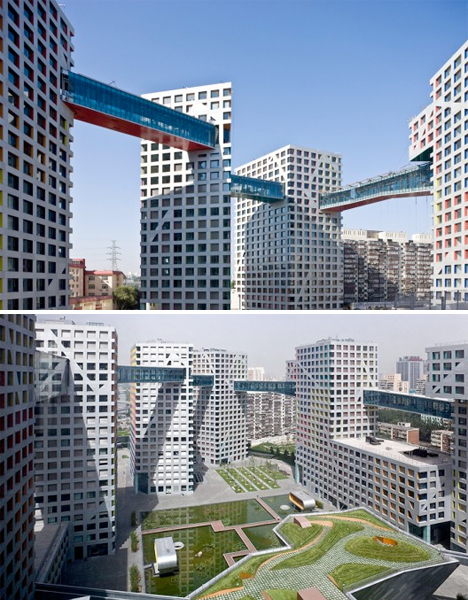
Designed as an ‘open city within a city’ oriented around pedestrians, the Linked Hybrid complex in Beijing by Steven Holl architects is a complex of shops, offices, pubic roof gardens, residential towers, restaurants, schools and more, all connected to green spaces. A multi-functional series of skybridges connects the various structures from the 12th to the 18th floors, offering access to the pools, a fitness room, a cafe, a gallery and an auditorium as well as views of the city. Say the architects, “We hope the public sky-loop and the base-loop will constantly generate random relationships. They will function as social condensers resulting in a special experience of city life to both residents and visitors.”

Velo Towers YIBD

Skybridges Velo Towers 1

Skybridges Velo 2

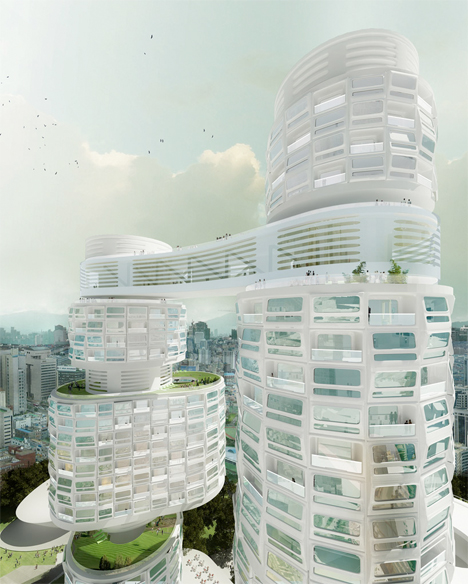
Two skyscrapers made up of stacked and rotated volumes are connected near the apex by a 30-story-high skybridge in this project in Seoul, Korea by New York-based Asymptote Architecture. The Velo Tower skybridge includes both a protected indoor viewing platform connecting the towers, and an outdoor recreation spot with gardens and fountains.

Next Page:
Sky Bridges 14 Aerial Structures That Span Skyscrapers

Share on Facebook


[ By Steph in Architecture & Cities & Urbanism. ]

[ WebUrbanist | Archives | Galleries | Privacy | TOS ]


WebUrbanist

 
Comments Off on Sky Bridges: 14 Aerial Structures that Span Skyscrapers

Posted in Creativity


Get 6 Days of Online Photography Training For Free This Week at Photo Week

16 Sep

photoweek_logo1.pngHere at dPS we are all about helping people of all experience levels to improve their photography.

This week we’re excited to see our friends at CreativeLIVE putting on a free online event that will help you do just that – it is called Photo Week and we think you’ll really love what is on offer.

Starting today and over the next 6 days CreativeLIVE have 50 amazing photographers coming into their studios to run full days of live workshop training on many many aspects of photography.

They’ve arranged the training into 3 tracks:

  • Wedding and Family – Explore the art — and business — of capturing life’s most important moments.
  • Portrait and Commercial – Learn how to delight commercial and editorial clients with these 20 workshops.
  • Create what you love – This series of 19 workshops covers everything you need to know about exploring your passion — whether it’s exploring toy cameras or getting back to the basics

The quality of trainers and training will be amazing – I hardly know where to begin with the lineup they’ve got. Here’s a quick screen shot of the instructors!

photo-week.png

The best thing about Photo Week is it is all shown on the CreativeLIVE site for free throughout the week.

You can pay to get recordings if you can’t make all of the sessions you want to see or would like to play them back over and over again – but if there’s just a few sessions you want you can tune in when they are on and grab them completely for free.

See the full 6 day schedule and RSVP for Photoweek here.

Post originally from: Digital Photography Tips.

Check out our more Photography Tips at Photography Tips for Beginners, Portrait Photography Tips and Wedding Photography Tips.

Get 6 Days of Online Photography Training For Free This Week at Photo Week


Digital Photography School

 
Comments Off on Get 6 Days of Online Photography Training For Free This Week at Photo Week

Posted in Photography


16. September 2013

16 Sep

Ein Beitrag von: Sven Scholz

Stuttgarter Volksfest © Sven Scholz


kwerfeldein – Fotografie Magazin

 
Comments Off on 16. September 2013

Posted in Equipment


All You Need to Know About iPhone Photography

16 Sep

You have your iPhone on you all the time; it’s like your best friend with whom you go everywhere. In fact, you can say that you’re in a long-term relationship with your iPhone, and that’s completely fine! If you’ve played around with your iPhone for any length of time, you know how you can do so many things with it. Continue Reading

The post All You Need to Know About iPhone Photography appeared first on Photodoto.


Photodoto

 
Comments Off on All You Need to Know About iPhone Photography

Posted in Photography


Getting Aerial: Mark di Suvero at Crissy Field

16 Sep

I’ve been tinkering with aerial photography and videography since NAB in April. Unfortunately where I live the wind can make the experience risky. Still this past weekend I decided to brave the America’s cup crowds at Crissy Field and get an alternate view of the Mark di Suvero sculpture exhibit. I look forward to getting a little more air time the next time the winds die down.


Copyright Jim M. Goldstein, All Rights Reserved

Getting Aerial: Mark di Suvero at Crissy Field

The post Getting Aerial: Mark di Suvero at Crissy Field appeared first on JMG-Galleries – Landscape, Nature & Travel Photography.


Related Stories

  • Getting Aerial: Mark di Suvero at Crissy Field – Enclosure
  • The Egg Factory – Bisti Bandlands, New Mexico
  • The Egg Factory – Bisti Bandlands, New Mexico – Enclosure
Feed Ads by FeedBlitz
powered by ad choices


JMG-Galleries

 
Comments Off on Getting Aerial: Mark di Suvero at Crissy Field

Posted in Equipment


3 Ways to Guarantee Good Exposures

16 Sep

There is no excuse for coming home from a photo shoot to discover that your images are over or under exposed.

Your camera’s light meter will guide you to choose the right aperture and shutter speed settings to get a good exposure, or it will choose them automatically if you are using the automatic or semi-automatic modes.

The problem is that your camera can be fooled by tricky lighting situations and that’s why your image may not come out exactly the way you want it, despite all the advanced technology in your camera.

Below are 3 techniques you can use to make sure you get a good exposure. Choose the technique that works best for the type of photo shoot you are on and how much time you have while making images.

1. Automatic Exposure Bracketing (AEB)

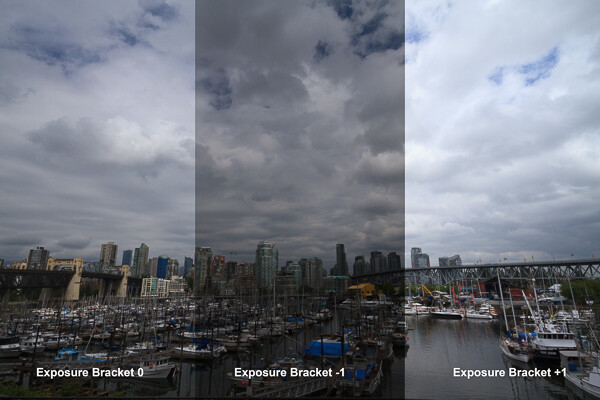
One way to make sure you get at least one image that has a good exposure is to use bracketing, which means that you take one exposure at the setting your camera’s light meter thinks is correct (0 on the light meter) and you take at least two more exposures, one at -1 stop and one at +1 stop.

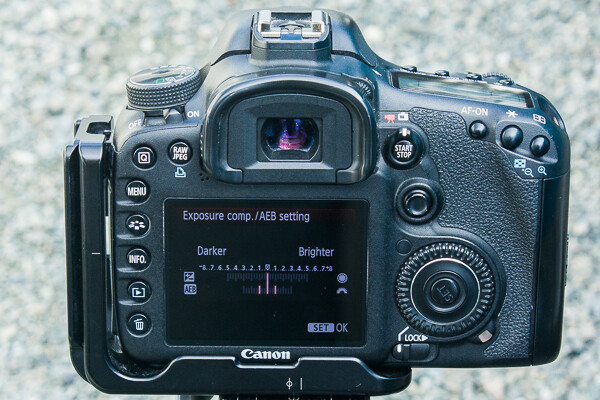
That might sound like a bit of a hassle, but most cameras have a setting for automatic exposure bracketing which makes it quick and easy. Check your camera manual to see whether your camera has this feature and, if so, how to turn it on.

AEB in Camera Menu

AEB in Camera Menu

AEB showing +1, 0, -1 brackets

AEB showing +1, 0, -1 brackets

With automatic exposure bracketing on, you simply hold down the shutter until your camera takes 3 exposures and voilà. This is even faster if you set your shutter drive mode to continuous high speed.

AEB will work on Aperture Priority and Shutter Priority exposure modes and on some cameras it will even work in Manual mode.

I usually use AEB on Aperture Priority mode because I like to have control over my depth of field for landscape photography. On this setting the camera will take the photo at three different shutter speeds to give you the three different exposures. It is important to use this setting if you think you might want to combine the exposures in post-processing.

Exposure bracketing example

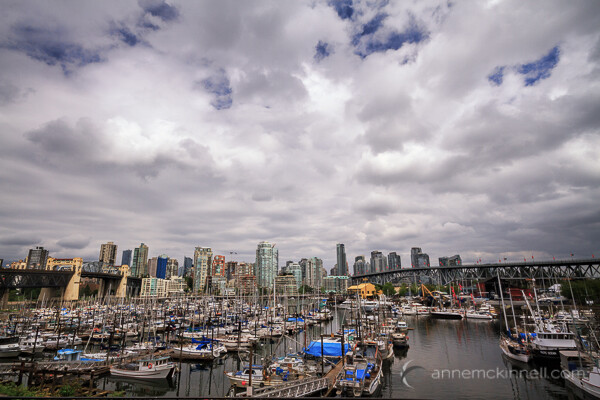
In this scene, the white sky caused the camera’s light meter to choose a darker exposure than was necessary. I decided that the +1 exposure was the best option.

Vancouver, British Columbia, Canada by Anne McKinnell

After processing the +1 exposure, this is the final version of the Vancouver City Skyline image.

If you use AEB on Shutter Priority mode, the camera will take the photo at three different apertures to give you the three different exposures. This is the best option to choose if you need to freeze motion at a fast shutter speed and depth of field is less of a concern.

Using AEB is the best method to use when things are happening quickly and you don’t want to spend any time looking at your LCD (known as “chimping”) after you make an image. When things are happening fast, chimping can cause you to miss a shot.

2. Exposure Compensation

Chimping is not necessarily a bad thing and unless there is a possibility of missing a shot, reviewing your images after you take them is a good practice to double check the exposure, focus and composition.

To use exposure compensation, just take the shot and then evaluate the image using the histogram. It is important to use the histogram for this and not just the picture as it appears on the back of your camera. The LCD is not all that accurate when it comes to exposure. Remember that if you shoot in RAW, what you are seeing on the back of your camera is a compressed version of the image and not an accurate representation of the RAW file. Also, your LCD’s brightness can be adjusted, so if you turn the brightness down when you are photographing at night all your images will appear darker during the day.

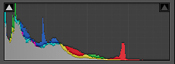
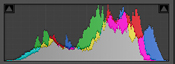
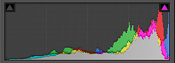
Using the histogram is easy. The blacks are on the left, the whites are on the right, all the mid-tones are in between. All you really need to know is that a spike on either edge of the graph is bad.

Under exposed image.

Under exposed image.

Good exposure.

Good exposure.

Over exposed image.

Over exposed image.

If there is a spike on the left edge, it means part of your image is completely black. You may want to use your exposure compensation to adjust the exposure to the right to make it brighter. But remember that having part of your image completely black, especially for a night shot, is okay.

If there is a spike on the right edge, it means part of your image is completely white and contains no data. Never let any substantial part of your image go completely white. Because it contains no data at all, it will always remain a white spot no matter what you try to do in post-processing. It’s better to keep the graph off the right edge. You only need to worry about this if the spike is right on the very edge of the histogram – if it spikes before the edge it is not a problem.

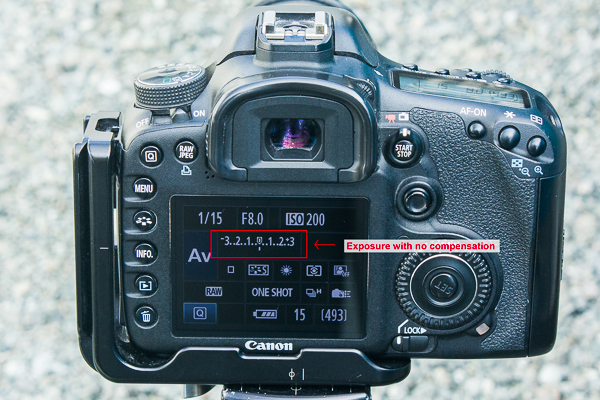
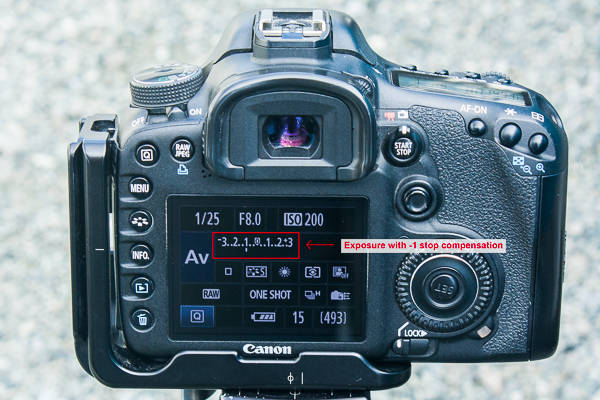
Once you evaluate your image using the histogram, you can use your exposure compensation to make the image darker or lighter without having to worry about changing the aperture, shutter speed, or ISO. If you just want it a little darker, turn the exposure compensation down a little. Or turn it up a little if your image is too dark. You’ll have to check your camera manual again to see how to do this. On my camera, I hold the shutter half way down and move the wheel on the back of my camera to change the exposure compensation.

Exposure with no compensation

Exposure with -1 compensation

This is the quickest method to use when you have time to chimp. While bracketing will ensure one of the three exposures is useable, this method is more precise and deliberate.

3. Exposure Lock

Exposure lock is my favourite method to use when I have lots of time. It actually doesn’t require that much time to do, especially when you get in the habit.

If you have a subject that isn’t moving, such as a landscape scene, and you have time to be purposeful about what you are doing, this is the ultimate method for getting the perfect exposure.

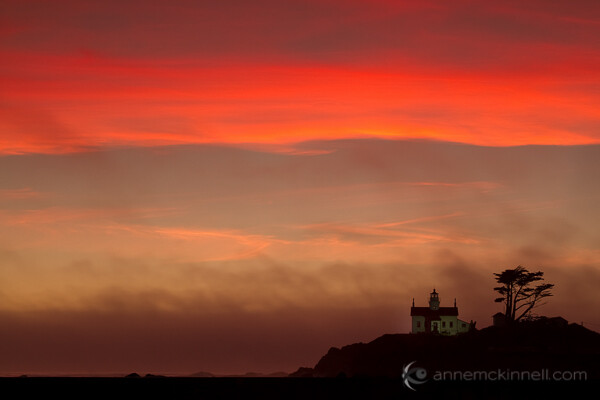
I like to use exposure lock in combination with the “spot metering” exposure mode so that the camera will only take into account the light level at the exact spot in the frame that I tell it to. I decide what part of the image is most important for the exposure. For example, if I am making a silhouette image at twilight, I will point the camera at the sky and use the exposure lock button to exposure for the sky, then I recompose the image, focus, and take the shot.

Battery Point Lighthouse, Crescent City, California, by Anne McKinnell

To make this image of Battery Point Lighthouse in Crescent City, California, I pointed my camera at the bright red band of clouds in the sky, used my exposure lock, and then recomposed the image and pressed the shutter.

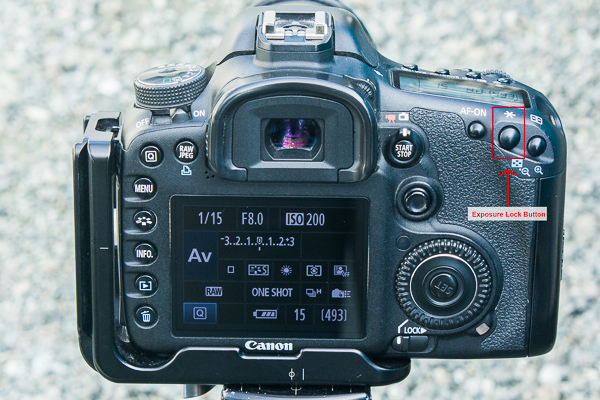
Check your camera manual to see how to use exposure lock. On my camera, I press a button with a * on the back of my camera.

Exposure Lock Button

Depending on the type of subject you are photographing and whether things in your scene are changing quickly or slowly, one of these methods will ensure you always get a good exposure.

Post originally from: Digital Photography Tips.

Check out our more Photography Tips at Photography Tips for Beginners, Portrait Photography Tips and Wedding Photography Tips.

3 Ways to Guarantee Good Exposures


Digital Photography School

 
Comments Off on 3 Ways to Guarantee Good Exposures

Posted in Photography


Realität trifft Mysterium

16 Sep

Ein Beitrag von: Lesley Ann Ercolano

1982 wurde ich in Aberdeen, Schottland, geboren, wuchs aber in der Nähe eines kleinen Dörfchens im italienischen Sardinien auf. Im Alter von fünf Jahren zog ich mit meiner Familie dorthin. Die väterliche Seite der Familie lebte in Neapel und die mütterliche Seite in Aberdeen.

Da wir nicht viele Verwandte in Sardinien hatten, fuhren meine Eltern, meine zwei Brüder und ich oft mit dem Wohnmobil zwischen Schottland und Italien hin und her. Die kulturellen Unterschiede waren faszinierend und obwohl wir immer „Familie“ besuchten, gab es etwas, was ich nicht verstand.

Die Straßen rochen andes, der alltägliche Rhythmus war unbekannt. Das Stadtleben – eine große Entdeckung. Und dann kam die Fotografie dazu.

© Lesley Ann Ercolano

Da ich noch nicht alt genug war, um mich an die Jahre vor Sardinien zu erinnern, fand ich alte Familienfotos schon immer anziehend. Ich stellte mir vor, was vor und nach dem Klick passierte. Jetzt bin ich 30 – ach halt, in ein paar Tagen 31 – Jahre alt, aber diese Familienbilder beeindrucken mich immer doch.

Und weil sich um mich herum so viel verändert, versuche ich, in diesen Bildern die Antwort darauf zu finden, wie all das um mich herum enstanden ist.

Es sind diese Gefühle, die mich die Fotografie so sehr lieben lassen. Es ist die Fähigkeit der Fotografie, mich erfahren zu lassen, was war, Geschichten zu erzählen und durch kurze Momente Gefühle, Menschen, Plätze und das Vorüberziehen der Zeit zu entdecken.

© Lesley Ann Ercolano

Ich habe ein sehr konfuses Konzept von Zeit und während ich älter werde, scheint die Zeit noch schneller zu vergehen. Ich finde es oft schwer, mich an bestimmte Momente zu erinnern und die Fotografie ist zu meinem Kalender, meinem Tagebuch geworden.

Dass ich die Zeit nur schwer festhalten kann, hängt auch damit zusammen, dass ich eine Tagträumerin bin, vielleicht sogar zu sehr. Ich glaube, dass andauerndes Tagträumen ein Art Pendant zu meiner Fotografie ist.

Realität trifft Mysterium, Wahrheit trifft Ambiguität. Die Fotografie leistet mir Gesellschaft, wenn ich allein bin und das kann mich Menschen näher bringen, die ich fotografiere. Denn: So bin ich involviert in Momente, die ich ohne Kamera nicht erlebt hätte.

© Lesley Ann Ercolano

Ich denke, dass es wichtig ist, unterschiedliche Dinge zu fotografieren, das hält die Sinne frisch. Unter den Dingen, die ich mag, sind Portraits, Landschaften, Straße und meine große Liebe: Die Tiere. Offensichtlich weiß ich recht gut, was ich nicht gern fotografiere, aber ich halte meine Augen offen für das, was mir die Welt präsentiert.

Und ich mag es nicht, an Regeln gebunden zu sein. Oft schaue ich meine Arbeit an und denke, dass ich vielleicht nicht konsistent genug bin und was das noch schlimmer macht (insbesondere in der wahnwitzigen Social-Media-Welt) ist, mit Regeln bombardiert zu werden. Jedes Genre hat da seine eigenen.

Ich habe entschieden, dass es keinen Grund gibt, auf irgendjemand zu hören, außer auf mich selbst. Ich weiß, dass ich von meinen eigenen Fehlern gelernt habe und immer noch lerne. Wenn Du engagiert bist, ist es nur eine Frage der Zeit, bis Du verstehst, was Du von Deiner Arbeit erwartest. Die Audienz, das Publikum, kommt meiner Meinung nach erst an zweiter Stelle.

© Lesley Ann Ercolano

Meine Bilder folgen meiner Stimmung und die ist nicht jeden Tag gleich. Das ist auf so vielen Ebenen therapeutisch und ganz oft mache ich gar keine Bilder, obwohl ich mit der Kamera unterwegs bin. Jedoch verbringe ich so den Tag damit, Menschen zu beobachten.

Menschen sind faszinierende Wesen und es geht kein Tag vorbei, an dem ich nicht etwas Neues über unsere Natur lerne, sei dies etwas Positives oder Negatives.

Obowhl ich mich nicht als Straßenfotografin bezeichnen kann, liebe ich diese Gattung der Fotografie sehr. Es ist die Straßenfotografie, die mir beigebracht hat, die Welt um mich herum zu beobachten und zu studieren und dafür bin ich sehr dankbar. Ohne die Straßenfotografie hätte ich mir niemals die Zeit dafür genommen, die kleinen Gesten, die uns zu Menschen machen, zu schätzen.

~
Meine kleine Reise mit Euch hier auf kwerfeldein kommt nun zu einem Ende und ich möchte mit einen paar Worten über dieses Bild abschließen:

© Lesley Ann Ercolano

Warum möchte ich damit abschließen? Nun, es fasst zusammen, was ich an der Fotografie so liebe. Aus meiner persönlichen Sicht und der eines Betrachters.

Das Bild wurde in Aberdeen aufgenommen und zeigt meine Großmutter mit ihrer Katze „Buddy“. Und nein, das ist kein gestelltes Foto. Nachdem mein Großvater und mein Onkel (dem meine Großmutter sehr nahe stand) verstorben waren, machte sie sich zunehmend Sorgen über alles Mögliche.

Sucht sie nach ihrer Katze?

Ich hatte sie über’s Wochenende besucht und der Nachbar reinigte sein Dach von Moos. Sucht sie jetzt nach ihrer Katze? Nein, tut sie nicht, denn sie schaut nervös dabei zu, was der Nachbar gerade macht.

Dieses Bild bedeutet nicht nur mir pesönlich etwas, da es meine Großmutter und ihre Jahre der Sorge nach den Verlusten dokumentiert, sondern es erzählt auch Euch, die ihr dieses Bild seht, eine Geschichte. Ja, sie sucht ihre Katze.

Realität trifft Mysterium, Wahrheit trifft Ambiguität. Ist das nicht die Magie der Fotografie? Nun, für mich ist es das.

Dieser Artikel wurde für Euch von Martin Gommel aus dem Englischen ins Deutsche übersetzt.


kwerfeldein – Fotografie Magazin

 
Comments Off on Realität trifft Mysterium

Posted in Equipment


Photographers Bruce Weber and David Bailey try the Nokia Lumia 1020

16 Sep

Weber_Final_Hires_18.jpg

Nokia is working hard to promote the imaging abilities of its 41-megapixel smartphone, the Lumia 1020, most recently by sending two famous photographers on a shoot with the device in Harlem, New York. David Bailey and Bruce Weber used Nokia’s flagship phone during the 24-hour shoot this July, which was Weber’s first time using any kind of digital camera. Sixty of their images are now available to view online and also at an exhibition in London. Learn more on connect.dpreview.com.

News: Digital Photography Review (dpreview.com)

 
Comments Off on Photographers Bruce Weber and David Bailey try the Nokia Lumia 1020

Posted in Uncategorized


These impressive photos will trick you into thinking they’re paintings

16 Sep

painting30.jpg

Photography, as an art form, can be quite elastic. It can be used to capture the ‘decisive moment’ or a once-in-a-lifetime split-second shot. Or, the form expands into more studied, careful, fine art approaches. These photos fall into the second category. Their use of color and lines, artificial lighting and repetition give them a lot in common with paintings – so much so that they might just trick you at first glance. 

News: Digital Photography Review (dpreview.com)

 
Comments Off on These impressive photos will trick you into thinking they’re paintings

Posted in Uncategorized