RSS
 

Archive for September, 2013

Adobe releases Camera Raw 8.2 and Lightroom 5.2

17 Sep

shared:AdobeLogo.png

Adobe has released Camera Raw 8.2 and Lightroom 5.2, as final versions of updates that were originally posted as ‘release candidates’. ACR 8.2 is designed to work with Photoshop CC but, as promised, is also compatible with Photoshop CS6. It brings support for 16 additional cameras, including the Canon EOS 70D, Fujifilm X-M1, and Sony RX100 II, along with new lens profiles and big fixes. For users of older Photoshop versions, Adobe DNG Converter 8.2 is also now available. Click through for more details and how to download.

News: Digital Photography Review (dpreview.com)

 
Comments Off on Adobe releases Camera Raw 8.2 and Lightroom 5.2

Posted in Uncategorized


Even the Best Photography Enthusiasts Have Their Limits

17 Sep

It doesn’t matter how much talent a photography enthusiast might have, what equipment they own or how comprehensive their technical skills, there are a number of jobs that they’re just never going to land. When it comes to the biggest, the most lucrative and the most demanding photography gigs, paying clients will always turn to a professional.

They want to be able to deliver a brief to someone who understands it. They expect the photographer to arrive on time. And, most importantly, they want to know that they’re going to get back the images they need.

And they also want to work with someone they know. That’s more likely to be a professional who has the motivation and the time to build those connections. You might have a great eye and know exactly how to focus and play with light but paid jobs still go to the people who know something equally important: the people who hand out the commissions.

But that doesn’t mean you can’t pick up paid work that’s nearly as satisfying — even if it doesn’t pay quite as much. Here are five professional jobs that enthusiasts can’t land and the alternatives that they can.

1.     Executive Portraits

When it comes to photographing the head of a corporation, giant firms won’t look at anyone less than an experienced professional. They’ll want a photographer who can give instruction to someone more used to giving orders than taking them and who’ll make the best use of the small amount of time available. Each time the board has to ask an executive on a multi-million dollar salary to stand and pose for twenty minutes, it costs the company thousands of dollars on top of the fee paid to the photographer. They won’t want to pay that fee twice, so they’ll always go for professional they can trust who can shoot fast and get the right images first time.

Enthusiast Job: Family and Pet Portraits

A non-professional might not be asked to create a portrait of Jeff Bezos, but he or she can certainly create other kinds of portraits. Build a portfolio of family photographs or offer pictures of pets and you might not get to spend time with the leaders of the corporate world but you will get to shoot  and tell stories through faces — and you’ll get paid for it.

2.     Fashion Shoots

Fashion shoots are complex. They might involve a designer and an art director, models and exotic locations. Hotels have to be booked, sites scouted, clothes delivered and make-up applied. The images that come out of a fashion shoot are the product of a team and every member of that team will be a professional, from the guy who drives the van to the person who arranges the flowers. Fashion companies will fly photographers to their shoots and pay them four-figure daily fees rather than run the risk of not getting the pictures they need.

Enthusiast Job: Street Fashion Photography

You have to be a professional before a fashion house will put its clothes in front of you, but anyone can photograph the fashion that’s already in front of them.  Scott Schuman was a fashion professional before he took time out to look after his daughter and started a blog showing his own photographs of street fashion. The success of thesartorialist.com has turned him from fashion enthusiast to photography professional.

3. Photojournalism

Enthusiasts can certainly sell their images to the press, a process that has become easier in the age of Twitter and Instagram for people who happened to be in eventful places at the right time. But newspapers are unlikely to send a photographer who hasn’t undergone professional training to a dangerous spot. For news editors, it’s important not just that the pictures come back but that the photographer does too. Before they commission a story, they’ll check the photographer’s experience as well as his or her pictures.

Enthusiast Job: Crowdsourced Documentary Photography

You might struggle to persuade an editor to give you a commission but you can persuade friends, family and other enthusiasts to pay for your idea. Emphas.is is a crowdfunding site specializing in documentary photography. You’ll have to market your idea to bring in the funds, but it’s much easier than marketing to a skeptical photo editor.

4. Architecture Photography

It’s not that businesses don’t believe you can shoot their buildings or their interiors; it’s that they know that lots of professionals with full portfolios and rich portfolios can do it at least as well. They know some of those photographers and they trust them. So why should they turn to an amateur they don’t know?

Enthusiast Job: Crowdsourced Documentary Photography

The answer is if you have a style or approach that only you can produce. Businesses will still turn to professionals for the sort of standard shots needed by hotels and resorts but they might turn to an artist for a special look. And creating those artistic architectural images will be an enjoyable end in itself even if you have to work hard to persuade gallery owners to show them or art fair buyers to pay for them.

5. Industrial Shoots

Mines, factories and other industrial sites are all professional places, staffed by professionals and shot by professionals too. Their owners might need images to document the work that takes place in them but they’re going to need a very good reason to turn to someone who isn’t a professional to take those images.

Enthusiast job: none

There are some jobs for which enthusiasts have no equivalent. While you’re out photographing landscapes or cashing in your emphas.is funds, professional will be at industrial sites, shooting workers and trying to make giant bits of machinery look good.

They might be getting paid, but you’ll probably be having more fun — and that’s always the best reward for any enthusiast. 


Photopreneur – Make Money Selling Your Photos

 
Comments Off on Even the Best Photography Enthusiasts Have Their Limits

Posted in Equipment


Our Fujifilm X-M1 review: big photo quality in a small package?

17 Sep

X-M1_Black_Front_16-50mm.png

We’ve completed our review of the Fujifilm X-M1, which is the company’s lowest-priced X-Trans-based mirrorless camera. It takes the sensor from the X-E1 and X-Pro1 and puts it in a simpler, more portable body. Fujifilm also added a tilting 3-inch LCD and Wi-Fi, which puts the X-M1 on much the same level as mirrorless cameras like the Panasonic Lumix GF6 and Sony NEX-5T. For a detailed look at the X-M1, follow the link.

News: Digital Photography Review (dpreview.com)

 
Comments Off on Our Fujifilm X-M1 review: big photo quality in a small package?

Posted in Uncategorized


West Coast – Teil 2

17 Sep

Wie versprochen, möchte ich Euch den zweiten Teil meiner USA-Reise im Mai natürlich nicht vorenthalten. Wir hatten die Küste erst einmal hinter uns gelassen und waren in der Columbia River Gorge angekommen.

Für mich war die Gorge mit ihren zahlreichen Wasserfällen das Highlight dieser Reise. Die dichten Wälder, tiefen Schluchten und tosenden Wasserfälle dort sind unbeschreiblich schön.

Nach dem fotografischen Erfolgserlegnis am Wahclella-Wasserfall am Tag zuvor war ich nun viel entspannter und auch nicht übermäßig enttäuscht, dass ich am Womans-Forum-Aussichtspunkt trotz drei Versuchen nicht einmal einen glühenden Himmel vorfand. Das mit den Sonnenauf- und -untergängen wollte einfach nicht klappen und so begnügte ich mich mit einem Foto, das ich zur blauen Stunde aufnahm.
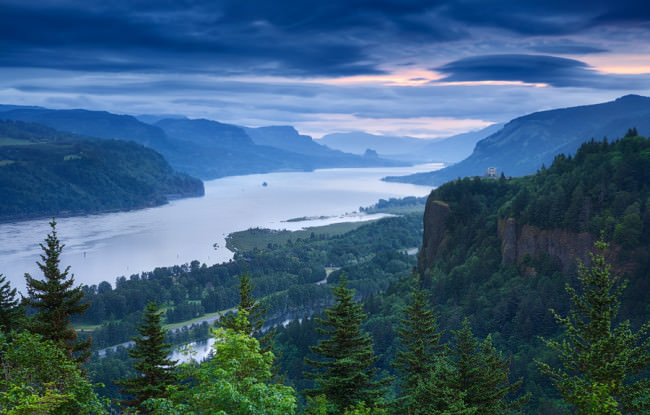
Columbia River Blues © Michael Breitung

Wie die Wolken am Morgen schon vermuten ließen, wurde es ein leicht regnerischer Tag. Perfekte Bedingungen, um weitere Wasserfälle zu erkunden. Die Auswahl fiel nicht leicht. Um möglichst viele Wasserfälle zu fotografieren, entschied ich mich für die leicht zugänglichen.

Zuerst fuhren wir zu einem der höchsten Wasserfälle der USA. Fast 200 Meter fällt das Wasser der Multnomah Falls in die Tiefe. Sie sind die wohl touristischsten Wasserfälle der Gorge und auch die mit am meisten fotografierten. Ich suchte also nach einer etwas anderen Ansicht und fand sie schon wenige Meter vom Auto entfernt am Parkplatz.
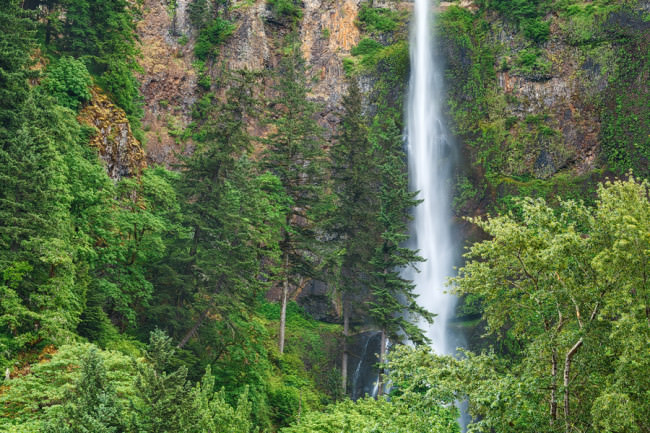
Muldnomah © Michael Breitung

Den historischen Columbia River Highway weiter Richtung Westen wartete gleich danach der Latourell-Wasserfall. Fast eine halbe Sunde stand ich dort knietief im Wasser und machte Fotos. Ich war überrascht, dass die Flüsse in der Gorge alle recht warm waren. Kein eisiges Schmelzwasser wie ich es erwartet hatte.

Zu lange wollte ich mich aber nicht aufhalten, denn das Highlight des Tages sollte erst noch kommen. Etwas höher und tiefer in der Gorge versteckt, liegen die Fairy Falls. Und dieser Wasserfall ist wirklich märchenhaft. Er gehört nicht zu den höchsten und auch nicht zu den stärksten Wasserfällen. Aber durch seine Fächerform stellt er ein besonders schönes Motiv dar.
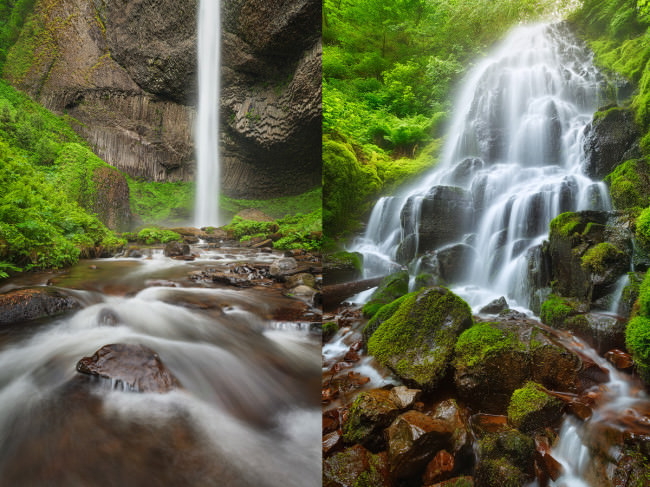
Latourell, Fairy Falls © Michael Breitung

Nach den letzten zwei Tagen war der Küstennebel der ersten Tage nun endgültig vergessen. Auch, wenn die Erfahrung mir mittlerweile sagte, dass ich in den folgenden Tagen an der Küste keine spektakuläre Dämmerung präsentiert bekommen würde, freute ich mich auf Bandon und später Kalifornien.

Zunächst lagen aber fast sechs Stunden Fahrt vor uns. In Anbetracht der großen Entfernungen, die man in den USA zurücklegt, vermisst man des öfteren die deutschen Autobahnen. Wenn man aber eine so schöne und abwechslungsreiche Strecke wie den Highway 1 entlang fährt, ist das zu verschmerzen.

In Bandon hatten wir dann direkt an den Klippen ein Motel gemietet und nur fünf Minuten Weg hinunter zum Strand. Ich habe schon viele Strände gesehen und fotografiert, aber am Bandon Beach kam ich aus dem Staunen nicht mehr heraus. Es ist schwer, einen Superlativ zu finden, der diesem Strand gerecht wird. Paradies für Landschaftsfotografen trifft es, denke ich, ganz gut.
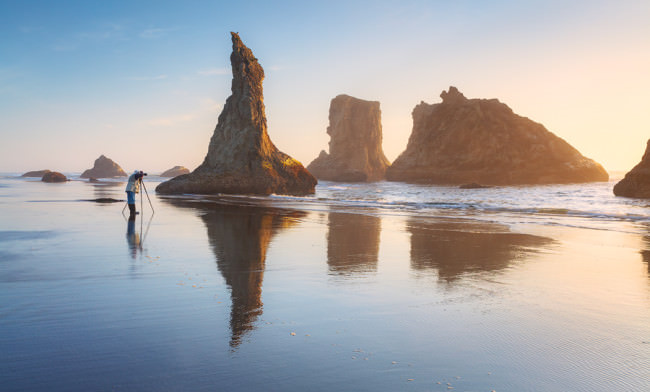
The Photographer © Michael Breitung

Nicht umsonst musste ich mir den Strand am Abend mit über 20 anderen Fotografen teilen. Eine ganze Reisegruppe sammelte sich vor den schönsten Felsen, alle mit Stativ und Gummistiefeln. Ich fand kaum eine Ansicht, bei der nicht mindestens ein Fotograf im Bild stand.

Am nächsten Morgen stand ich sehr zeitig auf, um den Strand für eine Weile ganz für mich allein zu haben. Es war traumhaft. Erst um fünf Uhr kamen nach und nach wieder die anderen Fotografen. Und es wurde uns ein ganz ansehnlicher Sonnenaufgang präsentiert.
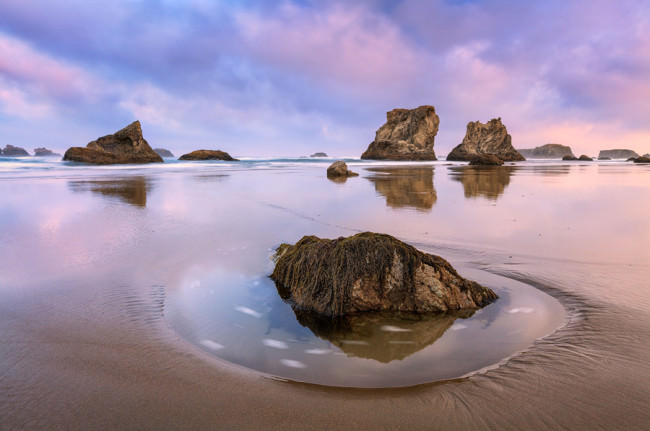
Bandon Dawn © Michael Breitung

Ich hätte hier noch Tage verbringen können. Aber wir hatten einen sehr straffen Zeitplan. Zwei Wochen waren eigentlich zu kurz für diese Reise. Aber was will man machen, der nächste Strand wartete schon in Kalifornien auf uns.

Trinidad ist einen Gemeinde im Humboldt County im Norden Kaliforniens und der optimale Ausgangspunkt zum Erkunden weiterer zerklüfteter Küsten und der mächtigen Redwoods. Die Fahrt durch die Redwoods ist beeindruckend. Von einen Moment auf den anderen sind da Bäume, die teilweise über 100 Meter hoch sind. Es fiel mir nicht leicht, mich da aufs Fahren zu konzentrieren.

Abends besuchten wir den Trinidad State Beach. Den hatten wir dann fast für uns allein und konnten einen schönen Sonnenuntergang genießen. Ich war es gar nicht mehr gewöhnt, einen Sonnenuntergang mit Sonne zu fotografieren und so vergaß ich meine Hand-Technick, um Lens Flares zu vermeiden. Aber es gibt auch noch andere Möglichkeiten, nachträglich Abhilfe zu schaffen.
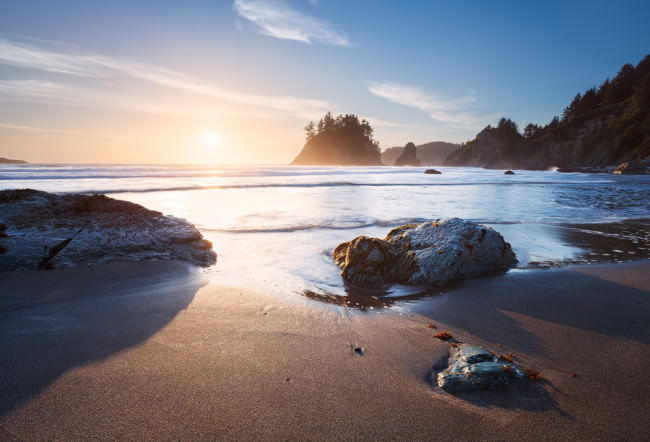
Trinidad © Michael Breitung

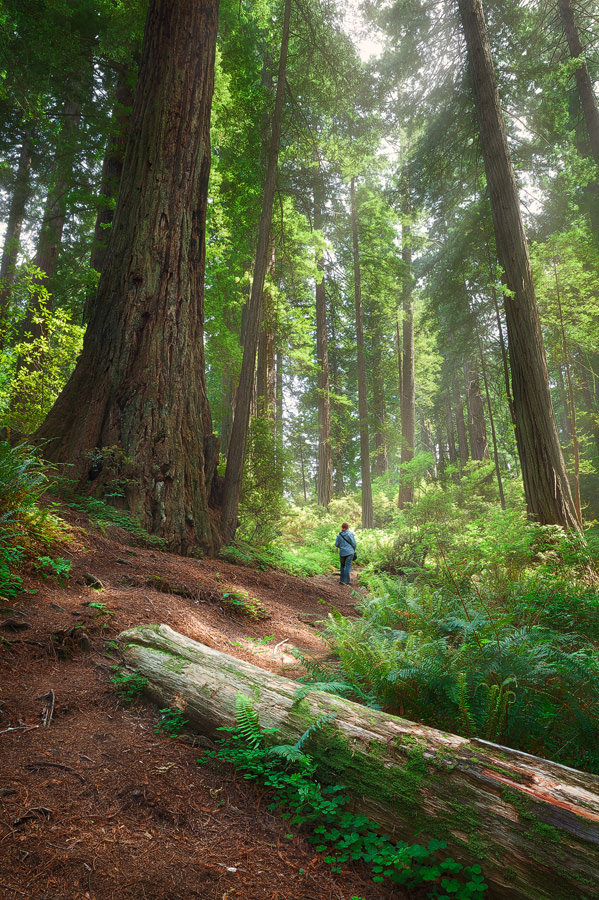
Der nächste Tag stand dann ganz im Zeichen der Redwoods. Unter diesen Giganten fühlt man sich wahrlich winzig. Zunächst erkundeten wir den Lady Bird Johnson Grove in der Nähe von Orick und danach ging es weiter in die Del Norte Redwoods. Auch hier könnte man Tage verbringen, es gibt so viel zu entdecken.

Wen es mal nach Kalifornien verschlägt, dem kann ich das Buch von Gary Crabbe* empfehlen. Von den Redwoods im Norden bis runter nach Santa Cruz zeigt Gary hier die besten Motive und liefert alle Infos, die man sich als Fotograf wünscht.
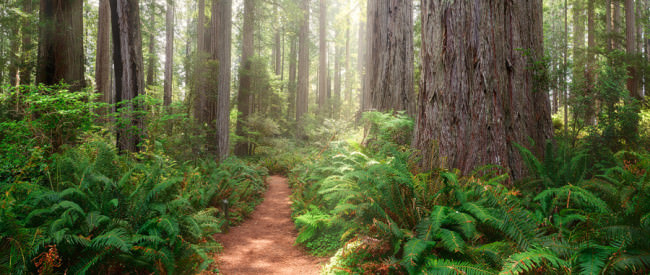
Redwoods Panorama © Michael Breitung

Walking amongst Giants © Michael Breitung

Auch den Luffenholtz Beach beschreibt Gary in seinem Buch und so durfte der auf unserer Reise auch nicht fehlen. Er liegt nur wenige Kilometer südlich von Trinidad. Leider ließ der Küstennebel wieder kein magisches Licht zu. Trotzdem war die blaue Stunde an diesem Ort etwas Besonderes.

Man kann aus der Not auch eine Tugend machen: Wenn das spektakuläre Licht ausbleibt, hat man viel mehr Zeit, sich auf die Auswahl des richtigen Standpunktes und die perfekte Komposition zu konzentrieren. Bei sich schnell änderndem Licht geht es mir hingegen oft so, dass ich möglichst viele unterschiedliche Ansichten einfangen möchte und den Standpunkt unter Umständen oft wechseln muss.
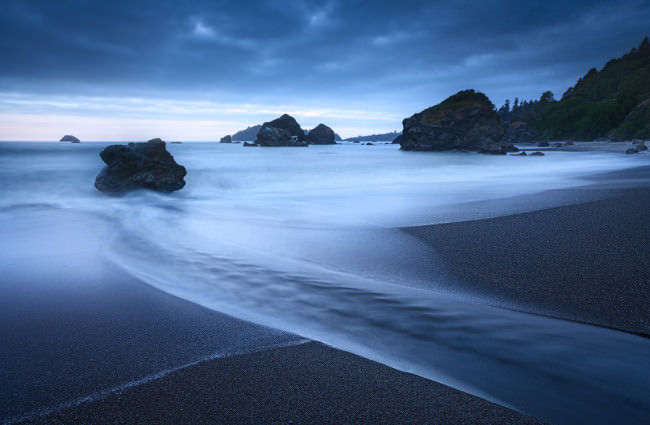
Luffenholtz Blues © Michael Breitung

Die letzte längere Fahrt führte uns dann bis runter nach San Francisco. Hier war ich sehr dankbar über unseren doch recht neuen Mietwagen und das Automatikgetriebe, das in den USA Standard ist. Die Straßen von San Francisco haben es wirklich in sich und unser Mietwagen musste einiges mitmachen.

Morgens fuhr ich rüber nach Marin County, um ein Foto der Golden Gate Bridge zu machen. Das Ergebnis seht Ihr im Titelbild. Abends gings dann für ein Sonnenuntergangsfoto zum Pier 7.

Dazwischen erkundeten wir unter anderem China Town und auch das eine oder andere Geschäft. Die Painted Ladies durften auch nicht fehlen und dann gab es an der Fisherman’s Wharf auch noch eine Robbenkolonie zu bewundern. Es ist einfach eine tolle Stadt, in der es nie langweilig wird. Strände gibt es natürlich auch noch.
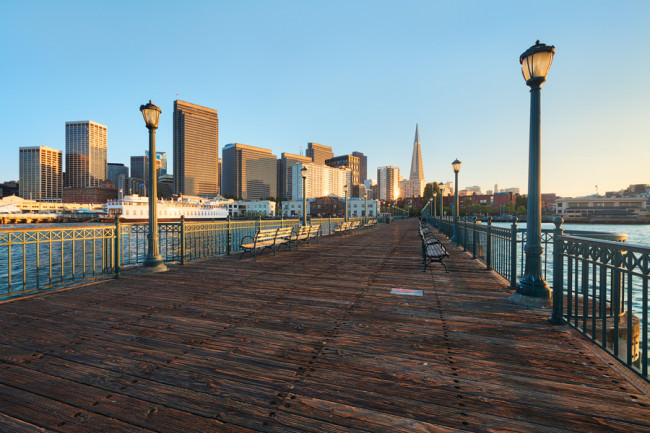
Pier 7 © Michael Breitung

Wir verbrachten die letzten drei Tage unserer Reise in San Francisco bei bestem Wetter. Nur am letzten Morgen, als ich von den Twin Peaks fotografierte, zog für eine Weile dichter Nebel über die Stadt. Als die Sonne dann durchbrach, war das endlich einer der magischen Momente, auf die ich bei meinen anderen neun Sonnenaufgangstouren vergeblich gewartet hatte.
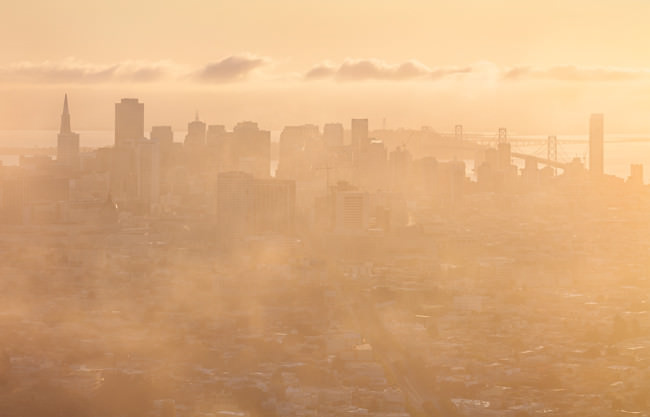
Cloud City © Michael Breitung

Zurückblickend war es eine tolle Reise. Aus fotografischer Sicht nicht immer ganz einfach, aber ich mag Herausforderungen und bin mit meiner Auswahl an Fotos doch ganz zufrieden. Zudem sind die Landschaften der USA einfach einzigartig und es ist toll, diese live zu erleben.

* Das ist ein Affiliate-Link zu Amazon. Wenn Ihr darüber etwas kauft, erhalten wir eine kleine Provision, Ihr zahlt aber keinen Cent mehr.


kwerfeldein – Fotografie Magazin

 
Comments Off on West Coast – Teil 2

Posted in Equipment


Fujifilm unveils X-A1: an entry-level mirrorless with a conventional sensor

17 Sep

X-A1_Black_Front_High_angle_16-50mm.png

Fujifilm has announced the X-A1, its most basic X-mount mirrorless camera yet. The X-A1 shares a body with the X-M1 but is based around a 16MP sensor with a conventional, Bayer color filter array, rather than the X-Trans design used in the other X-series models. The X-A1 retains the 920k-dot tilting LCD and Wi-Fi offered by the X-M1, and is being launched with an MSRP of $ 599 with the XC 16-50mm F3.5-5.6 OIS zoom lens – $ 100 cheaper than the X-M1 cost at its launch. The company has also announced the Fujinon XC 50-230mm F4.5-6.7 OIS – a relatively small, lightweight telezoom that would pair well with either the X-A1 or X-M1.

News: Digital Photography Review (dpreview.com)

 
Comments Off on Fujifilm unveils X-A1: an entry-level mirrorless with a conventional sensor

Posted in Uncategorized


Crazy Cakes: 30-Foot Tentacle Leads to Edible Kraken

17 Sep

[ By Steph in Design & Guerilla Ads & Marketing. ]

Kraken Tentacle Cake 1
The thirty-foot tentacle that appeared to have washed up on the beach in Portmeirion, Wales was what drew the onlookers in, but it was the edible kraken that kept them. Beach goers who gathered around the dark purple-black appendage to stare at it in wonder were led to a tent where they found similar tentacles on a smaller scale – made of cake.

Kraken Tentacle Cake 2

A ‘Kraken Hunter’ in an intricate steampunkish costume performed an ‘edible autopsy’ on the questionable remains within the tent, serving up large chunks of what turned out to be spiced rum cake, including a football-sized eyeball.

Kraken Tentacle Cake 3

Kraken Tentacle Cake 5

The beach installation was part of a viral marketing campaign by Kraken Rum at Festival No. 6, an annual music event that draws thousands to an Italianate village on the Dwyryd Estuary.

Kraken Tentacle Cake 6

The cake calls to mind another incredibly realistic culinary creation: a snake cake that looks so much like a real viper, you’d hesitate to go near it with a knife.

Share on Facebook


[ By Steph in Design & Guerilla Ads & Marketing. ]

[ WebUrbanist | Archives | Galleries | Privacy | TOS ]


WebUrbanist

 
Comments Off on Crazy Cakes: 30-Foot Tentacle Leads to Edible Kraken

Posted in Creativity


Proper Disposal of Outdated Media: A Cautionary Tale

17 Sep

If I were to guess, I’d say it’s safe to assume that you’ve accumulated quite a sizable image library. Regardless of whether you’ve been shooting digitally for a decade or even just a year or two, all of those ones and zeros dancing happily inside your computer as image files are piling up. Don’t forget about all of those photos you’ve scanned in from your film days. Digitized any slides lately? How about the photo stream from your phone? Megabytes become gigabytes, gigabytes become terabytes, and over time the sheer volume of data can become mind boggling.

You’re backing it all up, right? Of course you are.

I think that being neurotic about backing up our images is pretty much a universal character trait of photographers. Or should be. When I shoot a wedding the cards are all backed up once before I even leave the venue. When I get home they are dumped from the cards to the computer. Then again to an external hard drive. I can’t think about anything else until the entire shoot exists in three places. I’m a little less uptight about commercial shoots, but only a little. For those, I only require a double backup. But it doesn’t end there. The catalog on my main drive automatically syncs to an external hard drive. Once a month it all gets synced to a second external drive which is stored off-site. And if that’s not enough, I’m starting to use the Copy cloud storage service as well. It’s like wearing a belt AND suspenders.

But technology changes over time, which means that our methods of backing up our data also change. In the grand scheme of things, it wasn’t that long ago that you were backing up your images on CDs. Towering piles of them. The piles began to shrink just a bit when DVDs became a viable option. External hard drives? Awesome. But then the clouds parted and we were suddenly able to store our prized data among them. Over time, those piles of shiny discs become obsolete. Once everything is backed up on current media, the obvious thing to do would be to trash the discs and outdated media, right?

Not so fast. And this is where our cautionary tale really begins.

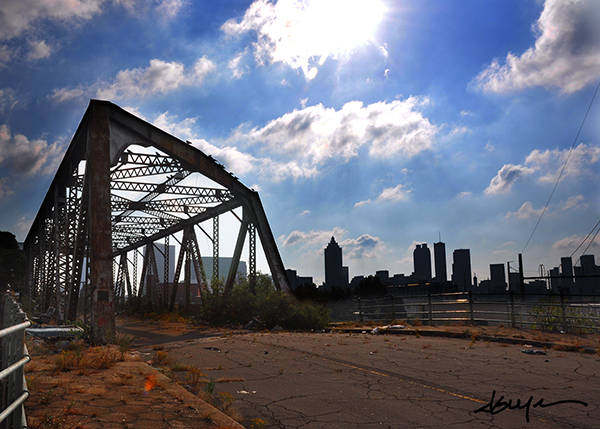
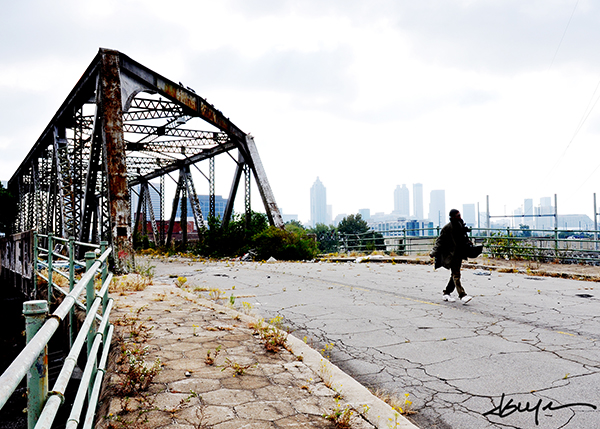
First, a little background. The photo below is the bridge at Northside Drive and Bankhead Highway in downtown Atlanta. Originally built in 1912, it was a major thoroughfare into the city long before the interstate highway system was even an idea on a drafting board. Years of progress, neglect, and shifting priorities– as well as the fact that the far end of the bridge now simply stops in mid-air 100 feet above some railroad tracks– have transformed it into “The Bridge to Nowhere.”  The bridge has become a haven and encampment for some of Atlanta’s homeless population. I’ve photographed it several times over the years.

bridge-to-nowhere-guyer-photography

This particular image did not come from my hard drive or any of my backups. This image came off a Flickr photostream. Not MY Flickr photostream, but A Flickr photostream. This photo had been part of a multi-DVD backup that I simply threw in the trash several years ago when I switched to external hard drives. I have no earthly idea how, why, or where these discs were found, or what possessed the finder to check what was on them. Apparently he/she could not have just been a run-of-the-mill, garbage-picking identity thief like everyone else. No. This culprit was content to post eight of my photos to their Flickr page.

bridge-to-nowhere-guyer-photography2

We are practically hard-wired to protect our personal and financial information by shredding or otherwise destroying it before it goes in the trash. Sometimes I even throw pieces of stuff away in different trash cans. Do you really want your images showing up on a photo sharing site without your knowledge? How about a stock agency? Obviously, the answer is a resounding NO. So, what do you do?  Simple. Destroy the backup before you dispose of it.  Some shredders are powerful enough for discs. If you don’t have a shredder, a hammer, screwdriver, knife, letter opener, or any sharp object can inflict enough damage to the disc surface to prevent anyone from misappropriating your images. External hard drives and jump drives can either be physically destroyed, or be wiped and rendered unrecoverable with programs like KillDisk.

As technology continues its upward march, concerns over the best way to dispose of digital media will hopefully become less and less of an issue. With bigger and bigger file sizes– particularly from cameras with full frame sensors– backup storage options are becoming more and more sophisticated, hopefully making concerns over proper disposal eventually a moot point. In the meantime, however, they’re your photos. Protect them.

Post originally from: Digital Photography Tips.

Check out our more Photography Tips at Photography Tips for Beginners, Portrait Photography Tips and Wedding Photography Tips.

Proper Disposal of Outdated Media: A Cautionary Tale


Digital Photography School

 
Comments Off on Proper Disposal of Outdated Media: A Cautionary Tale

Posted in Photography


CreativeLive to broadcast six days of free photography workshops

17 Sep

PhotoWeek_640x360.jpg

The folks behind CreativeLive, an online resource for photographers co-founded by Chase Jarvis, have kicked off Photo Week: six days of educational workshops streamed live online for free. Workshops will be broadcast over three channels with topics including wedding, family and portrait photography. It begins today – click through for more details.

News: Digital Photography Review (dpreview.com)

 
Comments Off on CreativeLive to broadcast six days of free photography workshops

Posted in Uncategorized


Meet Piccolo: Our Prints Charming

17 Sep


We all said it… “I like digital photography, because then I just print out the photos I want.” And then we all did the same thing… Stopped printing photos entirely!

We miss ‘em.

That’s why we were so excited when we heard about Piccolo, an automatic photo printing service.

Once a month they print out your best shots from Insagram and Facebook, then drop them right off into your mailbox.

Just like that, prints are back!

Prints for crafting. Prints for decorating. Prints for mailing to grandma.

You can even subscribe a friend (or frenemy) to receive an analogue update on your life every 30 days. They’ll love (hate) that!

Sign-up is simple. Then just keep doing what you’re doing – taking great shots and sharing them on the web! Piccolo will do the rest.

Piccolo — Prints! On your doorstep, on the regs.

But wait! There’s more… use the coupon code photojojo3 for $ 3 off you first month. Thanks for the hook up, Piccolo!

Related posts:

  1. DIY: Turn Digital Photos into Vintage-like Prints with Mulberry Paper Extra photos for bloggers: 1, 2, 3 What is it…
  2. Lavish and Large: Huge, Wall-sized Prints Using Your Inkjet or Laser Not since we used PrintShop for our Commodore 64 has…
  3. DIY: Turn Phone Photos into Mural-Sized Prints! Extra photos for bloggers: 1, 2, 3 What’s on every…


Photojojo

 
Comments Off on Meet Piccolo: Our Prints Charming

Posted in Equipment


Blickfang: Sibylle Bergemann – ein Polaroid

17 Sep

Seit Sibylle Bergemanns Polaroids an den damals noch wunderschönen alten Wänden des C/O in Berlin-Mitte hingen, war ich angetan von der stillen Farbigkeit verblasster Erinnerungen. Ein Bild, vor dem ich lange stand, war dieses. Es trägt keinen Titel, keine Bildunterschrift, rein gar nichts.

Es hängt seitdem an meiner Wand, natürlich nicht das Original, wie wäre das denkbar. Aber eine Kopie prangt über meinen Schreibtisch, zieht immer wieder meinen Blick an. Viele, die mich besuchten, zeigten auf das Bild, wollten wissen, wer es ist.

Es ist ein leises Bild. Das Gesicht der Frau ist ebenmäßig, zart und ein leichtes, fast nicht sichtbares Lächeln umspielt die Klarheit ihrer Augen. Hingezogen fühle ich mich auch zu dem Rot ihrer Wangen, als hätte jemand noch schnell mit einem Pinsel ein paar Pigmente darüber verteilt.

Das Bild macht mich still, wühlt nichts auf, stellt keine Fragen. Es schaut mich an und ich schaue zurück.

Polaroid © Sibylle Bergemann

Das Bild stammt aus dem Katalog „Die Polaroids – The Polaroids“*, der anlässlich der Ausstellung Sibylle Bergemanns im C/O erschienen ist. Die Polaroids darin zeigen, was Sibylle Bergemann sah, ihre Welt aufgezeichnet auf ein Medium, vom dem man behauptet, es verblasst, sobald es das Licht der Welt erblickt.

Kinder, verkleidet, das Meer und zwei verlassene Stühle, Treppenaufgänge, ein Hof aus gelben Sand und Ziegen, die in die Kamera blicken, Licht, das sich durch Glas windet – in jedem Bild die Stille, das Anhalten von Zeit, die Ewigkeit.

Ich bin mir sicher, in diesem Buch findet sich für jeden ein Lieblingsbild, das aufgeschlagen auf dem Nachttisch ruht und einen am Morgen begrüßt, wenn man die Augen öffnet.

* Das ist ein Affiliate-Link zu Amazon. Wenn Ihr darüber etwas bestellt, erhalten wir eine kleine Provision, Ihr zahlt aber keinen Cent mehr.


kwerfeldein – Fotografie Magazin

 
Comments Off on Blickfang: Sibylle Bergemann – ein Polaroid

Posted in Equipment