RSS
 

Archive for September, 2013

Taking Shots of Your Car Like the Hot Ride She Is: Amazing Car Photography Tips 101

18 Sep

Anyone who has tried to shoot a photograph of their new car (or their old, well-loved car after it finally drove through the car wash) knows that a car is difficult to capture. Nevertheless, those of us who have practiced can vouch for this series of tips that I’ve aimed at my neighbor’s Mustang and my own practical Prius. The Continue Reading

The post Taking Shots of Your Car Like the Hot Ride She Is: Amazing Car Photography Tips 101 appeared first on Photodoto.


Photodoto

 
Comments Off on Taking Shots of Your Car Like the Hot Ride She Is: Amazing Car Photography Tips 101

Posted in Photography


Für eine Handvoll Dollar

18 Sep

Ein Beitrag von: Maximilian Rempe

Die Desierto de Tabernas liegt im Süden Spaniens, 40 km nördlich von Almeria. Almeria ist bekannt für seine Gewächshäuser, die ganz Europa zu jeder Jahreszeit mit Obst und Gemüse versorgen. Möglich macht das die ungewöhnliche Wetterlage in dem Gebiet. Es regnet selten und die Sonne scheint hier so oft wie an keinem anderen Ort in Europa.

Das ist auch einer der Gründe, weshalb die Desierto de Tabernas für etwas völlig Anderes bekannt ist, auch wenn sie den meisten kein Begriff sein dürfte.

Durch einen Gebirgszug abgeschnitten von der feuchten Mittelmeerluft, erstreckt sich eine karge, felsige und staubige Ebene. Zerklüftet durch Hügel, Täler und nur bewachsen von Sträuchern und farblosen Gräsern, ähnelt die nur 280 km² kleine Landschaft den großen Wüsten Nordamerikas.

Desierto de Tabernas © Maximilian Klein

Genau deswegen entdeckten viele europäische Filmemacher in den 60er Jahren die Desierto de Tabernas als ideale Möglichkeit, echte Westernfilme in echter Kulisse zu drehen; auch mit kleinem Budget. Allen voran war es Sergio Leone, der den aufkommenden Italo-Western-Hype förderte und seine berühmtesten Werke in der Gegend rund um die Provinzstadt Tabernas produzieren ließ.

Für meine Bachelorarbeit, mit der ich mein Fotodesign-Studium in München abgeschlossen habe, war ich auf der Suche nach einem ungewöhnlichen Thema, einem ungewöhnlichen Ort. Dabei hatten es mir besonders die Wüstengegenden angetan. Die Farbwelten und Lichtstimmungen faszinierten mich schon lange und meine Abschlussarbeit erschien mir der richtige Anlass, endlich in einer Wüste zu arbeiten.

Doch in welcher und zu welchem Thema? Sicherlich gibt es viele Wüstengegenden in der Welt, doch eine reine Arbeit über Landschaften erschien mir zu wenig. Nein, es sollte schon mehr sein. Also machte ich mich auf die Suche, durchforschte das Internet und googlete nach Wüsten, Wüsten, Wüsten.

Desierto de Tabernas © Maximilian Klein

In meinen Arbeiten tauchen immer wieder marode oder unvollendete, vom Menschen verlassene Strukturen auf: Skidörfer, die nach der Schneeschmelze wie Geisterstädte zurückbleiben, wartend auf den nächsten Winter und die tausenden Skifahrer, die ihnen wieder Leben einhauchen.

Oder die Formel-1-Rennstrecke in Singapur, die einmal im Jahr eine ganze Stadt verändert und Autobahnen, Straßenzüge und ganze Viertel lahmlegt. Meine Abschlussarbeit sollte wieder in eine ähnliche Richtung gehen: Zurückgelassene Strukturen, verfallene Gebäude. Durch Zufall erfuhr ich in einem Gespräch mit einem Bekannten von der Gegend in Südspanien.

Eine Wüste! Er erzählte davon, wie er vor mittlerweile über 20 Jahren mit ein paar Freunden und einem alten Ford Escord die 2.400 km bis nach Tabernas gefahren war, um dort wandern zu gehen. Mitten in der Wüste, in einem kleinen Tal, entdeckten sie ein metallisch glänzendes, merkwürdiges Objekt. Es sah aus wie ein UFO.

Desierto de Tabernas © Maximilian Klein

Neugierig erkundeten sie ihren Fund. Es erwies sich als notdürftig aus Pappe, Holz und glänzender Folie zusammengenagelte Konstruktion. Eine Filmkulisse. Für irgendeinen Science-Fiction-Film. Doch von der Filmcrew war weit und breit nichts zu sehen und der schlechte Zustand des „UFOs“ ließ vermuten, dass sie auch schon eine Weile nicht mehr dort gewesen waren.

Die Geschichte faszinierte mich. Alte und verlassene Filmsets, mitten in einer staubigen, kargen und menschenleeren Umgebung. Ich recherchierte mehr über diese Gegend: Seit den 60er Jahren entwickelte sich die Desierto de Tabernas von einer unscheinbaren, trockenen und ungenutzten Wüste zu einem quirligen Filmset.

Insbesondere die Westernfilme fanden hier ideale Bedingungen. Sergio Leone prägte zu Beginn der 60er Jahre ein völlig neues Genre: Den Italo-Western. Leone war begeistert von den amerikanischen Filmen, die bislang den Filmmarkt beherrschten und war davon überzeugt, dass auch europäische Westernproduktionen erfolgreich sein konnten.

Desierto de Tabernas © Maximilian Klein

Desierto de Tabernas © Maximilian Klein

Mit „Per und Pugno di Dollar“ („Für eine Handvoll Dollar“) wagte er dann 1964 einen ersten Schritt. Das Budget war allerdings knapp und so reichte es nicht für die zur Zeit großen Schauspieler wie etwa Henry Fonda oder James Coburn. Stattdessen konnte der damals noch unbekannte TV-Schauspieler Clint Eastwood verpflichtet werden.

Und auch die Filmsets mussten aus finanziellen Gründen in Europa bleiben. „Für eine Handvoll Dollar“ wurde daher größtenteils in der Tabernas-Wüste gedreht, die den typischen Western-Landschaften Nordamerikas ähnelt und wurde trotz zweifelnder Kritiker, die den Film entweder gar nicht beachteten oder aber in der Luft zerissen, zu einem sensationellen Erfolg.

Clint Eastwood wurde über Nacht zu einem internationalen Filmstar und „Für eine Handvoll Dollar“ prägte eine ganz Generation von Filmen. Mit ihrem finanziellen Erfolg und den relativ günstigen Produktionskosten löste die „Dollar“-Trilogie eine wahre Flutwelle an Italo-Western aus.

Desierto de Tabernas © Maximilian Klein

Ende der 60er Jahre brodelte die Wüste. Überall wurde gedreht. Wilde Schießereien, rasante Pferdestunts und Cowboys auf der Suche nach Schätzen, Banditen und Rache. Für alle Filme wurden neben den tollen Landschaften auch Kulissen benötigt, die noch nicht vorhanden waren. Anders als es in Amerika teilweise der Fall war, gab es in der Wüste natürlich keinerlei Dörfer oder Gebäude, die ins Bild eines Westernfilms passen wollten.

Also mussten diese für die Filmproduktionen extra errichtet werden. In der Desierto de Tabernas wurden ganze Westerndörfer aus dem Boden gestampft. Bereits während der Dreharbeiten waren die Filmsets wackelig und fragil, sie sollten möglichst kostengünstig sein und sowieso nur für die Zeit der Filmproduktion halten.

Es entstanden Saloons, Banken, Forts und Dörfer aus notdürftig zusammengenagelten Holzgerüsten, Strohmatten, Putz und etwas Farbe. Zeitweise gab es so bis zu 14 Filmdörfer und Dutzende einzelne kleine Kulissen. Nach dem Ende der Dreharbeiten interessierte sich niemand mehr für die Gebilde. Für eine normale Nutzung als Haus, Lagerhalle oder Stall waren sie nicht brauchbar und ohnehin gab es in der beinahe menschenleeren Gegend niemanden, der sie hätte nutzen wollen.

Desierto de Tabernas © Maximilian Klein

Und da es noch zu früh für Naturschutz war (die Gegend wurde erst 1989 als Naturschutzgebiet ausgewiesen), verblieb alles so in der Wüste, wie es die Filmcrews zurückgelassen hatten. Viele Regisseure nutzten die schon vorhandenen Möglichkeiten, die vorherige Produktionen hinterlassen hatten, mit teilweise nur minimalen Veränderungen (neuer Anstrich, neue Requisiten) für ihre eigenen Produktionen.

So kommt es, dass in ein- und derselben Kulisse viele verschiedene Filme gedreht wurden. Kulissen, die aber längere Zeit nur sich selbst überlassen waren, fielen schnell den Witterungsbedingungen in der Wüste zum Opfer. Ein permanent kräftiger Wind und teilweise ergiebige Regenfälle im Winter setzten den Konstruktionen so zu, dass sie schon nach wenigen Jahren völlig zerstört waren.

Viele erkennt man heute so gut wie nicht mehr. Die vielen Filme sorgten dafür, dass neben Regisseuren und den großen Filmstars auch scharenweise kleine Schausteller, Stuntmen und Statisten mit der Hoffnung auf eine Rolle in die Wüste kamen.

Desierto de Tabernas © Maximilian Klein

Während der Hochphase der Filmindustrie in der Desierto de Tabernas kamen viele von ihnen in kleinen Komparsenrollen unter oder jobbten in den verschiedenen Bereichen der Filmproduktionen. Doch der Hype, der mit Sergio Leones „Spiel mir das Lied vom Tod“ seinen Höhepunkt fand, endete wieder.

Nach knapp zwei Jahrzehnten kehrte in der Wüste wieder Ruhe ein und mit den Filmcrews verschwanden auch Geld und Arbeitsplätze. Zurück blieben viele der Statisten und Komparsen, die versuchen, den Westernmythos bis heute weiter zu leben. Als Touristenbespaßer arbeiten sie in den drei verbliebenen, zu Themenparks umgebauten, Filmstädten „Texas Hollywood“, „Western Leone“ und „Oasys“.

Sie veranstalten Stuntshows, fahren die Gäste in Kutschen durch die staubige Wüste oder lassen sich mit kleinen Kindern fotografieren. Man merkt schnell, dass die goldenen Zeiten des Wilden Westens in Tabernas vorüber sind. Denn die Stuntshows wirken oberflächlich, improvisiert und selbst die Kulissen, die noch genutzt werden, verfallen langsam.

Desierto de Tabernas © Maximilian Klein

Desierto de Tabernas © Maximilian Klein

Was bleibt, ist eine melancholische Stimmung, die über der gesamten Desierto de Tabernas liegt. Eine Stimmung, die wahrscheinlich nur noch die eingefleischten Fans von Clint Eastwood und Sergio Leone ausblenden können, wenn sie in Nostalgie schwelgend durch die Wüste wandern. Ennio Morricones berühmte Melodie immer im Kopf.

Fotografie

Im April 2013 war ich für drei Wochen in der Desierto de Tabernas. Ich erkundete soviel wie möglich und sprach mit Touristen und Cowboys, Arbeitern und Durchreisenden. Vielen gefiel mein Projekt, eine Fotoserie über die Wüste zu machen. Dementsprechend waren auch so gut wie alle einverstanden, als ich fragte, ob ich sie fotografieren dürfe.

Verwundert waren sie dann aber über meine Kamera: analog. Mit einer Hasselblad 503 cm für die Portraits sowie einer Linhof Technorama 617s III für die Panorama-Aufnahmen von Landschaften und Filmkulissen. Zwei Mittelformatkameras, mit denen ich in 20 Tagen über 100 Rollfilme belichtet habe.

Warum analog? Seit rund einem Jahr begeistere ich mich immer mehr für die analoge Fotografie, ich hatte genug davon, meine Panoramen am Computer montieren zu müssen. Und begeistert davon, wie sorgsam und überlegt ich arbeite, wenn ich das Ergebnis nicht sofort am Monitor überprüfen kann. Die höheren Kosten und den größeren Aufwand nehme ich gern in Kauf, wenn ich mir das Stitchen und Aussortieren von Tausenden Fotos sparen kann.

Desierto de Tabernas © Maximilian Klein

Die Linhof Technorama 617s III, die ich im Equipment meiner Hochschule entdeckte, ist eine große Kamera aus massivem Metall mit einem festen, nicht wechselbaren Objektiv. Sie belichtet den Rollfilm in einem Bildformat von 3:1 mit erstaunlich wenig Verzeichnung und einer schönen Vignettierung. Zusammen mit dem feinen Korn und den Farben des Kodak Ektar 100 eine wunderbare Kombination.

Im Vergleich zur Hasselblad (6×6) ist das Negativ drei Mal so groß, die Qualität daher enorm und fast nur mit Großformatfotografie vergleichbar. Statt 12 gehen aber auch nur noch 4 Bilder auf jeden Film, so dass man ständig mit Filmwechseln beschäftigt ist. In der staubigen Gegend rund um die Westerndörfer und Filmkulissen keine leichte Angelegenheit.

Nach der Entwicklung der Filme und dem Scannen der Negative folgte die Gestaltung eines Buchs mit über 60 Fotografien, ergänzt durch kurze Texte. Das Buch ist 120 Seiten stark und in Zusammenarbeit mit einer kleinen Buchbinderei aus München entstanden.

Mit dem Buch und dem gesamten Projekt konnte ich mein Fotodesign-Studium im Juli erfolgreich beenden.


kwerfeldein – Fotografie Magazin

 
Comments Off on Für eine Handvoll Dollar

Posted in Equipment


50 Years, 1 Imagination: Man Draws 2000 Sq Ft Map by Hand

18 Sep

[ By WebUrbanist in Art & Drawing & Digital. ]

hand drawn world map

Long before Sim City, Minecraft or the MMPORG, there was Jerry Gretzinger, man using cards and spending decades to spawn his own self-contained imaginary game world.

Over 2600 sheets of 8.5-by-11-inch paper make up this strange and amazing fantasy world, largely unknown until this video began to spread slowly (then quickly) around the internet, gaining him almost overnight fame. Each frame is created when Jerry chooses from a deck that dictates his next move, be it destructive, creative over both.

handmade fantasy world map

It started with a single city, then sprawled into ever-vaster territories and entire countries connected by highways and high-speed rail, or or divided by defensive barriers and walls, all expanding panel by panel across standard-sized sheets.

handmade map custom paints

Attention to detail and daily ritual pervades the project, from a carefully-controlled color palette and archaic digital organization system to deployment based on semi-randomized cards, shuffled to reveal what direction he should take next.

handmade map creative process

At the same time, chaos is routinely added back into the system, through elements like ‘void cards’ that dictate the complete rebuilding of a section of the map, and can mean the entire destruction of cities that stand in the way.

handmade map shelf stacked

These pages are stacked by necessity on shelves rather than splayed out to form a contiguous map too big for any interior wall. Perhaps the most amazing aspect of the entire project is the fact that the entire work-as-such has never actually been on display until the documentary was being made about it. Even Jerry did not know its exact overall shape or form for the past decades, and, thanks to elements of chance and his own creativity, still does not know what future shapes it may yet take.

handmade map wall panels

As UpperCase reports: ”Jerry’s willingness to bend, adapt and break his own rules extends freedom to the map itself,” says filmmaker, Greg Whitmore, the creator of Jerry’s documentary trailer. “I should add that though Jerry is permissive and liberal when it comes to the process, he is dogmatic in one regard: that this ‘thing’ is, in fact, a map and he is responsible for it.”

Share on Facebook


[ By WebUrbanist in Art & Drawing & Digital. ]

[ WebUrbanist | Archives | Galleries | Privacy | TOS ]


WebUrbanist

 
Comments Off on 50 Years, 1 Imagination: Man Draws 2000 Sq Ft Map by Hand

Posted in Creativity


Architecture: Photographing Exterior Details

18 Sep

Between shooting for clients, teaching my kids photography class, family obligations, and all of the non-photography activities essential to running a photography business, Life has a way of not letting me shoot just for me very often. So, when I do get a chance to get out and shoot for myself, I find that I gravitate to architectural subjects. I live pretty close to a busy downtown area with a lot of history, so there’s never any shortage of interesting buildings to photograph. Much has been written about the technical aspects of architectural photography. Everything from perspective-correcting tilt-shift lenses to reflection-reducing polarizing filters have been suggested by some of the best in the business for capturing compelling images of buildings big and small. Don’t fall into the trap, though, of thinking that you need lots of expensive accessories to take interesting architectural photos.

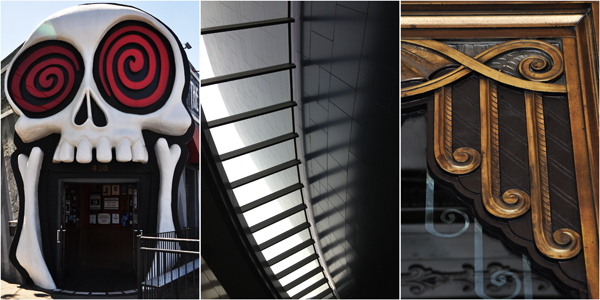
Architectural photography, like every other genre, has its share of cliches, and I’ve probably shot them all.  Skylines? Check.  Laying down on the sidewalk and shooting straight up the side of the city’s tallest building? Check. So, if you believe (as I mostly do) that there is no such thing as an original idea, how do you capture something original and unique? Step #1 is to not care whether somebody else has taken a similar photo before you. If it’s original to you and you like it, then go with it. Print it big and hang it proudly. But if  you’re still looking for an original, unique perspective, start concentrating less on the big picture and more on the details.

detroit-architecture

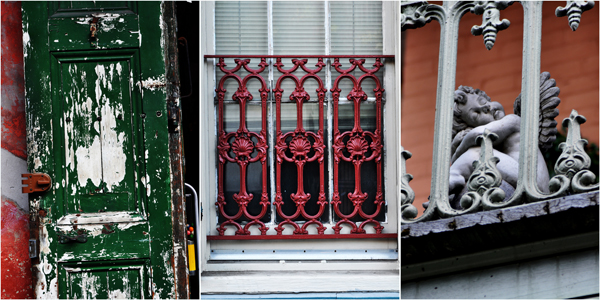
Older buildings like these in Detroit offer a wide variety of textural and structural components to photograph.

You’ve heard the old line about the whole being greater than the sum of its parts. It’s the theory that something grand and impressive can result from the combination of less significant components. What you may not have heard is that the opposite can be just as true. Depending on your lens, vantage point, available lighting, and a host of other variables, it is entirely possible– if not likely– that an entire building would appear so small in the frame that whatever drew you to it in the first place could be lost and overlooked in the actual photo. Also, light that might be perfect for windows, doorways, and other details could be completely unsuitable for capturing the detail and character of the building as a whole.

french-quarter-architecture

The French Quarter in New Orleans is a treasure trove of distinct architectural elements.

As photographers, we strive to put our personal stamp on every image. Every picture tells a story. Architects are no different, imprinting style, history, and textures into their work.  They are easy to find. Just take a step back and look for the parts that make up the whole. As with any other type of photography, concentrate on angles, composition, and lighting. As far as selecting the right lens?  Just like photographing portraits, landscapes, food, or any other subject, your ideal focal length is going to depend on the size of the subject and your proximity to it. If, for instance, you are photographing gargoyles several stories above the ground, a long zoom of at least 200-300 mm is a must. On the other hand, if you are photographing a doorway, you’ll definitely need a wide angle of 28mm or wider.

Atlanta-Doorways

Three of my favorite Atlanta doorways. Going for bigger details will require a wide angle lens.

Beware of some of the common pitfalls. Even though you are not photographing the entire building, you still have to be careful about tilting your camera back too far and causing distortion. When you tilt back to look up at a building through your camera, the bottom of the sensor is closer to the building that the top of the sensor, resulting in an image where the top of the building looks considerably more narrow than the bottom. While you won’t encounter this issue too often while photographing details, you still need to be aware of it. Also watch out for reflections in windows and glass doors. Sometimes, slightly shifting your angle so you are not shooting at a direct 90-degree angle to the glass can correct the problem (and keep your own reflection out of the photos).

One last note on safety and choosing your buildings carefully. In this post-9/11 world–particularly in the United States– there are security issues to be considered. If you are photographing a government building, for example, do not be surprised to find yourself in a discussion with armed security guards within moments of taking your shot. While you are legally and technically allowed to take photos of public buildings from public vantage points, this does not always apply to federal office buildings, courthouses, and banks. Be polite. Don’t argue. If asked for your ID, provide it. Be prepared to delete the images on the spot. I’ve run into this issue a few times with non-governmental buildings also. I was once photographing the office building where I practiced law in another life, when I was approached by two very large men who were demanding to know what I was doing. I was not doing anything illegal or even anything for which they had the right to detain or question me. In these situations you have to ask yourself just how important that photo of the archway over the door really is. In my case, they pushed so I pushed back. They threatened to call the police, so I sat down on a bench and politely told them I’d wait. Everything worked out fine in the end, but it probably wasn’t my smartest move. Do as I say, not as I do.

atlanta-architecture

A few of the elements outside my old office building. Details above the first couple of floors will require a zoom lens

Photographing architecture can be a great way to hone your skills in a low-pressure setting.  You can experiment with composition and natural light without worrying about your subject getting bored and walking out on you. Take advantage of the opportunity to push your creativity and grow as a photographer.

Post originally from: Digital Photography Tips.

Check out our more Photography Tips at Photography Tips for Beginners, Portrait Photography Tips and Wedding Photography Tips.

Architecture: Photographing Exterior Details


Digital Photography School

 
Comments Off on Architecture: Photographing Exterior Details

Posted in Photography


17. September 2013

18 Sep

Ein Beitrag von: Petra Holländer

my own little place © Petra Holländer


kwerfeldein – Fotografie Magazin

 
Comments Off on 17. September 2013

Posted in Equipment


18 September, 2013 – Tree On The Hill

18 Sep

Today Kevin Raber shares Tree On A Hill  a how to article on taking an ordinary image and dramatizing it.  This is an image made and published on the Home Page recently.  

Also, continue reading the updates on the Olympus OM-D E-M1 in Michael Reichmann’s continuing blog as he tries out this new camera while traveling in Paris.

On Saturday, October 5th Kevin Raber will lead a Worldwide PhotoWalk in Indianapolis. If you live in the area and would like to learn more then please Click Here.


"Having been to Antarctica with Michael and Kevin, I would say after having traveled the world and shot nearly my entire life as an exhibiting photographer,  it was one of my highlights in my life and I talk about it, all the time.  The images and experience of seeing something visionary and nearly extinct from the world, to see and experience the wildlife and scenery that does not fear humans is amazing.  The images I shot there won me two Smithsonian awards and nearly 18 other international awards". – Tim Wolcott

 Find Out More Now
These Expeditions Will Sell Out Quickly. They Always Do


The Luminous Landscape – What’s New

 
Comments Off on 18 September, 2013 – Tree On The Hill

Posted in News


How Good Are Your Photoshop Skills?

18 Sep

Photographers who want to improve their landscape photography, to pick up some new wedding photography techniques, or to learn how to shoot children are spoilt for choice. Search on Google for a “photography workshop” and you’ll get more than 67 million results. Whatever kind of photography you want to practice, from snapping models to capturing pets and creating portraits you can always find someone willing to teach it.

Search, though, for a “Photoshop workshop” on Google and you’ll get fewer than 19 million results. That might still make for a pretty big choice but it’s less than a third of the educational content aimed at teaching photography skills even though the size of the demand should be the same. Regardless of what you want to shoot, just about every kind of image and every photography specialty will require a good understanding of image editing and post-production.

One reason that Photoshop classes are so much rarer than photography classes may be that while the need may be the same, the apparent demand for the classes is lower. Learning to take pictures is fun; learning to improve the white balance or remove red-eye not so much. Sitting at a keyboard and choosing tones from a piece of software is certainly a lot less romantic than directing models or even swishing chemicals under the red light of a darkroom.

But the skills are just as essential. Even if they don’t want to change their pictures too much once they’ve taken them, even the best photographers and the most experienced professionals have to spend some time adjusting their images before they submit them. And if they don’t, it’s only because they outsource the work to assistants who can charge a premium for their digital skills.

Learn How to Mix Your Colors

Fortunately, learning those skills has got easier. MCP Actions is one of a number of companies that help people get to grips with Adobe’s over-complicated editing suite. The company started in 2006 providing Photoshop training and selling prepared actions to simplify the editing process, initially for online businesses that needed to upload images. Jodi Friedman, the company’s founder, soon found that photographers also wanted to learn how to edit their photos so she added the image-makers themselves to her mix of customers too.

“Now all my customers are photographers – either hobbyists or professionals.”

The classes are held online through GoToMeeting.com and take place either as one-to-one tutorials or in groups of between five to fifteen students. Altogether, Jodi believes that “a few thousand” people have taken part in her online classes, and “hundreds of thousands” have watched her video tutorials. The customers, she says, range from new hobbyists to experienced photographers and from teens to grandmothers. Although the subjects covered in the class are broad and include lessons on using curves and newborn photography, as well as workshops on elements, the most popular topic by far is color fixing. Those classes are also among the lowest priced workshops at $ 99.95 for a two-hour live session.

About 85 percent of Jodi’s students are women, though, a surprising dominance that may suggest that men are missing out. It’s possible that Jodi’s marketing is focused on women and it could be that men are more comfortable with a big Photoshop manual and self-learning. But it’s also possible that too many photographers are still seeing photography as starting and ending with the camera.

Wedding Photographers Are Really Wedding Photo Adjusters

In fact, according to at least one survey, professional wedding photographers should more accurately describe themselves as professional wedding image editors. More than 28 percent of their time is spent “editing photos” and completing “other computer tasks,” work that takes up the largest part of their day. Just 12 percent of their workday is actually spent taking pictures. Those proportions may be different in other specialties but they’re unlikely to vary by much.

Photographers who fail to get to grips with the software side of picture-taking are ignoring the work that they’re likely to be doing the most.

There are alternatives to taking online courses though. Even Jodi Friedman admits that there’s nothing wrong with learning from books. (Although she stresses that some of her customers can pick up in an hour or two what it would take them months to learn from a book or a college course.) Outsourcing is also an option. If you’re not in a position to hire an assistant, you can find plenty of freelancers — often photography enthusiasts with digital skills — willing to do the basic editing for you. ProImageEditors.com, for example, charges wedding photographers from 13 cents to 19 cents an image for adjusting exposure, white balance, highlight recovery and fill light. They say they’ll even crop and straighten if needed.

But however tedious basic image editing might feel, not all photographers are willing to outsource such an important part of the image-making workflow, especially to companies outside their own studio. Wedding photographers, in particular, tend to want to keep control of the process themselves, ensuring that the product meets the standards they want to keep and leaving room for some creativity even during image adjustment.

For today’s photographers — both professional and enthusiasts — time in front of the camera is even more important than time behind the lens. It might even take up a greater part of the day than old-fashioned darkroom development and while it’s not likely to be the most interesting part of being a photographer, it is important and it is worth knowing well.

And once you know it, not only will you be able to edit faster, cut back on the time in front of the monitor and give yourself more time at the tripod, you could also find that you enjoy it — and that you want to charge classes of students a hundred bucks each for a couple of hours of tuition.


Photopreneur – Make Money Selling Your Photos

 
Comments Off on How Good Are Your Photoshop Skills?

Posted in Equipment


Conquering Crappy Light In Fashion Shoots: Mixed Shade

18 Sep

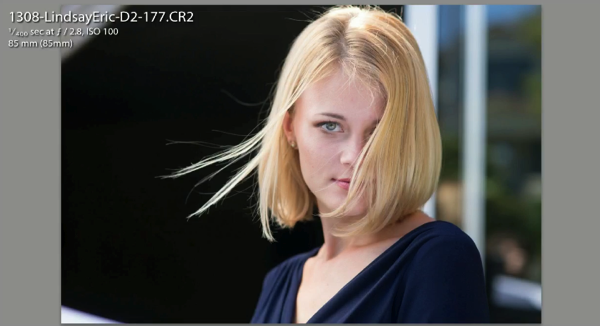
These tips are from fashion photographer Lindsay Adler – one of the instructors during this week’s CreativeLIVE Photo Week – an event being held this week that showcases teaching by 50 photographers across 3 tracks, including weddings and family.

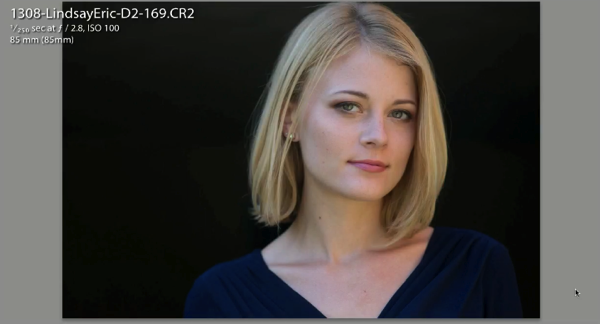
Finding a shady spot during an outdoor shoot is a perfect way to snap beautiful pictures while still maintaining a sunny outdoor feel –– but what happens when your model’s face is being hit by directional light sneaking through the side of your shady covering? Check out professional glamour and fashion photographer Lindsay Adler’s favorite tips for troubleshooting (literally!) working in mixed shade:

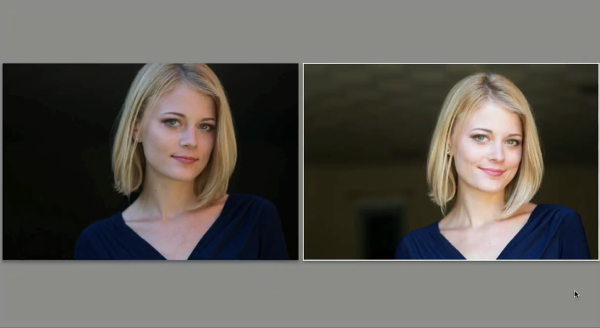
BEFORE in mixed shade

Block Off Overhead Light

Scout around your location and find a doorway that leads to the outside. If your model steps back into the doorframe, not only does it block overhead light, it blocks light coming from the left and right – and you’ll still have a nice glow coming in through the front. This option also creates great negative fill, which is especially handy if you’re doing a beauty shoot and want to highlight your model’s jawline and cheekbones.

OPTION ONE door way

Need even more contrast on the front of your model’s face? Try backing her up a little further into the doorway. You’ll be giving yourself a smaller light source that’s more directional, essentially creating a giant softbox effect. “I have used this setup for every single wedding I have ever done. And I have shot two of my favorite beauty editorials like this,” Lindsay says. “I’ve had the model stand in a doorway, and I’ve used black fill from left and right, and just gorgeous glowing light in the front.”

Diffuse Your Light and Add Fill

This method is super simple, and will definitely help you show the sun who’s boss. If you can’t swing placing your model in a door and you have no choice but to shoot her in direct sunlight, your first step is popping up a parabolic umbrella. It will diffuse and soften the light but not change the angle.

OPTION TWO Diffusion and Fill

The parabolic works pretty well on its own, but if you want the model’s eyes to catch the light and get extra sparkly, have an assistant hold a white reflector underneath her face to create some negative fill. “For commercial style portraits, this is actually my favorite,” Lindsay says.

Both Lindsay’s methods for conquering mixed shade work great, and will give you even skin tone, contrast, and nice catch-light so you can snap that perfect picture even when the sun is shining!

Learn more from Lindsay in this weeks Photo Week from CreativeLIVE.

Post originally from: Digital Photography Tips.

Check out our more Photography Tips at Photography Tips for Beginners, Portrait Photography Tips and Wedding Photography Tips.

Conquering Crappy Light In Fashion Shoots: Mixed Shade


Digital Photography School

 
Comments Off on Conquering Crappy Light In Fashion Shoots: Mixed Shade

Posted in Photography


Phase One makes Capture One 7.1.4 available

17 Sep

COP7_icon.png

Phase One has released the latest version of its Raw processing software, Capture One 7.1.4. This update offers support for more cameras and lenses, and also promises improved performance when working with large numbers of photos. With this version, Capture One 7 now supports the Sony Cyber-shot RX100 II, Fujifilm X-M1 and Olympus E-P5 among others, and adds 32 new lens profiles. Click through for the full press release.

News: Digital Photography Review (dpreview.com)

 
Comments Off on Phase One makes Capture One 7.1.4 available

Posted in Uncategorized


Reconstructed Destruction: Flyover of Bombed WWII Warsaw

17 Sep

[ By WebUrbanist in Abandoned Places & Architecture. ]

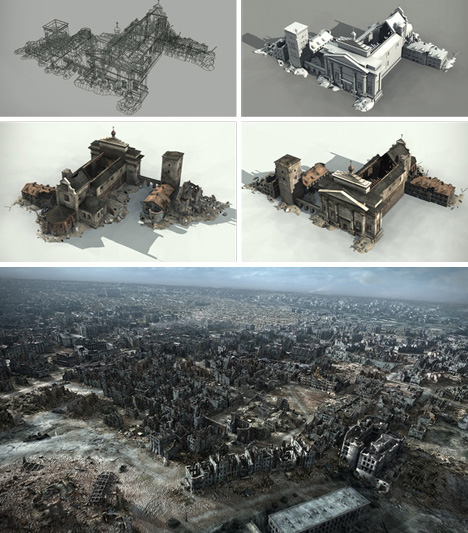
poland 3d model city

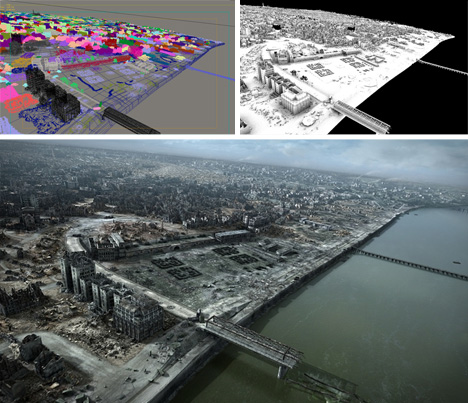
It took 1 year, over 1000 photographs and extensive archival research to construct The City of Ruins, a digital stereoscopic reconstruction of Warsaw, Poland in its most devastated state. With over 60,000 3D-modeled structures (detailing what remained), this incredible undertaking brings home the scale of destruction with stunning visual details and remarkable historical accuracy.

As illustrated in the trailer above and images below, over 85% of the buildings in the city were ultimately destroyed between urban combat and systematic leveling. Its creators note that this is the first rigorous large-scale attempt to rebuild a war-ravaged city in digital form.

poland aerial reconstruction images

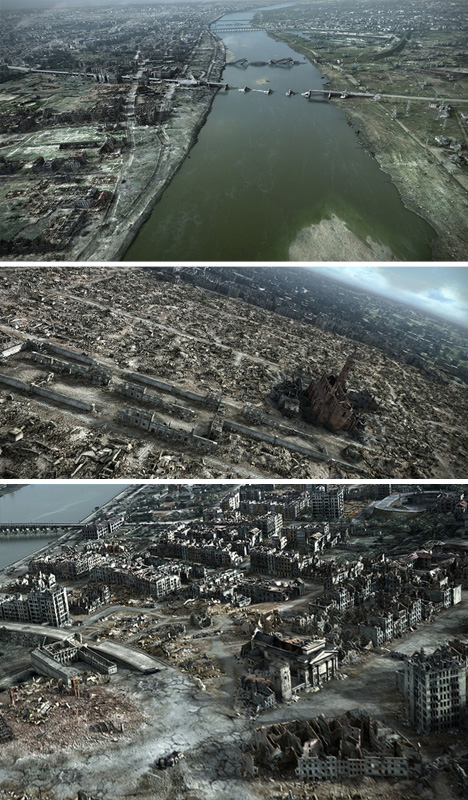
The Polish Resistance staged the Warsaw Uprising in 1944, which, lacking promised Soviet support, fell hard to German forces over brutal two month period. Thus Warsaw, previously a of nearly 1,000,000 people, was reduced to a habitat for less than 1,00o.

poland 3d reconstruction examples

The extent of its demolition is hard to picture, hence the creation of this model and flyover video for the Warsaw Rising museum. Without anti-aircraft capabilities or the ability to receive sufficient aid and support from the West, defenders in the city fought but ultimately fell or retreated through the sewer system.

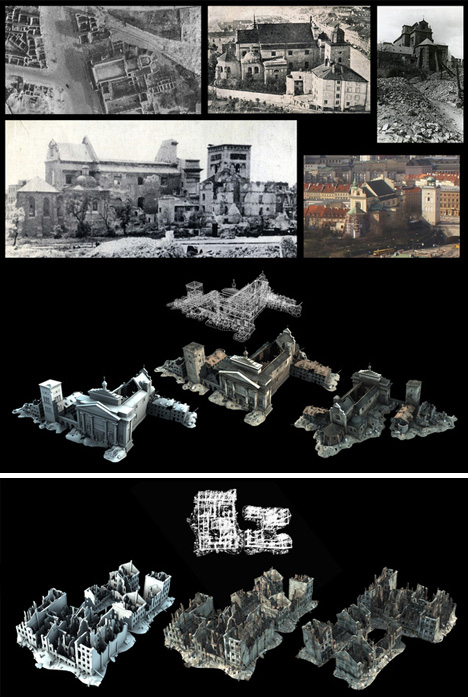
warsaw detailed reconstruction photo

Hundreds of thousands of fighters and civilians alike perished in the conflict. The destruction of structures and infrastructure was documented piecemeal, the scraps of which were assembled formed the basis for this disturbingly realistic model and film. More on the remaking of the ruins below.

Next Page:
Reconstructed Destruction Flyover Of Bombed Wwii Warsaw

Share on Facebook


[ By WebUrbanist in Abandoned Places & Architecture. ]

[ WebUrbanist | Archives | Galleries | Privacy | TOS ]


WebUrbanist

 
Comments Off on Reconstructed Destruction: Flyover of Bombed WWII Warsaw

Posted in Creativity