RSS
 

Archive for September, 2013

You and Your LCD: A Matter of Trust

19 Sep

It glows on the back of your camera like a homing beacon– drawing you to its display like a moth to a flame. You protect it. You rely on it (perhaps a bit too much?). But can you trust it? That question has been the subject of debate for quite some time, and the unfortunate answer you hear most often is, “It depends.” I suppose you could say that there are levels of trust. Personally, I have a love/hate relationship with my LCD. Think about it. The thing is practically useless on a sunny day. The times when I need it most– outside the controlled environment of the studio– are the same times that it almost always lets me down. The questions of whether to trust your LCD screen, and how much– if at all– can only be made based on personal experience. In order to answer these questions, it helps to understand what’s happening with your screen while you’re shooting.

What am I Looking At?
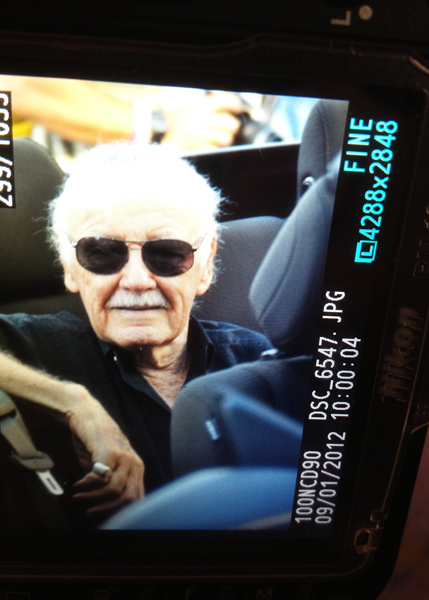
stan-lee-copyThere is a very common misconception that the image you see on the back of your camera is the actual image file. It’s not. If you shoot JPEG, what you are actually looking at is merely a preview of the image. It’s pretty close to what the shot will look like in Photoshop or Lightroom, but not exactly. So, if we are looking at a preview of the JPEG when we’re shooting in that mode, we must be looking at a preview of the RAW file if we’re shooting RAW, right? Not so fast. This is where the trust factor begins to erode. Even though your camera may be set to RAW capture, your LCD screen is still displaying a JPEG preview.

Taking things a step further, if you’re someone who regularly shoots RAW, then you already know that a JPEG– even just a preview– is going to look better than an unedited RAW file prior to processing. In generating the preview, your camera has sharpened the image, as well as tweaked the saturation, color, and contrast. I’m not commenting on the merits, virtues, or advantages of one shooting mode over the other. Each has a place in my workflow. You need to know this stuff, however, if you are just learning to shoot and process RAW files. I once had a student come to class, put his camera down on the desk in front of me, and declare, “I swear there’s something wrong with this camera!” There was nothing wrong with his camera. He was learning his way around RAW and couldn’t figure out why there was such a big difference between how his camera and computer displayed the RAW images.

Sometimes You Gotta Zoom

How big is the monitor where you view and edit your photos? Regardless of whether you are working on a 15″ laptop or a 27″ desktop, it’s still a whole lot bigger than those three inches on the back of your camera. Your LCD screen is way more forgiving than your editing screen. Beside the fact that you are only looking at a preview on the camera itself, it is common for even significant blur to not show up until you’re looking at the image full-size. And this is where the zoom button becomes your friend. At least until you have a solid grasp on just how much your LCD is out to get you, I suggest zooming in nice and tight on your image to make sure it really is as good as you think it is. I am not talking about going overboard with the chimping (checking the LCD after every single shot). But if you wrap the shoot, send the client on their way, and wait until you get back to the office to discover that the image is soft, you’re going to have a whole lot of explaining to do, and quite possibly some money to refund.

There is no denying that the LCD screen is a valuable tool and has become an integral component of digital photography. But just like it’s important to know what your cameras, lenses, and lights can and can’t do, it’s also important to know your LCD’s limitations.  Understanding what you’re looking at and whether you can trust it can make a huge difference in the success of your images.

Post originally from: Digital Photography Tips.

Check out our more Photography Tips at Photography Tips for Beginners, Portrait Photography Tips and Wedding Photography Tips.

You and Your LCD: A Matter of Trust


Digital Photography School

 
Comments Off on You and Your LCD: A Matter of Trust

Posted in Photography


Digital Grotesque: Intricate Full-Scale 3D Printed Room

19 Sep

[ By Steph in Gadgets & Geekery & Technology. ]

Digital Grotesque 3D Printed Room 1

Stacked sections of intricate 3D-printed columns of the most baroque nature imaginable make up a cube-shaped, full-scale room. Designers Michael Hansmeyer and Benjamin Dillenburger made ‘Digital Grotesque‘ out of eleven tons of sandstone, its outside smooth and flat, with an impossibly ornamented interior. It measures 16 square meters, and has 260 million surfaces.

Digital Grotesque 3D Printed Room 2

These complex, interwoven details and the ways in which the various layers of them join together wouldn’t be possible to craft by hand. Many elements look fractal in nature, repeating endlessly. One side is mirrored by the other in perfect symmetry. The architectural scale, for the designer, has been reduced from bricks to grains of sand.

Digital Grotesque 3D Printed ROom 4

This scale and detail is made possible by a new sand-printing technology that overcomes some of the limitations of 3D printing, enabling large-scale elements that can be layered into a whole. “The design process thus strikes a delicate balance between the expected and the unexpected, between control and relinquishment,” write the design team. “The algorithms are deterministic as they do not incorporate randomness, but the results are not necessarily entirely foreseeable. Instead, they have the power to surprise.”

Digital Grotesque 3D Printed Room 3

“Digital Grotesque is between chaos and order, both natural and the artificial, neither foreign nor familiar. Any references to nature or existing styles are not integrated into the design process, but are evoked only as associations in the eye of the beholder.”

Share on Facebook


[ By Steph in Gadgets & Geekery & Technology. ]

[ WebUrbanist | Archives | Galleries | Privacy | TOS ]


WebUrbanist

 
Comments Off on Digital Grotesque: Intricate Full-Scale 3D Printed Room

Posted in Creativity


Apple’s new iOS 7 from a photographer’s perspective

19 Sep

overview_whatis.jpg

While early reviews of the iPhone 5c and 5s may have mobile tech fans talking hardware today, the bigger news in our opinion is actually Apple’s free iOS 7 software update. iOS 7 offers plenty of features aimed specifically at mobile photography enthusiasts, and we’re taking a look at the updated Camera and Photos app today on connect.dpreview.com.

News: Digital Photography Review (dpreview.com)

 
Comments Off on Apple’s new iOS 7 from a photographer’s perspective

Posted in Uncategorized


Blickfang: Der rote Bulli

19 Sep

Stephen Shore ist der Urvater der unaufgeregten Abbildung amerikanischer Gewöhnlichkeit. Er war seinerzeit einer der Pioniere, die mit ihren dokumentarischen Arbeiten die Farbfotografie jenseits von Mode und Werbung etablierten.

Kristallklar ist sein Blick auf die müde Realität amerikanischer Zwischenstädte, die zerfransten Vororte, die versiegelten Landschaften einer Zeit, in der das Automobil noch unumstrittenes Vehikel für den amerikanischen Traum war.

Wir stehen auf der linken Seite einer von roten Backsteinhäusern gesäumten Straße und schauen auf die Kreuzung einer – die vergleichsweise niedrige Bebauung deutet darauf hin – Kleinstadt in der amerikanischen Provinz. Ein ungewöhnlich gewöhnlicher Ort. Laut Bildunterschrift handelt es sich um den Ort Easton im US-Bundesstaat Pennsylvania, aufgenommen vor fast 40 Jahren am 20. Juni 1974.

Die Perspektive ist unaufgeregt und klar. Der Fluchtpunkt liegt in etwa auf dem unteren linken Kreuzungspunkt des Bilddrittelrasters. Dadurch wirkt der Bildaufbau simpel und ausgewogen, fern von jeglicher Effekthascherei.

Der rote Bulli © Stephen Shore

Ins Auge springt das auf der gegenüberliegenden Seite der Kreuzung geparkte Auto – ein roter Bulli. Auf den ersten Blick scheint das Bild menschenleer, doch bei genauerer Betrachtung entdeckt man den Jungen am Fenster hinter dem Bulli. Mit dem Rücken zum Fenster sendet er seine Aufmerksamkeit über die Schulter nach draußen. Sein Atem kondensiert an der Scheibe und verschleiert seinen skeptischen Blick auf den Fotografen.

Überhaupt wird der eigene Blick hier regelrecht durch den Raum des Bildes spazieren geführt, vorbei an all den fabelhaften Details und ihren kleinen Geschichten. „Das Foto ist eine Welt für sich, in der der Betrachter herumwandern und sie für sich entdecken kann“, so Shore.

Der Detailreichtum des Bildes rührt vom Aufnahmeformat her. Shores eigener Aussage zufolge ist dies das erste Bild, das er mit einer 8×10-Großformatkamera machte und justament festellte, dass er damit schließlich das richtige Werkzeug für seine Art der Fotografie gefunden hatte.

Das Bild ist „Uncommon Places“* entnommen – einem Bildband, der Shores komplettes Werk in sich vereint und empfehlenswert ist für alle, die gern ins Weite blinzeln, sich dabei an eine alte Gegenwart erinnern und von einer längst vergangenen Zukunft träumen.

* Das ist ein Affiliate-Link zu Amazon. Wenn Ihr darüber etwas bestellt, erhalten wir eine kleine Provision, Ihr zahlt aber keinen Cent mehr.


kwerfeldein – Fotografie Magazin

 
Comments Off on Blickfang: Der rote Bulli

Posted in Equipment


Will That Fly? 17 Imaginary Vehicle & Aircraft Concepts

18 Sep

[ By Steph in Art & Drawing & Digital. ]

Imaginary Vehicles Ships Main

Never mind the mechanics of these fantastical digital art renderings of alien spaceships, advanced military vehicles and futuristic aircraft. Whether or not they’re compatible with the laws of physics, these sci-fi visions are a thrill to take in, inspiring a sense of wonder about the possibilities of the future and the technology that might already be present in the far-off reaches of outer space.

NASA Garbage Ship by Vaughan Ling

Imaginary Vehicles NASA Garbage Ship

Concept artist Vaughan Ling envisions a ship for NASA that would collect and recycle garbage in space. He wrote to io9, “My fantasy concept is a system composed of the collector, a net dispenser and a recycling station in low earth orbit. Considering the launch cost can range from $ 4-5k per pound, not including the precious metals often used for satellite constrution, I thought that recycling could be a viable business one day. The collector would use nuclear power + highly efficient VASIMR rockets for propulsion and a detachable holding bay for dropping off at the station plus an arm similar to Canadarm on the space shuttle and ISS.”

Journey Awaits Steampunk Aircraft by Darkki1

Imaginary Vehicles Journey Awaits

A complex steampunk airship hovers over a grassy field in this digital concept by artist Darkki1 on deviantART.

Black Phoenix Ambulance Mech by Bulgarov

Imaginary Vehicles Ambulance Mech

This ambulance mech by Vitaly Bulgarov is part of the Black Phoenix Project, a series of designs showcasing the product line of a fictional military corporation. The series is produced in collaboration with photographer Maria Skotnikova, who creates the high-res HDR-environment maps Bulgarov uses for lighting. The artists plan to release the series in the form of an art book.

G103 Aircraft by Alex Ichim

Imaginary Aircraft G103

The G103 is a concept gunship by artist Alex Ichim.

Cosa Nostra Delivery Vehicle by Igor Sobolevsky

Imaginary Vehicles Cosa Nostra 1

Imaginary Vehicles Cosa Nostra 2

Artist Igor Sobolevsky brings a ‘deliverator vehicle’ from the book ‘Snow Crash’ by Neal Stephenson to life.

Next Page:
Will That Fly 17 Imaginary Vehicle Aircraft Concepts

Share on Facebook


[ By Steph in Art & Drawing & Digital. ]

[ WebUrbanist | Archives | Galleries | Privacy | TOS ]


WebUrbanist

 
Comments Off on Will That Fly? 17 Imaginary Vehicle & Aircraft Concepts

Posted in Creativity


On Assignment: Kai-Huei Yau’s Football Previews

18 Sep

Growth as a photographer is, for me, long periods of muddy struggle punctuated by moments of clarity. Sometimes the moments break new ground. But other times the moments solidify things you already knew —but didn't know know.

Photographer Kai-Huei Yau's shot of a high school football lineman is a great example of the latter.

Read more »
Strobist

 
Comments Off on On Assignment: Kai-Huei Yau’s Football Previews

Posted in Photography


18. September 2013

18 Sep

Ein Beitrag von: Jürgen Adler

© Jürgen Adler


kwerfeldein – Fotografie Magazin

 
Comments Off on 18. September 2013

Posted in Equipment


Studio Test Scene launched – with 23 cameras (and counting)

18 Sep

TestScene.jpg

After many, many months of design and testing we are happy to announce the official unveiling of our studio test scene. The new scene was designed to address certain drawbacks with the previous test scene, as well as providing the opportunity to show more real-world relevant information about how cameras behave. We’ve increased the number of cameras supported to 23 and we’ll be continuing to add models (old and new) in the coming weeks.

News: Digital Photography Review (dpreview.com)

 
Comments Off on Studio Test Scene launched – with 23 cameras (and counting)

Posted in Uncategorized


Shadowless – Yosemite National Park

18 Sep

While it can be enticing if not blinding over time to chase golden hour light I’ve come to savor the moments I can explore a foggy landscape. While photographers will often use depth of field and lighting (ex. rim lighting, naturally occurring spot lighting, back lighting, etc.) to place an added emphasis of focus on a subject fog provides a naturally occurring means of doing the same thing. Fog both obscures and isolates subjects while bringing out naturally occurring color. Leveraging these qualities of fog with the right subject and you can produce a moody and timeless photo.

Around this time last year while driving to the Owens Valley, via Tioga Pass through Yosemite, I was pleasantly surprised that most of high country was socked in with extremely heavy fog. Ironic in such a majestic landscape I could be so excited to have obscured views. Rather than focus on the bigger elements of the landscape the fog provided a means to see the finer details and work to capture them in an intimate fashion. If you’re ever driving through a scenic location with heavy fog my recommendation is duck off the road to a safe spot and explore the area with your camera.

Photo Details

5 image vertical panoramic, Canon 5D Mark II, Canon EF70-200mm f/2.8L IS II USM, 1/100 sec, f/9, ISO 320

Copyright Jim M. Goldstein, All Rights Reserved

Shadowless – Yosemite National Park

The post Shadowless – Yosemite National Park appeared first on JMG-Galleries – Landscape, Nature & Travel Photography.


Related Stories

  • Shadowless – Yosemite National Park – Enclosure
  • Yosemite Falls Moonbow and Star Trails
  • Yosemite Falls Moonbow and Star Trails – Enclosure
Feed Ads by FeedBlitz
powered by ad choices


JMG-Galleries

 
Comments Off on Shadowless – Yosemite National Park

Posted in Equipment


DxOMark tests Canon EOS 70D Dual Pixel AF against the Sony SLT-A77

18 Sep

shared:DxOMark-logo-520.jpg

DxOMark has tested the Canon EOS 70D’s live view autofocus system in comparison to the Sony SLT-A77, looking at focus speeds and accuracy in both movie and stills modes. The two cameras offer an intriguing contrast in technologies; the 70D uses Canon’s latest ‘Dual Pixel AF’ on-sensor phase detection, while the A77 employs a separate phase detection AF sensor which receives light via a semi-transparent mirror. Click through to see how the two cameras fare in DxOMark’s head-to-head testing.    

News: Digital Photography Review (dpreview.com)

 
Comments Off on DxOMark tests Canon EOS 70D Dual Pixel AF against the Sony SLT-A77

Posted in Uncategorized