Erna und Hrefna ist ein Zwillingspaar aus Island. Ariko Inaoka fotografiert sie seit 2009. Damals waren sie gerade neun Jahre alt. Ihre Fotografien sind Studien von Zusammenhalt und der ganz besonderen Verbindung, die die beiden zueinander haben.
Kennengelernt hat Ariko die Zillinge bereits 2005. Damals fotografierte sie jeden Sommer in Island für ihre Serie SÒL. Nach Abschluss dieser Serie wollte sie Zwillinge fotografieren. Dass es Erna und Hrefna sein würden, stand damals noch nicht fest. Ariko fotografierte zunächst drei weitere Zwillingspaare, fand unter ihnen aber nicht eine solch starke Verbindung, wie sie sie bei den isländischen Mädchen gespürt hatte.
Ihre Wahl fiehl also auf Erna und Hrefna, trotz der großen Entfernung zwischen Kyoto, ihrem jetzigen Wohnort, und Island. Einmal im Jahr besucht sie die Mädchen, um sie zu fotografieren. Bis zu ihrem 16. Lebensjahr will sie sie in der Fotoserie begleiten.
Meine Intention für dieses Projekt ist es, die sehr kostbare Zeit zwischen Kind zum Teenageralter zu erfassen, sowohl physisch als auch psychisch. Die Beziehung zwischen eineiigen Zwillingen ist ein interessantes Thema. Ich habe oft gehört, dass eineiige Zwillinge telepathische Verbindungen haben. Das stimmt bei Erna und Hrefna.
Sie sind immer zusammen. Sie haben fast nie miteinander Streit. Wenn ich Zeit mit ihnen verbringe, fühle ich mich so behaglich in ihrer?Gesellschaft, aber zur gleichen Zeit habe ich ein seltsames Gefühl, weil ich noch nie eine so starke Verbindung zwischen zwei Menschen gesehen habe. Einmal sagten sie zu mir: „Von Zeit zu Zeit haben wir die gleichen Träume.“
Die starke Verbindung der beiden sieht Ariko darin begründet, dass sie keine weiteren Geschwister haben und recht isoliert aufwachsen. In ihren Bildern ist diese Verbindung so auch immer ein wichtiges Motiv.
Die Fotos von Ariko sind keine einfachen Portraits. Sie erzählen Geschichten, zeigen die Zwillinge im Spiel. Oft wirken die Bilder auch inszeniert und ich frage mich, ob Ariko oder die Zwillinge die Posen aussuchen. Wahrscheinlich ein Zusammenspiel, aber gerade das empfinde ich als spannend.
Wie stellen sich die Zwillinge dar und wie sieht sie Ariko? Wie wird sich dies im Laufe der Serie noch verändern? Man sieht zu, wie die Zwillinge wachsen, sich verändern. Wird sich auch ihre Beziehung zueinander verändern?
Auf den letzten Bildern von 2010/2011 sind sie gerade elf Jahre alt. Innerhalb der zwei Jahre, die seit 2009 vergangen sind, wirken Erna und Hrefna viel erwachsener. Auch 2012/2013 war Ariko bei ihnen. Bis die neuen Fotos veröffentlicht sind, wird es aber noch dauern, verrät sie.
Ich bin auch Besitzerin des ältesten Restaurants in Kyoto, Japan. Es gehört meiner Familie seit 550 Jahren und ist spezialisiert auf Soba-Nudeln. Seit drei Jahren bin ich nun an diesem Geschäft beteiligt und führe seitdem ein Doppelleben, wodurch ich viel weniger Zeit für die Fotografie habe.
Solltet Ihr also demnächst in Japan sein, könnt Ihr Euch bei Soba-Nudeln vielleicht auch persönlich etwas über das Zwillingsprojekt von Ariko Inaoka erzählen lassen. Bis dahin empfehlen wir Euch einen Blick auf ihre Webseite.
Throughout my photography career, one of the most challenging aspects has been learning how to get the travel shots I really want. Faced with a limited window of time, unfamiliar areas, and unpredictable weather, getting the shot you envisioned can be difficult. However, by planning ahead, being flexible and making any conditions work to your advantage, the end result of Continue Reading
The post The Kickstarter Travel Photography Campaign You Just Have to See to Believe appeared first on Photodoto.
When was the last time you got to snuggle a wolf puppy at work?
Never? Us neither. Sharon Montrose, on the other hand, can raise her hand to that one (and we’re green with jelly).
Sharon’s the photographer behind The Animal Print Shop. You might’ve spotted her portraits of wide-eyed baby giraffes, raccoons looking smug, and baby bears being baby bears.
We asked about how she discovered her awesome talent for photographing animal personality and what working commercially is all about.
While wolf pups might not be next up on your model list, you’ll get inspired to sit your pet down for a session!
Sharon Montrose on Animal Photography
p.s. We’re hiring for an amazing opening at Photojojo. We’re looking to re-invent what/how/where we publish online, and we’re seeking one amazing somebody to lead the charge as Editorial & Community Lead.
Who is Sharon?
The first time we heard about Sharon, she was snapping a baby giraffe in this Etsy interview. That’s when we knew that she probably had the best job in the world.
Sharon’s an acclaimed animal photographer who happened upon her talent for capturing portraits of animals when she was inspired to photograph her own dog one day (read more about that in the interview).
While she shoots dogs and cats commercially (you’ve probably seen her photos on billboards), Sharon has had the opportunity to work with less common animals like bear cubs, ostriches, and flamingos in her personal photography. This project is what became her Animal Print Shop series. Read about where the animals come from here.
Looking through Sharon’s portfolio is a roller coaster ride of awwww and is that real! and dang, she’s inspiring. Read on to learn more about how Sharon got started and what gets her inspired.
Is photographing large animals intimidating?
Q:You’ve photographed buffalo, cows, giraffes, lions even! Is it intimidating to stand in front of an animal that large with your camera?
A: No. I’m naturally a somewhat fearful person, but I when I get behind the lens, my fear is goes away–I think I’m too distracted getting my shot to be afraid.
How do you get great photos of wiggly subjects?
Q:So, kittens and puppies aren’t known for their sitting-still-in-one-spot skills. How do you manage to get great photos of them regardless?
A: Patience and timing. With animals that move around a lot, you have to be ready and focused to hit the shutter in that split second when they stop.
How many shots does it take to get that one photo?
Q:When you’re shooting for your Animal Print Shop series, how many shots does it take to get that one incredible photo?
A: It really depends on the animal–if it’s a calm animal (like a cow) who will just stand there and look around, I can get my shot in a couple frames. Others though, like little lion cubs, are running all over the place and take some serious time and patience.
How did you get into animal photography?
Q:Did you know you wanted to get into animal photography off the bat? If not, what was getting there like?
A: At first I had a very tough time turning what I loved doing into a way to earn a living. I floundered before I became established as a working photographer. I was shooting headshots and weddings and doing okay at it, but I wasn’t happy doing either and had lost the love I had for photography.
Around the same time, I adopted my first dog (several members of my family also had dogs), so I started taking photos of all the dogs in my life to see if it reignited the love I once had for photography. It did, and I learned an important lesson as a result: I had to have an authentic connection with my subjects.
Shortly afterwards I began work on my first book Dogtionary (Viking Press 2001). The book came after many failed attempts at marketing myself as a private party pet photographer. Back in 1998 people didn’t spend money on their dogs like they do today.
The book (and subsequent books) established me in my niche because the internet was still new, so being published was more productive in those days and there were very few published photographers with dog books in the United States. There were only a handful of us in the shadows of the great William Wegman, Elliot Erwitt, Henry Horenstein, and Keith Carter. I think it was me, Jim Dratfield, Kim Levin, Valerie Shaff, Sharon Beals, Deborah Samuel, Jeff Selis, and Debra Marlin. If I forgot someone, I’m human, please don’t send me hate mail.
Can you describe a shoot in 5 steps?
Q:Can you describe a shoot (let’s say one from your Animal Print Shop series) in 5 steps? Give us an idea of what happens start to finish!
A:
1. Phone calls: Reaching out to my contacts to see if there’s anything out there for me to photograph.
2. Production: Coordinating the logistics and equipment for the shoot.
3. Shoot day: The best day!
4. Editing, post production, and test printing.
5. Producing Materials for New Release: Producing product shots, printing inventory, and adding the new release to the site, plus marketing efforts.
What is having a professional team like?
Q:What is having a professional team like? Are you ever like, “I wish it was just me?”
A: I never wish it was just me. I literally couldn’t do what I do without my team–I’m very lucky to have them.
What didn’t you realize you would be doing?
Q: You’re pretty much running your own business as a photographer. What do you do a lot of now that you didn’t realize you would be doing when you started?
A: Answering questions about myself in interviews. I take my work seriously, but I don’t take myself seriously–so it’s a weird challenge.
How much creative free-reign do you typically get?
Q:In commercial photography how much creative free-reign do you typically get? We’re guessing you’re working with clients’ marketing teams and maybe stylists — how collaborative is it?
A: It’s always a collaborative effort to get the shot, sometimes with many different creatives coming together: creative director, set decorator/prop stylist, production, and my crew.
If I have been selected for a job by a creative team, it’s because they like what I do and believe I can nail their comp, so it’s inherently collaborative.
Usually after we’ve been successful at getting their comp and the client is happy, I’ll shoot variations and freestyle a little to get extra options and make sure they have everything they need — that’s where I get free-reign. And sometimes they end up using those shots instead or in addition to the original concept.
Who are your top 3 favorite photographers?
Sally Mann, Robert Mapplethorpe, Edward Weston.
Where or who is your favorite inspiration?
Q:When you want to photograph your own stuff, where or who is your favorite inspiration?
A: Honestly, it’s hard to shoot my own stuff now since I’m so busy running The Animal Print Shop. Inspiration does strike though, and I usually just pull out my iPhone to take a few snaps. It’s usually of my dogs or my crew messing around at the shop to post on Instagram.
Unless I’m in my most favorite place on earth: Yosemite. There you will find me somewhere along the Merced River in all my photo glory looking like a total Ansel Adams wannabe, photo-geek. True story.
Do you have any favorite phone photo apps or tips?
Q: We see you’re on Instagram. (OMG wolf puppy!) Do you have any favorite apps or tips?
A: I like VSCOcam and Squareready. But don’t ask me, I’m old.
Related posts:
How to Photograph the Holidays — From Around the Web Points of Interest Got ideas for great New Year’s Photo…
Photograph Your Friends From Five States Away! Relationships, fragile packages, our feet. Long distance is hard on…
How to Photograph the Galaxy…in 3D! The minute Richard Branson’s Virgin Galactic takes off, you’ll be…
Photographer Anthony Karen has built a career around gaining access to ostensibly inaccessible societies. After a trip to Haiti documenting Vodou rituals, he has gone on to photograph white supremacist groups, the infamous Westboro Baptist Church and the Ku Klux Klan. His compelling photos and unrestricted access to the KKK resulted in a collaboration with the Discovery Channel, and slate.com has published an interesting profile of his work, in which he explains his approach. Click through for extracts, and some of his compelling images.
[ By Steph in Conceptual & Futuristic & Technology. ]
Mobile robotic surveillance devices are nothing new – you can purchase remote-controlled ones online, and the government has been developing spy gadgets that get smaller, faster and harder to spot with each passing year. But the STAR V3 3D-printed robot is able to scoot 15 feet per second and flatten itself to get under doors, calling to mind the iris-scanning robots from the movie Minority Report.
Developed by a team of researchers at The University of California, Berkeley, STAR (Sprawl Tuned Autonomous Robot) V3 is clearly bio-inspired, moving around on six legs that call to mind insects and lobsters. It can overcome obstacles three times taller than its own hip height, and travel at a top speed of 5.2 meters per second. Each side of the robot body has three spoke-wheel legs with a drive distributed from a single motor. All the components can be 3D-printed using a Project 3000 machine, and the parts can be assembled within about thirty minutes.
BAE Systems developed another creepy-crawly robot (among many other sophisticated robotics) that will move in swarms to investigate caves, bunkers and other potentially dangerous places on the battlefront, theoretically reducing casualties. But it’s not hard to imagine these things being deployed in domestic situations, as well, equipped with cameras to spy on people without their knowledge. Once you see how fast the STAR V3 moves in that video, you might just get paranoid about what can fit under your door.
[ By Steph in Conceptual & Futuristic & Technology. ]
In my 20 years in photography, I’ve seen a lot of different assignments teachers have given their students. Most I have heard, or been given myself from time to time, have centered around learning to use the camera. Things like “Use Only One Exposure Mode”, “Use Only One Lens”, or “Use One Aperture Setting”. The most interesting to me, from a photographic standpoint, involved learning to see. The reason I say this is that simple camera use can be easily learned. It’s basic math when you boil it down. But learning to see creatively, learning to compose a shot, takes much more than learning buttons, dials, and controls. These self assignments force you to look around you, to really see what you’re shooting and try to make interesting images.
1. Pick A Color
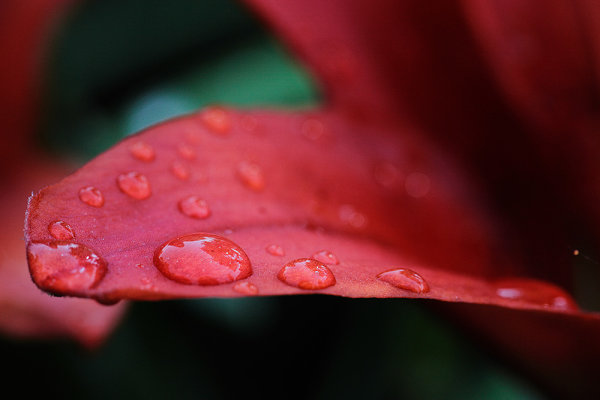
Pick up your camera and choose a color for the day. Go out and make images with that color as a dominant element in the image. Find as many different ways as possible to do this.
This image I went in search of things red. 1/320, f/7.1, ISO 1000. EOS 5D Mark II, EF 100mm f/2.8L IS Macro.
2. Pick A Shape
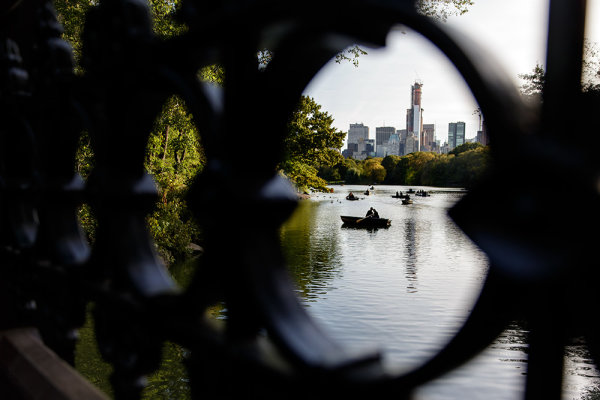
Choose a shape and create images which use that shape in an interesting way. It could be features in architecture, artwork, or juxtaposition of multiple structures. Squares are relatively easy. Start there, and then search out triangles, circles, or combinations of shape. Again, look for the most interesting composition you can to highlight that shape in your image.
I ventured into Central Park in New York City without a real game plan in mind. I found a sundial and started shooting that, and then went in search of more circles. Found this ironwork and used it to frame a pair of lovers in a rowboat. 1/160. f/2.8, ISO 100. EOS 5D Mark III, EF 24-70 f/2.8L II at 24mm.
3. Shoot Something Different
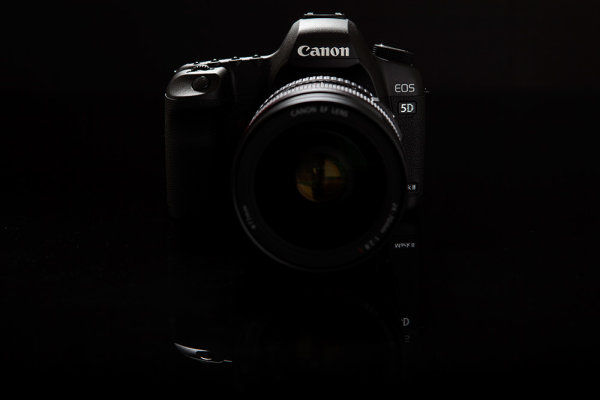
If you’re like me, you probably have one type of subject you gravitate to more than any other. But it’s easy to get too comfortable, and miss opportunities to make great images, when you’re only looking for one thing. Once in a while it’s a good idea to change things up and shoot something different. If you’re a sports shooter, try shooting a still life. If you’re a landscape artist, try shooting macro. These types of exercises forces you out of your comfort zone and helps you learn to see in a new way.
Normally I’m a landscape guy first. But I decided I wanted to try a still life of one of the tools of my trade. I used some black plexi as the table, and black matte board for the background. I used a single speedlite in a softbox above and behind the subject. EOS 5D Mark II with EF 24-70 f/2.8L II. 1/200, f/8, ISO 100.
4. Shoot Reflections
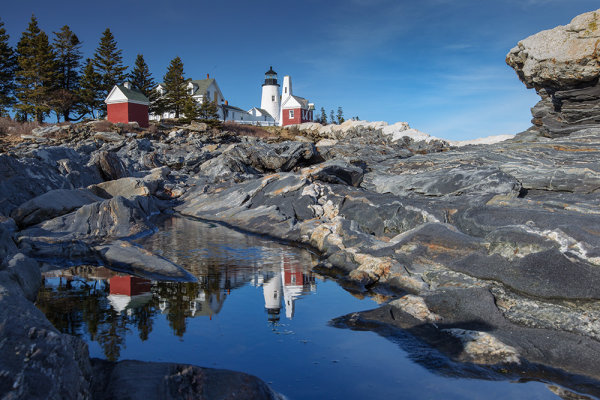
Reflections are a powerful element in photography, but I’m almost embarrassed to admit how long it took me to actually start SEEING them. I had a “lightbulb moment” one day when shooting with a friend of mine, and since then, I am constantly looking for reflections as an element in my work, whether it be portraits, landscapes, or still lifes.
This is probably the most photographed puddle in New England, but it’s great for producing a reflection of Pemaquid Point Lighthouse. Reflections add interest to images so always be on the lookout. EOS-1D Mark IV, EF 16-35mm f/2.8L II. ISO 100, 1/20, f/16.
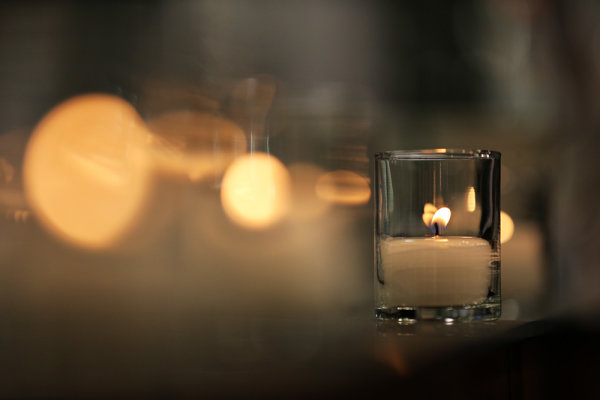
5. The 15 Foot Circle
Stand in the center of a room, or wherever you happen to be. Make photographs only of subjects that happen to be within 15 feet (or 10, or 5) of where you’re standing. Give yourself a time limit. Exhaust all possibilities. Get as many images as you can using only that area before moving on. This kind of exercise forces you to really look at things and work to compose interesting images.
I was standing in a dining room at the holidays last year and decided to try the 15 foot circle. This was a line of candles on a fireplace mantle. EOS-1D X with EF 70-200 f/2.8L IS II. ISO 400, 1/250, f/2.8.
For beginners, these assignments are great for learning to see. For more experienced photographers, these are great ways to stay fresh, to restart the creative eye when you’re feeling blocked, or to just do something different. What other self assignments have you tried to refresh your photographic vision?
Post originally from: Digital Photography Tips.
Check out our more Photography Tips at Photography Tips for Beginners, Portrait Photography Tips and Wedding Photography Tips.
We’ve been working on a brand-new studio comparison scene for some time, and we’ve decided to give you a sneak peak, using images from the new Panasonic Lumix DMC-GX7. We’ll be speaking more about this new scene (and the new interface that goes with it) very soon, but for now we wanted to let you have a look, try it, play around and tell us what you think. As well as the new scene, you’ll notice two new options – ‘daylight’ and ‘low light’ simulation modes and the option to ‘normalize’ resolution to simulate print and web output, as well as 100%. Click through for a link.
What would you do for a new smartphone? At recent promotional event in Seoul, South Korea, twenty people were injured, seven seriously, while trying to collect free phone vouchers for LG’s new G2 handset. According to authorities, the stunt went badly wrong when crowds showed up carrying BB guns and ‘knives on sticks’ to retrieve the vouchers, which were suspended from helium balloons. This simply confirms our long-standing suspicion that the human race truly is doomed. Click through to read more at connect.dpreview.com.
Durch das Bild „7 Novembre, Paris“ aus der Serie „Chambre Close“ wurde ich auf die französische Fotografin Bettina Rheims aufmerksam. Ich mag provozierende Bilder, die nicht an der Würde der Abgebildeten rütteln, sondern sie eher stärken. Dieses Bild ist für mich ein wunderbares Beispiel dafür.
Die Frau stellt sich dar, sie ist nackt bis auf einen halbgeöffneten Mantel, doch sie schämt sich nicht. Ihre Nacktheit ist scheinbar das Natürlichste der Welt, denn ihr Gesichtsausdruck ist entspannt, freundlich und schön.
Sie zeigt eine ihrer Brüste, hält sie mit beiden Händen, als würde sie sie der Kamera präsentieren. Die andere Brust ist durch den Mantel verdeckt. Die scheinbar fehlende Brust gibt dem Bild etwas Rätselhaftes, Unperfektes. Das Sexuelle tritt zurück und das Bild zeigt mehr als nur eine schöne, halbnackte Frau.
Ich muss beim Anblick der mittig plazierten Brust an eine Amazone denken und die Frau wird zu einer mythischen Figur in meinem Kopf. Eine Kriegerin, die sich die Brust abschlug, um ihren Bogen besser halten zu können. Eine stolze Frau, die sich nicht zu schämen braucht. Für nichts.
Das Bild stammt aus dem Bildband „Can you find Happiness“* von Bettina Rheims.
* Das ist ein Affiliate-Link zu Amazon. Wenn Ihr darüber etwas bestellt, bekommen wir eine kleine Provision, Ihr bezahlt aber keinen Cent mehr.
Swiss company Hyetis has created a new wristwatch which features a built-in 41MP camera (because anything less would have been soooo 2012…) which is expected to cost around $ 1200 when it goes on sale. Details are sketchy, but according to the manufacturer, the watch’s built-in camera features an ‘optical zoom lens’, with an integrated ring flash, as well as communication features including a microphone. Click through for more details on our sister site, connect.dpreview.com.


 The first time we heard about Sharon, she was snapping a baby giraffe in this Etsy interview. That’s when we knew that she probably had the best job in the world.
 Q: You’ve photographed buffalo, cows, giraffes, lions even! Is it intimidating to stand in front of an animal that large with your camera?
 Q: So, kittens and puppies aren’t known for their sitting-still-in-one-spot skills. How do you manage to get great photos of them regardless?
 Q: When you’re shooting for your Animal Print Shop series, how many shots does it take to get that one incredible photo?
 Q: Can you describe a shoot (let’s say one from your Animal Print Shop series) in 5 steps? Give us an idea of what happens start to finish!
 Q: What is having a professional team like? Are you ever like, “I wish it was just me?”
  Q: You’re pretty much running your own business as a photographer. What do you do a lot of now that you didn’t realize you would be doing when you started?
 Q: In commercial photography how much creative free-reign do you typically get? We’re guessing you’re working with clients’ marketing teams and maybe stylists — how collaborative is it?
 Q: When you want to photograph your own stuff, where or who is your favorite inspiration?
  Q: We see you’re on Instagram. (OMG wolf puppy!) Do you have any favorite apps or tips?




You must be logged in to post a comment.