RSS
 

Archive for August, 2013

10 Books for Photographers That Can Inspire You

19 Aug

There are countless books for photographers available to us, and every photographer should have a library of books which provide them with useful information about different techniques as well as books to inspire them in their work. Subject matter varies widely between different photographers, but the list below is a general core set of books which cover a range of subjects Continue Reading

The post 10 Books for Photographers That Can Inspire You appeared first on Photodoto.


Photodoto

 
Comments Off on 10 Books for Photographers That Can Inspire You

Posted in Photography


Stille und Isolation

19 Aug

Ein Beitrag von: Rupert Vantervell

Natürlich klingt es wie ein Klischee, aber die Fotografie ist für mich – wie für viele andere – eine Art des Ausdrucks. Sie führt sowohl die emotionale als auch die kreative Seite meines Charakters zusammen und erfüllt mich. Andere Menschen schreiben, zeichnen, musizieren, gestalten; das ist ihre Art. Aber für mich ist das die Fotografie. Sie ist das beste Medium für meine Persönlichkeit.

Obwohl durch meine Arbeit viele unterschiedliche Kameras involviert waren, bin ich nicht besonders interessiert an ihrer Technologie. Sie sind ganz einfach ein Mittel zum Zweck. Sie erlauben mir, auf die Straße zu gehen und die Welt da draußen zu fotografieren. Aber sie sind nicht die treibende Kraft meiner Kreativität.

Die Qualität des Lichts ist natürlich der wichtigste Faktor und zwischen Licht und Schatten die richtige Balance zu finden, ist die große Herausforderung in meinen Bildern. An feineren Details bin ich nicht so sehr interessiert, sondern was in den Schatten versteckt sein könnte, das fesselt mich. Das ist das Mysterium, dort liegt die Geschichte.

Meine aktuelle Serie „Man On Earth“ unterstreicht den dramatischen Kontrast zwischen urbanem Hintergrund und der kleinen, aber wichtigen Präsenz des menschlichen Lebens und der einzigartigen visuellen Charakteristika.

Space © Rupert Vandervell

Fragile © Rupert Vandervell

In The Line Of Light © Rupert Vandervell

Man On Earth © Rupert Vandervell

Fade To Black © Rupert Vandervell

Lightness Of Being © Rupert Vandervell

Metaphysical Moment © Rupert Vandervell

The Healing Place © Rupert Vandervell

Dabei ist es mir wichtig, die menschliche Form in ihrer alltäglichen Welt auf eine Weise festzuhalten, die normales menschliches Benehmen darstellt. Genau das definiert, wer wir sind.

Beim Arbeiten begann ich zu sehen, dass sogar in der Geschäftigkeit einer übervollen Stadt Stille und Isolation zu finden sind. Eine bestimmte Art Einsamkeit. Diese Momente, in denen wir getrennt von anderen und vielleicht zu einem bestimmten Maß verletzlich sind.

Distanziert bleiben, jedoch ein bisschen in diese Vertrautheit dringen und zeigen, wie faszinierend wir in unserer Umgebung sind, eingeschlossen in der großen Stadt: Für mich ist das essentiell. In unserer Welt mit immer weiter wachsenden Bevölkerungszahlen werden stille Momente wie diese immer schwerer vorstellbar.


kwerfeldein – Fotografie Magazin

 
Comments Off on Stille und Isolation

Posted in Equipment


Sanna Dullaway Adds Color to the Most Iconic Photos in History

19 Aug

Screen_Shot_2013-08-13_at_6.14.49_PM.png

General-interest blog The Roosevelts has posted a selection of artist Sanna Dullaway’s colorized images, showing what iconic images might have looked like to the photographer that captured them. Among the (exceeding well-done, it must be said) adjusted images are Malcolm Browne’s iconic shot of monk Thich Quang Duc’s self-immolation, Alfred Eisenstaedt’s famous image of the kiss in Times Square on VJ Day, and Anne Frank’s haunting 1942 portrait. Click through for a selection of shots, and links to both the full article and Sanna’s website.

News: Digital Photography Review (dpreview.com)

 
Comments Off on Sanna Dullaway Adds Color to the Most Iconic Photos in History

Posted in Uncategorized


When Bad Weather Means Great Photography

19 Aug

CKP_Landscape_Clare128.jpg

Landscape photographer Carsten Krieger is no stranger to poor weather, but in this article he explains how you can get great shots even when the sun is hidden from view. His three-page article features several images taken in his native Ireland which should provide plenty of inspiration for those damp, rainy days that are just around the corner. Click through for a link to the full article. 

News: Digital Photography Review (dpreview.com)

 
Comments Off on When Bad Weather Means Great Photography

Posted in Uncategorized


Street Origami: 30,000 Pieces Folded to Create Colorful Art

19 Aug

[ By WebUrbanist in Art & Street Art & Graffiti. ]

street art origami mural

An urban art play in multiple acts, this staged installation colorfully spans brick walls, stone steps and wood facades as part of an art festival in Angers, France.

street art origami steps

origami steps art detail 2

Mademoiselle Maurice is the French artist behind this series of works, but not the only person involved. Lots of local volunteers, from regional students to nearby residents, pooled their efforts to help build the thirty thousand pieces required to make it all work.

step art installation project

urban color wall installation

Made up of detailed parts, the works are designed to function at different scales, and spread out to also make for movement-centered experiences as one walks through or past the colored arrays.


street sidewalk paper art

street rainbow wall mural

street mural face detail

This set of interventions was built for the 2013 ARTAQ Festival, but in a similarly colorful style that is a long-standing signature style of its creator. From the artist: “We intervened in nearly twenty places, such as leisure centers, schools (from kindergarten to high school), but also within the prison.”

Share on Facebook


[ By WebUrbanist in Art & Street Art & Graffiti. ]

[ WebUrbanist | Archives | Galleries | Privacy | TOS ]


WebUrbanist

 
Comments Off on Street Origami: 30,000 Pieces Folded to Create Colorful Art

Posted in Creativity


The Winner of our Living Landscapes Prize Pack Is….

19 Aug

Over the last few weeks as part of the launch of our Living Landscapes eBook we were offering one buyer of this new eBook the chance to win a $ 1500 USD photographic Prize pack.

The randomly selected winner gets a rotation180° Professional Deluxe Camera Bag (worth $ 500) plus $ 1000 USD towards some new lenses!

The winner has just been drawn and is… Ami Kim!

Congratulations Amy – we’ve just sent you an email with details of how to get your prize.

Thanks to everyone else who picked up our new Landscape Photography eBook (one of the fastest selling eBooks we’ve ever launched)!

Post originally from: Digital Photography Tips.

Check out our more Photography Tips at Photography Tips for Beginners, Portrait Photography Tips and Wedding Photography Tips.

The Winner of our Living Landscapes Prize Pack Is….


Digital Photography School

 
Comments Off on The Winner of our Living Landscapes Prize Pack Is….

Posted in Photography


Composition and Negative Space

19 Aug

Composition and negative space

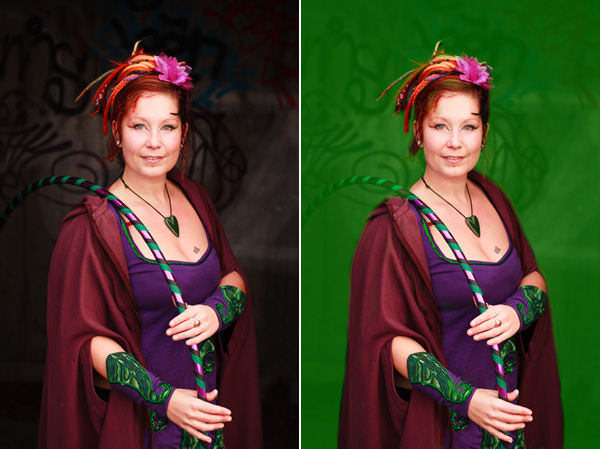
In portraiture, negative space is the area around the main subject of your photograph. The portrait above has negative space – it is the dark area around the model. I’ve highlighted it below in green so you can see exactly what I mean:

Composition and negative space

There’s a quote in photography attributed to photojournalist Robert Capa:

“If your photographs aren’t good enough, you’re not close enough.”

A lot of the time, that’s good advice – many portraits can be improved by getting in closer to the subject, either physically or with a longer lens, so the model dominates the frame. When it comes to photographing people, it also helps to get closer emotionally to your models, by establishing a rapport or connection that enables you to take deeper, more insightful portraits.

But there are also times when the environment around your model can contribute to the composition. Sometimes the subject needs room to breathe. This is when you can create an interesting image by backing off and including more negative space.

There is nothing to stop you getting in close to your model and making a portrait, and then stepping away and including more of the environment to make use of the negative space. This is called working the subject, and is the process of exploring the photographic possibilities by varying focal length, shooting distance and other factors.

In addition to making the portrait above, I also got in close during our shoot. Here’s a close-up portrait, side-by-side with the first so you can see the difference. See how the close-up also uses negative space, just in a different way:

Composition and negative space

Please note there is no right or wrong here, no simple rule to tell you what to do. You have to take each situation on its merits and find the best way to make a good portrait of your model. But, it always helps if you keep the composition as simple as possible. In the examples here, the negative space is ‘empty’. There is detail if you look closely, but nothing to distract attention away from the model.

Other subjects

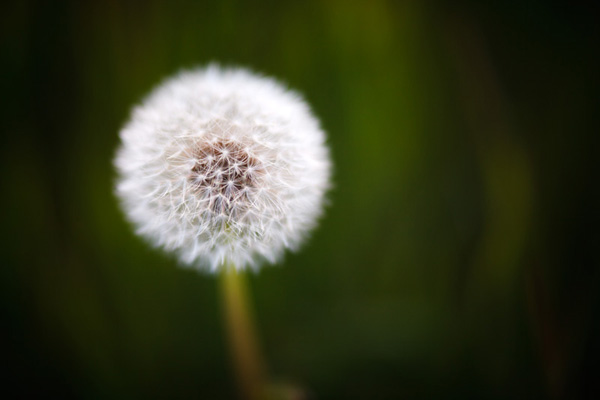
This technique also works with subjects other than portraits. Here is an example with a photo of a dandelion. Note the principle of simplicity has come into play again. I used a wide aperture (f2.8) to ensure the background is blurred:

Composition and negative space

Here’s an example of a landscape photo that uses negative space in the composition. It works because the blue and orange colours in sky add atmosphere and mood:

Composition and negative space

Finally, here is a black and white photo I took in Argentina a few years ago. I was attracted by the textures in the door and the wall, which I knew would come out well in black and white. Note the use of rectangles in the composition. The door is a rectangle, so is the door frame, and so are the paintings hanging on the wall. They are all contained in another rectangle – that of the 35mm frame. The negative space provided by the wall (which I darkened in post-processing to emphasise the effect) accentuates the rectangular shapes in the image.

Composition and negative space

Mastering Photography

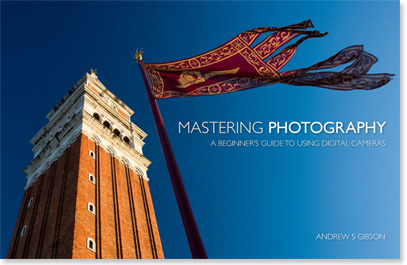
My latest ebook, Mastering Photography: A Beginner’s Guide to Using Digital Cameras introduces you to digital photography and helps you make the most out of your digital cameras. It covers concepts such as lighting and composition as well as the camera settings you need to master to take photos like the ones in this article.

Composition and negative space


Post originally from: Digital Photography Tips.

Check out our more Photography Tips at Photography Tips for Beginners, Portrait Photography Tips and Wedding Photography Tips.

Composition and Negative Space


Digital Photography School

 
Comments Off on Composition and Negative Space

Posted in Photography


3 of My Favorite Photography Books

19 Aug

We are all familiar with the old refrain, “Those who can, do.  Those who can’t, teach.  Those who can’t teach, teach gym.”  I’m still not sure about that last part, but I think by now we’ve pretty much debunked the middle part.  The photography world is full of incredibly successful, highly talented photographers who willingly and eagerly pass along their knowledge and expertise to a new wave of hobbyists, enthusiasts, and professionals.  From workshops and photo walks, to seminars and tutorials, there is a lot of solid information to be found.  As great as live face-time with many of these photographers is, however, it’s not always feasible, possible, or even affordable.  As amazing as a five-day seminar at a four-star hotel in the Virgin Islands might sound, in my world things like food, shelter, and a growing 12-year-old son have to come first.

That’s when I hit the books.  And I’m not talking about an e-book or an on-line forum or magazine (not that there’s anything wrong with them).  I’m talking about an actual collection of pages, bound together in a single unit, containing useful information and insight.  Something I can highlight and bookmark.  But just like not every workshop is everything it’s cracked up to be, not every book is full of secrets bound to catapult you to the next level.  I’ve amassed a fairly sizable photography library over the years.  Some have been disappointing, while others have been worth every penny.  My philosophy on photography books is simple.  A photography book is worth its price tag and earns a permanent place on the shelf if I learn even just one or two things that can noticeably impact my photography in a positive way.  Regardless of whether it is geared towards shooting, editing, or running my business, a good photography book will have at least one shiny nugget that changes the way I do things.

In no particular order, these are three of my favorites.

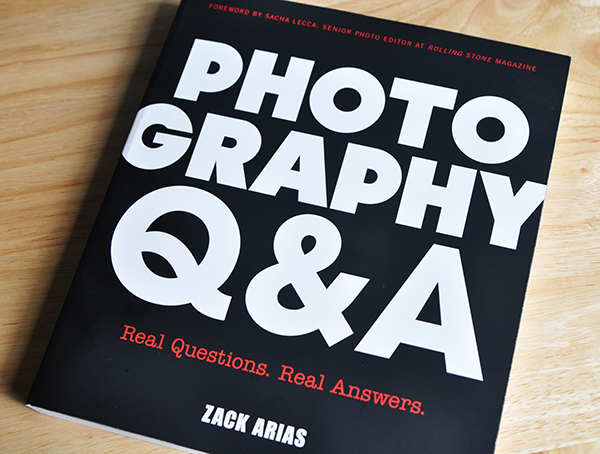
1.  “Photography Q&A – Real Questions. Real Answers,” by Zack Arias

I had the pleasure of writing the first published review of  Zack’s book back in June.  Since then, I have re-read it cover-to-cover twice.  In August of 2012, Zack, an Atlanta-based commercial/editorial photographer, embarked on a mission to save us all from really bad advice.  He launched his popular Tumblr blog, “Phtography Q&A – Ask Me Anything About Photography”, with the goal of answering 1,000 reader-submitted questions.  It was this collection of questions and answers that became the rough draft for the Q&A Book.   There are several things I love about this book.  For starters, it’s not about any one topic.  The questions range from gear, lighting, and confidence, to portfolio-building, submitting your work, and selling yourself.  I wouldn’t call this a book about photography,  but I would call it a book about being a photographer.  Covering topics as widely varied as the photographers who submitted them, PQ&A reads like you’re sitting across the table from Zack, having a beer, as he shares not only his advice and expertise, but the personal experiences that taught him those lessons in the first place.
JJG-001

I summed up my original review like this: “While this book may help improve your photography, I think its greater goal will be improving your quality of life as a photographer– or at least the quality of your head space.  If you’re anything like I am– still grappling with crises of confidence, fighting and clawing through creative and practical ruts, or still occasionally convinced that ‘my photography/business will skyrocket if I can just buy THAT,’ then this book is for you.”

Our playing field has changed drastically in recent years.  PQ&A cuts to the chase and tells it like it is.  The advice you’ll find in these pages is worth way more than the price tag.

2.  A Tie Between “The Moment it Clicks” and “The Hot Shoe Diaries,” both by Joe McNally

Joe McNally has to be one of the most dynamic photographers and educators working today.  And no, I’m not exaggerating.  If you’ve ever had the privilege of attending one his seminars you know what I’m talking about.  If you haven’t, read both of these books.  Both are written in Joe’s signature conversational style and will leave you chomping at the bit to get out and put what you’ve learned into practice.

A typical Joe McNally seminar or workshop tends to be filled with sentences that begin with things like, “The photo editor at National Geographic once told me…” or “My editor at Life Magazine used to say…”  These are your cues to start feverishly writing down every word that follows.  “The Moment it Clicks” is an entire book of these one-liners, with each two-page spread combining Joe’s words of wisdom with a stellar photograph and the story behind it to illustrate the point.

JJG-004

“The Hot Shoe Diaries” should absolutely be required reading for anyone who even gives passing thought to off-camera flash.  I know I sound like a gushing fanboy when I say this book changed my life, and I’m okay with that.  With sections like “Up to Your Ass in Alligators,” “Strobe Strategy,” and “Do You Have a Bedsheet?” you know that a whole heap of knowledge and information is about to fall in your lap.  As with “The Moment it Clicks,” each lesson is illustrated with one of Joe’s amazing images.  One of the most valuable sections comes at the very beginning of the book.  “What I Use…and Why and When I Use It” sets the stage for each of the many off-camera flash lessons.
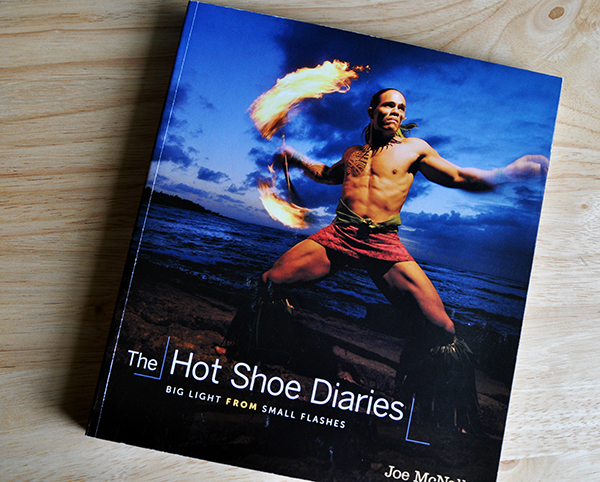
JJG-006

3. “The Digital Photography Book – Volume 2,” by Scott Kelby

The name Scott Kelby has pretty much become synonymous with photographic education, from shooting to post production, and everything in between.  There are currently four volumes in this series.  Volume 2 is my favorite.  Just like the other authors mentioned here, Scott Kelby lays it all out on the table, sharing his setups, his experiences, and why he does things the way he does them.  Each chapter (all named “Shoot ________ Like a Pro”) sets out with a singular goal– to improve a specific aspect of your photography.  Topics include flash, portraits, landscapes, weddings, travel, and macro.  There is also excellent information on “Building a Studio from Scratch” and “Pro Tips for Getting Better Photos,” as well as Scott’s “Recipes to Help You Get ‘The Shot.’”
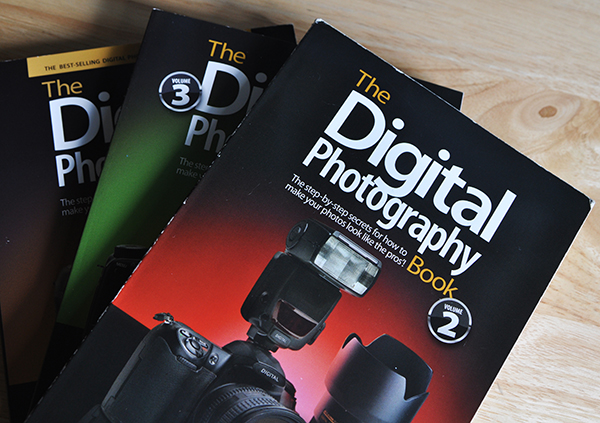
JJG-008

Photography is one of those things where you only get better by doing it.  A LOT.  You can read all the photography books you can get your hands on, but until you get out there and repeatedly apply what you’ve read (over and over again), nothing is going to change.  I’ve chosen the three (okay…four) books here for three very different reasons.  Scott Kelby’s “The Digital Photography Book” series is bursting at the seams with useful information for the beginning to intermediate photographer looking to take their photography to the next level.  Nobody beats Joe McNally when it comes to teaching everything from the basics to the finer points of off-camera flash, but you need to have a solid foundation and firm grasp of certain photographic principles before tackling advanced lighting techniques.  Zack Arias’ book departs from the traditional photography book in that it is less about technique and more about getting your photographic head screwed on straight.  All three are important, and all three will benefit every photographer at some point on their journey.

Post originally from: Digital Photography Tips.

Check out our more Photography Tips at Photography Tips for Beginners, Portrait Photography Tips and Wedding Photography Tips.

3 of My Favorite Photography Books


Digital Photography School

 
Comments Off on 3 of My Favorite Photography Books

Posted in Photography


17. August 2013

18 Aug

Ein Beitrag von: Alexander Rentsch

© Alexander Rentsch


kwerfeldein – Fotografie Magazin

 
Comments Off on 17. August 2013

Posted in Equipment


Good Pie & Farewell: 10 Crusty Old Abandoned Pizzerias

18 Aug

[ By Steve in Abandoned Places & Architecture. ]

abandoned pizzerias
Hold the anchovies and everything else! These 10 crusty old abandoned pizzerias have sliced their penultimate pepperoni and will cut the cheese no longer.

Antonio’s Pizza – Long Beach, California

Antonio's Pizzeria North Torrance abandoned(image via: Nobody Walks In Long Beach)

It’s hard to believe a pizzeria with a BYOB policy could fail but fail Antonio’s Pizza did, and its remains still stand in North Torrance, California to remind us of its past glory. You might still see the store’s flaked and fading shell still standing at the corner of Prairie Avenue and 182nd St. Question: is it still OK for pizzerias to depict stereotypical Italian chefs in their signage, or has that practice gone the way of the Frito Bandito?

abandoned Antonio's Pizzeria North Torrance

Antonio’s Pizza closed almost 20 years ago but as of August 2012 when these photos were taken, it still stood abandoned. Even odder, the building is remarkably unmarked by graffiti. Kudos to the indomitable Dennis of Nobody Walks In Long Beach for capturing the ruins of Antonio’s Pizzeria on a marvelously sun-soaked southern California afternoon. I’d bring my own beer there just to enjoy the building’s timeless and atmospheric presence.

Bilit’s Pizza & Philly Steaks – Beaufort, South Carolina

Bilit's Pizza & Philly Steaks abandoned Beaufort fire(images via: The Beaufort Gazette)

We’re shocked, SHOCKED to hear that a “suspicious” fire destroyed a long-abandoned pizzeria but believe it or not, it happened… one night in late June of 2013, in Beaufort, South Carolina to be exact. The foreclosed & bank-owned shell of the former Bilit’s Pizza & Philly Steaks on 500 Laurel Bay Road gutted the building, which had been abandoned for several years and had no working electrical service. In related news, time was you could get Philly Steaks in South Carolina.

Read more here: http://www.islandpacket.com/2013/06/24/2553651/abandoned-pizza-restaurant-outside.html#storylink=cpy

Melina’s Pizzeria – Hoboken, New Jersey

Melina's Pizzeria Hoboken abandoned(image via: Baseballoogie)

Something’s broken in Hoboken (more than a few, though that’s changing) and we’re looking at you, Melina’s Pizzeria on the corner of 6th and Adams Street. Flickr user Baseballoogie snapped what may be the last and best image of the well-loved Jersey landmark though it’s not known if he was the last to gustatorially experience its “well-regarded” and “unique” pizza style.

abandoned Melina's Pizzeria Hoboken(images via: Hoboken411 and Baseballoogie)

Who knew the Animaniacs loved Melina’s Pizzeria so much? Not Steven Spielberg, we’re guessing, though potential legalities are a moot point now that Melina’s is no more. The undoubtedly unauthorized art does serve to effectively date the tableau, however, as a lost signpost of Nineties pop culture.

Next Page:
Good Pie Farewell 10 Crusty Old Abandoned Pizzerias

Share on Facebook


[ By Steve in Abandoned Places & Architecture. ]

[ WebUrbanist | Archives | Galleries | Privacy | TOS ]


WebUrbanist

 
Comments Off on Good Pie & Farewell: 10 Crusty Old Abandoned Pizzerias

Posted in Creativity