Firstly, a slightly belated Happy Canada Day to everyone up here in the rainy northland, and a Happy 4th of July to all of our America friends.
Our new Advanced Guide to Lightroom 5 video tutorial has been selling extremely well, and has gotten rave reviews. But, the 20% off launch discount ends next Monday, July 8, so if you own or are thinking of owning Lightroom 5, this is the week to buy our tutorial. Nothing will get you up to speed faster. I promise.
We are about to announce two new Antarctic Expeditions for early 2015. These trips have the most remarkable line-up of world-class instructors. The announcement will happen in the next day or two. Watch this page!
Sean Reid has just published in in-depth review of the new Ricoh GR, a pocket-sized APS-C sensor camera. Reid Reviews is a subscription site, but the depth of his reviews is unlike any other.
"Michael’s and Jeff’s tutorial videos are absolutely awesome, not only because of the information transmitted but also because of the casual, conversational style which somehow really makes things stick in your memory."
The perfect DSLR camera case can be hard to come by.
And more often than not, it doesn’t even resemble any of your fave animals. What gives?
That’s where the DIY Dog Camera Cozy swoops in to save the day. It’s a soft camera cozy for your DSLR, and our pal Sarah Goldschadt is the clever crafter behind it.
Here’s the story from Sarah:
“In 2009 I bought my first DSLR …I had recently learned how to crochet with the help of my friend Alicia Kachmar.
I ended up using the basic shape of slippers to create a lens cover and then kept crocheting around my camera to see what would happen.
When I finished, adding on buttons and ears seemed like a no-brainer. Since then, I’ve upgraded to a better camera and bought a new lens, so it’s always the perfect excuse to crochet a new cover.”
Inspired? Get your craft on, and make your best friend look like man’s best friend.
Make a Crochet Dog Camera Cozy
On Crocheting for Your Camera
The following are basic steps used to create your own camera cozy. Below each step, we included the crocheting techniques that will help you for that part of the DIY.
If you already know how to crochet, perfect! Follow along with the basic steps below or get more precise with the more detailed pattern that Sarah has available as a download.
If you’re new to crocheting, get started with some quickie video lessons at the Lion Brand Learning Center.
Since there are many camera and lens combinations, you’ll find it easier to test your work on your camera and lens to ensure the best fit.
The completed sample cozy that fits a Cannon 7D with 35 mm lens is available for sale, too!
Ingredients:
Worsted weight yarn color of your choice
Crochet hook to correspond with your yarn size
Yarn needle
Scissors
4 buttons (two for the eyes, one for the nose, one to attach the case at the bottom)
Sewing thread
Sewing needle
STEP 1: Make a Circle for the Nose
Single crochet a circle and increase until it matches the width of your lens cap.
For those just getting started, here are some helpful tutorials: Chain, Slip Stitch, Single Crochet, Crochet a Circle
STEP 2: Crochet a Snout
Single crochet around and around until it’s the length of your lens.
Helpful tutorial: Single Crochet
STEP 3: Do a Little Turn
Turn your work and use half of the stitches to single crochet back and forth. It should be long enough to go over the top of your camera and down to the bottom of your viewer.
You might want to lay it over your camera and eyeball how much more you need to crochet. The end result will fit over your lens, wrap over the top of your camera, around the back, and button on the bottom of the “snout.”
Helpful tutorials: Turning Chain, Turning your Work
STEP 4: Complete the Body
Decrease each round on both sides until 4 stitches remain. Chain 4 then join the chain to the 4th stitch in the last row with a slip stitch to form a loop for a button. Turn and crochet over the chain to reinforce it. Fasten off all ends and trim the excess yarn.
Helpful tutorials: Decreasing, Chain, Fastening Off
STEP 5: Make the Ears
To create a dog ear, chain 7, chain one and single crochet back and forth (with 7 stitches total in each row) until you’ve reached a desired length.
Decrease each row on both sides until 2 stitches remain. Single crochet around the entire shape and fasten off. Trim excess yarn. Repeat to make another ear.
STEP 6: Add Buttons for the Nose, Ears, Eyes
Attach the case to your camera and use your judgement to find the best places for the eyes, nose, ears, and button on the bottom of the case.
Take the case off and with extra yarn and a yarn needle, attach the ears with a whipstitch, then sew on the buttons and other features with sewing thread and sewing needle.
Helpful tutorial: Seaming
Taking It Further
The cozy can easily be modified to be a cat or bee or anything else you can dream of. Use embroidery thread to add whiskers or try making eyelashes.
Sarah Goldschadt, is a crafter, graphic designer, and author living in Brooklyn. Find her at her site, on Facebook, and Instagram.
Special note. Sarah is super awesome for putting this pattern and tutorial together for us (yaaay!) and has one special request:
This pattern is an original design by Sarah Goldschadt and is licensed under a Creative Commons License. Selling, recreating or distributing this pattern in part or whole is prohibited. Pattern is for personal use and finished product may not be sold without permission.
Related posts:
Make Your Own Camera Case Recently in the forum… Share your photos: Curves, Sky, Flowers,…
Turn a Book Into a Top-Secret Camera Case Extra photos for bloggers: 1, 2~Have a cool photo product…
Construct a Colossally Cute Camera Case This Photojojo made possible by… ~Advertise with theWorld’s Greatest…
Hot on the heels of Carl Zeiss’s decision to become simply Zeiss, Pentax Ricoh has decided that from August 1st it will be known simply as Ricoh. It’s not all bad news for Pentax fans though – the brand name will continue to be used on the company’s SLRs and interchangeable lens cameras. Meanwhile the Ricoh name will be used for compact cameras and, cryptically, ‘new technological innovations’.
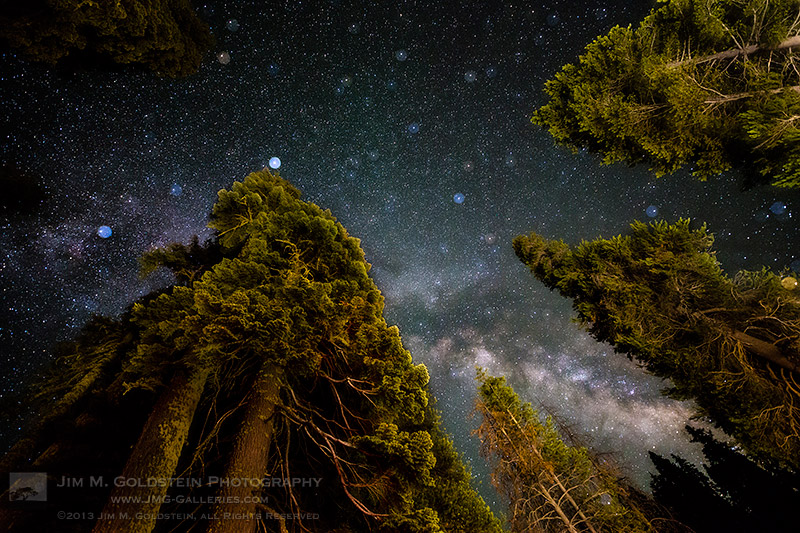
The Milky Way rises above the trees in Yosemite National Park, California
One of the most amazing sights often overlooked on dark nights is the Milky Way. Tired, road weary and focusing on the road ahead its easy for travelers to miss out on the the scene above them at night. On a recent trip to Yosemite National Park I made a conscious effort to stop the car every so often when driving to survey the night sky above me. It wasn’t an easy thing to do due to a good amount of sleep deprivation, but the results sure paid off. Seeing the rising Milky Way is a sure fire way to put life’s challenges in perspective.
In this single exposure, trees in the foreground are lit by the ambient light of my cars headlights. The magical halo around some of the stars is an in-camera trick. Combined I’m fond of how the connection between heavens and Earth came out.
Photo Details
Canon 5D Mark III, Zeiss Distagon T* 2.8/15 ZE, ISO 6400, 30 sec – single exposure
Equipement courtesy of BorrowLenses.com
Copyright Jim M. Goldstein, All Rights Reserved
All That Glitters – Milky Way Above Yosemite Forest
The post All That Glitters – Milky Way Above Yosemite Forest appeared first on JMG-Galleries – Landscape, Nature & Travel Photography.
In meinem letzten Artikel über die Kreativ-Neurose erwähnte ich ja bereits lässig am Rande, dass ich dann doch wieder zur Kamera griff und weiter machte. Dass sich daraus eine Serie entwickelte, die ich mittlerweile mit vier Leuten umgesetzt habe, daran war zu diesem Zeitpunkt nicht einmal im Ansatz zu denken.
Aber es kommt ja oft ganz anders, nicht wahr? Die Idee zu Beginn sah folgendermaßen aus: Meinen bis dahin auf Papier gebrachten Foliengeistern wollte ich eine Ruhepause gönnen und dennoch in einer ähnlichen Richtung weitermachen.
Glücklicherweise fielen mir bei meiner Recherche die Bilder eines gewissen Thomas Devaux (über den zu berichten ich hoffe, bald in der Lage zu sein) in die Hände, die mich sofort ergriffen. Sie zeigten Menschenwesen mit teilweise zerstaubten Köpfen, seltsam entstellt, aber elegant.
Das Gefühl, dass dabei entstand und das Kopf und Herz nicht begriffen, das wollte ich auch in meinen Bildern zeigen. Es ist schon immer diese Zwischenwelt, in die ich abdriften möchte, wenn ich zur Kamera greife. Unbegreifliches greifbarer machen.
Da ich aber komplett mit Film arbeite und meine Dunkelkammerfähigkeiten sich bisher nur auf stumpfes Ausbelichten belaufen, musste ich mir überlegen, wie ich den gewollten Effekt bereits vorher ins Bild bringen konnte.
Ich hatte zuhause eine Menge Papier liegen, sehr dünnes und zartes. Einige glauben, man benütze es lediglich zum Einpacken von Warengut, aber nichts da! Dies sind natürlich wundersame und ganz zauberhafte Materialien für den Künstler an sich.
Schnell war eine Testperson gefunden und ich modellierte mit Hilfe von Wasser das Papier um den Kopf herum. So entstand ein neues Wesen. Mit dem Ergebnis war ich einigermaßen zufrieden und dachte, nun das Richtige gefunden zu haben.
Aber es kam wieder alles anders als gedacht: Durch Zufall, ich weiß nicht, wie ich es sonst nennen soll, fiel mir ein anderer schöner Werkstoff in die Hände. Bei einem Paarshooting kam er zur Verwendung und ich war von den Ergebnissen sofort angetan. Dieses Gewebe konnte man ziehen, verändern oder zerknüllen. Also formen wie es einem beliebt und doch sehr vorsichtig dabei sein.
Als Gloria, der ich zunächst von meiner ersten Idee berichtet und frohlockt hatte, dann den Raum betrat, verflüchtigte sich die Papieridee wie ein Lufthauch aus meinem Kopf. Ich sah, wie sich das Gewebe um ihren Kopf formte und hatte gefunden, wonach ich suchte.
Die Ergebnisse sprachen für sich. Gloria und ich fühlten uns wohl mit den Bildern und auch einige andere ruhten sich gern mit den Augen darauf aus. Vor allem machte es mich aber glücklich, Nachrichten zu erhalten, in denen mir einige berichteten, was die Bilder in ihnen auslösten und was sie darin sahen.
Und wie Ihr seht, blieb es nicht bei Gloria und ihrer fast identisch aussehenden Puppe, die mir mitunter mehr seltsames Herzflattern auslöste als die geisterhaften Spinnenweben.
~
Zum Einsatz kamen hier außerdem: Eine Mittelformatkamera, ein Belichtungsmesser, ein Schwarzweiß-Film mit ISO 400 und bei gutem Wetter mit ISO 100, natürliches Licht, Lavendelblütentee, Kaffee oder Orangensaft je nach Wunsch, und bereits erwähnte Spinnenwebenzuckerwatte.
Canon has announced the EOS 70D, a mid-range SLR for enthusiast photographers. Its headline feature is a brand-new 20.2MP ‘Dual Pixel CMOS AF’ sensor which splits every single pixel into two photodiodes for on-chip phase detection, promising vastly improved autofocus performance in live view and movie mode. It also gains the 19-point AF module from the EOS 7D for viewfinder shooting, touchscreen control via its fully articulated 3″ LCD, and built-in Wi-Fi for image sharing and remote camera control from your smartphone or tablet. Click through for more details, including full specifications.
Just posted: Our hands-on preview of Canon’s latest mid-range SLR, the EOS 70D. From the outside it looks very similar to the EOS 60D, but on the inside it sports a brand-new ‘Dual Pixel CMOS AF’ sensor that promises much-improved focusing in live view and movie mode. It also borrows most of the best bits of Canon’s existing SLRs, including the AF module from the EOS 7D, the articulated touchscreen from the EOS 700D, and built-in Wi-Fi from the EOS 6D. In our detailed preview we take a closer look, and try to get to grips with its innovative sensor technology. Click through to read all about it.
Ever wanted to add a little spice to your video creations, perhaps your next Matrix fan-fiction video, by adding a little slow-motion bullet-time effect? Jeremiah Warren did just that, employing a ceiling fan, a GoPro 3 video camera, and a handful of bits of wood, effectively eliminating thousands of dollars worth of individual cameras and rigging, not to mention computer-controlled timing equipment. Click through for more details and to see the results.
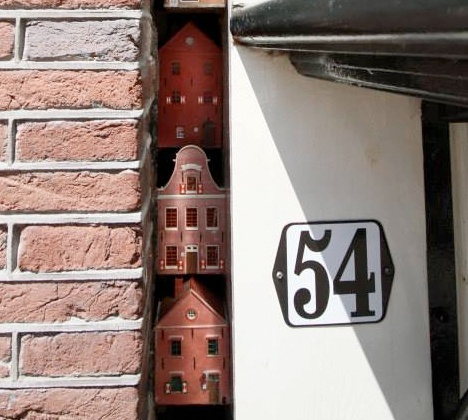
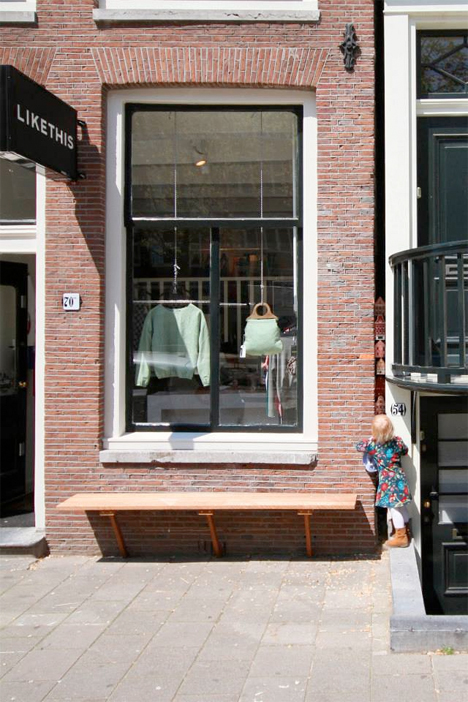
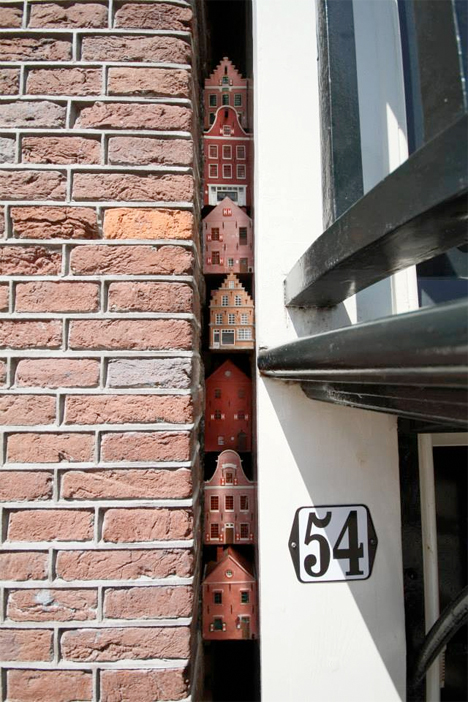
Taking a stroll along Westerstraat in Amsterdam, you might notice that an entire clump of houses seems to have disappeared. The addresses jump from 54 to 70, with nothing but a four-inch crack between them. Where did those houses go? Ad agency Natwerk has its own creative take.
The agency restored the seven ‘missing’ row houses, building tiny models in the same style as the full-scale homes that surround them. Just barely peeking out from the dark void, these cute little sculptural installations invite passersby to stop and look closer.
Urban interventions are a fun way to temporarily alter the environment in public places. Some are fleeting, like chalk tracings of shadows that document a passing moment, or tiny, like Slinkachu’s miniature scenes. Some require no more than a couple plastic eyeballs to make people smile. Others are more disruptive, altering familiar objects like street signs, trash cans and traffic markings.


 The following are basic steps used to create your own camera cozy. Below each step, we included the crocheting techniques that will help you for that part of the DIY.
 Single crochet a circle and increase until it matches the width of your lens cap.
 Single crochet around and around until it’s the length of your lens.
 Turn your work and use half of the stitches to single crochet back and forth. It should be long enough to go over the top of your camera and down to the bottom of your viewer.
  Decrease each round on both sides until 4 stitches remain. Chain 4 then join the chain to the 4th stitch in the last row with a slip stitch to form a loop for a button. Turn and crochet over the chain to reinforce it. Fasten off all ends and trim the excess yarn.
 To create a dog ear, chain 7, chain one and single crochet back and forth (with 7 stitches total in each row) until you’ve reached a desired length.




 Now wait for confetti to fall from the ceiling.