RSS
 

Archive for July, 2013

Vivian Maier – The Secret Nanny Street Photographer: BBC Documentary Part 1

02 Jul

We’ve posted about the remarkable story of Vivian Maier in the past here on dPS. Vivian was a nanny who worked in a number of families – none of which knew she had a secret life of a street photographer.

Over the years she took over 100,000 images between the late 1940′s through to the 1990s – showing them to nobody but storing them in a storage locker which was only discovered after her death when the contents were auctioned without really knowing what treasure was in the negatives and slides in it.

Her images have now been catalogued and a documentary is being made by the owner of the photographs after a kickstarted project.

This week the BBC released part 1 of a documentary on Vivians story. Part 2 shouldn’t be too far off but in the mean time – grab a drink and settle down to watch Vivians story.

Post originally from: Digital Photography Tips.

Check out our more Photography Tips at Photography Tips for Beginners, Portrait Photography Tips and Wedding Photography Tips.

Vivian Maier – The Secret Nanny Street Photographer: BBC Documentary Part 1


Digital Photography School

 
Comments Off on Vivian Maier – The Secret Nanny Street Photographer: BBC Documentary Part 1

Posted in Photography


Just posted: Pentax MX-1 review

02 Jul

specs.jpg

We’ve just posted our Pentax MX-1 review. Designed to recall the golden days of camera design, the Pentax MX-1 features a bright F1.8-2.5 28-112mm equivalent zoom lens, a 12MP 1/1.7″ sensor, and a 3-inch, 920K-dot tilting LCD screen. Brass plates top and bottom are a minor feature of the MX-1 that Pentax was nevertheless careful to highlight as giving that old camera feel, even showing signs of wear over time. A retro look and feel is great, but does that translate into a good camera for modern times? Click through to read our review.

News: Digital Photography Review (dpreview.com)

 
Comments Off on Just posted: Pentax MX-1 review

Posted in Uncategorized


Shutterbug Remote looks to launch next-gen device

02 Jul

shutterbugremote.png

The creators of the Shutterbug Remote are looking to fans of the remote camera trigger technology to fund version 2.0 of their device. Aimed at photographers who want to capture time lapse videos, time delay portraits, low-light images, HDR bracketing and other complex shots, developers are envisioning even more features and broader compatibility in a next-gen version; learn more at connect.dpreview.com.

News: Digital Photography Review (dpreview.com)

 
Comments Off on Shutterbug Remote looks to launch next-gen device

Posted in Uncategorized


War and Peace: 15 Repurposed Military Structures

01 Jul

[ By Steph in Architecture & Public & Institutional. ]

Repurposed Military Architecture Main

Once they were no longer needed as bunkers, flak towers, forts, airfields and barracks, these military structures sat empty and abandoned, a stark reminder of wars past and those that may occur in the future. But these structures were built to last, and now they serve surprising purposes – like climbing walls, aquariums, hotels, apartment buildings and night clubs.

Flak Towers in Germany – Climbing Walls

Repurposed Military Architecture Climbing Towers

Flak towers constructed in Germany and Austria on Adolf Hitler’s orders during World War II have been reclaimed as climbing walls, music schools, shops, nightclubs and even an aquarium. These extremely strong structures were built to counter airborne Allied forces, with concrete walls three meters thick. Their size and durability made them difficult to destroy after the war, and many stood empty and abandoned for decades. Climbing equipment enables visitors to scale the 47-meter-tall (154-foot) Haus des Meeres in Vienna; it was once crowned with a Wurzburg radar dome, and now contains thousands of sea creatures, including a 300,000-liter shark tank.

Airship Hangar – Water Park

Repurposed Military Architecture Hangar Water Park 1

Repurposed Military Architecture Hangar Water Park 2

The world’s largest freestanding building is an airship hangar built at an abandoned Soviet military base just south of Berlin. Measuring 1,181 feet long and 688 feet wide, the structure was created for the delivery of massive industrial machinery like wind turbines, but a Malaysian firm has converted it into something much more fun: a water park. Tropical Islands Resort contains a 3,000-square-yard swimming pool, 600 feet of sandy beach and 50,000 trees in 600 varieties.

Russian Bunker – Night Club

Repurposed Military Architecture Bunker Night Club

The 75,000-square-foot Taganskaya Protected Command Point in Russia was in military use from the 1950s to 1986, when it was abandoned. But in the early 2000s, a company purchased the disused subterranean space and transformed it into a Cold War Museum called Bunker 42, which includes a restaurant and night club.

Torpedo Facility – Private Residence

Repurposed Military Architecture Torpedo House

A former Cold War torpedo facility in a London suburb, once used to test submarine technology, is now a stunning round home. The structure once boasted a 160-foot-diameter dome covering a 120-foot-long, 15-foot-deep pool where model torpedoes and submarines were rotated on a large arm up to 150 feet per second. The domed structure had to be removed due to contamination, but the home still features a 4-foot-thick blast wall.

19th Century Gasometer – Apartment Building

Repurposed Military Architecture Gasometer

A 19th-century gasometer that was also used as an air raid shelter during World War II is now a luxury apartment building. The Fichte-Bunker in Berlin held gas for the city’s street lamps, but when they were switched to electricity in the 1920s, it was no longer needed for this purpose. The walls were reinforced with up to three meters of concrete for its use as a shelter, and 30,000 people allegedly took refuge there on February 3rd, 1945 despite its capacity of 6,000. Once the war was over, it was used as a homeless shelter for decades, and then held emergency supplies for the Cold War. The structure now holds thirteen two-story luxury condos with large grassy upper-level terraces.

Next Page:
War And Peace 15 Repurposed Military Structures

Share on Facebook


[ By Steph in Architecture & Public & Institutional. ]

[ WebUrbanist | Archives | Galleries | Privacy | TOS ]


WebUrbanist

 
Comments Off on War and Peace: 15 Repurposed Military Structures

Posted in Creativity


The Best iPhone Photo Apps That You Should Download Right Now

01 Jul

Your handheld device is nothing without apps, that lovely and beautiful software that lets you do much more on your smartphone than just call someone. If you’re a serious photographer, you just can’t pass up the chance to install serious photography apps on your mobile device. They will empower you to engage in your picture-taking passion when you’re on the Continue Reading

The post The Best iPhone Photo Apps That You Should Download Right Now appeared first on Photodoto.


Photodoto

 
Comments Off on The Best iPhone Photo Apps That You Should Download Right Now

Posted in Photography


Gulf Photo Plus PopUP is Coming to London

01 Jul

One of the coolest things about Dubai is coming to London this fall. No, not the tower—although it would make a nice little spear for London's gherkin, dontcha think?

Nope, even cooler: Gulf Photo Plus is coming to London on Sept. 28th and 29th. I'll be there. So will Zack and McNally. And Heisler. It's gonna be a nonstop firehose of a weekend.

You can sleep at your desk on Monday.

Read more »
Strobist

 
Comments Off on Gulf Photo Plus PopUP is Coming to London

Posted in Photography


1. Juli 2013

01 Jul

Ein Beitrag von: Justus Sehl

Morgentau-©-Justus-Sehl


kwerfeldein – Fotografie Magazin

 
Comments Off on 1. Juli 2013

Posted in Equipment


Die einfachen Dinge

01 Jul

Ein Beitrag von: Laura Lou

Wenn ich Fotos von mir selbst mache, ist es in erster Linie immer etwas sehr Persönliches und ich realisiere gar nicht richtig, dass das Bild später weitere Menschen sehen werden, die vielleicht gar nicht wissen, wie sie es verstehen oder was sie nun von mir halten sollen. Bin ich denn nicht eingebildet oder gar egozentrisch, wenn ich mich als Objekt meiner Kunst nehme und sich in diesen Fotos alles um mich dreht?

Diese Frage habe ich mir schon oft gestellt, denn an manchen Tagen bin ich derart von Selbstzweifeln besessen, dass ich jegliche Art von Beschäftigung mit meiner Person als Egozentrik werte.

Doch bei genauerem Betrachten kam ich zu dem Schluss, dass es gesund ist, sich mit sich selbst und seinen Gedanken zu beschäftigen und natürlich noch besser, wenn in diesem Prozess auch noch Kunst entsteht.

Zumindest habe ich mich aus jenen Gründen im letzten Sommer dazu entschlossen, ein Selbstportrait-Projekt anzugehen, das sich über 52 Wochen zieht. Ich wollte mich fotografisch, aber auch persönlich weiterentwickeln, da sich gerade viel in meinem Leben getan hatte und ich dies auch als eine Art Neuanfang sah.

Im Laufe des Projekts kam ich immer öfter auf das Einfachste zurück, was ich besitze: Die Rückseite meines Reflektors oder der Eingang unserer Scheune, alles, was einen schwarzen Hintergrund zauberte. Manchmal aus Zeit- oder Ideenmangel, aber meistens, da mich der Minimalismus reizte, daraus noch einmal etwas völlig Neues zu schaffen. Unbewusst entstanden diese Bilder so, dass sie theoretisch auch eine Serie bilden könnten.

inspired by Daniele Buetti © Laura Lou

Zwei dieser Bilder sind von Daniele Buetti inspiriert, einem Schweizer Künstler, der in den 90ern mit seinen „Leuchtkästen“-Manipulationen von Bildern berühmter Modelle bekannt wurde. Als ich diese Bilder zum ersten Mal sah, war ich sofort gefesselt von ihrer Einzigartigkeit.

Die Idee, die Umsetzung, die Nachricht an den Betrachter, alles war so unvergleichbar einmalig und brillant. Man merkt sofort, dass ich große Bewunderung für seine Arbeiten hege, sodass sie mir auch lange nicht aus dem Kopf gingen, bis ich entschied, einfach eine eigene Version, sozusagen als Widmung, zu schaffen.

Bei diesen Bildern geschah erst während der Bearbeitung der nötige Schritt, der sie für mich zu einem persönlichen Werk machte und womit sie für mich nun auch an emotionalem Wert gewannen.

Jeder einzelne der Punkte wurde von der Spitze meines Grafiktablett-Stiftes an seine Stelle gesetzt. Diese Prozedur war unglaublich zeitintensiv, doch mochte ich die Zeit, die ich damit verbrachte. Begleitet von den Klängen meiner Lieblingsmusik hatte die Beschäftigung mit etwas so grundlegend Einfachem beinahe schon etwas Rhythmisches und Entspannendes.

cracked me © Laura Lou

Das nächste Bild wäre beinahe nicht entstanden, da ich schon komplett verzweifelt und kurz davor war, aufzugeben. Ich war sowieso nicht bester Laune, was das Endresultat, meiner Ansicht nach, auch wiedergibt. Ich habe mich dann aber zusammengerissen und noch mal von vorn angefangen.

Jedes Dreieck ausgewählt, ausgeschnitten, kopiert und an seinen Platz gebracht. Es war einfach einer dieser Tage, an denen man das Gefühl hat, sich aufzulösen in all dem Stress, der einen umgibt. Und mit diesem Gefühl entstand auch die Idee und ihre Umsetzung.

paperrip © Laura Lou

Mir fällt erst beim Schreiben dieses Artikels auf, dass viele meiner Selbstportraits aus Traurigkeit oder Verzweiflung entstehen. Bei dem nächsten Foto reichten sie soweit, dass ich mich am liebsten wie ein Stück Papier zerrissen und die Fetzen durch die Luft geworfen hätte. Glücklicherweise habe ich mich stattdessen einfach an ein Foto gesetzt, das es, zumindest bildlich, für mich tut.

snowcatcher © Laura Lou

Das letzte Bild, „the first snow“, entstand einfach nur spontan, da der erste Schnee im letzten Winter schon im Oktober fiel und ich natürlich in Euphorie über diese ungewöhnliche Wettererscheinung unbedingt ein Foto in ihm machen wollte. Leider blieb er aber nicht liegen und ich musste mit Photoshop improvisieren.

Rückblickend kann ich diese sechs Schwarzweiß-Bilder am ehesten unter folgendem Satz zusammenfassen: Manchmal sind es eben doch die einfachen Dinge, die das meiste bedeuten.


kwerfeldein – Fotografie Magazin

 
Comments Off on Die einfachen Dinge

Posted in Equipment


Fine Art Painterly Images From Your Photos

01 Jul

A Guest Post by Alex Morrison

So, you’re thinking about unleashing your inner artist? Good for you! Old school photography can seem a bit limiting sometimes, with all those pesky rules – the rule of thirds, the rules of thumb, sunny 16 rule. Who needs rules! Your creative after all and we creatives are born to break the rules!

Fine art photography is one of those photographic genres that defies rules, bends and breaks them and in the process of doing so the photographer creates art. A bad out of focus image of a flower could become your masterpiece; a mediocre landscape can hang in a gallery! With a little know how, and a creative eye, fine art images are pretty easy to create.

In this article we’ll discover what fine art photographs are, how to develop your own artistic style, and a simple way to process your photos into art images.

But Is It Art?

So what’s the difference exactly, between a fine art image and any other kind of photography? Well, this is where a clear definition gets a little murky.

Here are some general parameters, so we can talk about fine art photography from a common perspective (excuse the pun). Art photography is printed, and hung. (Hopefully in a prominent place!). It can be used in decor, in homes and offices; or “art for art sake” in galleries and exhibitions. Fine art photos are usually presented and sold as limited editions.

Here’s a pretty clear definition I really like, from the Professional Photographers of Canada that covers most of the generally accepted requirements of a fine art image:

Fine art images may consist of unusual images, individual images or a series of images. The range of styles and treatments varies greatly, from the classic black and white scenes to more non-conventional images. In fact, conventional beauty, formal design and familiar subjects are often not components of fine art images and can include painterly effects, soft-focus, journalistic, snapshot type images, bizarre and erotic images and other unconventional approaches.

Fine art images are usually sold to individual collectors, museums and business clients. Photo Decor is usually the term used to designate a print hung to decorate a room, whether in a private home, an institution, a corporate boardroom, a gallery, etc.

All right, now that we know what we are talking about let’s find out about how to create these wondrous and unconventional images. For this discussion we’ll be devoting our exploration to painterly styles and effects – the coolest and easiest techniques to learn! Other fine art photography techniques will be discussed in future articles. So hang tough if your favourite style isn’t included here yet :-) And if you don’t like photographs that look like paintings don’t despair – this is only one way of so many ways you can create fine art photographs.

Finding Your Artistic Style

First, let’s look at classic fine art. I know this seems counter intuitive – how can we break the rules if we’re studying classics – didn’t they define the rules?! Well, yes, but…these historical styles and techniques give us powerful insight into the range of artistic expression that you can build on when considering painterly looks.

449px Flowers in a Crystal Vase Edouard Manet c1882Since I’m a big fan of Sir Isaac Newton’s “..on the shoulders of giants…1″ school of greatness, I believe you achieve success in anything by building on and learning from the achievements of others.

A great place to begin absorbing a fine art point of view is with the old classic paintings, from Goya to the Post-Impressionists, and all schools in between!

I adore works by Claude Monet, and much of my art photography style is of his influence (his picture to the right).

Not to be confused with Claude is Édouard Manet, whose use of colour in his still lifes also moves me deeply.

The great thing is you don’t even have to “study” these works, just look at them and notice the colours, the brush strokes, the compositions, the subject matter.

Are you inspired yet? Ok, here’s another artist for you to investigate, in case you want more examples than just flowers in vases! Look for works JMW Turner an 18th century water colour artist who changed landscape art forever.

He inspired this image of a reflection in a lake.
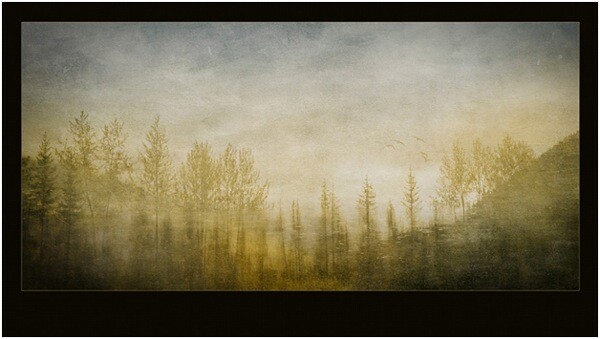
Rainforesttapestry

The Subject of Your Desires

If your aim is to sell your fine art images as decor, be sure that your subject matter is something most people would want in their homes or offices. Think about the context. Ugly doesn’t sell – no matter how artistically it is portrayed. But beauty generally does. Artistic treatments of flowers, landscapes, still lifes, abstracts and impressionistic figure studies are safe bets as subject matter. They seem to be almost universally accepted.

One of my most acclaimed art images – won several major awards – and one that everyone absolutely loves is “the Devils’ in the Details.” Someone loved it so much they bought it, but returned it to the gallery a week later because once they got it on the wall – it was just too freaky and disturbing!

Devilsinthedetails
?
If you plan on selling to collectors then usually any subject is fair game – some lesser known van Gogh paintings were of old shoes. Who knew!

But it’s YOUR creative interpretation and treatment of these subjects, whatever they may be, that creates the WOW factor. And it is here in your treatment and interpretation that you can break all the rules!

Viewing the works of artists who have gone before will expand your imagination and get your creative consciousness flowing for styles, subjects and different and unique ways to portray them. Once you have your image captured, you can then create a wild assortment of artistic and painterly effects in your post production processing…which is coming right up!

Creating Painterly Techniques in Post Production

One of the most flexible and fun ways to give your images a painterly fine art quality is to use overlays, underlays and textures, which you add in post production. As long as your favourite image editor supports layers and blending modes you’re good to go. If you get really expert you may even want to make your own textures and under/overlays to take full control of your final image. You’ll be rocking epic fine art photography.

Back in 2006 I was playing with a program called Corel Painter – it is a painting program where you can create all sorts of paint effects in a digital way. I had created an image in Painter using an oil paint “brush” and the texture and some subtle colours. Just our of curiosity I layered this image on top of a landscape and wow! the brush strokes came through in a most enchanting way – and so my own form of painterly fine art overlays were born! I use these a lot and make new ones as needed. But you don’t have to go to all that work – often using random images you have in your folders can be just as useful, as we will soon see.

Achieving a painterly affect in a photograph requires two main components in post production, usually a texture to emulate canvas, cloth, or some other base media; and at least one other texture or overlay to give it the image the look of something other than a straight-up photo – something like a painting! Depending on your initial image you may not have to use both these types of textures. In fact because there are no rules here you can stack multiple layers in a variety of combinations to achieve stunning images.

“Winter Garden” started out as this. A fine mess of dead and withered grasses in my garden in January!
?
Wintergardenbefore

And it was transformed to this, and went on to win several national and provincial awards for Fine Art photography:

Wintergardenafter
?

And now finally – How do I do this?

First, take a stroll around the Internet and look for free textures. Not textures of wooden boards and bricks though – look for cloth and fabric textures. Also look for textures of brush strokes or that have a very fine pattern like rust, old concrete. Other photos that are out of focus, or that have primarily one colour or pattern such as frost or rain drops on a window also work particularly well.

If you’re not inclined to go on a treasure hunt right now, I’ve created source files for you! Here are the files I used for Winter Garden, to get you started!

(downloads) (warning: this is an 18MB download and will give you a zip file with a PSD file and some JPGs).

The idea is to underlay and overlay these textures and images with your base image using blending modes and opacity to alter the way the textures interact with the base image. Ready to get started?

The Process of Post Processing

In Photoshop or your image editor, open your main photograph – your base image – in this case if you’re using my source files, Image 0852. Double click on the Background layer in the layers panel to make your Background layer editable. It will be called Layer 0. Set its blending mode to Soft light.

Then go to File>Place and select the image 0853.jpg. Stretch it to fit if needed. This will become Layer 1 Change the blending mode to Hard Light.

Duplicate this layer, and set the blending mode to Luminosity, and change the opacity to 20%. Flip the layer horizontally by going to Edit>Transform> Flip horizontal.

Almost there! Now place Image 0775, this is a photo of frost that I am using as a texture and colour overlay – stretch to fit if needed, and then set the blending mode to color, and opacity to 49%.

Now we’re going to create the UNDERLAYS! These are layers that we will add UNDER Layer 0. How exciting!

So… place image 0870, and drag the layer to be immediately under Layer 0. Set Layer 0 to Soft Light.

Set your underlay layer to 53% opacity.

And finally we will add our last underlay layer by placing the texture, Image 0809. Well add this in 2 places, but first place it as we have done with the others, and move it to be the bottom-most layer in your stack. It will be Normal and 100%.

Now duplicate this layer (CTRL J) and drag the copy to be the top-most layer in your stack. Set it to soft light and 42%.

At this point you should save your file as a layered image. What do you think? Quite painterly, no?

Want to adjust some more? Awesome! You can now play with these layers, the order, the opacities, the blending modes and even adjusting hue and saturation of individual layers to suit your own style and your interpretation of withered grasses in the winter. You can add other textures you may have on hand or that you’ve found online.

With a few simple images, some inspiration from the Masters, and your own imagination, free from rules and constraints, you’ll be making fine art images in no time!

Screenshot

Alex is a professional fine art and nature photographer, accredited by The Professional Photographers of Canada, and was Canadian Photographic Artist of the Year in 2009. In 2012 and 2011 she was selected Manitoba Photographic Artist of the Year. She teaches photography, runs workshops and online classes on fine art and nature photography, infrared photography and iphone photography. Her educational website with photography tips and tricks is at www.nature-photography-central.com. Her art photography portfolio is www.alexandra-morrison.com. Connect with Alex on Facebook, Pinterest and Google+.

Post originally from: Digital Photography Tips.

Check out our more Photography Tips at Photography Tips for Beginners, Portrait Photography Tips and Wedding Photography Tips.

Fine Art Painterly Images From Your Photos


Digital Photography School

 
Comments Off on Fine Art Painterly Images From Your Photos

Posted in Photography


Paper City Animation: “Rise & Fold” of a Fragile Metropolis

01 Jul

[ By WebUrbanist in Art & Drawing & Digital. ]

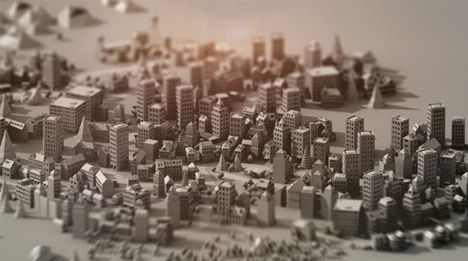
paper city animation project

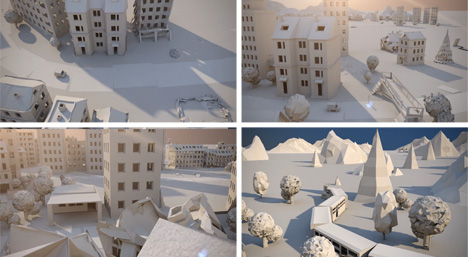
Unfolding like a pop-up book in real time, this incredible little built landscape of buildings and bridges, trees and mountains, lampposts and benches rises from nothing then fades back into the oblivion from whence it came.

paper unfolding built environment

A summary from the creator of this cool short animation, Maciek Janicki: “The streets are paved with paper. This delicate animation follows the charming rise and fold of a fragile metropolis. Captured by an unseen helicopter, the narrative unfolds through winding roads, erupting forests and emerging mountains. Paper City grows in one fluid take, with skyscrapers rising from the page – only to crumble, wrinkle and gently crease back into the ground.

Janicki is a motion graphics artist and computer animator from London, England, whose work often focuses on the intersection of built environments, everyday objects of offbeat animation. Some of his other projects, experiments and tests can be viewed via the videos above.

Share on Facebook


[ By WebUrbanist in Art & Drawing & Digital. ]

[ WebUrbanist | Archives | Galleries | Privacy | TOS ]


WebUrbanist

 
Comments Off on Paper City Animation: “Rise & Fold” of a Fragile Metropolis

Posted in Creativity