RSS
 

Archive for July, 2013

How to Create Realistic Looking HDR Photographs

11 Jul

By Sean Ogle.

HDR photography has gotten a bit of a bad reputation, simply because so many people don’t know how or when to use it.

It kind of reminds me of my first experiences using Photoshop in high school. The only thing I knew how to do was open a photo, head to the filters, and create surreal, barely recognizable images.

That’s what I see many photographers doing with HDR today. They open up Photomatix or HDR Efex Pro and start making photos that look overly processed, overly saturated, and basically just all around over done.

Sure, there are people that like this look, but those photos overshadow the true benefits that HDR can bring to the table.

My favorite photos are the ones that look almost too real. You can tell they’ve been edited, but you aren’t exactly sure how.

With that said, the most practical use of HDR is when you’re trying to create a more realistic depiction of what your eye is actually seeing in any given scene.

This could be a landscape photographer trying to capture the perfect sunset over an ocean, or perhaps a real estate agent that’s trying to accurately show the interior of a home.

This shot of from the Jersey Shore is a good example of that:

NewImage

Without HDR there’s no way I’d be able to get the detail in the foreground, while also bringing out the colors of the sky.

What’s important here is the average person wouldn’t be able to tell this was an HDR image.

So what are some of the key components to making a realistic looking HDR shot?

Let’s take a look.

Take it Easy on the Saturation

This is one of the easiest mistakes to make with HDR. We tend to be drawn towards bright and vibrant colors, but when editing, even slight adjustments can have very significant effects.

Had I not touched the saturation with the photo above, this would look like a big orange mess after the initial HDR processing.

This is particularly important to keep in mind if you’re shooting outdoors in grassy park or forested areas. Green and yellows are the hardest colors to accurately reproduce when doing HDR, and the secret to getting them correct is to significantly reduce the saturation.

NewImage

HDR was used in this case in order to bring out the detail of the clouds, which were extremely dramatic in person. However, the saturation was turned down to -35% in HDR Efex Pro to create this image. Without doing that, the green looked completely unrealistic, and the foreground didn’t accurately capture the high desert surroundings.

Use a Tripod

Yes, this is an HDR 101 tip, but it’s extremely important. When going for realism, you want things to look as crisp and clean as possible. While the latest software actually does a surprisingly good job at correcting for minor shifts in images due to camera shake or a handheld series of brackets, it still isn’t perfect, and can leave things looking slightly fuzzy.

The biggest selling point for a realistic image is it’s clarity and this will work against you if you aren’t careful.

Consciously Make Adjustments to “Structure”

This is perhaps the biggest secret towards getting realistic HDR shots. Your eyes can see a lot more detail than a photo can capture. By very sparingly adjusting the structure setting (or the balance between HDR “strength” and “smoothing” in Photomatix), you can bring out just enough “pop” to make what might otherwise be a dull image seem much more lifelike.

Never use any settings or presets that are labeled “strong”, “grungy”, “accentuated”, “grainy” or anything similar. These are pretty much a dead giveaway that your photo is going to look fake. For many amateur photographers, it’s these effects that make a photo look “cool”, but if you’re going for realism, these are deal breakers.

However, like most aspects of HDR, structure can very easily be overdone.

Pay Attention to Your Histogram

The natural eye has a much higher dynamic range than a camera sensor, and because of this, if your brackets don’t capture the full range of light, you could find yourself with an image that isn’t quite the way you remember a scene looking.

As much as possible you want your underexposed shots all the way to the left, and your overexposed shots all the way to the right on your histogram. You may need to take more than 3 shots in order to capture the full range.

When shooting interiors with windows this is especially important. You don’t want whatever is outside to get blown out, so by making sure you’ve captured the full dynamic range you’ll be able to create a more realistic representation of the room and not lose any detail in the windows.

NewImage

One Final Thing to Keep in Mind

Every shot you take should have a purpose, and when you’re shooting, you should be very deliberate about that.

When you don’t have an idea of what you want the final result to be, it can be really easy to go overboard, and end with something that’s much more surreal than you were expecting.

If you’re shooting interior real estate, make sure you’re not losing detail outside. If you’re shooting landscapes, spend extra time adjusting for structure and saturation.

HDR is one of the very best ways to create stunning, realistic images, but only if you have the discipline to properly edit them.

Sean Ogle is an HDR photographer and entrepreneur. He specializes in helping people build small businesses that allow them to do more of the stuff they like to do. He also golfs way more than the average person probably should. DPS readers can grab his book 50 Tips to Improve Your HDR Photography for free here.

Post originally from: Digital Photography Tips.

Check out our more Photography Tips at Photography Tips for Beginners, Portrait Photography Tips and Wedding Photography Tips.

How to Create Realistic Looking HDR Photographs


Digital Photography School

 
Comments Off on How to Create Realistic Looking HDR Photographs

Posted in Photography


How to Use Lightroom on 2 Computers and Keep the Catalogue Synchronised

11 Jul

A common question that we hear from readers about using Lightroom is how can it be used on two computers while keeping your catalog synchronised?

In this video Phil Steele shares 3 great strategies for doing just this.

For more great Lightroom tips from Phil Steele check out his Lightroom Made Easy Course which many dPS readers have enrolled in and found helpful.

Post originally from: Digital Photography Tips.

Check out our more Photography Tips at Photography Tips for Beginners, Portrait Photography Tips and Wedding Photography Tips.

How to Use Lightroom on 2 Computers and Keep the Catalogue Synchronised


Digital Photography School

 
Comments Off on How to Use Lightroom on 2 Computers and Keep the Catalogue Synchronised

Posted in Photography


How to Prepare your Photographs for Stock Submission

10 Jul

Post processing is an important part of photography. No matter how good you are at photography, your commercial success depends entirely on your final product. Using Adobe Lightroom and other post processing software, you can transform your photograph into a truly remarkable commercial success. Stock Photography is one of the most proficient ways of earning money for photographers but it Continue Reading

The post How to Prepare your Photographs for Stock Submission appeared first on Photodoto.


Photodoto

 
Comments Off on How to Prepare your Photographs for Stock Submission

Posted in Photography


Fold-Out Room: 12 Ultra-Compact Living Pods & Systems

10 Jul

[ By Steph in Design & Furniture & Decor. ]

Fold Out Rooms Main
When you live in a small space, every square inch counts, and furniture that can expand and contract on demand makes it a lot easier to fit all the functions you need into your home without feeling overwhelmed with clutter. Modular furniture sets and rooms-within-rooms containing fold-out and slide-out components make clever use of the space available, and the ability to hide things away when they’re not in use will please minimalists, too.

Sleepbox: Tiny Bedroom for Public Spaces

Fold Out Room Sleepbox

Sleepy travelers can catch a night’s sleep in private surroundings with the Sleepbox, a compact lodging pod meant for public spaces like airports and train stations. For those with layovers or unexpected delays, a room-in-the-box right inside the transit station could definitely be an affordable and convenient option.

Cocoon 1 Room Pod

Fold Out Room Cocoon 1

This unusual room-within-a-room is almost as much an art piece as it is a functional living space. Cocoon 1 by Micasa Lab is a plastic pod offering a separated space that provides a sense of privacy and solitude while maintaining a connection to the outside world. It contains built-in furniture, a kitchen and a power pack that can provide either 40 hours of light, or 20 hours of light plus 30 minutes of cooking.

Boxetti: 3 All-in-One Fold-Out Living Spaces

Fold Out Room Boxetti 1

Fold Out Rooms Boxetti 3

Fold Out Room Boxetti 2

Minimalists, rejoice – options that hide virtually everything from view when not in use are not only becoming easier to procure, they’re more stylish than ever, too. The Boxetti Collection by Rolands Landsbergs is a series of fold-out, slide-out living spaces contained within simple white modules. It includes a bedroom box, a living room box, an office and a kitchen.

Sleek and Simple Fold-Out Bedroom Box

Fold Out Rooms Bedroom Oda 1
Fold Out Rooms Bedroom Oda 2

For those in temporary living spaces, or who just don’t care about personalizing their homes, all-in-one box systems like the Room by ODA offer a modular dwelling system that collapses and expands. It comes with three elements – the pod, a media station and a satellite. Colors and materials can be customized.

Next Page:
Fold Out Room 12 Ultra Compact Living Pods Systems

Share on Facebook


[ By Steph in Design & Furniture & Decor. ]

[ WebUrbanist | Archives | Galleries | Privacy | TOS ]


WebUrbanist

 
Comments Off on Fold-Out Room: 12 Ultra-Compact Living Pods & Systems

Posted in Creativity


10. Juli 2013

10 Jul

Ein Beitrag von: Daniel Book

Mirkwood © Daniel Book


kwerfeldein – Fotografie Magazin

 
Comments Off on 10. Juli 2013

Posted in Equipment


DxO Viewpoint 1.2.1 now compatible with Photoshop CC and Lightroom 5

10 Jul

shared:DxOLogo.png

DxO Labs has updated its distortion-correction software Viewpoint to version 1.2.1, meaning it’s now compatible with Adobe Photoshop CC and Lightroom 5. Viewpoint works both as standalone software and as a plug-in, and is designed to correct for perspective distortions such as converging verticals, and to restore more natural proportions to objects at the edge of the frame when shooting with wideangle lenses. The company has also announced that all of its software is on sale at reduced prices until 31st July. Click through for more info and download links.

News: Digital Photography Review (dpreview.com)

 
Comments Off on DxO Viewpoint 1.2.1 now compatible with Photoshop CC and Lightroom 5

Posted in Uncategorized


Robotic Nikon cameras capture Wimbledon 2013

10 Jul

news.jpg

In the aftermath of Andy Murray’s historic victory at Wimbledon 2013, Nikon UK has been explaining how its cameras were used in a robotics setup to capture images from unique angles during the championship. The system was developed in partnership with Mark Roberts Motion Control, and operated by photographer Bob Martin. It used a Nikon D4 mounted on the roof above Centre Court, with 200-400mm and 80-400mm lenses. Click through to see some of the resultant images.

News: Digital Photography Review (dpreview.com)

 
Comments Off on Robotic Nikon cameras capture Wimbledon 2013

Posted in Uncategorized


Just posted: Olympus PEN E-P5 real-world samples

10 Jul

EP5gallery.jpg

We’ve been shooting with the Olympus PEN E-P5 for the past few weeks, in preparation for our review. Using a selection of lenses, we’ve put together a real-world samples gallery showing what the latest big PEN can do. In addition to shooting at the default settings, we’ve also tried adjusting the noise reduction and sharpening settings, and have included both out-of-camera JPEGs and Adobe Camera Raw conversions to give an idea for the choices you’re offered. Click through for a link to the gallery.

News: Digital Photography Review (dpreview.com)

 
Comments Off on Just posted: Olympus PEN E-P5 real-world samples

Posted in Uncategorized


How I Caught a Glimpse of the Elusive “WOW-Factor” & What You Can Do To Get Your Own

10 Jul

We all want to amaze our friends, family and hopefully even our raving fans with our photography, but in order to do so we need to first find out how to make our photos stand out – we need to harness the elusive “wow-factor” and have it help us define our style.

Do You Shoot to Record a Moment In Time or to Tell A Story?

This question is one you must ask yourself every time you pick up the camera. There are two types of photographs in my eyes – ones that record a moment in time and ones that tell a story. Each serve their purpose and I have nothing against either one, but I do think that photographing to tell a story is more prone to “wow-factor” photos.

That’s not to say that you can’t take good photographs of moments in time after all there are amazing and beautiful things happening all around us every day. Take this wild flower for example.

Flower

Technically it’s a good photo right? It’s sharp, composed with purpose, and processed to showcase the flower’s natural beauty, but it’s nothing more than a moment of time captured. Unless you have an obsession with white flowers this probably doesn’t jump off the page for you.

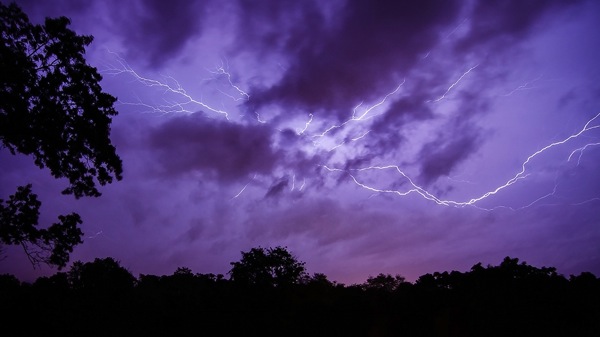
Moments in time can be spectacular though. Take this lightning bolt photograph that I captured a few weeks ago and if you’re curious you can read about out how I did it here.

Lightning

It’s a photo that many people were excited about when I published it, I’ve even sold a couple prints of it, but does it have the “wow-factor” that I’m talking about today? I don’t think so. In reality this photograph is no different than the photograph of the flower above it. It records a moment in time, but doesn’t tell much of a story. However, it is compelling in a way, and that can be attributed to the fact that we don’t typically get to see a lightning strike for more than a fraction of a second.

Still for me it’s missing the point of this post which is the “wow-factor” that comes from having a compelling story within your photograph.

So How Did I Catch A Glimpse of the ‘Wow-Factor’

Over the weekend I caught a glimpse of something that made me stop and think “wow that’s cool” and ultimately it’s what has inspired me to write this post for DPS.

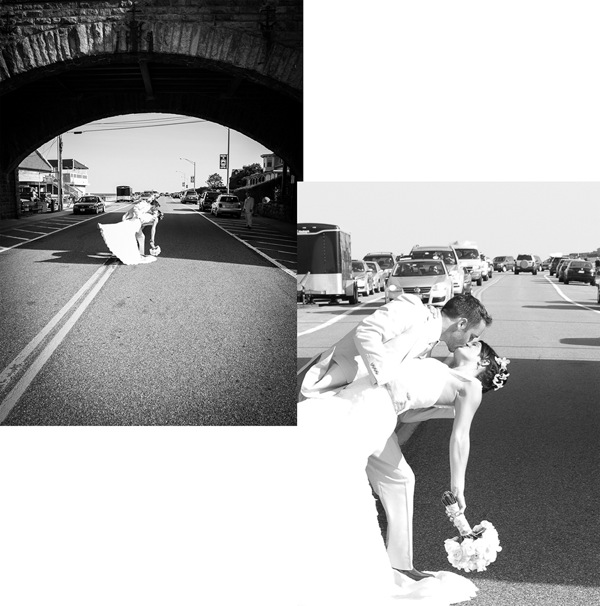
I was photographing a wedding at a location where the building spans the main street through the city. I was presented with the idea of having the couple kiss under the arch of the building, but in order to do this we had to stop traffic in both directions for a couple minutes – not an easy task on a Friday afternoon so this was a one shot deal.

Couple kissing

While there are always other things to try and I’d love to have had a second, third and fourth chance at this photo I am pleased with the result of this shot. I think it succeeds in telling a story and I know that the bride and groom absolutely love it so in the end that’s what matters most to me anyway.

Three Keys To Help You Find Your Own Glimpse

I’ve been using the word ‘glimpse’ in this post because I do believe that “wow-factor” is something that for many of us will come and go until we can fine tune our aim.

I don’t believe that it can be taught specifically, but I do believe that it can be learned. This might sound kind of strange, but what I mean by this is that we each have to figure out what works for our own style through our own process. After years of experience we will fine tune our abilities and as an end result harness the “wow-factor” to define our style.

That said here are three key points for you to keep in mind every time you set out to create a photograph which I believe will help speed you along the process of creating photographs with the “wow-factor” you’re looking for.

  1. Shoot with Purpose – When you click the shutter button how often are you thinking about why you’re clicking the button? Instead try telling yourself exactly why you’re taking the photograph that you’re taking before you take it – by doing this you’ll be photographing with purpose and hopefully end up with a better shot to show for your efforts.
  2. Tell a story – A picture is worth a thousand words right? Well this cliche is only true if the picture actually tells a story. Otherwise, it’s just another photo added to the pile.
  3. Go Beyond – I didn’t have to stop traffic to get a photograph of my couple kissing in the middle of the street. I could have shot with purpose and told a story on the sidewalk or in a garden, but by going the extra mile we were able to capture a more compelling image.

I think that we all get chances to create photographs with ‘wow-factor’ in them. They don’t happen often and it takes more than simply clicking the shutter button to come up with the vision that makes a photograph something more than just another moment frozen in time.

Post originally from: Digital Photography Tips.

Check out our more Photography Tips at Photography Tips for Beginners, Portrait Photography Tips and Wedding Photography Tips.

How I Caught a Glimpse of the Elusive “WOW-Factor” & What You Can Do To Get Your Own


Digital Photography School

 
Comments Off on How I Caught a Glimpse of the Elusive “WOW-Factor” & What You Can Do To Get Your Own

Posted in Photography


Uhus – Heimliche Nachtjäger

10 Jul

Ein Beitrag von: Kevin Winterhoff

Es ist ein schrecklich-schönes Schaudern, das mich überfällt, als ich wieder den Ruf von der gegenüberliegen Felswand höre. Seit einigen Stunden sitze ich nun bereits im Steinbruch und warte auf den Einbruch der Nacht. Während der Mond am dunkelblauen Nachthimmel aufgeht, höre ich immer wieder den weit entfernten Ruf des Männchens.

Ein dumpfes, abfallendes „Uuuhhhouu“ durchdringt das Tal. Nicht laut, eher stumpf, aber man hört es bis zu vier Kilometer weit. Der Nachwuchs hat sich bereits in seine Höhle zurückgezogen, als ein dunkler Schatten durch die Dunkelheit streift: Das Weibchen hat Beute gemacht. Lautes Betteln der Jungvögel zerreißt die Stille des nächtlichen Steinbruchs. Die Rede ist vom Uhu, der größten Eule der Welt.

Stativ mit Kamera © Kevin Winterhoff

Uhus aus dem Steinbruch

Der Uhu nimmt mich seit Jahren gefangen. Ich kann nicht anders als die mir bekannten Brutplätze jedes Jahr zu kontrollieren. An einem alten, sehr erfolgreichen Brutplatz in einem Steinbruch brüten sie auch dieses Jahr wieder. Drei kräftige Junge schauen aus der Felswand herunter und rufen mit ihrem heiseren Krächzen nach Futter. Sie animieren die Mutter damit zur Futtersuche und es dauert auch nicht lange, bis das Weibchen aus ihrem Tageseinstand abstreicht und in die Nacht fliegt.

Uhus © Kevin Winterhoff

Die Geschichte der Uhus

Uhus sind beeindruckende Vögel. Allein ihre Maße sind respekteinflößend: Eine Flügelspannweite bis zu 170 cm, bis zu 3,2 kg Eigengewicht und eine Körperlänge von fast 70 cm. Der Uhu ist die größte heute lebende Eulenart.

Viele Fotografen machen sich auf lange Reisen, um Sumpfohreulen, Schneeeulen oder Bartkäuze zu fotografieren. Auch ich würde dies sehr gern tun, aber mein Herz hängt an den Uhus. Keine Eule ist ihr gleich, weder in Abmaß, noch in Kraft.

Auch ihr Aussehen ist unverwechselbar: Die langen Federohren verbunden mit der Größe lassen keinen Zweifel aufkommen.

Uhu in Nahaufnahme © Kevin Winterhoff

Uhus waren nicht immer willkommen in unserem Land. In den 1950er Jahren waren die größten Eulen der Welt fast ausgerottet. Starke Verfolgung führte dazu, dass lediglich im Elbsandsteingebirge einige Exemplare überlebten.

Eulen haben von jeher einen schlechten Ruf, werden sie doch mit Tod und Unglück in Verbindung gebracht. Der Aberglaube, der um die Eulen kreiste, machte auch vor der sogenannten Adlereule nicht halt. Man jagte sie, stellte ihr nach, räumte ihre Horste aus und sorgte so für das beinahe Aussterben dieser beeindruckenden Vogelart.

Heute erklingt das einst so vertraute Rufen der Adlereule wieder in vielen Steinbrüchen Deutschlands. Der Uhu hat seinen Weg in die Natur zurückgefunden, Dank vieler Naturschützer und Auswilderungen. Die Natur musste sich auf sein Zurückkehren erst wieder einstellen.

Seine Beute, vor allem Igel und Ratten, gern aber auch andere Eulen, mussten erst wieder verstehen lernen, was es heißt, einen Uhu im Revier zu haben. Denn der Uhu ist ein gewaltiger Nachtjäger mit Krallen, die nicht loslassen, haben sie denn einmal zugeschlagen.

Uhu-Silhouette © Kevin WinterhoffDrei Uhus © Kevin Winterhoff

Jungenaufzucht im Steinbruch

Die zumeist erfolgreiche Jagd macht sich natürlich auch in der Kinderstube der Uhus bemerkbar. Im Steinbruch sind die Junguhus nun bereits einige Monate alt, gut genährt und bereits flugfähig. Dennoch verbleiben sie in der Nähe der Geburtsstätte.

Flugversuche werden ab Ende Mai unternommen, dabei verändert sich ihr Gefieder und unter dem Flaumfedern sprießen erste Anzeichen des „Erwachsenwerdens“. Das Betteln gegenüber den Eltern wird nun immer heftiger.

Heisere Krächzrufe schallen der Mutter entgegen, was sie zum Jagdflug animiert. Bei meinen Uhus war es dabei meist so, dass vor allem das Weibchen das Futter herbeischaffte.

Das Männchen saß, im Denken, seine Pflicht vor einigen Monaten bereits getan zu haben, zumeist auf einem Ast hoch im Steinbruch und schaute dem regen Treiben seiner Nachkommen zu. Im Spätsommer wird er seine eigene Brut aus dem Revier der Eltern verjagen, so wie es bei großen Greifvögeln üblich ist.

Die Kleinen werden ihren eigenen Weg gehen müssen, was sie auch tun. Junguhus wurden bereits Hunderte von Kilometern entfernt von ihrem Geburtsort wieder gefunden, was dafür spricht, dass sie durchaus in der Lage sind, auf der Suche nach eigenen Revieren auch längere Strecken zurückzulegen.

Uhu © Kevin Winterhoff

Wenn die Jungen verschwunden sind, beginnt für die Eltern die Herbstbalz. Wenn das Männchen zu Beginn der Jungenaufzucht das Revier verlassen haben sollte, was durchaus vorkommt, findet sich mitunter auch ein neues Männchen und damit Pärchen ein.

Bleibt das Männchen, stärkt die Herbstbalz die Bindung zum Partner. Diese Herbstbalz kann bis ins Frühjahr hinein dauern, wenn kein harter Wintereinbruch dies verhindert.

Dann kommt das Pärchen erneut zusammen und mit ein bisschen Glück schauen dann nach einigen Wochen wieder junge Uhus aus dem Steinbruch auf ihre Welt.

Uhu mit geschlossenen Augen © Kevin Winterhoff

Es ist ein Genuss, den jungen Uhus bei ihrem Aufwachsen zuzusehen. Wer es einmal gesehen hat, diesen jugendlichen Spieltrieb, das Interesse an allem Neuen und dieses lustige rhythmische Wackeln mit dem Kopf, der wird genau wie ich auch jedes Jahr rausgehen und wieder nach unseren größten heimischen Eulen Ausschau halten.

Überall in Deutschland klingt es endlich wieder aus Wäldern, Steinbrüchen und alten Ruinen hervor, das namensgebende „Uuuhuuu“.


kwerfeldein – Fotografie Magazin

 
Comments Off on Uhus – Heimliche Nachtjäger

Posted in Equipment