RSS
 

Archive for July, 2013

Und Glück gehört auch dazu

17 Jul

Ein Beitrag von: Georg Pagenstedt

Ich fotografiere seit ungefähr zwei Jahren und mache Bilder insbesondere auf Reisen und wenn ich mit Freunden oder der Familie unterwegs bin. Meine Fotos erstehen aus dem Moment heraus. Ich versuche, alltägliche Situationen so zu fotografieren, dass sie etwas Außergewöhnliches darstellen.

Mann vor Telefonzelle © Georg Pagenstedt

Frau unterm Schirm  © Georg Pagenstedt

Das funktioniert etwa durch zusätzliche Ebenen wie Ähnlichkeiten, Gegensätze, Spiegelungen, Geometrie oder natürlich Licht und Schatten. Für mich geht es weniger um die Motive, die ich fotografiere, sondern wie sich alles im Sucher zu einem besonderen Bild zusammenfügt.

Natürlich ist die Frage, was ein besonderes Bild ausmacht, in höchstem Maße subjektiv. Ein gutes Bild ist für mich eines, das den Betrachter in eine andere Welt führt. Eine Parallelwelt, die dem hastigen Passanten normalerweise entgeht.

Tatoo  © Georg Pagenstedt

Flügel  © Georg Pagenstedt

Ich schaue mir gern Fotobücher und Bilder auf Flickr an. Das ist einerseits eine große Inspiration, anderseits zeigt es die Hoffnungslosigkeit, einen eigenen Stil entwickeln zu wollen. Alles ist schon da. Und so mache ich einfach das, was ich mag – ohne zu hohe Ansprüche.

Mich interessiert Technik und Theorie eher wenig, umso mehr das Bild. Meine Kamera ist sehr einfach zu bedienen und ich benutze weder automatische Belichtungseinstellung noch Autofokus. Wenn es schnell gehen muss, schätze ich die Entfernung oder nutze die Tiefenschärfe.

Schnell  © Georg Pagenstedt

Gesicht © Georg Pagenstedt

Früher habe ich die Fotos häufig in schwarzweiß konvertiert. Das bügelt Mängel am Bild schon einmal weg. In Farbe zu fotografieren finde ich viel schwieriger, da muss wirklich alles passen. Farbe bringt eine zusätzliche Ebene ins Bild.

Vielleicht ist die Fotografie ein Ausgleich für meine eher kopflastige Arbeit. Und ein Bild kann oft auch etwas über das Weltbild und die Persönlichkeit des Fotografen erzählen. „I am what I photograph“, so sagt es Martin Parr.

Roter Schirm  © Georg Pagenstedt

Beim Fotografieren ist es wie überall: Man muss viel arbeiten und ausprobieren, um gute Ergebnisse zu bekommen. Und Glück gehört auch dazu.

Wenn ich im Monat ein Bild mache, das okay ist, dann bin ich schon zufrieden. Und wenn ich am Ende meiner Fotografenkarriere zehn Bilder gemacht habe, die richtig klasse sind, dann habe ich alles erreicht.


kwerfeldein – Fotografie Magazin

 
Comments Off on Und Glück gehört auch dazu

Posted in Equipment


Fujifilm revises upcoming X-Pro1 and X-E1 firmware updates

17 Jul

xp1news.png

Fujifilm has given more details about its upcoming firmware updates for the X-Pro1 and X-E1 (Versions 3.00 for the X-Pro1, and 2.00 for the X-E1). In addition to the existing promise to improve autofocus speed, it says that focus accuracy will be improved with difficult subjects. The updates will also add a ‘focus peaking’ function to aid manual focus, and improve image stabilisation during movie recording with the 18-55mm F2.8-4 lens. They are due to be available for download on 23rd July.   

News: Digital Photography Review (dpreview.com)

 
Comments Off on Fujifilm revises upcoming X-Pro1 and X-E1 firmware updates

Posted in Uncategorized


16. Juli 2013

17 Jul

Ein Beitrag von: Marc Reichenbach

© Marc Reichenbach


kwerfeldein – Fotografie Magazin

 
Comments Off on 16. Juli 2013

Posted in Equipment


3 Tips for Creating Outstanding Portraits, Inspired by the work of Dutch Artist Van Gogh

17 Jul

A Guest Post by Oded Wagenstein

Few months ago I visited the Metropolitan Museum of Art in NYC. Upon arriving there, I immediately ran to see the work of the artist who influenced me the most: Vincent Van Gogh; the artist who changed the way we look at color as a tool for telling stories; an artist who had nothing in his pockets but had a never-ending passion for creativity and innovation.

In this post I decided to share some work methods and tips that I have learned from the portraits of this great artist. Methods I TRY, just try, to apply in my work as well.

3 Things I learned about Portrait Photography from Vincent Van Gogh’s Work

Tip 1: Use Light as a Tool for Telling Stories in Your Portraits:

You can treat “light” in one of the two ways below:

  • Something that just illuminate your subjects. An existing fact, which you cannot control
  • A creative tool. Something to be aware of, as being aware of the lens or the camera you are using

Source of Inspiration

Notice how the light affects the story in this drawing of a Peasant from Nuenen.
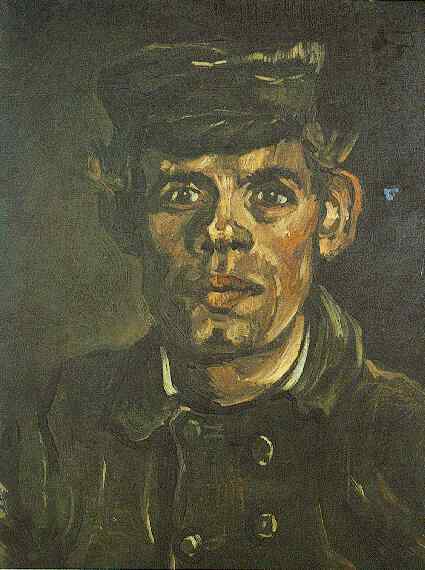
Vincent van Gogh Head of a Young Peasant in a Peaked Cap

The choice to create the peasant’s portrait at night (or a dark room) under the pale light of a single bulb, which forms many shadows on his face, strengthens the dark feeling coming from this image- a feeling of a hard working man. You can imagine that creating the portrait of the same guy, in daylight, in an open space, would create a completely different story.

My Interpretation:
F11A3438
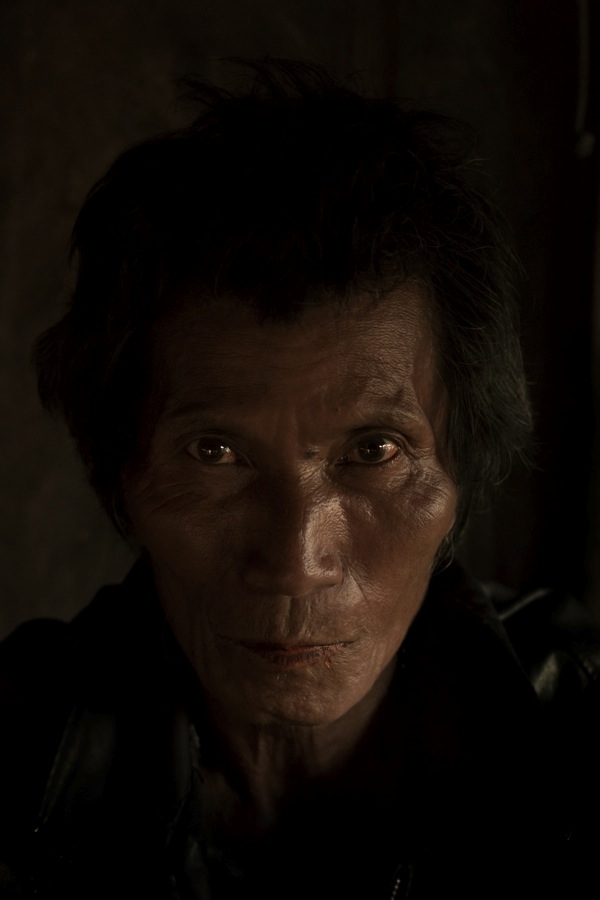
In this image of Apollo-mo, a 61 years old farmer and village shaman from the Akha community in Laos, I tried to create the same “hard working” feel as in the “Peasant from Nuenen”. I chose to capture Apollo indoor (keeping him also very compressed inside the frame) with this dark background and dramatic, single source light coming from his right side, creating very deep shadows on his face. Of course I could photograph Apollo at any other time: Laughing with his family and grandchildren, working under the soft light of the sunset and so on. Yet,I chose to show him as I perceived him – as a hard working man with a difficult life story.That’s exactly what I wanted the viewer to feel.

Tip 2: Harnessing the Power of Complementary Colors

Van Gogh’s use of color was groundbreaking and many books and theses already examined the issue in depth. What I would like to present here is a small fraction of his approach on color: Understanding the power of complementary colors.

You can think of the complementary colors (and this is going to be a very shallow way of putting it) as two colors, sitting side by side, and by doing so, creating a great impact on the viewers.

Color star en svg

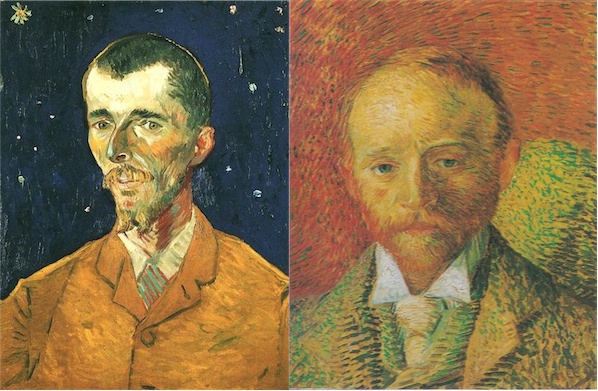
Van Gogh often used complementary colors in his works. Green and red, orange and blue, purple and yellow – he’s done it all.

In my work, I try to keep this principle of complementary colors in mind.

Source of inspiration:
Van gogh

My interpretation:
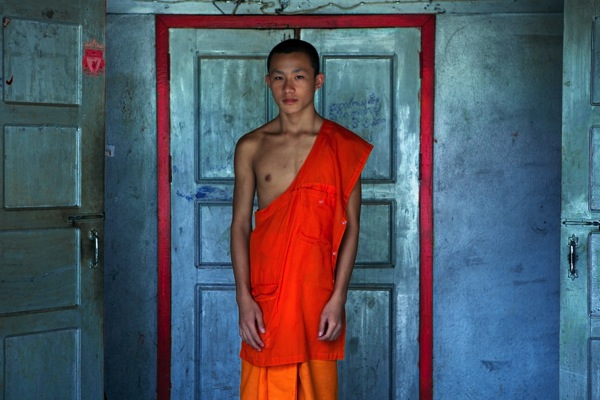
Red and green or orange and blue are working together to create a stronger portrait.
Monk

Tip 3: The Power of the “Off Camera” Gaze

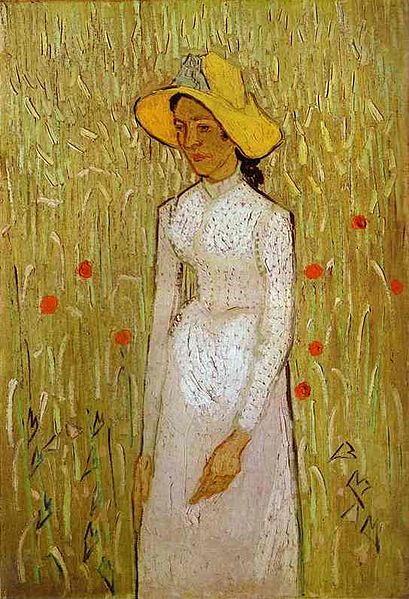
In Most portraits, either photographs or paintings, the person looks straight at the viewer. Van Gogh’s work taught me that sometimes, when a person is looking “off camera”, it can give my image some sort of natural feeling, sometimes melancholic, yet always powerful.

Source of inspiration:
409px Van Gogh 2

The artist made this painting during the last months of his life. And although the situation appears seemingly nice (woman standing in a field) the sadness and hardship is certainly present, mainly due to the off camera gaze.

My interpretation:
So when I want to convey a feeling of hardship or sadness I will try to capture my subject in an unguarded moment, looking off camera.

Woman in field A

This off course can be done only if you get a good relationship with your subject, enabling you to work in a close distance and still be “transparent”.

I will not tell the subject what to do (“now, look off-camera and act sexy”). I will just wait for the right time to click the shutter.

Conclusions

Using light as a creative tool: Try to match the story you want to tell to the light being used. One possibility is to control the light: flash, reflectors, etc. the more simple option is to just choose the right time to shoot. Dramatic story? Choose a time when there is a harsh or dramatic lighting situation. A story about the happy moments in life? Let your light to convey this feeling by working in a soft, full of color light, like in the golden time (before sunset or right after sunrise)

Watch for complementary colors: in order to create powerful portraits.

Think about the subject’s looking direction as a creative tool: Sometimes an off camera gaze can give your story outstanding emotional impact.

The story of Vincent van Gogh Is sour – sweet. On one hand, an artist whose paintings are known by everyone and sold today for millions of dollars. On the other hand, an artist who had a great financial and emotional struggle over his life-time.

Oded Wagenstein is a Travel photographer and writer. He is a regular contributor to the National Geographic Traveler magazine (Israeli Edition) and he is known for his intimate culture portraits. You can join his Portrait & Travel Photography blog and continue to discuss on travel and people photography and get more amazing tips!

Post originally from: Digital Photography Tips.

Check out our more Photography Tips at Photography Tips for Beginners, Portrait Photography Tips and Wedding Photography Tips.

3 Tips for Creating Outstanding Portraits, Inspired by the work of Dutch Artist Van Gogh


Digital Photography School

 
Comments Off on 3 Tips for Creating Outstanding Portraits, Inspired by the work of Dutch Artist Van Gogh

Posted in Photography


Toshiba announces first UHS-II SD cards as world’s fastest

17 Jul

Toshiba-UHSII.png

Toshiba has announced the Exceria and Exceria Pro ranges of SD cards – the first to conform to the UHS-II standard and the fastest SD cards yet announced. The Exceria Pro cards will be available in 16GB and 32GB sizes from October 2013 and will offer read/write speeds of 260MB/s and 240MB/s respectively. 32GB and 64GB Exceria series cards offering the same read speeds but half the write speed will follow a month later.

News: Digital Photography Review (dpreview.com)

 
Comments Off on Toshiba announces first UHS-II SD cards as world’s fastest

Posted in Uncategorized


Building Eraser: Smart Robot Scans & Deconstructs Concrete

17 Jul

[ By WebUrbanist in Conceptual & Futuristic & Technology. ]

building deconstructing robotic system

Whether the building is a bare-bones warehouse or five-star hotel, demolition is an equally messy business – but perhaps it does not have to be. What if demolition teams could precisely separate the component parts of the concrete forming the walls, floors and ceilings of a structure?

building erasing robot design

ERO is an award-winning robotic solution that strips concrete on-site and step-by-step, saving time, energy and copious amounts of water (used to reduce airborne particulates) in the deconstruction process. It parses the pieces back into cement, aggregate and water as it goes, literally erasing a building rather than demolishing it.

building demolition robot

The robot scans sections and identifies the best ways to break them down into constituent parts for reuse or recycling. This approach switches the literal sledgehammer with a proverbial scalpel – the latter taking the form of a concentrated high-pressure water jet that cracks the concrete and allows it to be more carefully removed.

building deconstruction smart system

In the end, the graywater is reused, the particulates turned into aggregate for fresh construction applications and the rebar cleaned and sorted as well. This systematic recycling saves materials not just for future uses but also reduces waste along the way by mitigating the need to actively blanket the building demo site with water and saves time in terms of sorting through the rubble.

building compact eraser robots

From the  2013 International Design Excellence Award (IDEA) awards page: “The challenge with this project was to separate materials concurrent with deconstruction. Concrete is usually reinforced with a metal mesh inside. Common techniques involve using brute force to pulverize the concrete, which creates a mixed mound of waste material that needs to be separated before it can be reused or sold as second-grade metal or as a filling material. In order to overcome later separation and ease the transport of materials, the process had to start with separation on the spot. It was a challenge to switch from brutal pulverizing to smart deconstruction.”

Share on Facebook


[ By WebUrbanist in Conceptual & Futuristic & Technology. ]

[ WebUrbanist | Archives | Galleries | Privacy | TOS ]


WebUrbanist

 
Comments Off on Building Eraser: Smart Robot Scans & Deconstructs Concrete

Posted in Creativity


How I Took This Award Winning Night Sky Group Photo

17 Jul

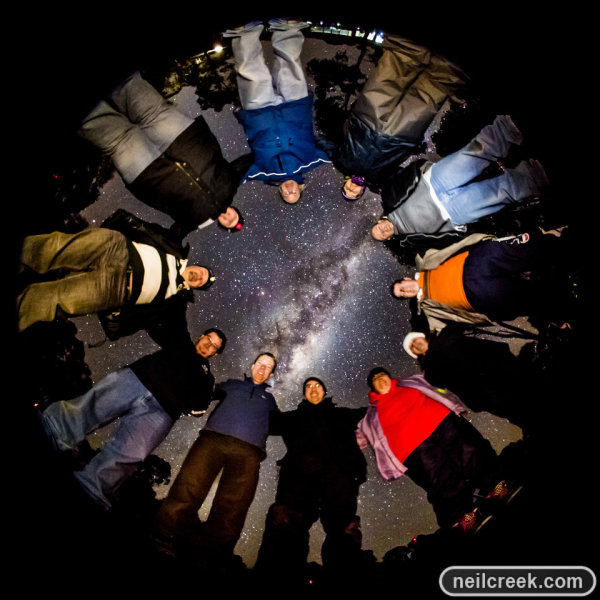
Last weekend one of my photos was selected as a category winner in the national night sky photography competition, the David Malin Awards. The category was “People and Sky”, and Darren asked if I could write a post describing how the photo was created.

creek-120812-012-X2

I assist friend and colleague Phil Hart with regular night sky photography workshops under the beautiful dark skies of country Victoria (Australia). Knowing my love of fisheye photography, Phil had an idea for a photo to help promote the course: A group photo under the stars by fisheye lens.

I immediately had a vision in my head of the photo and knew it would look cool, so I set myself to working out how to achieve the difficult task of composition and balancing light. Once night fell and we made sure the students were all confident with their new skills and happily taking photos of the night sky, I put my Sigma 8mm f4 circular fisheye on my full-frame Canon 5D MkIII. To achieve this effect you will need a circular fisheye lens and a full-frame camera, or a fisheye lens designed to give a circular image on a cropped sensor. A diagonal fisheye will not capture the whole hemispherical field of view needed to image the whole sky.

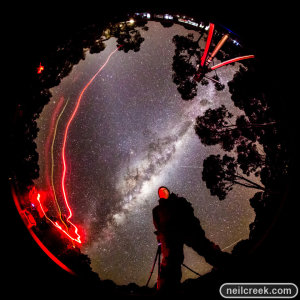
Testing the setup and lighting.

Testing the setup and lighting.

From experience shooting the night sky with this lens, I knew that I would be shooting at the widest aperture of f4 and the full 30 seconds shutter speed. Balancing noise and sufficient exposure I chose an ISO of 8000. These settings give me a good exposure of the night sky and particularly the milky way, which would feature in the shot. This is incredibly faint! My main problem was how to light the faces of the students to approximately the same brightness of the Milky Way.

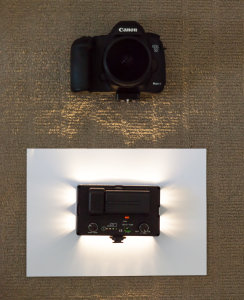
At first I considered using a flash, but even at the lowest setting, even with significant diffusion, the exposure was too difficult to control. The other problem is that I’d need the light to be omnidirectional so that all of the people in the shot would be evenly lit. Ultimately the solution I came up with was to use my LED video light, dialed down to its lowest power setting and laid face down on the ground on a piece of white paper. Only a little bit of light leaked out from around the edges, but it was even and spread out in all directions. Due to the relatively warm white balance of the Milky Way I adjusted the light’s white balance to be warm to match.

A recreation (in my office) of the setup I used. The video light is pointing straight down into the paper.

A recreation (in my office) of the setup I used. The video light is pointing straight down into the paper.

I took a few test shots to make sure the exposure, focus, white balance and everything else was working just right, and when the galaxy had risen to it’s highest point and was nearly directly overhead we called everyone together. We formed a circle and put our arms over each others’ shoulders to ensure even spacing, and tried to keep where the camera would be in the centre. Linking arms also helped us all to stand as still as possible for the 30 seconds of the exposure. Once we were all ready, I set the camera to 10 second self timer mode and placed it on the ground pointing directly up.

There were a couple of confused comments as people tried to work out how it would look, and jokes about how we all must have looked to anybody watching us from the outside. But once we got a look on the back of the screen, everyone was convinced. This was a truly unique group photo.

Join me on Facebook to learn more and see new photos daily: http://facebook.com/neilcreekphoto.

Post originally from: Digital Photography Tips.

Check out our more Photography Tips at Photography Tips for Beginners, Portrait Photography Tips and Wedding Photography Tips.

How I Took This Award Winning Night Sky Group Photo


Digital Photography School

 
Comments Off on How I Took This Award Winning Night Sky Group Photo

Posted in Photography


Researchers in Tokyo develop high-speed subject tracking system

17 Jul

Screen-Shot-2013-07-16-at-11.01.35-AM.jpg

Engineers at Tokyo University’s Ishikawa Oku Laboratory have come up with new technology to track extremely fast motion. Their new system – which uses ‘Saccade Mirrors’ for pitch and tilt, a ‘pupil shift system’, and very fast image processing – is able to keep even the quickest subject in the center of the frame at all times. According to engineers, the initial application for this system could be to capture video at sporting events. They expect it to be market-ready in about two years. Follow the link for a video demonstration of this intriguing new technology.

News: Digital Photography Review (dpreview.com)

 
Comments Off on Researchers in Tokyo develop high-speed subject tracking system

Posted in Uncategorized


‘Letting Go of the Camera’: Olivier Duong concludes look at gear addiction

17 Jul

nex-7-miami-street-photography-5.jpg

Florida-based photographer and blogger Olivier Duong has concluded his examination of so-called ‘gear acquisition syndrome’ with an article that explains how he broke free from his addiction. Starting with the mantra ‘there is more to photography than gear’, Duong describes how he make a conscious effort to appreciate the equipment he already owns, and to concentrate on using it to improve his photography. Click through for more details.

News: Digital Photography Review (dpreview.com)

 
Comments Off on ‘Letting Go of the Camera’: Olivier Duong concludes look at gear addiction

Posted in Uncategorized


Aptina’s Clarity+ sensor tech claims to have cracked the clear pixel puzzle

17 Jul

Logo.png

Sensor maker Aptina has given more details of its Clarity+ technology that it claims will offer a 1EV improvement in sensitivity over conventional sensors. The company believes it has found a way to use clear pixels to capture more light while retaining the image quality of a standard Bayer sensor. Although initially intended for smartphone sized sensors, the company says it could have applications in larger formats. Find out more over at connect.dpreview.com

News: Digital Photography Review (dpreview.com)

 
Comments Off on Aptina’s Clarity+ sensor tech claims to have cracked the clear pixel puzzle

Posted in Uncategorized