Ein Beitrag von: Benjamin Schubert


Today, DPReview.com officially opens GearShop to the public. GearShop is a highly curated and content-rich online store for buying cameras, lenses and photography accessories. Utilizing DPReview’s comprehensive testing and research, GearShop provides photography enthusiasts with expert guidance when buying photography equipment online. In celebration of the launch, GearShop customers will be able to claim up to $ 150 in free accessories with select camera purchases now through July 27, 2013. Click through for more details. Apologies to our international visitors: At this time GearShop is only able to ship to customers in the USA.
I apologize to anyone affected. Still putting out fires today, and trying to get to the bottom of it. That said, if I appear to have sent you a link via email, please don’t click on it. Even if it is for the really good manhood pills.
-30-

The folks at Magic Lantern are no stranger to adding new features to Canon DSLRs, courtesy of their EOS Camera Tool software. Their latest creation, Dual ISO, increases the dynamic range of the 5D Mark III and EOS 7D by four stops, bringing the total dynamic range to 14EV. This allows you to pull detail out of the shadows with a lot less noise than with the ‘stock’ firmware. Click through for more details.

Tuesday was reasonably tense. I photographed a breakup, a drug intervention, a high school cafeteria fight and a few other iffy situations.
All in all, a very enjoyable afternoon. And it will probably change the way I approach my portraiture going forward.
Read more »
Strobist
A leading line paves an easy path for the eye to follow through different elements of a photo. Usually they start at the bottom of the frame and guide the eye upwards and inwards, from the foreground of the image to the background, typically leading toward the main subject.
The easiest place to find a leading line is on a road. Roadways are inherently leading because they go somewhere, give us a feeling of motion, and the lines often point so far inwards that they reach a vanishing point – the place where two or more lines converge into theoretical infinity.
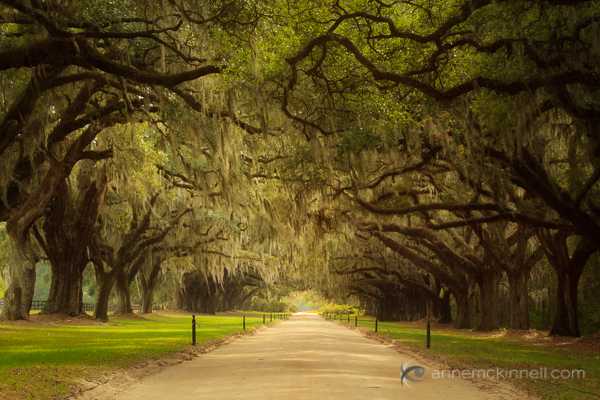
The leading lines of the road converge to create a sense of infinity.
When leading lines, such as roads, connect the foreground to the background of a scene, they help to create depth and dimensionality which draws the viewer into the image.
Leading lines are all around us in cities and in nature. Your job as the photographer is to find them and arrange them in your photograph so that they lead towards something, even if that something is infinity.
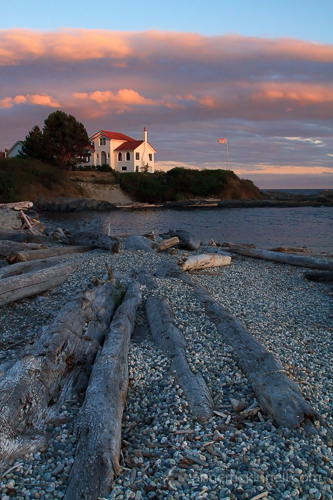
The logs on the beach draw the viewer’s eye into the frame and lead up to the house.
When you’re setting up a shot, take a moment to examine the scene for its prominent lines. Clear your mind, relax your eyes, and notice where they are naturally drawn to.
|
Pay special attention to man-made things such as:
|
In nature, pay particular attention to:
|
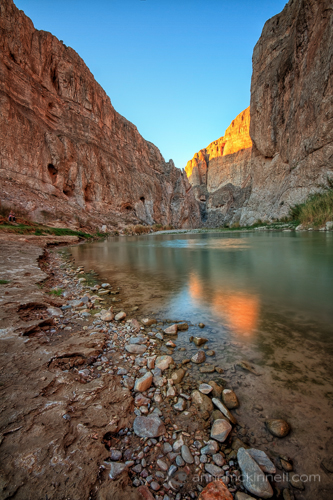
The soft leading line of the river’s edge creates depth in the image.
Once you’ve identified your strongest lines, consider how you can use them to enhance your composition. Depending on your intention, you might:
Arranging the elements in the frame may involve the use of different lenses to change perspective, but usually you can accomplish it simply by moving yourself so that the point of view you choose is purposeful.
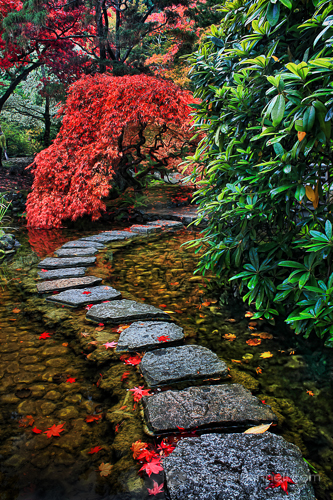
The leading line of the path leads the eye directly to the maple tree.
Leading lines are the key compositional element that carries our eye through the photograph. They can be used to tell a story, to place emphasis, and to draw a connection between two objects.
Use them creatively and with expressive purpose to help you tell your unique photographic tale.
Post originally from: Digital Photography Tips.
Check out our more Photography Tips at Photography Tips for Beginners, Portrait Photography Tips and Wedding Photography Tips.
How to Use Leading Lines for Better Compositions
[ By Steph in Abandoned Places & Architecture. ]
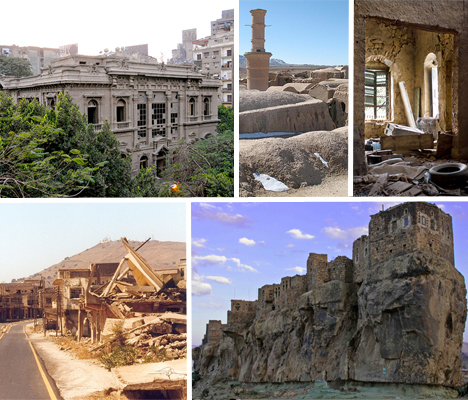
Eerie ghost towns, villages abandoned after shocking massacres, the palaces of deposed dictators and mansions so well preserved they’re like 1950s time capsules are among the Middle East’s abandoned treasures. The Cradle of Civilization and the areas that lie just outside of it contain some of humanity’s oldest structures, and a great many ruins.
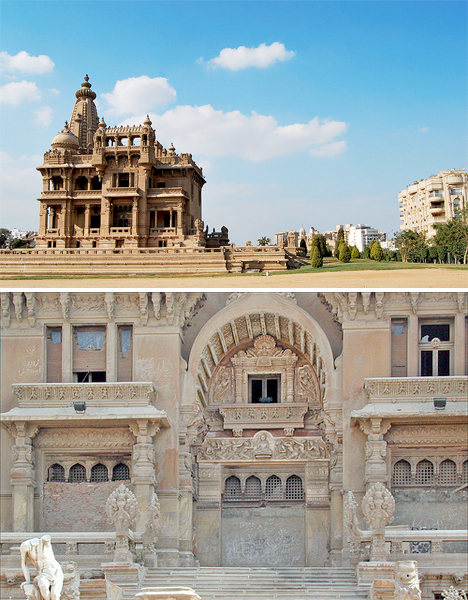
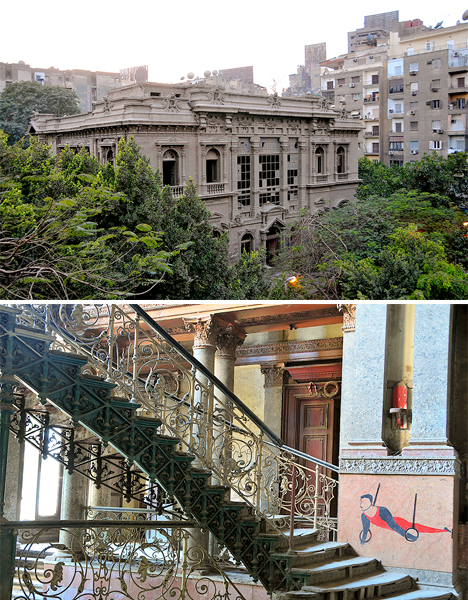
In 1869, construction of the Suez Canal brought foreign money flooding into Egypt, and ambitious foreign businessmen got to work on ornate castles in Western European style, which stood as stark symbols of colonialism. But when Gamal Abdel Nasser became president in 1956, he put an end to that, kicking out the wealthy foreigners to reclaim the nation for the people. Unfortunately, economic instability hasn’t allowed for the palaces to be redeveloped, so today they range from shuttered time capsules of the 1950s to crumbling ruins.
The Baron Empain Palace (top), built by Eduoard Louis Joseph of Belgium in the late nineteenth to early 20th centuries, is one such place. Modeled on Hindu and Cambodian temples, the palace sits in a dirt lot in the Cairo suburb of Heliopolis, surrounded by barbed wire. It’s closed to the public, but like many such places, it’s the subject of many rumors of ghost stories and Satanic rituals.
Another is Prince Said Halim’s palace, also known as Champollion House, in Cairo. This palace was converted to a secondary school after its abandonment, but it has been empty since 2004.
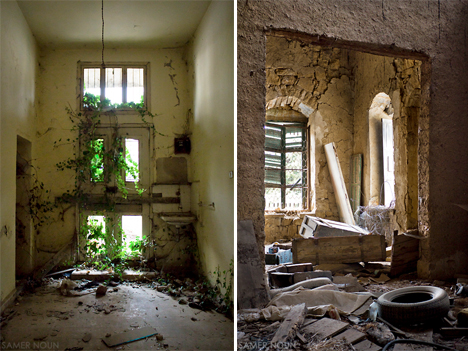
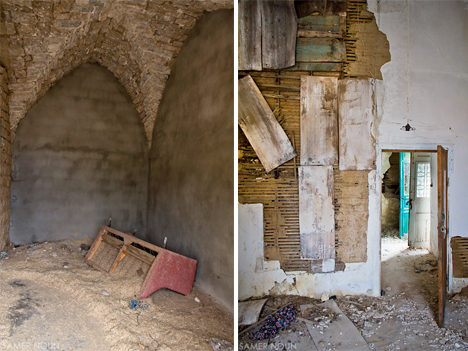
Located in lush woods just outside the peaceful Al-Shouf Cedar Reserve of Lebanon’s Maasser Cedar Forest, this idyllic village was utterly devastated by the massacre of September 9th, 1983. The houses that remain empty belonged to those who perished or fled to safer places when 63 Catholics were killed by their Druze neighbors in a brutal daytime assault. Years later, in 1990, a son left orphaned by the attack returned and killed five Druze villagers and three soldiers in revenge. Some of the homes are still occupied by those who survived.
Photographer Samer Noun gained access to the abandoned homes in 2011, capturing these eerie images of the architectural remains.
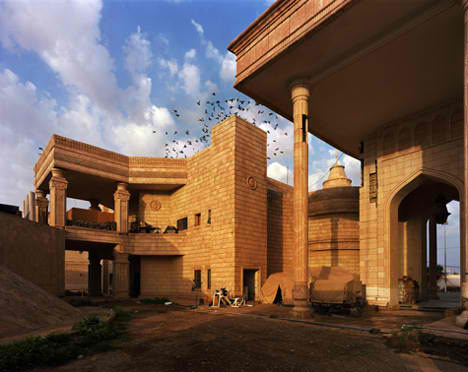
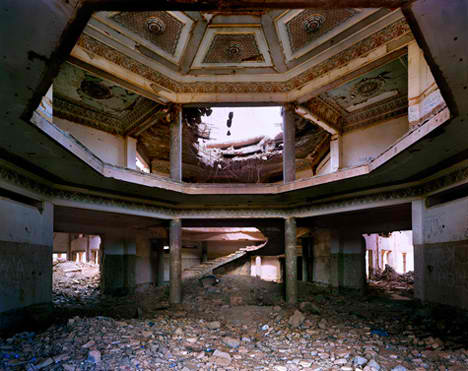
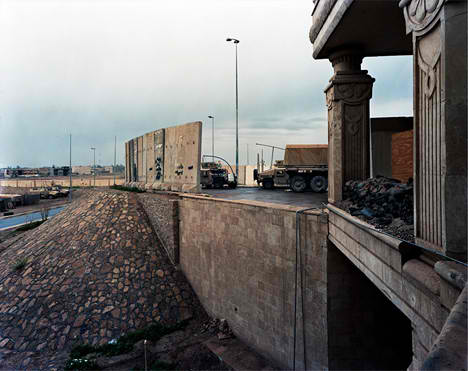
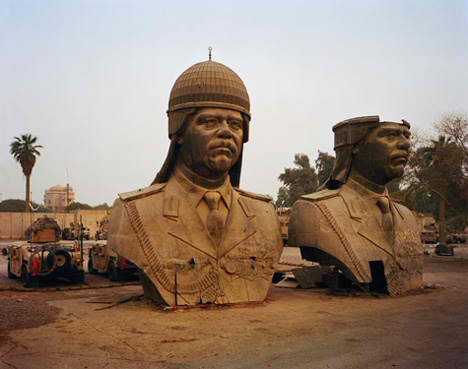
The Babylonian palaces of Saddam Hussein once stood as ostentatious symbols of the Iraqi dictator’s power, hastily constructed all over the country. Once he was forced from power, these ornate palaces full of treasures were either taken over by US Army forces or looted by locals. These photos by Richard Mosse document the period in which American soldiers stalked the marble halls, strung up American flags in what were once exclusive chambers and parked their massive military vehicles right in front of the faux-grand entrances. Many of the palaces are deteriorating, and not just because of war damage; they were so cheaply made that they simply haven’t stood up to the test of time.


[ WebUrbanist | Archives | Galleries | Privacy | TOS ]

     |
Over the last few years photo blogging has exploded in popularity. Therefore, there is tons of great content all over the web, especially when it comes to fashion blogs, travel blogs, and crowdsourced photo sites. Photo blogs are easy to set up and maintain. Moreover, they make awesome photo galleries for photographers which are put off by the complexity of Continue Reading
The post 44 Inspiring Photo Blogs for Photography Lovers appeared first on Photodoto.
Our contributor, Edmund Roland looks at the printer makers’ colour workflow as a means of diagnosing print profiling issues.
The Luminous Landscape has just announced two spectacular new
Antarctic Photographic Expeditions for January and February 2015
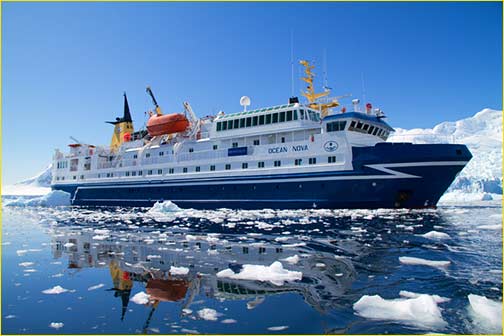
Find Out More Now
These Expeditions Will Sell Out Quickly. They Always Do.

The 2013 UK Picture Editors Guild Awards are now open for entries. Amateur photographers can show off their skills by entering the ‘BT Citizen Photographer of the Year’ category; images must have been taken between July 17th, 2012 and July 16, 2013, and the final date for submission of entries is September 1, 2013. Meanwhile professionals can enter images into a range of categories, for a £20 fee. Click through for full details and entry links.

