RSS
 

Archive for May, 2013

Raspberry Pi enthusiast sends camera 120,000 feet above England

29 May

P1070588-1024x768.jpg

David Ackerman, a ballooning hobbyist based in England has been working with the Raspberry Pi Foundation to use their products for high-altitude photography. Using a Raspberry Pi computer hooked up to the company’s new camera module, Ackerman created a lightweight ‘eye in the sky’ that he recently sent up to more than 120,000 feet above the United Kingdom. Click through for more details – and images – on connect.dpreview.com.

News: Digital Photography Review (dpreview.com)

 
Comments Off on Raspberry Pi enthusiast sends camera 120,000 feet above England

Posted in Uncategorized


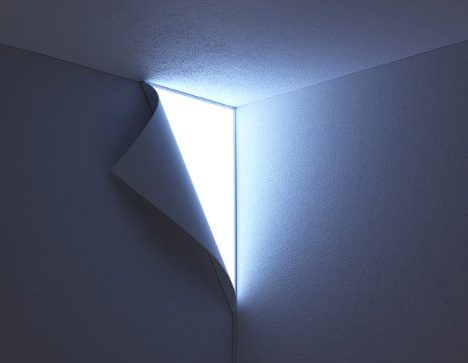
Edge Cases: 8 Space-Saving Design Ideas for Inside Corners

28 May

[ By WebUrbanist in Design & Furniture & Decor. ]

inside interior corner designs

Most home furnishings are made for flat surfaces, not for those uncomfortable edge conditions we call either ‘inside’ or ‘outside’ corners. The following designs do more than just address such conditions, they thrive on these traditionally-problematic challenges.

inside kitchen corner drawers

Kitchens are somewhat notorious when it comes to corners – cupboards bumping into another is one thing, but you also often lose the extra space contained in the corner itself. Not so with these crafty corner drawers that slide out at a 45-degree angle – designs by Blum and Heritage.

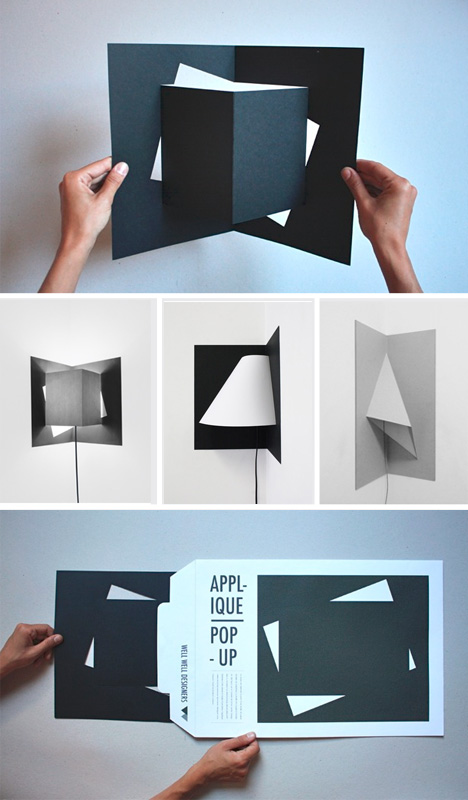
inside flat pack lamps

Floor lamps are another classic challenge- they are often rounded, and occupy more space in the corner than they could possible need. One solution is the Pop-Up corner light from WellWell, packed flat in an envelope with a cord, and folded out by the recipient to form a triangular, rectangular or round shape suited to 90-degree or even slightly-more-unusual angles.


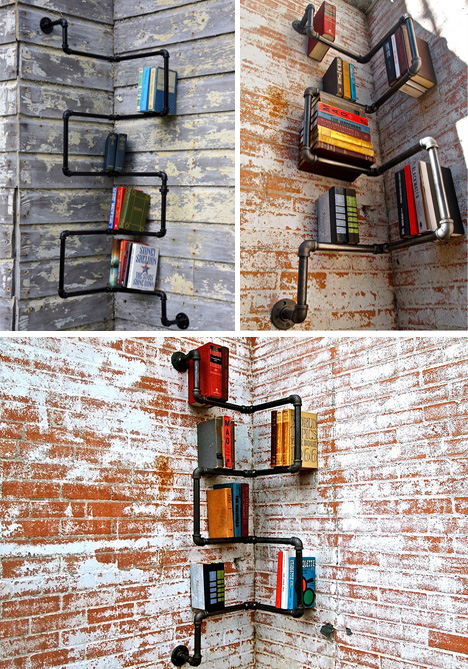
inside corner pipe shelves

For storage considerations, pipe shelves like the ones shown above have been popping up for sale on Etsy for a while now – these are generally oriented toward inside corners, but could just as easily wrap out and around as well. And, of course, you can buy something already-made or go the do-it-yourself route instead.

inside outside corner shelf

But inside corners are only half of the equation – what about outside corners, where two walls meet as they push out into the room? This corner shelf by Martina Carpelan fills both functions with elegant simplicity – it can be flipped to wrap around an outside corner, or to tuck into an inside one.

Next Page:
Edge Cases 8 Space Saving Design Ideas For Inside Corners

Share on Facebook


[ By WebUrbanist in Design & Furniture & Decor. ]

[ WebUrbanist | Archives | Galleries | Privacy | TOS ]


WebUrbanist

 
Comments Off on Edge Cases: 8 Space-Saving Design Ideas for Inside Corners

Posted in Creativity


Where to Position that Horizon?

28 May

Horizons can be quite divisive, both in terms of composition and opinion.  If used correctly, a horizon will either add to a composition or go unnoticed, however, if positioned poorly, it can become a competing element, distracting attention away from the main areas of interest.

One of the main ‘rules’ you often see written regarding horizons is that they should never be placed in the centre of the frame, but positioned closer to a ‘third’.  As with most rules, there are plenty of times when this can be completely disregarded, so here are a few guidelines to help you to decide where to position the horizon when composing your shot.

A low horizon

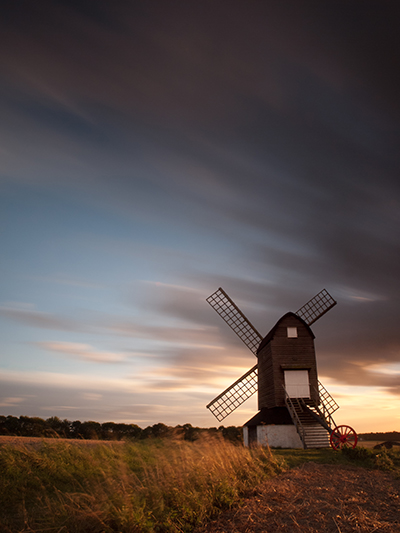
Placing the horizon towards the bottom of the frame is a great way of emphasising a dramatic sky.  By placing the horizon low in the frame, you are giving dominance to the upper portion of the image and so, ideally, you want to have something there to keep the attention of the viewer, i.e. don’t do this if the sky is completely clear, as you will be dedicating over half of the frame to an empty blue sky, and that will not hold interest for long.

A low horizon

A low horizon gives dominance to the sky to help emphasise the movement of the clouds

A high horizon

Conversely to above, placing the horizon towards the top of the frame gives dominance to the lower portion of the image, allowing you to emphasise foreground detail to draw the viewer through to a sky.

A horizon high in the frame

An empty sky and a foreground full of detail made the choice of where to place the horizon in this composition very easy

In both of the above cases, if you tilt the camera either forwards or back to adjust the position of the horizon, be aware of distortion of any vertical lines at the edge of the frame, e.g. trees, buildings etc.  You will find they will either lean into or out of the frame, and may need to be corrected during post processing.

Horizon in the centre of the frame

This is probably the most difficult horizon to handle, compositionally, as it is very easy for a scene to appear unbalanced when the horizon is so close to the centre of the frame.  If you are going to take this approach, it is a good idea to ensure that the horizon is bang in the middle as positioning slightly above/below may look as if you were intending for central positioning but were sloppy in either composition or crop.

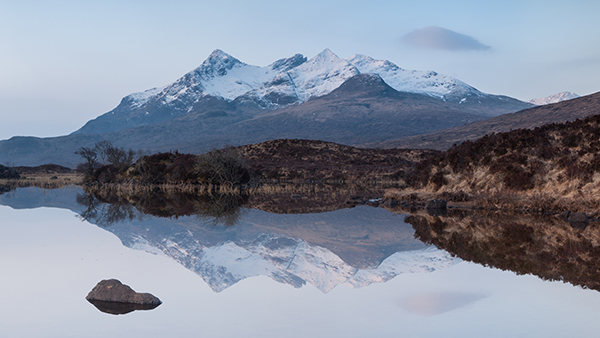
A centred horizon works very well when dealing with reflections as, by default, the composition is easily balanced.

Horizon in the centre of the frame

A centred horizon can work very well with reflections

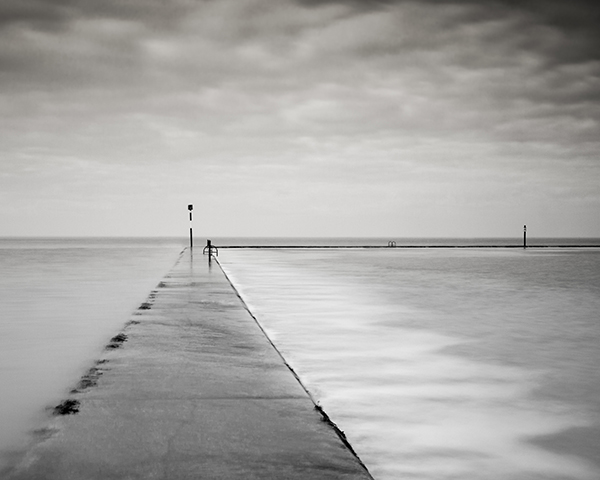
Also, given that the frame is going to be split in half by the horizon, it is wise to ensure that there is something that breaks the horizon line, from land to sky, to ensure there is a relationship between the two halves of the image.

horizon - centre but broen

The two posts that break the horizon here ensure that the sky and foreground are linked, and are not seen as two separate elements

No horizon

Whilst discussing horizon placement, it is worth considering the option of omitting the horizon entirely.  If the sky doesn’t add anything to the scene in front of you, consider leaving it out and focussing on the detail of the landscape alone.

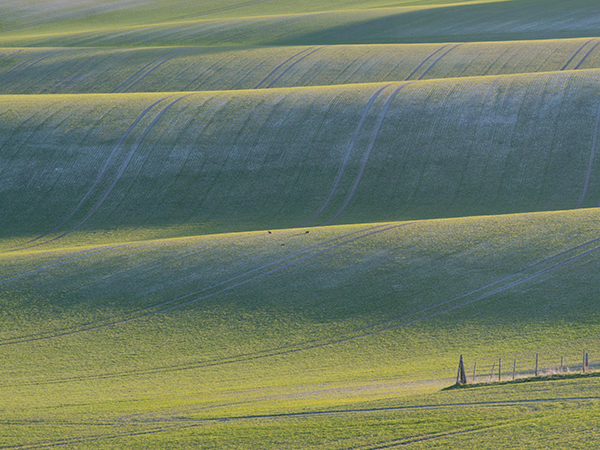
No horizon

You can choose to omit the horizon entirely and focus in on detail within the landscape

So there you go, a few things to help you consider what it is you want to capture about the landscape in front of you, and how that can help you determine where to position the horizon within the frame.

Post originally from: Digital Photography Tips.

Check out our more Photography Tips at Photography Tips for Beginners, Portrait Photography Tips and Wedding Photography Tips.

Where to Position that Horizon?


Digital Photography School

 
Comments Off on Where to Position that Horizon?

Posted in Photography


28. Mai 2013

28 May

Ein Beitrag von: Steven Böhm

© Steven Böhm


kwerfeldein – Fotografie Magazin

 
Comments Off on 28. Mai 2013

Posted in Equipment


Fury, Point Lobos State Natural Reserve – Diving Into Digital Medium Format

28 May
Fury - Point Lobos State Natural Reserve, California

Fury – Point Lobos State Natural Reserve, California

This weekend I went out with some new gear to test, namely the Hasselblad H5D medium format DSLR and Hasselblad 300mm f/4.5 lens via BorrowLenses.com. The location of choice was Point Lobos State Natural Reserve. The H5D has roughly twice the resolution as my Canon 5D Mark II with a whopping 40 megapixels per image.  I had been curious to find out if Hasselblad’s reputation was hype or not. To cut to the chase I’ll tell you that the reputation is justified.  Focusing just on resolution for the sake of this post I’ll tell you that working with a 40 megapixel image is breathtaking especially when Hasselblad optics reveal so much sharp detail.

Fury - Point Lobos State Natural Reserve, California

Fury – Point Lobos State Natural Reserve, California

Above is the original image I took (7304 x 4578 pixels) before cropping it down to a ~2:1 ration (7304 x 3539 pixels). This particular composition I knew ahead of time I’d crop down into a panoramic format as much of the extreme background and foreground were uninteresting and unnecessary to include.

Fury - Point Lobos State Natural Reserve, California - Detail

Fury – Point Lobos State Natural Reserve, California – Detail

Above is a tighter crop into the image to highlight the sharpness Hasselblad lenses provide.  This particular image was cropped down to 2604 x 1953 pixels and below is a 1 to 1 crop of the original image.

Fury – Point Lobos State Natural Reserve, California - Hasselblad H5D 1-to-1 crop

Fury – Point Lobos State Natural Reserve, California – Hasselblad H5D 1-to-1 crop

In case you were curious this was the setup for the previous test shots. Expect a few more photos and thoughts on my experience with Hasselblad in the near future.

Hasselblad H5D and 300mm f/4.5 Auto Focus HC Lens

Hasselblad H5D and 300mm f/4.5 Auto Focus HC Lens

Photo Details:
ISO 100, f/13, 1/350 sec, 300mm on a H5D-40

Copyright Jim M. Goldstein, All Rights Reserved

Fury, Point Lobos State Natural Reserve – Diving Into Digital Medium Format

The post Fury, Point Lobos State Natural Reserve – Diving Into Digital Medium Format appeared first on JMG-Galleries – Landscape, Nature & Travel Photography.


JMG-Galleries – Landscape, Nature & Travel Photography

 
Comments Off on Fury, Point Lobos State Natural Reserve – Diving Into Digital Medium Format

Posted in Equipment


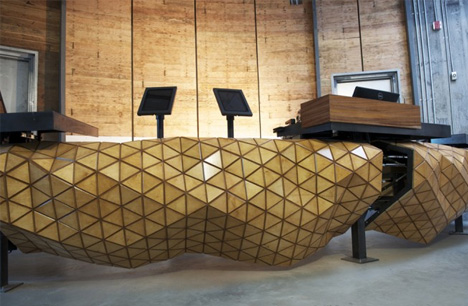
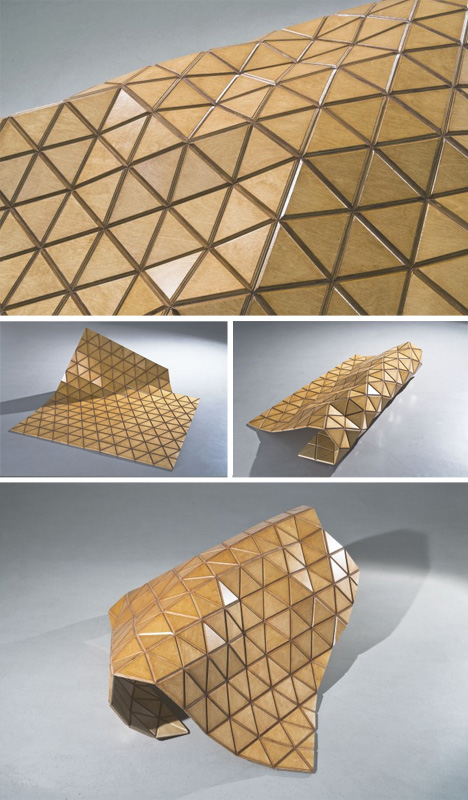
Woodskin: Flexible Hybrid Material Makes Wood Modular

28 May

[ By WebUrbanist in Design & Fixtures & Interiors. ]

flexible wood

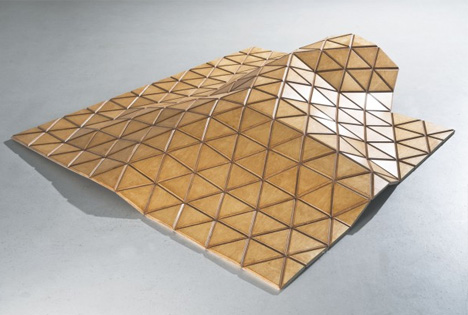
In essence, it has the look and feel of wood, but the flexibility of fabric, all rolled into one composite mesh that is durable but able to be molded into all kinds of creative patterns both temporary and permanent.

flexible wood mesh furniture

From its Italian creators at MammaFotogramma: “Woodskin is a composite material, developed and patented by our design firm. This highly flexible surface – a sandwich wood and high performance mesh – was created by a process of excavation with a CNC cutting machine. By dividing the rigid plan of wood into small triangle, the material is freed – able to be shaped as the maker desires.”

flexible composite wooden material

The result has advantages of both decorative malleable materials and functional solid systems, enabling a wide range of potentials for use in furniture and interior design. Following a broader trend in complex 3D architecture, the mesh of CNC-cut Russian plywood stitched together with layers of vinyl makes the most abstract shapes possible.

Share on Facebook


[ By WebUrbanist in Design & Fixtures & Interiors. ]

[ WebUrbanist | Archives | Galleries | Privacy | TOS ]


WebUrbanist

 
Comments Off on Woodskin: Flexible Hybrid Material Makes Wood Modular

Posted in Creativity


Flickr Founder Stewart Butterfield on Flickr’s New Redesign

28 May

Founder of Flickr Likes the New Flickr


Thomas Hawk Digital Connection

 
Comments Off on Flickr Founder Stewart Butterfield on Flickr’s New Redesign

Posted in Photography


SoundTank: Mobile Sound System or Armored Vehicle?

28 May

[ By Steph in Technology & Vehicles & Mods. ]

SoundTank Mobile Sound System 1

You might think twice about approaching a neighbor to turn down their loud music if it were emanating from the SoundTank, a mobile audio system by Berlin-based artist Nik Nowak. The imposing sound system was made using an old Japanese miniature tracked dumper as a base. Nowak added four tweeters, six 12-inch drivers, and three 8-inch subwoofers, in addition to other audio components, as well as a faceted exterior full of speakers.

SoundTank Mobile Sound System 2

‘Panzer’, which means tank in German, is capable of booming 4,000 watts of sound from its strategically designed array of speakers, and it has a hydraulic cover that flips up with the touch of a button. It’s also equipped with a drum machine, mixer and synthesizer.

SoundTank Mobile Sound System 3

Nowak focused on electronic music during his art studies, and composes music that consists only of low-pitched tones. With the SoundTank, the artist was looking to create an extra-loud system for outdoor performances that can handle a particular frequency spectrum. Performances at festivals and other venues showed off the tank’s capabilities.

Share on Facebook


[ By Steph in Technology & Vehicles & Mods. ]

[ WebUrbanist | Archives | Galleries | Privacy | TOS ]


WebUrbanist

 
Comments Off on SoundTank: Mobile Sound System or Armored Vehicle?

Posted in Creativity


Woodskin: Flexible Hybrid Material Makes Wood Modular

28 May

[ By WebUrbanist in Design & Fixtures & Interiors. ]

flexible wood

In essence, it has the look and feel of wood, but the flexibility of fabric, all rolled into one composite mesh that is durable but able to be molded into all kinds of creative patterns both temporary and permanent.

flexible wood mesh furniture

From its Italian creators at MammaFotogramma: “Woodskin is a composite material, developed and patented by our design firm. This highly flexible surface – a sandwich wood and high performance mesh – was created by a process of excavation with a CNC cutting machine. By dividing the rigid plan of wood into small triangle, the material is freed – able to be shaped as the maker desires.”

flexible composite wooden material

The result has advantages of both decorative malleable materials and functional solid systems, enabling a wide range of potentials for use in furniture and interior design. Following a broader trend in complex 3D architecture, the mesh of CNC-cut Russian plywood stitched together with layers of vinyl makes the most abstract shapes possible.

Share on Facebook


[ By WebUrbanist in Design & Fixtures & Interiors. ]

[ WebUrbanist | Archives | Galleries | Privacy | TOS ]


WebUrbanist

 
Comments Off on Woodskin: Flexible Hybrid Material Makes Wood Modular

Posted in Creativity


Flickr Users Uploading 71% More Photos to Flickr Since New Design Rolled Out

28 May

Founder of Flickr Likes the New Flickr

Recently I blogged about the new design on Flickr noting that engagement on my own personal photostream had skyrocketed. By my own estimation, activity (comments/faves) have increased approximately 294% on my stream since the redesign.

Despite a loud, vulgar, disrespectful chorus, by a small group of torch and pitchfork type haters in the Flickr Help Forum, I’ve wondered how the larger Flickr community has felt about the site changes. To hear it told by the haters, *everybody* on Flickr hates the new design and they are all leaving in droves for other sites on the web.

One of the interesting things about Flickr, is that each photo on Flickr is assigned a unique ascending number on upload that signifies its numerical place as a Flickr upload. Because of this structure, it is fairly easy to measure the pace of uploads at any given time on Flickr.

I wanted to see if users were uploading more or less photos since the changes.

My measurement is approximate, but would seem to indicate that the number of uploads to Flickr since the site redesign have increased *dramatically*, about 71%.

To measure this, I tried to find a photo about as close to the redesign implementation as possible. In this case I found this photo taken by Veronica Belmont posted at about 3pm PST on the date of the change, May 21. This was within minutes of the change as implemented on Flickr. This is what I’m using as a baseline image. It is Flickr photo number 8,776,546,808 (you see this number in the url of the photo).

Next, I went and looked at a recent photo uploaded today. This photo by my contact rollerphoto works. This photo is upload number 8,855,853,505

So roughly between today and the changes made by Flickr, users have uploaded almost 80 million photos to the site. The time measured is about six hours short of six days.

Next, I went and found an older photo uploaded about six days *before* the change was implemented. In this case I found this photo taken by my contact Jazzyblue TR. This photo is one hour short of six days from the changes. This photo is upload number 8,730,146,140.

So, in the 6 days prior to the change, users uploaded about 47 million photos to the site.

So, roughly, as measured in the six days before and the six days after Flickr’s new site design, uploads are up about 71% site wide.

Now, number of photos uploaded is only one metric to measure when looking at the effect of this change. As I mentioned earlier, personally my own engagement numbers are up even higher — but to hear it told by a loud, vocal contingent of about 3,000 members in the Flickr Help Forum, 99% of users hate this change. This simply is not true. The vast silent majority of Flickr users are chugging along just like they always have been and I suspect Flickr signups have *far* exceeded deletions since the change has been made.

Flickr can view much more data internally than I can from the outside, but I suspect that by every way they measure success on the site, this most recent change has been an absolute homerun for them.

Unfortunately, with all change comes haters. Flickr would do well to ignore these haters. Of the almost 100 million Flickr users, we may lose a few thousand of the most vulgar and vitriolic accounts on Flickr, but I suspect what we gain in terms of new users is far greater.

Interestingly enough, earlier last week, the Founder of Flickr himself, Stewart Butterfield, had high praise for the new design on Flickr. Butterfield left as General Manager of Flickr back in 2008, but remains a user still today. In a tweet, Butterfield described the new design as “fantastic,” noting that history will ultimately vindicate the work as “nicely done.” I posted about this praise by Butterfield in the hatefest in the Flickr Help Forum and it only took about 21 minutes for one of the haters to compare his words with Adolph Hitler.

Hopefully the worst of these haters *do* actually leave the site as they keep threatening to do over and over and over and over again, and let the rest of us who *do* like the changes enjoy the new design for what it is, a new, better, fresher version of Flickr.


Thomas Hawk Digital Connection

 
Comments Off on Flickr Users Uploading 71% More Photos to Flickr Since New Design Rolled Out

Posted in Photography