RSS
 

Archive for May, 2013

kwerfeldein diskutiert: Wo fängt Bildbearbeitung an und wo hört sie auf?

04 May

Fehler beseitigen oder Dinge verändern? Die Möglichkeiten der digitalen Bildbearbeitung erlauben uns inzwischen weitreichende Veränderungen an dem Material, das unsere Kamera einfängt. Ganze Kunstgenres basieren auf digitaler Bearbeitung von Bild oder Filmmaterial, Fotomanipulationen taugen aber auch immer wieder für politische Skandale oder weitreichende Diskussionen über das konstruierte Schönheitsideal unserer Gesellschaft, dem nicht einmal die Modelle mehr entsprechen.

An welchem Punkt wird aus Retusche eigentlich Manipulation? Gibt es diesen Punkt überhaupt wirklich oder muss ihn jeder für sich finden? Die Grenzen sind seit jeher fließend und jeder hat eine Meinung dazu: Was geht noch? Was geht nicht mehr? Was ist der Unterschied zwischen einer Fotomanipulation und einem retuschierten Foto?

Lügen Fotos nie oder lügen sie im Gegenteil eigentlich immer und nur im manchen Fällen etwas weniger? Die kwerfeldein-Redaktion diskutiert darüber, was eigentlich Fotografie und was schon etwas anderes ist und warum Purismus vielleicht doch auch eine Option ist…

Martin: Fakt ist, dass jedes Genre in der Fotografie eigene – manchmal auch ungeschriebene – Regeln zum Umgang mit der Bildbearbeitung hat. Schauen wir in die Landschaftsfotografie, dann gehören HDRs schon fast zum Inventar, wohingegen die Straßenfotografie als solche weitläufig wesentlich dokumentarischer daherkommt und auch ausbrennende Lichter akzeptiert.

Dass es hier auch Ausnahmen gibt, die die Regel(n) bestätigen, möchte ich jedoch noch hinzufügen, denn es gibt hier keine Gesetze, sondern nur viel und weniger genutzte Möglichkeiten. Auch im Fotojournalismus wird die oben angeführte Diskussion viel energischer betrieben als beispielsweise in der Portraitfotografie, die eigentlich alles erlaubt.

So ist es schwierig, per se zu sagen: „das ist zu viel oder zu wenig nachberbeitet“, sondern meiner Meinung nach muss hier auch immer der fotografische und inhaltliche Kontext mitbeachtet werden.

Sebastian: Also grundsätzlich würde ich dem zustimmen, dann aber gleich mal die Frage stellen, ob man nicht genau diese Prinzipien komplett über den Haufen werden sollte oder sogar muss, wenn man kreativer sein will als der Rest. Du kennst ja auch die Streetportraits von Lee Jeffries, Martin. Stark nachbearbeitet, wenn auch auf eine Art, die das Bild an sich nicht verändert. Und genau mit dem dramatischen Effekt ist er extrem erfolgreich.

Das ist jetzt vielleicht ein Grenzfall, aber ich würde diese Regeln grundsätzlich für komplett wertlos erklären, vielleicht mit Ausnahme des Fotojournalismus, wo „Authentizität“ das wichtigste Merkmal ist. Wobei ich aber auch die Frage stellen würde, ob Fotografie überhaupt jemals authentisch in dem Sinne sein kann oder ob man mit Brennweite, Blende und Perspektive (geschweige denn das Raw fertigstellen, nachschärfen etc.) nicht auch schon die Realität verändert.

Martin: Natürlich. Ich glaube, dass der Realitätsanspruch auch überflüssig ist. Aber das Maß, in dem nach einer Aufnahme an einem Bild gedreht wird, ist für mich hier entscheidend.

Und ja, Lee Jeffries macht großartige Fotos, jedoch würde ich hier die Maxime gern in Richtung Portrait verschieben, denn für mich ist das keine Straßenfotografie, die Lee betreibt. Und im Bereich Portrait gelten ganz andere ungeschriebene Gesetze.

Und gerade bei ihm ist für mich persönlich nicht die Bildbearbeitung das, was heraussticht, sondern seine Nähe und Identifikation mit den Leuten, was auch in den Aufnahmen deutlich wird.

Und ich meine, dass es, um kreativ zu sein nicht zwingend erforderlich ist, Vorgaben zu brechen. Zumindest nicht in erster Linie. Klar ist das ein Teil der Selbstreflexion (was will ich tun, wo will ich hin), aber ich würde hier lieber das Augenmerk auf „was will ich“ legen als auf „was will ich nicht“.

Ich denke, dass die Bildbearbeitung immer ein Teil des fotografischen Prozesses ist – auch, wenn ein Mensch ganz drauf verzichtet. Wie viel Gewichtung dem beigemessen wird, hängt für mich damit zusammen, was ein Fotograf „sagen“ möchte.

Marit: Auf die Frage von Sebastian habe ich gewartet, denn mit ihr beschäftige ich mich schon so lange. Kann Fotografie überhaupt authentisch sein? Wir geben dem Bild ja schon einen Rahmen, blenden andere Menschen oder Begebenheiten bewusst aus. Hier fängt die Manipulation doch schon an.

Martins Frage „Was will ich sagen?“ ist also der Anfang der ganz eigenen Geschichte. Das Beispiel Straßenfotografie finde ich dabei ganz gut. Ich kann beobachten und festhalten, aber ich kann mit dem Bildausschnitt die Aussage auch bewusst verändern. Der Betrachter des Bildes weiß dann nicht, was außerhalb des Bildes noch gewesen ist, um die Realität der Situation zu erfassen. Der Fotograf manipuliert die Situation und somit auch den Betrachter.

Die Bildbearbeitung führt das weiter. Wenn die Frage ist, was erlaubt ist und was nicht, ist die Antwort: Alles ist erlaubt. Brenzlig wird es, wenn wir bewusst in die Irre geführt werden und uns etwas verkauft wird, was nicht so da ist. Als Beispiel führe ich hier die Beauty-Maschinerie an, in der uns eine Realtität verkauft wird, die so nicht existieren kann, aber ganze Generationen einem vernichtenden Selbsturteil überlässt.

Sebastian: Irgendwie lese ich bei Euch raus, dass es ungeschriebene Gesetze zur Bearbeitung für verschiedene Bereiche der Fotografie gibt. Ich beobachte das auch, dass zum Beispiel eine Form von Fotografie möglichst „authentisch“ (was immer das auch ist) gehalten werden soll, bei der anderen darf rumgebastelt werden, was das Zeug hält. Natürlich beobachte ich diese Gesetze auch und habe sie irgendwie „verinnerlicht“, aber die Frage wäre für mich: Woher kommt das eigentlich und was soll das?

Wenn ich mir so angucke, welche Bilder bei mir einen Eindruck hinterlassen, dann sind das oft ganz triviale Szenen. Was sie stark macht, sind Licht, Ausschnitt, Schwarzweißtechniken – also die „Aufhübschung“ der Realität über Komposition und natürlich auch Bearbeitung. Ein flaches Blitzbild von einem Blumengesteck und ein Schwarzweißstillleben mit schönem Schärfeverlauf: Zwei völlig unterschiedliche Welten. Und doch dasselbe Motiv.

Ich würde ableiten, dass eigentlich alles „bearbeitet“ ist. Was macht es also für das Bild für einen Unterschied, ob in einer Straßenszenerie Dinge verändert werden? Wenn ich zum Beispiel eine Person aus einer Mehrpersonenszene rausretuschiere, weil das Bild dann stärker wirkt: Ist das „unethisch“, weil es dann nicht mehr „echt“ ist? Es bleibt ja so oder so ein vom Fotografen konstruiertes Abbild der Realität, nicht die Realität.

Marit: Es ist der Anspruch, den ein Bild für sich beansprucht. Gehen wir doch mal ins Detail. Wer dokumentieren will, sollte eine Szene so belassen wie sie ist, nicht eingreifen. Er darf natürlich entscheiden, welchen Ausschnitt er wählt; er muss sogar entscheiden, welcher Ausschnitt die Situation so wiedergibt, wie er glaubt, sie selbst wahrzunehmen. In der Bearbeitung kann er angreifen, aber es muss im Verhältnis zum dokumentarischen Charakter stehen. Das Rausretuschieren einer Personen aus solch einer Szene wäre für mich ein No-Go.

Aileen: Man muss ja nicht einmal so weit gehen, etwas raus oder hinein zu retuschieren. Aktuell* wird beispielsweise der diesjährige Gewinner des World Press Photo diskutiert.

* Wir haben unsere Diskussion bereits im Februar begonnen.

Dabei geht es wohlgemerkt nur um eine leichte Veränderung der Tonung, die aber als so dramatisch empfunden wird, dass sie vielleicht das Urteil der Jury beeinflusst hat. Und damit überhaupt die allgemeine Wahrnehmung aller Betrachter.

Marit: Die Diskussion um dieses Bild finde ich affig. Da müsste man dann auch darüber diskutieren, ob Schwarzweiß-Fotografie überhaupt für Dokumentarbilder eingesetzt werden darf, denn dort ist die Wirkung und somit die Wahrnehmung eine andere.

Martin: Wir sprechen hier die ganze Zeit von Realität und „echt“ und die Frage geht für mich auch ein wenig darauf zurück: Wie wollen wir Abschattungen oder Variationen der Realität besprechen, wenn immer noch diese Frage im Raum ist? Sie scheint mir ein fester Begriff zu sein, als ob wir die Realität anfassen, malen und definieren könnten. Aber wie wollen wir bestimmen, was näher an oder weiter weg von der Realität ist, wenn diese selbst so abstrakt ist? Schwierig. Denn niemand kann sagen: So war es und nicht anders.

Michael: Ja, die Realität, wie soll man sie überhaupt fotografisch einfangen? Für mich gehört da mehr dazu, als nur das Gesehene zu dokumentieren. Wir erleben unserer Umwelt ja auch mit all unseren Sinnen – wenn wir nicht gerade Schnupfen haben und kaum etwas riechen. Zudem ist die Wahrnehmung von Person zu Person unterschiedlich.

Deshalb finde ich es auch gar nicht verwunderlich, dass bei der Bearbeitung von Fotos die Ergebnisse so stark auseinander gehen. Der eine versucht, mit der Bildbearbeitung etwas von seinen Gefühlen mit einfließen zu lassen, der nächste möchte einfach nur, dass es dramatischer aussieht, weil es ihm so besser gefällt und wieder ein anderer hat sich vor Ort genaue Notizen gemacht und versucht nun in der Bildbearbeitung, seine Realität möglichst genau wiederzugeben. Auch gibt es Fotografen, die Fotos bearbeiten, weil es vom Auftraggeber so erwartet wird.

Wenn man nicht verstanden hat, was der Fotograf mit der jeweiligen Bearbeitung bezwecken möchte, sollte man sie auch nicht kritisieren. Das ist es, was mich am meisten nervt. Immer wieder wird rumgenörgelt an bearbeiteten Fotos. Die meisten Nörgler verstehen nicht einmal, worum es dem Fotografen geht. Für mich ist Fotografie eine Kunstform und somit ist ein Foto erst einmal nicht an irgendeine Realität gebunden. Ich versuche trotzdem, meiner Realität nahezukommen und habe selbst ein paar Richtlinien, was in der Bearbeitung für mich erlaubt ist und was nicht. Aber das gilt für meine Fotos und was ein anderer Fotograf für Richtlinien hat, ist seine Sache.

Was am Ende zählt, ist doch das Ergebnis. Wenn das gefällt, ist mir eigentlich egal, wie stark es bearbeitet wurde. Wenn ich selbst nörgle, dann vielleicht mal an der Qualität der Bearbeitung. Das ist auch ein Bereich, in dem ich selbst für Kritik empfänglich bin.

Um noch einmal auf den Anspruch, den ein Bild für sich beansprucht, zurückzukommen: Möchte man dokumentieren, hat man wohl andere Richtlinien für die Bearbeitung der eigenen Fotos. Erzählt man zudem den Menschen, die Fotos dokumentieren die Wirklichkeit und sind kaum bearbeitet, dann muss man sich wohl auch an allgemeine Regeln halten.

Ein Problem ist hier meiner Meinung nach fehlende Ehrlichkeit. Wenn versucht wird, ein bearbeitetes Foto der Masse als unbearbeitet zu verkaufen, leidet die Glaubwürdigkeit. Bei Fotowettbewerben war das im letzten Jahr leider einige Male der Fall. Meist, weil die Wettbewerbsbedingungen nicht richtig gelesen wurden. Wobei ich die oben angesprochene Diskussion auch etwas lächerlich finde. In diesem Genre gibt es sehr starke Meinungen, was erlaubt ist und was nicht.

Aileen: Mir scheint fast, dass wir uns alle ziemlich einig sind, dass man sehr viel machen kann und in den meisten Genres auch darf. Ich frage mich dann: Warum ist das Thema trotz allem noch so brisant? Wo wird es Eurem Gefühl nach brenzlig und warum eigentlich?

Sebastian: Ich glaube, das Thema ist einfach deswegen so brisant und kommt immer wieder, weil die Fotografie in der Hinsicht so ein besonderes Medium ist. In allen anderen Kunstrichtungen würde diese Frage ja nicht wirklich in der Form auftauchen, da gehört subjektive Wahrnehmung und Darstellung meistens dazu – sogar in journalistischen Textreportagen ist es die Sprache und die Wahrnehmung des Autors, die alles ausmacht. Aber dadurch, dass Fotografie vermeintlich „objektiv“ sein kann, taucht immer wieder auf, ob sie es auch sein muss oder soll. Das macht für mich auch den Reiz aus, darüber in verschiedenen Kontexten nachzudenken.

Was Wettbewerbe angeht, verstehe ich aber, warum es da immer wieder solche Skandälchen gibt. Die Wettbewerbe machen halt ihre Regeln und das hat dann irgendwie mit Chancengleichheit zu tun, um die Bilder besser gegeneinander zu stellen. In dem Fall ist zu starke Manipulation ja ein bisschen wie Doping – zumindest, wenn man sich mal anguckt, was so richtig gute Bildbearbeiter manchmal aus Fotos rausholen können.

Martin: Wir müssen uns eben auch darüber im Klaren sein, dass Fotos nicht nur dort existieren, wo sie von Fotografen als „Fotografie“ diskutiert und definiert werden. Fotos durchziehen die gesamte Print- und Onlinelandschaft und einen nicht wegzudenkenden Teil der journalistischen Berichterstattung. Außerdem sind sämtliche Social-Media-Kanäle durchspült von Bildern.

Die Gesellschaft dokumentiert sich zunehmend selbst und das ganz ohne fotografischen Anspruch. Der einzige Anspruch, der hier gilt, ist: Dokumentieren.

Und somit ist die Fotografie ein Mittel, das in großen Teilen überhaupt keinen künstlerischen, sondern eher einen Wahrheitsanspruch inne hat, auch wenn das so keineswegs artikuliert wird. Ein Titelbild auf Spiegel Online? Wird schon so stimmen.

Hoffen wir’s. Und all das wirkt auch in die Diskussionen unterschwellig hinein, die von Fotografinnen und Fotografen geführt werden. Denn wir schreiben uns schließlich auf die Fahnen, das Mittel Fotografie zu beherrschen.

Marit: Nach all den facettenreichen Ansichten wird klar, dass man das Thema nicht so einfach betrachten kann. Es hängt immer davon ab, in welche Sparte wir ein mit digitalen Sensoren oder auf Film aufgezeichnetes Bild einordnen. Ob, wie Martin sagt, als Dokumentation oder, wie Michael es benennt, als emotionales Landschaftsportrait oder, wie Sebastian es andeutet, das Foto als Ausgangspunkt für Fotomanipulationen.

Aileen: Hattet Ihr selbst denn schon einmal bei eigenen oder fremden Bildern das Gefühl, dass eine Bearbeitungsgrenze überschritten wurde oder Ihr dabei wart, eine zu überschreiten?

Bei mir war es so, dass sich diese Grenzen über die Jahre, in denen ich mich praktisch mit der Fotografie beschäftigt habe, immer weiter ausgeweitet haben. Heute habe ich wenig Skrupel, zum Verflüssiger zu greifen, ganze Objekte aus einem Bild zu retuschieren oder aus mehreren Bildern ein ganz neues zu machen, das dann wieder aussieht, als wäre es genau so aufgenommen – sofern ich diese Maßnahmen als Bereicherung für die Wirkung meines Bildes empfinde. Da es sich dabei aber meistens um Portraits handelt, bin ich mir durchaus der Tatsache bewusst, dass viele Betrachter sich „hinters Licht geführt“ fühlen dürften, wenn sie wüssten, was mit einigen Bildern passiert ist.

Sebastian: Marit, den Punkt finde ich sehr, sehr interessant, auch in Bezug auf das, was Martin vorher gesagt hat. Ein Foto ist dann eine Dokumentation, wenn der Betrachter es so sehen will oder so sieht. Vielleicht entstehen die großen Diskussionen und Missverständnisse oft dann, wenn das nicht übereinstimmt mit dem, was der Fotograf da hineinlegen wollte. So eine überschrittene „Bearbeitungsgrenze“, wie Aileen das sieht, entsteht dann bei jedem irgendwann, der mit einer Erwartung an ein Bild rangeht.

Ich nehme mich da selbst gar nicht aus, ich habe trotzdem selbst so eine Grenze. Gerade bei so super geairbrushten Modelfotos auf Zeitschriftentiteln (am besten noch mit übersättigten Farben) denke ich oft: Uärghs, geht gar nicht. Nicht wegen des moralischen Aspekts (der kommt natürlich auch dazu: falsches Schönheitsideal), sondern weil das einfach meinem eigenen ästhetischen Anspruch an Fotografie total zuwiderläuft.

Martin: Witzigerweise verhält sich meine Entwicklung bezüglich der Bearbeitungsgrenze genau umgekehrt wie die von Aileen – und das hängt nicht nur mit dem Genre zusammen, das ich heute bediene. Früher habe ich mir eigentlich alles erlaubt, heute sind für mich Kontraste, Helligkeit, Sättigung und maximal Farbtemperatur alle Parameter, die ich an meinen Fotos verändern möchte.

Grenzüberschreitungen bei anderen stelle ich natürlich auch fest, klar. Die Frage ist jedoch auch, wie ich damit umgehe. Da es sich nicht um meine eigenen Fotos handelt, wäre ich der Letzte, der daran rumkrittelt, denn es gibt nichts Schlimmeres als ungefragte Kritik (in meinen Augen). Ausnahme: Der von Sebastian angesprochene Fall der Mode(l)fotografie, jedoch bin ich so privilegiert, dass ich mir so etwas nur selten anschauen muss.

Marit, wie ist das denn bei den analogen Fotografen? Gibt es da solche heißgeführten Diskussionen auch oder eher selten? Beabeitet wird da ja schließlich auch…

Marit: Wie es im Allgemeinen bei den Fotografen ist, die auf Film fotografieren, kann ich ebenso wenig sagen wie Ihr. Eine Dunkelkammer ist eben eine Dunkelkammer, ob im Bad mit verdunkelten Fenstern oder am Computer. Verändern kann man ein Bild immer. Das ist und bleibt eine persönliche Grundeinstellung.

Ich versuche lediglich, aus dem Bild das Beste rauszuholen. Ich arbeite mit Gradationsfiltern, wähle den Ausschnitt des Bildes und helle manchmal Stellen im Bild auf. Das ist die einzige Bearbeitung, die ich einem Bild anheim fallen lasse. Das ist aber eine sehr persönliche Sicht, denn ich denke, dass ich während der Aufnahme schon das im Bild habe, was ich gesehen und gefühlt habe.

Hinterher möchte ich daran nichts mehr verändern, nichts hinzufügen, nichts wegnehmen. Ich möchte zeigen, was in der Realität möglich ist, was zeigbar ist. Ich bin wohl so streng gegen nachfolgende Manipulationen am Bild, weil ich etwas Haltbares in dieser Welt brauche und suche. Man könnte sagen, ich bin ein surrealisitscher Realist, was die fotografische Sprache angeht.

Michael: Ich bewege mich mit meiner Bildbearbeitung eigentlich immer an einer Grenze und das ist auch nötig, weil knapp vor dieser Grenze für mich das optimale Bildergebnis liegt. Aber diese Grenze ist einzig durch meinen eigenen Geschmack und meine Erwartungen an das Ergebnis festgelegt. Für andere ist diese Grenze vielleicht woanders, weil sie, wie Sebastian schon sagt, andere Erwartungen an die Fotografie haben.

Man sollte nur nicht den Fehler machen, die Erwartungen, die man an die eigenen Fotos hat, auch auf die Fotos anderer zu projizieren. An der Stelle entstehen dann oft diese hitzigen Diskussionen. Ich sehe auch oft Fotos, die meine Grenze überschreiten oder so deutlich unterschreiten, dass es mir nicht gefällt. Aber ich halte es da meistens wie Martin und enthalte mich der ungefragten Kritik.

Martin: Was meiner Meinung auch eine gute und respektvolle Haltung anderen gegenüber ist, denn so lasse ich stehen, was mir missfällt und finde dennoch eine eigene Arbeitsweise. Meinung ist wichtig – die Frage ist jedoch, in welchem Rahmen sie geäußert wird.

Sebastian: Vielleicht sollte man sich insgesamt etwas damit zurücknehmen, seinen Geschmack in der Fotografie anderen überzustülpen – das gilt insgesamt und natürlich auch speziell bezüglich der Bearbeitung. Sonst ist man schnell an dem Punkt, dass Leute sich gegenseitig erklären, dass irgendetwas „gar nicht geht“.

Erlaubt ist meiner Meinung nach das, was machbar ist, was ästhetisch oder einfach „gut“ aussieht – was immer das heißt, muss jeder selbst entscheiden – oder das Bild in die Richtung bringt, die ich zeigen mag. Bei Wettbewerben und im journalistischen Kontext gibt es da natürlich Rahmenbedingungen, die man beachten muss – aber in freien Arbeiten? Soll jeder das tun, was er für sich als richtig erachtet, denke ich.


kwerfeldein – Fotografie Magazin

 
Comments Off on kwerfeldein diskutiert: Wo fängt Bildbearbeitung an und wo hört sie auf?

Posted in Equipment


Change is Good

04 May

Google Co-Founder Sergey Brin Sports the New Google Glasses at Dinner in the Dark, a Benefit for the Foundation Fighting Blindness -- San Francisco, CA

If you want to make enemies, try to change something.

– Woodrow Wilson

I’ve been watching with great interest over the past few weeks as the naysayers seem to have gone CRAZY overboard trying to bash Google Glass every chance they can. I’ve seen articles in Wired and on CNN and on blogs, etc., all stating how terrible Google Glass is. Oh NO, geeky white dudes are wearing Google Glass! This will never work! Oh no, someone wore a pair into the shower! Oh no, I will punch someone in the face if they try talk to me with them on — all sorts of gibberish.

There’s nothing like change to bring out the absolute haters.

It seems like every time something comes out that represents change, people freak the fcuk out.

It’s not enough to say, “oh no, this thing is not for me.” People have to go absolutely overboard, talking about how horrible some new thing is for everybody ELSE.

I remember when I waited in line overnight (with my pal Robert Scoble, probably today’s biggest Google Glass cheerleader) for the very first iPhone. Robert’s son Patrick was the very first person to buy an iPhone at the Palo Alto store.

I’m not sure I’d ever been mocked by people so much. “You waited in line overnight to pay HOW MUCH?” for a stupid phone??? People thought the iPhone was the dumbest thing ever. “Why would you ever need a phone to surf the web?” “Why would you pay so much for a phone?” They laughed at me for camping out overnight to get the first generation phone — even though camping out overnight in front of an Apple store has been one of the most fun things I’ve ever done. Getting to hear Apple luminaries like Andy Hertzfeld and Bill Atkinson talk about Apple’s early days was a blast! It’s where I first met the awesome guys from SmugMug. Was it dorky and geeky? Sure, but whatever.

Read some of these early quotes about the iPhone when it first came out. Even though some of us loved it early, so many more were so “doom and gloom” on it. Now, of course, everybody loves the iPhone and the whole generation of Android and other smartphones that followed.

I remember when Twitter first came out. People hated that too. “Twitter is still a fad, and according to a study out today, it looks like it’s popularity may soon fade,” wrote BusinessWeek. People constantly mocked Twitter — “who wants to read a dumb post about what someone had for breakfast,” they’d say. I hopped on Twitter right away while so many of my friends refused to join. Those same friends now complain about how everybody else has more followers than they do.

The same naysayers took umbrage with Google+. Despite being named earlier this week as the second largest social network, the “change is bad” crowd hated Google+ when it came out. How many articles out there were written about Google+ being a ghost town? My good friend Trey Ratcliff passed 5 million followers on Google+ earlier this morning. That sure is an awful lot of ghosts if you ask me.

I’m having the best time on Google+. I’ve met some of the most talented and interesting photographers in the world, I’ve been on tons of great live hangouts and photowalks, and it’s been the best designed social network I’ve ever been a part of. I’m glad I joined it the first day it was available to the public.

When one of my heros, William Eggleston, had the first color photography show at MOMA in New York, a lot of people hated that too. Many people called it the most hated fine art photography show ever. Ansel Adams, the most famous photographer in the world at the time, even wrote a letter to MOMA curator at the time, John Szarkowski, trashing the change that Eggleston represented. Now everybody loves Eggleston and color photography is firmly established as a photographic fine art aesthetic. Just last month the Independent called him the world’s greatest living photographer.

I remember when I first started posting my photos online at Flickr back in 2004, their first year in existence. So many photographers gave me a hard time. They kept going on and on about how my photos would be “stolen.” “Who the hell cares,” I’d answer back. Now everybody posts their photos online, everywhere.

So what is it about Google Glass, the iPhone, Twitter, Google+, color photography, photo sharing that scare people so much? What is it that brings out the naysayers and haters?

It’s simple. Most people hate change. Most people fear change. Most people hope the world around them never changes and turns into something else. They are afraid that change will take their job, or their income, or somehow hurt them. A lot of these people are also lazy. They groan about having to learn a new thing or technology. They worry they will be left behind. So it’s easier for these people to bash whatever is new and interesting and jump on the anti-change bandwagon.

As far as Google Glass goes, I have no idea if it’s going to be a hit or not. I do think it represents an interesting new tool to use for street photography and I’m excited about trying them out myself at some point. I think it’s dumb though to see article after article by scared people trying to talk the rest of the world out of them. Articles that try to paint them as dorky or geeky or creepy. These are just more of the same old complainers/haters who hate every new thing that comes along.

Change is good. Don’t let the naysayers tell you otherwise. The next time somebody brings up some new idea, check yourself. Instead of immediately starting to bash it, resist that urge and keep an open mind. Every so often you just might be surprised.

Oh, and personally speaking, I think journalists that like to bash change are far, far, more dorkier than bloggers who like to take showers with their Google Glass on. ;)


Thomas Hawk Digital Connection

 
Comments Off on Change is Good

Posted in Photography


Just posted: Pentax MX-1 Preview Samples

04 May

Screen_Shot_2013-05-03_at_4.10.35_PM.png

We’ve just posted a gallery of real-world samples from Pentax’s flagship compact camera, the MX-1. Announced earlier this year the MX-1 offers a 12MP backlit CMOS sensor, and a fast F1.8-2.5 lens which spans an equivalent focal range of 28-112mm. We wrote a detailed hands-on preview back in January and we’re working on putting the camera through our usual gamut of studio and real-world testing. For now, we hope you enjoy this small gallery of samples which – if nothing else – proves that the sun does occasionally come out in Seattle. 

News: Digital Photography Review (dpreview.com)

 
Comments Off on Just posted: Pentax MX-1 Preview Samples

Posted in Uncategorized


Transport: Weekly Photography Challenge

04 May

This week your photographic challenge is to shoot and share a photo or two on the theme of transport.

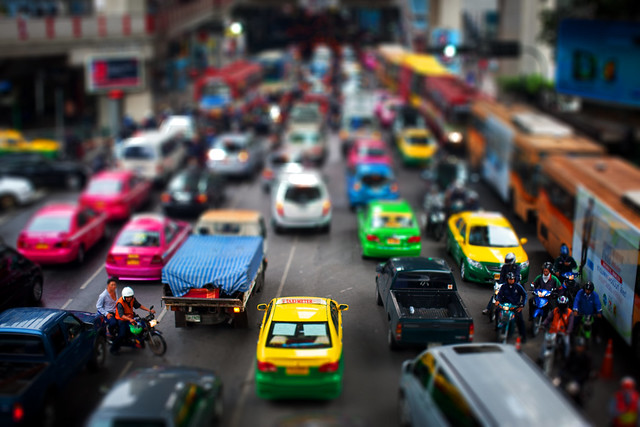
biG miNiaTURe wOrLd

Feel free you take any approach you like – you can photograph a car, bus, plane, bike, horse and cart, skateboard, train, hand glider…. if you travel with it you can photograph it.

Feel free also to shoot it from inside the transport, outside the transport, with it moving or at a stand still… it’s totally up to you!

Can’t wait to see what you come up with this week!

Once you’ve taken your ‘TRANSPORT’ image and have upload it to your favourite photo sharing site either share a link to it or – embed it in the comments using the our new tool to do so.

If you tag your photos on Flickr, Instagram, Twitter or other sites with Tagging tag them as #DPSTRANSPORT to help others find them. Linking back to this page might also help others know what you’re doing so that they can share in the fun.

Also – don’t forget to check out some of the images posted in our last challenge – Simplicity challenge where there were some great images submitted.

Post originally from: Digital Photography Tips.

Check out our more Photography Tips at Photography Tips for Beginners, Portrait Photography Tips and Wedding Photography Tips.

Transport: Weekly Photography Challenge


Digital Photography School

 
Comments Off on Transport: Weekly Photography Challenge

Posted in Photography


Engineers eye-up insect biology as inspiration for curved camera

04 May

bugsview1.jpg

Engineers have developed a curved camera designed to mimic insects’ compound eyes. The hemispherical design gives a wide field-of-view with no aberrations and effectively infinite depth-of-field, with the hope it could be used in applications such as endoscopy or as visual sensors on unmanned aircraft. The current design uses 180 light-sensitive elements, each behind its own lens, but researchers hope to build one with 20,000 elements, giving a similar resolution to that seen by dragonflies.

News: Digital Photography Review (dpreview.com)

 
Comments Off on Engineers eye-up insect biology as inspiration for curved camera

Posted in Uncategorized


Light Painting Part One – the Photography

04 May

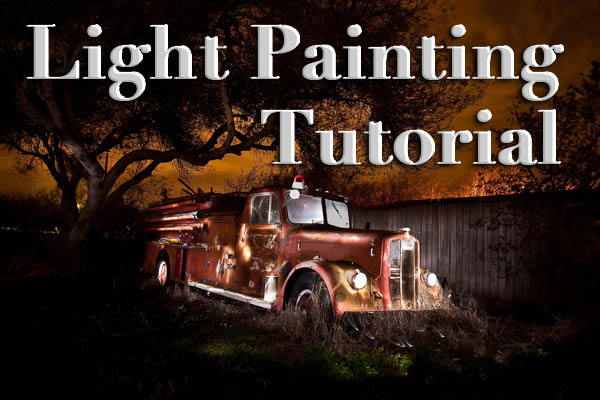
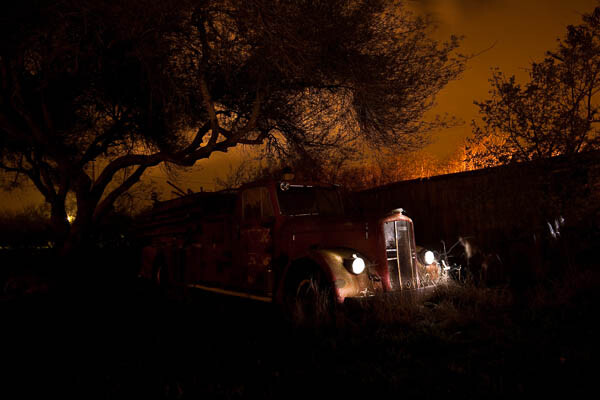
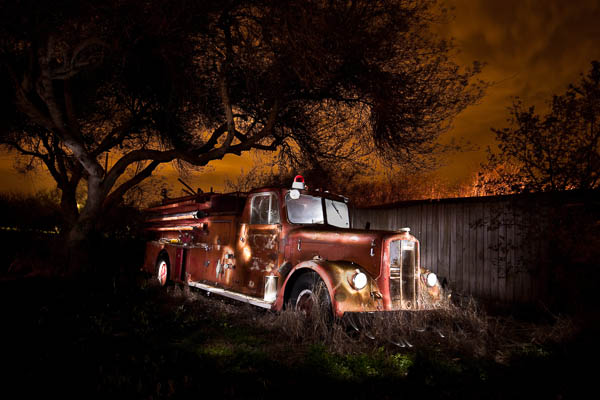
"1956 Le France Pumper"

I teach a night photography class and I find that many people who’ve never tried it imagine it to be a lot harder than it really is to get spectacular results. In this two part series I’m going to take you through step by step how I created the image above using light painting techniques that are actually quite easy.

PART ONE – THE PHOTOGRAPHY

In this article, Part One, I’m going to go through everything you need to know so that you can go out and create some images using this technique. In Part Two I’ll take you through combining multiple exposures, like I’ve done for this shot, using Photoshop to create the final photograph. It’s really not that hard and I’ll do it one step at a time so you can follow along with my screen shots after each step.

WHAT YOU’LL LEARN IN THIS ARTICLE

  • Recommended equipment
  • Camera basics (how to set up your camera)
  • Finding a good subject
  • Getting started (set up, preparation and starting points)
  • Lighting, how to do light painting and some tips
  • Potential problems and how to avoid them

EQUIPMENT FOR NIGHT PHOTOGRAPHY

Night photography is not that difficult but there are a few essential pieces of equipment needed to do the job right. Here is a list of mandatory and optional items:

The “Must Haves”

  • a DSLR, or camera with manual settings that include “Bulb”
  • a camera that shoots RAW format images (not mandatory but highly suggested)
  • a sturdy tripod that is not affected by wind
  • an electric cable release or remote trigger (could be called either) with a locking mechanism or timer
  • at least one extra battery for your camera (long exposures and cold eat up batteries quickly so you may run through two or more in a night)
  • a lens hood or shade for your lens

The “Really Nice to Haves” – not essential, but sure handy

  • a digital watch or timer (or remote that has a timer) I use my iPhone
  • a penlight or small flashlight (your cell phone can work in a pinch) to be able to check camera settings and find an item in the bottom of your bag OR a headlamp like the kind hikers wear, is a better option for hands free operation
  • a powerful flashlight like a Maglite for light painting (I use an incandescent one, LED will produce a bluer tone light)
  • a speedlight or portable flash unit can also be used for light painting (you don’t need a fancy one, even an old Vivitar 283 or 285 will do the trick)
  • rain covers for your camera bag, camera, and yourself (weather can change quickly at night but you can get some great shots in bad weather if you’re prepared – you dry easier than your camera, keep that in mind!)
  • A friend to tag along. Helpful if you’re doing night photography in an urban setting. It’s someone to help pass the time, but also watch that your gear doesn’t grow legs and walk off while you’re digging in the camera bag for something. Or someone to stand guard over the camera gear while you’re off painting with light in the scene.

CAMERA SETTINGS

  • File format –  shoot raw whenever possible lighting at night can be odd colors
  • White balance – I generally choose “incandescent” or “tungsten” White Balance Preset when doing light painting because I know that will balance correctly for my flashlight. I let the rest of the scene fall where it may color wise
  • Focus – your camera has a hard time focusing at night and will “hunt” unless you find focus and lock it for all your exposures.  If your camera has back button focus capabilities I’d suggest using that, if not you can focus and then turn it to manual focus so it doesn’t attempt to refocus when you hit the shutter release. You can try to focus using manual but keep in mind if your camera can’t see in the dark, neither can you!  So to achieve focus use your flashlight, and if you have a friend along, get them to light up the part of the object you want to focus on. Then either use your auto focus and lock it, or manually focus and then don’t touch it!
  • Manual mode or BULB – for exposure set it to manual. That way the camera is not trying to guess the correct exposure. We’ll be setting it and leaving it for the most part – just like our focus. For exposures longer than 30 seconds (30″ on your camera) you’ll need to find and use your BULB setting. On many cameras it is right after 30 seconds on the shutter speed scale, one some there’s a B option on your mode dial on top of your camera.
  • ISO – how low can you go?!  This is where it gets counter intuitive because your gut may be telling you that it’s dark out so you need a higher ISO, right?  Well in certain situations like shooting the moon, a starry sky, or northern lights where you want a faster shutter speed – then you might need a higher ISO. But for this purpose and most of the times you are on a tripod it is always best to choose the lowest ISO possible. Noise in your image increases with changes in 3 things:  higher ISO, long exposures and in blue or dark areas of your scene. We’re already pushing the long exposure boundaries and night is ALL blue – so keeping the ISO low will minimize the noise best we can.

Light-painting-015FINDING A GOOD SUBJECT

Night photography can produce some great images, but it can be a bit tricky to find a location and compose your shots in the dark.  It is best to go out ahead of time and find a spot, then return to it later, about 30 minutes before you actually want to start shooting.  That will give you time to find it, get set up and be ready.   Here are some tips for finding a good night subject suitable for painting with light.

  • Old barns and abandoned cars and trucks in fields make great subjects, and often are appropriate for some painting with light.  If you need to cross someone’s land to get to there, make sure to get permission BEFORE you head out.  Trespassing is not cool and could lead to  lot of problems including getting arrested, or worse, which you certainly don’t want.
  • If you want to shoot the moon, star trails, or do light painting you’ll need to get out of the city.  You may have to drive quite a while to get far enough away so that the city lights do not contaminate your shot.  As you will be exposing for several minutes or longer, the city lights may show up on the horizon if you are not far enough away. (the city lights are a factor in my example in this article which gave me some limitations, and the orange fire in the sky – more on that later)
  • Start with a smaller subject that you can light in one exposure and work your way up to bigger ones like this firetruck or an old barn that will take a few shots and need compiling. An old bicycle is a great starter subject. Buy one at a flea market or junk yard and take your own prop wherever you want and plop it into your scene.  Just remember to take it with you as you’ll want it again later and littering isn’t cool either.

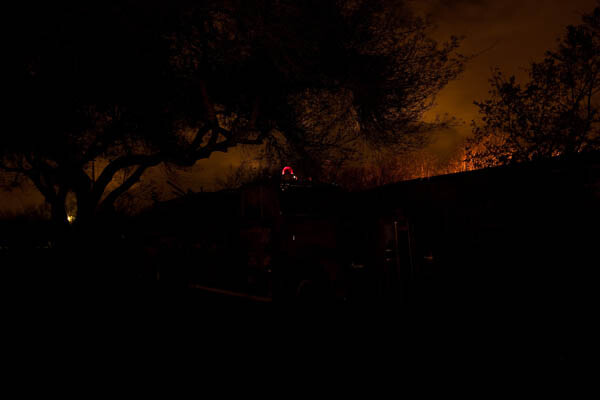
Light-painting-014

GETTING STARTED – SETTING UP

  1. Set up your camera on tripod with remote attached or set up to fire the camera
  2. Turn off any image stabilization (IS or VR) on your lens
  3. Turn OFF “long exposure noise reduction” unless you have a lot of patience. What it does it takes a second exposure of equal length of just black, then merges it with your shot to get rid of the noise. But if you’re doing a 2 minute exposure, you have to wait another 2 minutes to review your image and be able shoot again. I don’t use it, and because we’re on a low ISO noise shouldn’t be a big factor
  4. ISO low – ideally 100 or 200
  5. Aperture – start around f/5.6 – depending on your scene, then adjust from there if you want more or less depth of field.  Keep in mind the smaller aperture you use, each stop you close down doubles the amount of time you need to be painting and exposing. So a 60 second exposure at f/5.6 becomes an 8 minute exposure at f/16!
  6. Shutter speed – start around 60 seconds. I’ve done enough night photography to know that’ll get you pretty close for most moonlit scenes. You may have to adjust faster (shorter exposure) or longer depending on whether it’s a full moon, or there’s some stray light in the scene, and how bright your flashlight is.
  7. Focus using the flashlight – then lock your focus.

LIGHT PAINTING – HOW TO DO IT

Basically what you do it set your camera on Bulb, open the shutter using your locking release and walk into your scene and start lighting the objects in the camera view using your flashlight. It sounds simple but can be quite tricky to get just the right amount of light in different places, not get yourself in the image, and still get a good overall exposure. Here are a few tips or starting points, then you just need to experiment and adjust as you go.

Setting up your base exposure

  • Before you start “painting” take a test shot, without the flashlight, of the scene as it is with no additional light added
  • Review that image and make sure you have a good overall exposure of the scene, with it perhaps just a little on the dark side (histogram should be mostly inclined to the left side)
  • When you are happy with the exposure, adjust your settings so that you have a long enough shutter speed to easily get into the scene and light the subject with your flashlight before the shutter closes (at least 30 seconds). You may have to go to a smaller aperture to do so.
  • Once you know your exposure and your shutter speed is at least 30 seconds long, you can get started. If you can bring a friend along they can press the shutter release for you, so you can go in and out of the scene without returning to the camera after each shot to press it again. Or a wireless remote comes in handy here too.
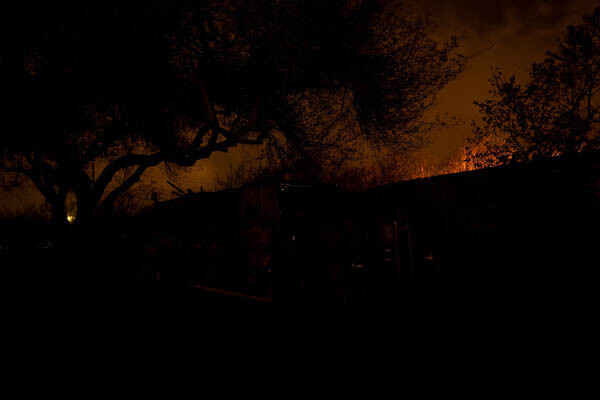
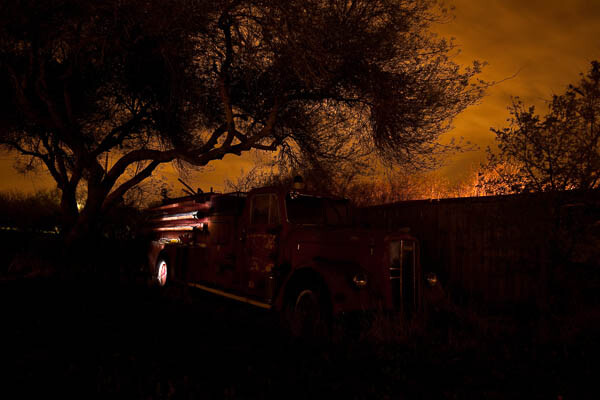
First shot to establish the base exposure. ISO 100, f/5.6 for 30 seconds.

My first shot to establish the base exposure. ISO 100, f/5.6 for 30 seconds.

Adding the flashlight – tips for light painting

  • To keep yourself invisible, always make sure the flashlight is aimed at the subject, and that you do not light up yourself, dark clothing helps too.  Also keep moving during the whole exposure.  Don’t stand in one place for more than a couple seconds or you will show up as a ghost in that spot.
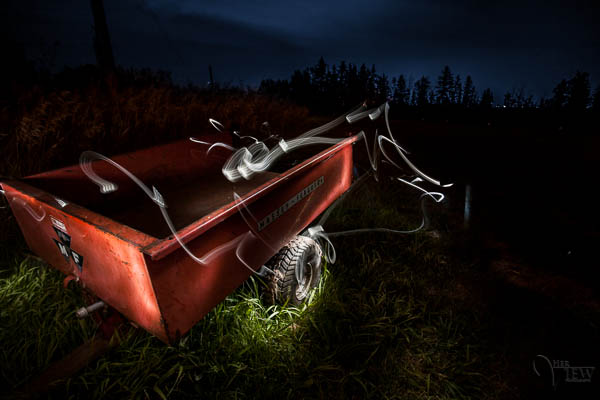
  • Don’t aim the flashlight back towards the camera, unless you want what I call “light bugs”. Sometimes you can use that technique on purpose to create streaks of light and outline your subject, and that can work well also.  See the image of the little red wagon above for an example of light bugs. I believe I accidentally had my headlamp on while I painted and it made the light bugs – but I kind of liked it so I kept it. Happy accidents are great!
  • Keep the light moving the whole time so as not to create any harsh lines or bright spots. I like to make outlines of the shape of my subject or parts of it. Discover what works for you.
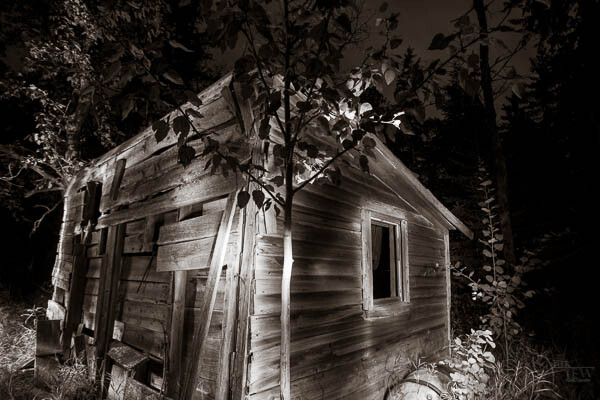
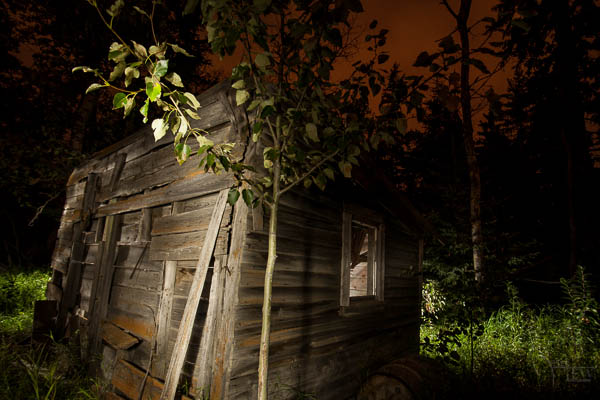
  • For a more defined and abstract look to your light painting you must come in a REALLY close to the subject!  By that I mean about 1-2 feet away from the subject. YES you are going to get right into the scene. But if you keep moving, and keep your light moving you will not show up in the photo. (see the b/w of the old shack above for an example of this look and technique). Also make sure your flashlight beam is focused to a small area – that’s why I like the Maglites, they focus down to a small spot.
  • For a broader more even light keep the flashlight beam wide and stand back from the subject a bit (4-8 feet) and light it from the side to create a nice cross light and texture on the subject. (see the color image of the old wooden shack below for an example of this affect)
Light-painting-017

Light painted from a few feet away from the shack with a wider beam flashlight

REVIEW YOUR IMAGE AND DO IT ALL AGAIN

Back in the days of film, painting with light was much harder.  There was no way to determine if any of the exposures were correct or not.  To paint a whole scene you had to get it right in one frame or exposure.  Now with digital we have the benefit of testing and seeing what we’re doing and compensating on the next shot.   You can even paint a scene in stages, or sections, and build them all into one image later in Photoshop.  I’ll cover how to do that in Part Two.

The things you want to look for in your first image are:

  • How did you do with your flashlight painting? If it was too bright in one area and not bright enough in another, just be conscious of how much time you spend on one spot and adjust accordingly.
  • If it is overall too dark or light, you may need to adjust your exposure time or your aperture.
  • If the flashlight isn’t showing up well enough you might need a longer exposure time (just go from 30 seconds to 60 and try again) to allow you to paint slower and cover more areas better.
  • If you want the light more even, back up and use a wider beam.
  • If you want it more focused and like outlines, get closer.
  • Did you get any light bugs you didn’t want?  (turn off your headlamp!)
  • Did you get a ghost of yourself or a body part?
  • Generally look for any problems or areas you want to correct.  Take note and do it again, and again, and again – until you’re happy with it.
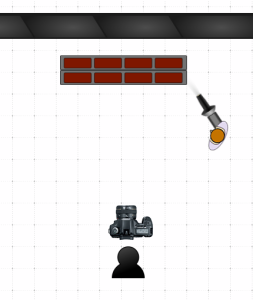
Set up showing how close I got to the firetruck

Set up showing how close I got to the firetruck

MAKING A MULTIPLE IMAGE COMPOSITE – SHOOTING FOR IT

Now that you’re ready to progress to a larger subject we’ll look at how to shoot multiple images of the same subject, so that you can merge them together in Photoshop later. The ONLY thing you’re going to do different than what you just did in the lessons above – is paint the subject in sections. That’s it!

For the firetruck image I actually shot about 30 different exposures. I didn’t end up using them all but I wanted to make sure I had my based covered and had options. That’s the beauty of putting them together later – you do NOT have to get it perfect in one shot! Let’s take a look at a few of my images from that shoot.

Lighting the back area where the hoses are.

Lighting the back area where the hoses are and the back tire

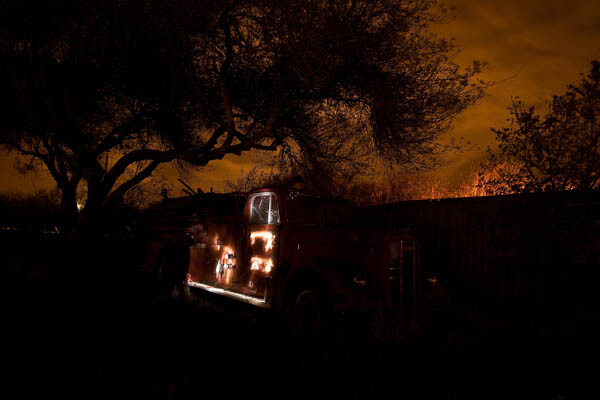
Lighting the side panel and running board.

Lighting the side panel and running board, notice how I’ve highlighted certain areas

Lighting the front grill and headlights - to get headlights to look like they're on, put the flashlight right up to the glass and just rotate it around for a bit.

Lighting the front grill and headlights – to get headlights to look like they’re on, put the flashlight right up to the glass and just rotate it around for a bit.  Notice the light bugs on the right here? We’ll handle those in part two.

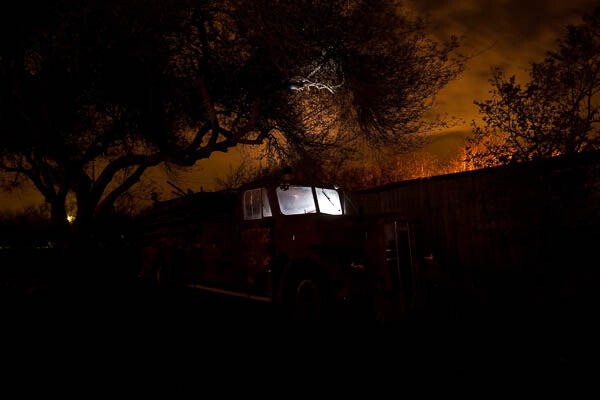
Lighting up the windows from the inside!

Lighting up the windows from the inside! A little of the tree branch too.

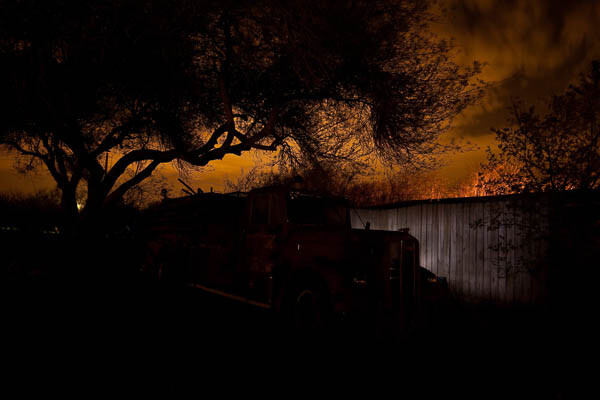
Lighting the fence behind the truck to give it separation

Lighting the fence behind the truck to give it separation

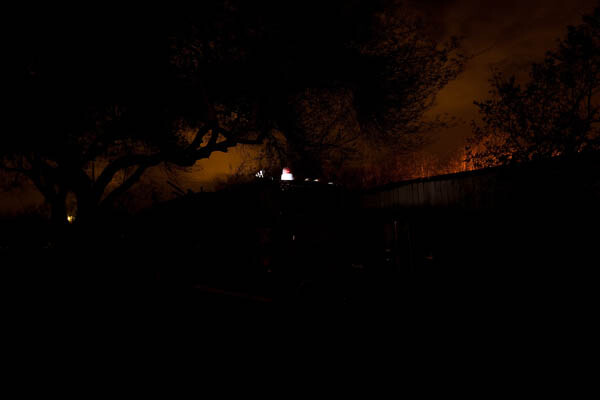
Turing on the cherry light that makes it a firetruck!  Don't forget the details like this!

Turing on the cherry light that makes it a firetruck! Don’t forget the details like this!

Lighting the "cherry" from behind to make it glow red

Lighting the “cherry” from behind to make it glow red

You get the idea right? Cover it well, then just to be sure, do it again. I think we were there (my husband was the button pusher, I ran the flashlight) about an hour an a half just doing this one shot. It was such a unique subject, and we had full permission to be there and be photographing it at night that I wanted to take full advantage of it. That it was a beautiful night and this stuff is just so much fun for me that once I get started, I lose all track of time.

Wrapping up

Well I was a bit long winded on this tutorial, I hope you are still with me. I wanted to make sure you had all the details you need to go out and try this yourself. I fully expect you to do so and be ready with some images for Part Two when we are going to take our multiple shots and combine them to get something that looks like this in the end.

Action plan steps

  1. get the right gear
  2. find a good subject, get permission if need be
  3. set up your camera using the starting settings
  4. take your base exposure test shot
  5. add your flashlight and light painting
  6. review and continue

COME BACK FOR PART TWO!

"1956 Le France Pumper" Corpus Christi, Texas

“1956 Le France Pumper” Corpus Christi, Texas

Post originally from: Digital Photography Tips.

Check out our more Photography Tips at Photography Tips for Beginners, Portrait Photography Tips and Wedding Photography Tips.

Light Painting Part One – the Photography


Digital Photography School

 
Comments Off on Light Painting Part One – the Photography

Posted in Photography


From phone to frame: Which apps are best for printing pictures?

04 May

TS520x0~cms_posts_2495582313_Printingstory_web.jpg

While improvements in camera phone technology have more of us relying on ‘the camera that’s always with you’ than ever before, we’re printing our photographs less and less. If you have fond memories of pasting your memories into photo albums, don’t despair – a growing crop of apps now make it easy to send your photos from phone to frame using online printing services. In this article, we’ve gathered eight of the top apps for printing your photos, and examined the results. Click through to read our findings on connect.dpreview.com.

News: Digital Photography Review (dpreview.com)

 
Comments Off on From phone to frame: Which apps are best for printing pictures?

Posted in Uncategorized


Nokia investment hints at Lytro-style technology in smartphones

03 May

pi-camera.png

The Finnish smartphone manufacturer Nokia has made a $ 20 million investment in Pelican Imaging which is known for its consumer imaging technology that features a grid of lenses to allow for post-capture focusing — similar to the system used in Lytro cameras. This has spurred rumors about the technology being applied in upcoming Nokia smartphone models. Click through to Connect for more details.

News: Digital Photography Review (dpreview.com)

 
Comments Off on Nokia investment hints at Lytro-style technology in smartphones

Posted in Uncategorized


Constellation Portraits: Thread Wrapped Around Nails

03 May

[ By Steph in Art & Drawing & Digital. ]

Kumi Yamashita Nail Art 1

A single, unbroken sewing thread is wrapped around a grid of carefully placed galvanized nails to bring human faces to life in stunningly intricate detail. Artist Kumi Yamashita, best known for light and shadow art, has crafted a series of portraits just as beautifully wrought as any made with more conventional media.

Kumi Yamashita Nail Art 2

Kumi Yamashita Nail Art 7

Kumi Yamashita Nail Art 3

Entitled ‘Constellation,’ for the visual effect of the nails and thread, the series is created on wooden panels painted solid white. Thousands of small silver nails are set into the wood, and Yamashita carefully winds the thread around them, sometimes using an entire spool for a single portrait.

Kumi Yamashita Nail Art 4

Kumi Yamashita Nail Art 5Kumi Yamashita Nail Art 6

Based in New York City, Yamashita was born in Japan and received her Master of Fine Arts degree from Glasgow School of Art. The Constellation series continues Yamashita’s transformation of everyday materials into visually arresting images that challenge the way we perceive these items.

Share on Facebook


[ By Steph in Art & Drawing & Digital. ]

[ WebUrbanist | Archives | Galleries | Privacy | TOS ]


WebUrbanist

 
Comments Off on Constellation Portraits: Thread Wrapped Around Nails

Posted in Creativity


3. Mai 2013

03 May

Ein Beitrag von: Herr Bohn

passingwater_©_HerrBohn


kwerfeldein – Fotografie Magazin
 
Comments Off on 3. Mai 2013

Posted in Equipment