RSS
 

Archive for May, 2013

Readers Shoot Back: Vivian Chung

13 May

Dontcha hate it when your bride-and-groom portrait gets photo-bombed?

Okay, maybe not if it's by a Beluga whale. And for Vancouver wedding photographer (and Strobist reader) Vivian Chung, this well-planned cameo was no accident.

Complicating things, she only had a little time—and a key technical restriction—to make this shot.

Read more »
Strobist

 
Comments Off on Readers Shoot Back: Vivian Chung

Posted in Photography


Bildvorstellung: The Rise

13 May

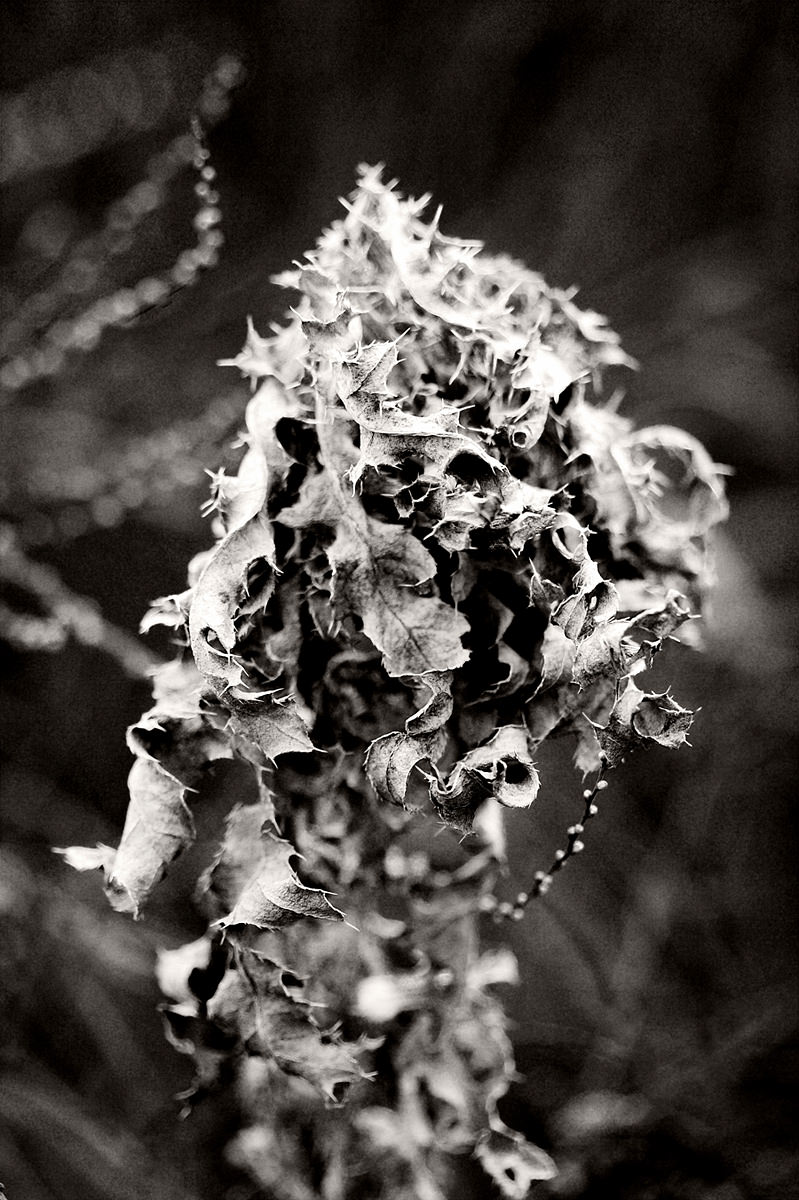
Das Bild, das ich vorstellen möchte, zeigt eine Ansammlung von Blättern, die langsam vertrocknen und dabei durch irgendeine Kraft so angeordnet wurden, dass sie eine fremdartige Skulptur ergeben. Ich erinnere mich noch sehr genau daran, wie sehr ich mich darüber gefreut hatte, diese Struktur zu entdecken.

Ich weiß bis heute nicht, ob sie als Ganzes Teil einer Pflanze war oder ob der Wind und die Naturkräfte sie dort einfach neben einer Hecke so arrangiert hatten. Die ganze Fototour an diesem Tag entstand aus einem Experiment: Ich wollte an einen Ort fahren, an dem ich normalerweise keine Bilder machen würde und dort nach Dingen suchen, die es zu fotografieren gibt. Mein Auge dafür schulen, Motive zu finden und festzuhalten.

© Sebastian Baumer

„The Rise“ ist im Anschluss Teil einer ganzen Serie geworden, die bis heute noch weiter wächst (sic!). Während die meisten Naturfotografen, die ich kenne, im Frühling und Sommer ihre Kameras auspacken und wild nach draußen laufen, um Blümchenbilder zu machen (was ich natürlich auch tue), habe ich mir angewöhnt, meinen Schwerpunkt auf den Herbst und den Anfang des Jahres zu setzen.

Ich gehe dann in Parks, in den Wald und einfach an irgendeinen Ort, an dem Pflanzen wachsen und beobachte, was passiert, wenn die Blätter von den Bäumen fallen, die Blumen verwelken, die Blüten langsam verblühen oder wie die Flora aussieht, wenn sie nach dem Winter wieder aus der Schneedecke hervorkriecht. Ich versuche, diese ganz eigentümlichen Formen des Verfalls einzufangen, die meiner Meinung nach nicht weniger beeindruckend als die Blütezeit sind und zusätzlich viel ungewöhnlicher wirken, weil man sie nicht so oft auf Fotos vorgeführt bekommt.

© Sebastian Baumer

Die Bearbeitung und die Technik, die hinter „The Rise“ stehen, sind nicht groß der Rede wert. Es ist technisch auch gar kein gutes Makrofoto, denn heute würde ich wohl die Spitze mit in den Fokus nehmen. Ich sah das Bild schon in schwarzweiß, als ich es aufnahm und habe es mit meiner üblichen Schwarzweißkonvertierung bearbeitet. Diese ist sehr stark darauf ausgelegt, die Details hervorzuheben und auch die Kontraste zu verstärken. Zusätzlich habe ich ihm einen leichten Sepia-Ton und eine Körnung für einen analogeren Look gegeben. Es verstärkt den Effekt, es hier mit einer Art abstrakten Installation zu tun zu haben.

Auf Facebook schrieb ich unter das dazugehörige Album, in das ich neue Bilder aus der Reihe oft hochlade, den Satz „Ich sehe tote Pflanzen“. Eine Anspielung auf einen Film, die eigentlich zunächst nur als spontaner Witz über mein eigenes Projekt gemeint war – Witze über sich selbst machen zu können, ist eine sehr wichtige Eigenschaft, glaube ich.

Je länger ich über den Satz nachdenke, desto besser beschreibt er aber doch genau, was das Projekt und das Bild sagen wollen: Als Fotograf die Dinge zu sehen versuchen, die sonst nicht gesehen werden, seinen ganz eigenen Blick auf die Welt zeigen.

Der Tag, an dem ich das Bild „The Rise“ und die ersten anderen Fotos aus der Reihe aufnahm, war ein grauer Herbsttag im Oktober. Ich lief durch das Industriegebiet der Stadt, in der ich damals wohnte und machte Bilder von einem kargen Gestrüpp, als ein älterer Passant an mir vorbeilief, mein Treiben beobachtete und fragte: „Was bilden Sie denn da ab? Da ist doch nichts.“

Genau dieses Nichts, das im normalen Kontext Nicht-Wahrgenommene will ich mit der Reihe einfangen, denn ihm wohnt meiner Meinung nach eine sehr fremdartige Schönheit inne. Pflanzen wissen, wie man elegant stirbt.


kwerfeldein – Fotografie Magazin

 
Comments Off on Bildvorstellung: The Rise

Posted in Equipment


How to Master Sunrise Photography in the Most Effective Way Possible

13 May

Sunrise photography is underappreciated. Heck, many people take the sunrise for granted; after all, it happens every day! If this is the way you actually feel, you are missing out on a golden opportunity to capture some of the most breathtaking pictures on Earth. People seem to be more captivated by sunsets, but that’s really regrettable when you think about Continue Reading

The post How to Master Sunrise Photography in the Most Effective Way Possible appeared first on Photodoto.


Photodoto

 
Comments Off on How to Master Sunrise Photography in the Most Effective Way Possible

Posted in Photography


Fighting the Future: 3D-Printed Gun Fired, Blocked by US

13 May

[ By WebUrbanist in Gadgets & Geekery & Technology. ]

3d gun

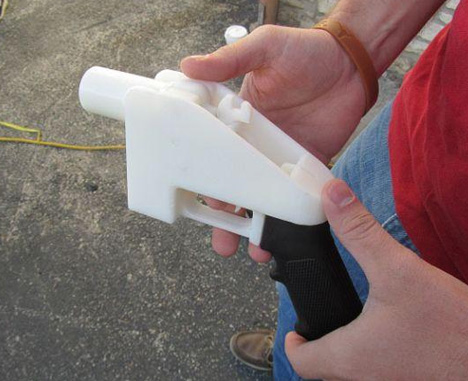
The story has unfolded fast, and people on both sides are furious. Within days of a successful test firing of the Liberator, this working 3D-printed weapon has attracted the attention of the United States government. 100,000+ downloads in,  the State Department has stepped in to try and stop further distribution.

3d gun in case

Cody Wilson of Defense Distributed and his crew have been harshly criticized, both by those who wanted him to stand up to authority and others who wish he had never created or released the blueprint files in the first place.

3d printed plastic gun

Despite adamantly contending they would not cave to external pressure, Defcad – the site hosting the 3D gun and other illicit-object designs – now has a white-on-red warning at the top of the page summarizing the situation for visitors. None of this, of course, has stopped people from distributing the files in a variety of alternative venues.

3d printer gun component

On the one hand, it is entirely understandable that people would fear a future in which gun control is difficult or impossible thanks to ease of on-demand printing. Further, its parts and breakdown also make it easy to sneak through security checks, making it potentially more dangerous in some ways than a traditional firearm.

3d firearm parts disassembled

On the other hand, people can already make guns with the right shop equipment (better ones than those that can be currently printed), plus history has shown that fighting inevitable shifts in technology is an uphill battle. In tech, much like in war, sophisticated capabilities tend to win in the end, regardless of which side was ‘right’ to begin with. Information, as they say, wants to be free.

Share on Facebook


[ By WebUrbanist in Gadgets & Geekery & Technology. ]

[ WebUrbanist | Archives | Galleries | Privacy | TOS ]


WebUrbanist

 
Comments Off on Fighting the Future: 3D-Printed Gun Fired, Blocked by US

Posted in Creativity


What the Mona Lisa Can Teach You About Taking Great Portraits

13 May

Mona-Lisa

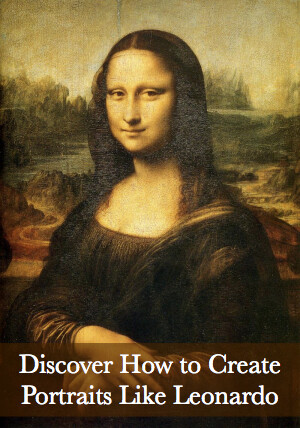
When it comes to famous images the Mona Lisa by Leonardo Da Vinci is one of the most recognized in the world.

When I visited the Lourve in Paris a couple of years ago I was stunned by the crowds of people gathering around this small image, pushing and shoving to get close and to take a picture of it (I got some great shots of the crowd).

The Mona Lisa has been at the center of much debate and speculation over the years but why is it an image that intrigues people so much and what can we learn from it as photographers today?

While we live in a different time (the Mona Lisa was painted in the 1500′s) and use different technology – is there something in this famous image that we can be inspired by as image makers today?

Lessons from the Mona Lisa for Photographers

Today I want to explore some of the different aspect of the Mona Lisa and point out some things that Leonardo did in painting this image that I think we could take away as portrait photographers today.

Composition
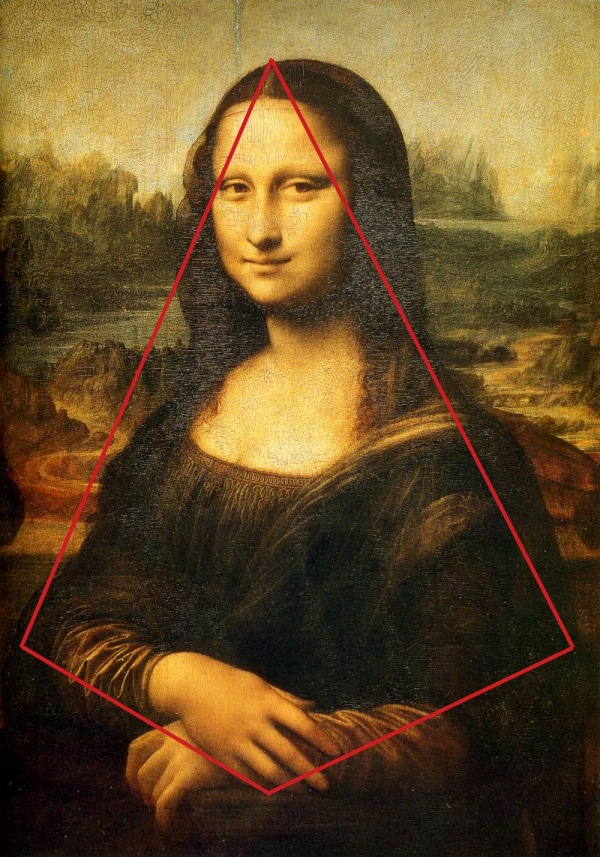
mona-pyramid.pngWhile we look at the Mona Lisa today and see it’s composition as fairly standard and simple – for it’s time the composition of the Mona Lisa was ground breaking and has set new trends in painting which have been followed for centuries since.

One of the compositional elements that the portrait is known for is Leonardo’s use of a pyramidal composition which shows the subject with a wider base at her arms and her hands forming the front corner and everything is in place to draw the eye up her body to her eyes and her infamous smile.

Take Home Lessons for Today

The same form of composition can work for us. While I wouldn’t dare suggest that this is the only or best way to set up a portrait shot – the pyramidal composition is one worth trying.

The Pose

Again – today we look at Mona Lisa’s pose and it seems fairly normal but for it’s day it was quite revolutionary as most portraits at the time were rigid, stiff and quite often profiles rather than front on.

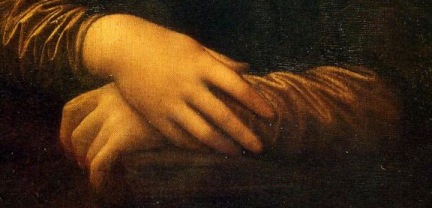
In contrast Mona Lisa is somewhat relaxed and at ease as she leans upon the arm of a chair with her hands crossed in a relaxed fashion.

While she’s slightly turned to one side she sits open to the viewer and holding their eye.

Also unusual for the time was the fact that Leonardo went against the norm with the framing of this image and opted for a three quarter length pose rather than a full length one. In this way he filled the frame with his subject which lends itself to an intimate image and little room for distraction by her context.

One last aspect of the pose is that the Leonardo has positioned Mona Lisa’s eyes at the eye level of the one viewing the image. This brings a sense of intimacy to the image as we the viewer gaze directly into her eyes (there’s not a sense that we’re looking down on her or that she’s doing that to us).

mona-hands.png

Take Home Lessons for Today

This classic pose works today. Fill your frame with your subject by using a three quarter length pose, relax your subject, have them turn their body slightly away from the camera and look directly at the camera. Give their hands something to lean on (they can look awkward otherwise). Most of all – attempt to relax your subject.

The Background
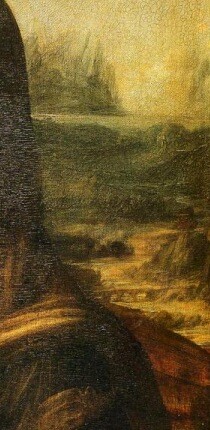
mona-background.png
Much has been written about the background of the Mona Lisa and we can draw out a few things from it for today.

One thing worth noting is that while paintings of the day generally had both the subject and background in sharp focus with lots of detail – the background of the Mona Lisa seems to ‘fade’ or become more blurred and out of focus the further from the subject it extends.

This was unusual for the time and is an effect that many portrait photographers use today by choosing a large Aperture to make for a blurred background that leaves the viewer of the image to focus upon the subject.

While there is definitely points of interest in the background (there’s a lot of debate about whether the two sides of it ‘match’ and whether it’s supposed to be some kind of a fantasy/imaginary background) the colors in it are somewhat bland, muted and subtle – again leaving the focus upon Mona Lisa.

Take Home Lessons for Today

There are different ways to use a background of a portrait. It can either be used to put your subject into context by showing their surrounds – or it can be used as a backdrop that is largely a blank canvas with few features so that your subject stands out.

In a sense Leonardo has done both with his background. It doesn’t take the focus away from the subject – yet the landscape behind her does have an element of mystery and interest to it. It’s also visually complementary to the subject with some of the shapes and colors almost mirroring colors and shapes in the subject’s clothing.

The lesson is to carefully consider your backgrounds – they can greatly enhance or detract from your portraits.

Light

One of the things that I like about the Mona Lisa is the way in which light falls upon the subject. Leonardo uses light to draw the eye of the viewer to the parts of the image that he wishes to be highlighted (the face and hands) and balances the image nicely by placing hands and face in positions that counter one another.

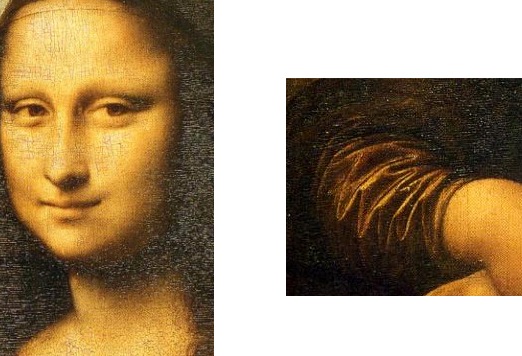
Leonardo also uses shadow (or a lack of light) to add depth and dimension to different aspects of the image – particularly the area around Mona Lisa’s neck and in the ripples on the dress on her arm.

light-1.jpg

Take Home Lessons for Today

Think about how your subject is lit. Use it to draw the eye to key parts of your image but also use shadow to create depth and dimension to your shots.

Clothing

We’ve talked about clothes and portraits here at DPS before and Leonardo takes the approach of darker less obtrusive clothes in this image. Once again – this is a little different to other portraits of the time which are renowned for being bright.

While her dress has quite a bit of detail (the lace work is quite fine and the detail in the folds on her arms are lovely) and it all is within keeping of the feel of the image – everything works to highlighting her face.

mona-lisa-clothes.jpg

There’s also a lack of any kind of jewelry or any other kind of accessory to distract the viewer away from Mona Lisa’s face.

Leonardo obviously wants something about the woman herself to shine through in this image rather than anything else.

Take Home Lessons for Today

Clothes are another element that can be a real distraction in a portrait. Take a lesson from Leonardo and use clothes that fit with the subject and give them context – but which don’t distract your viewer.

Framing

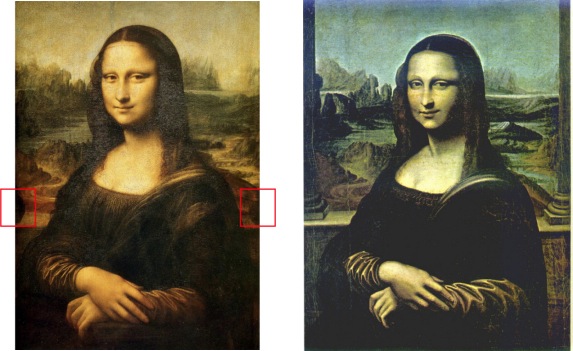
One of the things that I’d not noticed about the Mona Lisa before that i read about today is that on either side of the subject just under and to the side of each of her shoulders there is half of a round ball shape (see the images below on the left).

It is believed that what we see of currently of the image is actually slightly smaller than the original. Part of the image was lost when the image was re-framed at some point. What were the balls?

The most widely accepted theory is that in the original and full version of the painting two columns extend up from the balls on either side of Mona Lisa. She’s actually sitting on a balcony overlooking the view behind her. You can see the horizontal edge of the balcony extending between the two columns.

Here’s how one artist reproduced the Mona Lisa with the extra columns.

mona-lisa-framing.jpg

Whether or not the columns in the original looked exactly like this reproduction or not I’m not sure – but it seems that Leonardo used a technique that we call ‘framing‘ in photography today. This technique is all about drawing the eye of the viewer of an image to your main subject. It also has the potential to add a little context to a portrait (with the columns it would be more obvious that Mona Lisa is sitting on a balcony).

Take Home Lessons for Today

Learn to use techniques like framing to draw the eye of the viewer of your images to your main subject. Frames can be subtle and a natural part of the environment around your subject. Don’t use them in every shot but do keep your eye out for opportunities to include them to add another dimension to your portrait work.

Mystery

Who is the woman (its been argued that she is anyone from a female form of Leonardo himself through to the wife of the man who commissioned the image)? What is the background? Why is she smiling (or is she)?

mona-smile.png

There’s something mysterious both about the subject herself (her look is both alluring and aloof) and the way that the image was painted (Leonardo used a technique called ‘blurring’ around the edges of the subject that was new for his time that give it a mysterious quality). This leaves the viewer of the image asking questions and entering into it with imagination. Leaving elements of the image open to interpretation can make an image impact it’s viewer.

Take Home Lessons for Today

One of the elements that takes a proficient image and makes it a great image is that it goes beyond being a record keeping exercise and becomes a story telling one.

The Mona Lisa has drawn viewers to use their imagination and have conversation about it for centuries simply because it leaves parts of the story untold. This is something that can’t really be learned as a photographer – but is something that comes with experience.

What Lessons Does the Mona Lisa Teach You about Photography?

What have I missed out on? What do you see in this famous painting that could teach us about photography?

Post originally from: Digital Photography Tips.

Check out our more Photography Tips at Photography Tips for Beginners, Portrait Photography Tips and Wedding Photography Tips.

What the Mona Lisa Can Teach You About Taking Great Portraits


Digital Photography School

 
Comments Off on What the Mona Lisa Can Teach You About Taking Great Portraits

Posted in Photography


12. Mai 2013

13 May

Ein Beitrag von: Philipp Häfeli

tango


kwerfeldein – Fotografie Magazin

 
Comments Off on 12. Mai 2013

Posted in Equipment


Tell Us What You Want Out of a dPS Redesign

13 May

It has been a couple of years since we did a complete overhaul of the design of dPS so over the coming months we’ve commissioned a team of designers and developers to give our site a once over – and we’d LOVE your feedback!

So now is your chance to tell us what features and design elements you’d love to see on the newly designed dPS.

Is there something missing that you’d like to see added? Is there a feature on another site that you’d love to see here?

You’re welcome to give feedback upon the blog area, the forum area or even our social media accounts (Facebook, Twitter, Pinterest etc).

Feel free to tell us what you honestly think (as long as you’re constructive that is) – we’ll keep this post open for comment for a day or two before closing it off to pass onto our team.

Thanks – ultimately dPS is nothing without you as readers so we can’t wait to hear what you’d like to see to make it even better than it is.

It’ll be a couple of months before you notice too many changes but rest assured we’re listening to your feedback today!

Post originally from: Digital Photography Tips.

Check out our more Photography Tips at Photography Tips for Beginners, Portrait Photography Tips and Wedding Photography Tips.

Tell Us What You Want Out of a dPS Redesign


Digital Photography School

 
Comments Off on Tell Us What You Want Out of a dPS Redesign

Posted in Photography


Can’t Be Shaved: 12 Abandoned Barber Shops

12 May

[ By Steve in Abandoned Places & Architecture. ]

abandoned barber shops
This abandoned barber shop triple-quartet collectively echoes with the metallic chattering of honed clippers tempered by hazy undertones of warm conversation.

Losing Your Head

abandoned barber shop Yanceyville NC(image via: Adam’s Journey)

The abandoned Richardson’s Barber Shop in Yanceyville, North Carolina, appealed to potential customers by displaying the unique motto “We need your head in our business” on the outside wall. Kudos to roving photographer Adam Prince for snapping the shop in a favorable light, or at least in favorable lighting.

abandoned barber shop Yanceyville NC(images via: CCHA and Adam’s Journey)

Evidently the snappy slogan wasn’t the best way to get ahead IN business because by the fall of 2005, Richardson’s was OUT of business. On the bright side, though the ex-clip joint is looking faded and forlorn these days the circus flyers marring its front picture window in the autumn 2005 image above weren’t a permanent addition.

Rest In La Paz

abandoned barber shop Spain(image via: Photorator)

The conquista-door has long slammed shut at the eerily exquisite La Paz Peluqueria de Caballeros (Gentlemen’s Hairdresser) shop sleepily snuggled in a small southern Spanish city. Shaded by gently waving palm trees and lit by a lone wrought iron lantern, the soot-stained stucco-walled shop exudes an aura of timeless style highlighted by the rich patina coating the frame of its cozy, glassed-in, second floor balcony.

A REALLY Close Shave

abandoned barber shop Bannack Montana ghost town(images via: SeaBix, Chuck_893 and Byron Serrano/Pinterest)

The well-preserved ghost town of Bannack, Montana, had a good run: it was founded in 1862 and finally abandoned in the 1970s. The former gold-mining town and territorial capitol boasted a population of around 10,000 and at least four saloons at its peak; one of which featured a one-seat barber shop in a front corner.

abandoned barber shop Bannack Montana saloon(image via: Chuck_893)

Legend has it that occasionally gunfights would break out among the drinkers, giving whomever was enjoying a trim at the time a close shave without the benefit of razor or cream. A tip of the hat goes to Flickr user Chuck_893 for his snap of the weather-beaten barber chair above

Next Page:
Cant Be Shaved 12 Abandoned Barber Shops

Share on Facebook


[ By Steve in Abandoned Places & Architecture. ]

[ WebUrbanist | Archives | Galleries | Privacy | TOS ]


WebUrbanist

 
Comments Off on Can’t Be Shaved: 12 Abandoned Barber Shops

Posted in Creativity


browserFruits Mai #2

12 May

Herzlichen Glückwunsch und alles Gute allen Mamas zum Muttertag. Lasst Euch verwöhnen und umsorgen. An diesen besonderen Tag haben wir auch wieder unser Fotospecial angepasst. Unsere browserFruits sind natürlich auch für alle Papas und Fotografen ohne Kinder da. Also Viel Spaß beim Durchklicken und Entdecken.


Fotospecial: Mamas

Flickr

500px


Deutschsprachig

• Bye, bye, Adobe Creative Suite. Statt CS7 übernimmt die Creative Cloud die Nachfolger der Creative Suite wie Photoshop, Illustrator, InDesign & Co. Zukünftig wird man also keine Vollversion mehr einmalig kaufen können, sondern das monatliche Abo ab 19,99 USD zahlen müssen.

• Es gibt ja viele skurrile Essens- und Backstage-Wünsche von Musikern, die durch den einen oder anderen Tour-Rider vertraglich vereinbart sind. Henry Hargreaves hat die seltsamsten in eine wunderschöne Serie von Stillleben verwandelt.

• Unser Sponsor Tamron veranstaltet eine Fotorallye in Köln – vielleicht auch was für Dich?

• Diese 600 kg schwere Kamera ist wohl bis heute die größte der Welt und wurde um 1900 gebaut. Bei Spiegel Online gibt es einen schön ausführlichen Bericht über die Entstehung.

• Herzlichen Glückwunsch, Hermann Hirsch zur Auszeichnung Naturfotograf des Jahres 2013! Übrigens auch auf DailyMail geehrt. Hermann hat bei uns bereits Artikel über seine Füchse und den Frühling geschrieben.

• ZEIT Fotografie: Die Wochenzeitschrift hat jetzt ein Foto-Sonderheft der Printausgabe beigelegt. Darin beantwortet unter anderem F.C. Gundlach einige Fragen der Leser. Auf Zeit Online gibt es noch weitere Antworten von ihm.


International

• Nolan Conway hat Dutzende McDonald’s Restaurants besucht und die Leute portraitiert, die dort ihre Burger oder Fritten futtern. Irgendwie auch eine Sozialstudie.

• „Stolz und Beton“ ist der Name eines Foto- und Story-Projektes, das sich dem Phänomen von im Ausland arbeitenden Rumänen widmet. Spannende Reportage junger Rumänen, die zur Zeit versucht, einen Bildband zu finanzieren.

• Peter Hoffman hat seine Negative kurzerhand angezündet, um sein Anliegen deutlich zu machen. Herausgekommen ist eine teils sehr abstrakte, aber auch sehr eindringliche Serie.

• Im Film sind uns fiktive Welten nicht fremd, warum aber ist ihre Abbildung in der Fotografie dann immer noch so fragwürdig? Ein Thema, mit dem sich Adan Ryder in seinen Arbeiten „Areth: An Architectural Atlas“ und „Selections from the Joint Photographic Survey“ auseinandersetzt.

• Interview mit Robert O’Donnell, einem jungen Fotografen, der auszog, um Kriegsfotograf zu werden. Spannend, aber auch sehr analog-lastig, erschienen im Lomography Magazine.

• Die Innenraumperspektiven des früheren Stasi-Gefängnisses in Berlin-Hohenschönhausen von Philipp Lohöfener überzeugen durch ihre diesem Ort des Grauens angemessene Nüchternheit.

• Wie Pierre Carreau Wellen fotografiert, sieht schier unmöglich aus.

• Jerry Uelsmann erschafft spannende Welten aus verschiedenen Fotos – in der Dunkelkammer, ohne Photoshop.

• Wie die meisten Instagramer wissen, kann nun jeder auf Instagram getaggt werden. Aber wie löscht man getaggte Fotos vom Profil? Mashable zeigt, wie’s geht.


Neuerscheinungen und Tipps vom Foto-Büchermarkt

buchtipps

• Unser Herausgeber ist sehr angetan von „Patina“* von Harald Kirschner, der Halle in den späten 1980ern (farb-)fotografierte und die verfallene, düstere Stimmung der Stadt dokumentierte. Der Titel ist also Programm und der Bildband mit seinen knapp 15 € durchaus erschwinglich. Tipp: Wer sich unsicher ist, kann ein paar Fotos auf Kirschners Webseite betrachten.

• Ein Kind entsteht:* Nicht zu Unrecht eines der meistgelesenen Bildbände zur Entwicklung pränatalen Lebens des Menschen. Herausgeber Martin Gommel, dessen Frau Hebamme ist, empfiehlt es uneingeschränkt.


Videos

Ein unglaublich gutes Zeitraffer-Video aus Dubai mit selektiver Farbgestaltung.


Beim Blick über den Tellerrand haben wir diese großartig gemachte Kampagne im Kampf gegen Kindesmissbrauch gefunden.


Ausstellungen

50 Jahre koreanische Bergarbeiter und Krankenschwestern in Deutschland
Zeit: 14. – 23. Mai 2013
Ort: Hauptgebäude der Knappschaft-Bahn-See, Pieperstraße 14-28, 44789 Bochum
Link

«Das Ruhrgebiet» – drei Bücher zu drei Städten von drei Künstlern
Zeit: 2. – 31. Mai 2013
Ort: Only Photography, Niebuhrstr. 78, 10629 Berlin
Link

Roger Fritz – Farbe in Schwarzweiß
Zeit: 11. Mai – 29. Juni 2013
Ort: Galerie Pinter & Milch, Auguststraße 49, 10119 Berlin
Link

George Friedman – Fotonovelas
Zeit: 4. Mai – 30. Juni 2013
Ort: Forum für Fotografie, Köln
Link

„Manfred Paul – Berlin Nordost“
Zeit: 25. Januar – 6. Juli 2013 (verlängert!)
Ort: Collection Regard, Steinstraße 12, 10119 Berlin
Link

Jürgen Bosse – New York Experience
Zeit: 31. Mai – 13. Juli 2013
Vernissage: 31. Mai 2013, 19 Uhr
Ort: Luxad, Mommsenstraße 42, Berlin
Link

Bill Perlmutter: Europe in the Fifties. Through a Soldier‘s Lens
Zeit: 23. Mai – 17. Juli 2013
Ort: Galerie Hilaneh von Kories, Stresemannstr. 384a, 22761 Hamburg
Link

Jan Saudek „Best-of“
Zeit: 25. Mai – 20. Juli 2013
Ort: in focus galerie, Brüsseler Str. 83, 50672 Köln
Link

Leonard Freed – Made in Germany
Zeit: 11. Mai – 1. September 2013
Ort: Museum Folkwang, Museumsplatz 1, 45128 Essen
Link

Margaret Bourke-White. Moments in History. 1930 – 1946
Zeit: 16. Mai – 1. September 2013
Ort: Kunstfoyer der Versicherungskammer Bayern, Maximilianstraße 53, 80538 München
Link

Fräulein Stinnes fährt um die Welt – Clärenore Stinnes und Wiesbaden
Zeit: 28. April – 1. September 2013
Ort: frauen museum wiesbaden, Wörthstraße 5, 65185 Wiesbaden
Link

10 Jahre Fotomuseum Hirsmüller
Zeit: 17. März – 22. September 2013
Ort: Fotomuseum Hirsmüller, Schlossplatz 1, 79312 Emmendingen
Link

Gilbert Garcin – Alles kann geschehen
Zeit: 16. März – 30. November 2013
Ort: Schloss Neuhardenberg, Schinkelplatz, 15320 Neuhardenberg
Link

Robert Häusser – Im Auftrag…
Zeit: 24. März 2013 – 12. Januar 2014
Ort: Forum Internationale Photographie im Museum Zeughaus, C 5, 68159 Mannheim
Link

Mehr aktuelle Ausstellungen


* Das ist ein Affiliate-Link zu Amazon. Wenn Ihr darüber etwas bestellt, bekommen wir eine kleine Provision, Ihr bezahlt aber keinen Cent mehr.


kwerfeldein – Fotografie Magazin

 
Comments Off on browserFruits Mai #2

Posted in Equipment


18 Stunning Self Portraits

12 May

This post is by Anna Gay – creator of our eBook – The Art of Self Portraiture.

by Ali Uher

For thousands of years, artists have used self-portraiture as a means of perfecting their technique. From ancient cavemen, to the classical masters, to Salvador Dali in the 20th century, artists have looked to self-portraiture not only to discover new aspects of their artform, but also as a means of self-discovery.

Today, photographers world-wide are stepping out from behind the camera, and placing themselves in front of the lens. Thanks to photo-sharing websites that display thousands of beautiful and unique self-portraits, many photographers are finding that not only is self-portraiture a wonderful, exhiliarating way to practice composition and lighting – amongst many other skills which are valuable to portrait photographers – it is an honest expression of self, and a way to share their experiences with other photographers.

Each of the photographers whose work is featured in this post has their own unique way of expressing themselves in front of the camera. Some use natural light, while others use studio lighting. Some take a more natural approach to post-processing, whereas others take a more conceptual route. Whether you consider yourself an amatuer, or a full-blown artistic self-portrait photographer, these self-portraits are sure to inspire you to step in front of the lens.

by Lila Limited

by Kelly Kardos

by Brian Day

by Boy_Wonder

by Miguel da Silva

by Bunny Spice

by ICT_Photo

by Zack Ahern

by Misha

by Viva Deva

by Steve Pontbriand

by *iNiNa*

by Zee Anna!

by KatB Photography

by FaceNorth

by sparkleplenty_fotos

by Lucem

Interested in improving your Self Portrait Photography? Check out Anna Gay’s eBook – The Art of Self Portraiture.

Post originally from: Digital Photography Tips.

Check out our more Photography Tips at Photography Tips for Beginners, Portrait Photography Tips and Wedding Photography Tips.

18 Stunning Self Portraits


Digital Photography School

 
Comments Off on 18 Stunning Self Portraits

Posted in Photography