RSS
 

Archive for April, 2013

Ein Berg zum Gedenken

02 Apr

Ein Beitrag von: Thomas Bredenfeld

Glockner Panorama © Thomas Bredenfeld

Kunst-am-Bau-Projekte sind für Künstler keine alltäglichen Aufträge. Sie kommen selten vor und sind oft Herausforderungen. Nach einer Reihe von Malereien im architektonischen Kontext kam dabei im Jahr 2009 für mich zum ersten Mal die Fotografie zum Zuge. Dieses Projekt und die Arbeit daran möchte ich hier vorstellen.

Kals ist ein kleines Bergdorf in Osttirol an der Südseite von Österreichs höchstem Berg, dem Großglockner. Es ist für viele Bergsteiger der Ausgangspunkt für einige wichtige Anstiegsrouten auf diesen Berg, der ebenso beliebt wie unterschätzt ist und zahlreiche Opfer gefordert hat. Auf dem Kalser Friedhof gibt es deshalb schon lange eine Gedenkstätte für jene Alpinisten, die nicht mehr von diesem Berg zurückgekehrt sind.

Seit einigen Jahren arbeitet die Gemeinde Kals an einer Modernisierung ihres Ortsbildes und geht dabei für ein Bergbauerndorf ungewöhnlich mutige und offene Wege, die mittlerweile mit Architekturpreisen bedacht werden. Im Zuge dieser Veränderungen sollte im Sommer 2009 auch jene Gedenkstätte am Friedhof komplett neu gestaltet werden.

Kals: Friedhof-Baustelle © Thomas Bredenfeld

Ich bin mit der Gemeinde ins Gespräch gekommen, als dieses Bauprojekt bereits weit fortgeschritten war. In der offenen Halle der Gedenkstätte war ein großes Panoramabild geplant, bei dem allerdings noch unklar war, wie es realisiert werden sollte.

Seit vielen Jahren gibt es die Fotografie als zweite Disziplin in meinem künstlerischen Schaffen. Ich bearbeite damit mein Generalthema, die Hochgebirgslandschaft, von zwei Seiten her und stelle diese Arbeiten auch gemeinsam aus.

Ich komme nicht von der klassischen Fotografie, sondern begreife sie viel mehr von der malerischen Seite her und habe im Gegensatz zur Bresson’schen Herausforderung, mit einem fixen Format umzugehen, nach einem Weg gesucht, die freie Wahl der Bildproportionen, die ich als Maler ja gewöhnt bin, hier auch zu haben.

Weil ich große Arbeiten machen wollte, statt Bilder zu beschneiden, habe ich mir früh schon Montagetechniken erarbeitet, die zum Beispiel in der Panoramafotografie benutzt werden. Mit den Reihen und Spalten meiner Aufnahmeraster bestimme ich die Bildproportion frei vor Ort und bekomme damit gleichzeitig eine Bildgröße zusammen, mit der ich auch sehr großformatige Arbeiten ohne jede Vergrößerung produzieren kann.

Vor diesem Hintergrund meines Schaffens hat mich die Gemeinde dann für das Projekt mit der Aufnahme einer Landschaft beauftragt, die den Großglockner im letzten Sonnenlicht zeigen sollte.

Die Endversion war auf ein Format von 415 x 60 cm festgelegt, denn die vorgesehene Bildnische war schon fertig betoniert. Trotz der Größe musste die Fotografie in Leseentfernung scharf sein. Die Betrachter sollten die Aufstiege nachvollziehen können und Nachfahren oder Angehörige auf dem Bild in der Gedenkstätte jene Plätze ausmachen können, an denen die Alpinisten umgekommen sind.

Mehrere Wochen sind dann für die genaue Planung, die Berechnung von Bildwinkel, Aufnahmestandort, Sonnenstand, Dämmerungsphasen, den besten Zeitfenstern und der Auswahl der nötigen Hardware vergangen.

Viel Zeit habe ich aber auch mit dem Nachdenken über den Charakter und die Würde eines solchen Gedenkortes verbracht. Ich war froh, auf Erfahrungen mit einem sakralen Projekt, einem Altarbild zurückgreifen zu können, bei dem es ebenfalls darum ging, ein stimmiges Bild für einen Raum, seine Architektur und seine spirituelle Funktion zu finden.
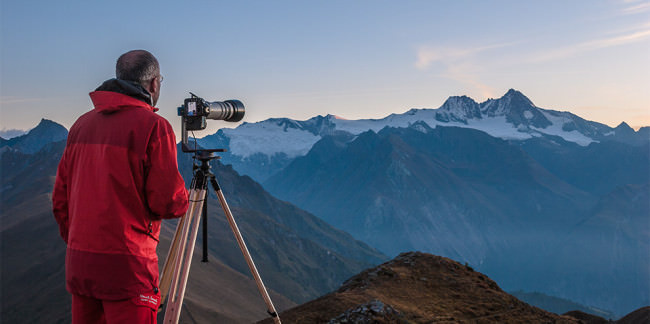
Kals: Thomas Bredenfeld in Aktion © Thomas Bredenfeld

Ende September 2009 zeichnete sich eine halbwegs brauchbare Schönwetterperiode ab und ich konnte endlich für die Aufnahmen von Wien in die Hohen Tauern fahren. Für insgesamt vier Sessions – je zwei am Abend und zwei am Morgen für eventuelle Alternativen, falls die Abendlandschaften nicht zufriedenstellend ausfallen sollten – habe ich mich auf einer Seilbahnbergstation auf knapp über 2.600 Metern Höhe einquartiert.

Vor Ort habe ich die Zeiten von morgens 4 bis 9 Uhr und von 6 bis 9 Uhr am Abend verbracht – viele sehr stille und teilweise eiskalte Stunden hinter der Kamera, eine unvergessliche Zeit.

Entstanden sind dort oben Aufnahmereihen mit Tausenden von Bildern, die dann später im Atelier mit Lightroom gesichtet, grob bearbeitet und für Vormontagen sortiert wurden. Von diesen Vormontagen sind letztlich zehn Versionen in einer engeren Auswahl übrig geblieben. Diese Auswahl habe ich der Gemeinde und den Architekten dann online vorgelegt, eine Variante davon bereits in voller Auflösung.
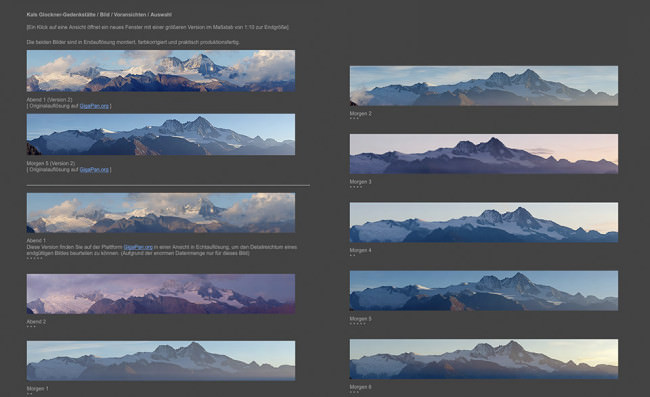
Screenshots © Thomas Bredenfeld

Nach der Entscheidungsphase ist es eine Montage aus mehreren Teilen verschiedener Aufnahmereihen geworden. Ich habe den Aufnahmepunkt am Boden markiert und die Stativhöhe vermessen, damit in einem solchen Fall die Aufnahmen pixelgenau deckungsgleich sind.

Wegen der geforderten sehr hohen Auflösung musste ich während der Montage und Bildbearbeitung riesige Datenmengen bewegen. Zwischenzeitlich war die Photoshop-Datei weit über 10 GB groß. Retusche beispielsweise funktioniert dann in vernünftiger Geschwindigkeit nur noch auf auskopierten Bildteilen, die nach der Bearbeitung wieder eingefügt werden.

Die fertige Arbeit wurde nach der Abnahme durch die Gemeinde spiegelverkehrt auf die Rückseite einer Glasplatte gedruckt, um die Fotografie nachts mit LED-Panels von hinten beleuchten zu können. Gedruckt wurde mit UV-beständiger Tinte in sieben Farben und weiß, damit die hellen Bildteile nicht transparent werden.

Kals Wand © Thomas Bredenfeld

Die Fotografie bildet nun ein Ensemble mit drei Glasstelen, auf denen die Namen aller Bergsteiger verzeichnet sind, die auf der Tiroler Seite des Großglockners umgekommenen sind und auf denen Gedanken zum Bergsteigen und zum Tod zu lesen sind. Besonders nachts ergibt das leuchtende Gebirgsbild zusammen mit den Grabkreuzen eine eigenartige Stimmung auf dem Friedhof.

Für mich persönlich ist dieses Projekt etwas ganz Besonderes. Ich habe mich nie zuvor so lange mit einer einzelnen Fotografie beschäftigt. Auch gibt es hier anders als bei einem Buch oder der Ausgabe eines Fotos im Druck oder elektronisch ein nachhaltiges physisches Werk, das sozusagen öffentlich und in Wind und Wetter lebt.

Kals Friedhof nachts © Thomas Bredenfeld

Ein interaktives Panorama von der Gedenkstätte gibt den räumlichen Zusammenhang auf dem neu gestalteten Friedhof sehr gut wieder.
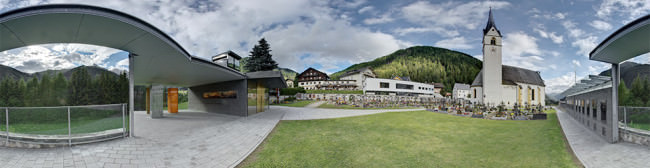
Kals Gedenkstätte: Panorama © Thomas Bredenfeld


kwerfeldein – Fotografie Magazin
 
Comments Off on Ein Berg zum Gedenken

Posted in Equipment


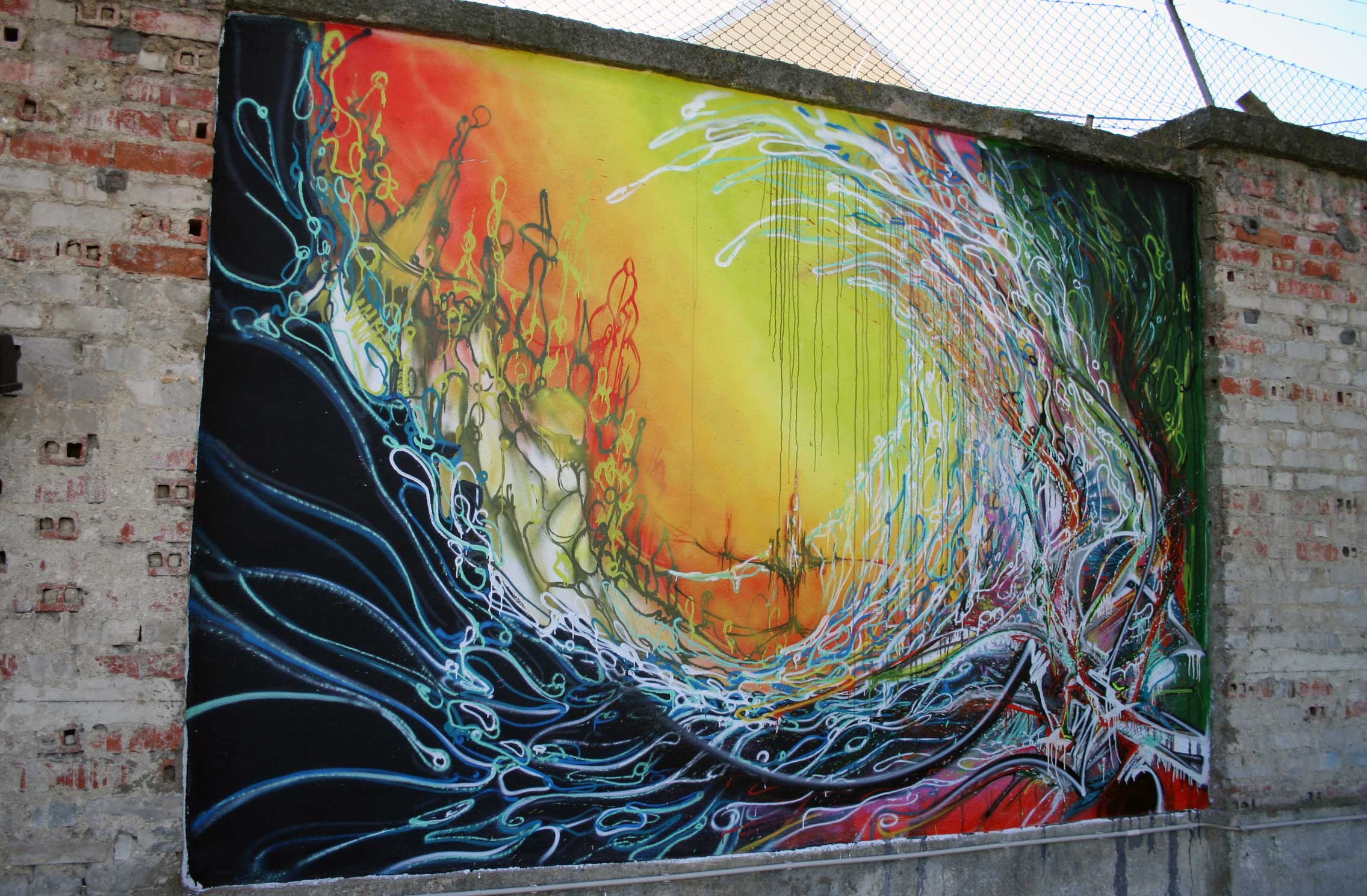
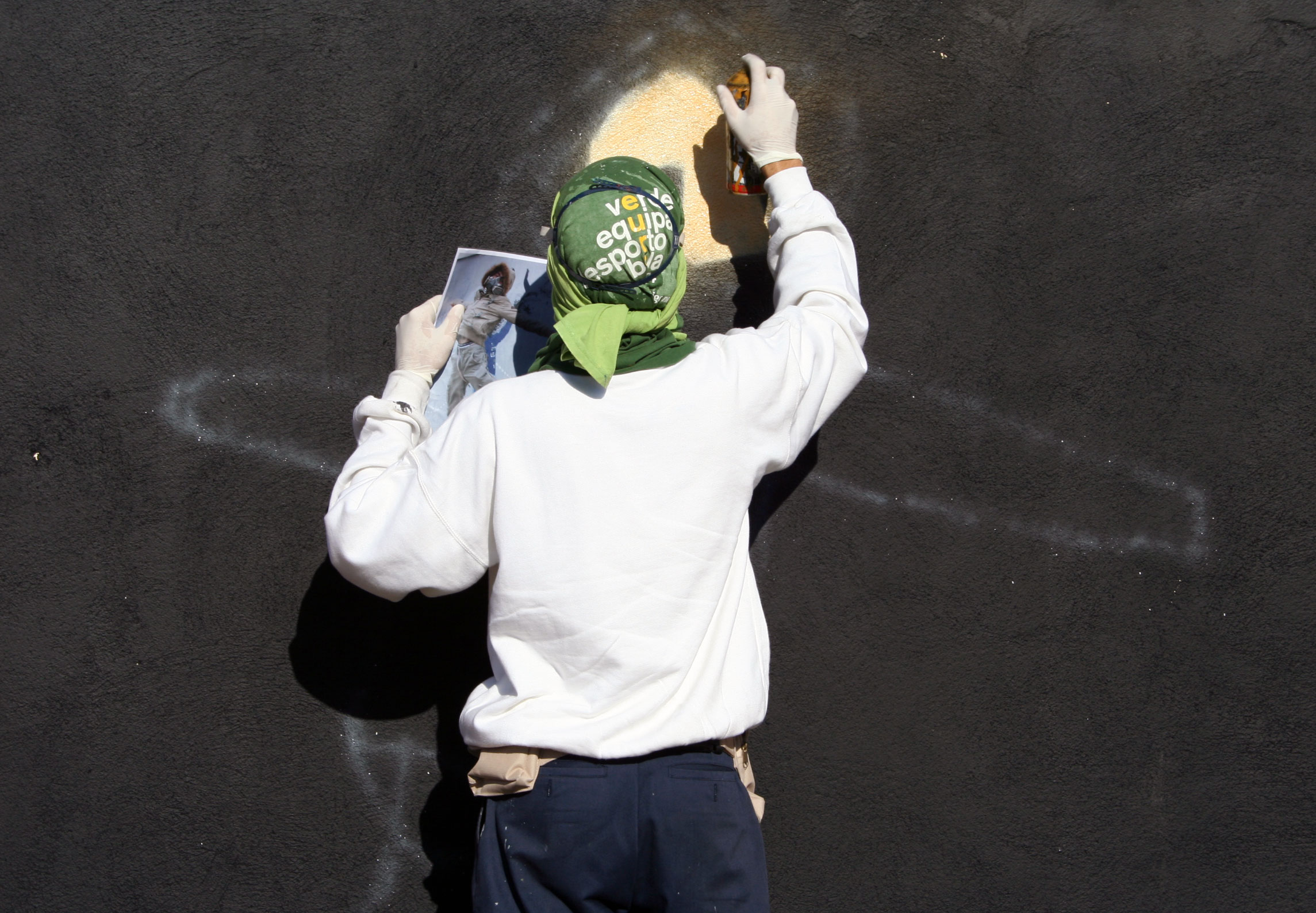
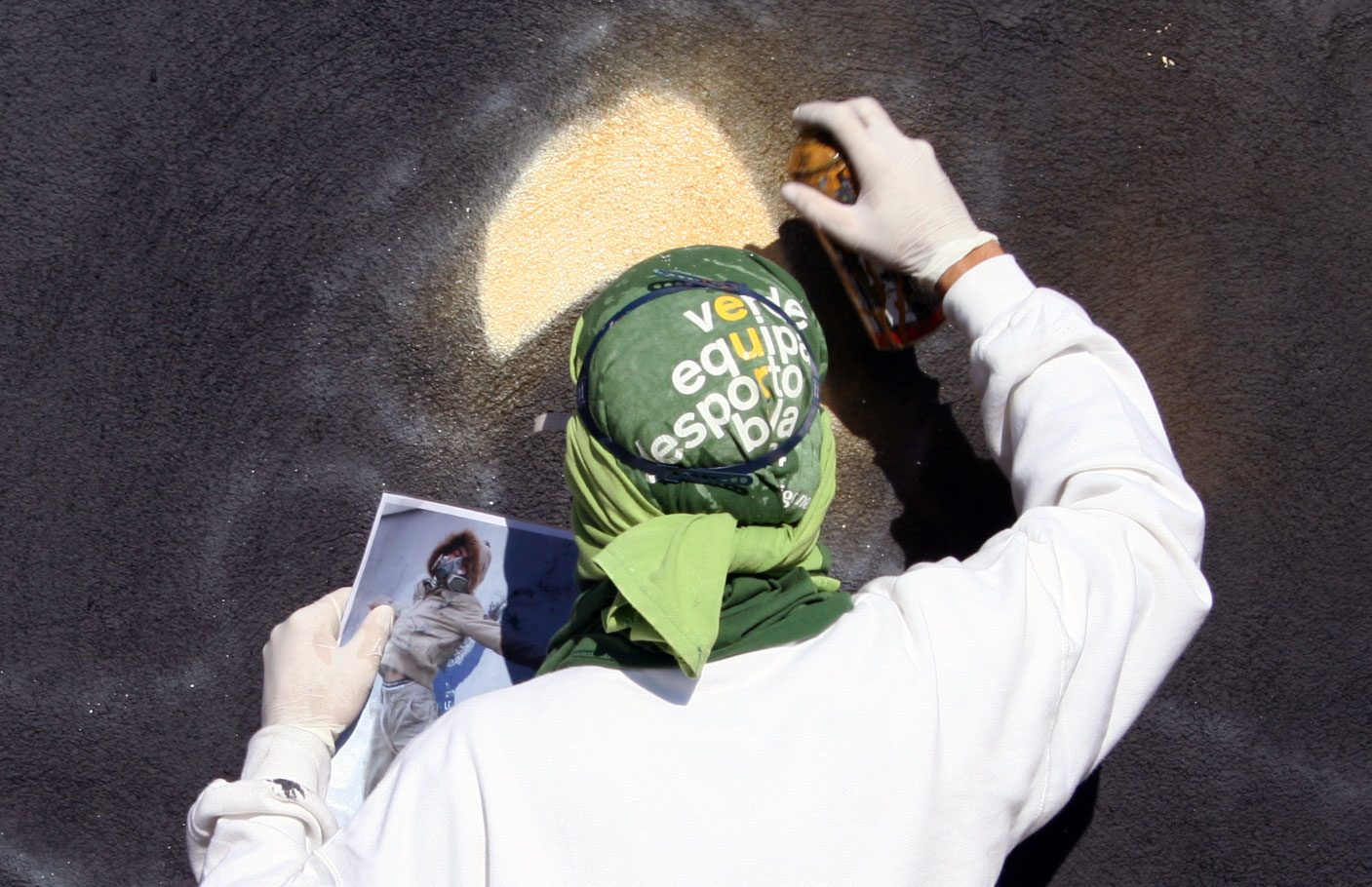
VSP Visual Street Performance 2007 @ Fabrica Braco de Prata, Lisbon, Portugal

02 Apr

Check out these visual art images:

VSP Visual Street Performance 2007 @ Fabrica Braco de Prata, Lisbon, Portugal
visual art
Image by Graffiti Land

VSP Visual Street Performance 2007 @ Fabrica Braco de Prata, Lisbon, Portugal
visual art
Image by Graffiti Land

 
Comments Off on VSP Visual Street Performance 2007 @ Fabrica Braco de Prata, Lisbon, Portugal

Posted in Photographs


Stealth Wear: Counter-Surveillance Fashion Protects Privacy

02 Apr

[ By Steph in Conceptual & Futuristic & Technology. ]

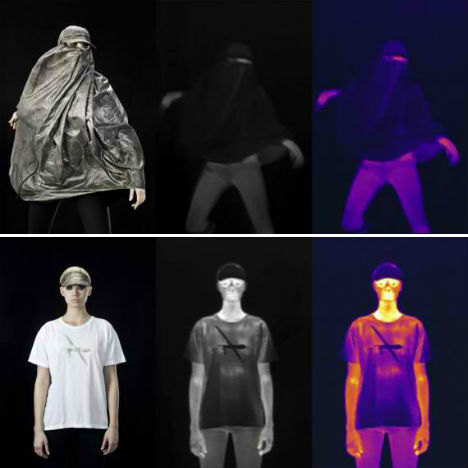
Stealth Wear Anti-Drone Fashion 1
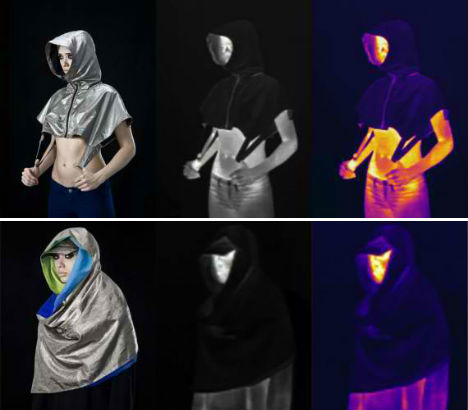
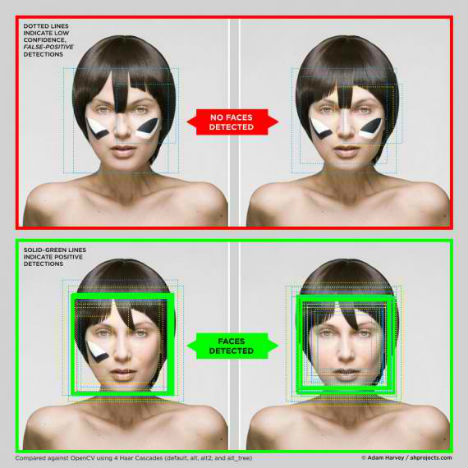
The rise of surveillance technology, including face recognition software, drones, body scans and cell phones as GPS locators, has resulted in some creative attempts to elude it. Designer Adam Harvey experiments with “fashion to challenge authoritarian surveillance” in a series called Stealth Wear (via PSFK). Anti-Drone garments protect against thermal imaging, a special cell phone pocket blocks signals, and off-the-wall makeup and hair styling techniques make it hard to ID faces.

Stealth Wear Anti-Drone Fashion 2

Stealth Wear Anti-Drone Fashion 3

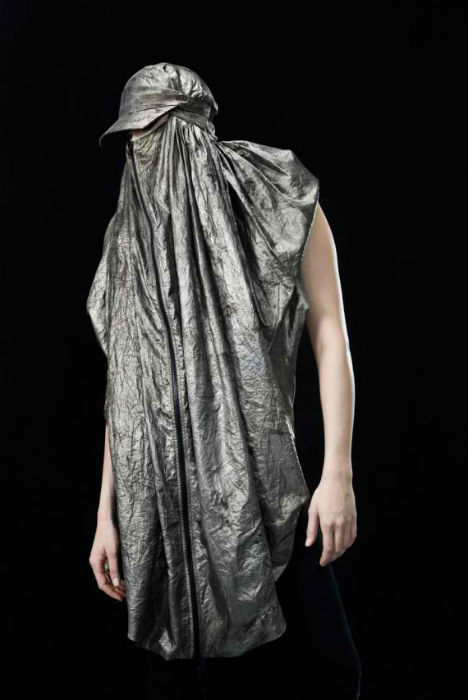
The Anti-Drone garments are made with a lightweight, breathable metallized fabric that reflects heat, masking the wearer’s thermal signature so they won’t show up in thermal imaging scans. Two of the designs are inspired by Muslim garments, including the burqa and scarf. “Conceptually, these garments align themselves with the rationale behind the traditional hijab and burqa: to act as ‘the veil which separates man or the world from God,’ replacing God with drone,” says Harvey.

Stealth Wear Anti-Drone Fashion 4

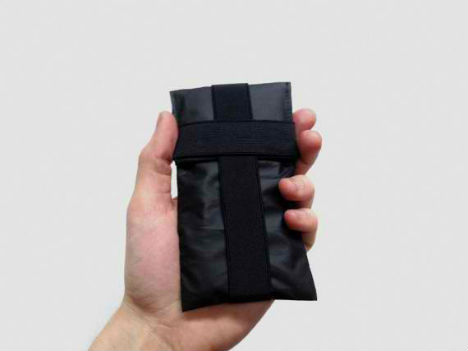
These garments aren’t intended to be serious gear for survivalists looking to elude The Man. They’re fashion, Harvey explains, exploring the ways in which we can interact and aestheticize our culture of rising surveillance. Technically, even the small parts that aren’t covered by the garments, like the hands and face, can give you away. The OFF Pocket, however, is definitely usable: it’s a flexible waterproof cover fitting most sizes of phones, including Nexus and iPhones, that blocks all incoming and outgoing call signals.

Stealth Wear Anti-Drone Fashion 5

Stealth Wear Anti-Drone Fashion 6

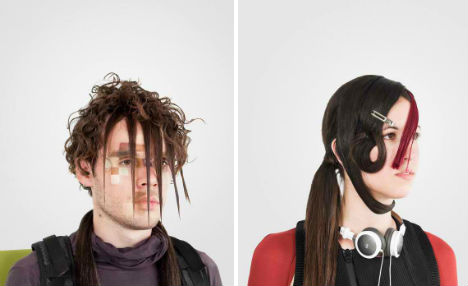
If you want to avoid facial recognition software determining your identity, you’ll have to get even more creative. Developed as his master’s thesis, Harvey’s project CV Dazzle attempted to find makeup and hair styles that would elude recognition. This collaboration between hair stylists, makeup artists and fashion designers used custom software that exposes the vulnerabilities of the OpenCV face detection algorithm, creating styles that exploit these weaknesses. The looks are definitely a bit cyber-punk, but it’s interesting to see them gain a little practicality. Check out an article on ‘how to hide from machines’ that explores more of these techniques at DISmagazine.

Share on Facebook


[ By Steph in Conceptual & Futuristic & Technology. ]

[ WebUrbanist | Archives | Galleries | Privacy | TOS ]


WebUrbanist

 
Comments Off on Stealth Wear: Counter-Surveillance Fashion Protects Privacy

Posted in Creativity


VSP Visual Street Performance 2007 @ Fabrica Braco de Prata, Lisbon, Portugal

02 Apr

A few nice visual art images I found:

VSP Visual Street Performance 2007 @ Fabrica Braco de Prata, Lisbon, Portugal
visual art
Image by Graffiti Land

 
Comments Off on VSP Visual Street Performance 2007 @ Fabrica Braco de Prata, Lisbon, Portugal

Posted in Photographs


1. April 2013

02 Apr

Ein Beitrag von: Felix Schmidt

sun-and-sea-(c)-felix-schmidt


kwerfeldein – Fotografie Magazin
 
Comments Off on 1. April 2013

Posted in Equipment


30 Irresistible Photography Gadgets for Your iPhone

02 Apr

Imagine what your friends would say, if you could take amazing shots with your iPhone, but not expensive DSLR camera? I want to tell you a secret how to do that. But shhh.. Nobody should know it. These days you take more pictures with your phone than with your 5D Mark III. Sadly, but its lens is far from Canon’s Continue Reading

The post 30 Irresistible Photography Gadgets for Your iPhone appeared first on Photodoto.


Photodoto

 
Comments Off on 30 Irresistible Photography Gadgets for Your iPhone

Posted in Photography


Lenovo announces ThinkVision LT3053p covering 99% of AdobeRGB gamut

02 Apr

lenovothinkvision.png

Lenovo Japan has announced the ThinkVision LT3053p Wide, a 30″ WQXGA (2560 x 1600) resolution AH-IPS LCD monitor designed for color-critical applications like photo editing. The latest flagship model promises 99% coverage of the AdobeRGB color space and 100% of sRGB. It includes features such as Picture In Picture (PIP) allowing input from multiple devices and an adjustable stand for ergonomic viewing. The monitor will start shipping from April 11, 2013 at a retail price of $ 1599 in the US. There is currently no information about the European price and availability.

News: Digital Photography Review (dpreview.com)

 
Comments Off on Lenovo announces ThinkVision LT3053p covering 99% of AdobeRGB gamut

Posted in Uncategorized


Teton Gravity Research posts video shot with 4K Gyro-stabilized system

01 Apr

69914b43-ccc1-406f-8a46-b2c5e0d7d7a3.jpg

Action sports video production company Teton Gravity Research (TGR) has posted the first video shot with the GSS C520, a five-axis gyro-stabilized 4K cinema system by GSS (Gyro-Stabilized Systems). The C520 is compatible with the RED Epic, Arri Alexa M and Sony F55/HDC-2500 video cameras. For this video, the system was fitted with a RED Epic video camera and mounted on a helicopter to capture 4K stabilized footage of San Francisco, California. (via FStoppers)

News: Digital Photography Review (dpreview.com)

 
Comments Off on Teton Gravity Research posts video shot with 4K Gyro-stabilized system

Posted in Uncategorized


The Future That Never Was: 12 Funny Gadget Predictions

01 Apr

[ By Steph in Gadgets & Geekery & Technology. ]

Retrofuturistic Technology Main

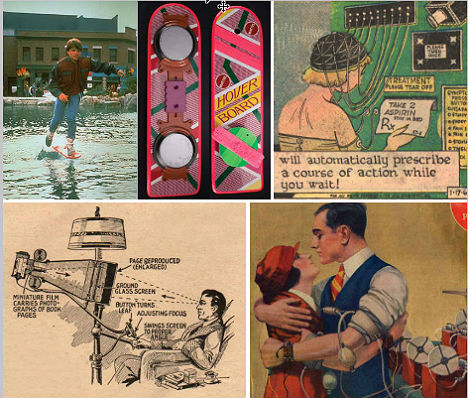
Yesterday’s visions of today were surprisingly accurate in some cases, but in others, they were humorously off-base. We’re not zooming around our moon colony homes in jet packs, confirming our choice in mates with scientific body odor tests, or enjoying our favorite TV shows via implants in our brains. These 12 predicted gadgets and inventions never came to be, and while we’ll never need robotic cargo horses for our milkmen, we’re still eagerly waiting for those hoverboards. See lots more fabulous retro-futurism at the Smithsonian Magazine blog, Paleofuture.

The iPad of 1935

Retrofuturistic Gadgets iPad 1937

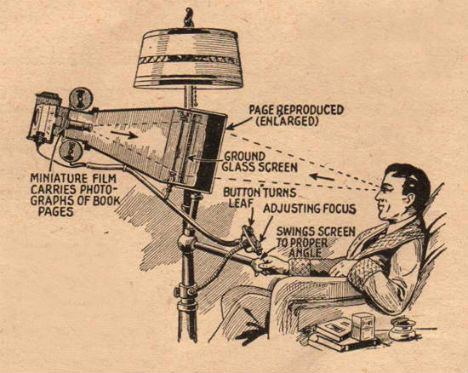
In the April 1935 issue of the magazine Everyday Science and Mechanics, the ‘next logical step in the world of publishing’ was envisioned: a mechanical microfilm reader mounted on a large pole that would theoretically allow you to sit back in your armchair and scroll through the pages of a book with the push of a button. Of course, unlike the modern iPad, which offers the same function, it’s not exactly portable – much less so than the book sitting on the table right next to the illustrated man.

Newspaper Printed by Your Home Radio

Retrofuturistic Gadgets Radio Prints Newspaper

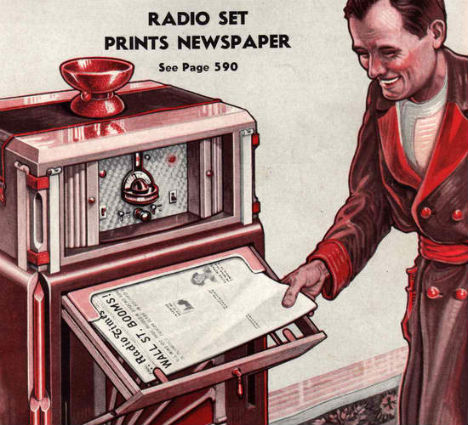
As envisioned in the 1930s and 1960s using radio and satellite technology, respectively, the future of newspapers would involve home printing machines that spit out the day’s news automatically each morning and evening. Philco-Ford’s Newspaper Printer, featured in an episode of the CBS show ‘The 21st Century’ entitled ‘At Home, 2001′, “provides a summary of news relayed by satellite from all over the world,” says narrator Walter Cronkite. “Now to get a newspaper copy for permanent reference I just turn this button, and out it comes. When I’ve finished catching up on the news I might check the latest weather. This same screen can give me the latest reports on the stocks I might own.”

Scientific Mate Tests

Retrofuturistic Gadgets Scientific Mate Test

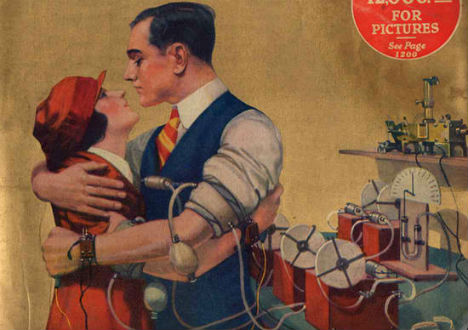
How can you determine whether you will have a successful marriage? According to an April 1924 issue of Science and Invention magazine about scientific love matching, you simply hook yourself up to a mating machine that measures your physical attraction and sympathy for your chosen partner. Recording the pulses of couples and checking their breathing while they embrace, and making sure they feel ‘sympathetic enough’ while watching their partner undergo an unpleasant procedure like having their blood drawn may not sound all that outrageous, but two other tests were even stranger. In the Body Odor Test, one partner is placed inside a capsule while the other is asked to take a sniff; if they don’t find the smells too objectionable, they’re probably a good match. The Nervous Disorder test aims to find out whether couples are too nervous around each other by testing their reaction to a surprise gunshot in the air.

Automated Farms

Retrofuturistic Gadgets Farm Automaton

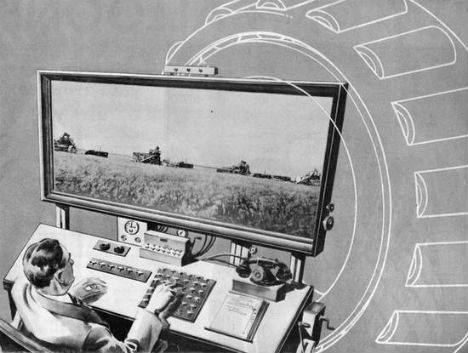
Retrofuturistic Gadgets Automated Farming

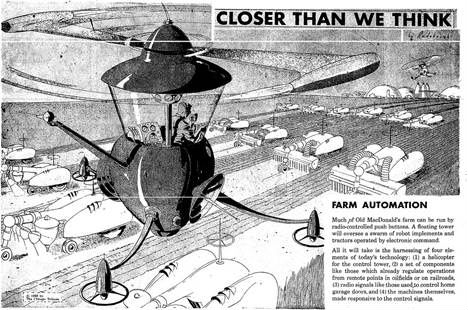
Throughout the 20th century, visions of the future often assumed that our 21st century lives would be full of leisure thanks to machines and automated processes. By the year 2000, they figured we’d only have to work for part of the week, and robots would do all the hardest labor. Radio-controlled farm robots, as envisioned in the syndicated comic strip Closer Than We Think!, would virtually eliminate the need for manual labor in fields. And in the March 1931 issue of Country Gentleman, the ‘farmer of the year 2031′ tends his farm virtually from a large flat-panel television.

Jet Packs for Soldiers and Personal Transport

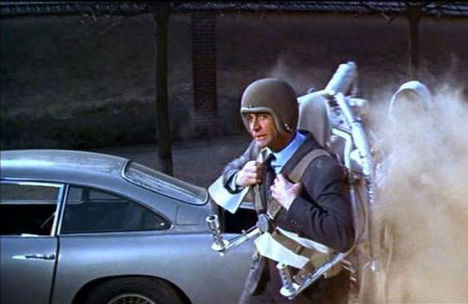
Retrofuturistic Gadgets Jet Pack

Jet packs (as seen here on James Bond) were a frequent component of futuristic technology, first emerging in the sci-fi of the 1920s and soaring in popularity by the 1960s when they were actually invented (sort of.) While jet packs do exist, they’re definitely nowhere near practical usage as personal transport or military reconnaissance. Aside from a few public demonstrations, they’re most commonly used by astronauts in outer space, where the challenges of Earth’s atmosphere and gravity don’t exist.

Headphone Television

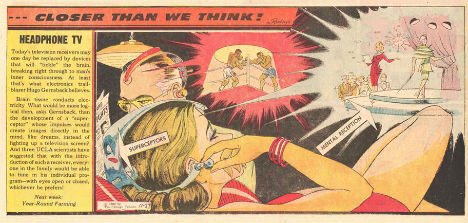
REtrofuturistic Gadgets Headphone TV

Television represented one of the biggest technological advances of the 20th century that was actually accessible to many average people, making its evolution a major source of speculation, from the first rumors of its existence to the days when it finally became a fixture in most homes. People began to envision long-distance visual communication as soon as the telephone was invented, and some predictions – like video chat, tiny TV sets, flat-panels and interactive programs – were right on the mark. Others, like TVs that emit smells – not so much. One concept from the comic strip Closer Than We Think! imagines television receivers that are implanted right into the brain, creating images directly in the mind, “like dreams.”

Automated Cooking with Plates Made on Demand

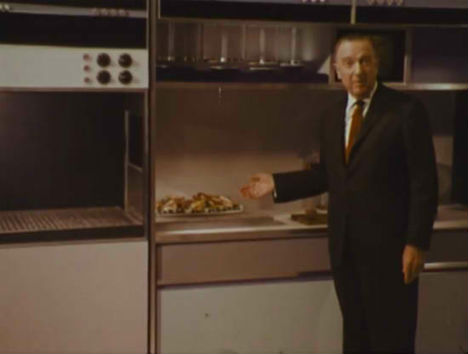
Retrofuturistic Gadgets Automated Cooking

Another advancement detailed in the ‘At Home, 2001′ episode of The 21st Century with Walter Cronkite was fully automatic meal preparation in which meals made from ‘frozen or irradiated foods’ are programmed into a menu and prepared by a robotic chef. An entire meal could be chosen and prepared within seconds. But the weirdest part of this speculation has to do with the tableware rather than the food. Instead of getting plates from the cupboard, the robot would instantly mold plastic into plates, cups and bowls for one-time use, and then melt them back down when you’re done. The point? Not having to wash dishes. Although 3D printed plates are nearly possible today, this whole process seems fairly ridiculous and energy-intensive when dishes could simply be loaded into a magical dishwashing machine.

Next Page:
The Future That Never Was 12 Uninvented Gadgets

Share on Facebook


[ By Steph in Gadgets & Geekery & Technology. ]

[ WebUrbanist | Archives | Galleries | Privacy | TOS ]


WebUrbanist

 
Comments Off on The Future That Never Was: 12 Funny Gadget Predictions

Posted in Creativity


Nice Visual Art photos

01 Apr

Check out these visual art images:

VSP Visual Street Performance 2007 @ Fabrica Braco de Prata, Lisbon, Portugal
visual art
Image by Graffiti Land
This Graffiti no longer exists. It has been covered with another one.

VSP Visual Street Performance 2007 @ Fabrica Braco de Prata, Lisbon, Portugal
visual art
Image by Graffiti Land

 
Comments Off on Nice Visual Art photos

Posted in Photographs