Ein Beitrag von: Martina Müller

kwerfeldein – Fotografie Magazin
As photographers we all have our favorite locations to take photographs. Mine happens to be in Philly, PA at an old prison (Eastern State Penitentiary) which has been converted to a museum. I have been there many times and always look forward to going back for more.

So I want to ask you… what is your favorite place to photograph? Comment below to share.

Nikon has posted firmware updates for a number of its DSLRs. Updates for the D600, D800, D4, D3s, D3x, D3, D7000 and D3200 include support for the AF-S Nikkor 800mm f/5.6E FL ED VR lens. The D600 and D800 see an improvement to the subject tracking performance in continuous autofocus mode when shooting using the optical viewfinder. And the D600 can now deliver 100% scene coverage via HDMI output. The updates are available for immediate download from Nikon’s website. Click through for a full list of feature updates, bug fixes and download links.
News: Digital Photography Review (dpreview.com)
By Annie Tao
Just like in Real Estate, Photography is about location, location, location. Well, sort of. It’s not as much the beauty of a location, but rather, the quality of the light at a location.
Case in point, my shoot this past weekend was of a lovely family in a seemingly lovely location. It was a small, narrow park that wrapped around a large lake. Sounds pretty, but the light was not desirable for portraits. Imagine clear skies and a sun that was as bright as can be! There weren’t structures or large trees to provide shade.
Why is this bad? Direct sunlight on clear, bright days means high contrast, squinting subjects, and unflattering shadows.
Can you still make this work? Certainly, but the kinds of shots are not as varied because of the location.
[FYI: For outdoor lifestyle sessions, I shoot entirely in natural light. This is my style of shooting. This article does not apply if you use lighting equipment or accessories outside.]
Since my clients chose the location for sentimental reasons, it was worth starting
there. Then we got in our cars to find a different location… one that has objects to diffuse the sunlight as well as add interest to the images.
Even from this one image, you can tell that it is a pretty location, but you can see that the trees are thin and the sunlight is super bright.

These images are examples of what can be achievable with the right light and location.

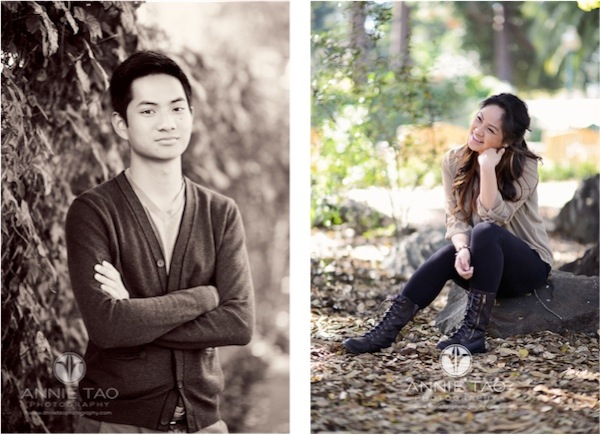
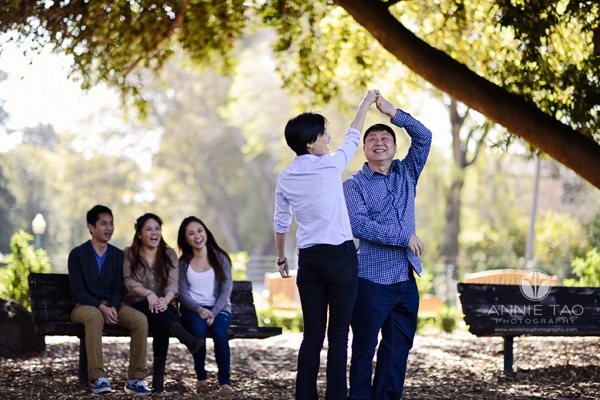
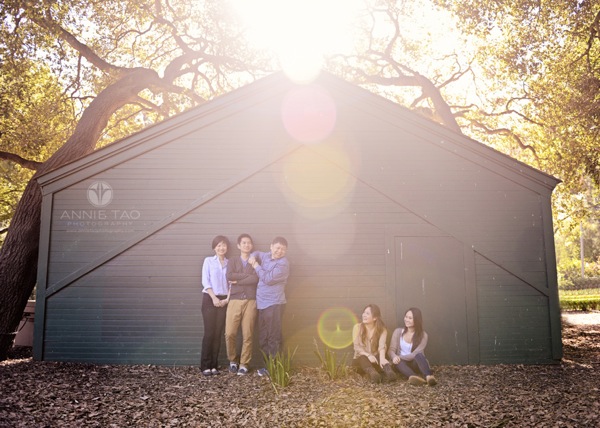
The key to finding the perfect location for outdoor portraits isn’t to find one that has the prettiest elements, but rather, one that has objects that provide shade when there is bright sun.
That doesn’t mean you have to shoot in the shade the entire time… or even at all!
Having these objects around will give you diversity in backdrops as well as a way to diffuse the harsh light on clear days.
Annie Tao is a Professional Lifestyle Photographer in the San Francisco Bay Area who is best known for capturing genuine smiles, emotions and stories of her subjects. You can visit annietaophotography.com for more tips or inspiration and stay connected with Annie at facebook.com/annietaophotography.
Post originally from: Digital Photography Tips.
Check out our more Photography Tips at Photography Tips for Beginners, Portrait Photography Tips and Wedding Photography Tips.
The Importance of Location for Outdoor Portraits
[ By WebUrbanist in Architecture & Public & Institutional. ]
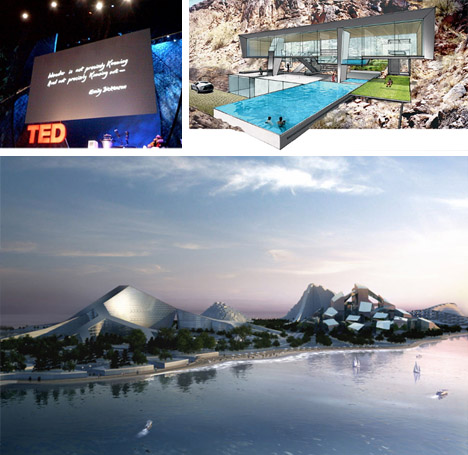
Watch these videos and you will never see built environments in the same way again. Some tackle timeless questions of light, dark and color, while others address emerging technologies and the architectural problems of tomorrow. Skim the descriptions below to decide which you want to view – or take an hour of your day to enjoy them all!
Richard Kelly starts out with Le Corbusier’s modern classic Notre Dame du Haut in Ronchamp, illustrating the amazing plays of light and dark that together make for a deeply spiritual experience of space. He goes on to talk about Richard Kelly, a pioneer of lighting design, who talked in terms of focal glow (space-dominating sources), ambient luminescence (mood lighting) and plays of brilliants (bright points in a dark space). If you have any doubt about the importance of light and color in architectural design, you need to watch this video.
Daniel Libeskind is a designer who preaches what he practices. He abhors neutral and strives for inspirational, emotional, complex, risky, raw and story-telling architecture that both describes but also rises above the times in which it is built. At the same time, he is not a proponent of artistic expression for its own sake, but shows surprising pragmatism – architecture, like the Ground Zero memorial towers, should fit the consensus and respond to the needs of people occupying it. Whether or not you are a fan of his elaborate Deconstructivist-style monuments and institutions, this talk will help you put one of today’s most energetic architects in context.
Rachel Armstrong proposes self-repairing and evolving metabolic materials that will step beyond design and history. She boldly proposes that sustainability means connecting to nature in a fundamental way: namely, with building blocks that can grow and change. It is more than just a vision, though – she brings actual material developments to the table that defy the inert qualities of familiar concrete, wood and bricks. These can respond in real time to environmental conditions. Instead of imposing structure upon matter, these concepts, like what they contain, are necessarily dynamic – they will literally grow out of material science in the coming years.
Magnus Larsson has an improbable but grand project in mind, turning bacteria and grains of sand into a sandstone wall that could span the entire continent of Africa. Each second, one billion grains of sand are created in the world – some become sandstone, but others collect in dunes and deserts. Each day, the Saharan frontier moves a meter forward, taking over human-occupied lands and displacing populations. To reclaim vast and uninhabited areas of the Earth, it only makes sense that we turn the destructive desertification power of sand to our advantage. This proposal would have multiple benefits, reclaiming such spaces, reducing droughts and curbing climate change.
Bjarke Ingels asks how we tell the architectural design stories outside of the finished project, using alternative media (including comic books!) to talk about history, evolution and the avante garde of architecture. If you enjoy offbeat comparisons, visual juxtapositions, comedic concepts and experimental expression, this is a much-watch video.
Cameron Sinclair was and is an early proponent of open-source architecture to address everyday issues of sustainable global design, from emergency housing and transitional shelter to shipping container infrastructure, straw bale construction, mobile health clinics and more. This talk is now nearly a decade old, but the lessons are just as applicable today, or perhaps more so than ever.
Liz Diller (of Diller + Scofidio) describes architecture as a special-effects machine – beyond basic shelter, it is theatrical in essence. Her work challenges conventions of spatial use and building technology. Notably, she recognizes that her projects are not always easy to capture and display in museum retrospectives – they are about a time, place and experience, for better (and/)or for worse. This video should be a fittingly light-hearted end to these series of somewhat-heavy features.


[ WebUrbanist | Archives | Galleries | Privacy | TOS ]

 |
 |
Some cool visual art images:
VSP Visual Street Performance 2007 @ Fabrica Braco de Prata, Lisbon, Portugal

Image by Graffiti Land
VSP Visual Street Performance 2007 @ Fabrica Braco de Prata, Lisbon, Portugal

Image by Graffiti Land
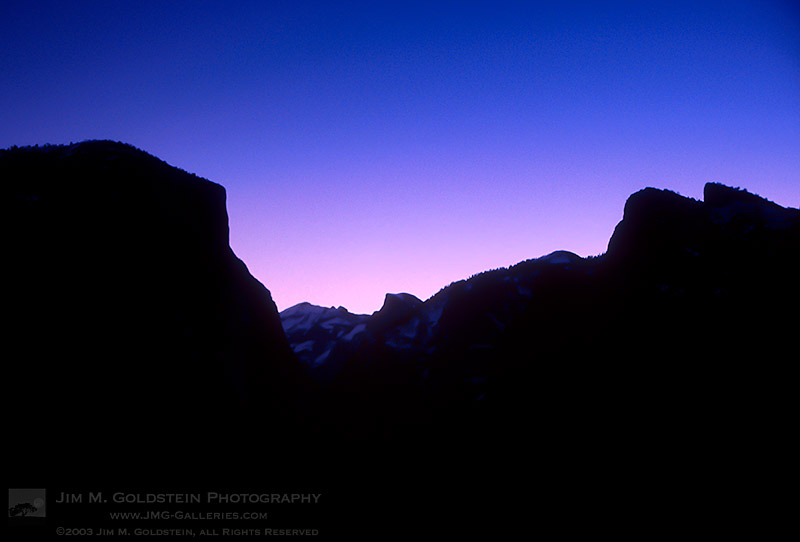
Pre-dawn light rises over the iconic Yosemite Valley granite formations of El Capitan and Half Dome
Yosemite Sunrise
I was revisiting some old film scans from several years ago thanks to a client request and rediscovered this photo. Slide film isn’t very forgiving in regard to dynamic range, but I always liked the contrasty nature of this photo. It was taken on a cold snowy winter morning well before sunrise. Taking a long exposure allowed for the faint color in the sky to register quite strongly which I always thought was quite striking.
Copyright Jim M. Goldstein, All Rights Reserved
Yosemite Sunrise (Revisited)
The post Yosemite Sunrise (Revisited) appeared first on JMG-Galleries – Landscape, Nature & Travel Photography.
JMG-Galleries – Landscape, Nature & Travel Photography

Following the recent release of Photosynth for Windows Phone 8, Microsoft held a contest to find the 10 best Photosynth images. Now that the feature is compatible with latest generation devices such as the Nokia Lumia 920, HTC 8X and Samsung Ativ Odyssey, we should be seeing more and more stunning 360-degree panoramas created with the software. Check out some of the top Photosynths selected at connect.dpreview.com.
News: Digital Photography Review (dpreview.com)

Just posted: Our review of the Fujinon XF 14mm 1:2.8 R lens. Fujifilm has been steadily building up its X-system of rangefinder-inspired mirrorless cameras since its launch in January last year, and the 14mm F2.8 is the fifth lens in the family. It’s a 21mm-equivalent ultra-wide prime that’s designed to match the full field of view offered by the X-Pro1’s optical viewfinder. Like the other XF primes it has an aperture ring on the lens barrel, but it also includes an improved manual focus ring with distance and depth of field scales. Fujifilm makes some grand claims for its optical performance; click through to see if it lives up to them in our detailed review.
News: Digital Photography Review (dpreview.com)
Some cool visual art images:
VSP Visual Street Performance 2007 @ Fabrica Braco de Prata, Lisbon, Portugal
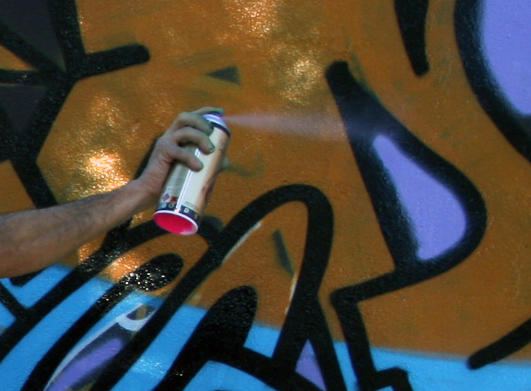
Image by Graffiti Land
VSP Visual Street Performance 2007 @ Fabrica Braco de Prata, Lisbon, Portugal
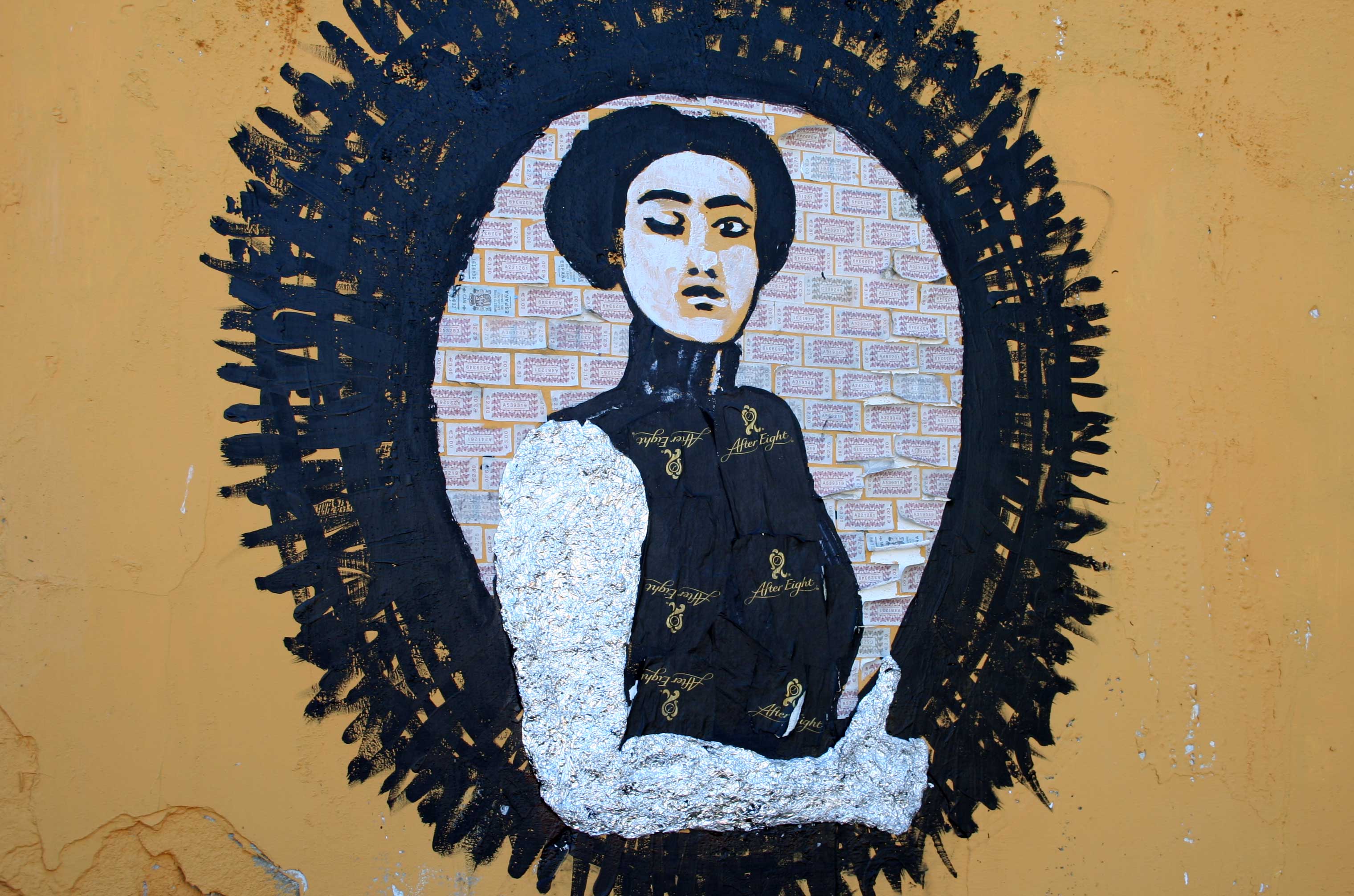
Image by Graffiti Land
You must be logged in to post a comment.