RSS
 

Archive for April, 2013

5 Terrifying Photography Fears and How to Overcome Them Today

15 Apr

You’re walking down the street, sleek camera in hand. As luck would have it, a photogenic girl crosses your path, stopping at the curb long enough to pull her hair back. She is silhouetted against the glowing city light; this is the perfect photographic moment. You reach for your camera, frame the shot, and…she’s gone. You didn’t hear the click Continue Reading

The post 5 Terrifying Photography Fears and How to Overcome Them Today appeared first on Photodoto.


Photodoto

 
Comments Off on 5 Terrifying Photography Fears and How to Overcome Them Today

Posted in Photography


The Crankerator and iFlash Drive:Photo Survival Gear

15 Apr
Check it out

It’s a jungle out there!

…and it’s a very pretty jungle so you’re going to want to take some photos.

Don’t forget to pack the Crankerator, an on-the-go back up battery you can charge by cranking the handle. The jungle doesn’t have outlets, but you have two arms that are ready to crank.

Also grab an iFlash Drive, the infinately handy iPhone/Pad/Pod and USB compatible thumb drive. Be ready to show a jungle cat your portfolio or clear space on your camera roll.

Oh, and bring insect repellant, the jungle is full of spiders.

The Crankerator Tweet It!
$ 60 at the Photojojo Shop

The iFlash Drive Tweet It!
From $ 99 at the Photojojo Shop

Related posts:

  1. The Camera USB Drive & The Camera Strap Buddy With all of the fun photo gizmos and gadgets you’ve…
  2. 10+ Awesome Ways to Upcycle Vintage Photo Gear Extra photos for bloggers: 1, 2 They say one man’s…


Photojojo

 
Comments Off on The Crankerator and iFlash Drive:Photo Survival Gear

Posted in Equipment


Fotogenes Deutschland – Großes Torfmoor

15 Apr

Ein Beitrag von: Kai Hormann

Da ich das große Glück habe, in unmittelbarer Nähe des großen Torfmoors zu leben, möchte ich Euch diese Landschaft hier einmal kurz vorstellen. Ich kenne das Moor zu jeder Tages- und Nachtzeit und es vergeht kaum eine Woche, in der ich nicht mindestens einmal mit der Kamera dort bin.

Gemeinhin wird das Moor häufig als dunkler und nicht sehr einladender Ort gesehen. Auch das ca. 500ha umfassende „Große Torfmoor“ – oder auch Hiller Moor genannt – im Kreis Minden-Lübbecke in NRW zeigt an manchen Stellen und zu manchen Wetterlagen seine finstere Seite, die aber, passende Kleidung vorausgesetzt, durchaus sehr sehenswert sein kann.

Allerdings ist dies nur ein „Gesicht“ des großen Torfmoors. Bedingt durch die ständig wechselnde Vegetation, einer großen Artenvielfalt an Tieren und den vielen kleineren und größeren Moorseen und Tümpeln findet man einen fast unerschöpflicher Vorrat an Motiven.

Eine weitere Besonderheit ist der weite, unverbaute Horizont, der dem Licht von morgens bis abends keinerlei Hindernisse in den Weg stellt. Die fotografisch ergiebigste Zeit ist meiner Meinung nach das Frühjahr mit einer sehr sehenswerten Wollgras-Blüte, schnell wechselnden Wetterlagen und dramatischem Licht sowie der Herbst mit Morgennebel und windstillen Abenden, die häufig grandiose Sonnenuntergänge bieten.

Natürlich sind auch die übrigen Jahreszeiten sehenswert. Falls eine Tour in den Sommermonaten geplant ist, muss aber unbedingt an ein gutes Mückenschutzmittel und passende Kleidung gedacht werden!

Auf den diversen Parkplätzen am Rande des Moors findet man Schautafeln mit einer Übersicht der Wanderwege. Es versteht sich von selbst, dass die gekennzeichneten Wege nicht verlassen werden sollten, da das Moor an manchen Stellen nicht ganz ungefährlich ist.

Aprilregen - © Kai Hormann

Ein Winterabend - © Kai Hormann

Eine Nacht geht zu Ende - © Kai Hormann

Erstes Licht © Kai Hormann

Morgenroete - © Kai Hormann

Am 18. April wird auch das Informationszentrum „Moorhus“ in Gehlenbeck beim Freibad eröffnet werden. Dort findet man weitere Infos und unter anderem auch eine Reihe von meinen Bildern, die im großen Torfmoor entstanden sind.


kwerfeldein – Fotografie Magazin

 
Comments Off on Fotogenes Deutschland – Großes Torfmoor

Posted in Equipment


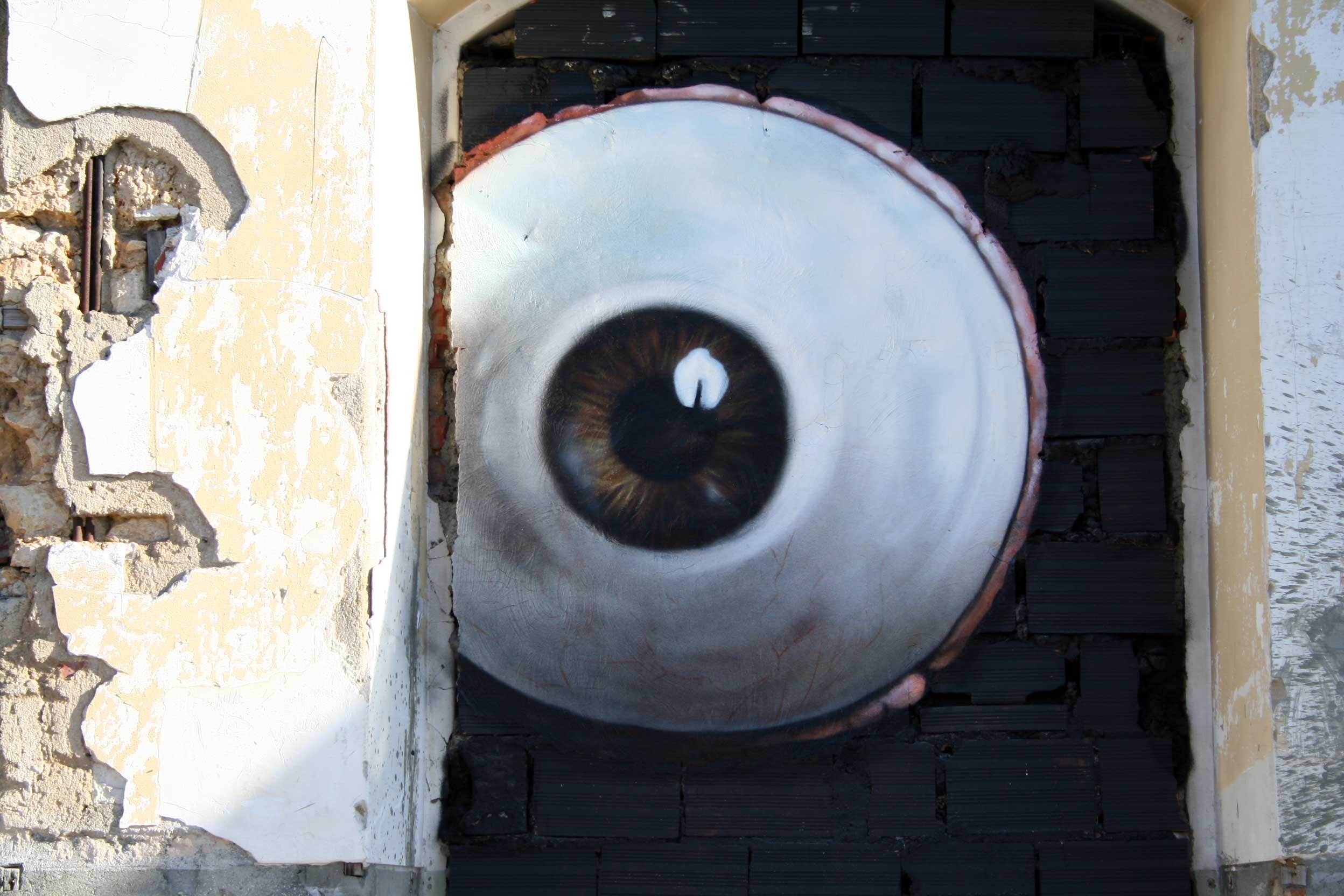
VSP Visual Street Performance 2007 @ Fabrica Braco de Prata, Lisbon, Portugal

15 Apr

Check out these visual art images:

VSP Visual Street Performance 2007 @ Fabrica Braco de Prata, Lisbon, Portugal
visual art
Image by Graffiti Land

 
Comments Off on VSP Visual Street Performance 2007 @ Fabrica Braco de Prata, Lisbon, Portugal

Posted in Photographs


As Seen on TV: Floor Plans from Famous Television Series

15 Apr

[ By WebUrbanist in Art & Drawing & Digital. ]

television plan drawings pencil

A talented cast, backed by brilliant directors and writers, makes you feel like part of the action – not just through the actors telling a story, but also via the familiar spaces they regularly occupy in each episode (sometimes for years).

telivision simpsons house

Iñaki Aliste Lizarralde is an artist and designer who painstakingly analyzes and draws out the rooms your favorite characters and their tales occupy, be they the charming sitcom Golden Girls or the macabre drama of Dexter.

television hand drawn pencil

And while our minds generally complete the picture for us, many of these famous dwellings do not really exist in a complete way, and some are never fully shown because of camera, entrance and exit placements, leaving our imagination to fill in the gaps.

telivision sitcom interior plans

In some cases, the action spans more than a single apartment, as in Friends where it is ultimately about two neighboring units and the hallway in between.

television show floor plans

In other cases, like the Simpsons, seeing the plan makes you realize how simple it is in a fictional world that is wacky in so many ways – it is the backdrop, not a character itself. In the end, real life or otherwise, everyone needs doors, floors, windows and walls. Check out DeviantArt for a closer look or to buy a print.

Share on Facebook


[ By WebUrbanist in Art & Drawing & Digital. ]

[ WebUrbanist | Archives | Galleries | Privacy | TOS ]


WebUrbanist

 
Comments Off on As Seen on TV: Floor Plans from Famous Television Series

Posted in Creativity


Batch Crop and Resize in Lightroom

15 Apr

Lightroom batch crop and resize opener

If you’re working on a large shoot and need to output a lot of images at a fixed size then Lightroom can do the work for you. It isn’t obvious how you can crop all your images to a fixed size and output them at a certain set of pixel dimensions but it is easy to do when you know how. Here’s how to do it:

Step 1

Lightroom batch crop and resize 1

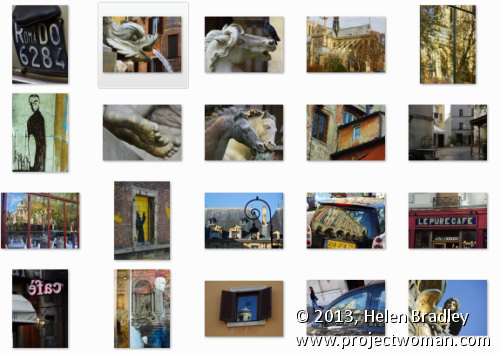
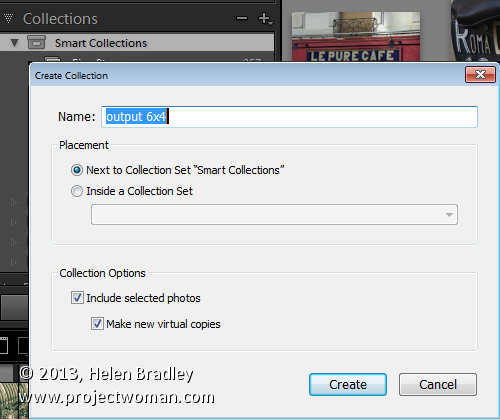
First locate the folder with your images in it. I prefer to make virtual copies of my images and put them in a new collection but you can do whatever makes sense to you.

Step 2

Lightroom batch crop and resize 2

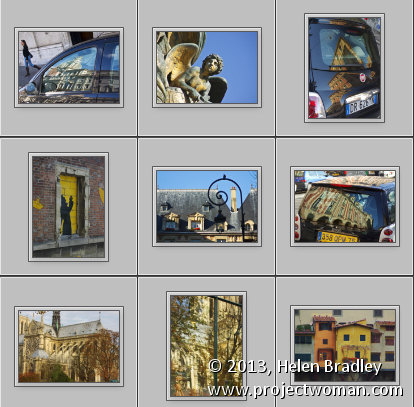
Select all the images in Grid view in the Library module in Lightroom.

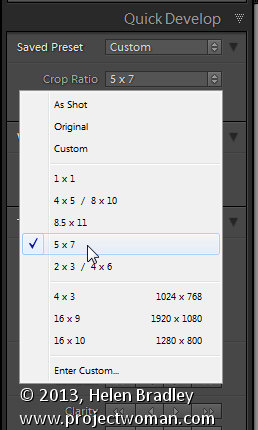
Open the Quick Develop panel on the right and, from the Crop Ratio dropdown list, select the crop ratio that you want to crop to. For example you can crop to fixed ratios such as 1 by 1 or printing sizes such as 5×7, 4×6 and so on.

Here I’ve selected 5×7 and when I do so all the selected images are automatically cropped to this 5 x 7 ratio.

Lightroom is smart enough to understand that some images are portrait orientation and others are landscape. Portrait images are cropped to 5 x 7 and landscape orientation images to 7 x 5.

Lightroom batch crop and resize 2a

Step 3 (optional)

Lightroom batch crop and resize 3

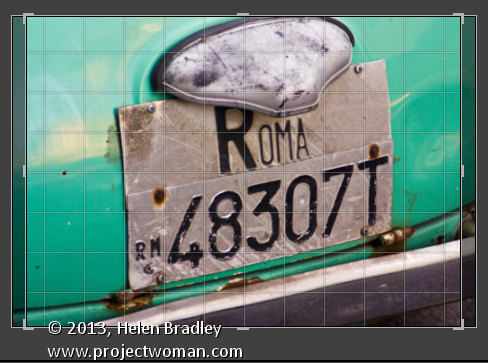
If desired, you can now move to the Develop module and check the crop for all the images. By default, Lightroom will center the crop rectangle on the image and this may not be exactly what you want for some images. However, it is easy to go to the Develop module, click the first image and click on the Crop Overlay Tool so you see the crop marquee in position on the on the image.

Now from the filmstrip you can click on each image in succession to preview it in the crop window and you can easily identify if any of them need an adjustment to the crop rectangle. If they do simply drag on the crop rectangle to reposition it. When you’re done return to the Library view.

Step 4

Lightroom batch crop and resize 4

As the images are now all cropped to size, press Ctrl + A to select them and then click Export. Choose a folder to export the images into or click New Folder to create a new folder.

You can now set your desired preferences in the Export dialog.

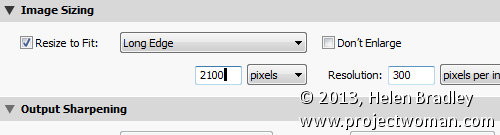
To control the output size – in pixels wide and tall – of the images easily because you already know the crop ratio. To do this, select the Resize to fit checkbox and choose Long Edge from the dropdown list. Then type a pixel dimension for the long edge. So, for example, to prepare 5 by 7 ratio images for printing at 300 dpi the longest edge will need to be 2,100 pixels (7 x 300) so type 2100 and set the resolution to 300.

Step 5

Lightroom batch crop and resize 5

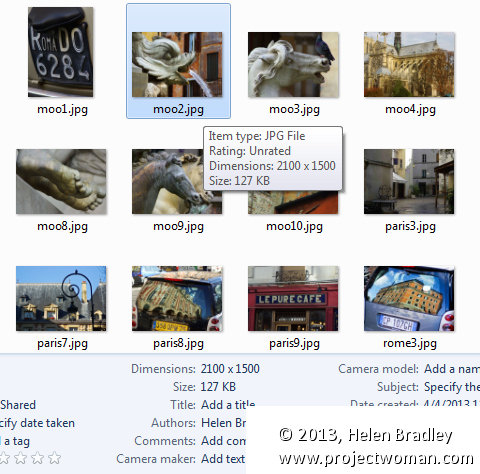
Click Export to export your images and they will be exported to a folder at the chosen size and resolution.

This process allows you to quickly and effectively prepare a batch of images for printing. It manages portrait and landscape images so that you don’t have to separately handle each type. It’s a simple workflow and a fast way to prepare images from a large shoot.

Post originally from: Digital Photography Tips.

Check out our more Photography Tips at Photography Tips for Beginners, Portrait Photography Tips and Wedding Photography Tips.

Batch Crop and Resize in Lightroom


Digital Photography School

 
Comments Off on Batch Crop and Resize in Lightroom

Posted in Photography


14. April 2013

14 Apr

Ein Beitrag von: Futzliputzli

Untitled-©-Futzliputzli


kwerfeldein – Fotografie Magazin

 
Comments Off on 14. April 2013

Posted in Equipment


All Bets Are Off: 10 Crapped-Out Abandoned Casinos

14 Apr

[ By Steve in Abandoned Places & Architecture. ]

abandoned casinos
At these 10 abandoned casinos, the high rollers are laying low, the cards are all jokers, the wheel’s stopped spinning and the dice have all thrown snake eyes.

Penthouse Adriatic Club Casino, Croatia

abandoned Penthouse Adriatic Club casino(images via: Photography Jiriparizek, Yugoslavia Virtual Museum, The Basement Geographer and Geocaching)

The Penthouse Adriatic Club casino was the centerpiece (or should we say “centerfold”) of the Haludovo Palace Hotel, located on the Croatian island of Krk. Opened with great fanfare in 1972, the casino was the brainchild of Penthouse magazine founder Bob Guccione who invested a cool $ 45 million in the project. Perhaps he should have stuck to ventures of the soft-focus and soft-core nature.

abandoned Penthouse Adriatic Club casino hotel(image via: kaskero de Viaje)

Rumor has it the late Iraqi dictator Saddam Hussein and his family vacationed at the hotel/casino at least once – his return flight to Baghdad was delayed because one of his sons forgot his gun under the pillow in his room. Good times!

abandoned Penthouse Adriatic Club casino hotel(images via: Tomislav Mavrovic and kaskero de viaje)

In any case, factors including the rise of the internet and the Yugoslavian Civil War conspired to constrict the Penthouse Adriatic Club casino to the point where it was closed, neglected, used to house war refugees and finally abandoned.

The Overlook Hotel’s Casino

abandoned casino Overlook Hotel(image via: Niki Feijen)

“Overlook,” as in The Shining? That’s Niki Feijen’s story and he’s sticking to it. Feijen’s spectacular photos of The Overlook Hotel posted to his photostream include the one above, purportedly depicting its 12-years-abandoned casino. Black Jack was here, and blackjack was played here.

The Big Easy Casino Boat

The Big Easy abandoned casino ship(images via: Pop Up City and Gaming Floor)

Name regardless, nothing’s been easy for The Big Easy casino boat. The 238-foot long New Orleans-themed ship was built around a 30,000-square-foot casino boasting 23 gaming tables. One wonders if the wind and waves would affect the motions of the roulette wheel, the dice  or the slot machines… actually the question is moot because The Big Easy has spent much of its life unoccupied, dodging hurricanes, docked at various Florida ports.

abandoned casino boat The Big Easy(image via: Traveling Around)

Delayed by bureaucracy first, ferocious weather second and Chapter 11, er, eleventh, The Big Easy has been a sad story of fading dreams and fading paint, the latter unattractively accented by dust, rust and debris. It seems that banking on a floating casino in a region prone to devastating storms may have been just too much of a (removes sunglasses)… gamble. Yeaaah!!

Next Page:
All Bets Are Off 10 Crapped Out Abandoned Casinos

Share on Facebook


[ By Steve in Abandoned Places & Architecture. ]

[ WebUrbanist | Archives | Galleries | Privacy | TOS ]


WebUrbanist

 
Comments Off on All Bets Are Off: 10 Crapped-Out Abandoned Casinos

Posted in Creativity


browserFruits April #2

14 Apr

Einen wunderschönen sonnigen Sonntag wünschen wir Euch. Auch, wenn unser Fotospezial etwas anderes vermuten lässt, genießen wir den langsam beginnenden Frühling und freuen uns mit Euch auf die vielen neuen Artikel der kommenden Woche. Und nun viel Spaß mit den gesammelten Früchten!


Fotospecial: Regen

Flickr

500px


Deutschsprachig

• Diese Datenbank sammelt Stipendien für Freiberufler aus sieben Kreativ-Branchen, natürlich auch für Fotografen.

• Der Tagesanzeiger stellt den Bergfotografen Robert Bösch in einem Interview vor.

• Zeit Online empiehlt die Ausstellung „AGES – Portraits vom Älterwerden“ in Köln und hat einige Fotos dazu.

• Kennt Ihr schon die superlustige Blocks-Serie vom Schweizer Fabien Nissels?


International

• Kitsch muss man können: Dave Wood fotografiert Spiegelungen in Wassertropfen. Und… Spiderman auch.

• Matthew Brandt bearbeitet seine Landschaftsaufnahmen zu sehr surrealen Fotos. Wir finden sie großartig.

• Großformat für unterwegs; Wer 4×5 mag, aber kein Freund des Schleppens ist, sollte sich das Kickstarter-Projekt von Wanderlust mal anschauen.

• Dass der Sänger Brian Adams fotografiert, wisst Ihr sicher. Aber kennt Ihr auch seine tollen Portraits?

• Ein abgefahrener Stabilisator für Videodrehs. Aber nicht ganz billig…

• Wale. Klingt langweilig? Ist es aber nicht, wie die Unterwasseraufnahmen von Bryant Austin zeigen.

• Richtig gute Blumen- und Makrofotos.

• DIY-Anleitung: Blitzaufsatz aus einer Zigarettenschachtel.

• Wenn Finn Beales nicht gerade mit seiner 5D fotografiert, nutzt er das iPhone 4s. Ja und? Seht selbst.

• Beeindruckend: Maurizio Galimberti macht kubistische Polaroid-Collagen von Künstlern und Schauspielern.

• Langzeitbelichtungen von Wasserfällen sind langweilig? Dann werft doch einfach ein paar Glowsticks* mit rein.


Neuerscheinungen und Tipps vom Foto-Büchermarkt

buchtipps

• „Abenteuer inklusive: Expeditionskreuzfahrten weltweit“* ist der Titel unseres ersten Buchtipps und verrät bereits, worum es geht. Der Reisefotograf hat 20 Kreuzfahrten zu sehr abenteuerlichen Orten rund um die Welt unternommen und dokumentiert. Bei GEO Online gibt es noch einen kleinen Einblick in das Buch.

• Der Bildband „Breathing the Same Air“* der finnischen Fotografin Nelli Palomäki zeigt Schwarzweiß-Portraits junger Menschen mit alter Anmutung. Einige der Fotos gibt es auch bei Zeit Online zu sehen.


Videos

Unser Redakteur Michael zeigt, wie er in Photoshop eine sanfte Vignettierung zu Fotos hinzufügt.


Zeitraffer mal ohne Kamera – ein kreativer Umgang mit Google Streetview.


Der Fotograf Sebastião Salgado über seine neue Serie und Ausstellung „Genesis“ im Natural History Museum.


Ausstellungen

Frank Machalowski: Monster
Zeit: 13. März – 14. Mai 2013
Ort: FENSTER61, Torstr. 61, 10119 Berlin
Link

Frank Doering: Der Weg am Schwarzen Fluss
Zeit: 18. März – 15. Mai 2013
Ort: schaelpic photokunstbar, Schanzenstr. 27, 51063 Köln
Link

Mario Marino, HAVANNA
Zeit: 26. Februar – 16. Mai 2013
Ort: Galerie Reygers, Widenmayerstraße 49, 80538 München
Link

MASKULINFEMININ – Jürgen Klauke
Zeit: 15. März – 17. Mai 2013
Ort: Galerie Anita Beckers, Frankenallee 74, 60327 Frankfurt/Main
Link

Nina Poppe „ama“
Zeit: 16. Februar – 18. Mai 2013
Ort: Robert Morat Galerie, Kleine Hamburger Str. 2, 10115 Berlin
Link

BER – Bilder einer Stadt
Zeit: 11. April – 18. Mai 2013
Ort: pavlov’s dog, Bergstraße 19, 10115 Berlin
Link

Tropfenfotos – Fotografien von Thomas Block
Zeit: 12. April – 18. Mai 2013
Vernissage: 12. April 2013, 19 Uhr
Ort: Luxad, Mommsenstraße 42, Berlin
Link

China Megacities. Fotografien von Christian Höhn
Zeit: 20. März – 19. Mai 2013
Ort: Museum Industriekultur, Äußere Sulzbacher Straße 62, 90491 Nürnberg
Link

SCHENKUNG HERBERT LANGE. Fotografien 1925 – 2009
Zeit: 3. März – 20. Mai 2013
Ort: Kunstsammlungen Chemnitz, Theaterplatz 1, 09111 Chemnitz
Link

Ein Drittel Weiß. Das zeitgenössische Interesse am Schwarz-Weiß
Zeit: 23. Februar – 20. Mai 2013
Ort: Kunst im Tunnel, Mannesmannufer 1b, 40213 Düsseldorf
Link

Knut Wolfgang Maron: Ein Leben
Zeit: 22. Februar – 20. Mai 2013
Ort: Staatliches Museum Schwerin, Galerie Alte und Neue Meister, Alter Garten 3, 19055 Schwerin
Link

Christian Reister: [Nacht]
Zeit: 27. April – 24. Mai 2013
Vernissage: 26. April 2013
Ort: Hotel Bogota, Schlüterstraße 45, Berlin
Link

Matthias Klages
Zeit: 13. Aril – 25. Mai 2013
Ort: imago fotokunst, Linienstr. 145, 10115 Berlin
Link

Orri Jónsson „Interiors“
Zeit: 23. März – 25. Mai 2013
Ort: Robert Morat Galerie, Kleine Reichenstr. 1, 20457 Hamburg
Link

Joakim Eskildsen „Homeworks“
Zeit: 23. März – 25. Mai 2013
Ort: Robert Morat Galerie, Kleine Reichenstr. 1, 20457 Hamburg
Link

Jodi Bieber: Between Darkness and Light
Zeit: 24. Februar – 26. Mai 2013
Ort: Museum Goch, Kastellstraße 9, 47574 Goch
Link

SOMETHING IN BETWEEN – Sergej Vutuc
Zeit: 12. März – 26. Mai 2013
Ort: Neue Sächsische Galerie, im TIETZ, 1. Obergeschoss, Moritzstraße 20, 09111 Chemnitz
Link

Wunden – Fünf Künstler in fünf Räumen
Zeit: 1. Mai – 20. August 2013
Ort: Kunsträume der Michael Horbach Stiftung, Wormser Str. 23 (Hinterhaus), 50677 Köln
Link

Mehr aktuelle Ausstellungen


* Das ist ein Affiliate-Link zu Amazon. Wenn Ihr darüber etwas bestellt, bekommen wir eine kleine Provision, Ihr bezahlt aber keinen Cent mehr.


kwerfeldein – Fotografie Magazin

 
Comments Off on browserFruits April #2

Posted in Equipment


iStockPhoto Founder Re-Creates Two-Tier Stock Industry

14 Apr

stocksy

When Bruce Livingstone launched iStockPhoto thirteen years ago, he split the stock industry. For the first time, enthusiasts — people with no connections to the photography industry, no professional training and no experience of creating for a market — could upload their photographs and make money from their talent. The result was a revolution. While established professionals were able to continue selling through Corbis and Getty (although against greater competition), engineers like Sean Locke, one of iStockPhoto’s first contributors, were able to quit their day jobs, buy a consumer DSLR and make livings, sometimes good livings, as microstock photographers. Other enthusiasts with careers they didn’t want to leave have been able to make a bit of extra cash shooting and uploading at the weekends.

That revolution has been grinding to a halt. Multiple platforms have followed iStockPhoto but the sale of the site to Getty in 2006 for $ 50 million allowed it to outgrow its copycats, become the biggest microstock site on the Web — and slash commissions until they were as low as 15 percent. Yuri Arcurs, arguably the world’s most successful microstock photographer, quit iStockPhoto last year to focus on direct sales, claiming that the prices and commissions were now too low to cover the costs of production. In March, iStockPhoto expelled Sean Locke after he pointed out on his blog that the company was giving away its photographers’ images to users of Google Docs.

Now though, a new revolution may be under way, and once again Bruce Livingstone is at the center.

bruce-livingstone

Profit-Sharing for Photographers

Stocksy, Livingstone’s latest enterprise, is a new stock site that takes a completely different approach to delivering images from photographers to buyers. Like many sites, photographers will receive 50 percent of the sales price of their photos but they’ll also receive 100 percent of the price of extended licenses and a share of the profits the company generates.

That’s because Stocksy is a photographer’s co-operative, owned and operated by the people who create the photos the site sells. Instead of generating profits for a corporation, Stocksy will distribute its profits to its contributors.

The idea came from photographers themselves, disappointed at the structure the industry had developed.

“Photographers came to visit us at our house in Los Angeles. They all said the same thing. They wanted more. They were disillusioned and frustrated with the state of affairs in the industry — artists were not fairly paid for the work they were creating,” Livingstone explained to us in an email from British Columbia. “We started talking about what would make a better business model, what would give photographers ownership, a decent royalty and a voice in how the business was run. Cooperatives in rural Canada and co-op structures are well developed and quite advanced as they have been around for a long time supporting group farms. The co-op keeps enough cash to operate, but the collective owners get all the money.”

Stocksy currently has 250 members. Most are photographers but some are employees and directors who provide advice. Each year, the co-op will hold an Annual General Meeting at which shareholders will vote on the running of the business. Once the firm is profitable, 90 percent of profits will paid to photographers with 10 percent going to employees, directors and board members.

That revenue-sharing may be unique in the world of photography but it also marks another change in the development of the stock industry. While anyone can upload an image and make it available for sale, following a review of the photo, on a microstock site, Stocksy maintains much of the exclusivity familiar to photographers who have tried to sell through Corbis or Getty. Photographers can apply to sell through Stocksy but the co-op will only invite photographers to join if their images match the co-operative’s aesthetic criteria. Stocksy is looking for photographers who can demonstrate a style and workflow that is consistent and unique, and who produce images that go beyond “too-perfect models pretending to do things, floating in white space or anything that appears to be forced conceptually.”

If that means that the site will have a relatively small collection, that’s fine with Bruce Livingstone.

“Something that’s really important for us is not to compete with any other agency on numbers of images or numbers of photographers,” says Livingstone. “That game is old and already has a winner. The size of the collection creates too much competition for photographers, dilutes earnings and disappoints buyers when presented with tens of thousands of bad results. The bigger the collection the worse the experience for everyone. It becomes unmanageable and inexplicably overwhelming for the consumer…. Each picture found on Stocksy should be inherently useful and special.”

Prices for the images are generally higher than those found on microstock sites, with RF licenses for small images starting at $ 10 and rising to $ 100 for X-Large photos of 2829 x 4242 pixels. Licenses for unlimited print runs or resale products cost even more. Livingstone, though, is confident that buyers will be willing pay a premium not just for the higher quality of the site’s curated collection but because supporting a sustainable model for photographers is the right thing to do.

The Return of the Two-Tier Stock Industry

Despite deliberately avoiding direct competition with iStockPhoto’s giant collection, Stocksy is clearly intended as an alternative to the microstock site that Livingstone created. Asked how he felt regarding the way the site has developed since its sale to Getty, Livingstone responded with a mixture of admiration at the growth Getty was able to create and disappointment at what they did with that growth.

“Getty grew the revenues on iStock exponentially. I couldn’t have done that alone. It’s what happened to iStockphoto after I left that is really at issue. The focus on corporate profits, not on fair pay for photographers is what we believe is problematic.”

If Stocksy succeeds, it will go some way towards solving that problem. But the co-op’s exclusivity means that it can only solve the problem partially. Livingstone recommends that photographers who want to succeed in stock find a niche, specialize and commit to shooting it full-time. Enthusiasts who want to remain part-time will have to stick with sites like iStockPhoto, creating a two-tier stock industry made up of committed professionals working and selling together, and part-timers accepting the small fees delivered by microstock sites.

“If that’s how it plays out,” says Livingstone, “then I think that’s fine.”


Photopreneur – Make Money Selling Your Photos

 
Comments Off on iStockPhoto Founder Re-Creates Two-Tier Stock Industry

Posted in Equipment