RSS
 

Archive for April, 2013

Sigma announces super-fast 18-35mm F1.8 DC HSM Art for APS-C DSLRs

18 Apr

sigma18_35.png

Sigma has announced the 18-35mm F1.8 DC HSM Art lens for APS-C DSLRs – the world’s first constant F1.8 zoom. The lens covers a 27-52.5mm equivalent range, though the company has not yet announced which mounts it will be offered in. There is also no announcement of a recommended price. The lens will offer the light-gathering and depth-of-field equivalent of a constant F2.7 on full-frame, which may under-cut the need for some photographers to change formats.

News: Digital Photography Review (dpreview.com)

 
Comments Off on Sigma announces super-fast 18-35mm F1.8 DC HSM Art for APS-C DSLRs

Posted in Uncategorized


Virtual Retail Stores Repurpose Unused Public Spaces

18 Apr

[ By Steph in Architecture & Cities & Urbanism. ]

Virtual Retail Stores 1

Photos of products with codes that can be scanned by smart phones transform cramped spaces like the walls of subway stations into virtual retail stores, saving space and potentially adding function to disused city spots. PayPal is among the main companies pioneering quick and easy virtual shopping with QR codes plastered on billboards and ad spaces. Online grocery service Peapod already has virtual shelves on subway and commuter train platforms in Philadelphia.

Virtual Retail Stores 2

The concept is simple: you download an app to your smart phone, scan the codes of the products you want to purchase, and enter your payment information. The goods you buy are then delivered to the location of your choice. The process is streamlined when payment info is saved – just scan and confirm.

While brick-and-mortar stores with physical products won’t disappear completely, since there are plenty of times we just want to grab something and run, this concept could help meet the evolving needs of both customers and the cities they live in. Virtual retail stores could go up on the outside of abandoned buildings, or give use to areas that are under transition.

Virtual Retail Stores 3

Experts have predicted that shopping will change more in the next three years than it has in the past twenty, with more and more people choosing the convenience of mobile shopping and self-checkout. PayPal has expanded a portion of its ‘Shop and Pay on the Go’ services by adding QR codes to the exterior of physical stores, for those times when you need something and the store is closed. Another service, ‘PayPal Here’, enables customers to check in with their phones, grab their items and pay for them virtually without having to pull out cash or a credit card.

Share on Facebook


[ By Steph in Architecture & Cities & Urbanism. ]

[ WebUrbanist | Archives | Galleries | Privacy | TOS ]


WebUrbanist

 
Comments Off on Virtual Retail Stores Repurpose Unused Public Spaces

Posted in Creativity


Aptina creates faster 14MP 1″ sensor capable of 80 fps and 4K video

18 Apr

Logo.png

Sensor maker Aptina has announced a 14MP 1″-type sensor for use in mirrorless and video cameras. The AR1411HS enters the range alongside the existing 10MP model and offers even faster shooting capabilities. The 14MP chip can shoot full-resolution images at up to 80 fps and can shoot either 4K or Quad HD (allowing high quality 4:2:2 color) at up to 60 fps. The company suggests the 1″ format (actually 13.2 x 8.8mm) offers an effective balance of image quality, price and capabilities to make a sensible middle ground between the tiny 1/2.3″ sensors in most compacts and the APS-C sensors used in many mirrorless models and DSLRs. 

News: Digital Photography Review (dpreview.com)

 
Comments Off on Aptina creates faster 14MP 1″ sensor capable of 80 fps and 4K video

Posted in Uncategorized


18 April, 2013 – A Matter of Character – Not Just Another Camera Review

18 Apr

When we say someone or something has "character", what do we mean?And in particular, what does it mean for a camera to have character? Find out in my latest essay – A Matter of Character – Not Just Another Camera Review. Then let us know what your idea of a camera with character might be on our Discussion Forum.


"Yes I downloaded the videos. THEY ARE AWESOME!!! I learned so much I think my brain is going to explode.


The Luminous Landscape – What’s New

 
Comments Off on 18 April, 2013 – A Matter of Character – Not Just Another Camera Review

Posted in News


Getting The Image You See In Your Head: Blending vs HDR

18 Apr
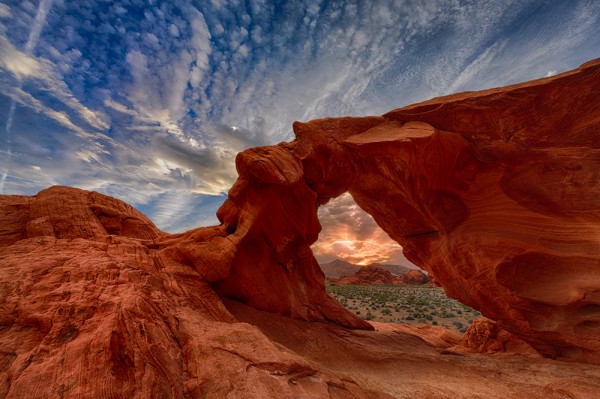
This shot is an HDR shot blended from 6 bracketed shots.  Each shot is one stop different from the next. The exposures range from -2 through +3. Aperture was set to f/16. The shutter speed ranged from 1/125 at -2, to 1/4 at +3.

This shot is an HDR shot blended from 6 bracketed shots. Each shot is one stop different from the next. The exposures range from -2 through +3. Aperture was set to f/16. The shutter speed ranged from 1/125 at -2, to 1/4 at +3.

Often times when I’m photographing landscapes, the image the camera sees versus the image in my head are quite different.  Sometimes that image in my head doesn’t mesh with what the camera capture, because the dynamic range is far too great.  The contrast between the highlights and shadows is just too great.  Such was the case with this shot I took a week ago of Arch Rock in Valley of Fire State Park in Nevada.

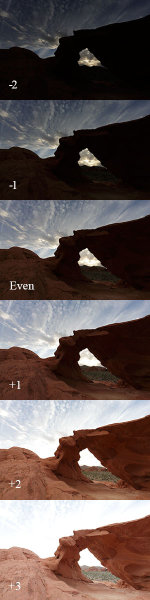
These are the six shots I used for the HDR blend. I also used the even exposure, and the +2 exposure, for the two image manual blend I did in Photoshop.

These are the six shots I used for the HDR blend. I also used the even exposure, and the +2 exposure, for the two image manual blend I did in Photoshop.

With the sun setting directly behind it, exposing for the sky would have rendered the rock a silhouette.  This may have been fine had I intended a silhouette shot- which I did capture and intend to use. But ultimately I wanted some detail in the rock, I wanted detail in the sky, and I wanted to maintain the drama of the spectacular desert sunset that I was witnessing.  Because of the way the landscape was laid out before me, graduated neutral density filters were not going to work for this shot.  If I wanted to bring down my highlights and keep detail in the shadows, I was going to have to either blend two shots, or use an HDR program to get the result I was looking for. HDR stands for High Dynamic Range, meaning an image where the range of tones is higher than what the camera can accurately record.

I really wasn’t sure which processing technique would give me the best results.  And sitting there in the desert, I didn’t want to place any bets on it.  So I bracketed my shots using the auto exposure bracketing mode on my EOS-1D X.  I shot in Av mode, at f/16, with the EF 14mm f/2.8L II lens. I bracketed for 7 exposures, but ended up only using six. The -3 exposure really didn’t add anything to the HDR, so that was dropped from my processing.   I use Nik HDR Efex Pro 2 for my HDR processing to blend the exposures, and then finish in Photoshop, adjusting color, saturation, etc.  Nik HDR Efex Pro offers a variety of presets, but I always try to keep the HDR processing fairly subtle. I don’t like the over the top look that some get, but I do like the image to pop a bit. I try to minimize any halos, and keep the tones fairly smooth.

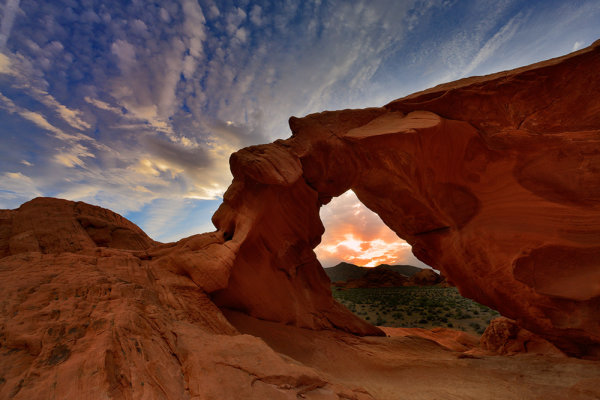
Before I processed the HDR image, I also tried a simple two shot blend in Photoshop. I first processed the even exposure and adjusted for color and saturation.  Then, I took the +2 exposure, and processed in the same way, dropping that image on a new layer in photoshop over the even exposure. I then apply a layer mask to the +2 layer, and paint the entire mask black to hide the layer.

Then, using white, I painted the arch back in to reveal the arch at +2 against the sky at even exposure. This takes a lot of patience since with the exposure difference, it’s very easy to see halos if the masking isn’t done carefully. One way to ease the transition is to run a gaussian blur filter on the mask to soften the edges. How much will depend on what the mask is like. You may need to run the gaussian blur more than once to get it just right.

Looking at the two images, the HDR blend seems to have a smoother transition from lights to darks, as well as a richer overall look. I know there is a lot backlash against HDR, and I understand it’s not everyone’s cup of tea. But I believe in using any tool available in order to express what I felt when I looked upon the scene as it happened.  Every scene will be different, and will lend themselves to different processing techniques. Understanding what techniques are available to you can help you overcome the shortcomings of technology and allow you to express your creativity to the fullest.

This shot was done by blending an even exposure with a shot exposed at +2.  The +2 exposure was masked off in Photoshop so only the areas I needed to show through did.

This shot was done by blending an even exposure with a shot exposed at +2. The +2 exposure was masked off in Photoshop so only the areas I needed to show through did.


Post originally from: Digital Photography Tips.

Check out our more Photography Tips at Photography Tips for Beginners, Portrait Photography Tips and Wedding Photography Tips.

Getting The Image You See In Your Head: Blending vs HDR


Digital Photography School

 
Comments Off on Getting The Image You See In Your Head: Blending vs HDR

Posted in Photography


The Secret of Creating a Strong Image – 5 Tips for Creating a Story in Your Image

18 Apr

Article and photos by Oded wagenstein.

In an era when we are drowning in images and lots of people and talents are competing for the viewers’ eyes or the magazines’ attention, have you ever wondered what makes you have a longer look at an image?

Is it the person that was photographed? Perhaps a certain color or an angle?

What is the secret of the photographers that mange to get their work published on magazines and newspapers? What is the secret of taking a strong image that lasts?

1.jpg

The secret of all strong images is their ability to provide the viewer a story .

Since the dawn of time, People gathered around the fire and shared stories with each other.

It doesn’t matter what subjects you like to shoot. If you want to become a good photographer, you have to be a good storyteller first. An image with a story, one that evokes emotion and curiosity will rise above other images and catch the viewer’s attention.

So what is the stuff of which “visual stories” are made from?

In most cases it is an emotion that the image creates. It can be empathy, curiosity or even negative emotions such is anger.

Even if you are dealing with macro or landscape photography it is better to have an image that tells a story. However, the best way for me to get a story is with people photography, as people are a large “pool” of stories and emotions.

Here are 5 tips for finding your “visual story” in Travel photography before departure, and on the road:

1. Preparation needed

The thing that makes the difference between an amateur and a professional in almost every field is usually preparation.

A professional photographer will start working even before leaving home, while an amateur photographer will wait for things to happen in front of their eyes in the field. Professionals will gather information that will help them exceed the potential of getting those photogenic stories on the road in minimum time and by doing so, increase the amount of good strong images.

2.jpg

What are the things that are worth checking before going to shot on a trip for example? Here are some classic examples:

Will there be any festival or photogenic event during your stay? Festivals are a great place for finding stories. Is there any taboo related to photography or culture in general in the country you are going to visit, that you must know? For example, the hill tribes that can be found on the mountains of Asia (as the woman from the Karen tribe in photo number 2) mostly believe that taking their photo would also take their soul. And trust me, the custom officers in your home country would not like the “soul” attached to your camera.

The best thing you can do to get this kind of information is to get the advice of a photographer who has already been there. Online photography forums would love to help you with that.

Want to take your photography to the next step? – Take a journey deeper into the place and read a little bit about the culture and history, prior to arrival.

The best tip someone has given me is to learn a few words of the local language. Locals appreciate people who try to speak their language (even if they laugh at them a bit at first)

Learning “Hello”, “Thank you” and ” may I take your photo?” will do wonders to your story telling images.

2. Getting closer

3.jpg

Taking photos of people from a distance with telephoto lens may be safer and will not ruin the spontaneity of the story, but there’s nothing like the narrative and emotional quality of close-ups in people photography.

Sometimes I want to photograph people from just a few inches away and still keep the spontaneity and intimacy.

What do I do? – I look for this moment in which the person returns to routine activity, after creating a bit of a connection with them and letting them understand that my camera and I don’t have any bad intentions.

I never approach people while the camera is hanging from my neck. It is threatening and may result in negative responses from the locals.

After greeting the person (in their language) I sit with them for a while, let them get used to my camera and me and only later I begin taking photos

Never ever forget- people don’t like to feel they are on a show for you. Always treat them with respect. The best way to do so is with the help of a local. So go to the next Section

3. Best ice breaker

4.jpg

Professional photographers use a fixer, which is a local who knows their needs as photographers and helps them to get around.

You can use a fixer, but you can also find your “fixer” in a much more interesting way and for free, in most cases. You can connect with local at your age in advance to your visit on the basis of “culture exchange”. The local will help you get to the best places and will also recommend which places to avoid. They will speak for you in their local language and will be the best “ice breaker”. All you have to do is be polite but it won’t hurt to bring your host something for your own country, like postcards or a unique product related to your place.

If you can find a photography student to be your fixer, it can be an exciting experience for both of you.

Hanging with a local as a friend or with a professional fixer does not give exemption from the previous section of “getting closer”.

4. The Stories generators

5.jpg

Feeling lost? Feeling unpleased with the photos you took? You can always try to visit a “story generator”. It can be anywhere that people Gather: a market, a central square or a festival. Just be alert and keep your eyes open and the stories will simply appear before your eyes.

The best tip for finding a “story generator” place is just to go to the places that interest you. It could be a church, a busy street, a quiet beach or even an abstract shooting of a building. Go with your passion and you will find your stories.

5, Last one for the road – get lost

We talked about the preparations and the work needed for good story finding, but sometimes all you need is to leave the tour guidebook in the hotel room and just go outside to walk the streets and roads looking for the unexpected.

Some of my best stories and photos came to me with this way of traveling.

Don’t forget to check with the locals or your fixer about the places that should be avoided and always, but always, check the time of your last ride home.

Oded Wagenstein is a travel photographer. His photographs were published on numerous magazines and websites world wide.

He is known for his intimate culture portraits. In his works he put the emphasis on understanding the culture and achieving good relationship with the person being photographed pre-shooting.

You can join his Travel photography group on Facebook and continue to discuss on travel and people photography:

Post originally from: Digital Photography Tips.

Check out our more Photography Tips at Photography Tips for Beginners, Portrait Photography Tips and Wedding Photography Tips.

The Secret of Creating a Strong Image – 5 Tips for Creating a Story in Your Image


Digital Photography School

 
Comments Off on The Secret of Creating a Strong Image – 5 Tips for Creating a Story in Your Image

Posted in Photography


Bottle & Sell It: 14 Designer Bottles that Break the Mold

17 Apr

[ By Steph in Design & Products & Packaging. ]

Designer Bottles Main

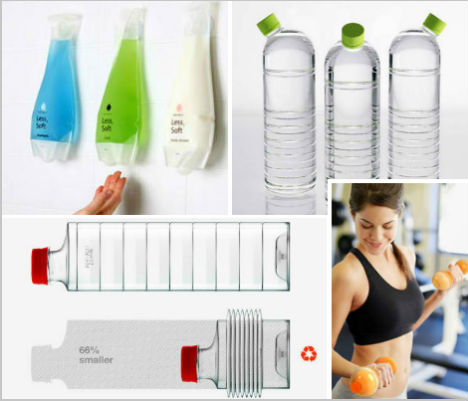
Most companies are primarily concerned with price when it comes to beverage and liquid product packaging, but what if designers were given free reign to tweak the standard designs so they’re more user-friendly? These 14 packaging design concepts solve annoyances like caps that are difficult to open, bottle shapes that force you to crane your neck to drink and the frustrating inability to reach those last drops of product in the bottom of a soap bottle.

Soft Hanging Soap and Shampoo Bottles

Designer Bottles Soft Hanging

Soft bottles with suction cups to attach them to the shower walls eliminate all the clutter that various toiletries can create in the bathroom. These bottles are made from cornstarch vinyl, so they’re easy to squeeze, and making them transparent may help distinguish between different types of products stored inside.

Easy Drink

Designer Bottles Easy Drink 1

This simple change in the standard water bottle design seems so obvious, it’s amazing that it hasn’t been implemented already. Moving the mouth of the bottle from the top to a 45-degree angle makes it much easier to drink and re-fill. No more craning your neck to get those last drops.

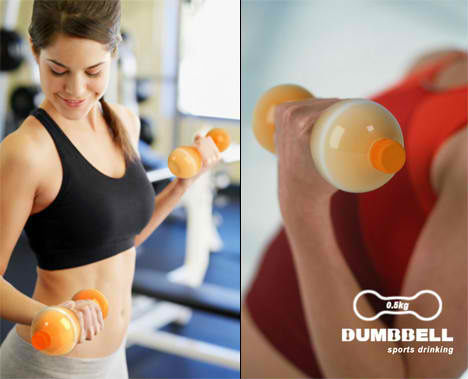
Dumbbell Bottle

Designer Bottles Dumbbell 2

Since you’re probably carrying a water bottle or sports drink while working out anyway, why not make it do more? The Dumbbell sports drink bottle won’t exactly get you ripped at just .5kg (1.1 pounds), but you could always fill it with something heavier when the drink is gone.

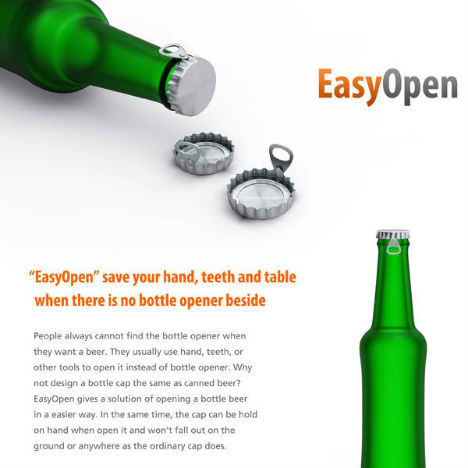
EasyOpen Tab-Pull Bottle Cap

Designer Bottles EasyOpen

Sometimes you’re caught without a bottle opener, and using your teeth isn’t exactly a good idea unless you’re willing to part with them. What if bottle caps had little easy-pull tabs on them? The ‘EasyOpen’ concept would certainly do what the name suggests.

Aqua Jar Turns Bottles into Pitchers

Designer Bottles Aqua Jar

The Aqua Jar by GH Lab extends the life of a plastic bottle by turning it into an easy-pour pitcher. It’s made from biodegradable and recyclable plastic, and fits the universal coil of any plastic bottle.

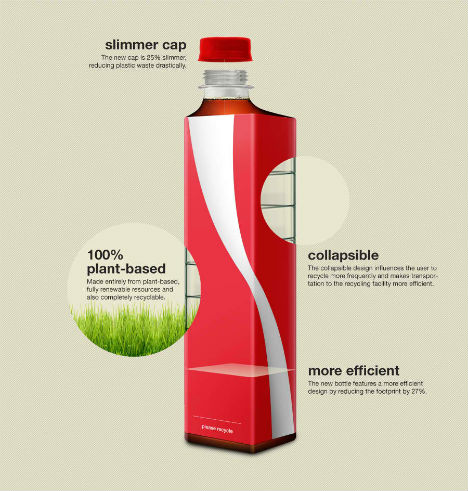
Eco Coke

Designer Bottles Eco Coke

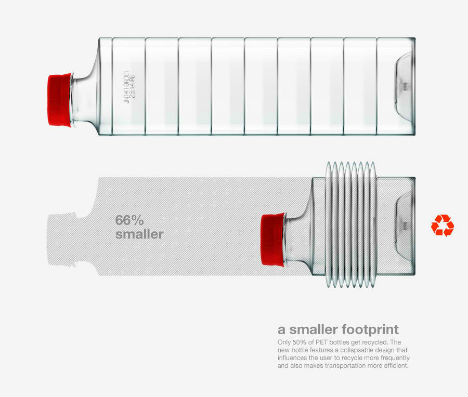
Designer Bottles Eco Coke 2

“Same classic design, just greener,” says Andrew Kim, designer of the Eco Coke bottle. So what makes it different – and superior – to the current bottle design? Aside from being 100% plant-based, this bottle is also collapsible, making it easier to keep it on hand until a recycling bin is nearby. Since it has a smaller footprint, space for nearly two additional bottles is recovered within standard boxes.

Retap

Designer Bottles Retap

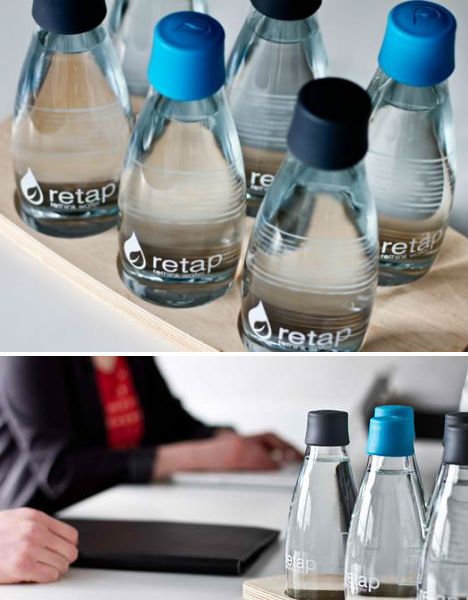
While some people will reuse plastic bottles a few times, they’re awkward to clean, and can leach chemicals into the water over time. Glass is safer – and nicer-looking. Retap is a designer water bottle concept that’s easily refillable, without any sharp corners to make cleaning difficult.

Next Page:
Bottle Sell It 14 Designer Bottles That Break The Mold

Share on Facebook


[ By Steph in Design & Products & Packaging. ]

[ WebUrbanist | Archives | Galleries | Privacy | TOS ]


WebUrbanist

 
Comments Off on Bottle & Sell It: 14 Designer Bottles that Break the Mold

Posted in Creativity


17. April 2013

17 Apr

Ein Beitrag von: Sandra Drljaca

Splash_©_-Sandra-Drljaca


kwerfeldein – Fotografie Magazin

 
Comments Off on 17. April 2013

Posted in Equipment


Traveling Light

17 Apr

Having traveled more in the last five years than in all of the previous forty three, I finally feel like I have found a comfort zone as a traveling photographer. Though lugging far less gear, I'm still protected with backups for critical items.

Looking back just four years, there is now a huge difference in the way I approach my gear pack. A walk-thru and my reasoning, below.

Read more »


Strobist

 
Comments Off on Traveling Light

Posted in Photography


8 Tips to Become Excellent at Minimalist Photography [+2 bonuses inside]

17 Apr

Less is more! You’ve definitely heard that old saying before, and it couldn’t apply more to the genre of minimalist photography. People’s exact definitions of minimalist photography may vary from person to person, but in general, this style of photography can be summed up in the following way. It makes sure that all of the attention is focused upon the Continue Reading

The post 8 Tips to Become Excellent at Minimalist Photography [+2 bonuses inside] appeared first on Photodoto.


Photodoto

 
Comments Off on 8 Tips to Become Excellent at Minimalist Photography [+2 bonuses inside]

Posted in Photography