RSS
 

Archive for March, 2013

BBC and Forbes look at the booming action camera business

13 Mar

_66198768_brinno_bikecamera.jpg

Small, rugged, go-anywhere action cams have become increasingly popular. Both BBC news and Forbes magazine have taken a look at the booming action camera business over the last week. The BBC’s  Forbes posted an interesting story about GoPro’s Founder and CEO Nick Woodman with details on the company’s success. Click through to read more and for links to the posts.

News: Digital Photography Review (dpreview.com)

 
Comments Off on BBC and Forbes look at the booming action camera business

Posted in Uncategorized


World Press Photo award enables photographer to resume his career

13 Mar

African_Football_in_Guinea_Bissau_1.jpg

Last October, Portuguese freelance photojournalist Daniel Rodrigues was forced to sell off all his camera gear to pay the bills. Only a few months later, however, one of his images took first prize in the Daily Life category from the prestigious World Press Photo foundation. As a result of the ensuing attention, Rodrigues has been able to acquire new gear and resume his career in photojournalism. (via New York Times Lens blog)

News: Digital Photography Review (dpreview.com)

 
Comments Off on World Press Photo award enables photographer to resume his career

Posted in Uncategorized


Making a Photo: Infuse Yourself into your Photos

12 Mar

Delicate Arch_073109_0045(sRGB-websize)As a hobbyist, self-taught photographer, I find myself often wondering about the esoteric nature of photography and what it is exactly that separates the average photographer from the professional or even world renown photographer. Is it technical skill, creative expertise, some sort of profound psychological perspective, post-processing acumen or just plain blind luck? In reality, it is likely a combination of all these things, but recently I have become more and more interested in the more introspective nature of photography and how powerfully creative and self-expressive it can be in shaping who you are as a photographer and a person.

Recently, I read a fantastic article “5 Ways to Improve Your Photography Without Touching Your Camera,” by Richard Walker over on Lightstalking.com. When you get a chance you should definitely check it out. The article discusses the inferiority complex one gets after looking at amazing photos, once the feelings of self-doubt and negativity creep into your mind, as you ponder the fact that you could never take a photo as great as the one you are viewing. Now, I do not know about you, but this happens to me all the time. I am constantly striving to improve my technique and skill and wonder if there is some enigmatic factor that I am missing that is preventing me from really producing something magical. In fact, it has just been in the past two years that I realized the same concept that Richard Walker introduces in his article of “making a photo.” This is an important and elegant concept that we all need to learn and aptly apply to our photographic process.

Making a Photo

So what does “making a photo” mean? It means to take some time and reflect upon that which your are shooting. Think about what it is you want your photo to look like prior to taking the shot. Pre-visualize the final product and refine your composition, lighting, angle, or background. It involves planning and thought prior to pressing the shutter so that you already have your personalized interpretation in mind. This is such an important concept. I cannot even express what an epiphany this was for me and have definitely been able to see my own progression as a photographer as I have transitioned from snapping photos and started creating them. So how does one start this process?

Botanical Gardens_091209_0103(sRGB-websize)

Know Thyself – The process of artistic creation starts with yourself. You need to really analyze what makes you tick and drives your motivation to be able to express it in your photography. Are you a hopeless romantic, edgy and adventurous, calm and serene, or just downright crazy? As you can imagine each of these personality types would create a different photo based upon what they find inspiring. Really turn the microscope onto yourself and start unravelling the threads of your emotional and psychological make-up. It is truly a fascinating process and will open up and expose that creative core that is necessary to start inspiring your photography.

Likes and Dislikes – Analyze your own photographic likes and dislikes. Keep a running file folder of photos that you have seen or found that you admire or that inspire you. Group them in separate monthly folders so that you can see how your likes change as you grow as a person. More importantly, and often forgotten, you should do the same thing (although to a lesser extent) with photos that you dislike. It is critical to understand what you do not like in a photo just as much as it is to comprehend what it is you like. Somewhere between these likes and dislikes is your own vision or desired artistic niche.

Visualization – Once you have an idea of who you are and what you like, use it to transform your photographic process. When you are getting ready to take your next photo, think about the shot for a few minutes and how you want it to look after post-processing. Consider the angle you are shooting at, the depth of field, available lighting and shadow, the colors involved in the scene and the emotive glimpse of self expression that you want to portray. If you are going for sad and lonely you might want a solitary subject with lots of dramatic soft shadows and a more drab color palette. If you want edgy and adventurous you might capture some action with harsh contrast and bring out the details of the scene with a lot of contrast added in post-processing. Basically, you need to know where you are going with the shot so that you can get there in the end.

Execution – The last step is the easiest and most gratifying of them all. By this point, you have a bit of a concept and feel for your shot. Now all you have to do is make the photo. Using your pre-visualized plan, start shooting. Take a few shots and study them and see if you are getting what you want. Refine the shot. Play around with white balance a bit a see how it changes your shot. Expose for highlight in the scene or for shadow and see how it changes the mood. Work the composition some and most of all enjoy the process and make sure you are accomplishing your goal for the shot.

Moose_Jun302010_0019(sRGB-websize)

When you stop taking photos and start making them, it is definitely a gradual process. You will not notice the results right away. In fact, you will likely try it a few times and want to abandon the process as foolish cause you find yourself struggling. Just remember, it takes time, practice, persistence and most of all confidence. It is not going to happen overnight. Stay positive and keep working at it. Analyze the problems you think you are having or how your vision is not being captured by your photos. Take your time and embrace the learning process. Soon you will be looking at your photos and start seeing a few glimpses of your vision. This will progress further and further and eventually you will have that one magical defining moment where you are looking through your viewfinder and you recognize your vision, your hope, your dream, and yourself in that one perfect click of the shutter. You my friend have just made a photo!

Portland Trip-497(sRGB-websize)

Post originally from: Digital Photography Tips.

Check out our more Photography Tips at Photography Tips for Beginners, Portrait Photography Tips and Wedding Photography Tips.

Making a Photo: Infuse Yourself into your Photos


Digital Photography School

 
Comments Off on Making a Photo: Infuse Yourself into your Photos

Posted in Photography


Pirate Island Radio Station Invaded, Dismantled & Rebuilt

12 Mar

[ By WebUrbanist in Architecture & Offices & Commercial. ]

pirate island

Few works of architecture can boast half so strange a history as this structure now serving as a restaurant in the waters of Amsterdam.

pirate historic building platform

Built in the Republic of Ireland, the platform known as REM Island was hauled off the coast of the Netherlands to become an artificial island broadcasting from what were initially international waters, complete with helipad.

pirate platform office restaurant

The Dutch government, none too pleased with the incursion of Radio and TV Noordzee from its coastal hideout, passed a law to grab jurisdiction, then promptly sent armed forces to take over the station. It became a governmental laboratory for water testing and research, before ultimately being taken apart in the mid 2000s.

pirate radio station rebuild

Today, it has been constructed (with functional retrofits) in the water once more, but close enough to shore to be reached by foot bridge. It currently serves as a stunning multi-story office and restaurant complex with an amazing rooftop viewing platform (images by Ewout Huibers, Jim Ellam via ArchDaily).

Share on Facebook


[ By WebUrbanist in Architecture & Offices & Commercial. ]

[ WebUrbanist | Archives | Galleries | Privacy | TOS ]


WebUrbanist

 
Comments Off on Pirate Island Radio Station Invaded, Dismantled & Rebuilt

Posted in Creativity


Cinetics introduces CineVise camera mount with vise grips

12 Mar

8527804301_51516e7307_m.jpg

Video accessories maker Cinetics has announced the CineVise camera mount. Similar to its Cine System, it is built around Joby’s popular Gorillapod Focus flexible tripod. The CineVise includes clamps around its feet, allowing you to firmly mount a DSLR or small video camera to any surface. It can be purchased from the Cinetics store as a complete system, including the GorillaPod Focus and Ballhead X for $ 295. You can also purchase just the CineVise grips for $ 165.

News: Digital Photography Review (dpreview.com)

 
Comments Off on Cinetics introduces CineVise camera mount with vise grips

Posted in Uncategorized


Sensing Mumbai – Jan 12, 2013

12 Mar

A few nice visual art images I found:

Sensing Mumbai – Jan 12, 2013
visual art
Image by BMW Guggenheim Lab
Sensing Mumbai
BMW Guggenheim Lab
January 12, 2013
Mahim Beach
Mumbai, India

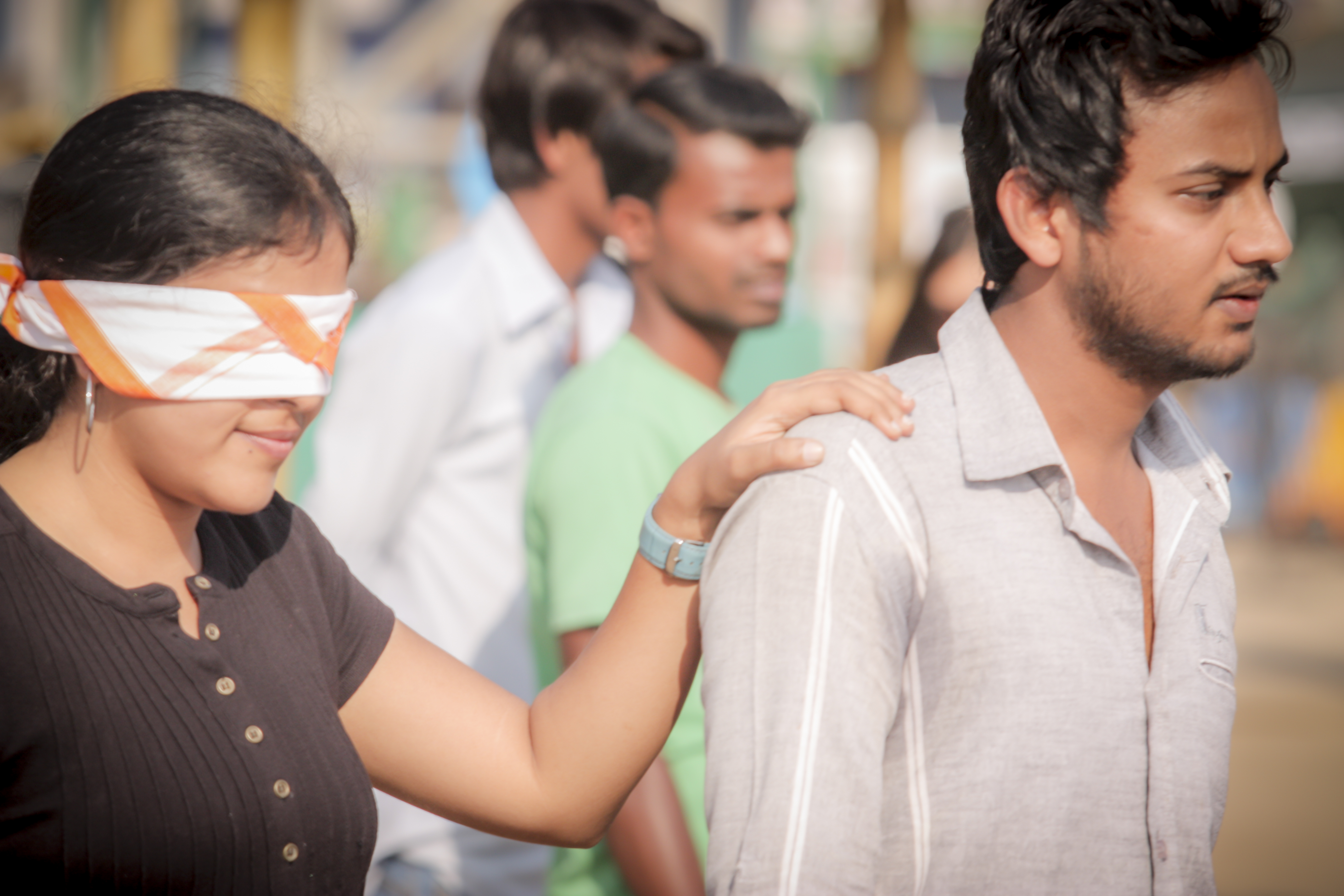
See the city in a whole new light…by not seeing it at all. We explored the non-visual experience of the city on this blindfolded adventure through Mumbai, and discovered how our experience of space changes when we are unable to see, and we become aware of sounds, smells, and sensations we might normally overlook.

Photos: UnCommonSense © 2013 Solomon R. Guggenheim Foundation, New York

Sensing Mumbai – Jan 12, 2013
visual art
Image by BMW Guggenheim Lab
Sensing Mumbai
BMW Guggenheim Lab
January 12, 2013
Mahim Beach
Mumbai, India

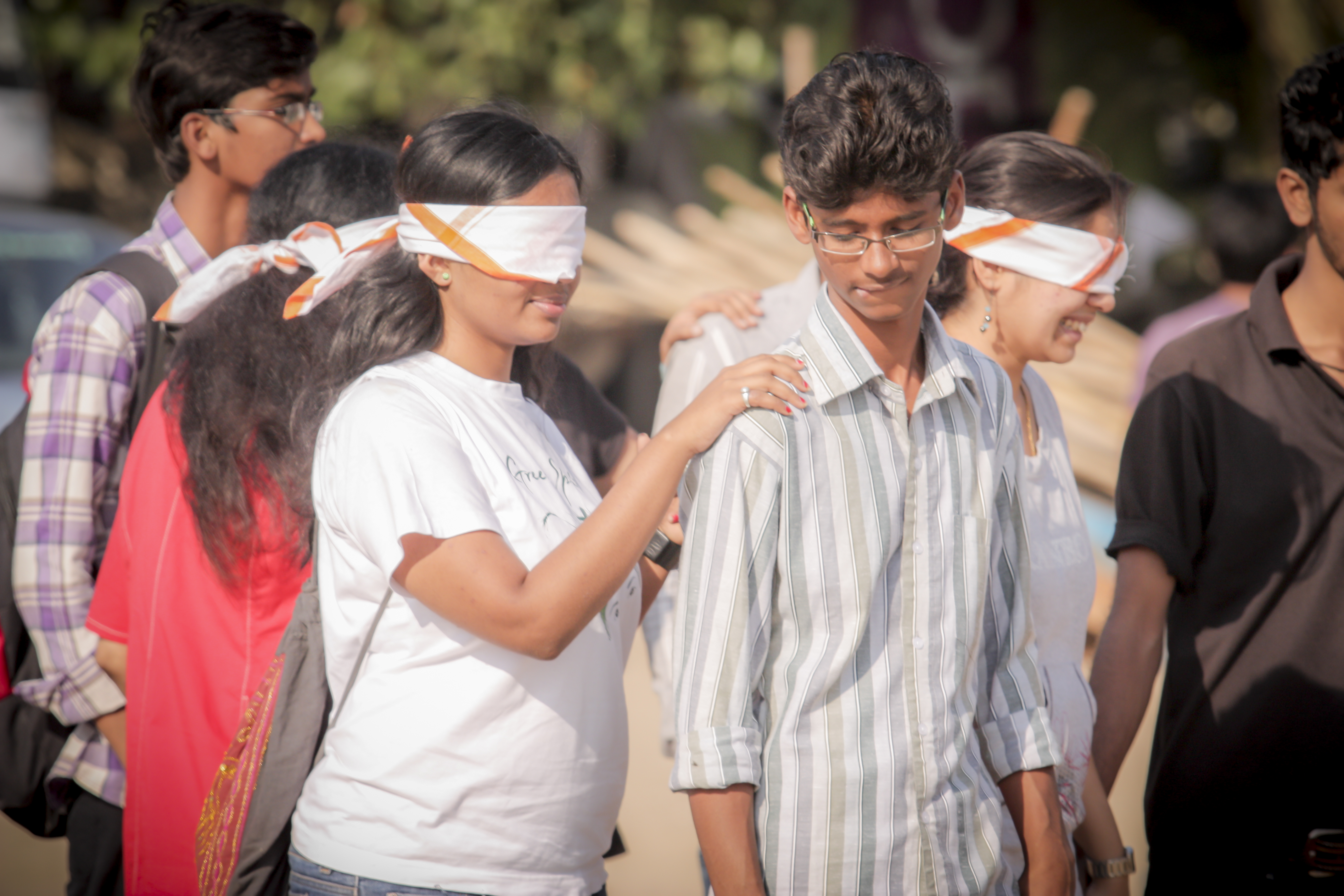
See the city in a whole new light…by not seeing it at all. We explored the non-visual experience of the city on this blindfolded adventure through Mumbai, and discovered how our experience of space changes when we are unable to see, and we become aware of sounds, smells, and sensations we might normally overlook.

Photos: UnCommonSense © 2013 Solomon R. Guggenheim Foundation, New York

 
Comments Off on Sensing Mumbai – Jan 12, 2013

Posted in Photographs


South Platte River at Fort Lupton – Northern Colorado Paddling

12 Mar
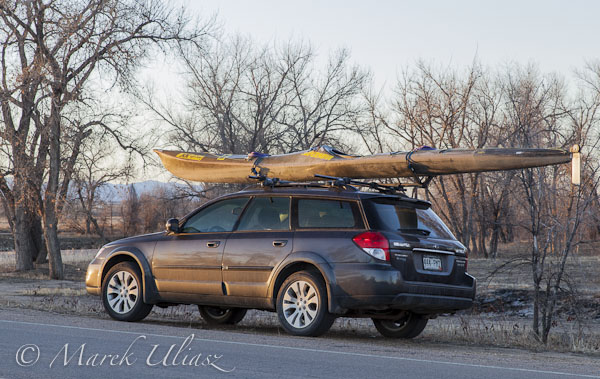
Subaru Outback and JKK Supernova kayak><br />
I haven’t paddled my JKK Supernova kayak since 2012 Missouri River 340 race. I decided that to rinse some Missouri mud off.</p>
<p><img decoding=

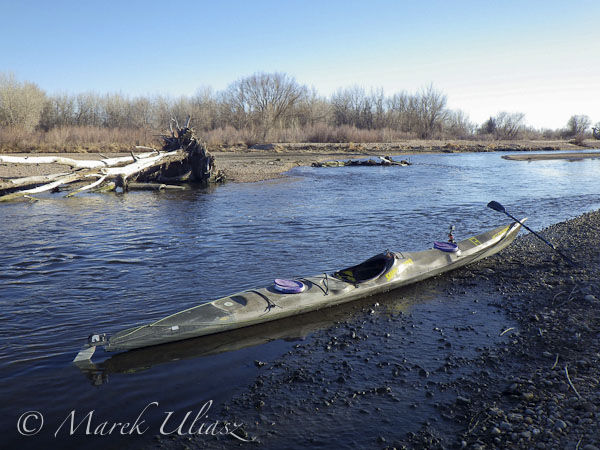
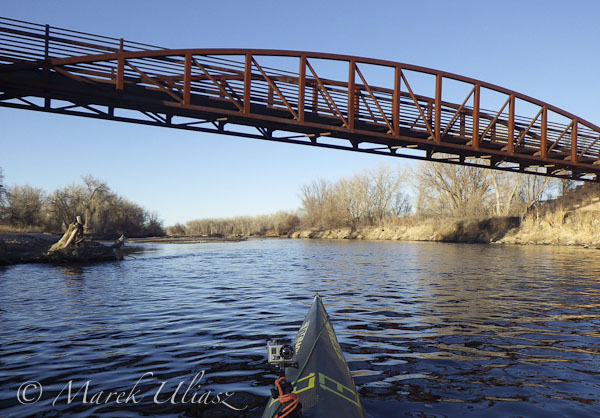
Paddling upstream with GoPro camera mounted in the front deck.

paddling South Platte River

About 2 miles upstream of Fort Lupton. The river was shallow, fast, twisty, stinky … Near perfect! I had a great workout.

South Platte River at Fort Lupton
Back to Fort Lupton.

I have paddled JKK Supernova starting at Fort Lupton several times this winter. It seems that my driving time from Fort Collins is about 45 minutes and is not longer than driving to Kersey below Greeley. I didn’t try to paddle my SUP since some spots were too shallow for a fin.


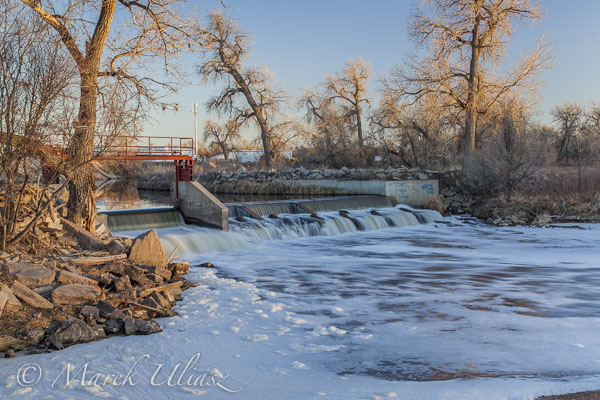
This is a diversion dam just below Fort Lupton. I’ve paddled the river between Fort Lupton and the confluence wit St Vrain Creek. There are 7 dams in this short section. Maybe, it’s a time to run it just for documentary purposes, certainly, not for recreation. It feels like a packrafting project.

Related posts:
South Platte River below Denver, Colorado – GPS/photo river guide


paddling with a camera

 
Comments Off on South Platte River at Fort Lupton – Northern Colorado Paddling

Posted in Photography


Cinebook Fotobücher: Ein Testbericht

12 Mar

Vielleicht seid Ihr ja auch schon einmal auf den relativ neuen Service Cinebook aufmerksam geworden. Ich glaube, es war bisher eine der wenigen Facebook-Werbungen, auf die ich geklickt hatte. Nach dem Klick landete ich auf einer ziemlich schick und übersichtlich gemachten Seite.

Als dann plötzlich ein kleines Chatfenster aufploppte, in dem ich begrüßt und gefragt wurde, ob man mir helfen könne, war meine Begeisterung erst einmal flöten. So etwas wirkt auf mich immer etwas – nun ja – merkwürdig. Aber …

0f

… nachdem sich herausstellte, dass am anderen Ende wirklich ein freundlicher Mensch sitzt, der meine Fragen beantwortet, scheute ich mich nicht zu fragen, ob ich den Service für kwerfeldein testen dürfte. Zwei Minuten später hatte ich einen Gutscheincode in meinem Postfach. Ich habe selten so eine nette und unkomplizierte Kommunikation mit einem Unternehmen geführt. Allein dafür gibt es schon einmal Pluspunkte.

0e

Und so kann ich Euch heute das Ergebnis meines Tests vorstellen. So viel sei vorweg verraten: Der erste positive Eindruck hat mich nicht getäuscht. Das Endergebnis – und das ist es ja, was zählt – ist über jeden Zweifel erhaben.

~Das einzige Manko, das ich feststellen konnte, war die Software, mit der man die Bücher erstellt. Adobe-Air-Applikationen sind generell nicht mein Fall. Ich weiß zwar nicht, wie sich solche Software auf aktuellen Windows-Systemen anfühlt, aber auf meinem (zugegebenermaßen in die Jahre gekommenen) Mac fühlt es sich immer so an, als wäre mein Kopf schon drei Schritte weiter als die Software. Laaa-haaam. Und das nervt ein wenig.

Neben der Langsamkeit stört das etwas fummelige genaue Ausrichten von Fotos. Auch die Formatierung der Schrift ist nicht gerade optimal gelöst. An dieser Stelle muss aber unbedingt erwähnt werden, dass man auch PDFs und InDesign-Dateien beim Bestellprozess hochladen kann. Das macht die Sache mit Sicherheit wesentlich komfortabler und vor allem individueller. Um diesen Test aber „massenkompatibler“ zu machen, hatte ich mich entschlossen, die Cinebook-Lösung zu nutzen.

0g

Das Programm an sich lehnt sich optisch an Lightroom an und erklärt sich eigentlich von selbst. Nachdem man sich für ein Format entschieden hat, kommt man direkt zum Editor. Links ist ein Dateibrowser, darunter sieht man die im oben ausgewählten Ordner vorhandenen Fotos.

Diese kann man wie üblich automatisch oder manuell platzieren. Dafür gibt es jede Menge verschiedene Seiten-Vorlagen, die rechts am Fenster hinter einem kleinen Symbol versteckt sind. Diese lassen sich aber auch noch editieren.

0i

Das ist alles nichts Weltbewegendes und ich setze an dieser Stelle einfach voraus, dass der geneigte Leser bereits Erfahrungen mit solchen Programmen gesammelt hat.

Einen Tag nach der Bestellung des Buchs flatterte schon die Bestätigung in mein Postfach: Mein Buch wäre fertig für den Versand. Einen weiteren Tag später wurde das Buch auch schon geliefert. Das nenne ich mal schnell! Ein wenig aufgeregt nestelte ich nervös am Karton und riss selbigen, ähnlich wie ein Kind seine Weihnachtsgeschenke öffnet, einfach auf.

SONY DSC

Jedes Buch wird in einem edlen, schwarzen Geschenkkarton geliefert. Darin schlummert das gute Stück in einer exakten Schaumstoffaussparung. An der Seite ragt ein kleiner Filmstreifen heraus, mit dem man das Buch hervorholen kann. Ich hatte die Option Softskin Cover gewählt. Das fühlt sich nicht nur toll an, sondern gibt dem Cover auch einen edlen, matten Glanz.

Die Fotos werden auf echtem, 0,16 mm dickem Fuji Crystal Echtfotopapier ausbelichtet. Im Endeffekt sind die Seiten dann inklusive Kleber 0,34 mm dick. Toll. Die Bindung ist eine spezielle Leporello-Bindung, durch die der sonst oft störende Mittelfalz praktisch nicht mehr vorhanden ist. Sehr schön, wenn man Fotos über beide Seiten platziert hat.

SONY DSC

Cinebook beschreibt das so:

Um das Beste erreichen zu können, stellen wir einen kompromisslos hohen Anspruch an unsere Premium-Fotobuch-Qualität. Deine Bilder verdienen die höchste Brillanz, Farbechtheit und Langlebigkeit. Cinebooks werden deswegen, anders als gedruckte Fotobücher, auf echtem Fotopapier ausbelichtet. Da das ohne störenden Falz möglich ist, kannst Du Deine Bilder in der gesamten Breite des Buches zeigen. Panorama-Feeling pur.

Für uns hört es aber bei der Ausbelichtung nicht auf. Zu einem Premium-Fotobuch-Erlebnis gehört ebenso die Haptik. Überzeugen die einzelnen Seiten durch die seidenmatte Oberfläche des echten Fotopapiers und sein charakteristisches Relief, wartet das Hardcover deines Cinebooks mit edler Softskin-Oberfläche auf.

Und das Beste: Fotobücher von Cinebook werden stets in einer hochwertigen Geschenk-Box geliefert. So bleibt Dein Cinebook immer gut geschützt, die Qualität erhalten und jedes Öffnen wird zu einem besonderen Erlebnis.

SONY DSC

Es ist wirklich eine wahre Freude, das Buch zu betrachten und durchzublättern. Allein die Dicke des gewählten Papiers vermittelt eine sehr hohe Qualität. Aber all das hat natürlich auch einen Haken: Der Spaß ist leider nicht billig. Es gibt vier verschiedene Formate, die mit folgenden Preisen zu Buche schlagen:

Cinema: 28 x 19 cm, ab 49,95 €
Lookbook: 21 x 28 cm, ab 54,95 €
Close-Up: 28 x 28 cm, ab 69,95 €
Widescreen: 42 x 28 cm, ab 89,95 €

Das sind im Vergleich zur Konkurrenz bestimmt keine Schnäppchen. Ich habe bisher aber auch kein Fotobuch in der Hand gehabt, das an diese Qualität herangekommen wäre. Lediglich Blurb würde ich noch als ähnlich gut ansehen. Da sind die Seiten aber wesentlich dünner und auch die Leporello-Bindung fehlt.

Wer also ein qualitativ wirklich hochwertiges Buch sucht, sollte sich überlegen, ob er nicht den einen oder anderen Euro mehr ausgeben möchte. Gerade, wenn man das Buch vielleicht zu einem speziellen Anlass verschenken möchte. Oder wenn man die tollen Fotos der eigenen Hochzeit in einem Buch verewigen möchte. Bei Cinebook lohnt es sich in jedem Fall.

Könnte ich Sterne vergeben, gäbe es 4,5 von 5 schicken, glänzenden Sternchen. (Das halbe Sternchen Abzug wegen der etwas hakeligen Software.)

Vielen Dank an dieser Stelle noch einmal an Cinebook für die insgesamt schnelle und unkomplizierte Abwicklung!


kwerfeldein – Fotografie Magazin

 
Comments Off on Cinebook Fotobücher: Ein Testbericht

Posted in Equipment


Abandoned Power Station Transformed into a Roller Coaster

12 Mar

[ By Steph in Architecture & Cities & Urbanism. ]

Battersea Power Station Rollercoaster 1

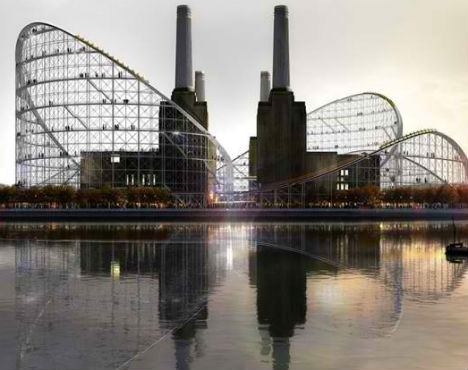
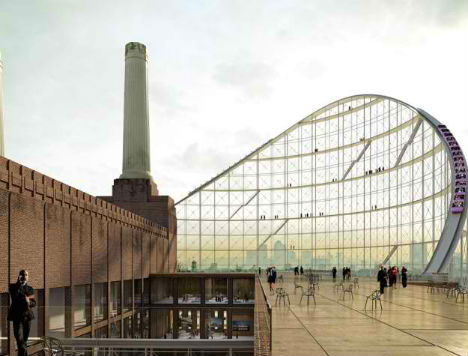
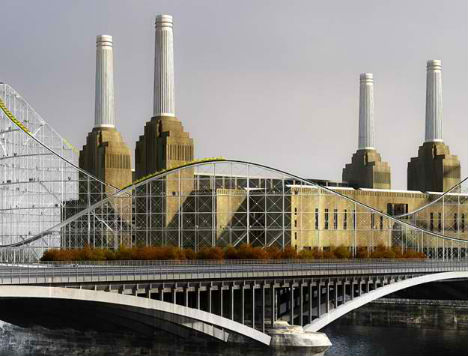
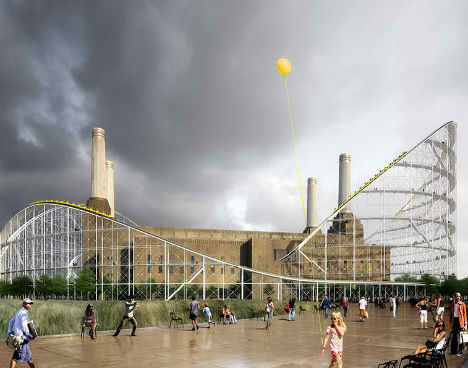
An abandoned power station that has been an iconic part of London’s skyline since 1933 is transformed into a playground and museum in the “Architectural Ride London” proposal by Atelier Zündel Cristea. The concept makes use of the Battersea Power Station, which was decommissioned in 1983, preserving its history while making it both an educational and recreational attraction.

Battersea Power STation Rollercoaster 2

Battersea Power Station Rollercoaster 3

The former coal-fired power station (which has been featured in a number of films and music videos) is notable for its original Art Deco interior fittings and decor, but throughout the thirty years of its abandonment, its condition has deteriorated severely. Former owners considered making the station an indoor theme park in the 1987, and work began on converting the site, but lack of funding brought the project to a halt.

Battersea Power Station Rollercoaster 4

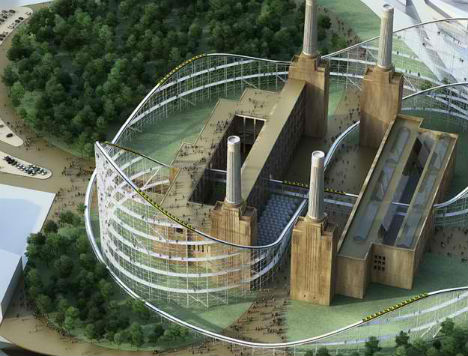
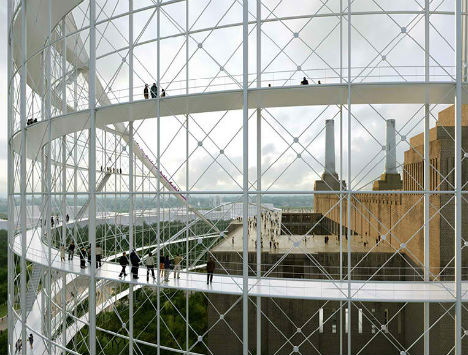
The new proposal revives this idea, making it even more grand with a roller coaster that winds around the building itself, making it the center of attention during the ride. Paths created by the scaffolding-like support of the roller coaster offer opportunities for walking tours. The design took first prize in the ArchTriumph Museum of Architecture competition.

Battersea Power Station Rollercoaster 6

Battersea Power Station Rollercoaster 5

“Our project puts the power station on centre stage, the structure itself enhancing the site through its impressive scale, its architecture, and its unique brick material. Our created pathway links together a number of spaces for discovery: the square in front of the museum, clearings, footpaths outside and above and inside, footpaths traversing courtyards and exhibition rooms. The angles and perspectives created by the rail’s pathway, through the movement within and outside of the structure, place visitors in a position where they can perceive simultaneously the container and its contents, the work and nature. They come to participate in several simultaneous experiences: enjoying the displayed works, being moved by the beauty of the structure and the city: river, park, buildings.”

Share on Facebook


[ By Steph in Architecture & Cities & Urbanism. ]

[ WebUrbanist | Archives | Galleries | Privacy | TOS ]


WebUrbanist

 
Comments Off on Abandoned Power Station Transformed into a Roller Coaster

Posted in Creativity


11. März 2013

12 Mar

Ein Beitrag von: Ronny Hanisch

sky


kwerfeldein – Fotografie Magazin

 
Comments Off on 11. März 2013

Posted in Equipment