RSS
 

Archive for February, 2013

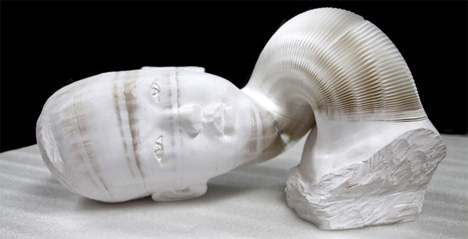
Flexible Paper Sculptures Bend Reality + Warp Perceptions

24 Feb

[ By Delana in Art & Sculpture & Craft. ]

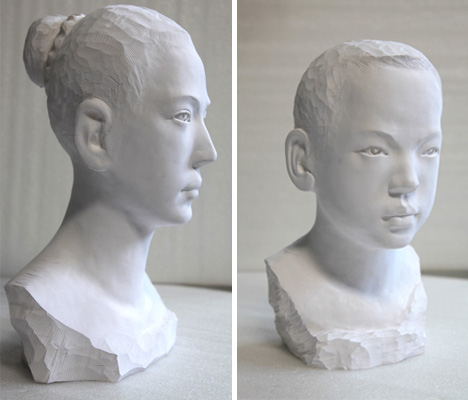
girl ii paper accordion-like sculpture

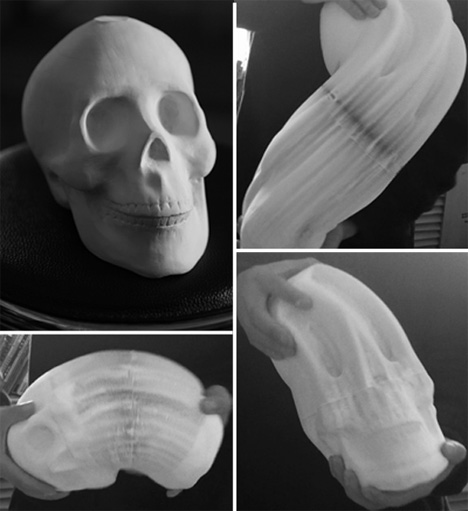
At first glance, these sculptures look just like delicate porcelain or ceramic – but they hide a surprising secret. Beijing artist Li Hongbo‘s sculptures are actually made of thousands of layers of plain white paper, glued together into heavy accordion-like shapes that only appear totally solid when they are still.

girl and boy paper sculptures

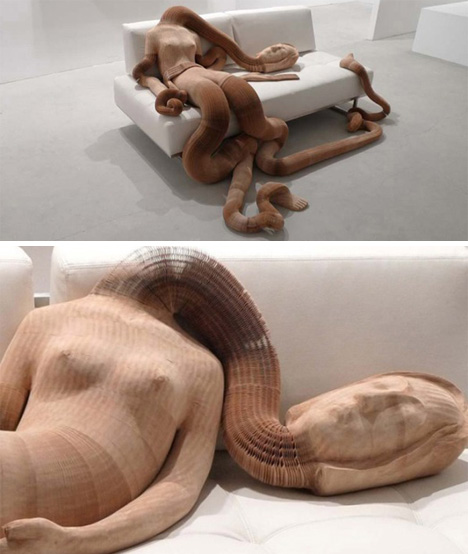
woman on sofa paper sculpture

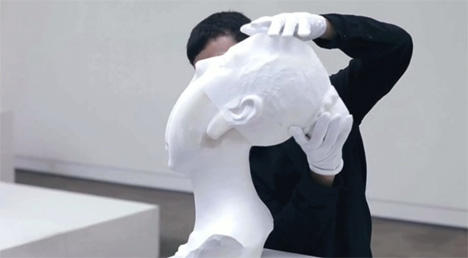
When grabbed and manipulated, their true nature is revealed. They are flexible and complex, capable of stretching long distances and looking altogether otherworldly, particularly the human figures.

paper sculpture bust

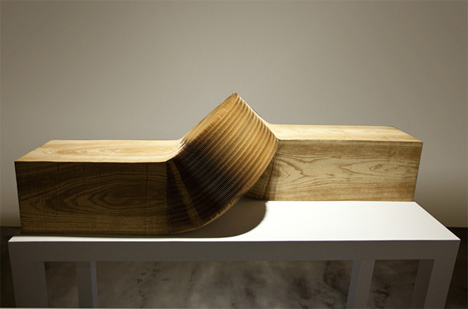
wooden cube paper sculpture illusion

Li Hongbo was inspired by traditional Chinese toys made from intricately folded and glued pieces of thin paper. The toys are stored flat but open up to reveal fun, playful shapes.

skull li hongbo paper sculpture

Likewise, Li Hongbo’s sculptures exist in two different states. Their static shape is stable, solid and beautiful – but when they are moved, their true nature is revealed. They are ephemeral, not stable; airy, not solid – but the beauty of these flexible sculptures remains.

Share on Facebook


[ By Delana in Art & Sculpture & Craft. ]

[ WebUrbanist | Archives | Galleries | Privacy | TOS ]


WebUrbanist

 
Comments Off on Flexible Paper Sculptures Bend Reality + Warp Perceptions

Posted in Creativity


Why does your camera see things differently than you?

23 Feb

Do you ever see a beautiful scene, take out your camera, take the shot and then wonder what went wrong? Why doesn’t the display on the LCD screen look at all like the scene in front of you?

Do you ever stand next to another photographer and wonder how they made an image that is better than the scene you see with your own eyes?

Understanding how the camera “sees” is the key to figuring out why this happens and what you need to do to take charge of your camera and make the images you envision.

If you’re already dreading the mathematical calculations, don’t worry! I’m not going to start measuring my eyeballs and pupils and trying to figure out what kind of lens my eyes are equivalent to in focal length, f/stops, and ISO, or how many megapixels my eyes see. That’s not what this is about.

It’s just about understanding how a camera works differently than our eyes.

When the camera’s “eye” is better than our own

Sometimes the best images show the very thing that we cannot see with our own eyes.

Low Light Levels

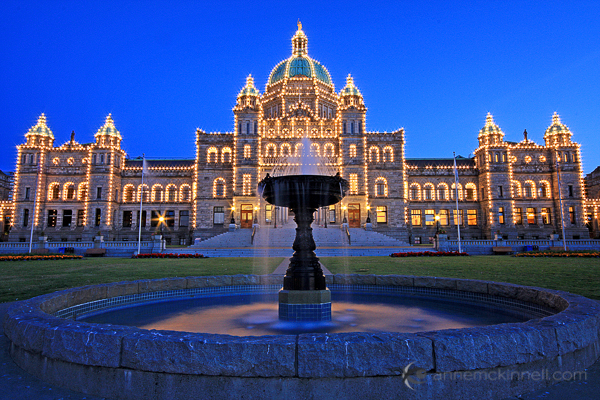
At low light levels our eyes are less sensitive to colour than normal. Camera sensors, on the other hand, always have the same sensitivity. That’s why photographs taken in low light appear to have more colour than what we remember.

The Legislature in Victoria, British Columbia

When I made this image of the Legislature in Victoria, British Columbia, the sky was much darker and less blue to my eye.

Long Exposures

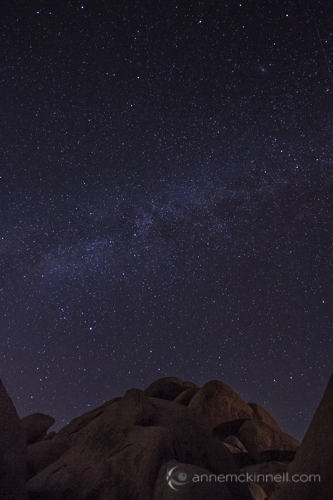
The longer the shutter remains open the more light can enter the camera and hit the sensor. Therefore long exposures can bring out objects that are faint in the sky whereas our eyes will perceive no extra detail by looking at something longer.

Starry Night at Joshua Tree National Park, California

The 30 second exposure in this image, made at Joshua Tree National Park in California, picked up more stars than I could see with the naked eye.

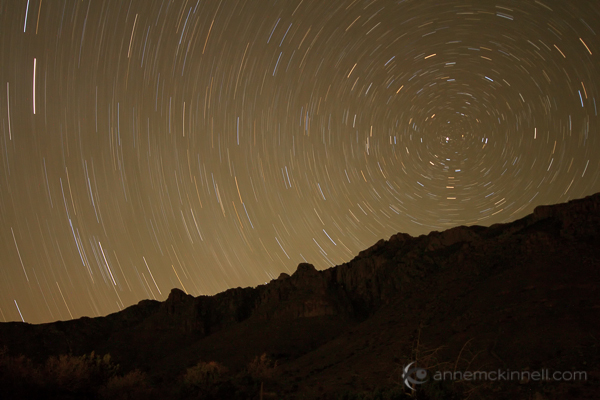
Long exposures also allow us to see the passing of time in a way we cannot with our eyes.

Star Trails in Guadalupe National Park, Texas

In Guadalupe National Park, Texas, I was able to capture the movement of the stars around Polaris, the north star, by leaving the shutter open for 30 minutes.

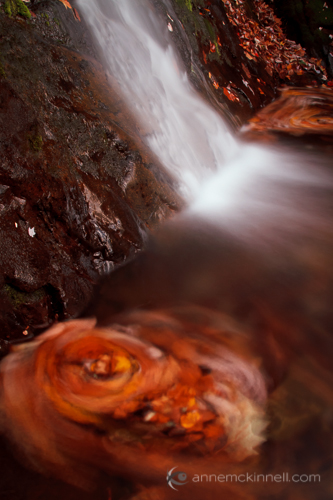
Fallingwater Cascades along the Blue Ridge Parkway, Virginia.

At Fallingwater Cascades along the Blue Ridge Parkway in Virginia, the movement of the water caused the maple leaves to swirl around in a circle. By using a 15 second exposure I was able to capture the movement of the leaves.

Short Exposures

On the other end of the scale, high speed photography can freeze motion and allow us to see something that would otherwise pass by too fast for our eyes to retain any detail.

Egret at Ding Darling Wildlife Refuge, Florida.

By using a shutter speed of 1/5000 second, I was able to freeze the water droplets as they swirled around the egret’s beak as he caught a fish.

Depth of Field

One thing that is somewhat similar between a camera and a human eye is aperture, but only if you hold it steady. For example, if you stare at one word in the middle of the this sentence and do not move your eyes, you can perceive that the other words are there but they are not clear. The part that is in focus is only the centre portion of your field of view.

That is the same as a camera with a small aperture. The difference is that you can’t actually look at the out-of-focus part. As soon as your eye moves to the out-of-focus words they instantly become in-focus.

Whereas if you are looking at a print or an image on your screen you can look at the out-of-focus part which is something we cannot do with our eyes. That’s why shallow depth of field images are so interesting to us.

Dandelion Seed

Colour

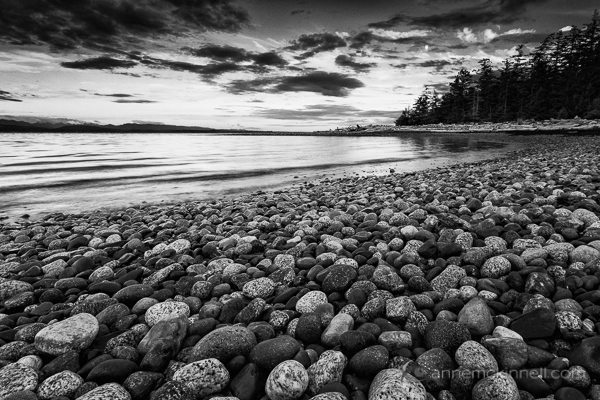
Most of us see in colour. Others see limited colours. But either way we are stuck with what we have. Maybe that’s why some people like or dislike black and white photography. For a long time colour was considered a limitation in photography and the human eye was obviously better. But now photographs give us the option of viewing things in a different way.

Rocks on the beach at Rebecca Spit, Quadra Island, British Columbia.

Rocks on the beach at Rebecca Spit, Quadra Island, British Columbia.

When the human eye (or brain) is better

Dynamic Range

One thing to keep in mind is that when we see something with our eyes, our brain is involved too. Think of optical illusions where you perceive something that isn’t actually there.

As we look around a scene our eyes quickly adjust to changing light. Take a scene with dark shadows and bright highlights for example. As your eye moves from one area to another it quickly adjusts so our eyes take in the right amount of light and we see detail in all parts of the scene. When we look at a scene it is like our brain takes numerous snapshots and what we perceive is the combination of those snapshots.

Your camera cannot do that. It simply records the light that hits the sensor at one aperture setting. It can only have one exposure for the whole scene.

That is where exposure blending, or high-dynamic-range (HDR) photography, can sometimes make a scene look more like what we perceived at the time.

On the other hand, depending on how you blend your images, HDR photographs can show us a lot more detail than what our eyes saw and then they don’t look realistic. Not that there’s anything wrong with that! It depends on whether you want your images to be realistic or not.

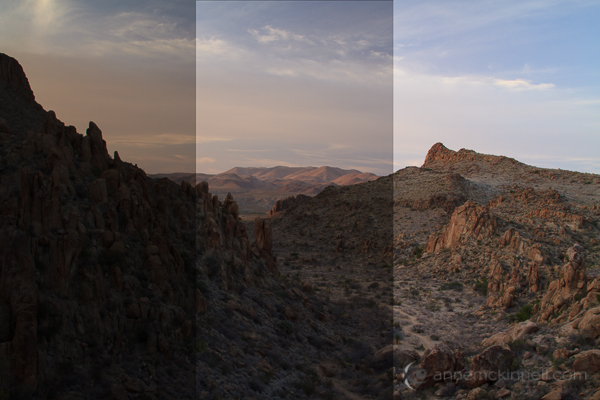
Grapevine Hills HDR Brackets

The image above represents the same scene taken at three different exposures. One exposure is for the shadows, another for the mid-tones and the other for the highlights.

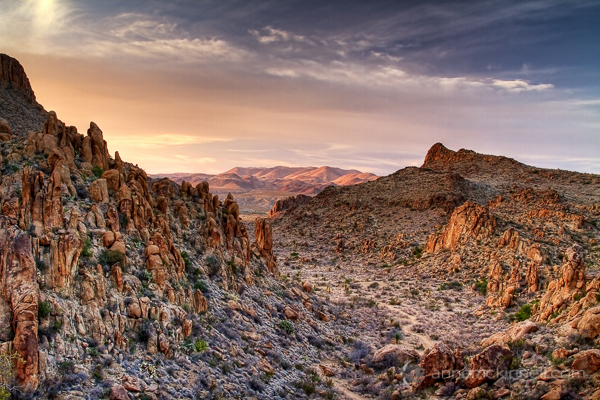
Grapevine Hills, Big Bend National Park, Texas.

Grapevine Hills, Big Bend National Park, Texas.

I can blend those images together in photoshop and end up with an image like this. Our brain does that all by itself!! This more closely represents the image I remember in my mind.

Conclusion

The kinds of images that are considered good differ from person to person. It’s subjective.

Some people like images that are just like what their eyes saw or are capable of seeing — the realistic images.

Other people prefer images that show them what they cannot see such as black and white, long exposures, or HDR with tons of detail.

Either way, understanding why the camera “sees” things differently than you will put you well on your way to creating the kind of images you want to make.

Post originally from: Digital Photography Tips.

Check out our more Photography Tips at Photography Tips for Beginners, Portrait Photography Tips and Wedding Photography Tips.

Why does your camera see things differently than you?


Digital Photography School

 
Comments Off on Why does your camera see things differently than you?

Posted in Photography


Kollodium-Nassplatten-Projekt: The Mask Series

23 Feb

Das Titelbild „Lungs“ stammt von Gerald Figal.

Dass sich aus einem kleinen Projekt namens „The Mask Series“, das von Shane Balkowitsch, einem Liebhaber der Kollodium-Nassplattenfotografie gestartet wurde, schnell eine internationale Kollaboration von über 100 Fotografen dieser alten Fototechnik entwickeln würde, hatte niemand geahnt.

Doch es ging alles ganz schnell: Nachdem kurz vor Weihnachten die ersten Bilder für das Projekt entstanden, entwickelte sich eine Eigendynamik. Nicht zuletzt deshalb, weil einige der besten Wetplater der Welt inzwischen an der Serie mitarbeiten, was weitere Interessenten anzieht. Bis heute haben sich 112 Teilnehmer eingeschrieben und jeden Tag werden es mehr.

Julia
„Free At Last“ von Julia Bailey

Im Mittelpunkt steht diese seltsame Requisite: Eine tschechische M10-Gasmaske, die jedem Bild etwas sehr Gespenstisches und Beunruhigendes gibt. Teilweise entsteht durch sie auch eine Komik, oft jedoch lässt sich in die Fotos eine Mahnung der Vergänglichkeit dieser Welt interpretieren.

Auf Grund des großen Erfolges ist nun auch ein Bildband geplant. Zudem sollen die Original-Exponate, die zentral in Nord-Dakota/USA archiviert werden, auch auf Welttournee gehen. Aber das ist Zukunftsmusik. Noch reist die Gasmaske von Fotograf zu Fotograf und von Land zu Land.

Andreas
„Breathless“ von Andreas Reh

Wenn Ihr nun auf den Geschmack gekommen seid und mitmachen wollt, könnt Ihr Euch an dem Projekt beteiligen. Mit etwas Geduld und dem nötigen Wissen und Können, um Kollodium-Nassplatten zu erstellen, habt Ihr alle Bedingungen für die Serie erfüllt.

Das Projekt versteht sich nicht als Wettbewerb, sondern möchte eine Zusammenarbeit ohne Grenzen und Beschränkungen von vielen Wetplatern fördern. Die Liebe und Leidenschaft zu dieser alten Technik steht im Vordergrund.

Bill
„Life after the Bomb“ von Bill Vaughn

Inspiration könnt Ihr Euch bei den ersten Ergebnissen holen. Sie sind online zu bewundern und auf Facebook gibt es den fiktiven Charakter Mark Mask, der über die aktuellen Entwicklungen zur Serie auf dem Laufenden hält. Es ist auf jeden Fall sehr spannend zu sehen, was die einzelnen Teilnehmer aus der Maske machen und mit welchem Ideenreichtum sie an der Serie arbeiten.


kwerfeldein – Fotografie Magazin

 
Comments Off on Kollodium-Nassplatten-Projekt: The Mask Series

Posted in Equipment


Weddings Through The Eyes of a “Noob”: Lessons I Learned

23 Feb
One of the things I'll do is set up a remote camera in the back of the ceremony, elevated if possible.  In this shot, a tilt-shift lens was used to create that miniature look.  EOS 5D Mark III, TS-E 17mm f/4L. Exposure was 1/320, ISO 3200, f/4.

One of the things I’ll do is set up a remote camera in the back of the ceremony, elevated if possible. In this shot, a tilt-shift lens was used to create that miniature look. EOS 5D Mark III, TS-E 17mm f/4L. Exposure was 1/320, ISO 3200, f/4. Photo by Rick Berk/kNot Photography

Throughout the first 20 years of my career in photography, I’d photographed a lot of different things- NHL All-Star games, Major League Baseball, NFL Football. I’d photographed portraits, boudoir, model portfolios. Landscape photography became a passion of mine. One thing I never photographed was a wedding.  When I began my career, I assisted on exactly two weddings. Never did I shoot one.  The two weddings I assisted on went so badly that I never wanted to touch one again.  I thought all weddings were like that. It wasn’t until years later that I understood it was more the photographer I worked for than it was the weddings themselves.
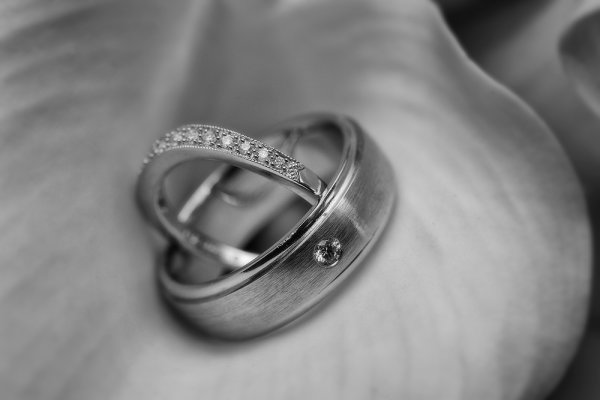
This type of shot is the kind that makes for a nice touch in the overall collection from a wedding.  They complete the set and really show a photographer's attention to detail.  EOS-1D X, EF 100mm f/2.8L IS Macro. ISO 800, 1/200, f/8.

This type of shot is the kind that makes for a nice touch in the overall collection from a wedding. They complete the set and really show a photographer’s attention to detail. EOS-1D X, EF 100mm f/2.8L IS Macro. ISO 800, 1/200, f/8. Photo by Rick Berk/ OneRedTreePhoto.com

For a variety of reasons, I made myself available as a second shooter in 2012, and got my first taste shooting weddings.  That first one was intimidating, but I learned a few things along the way.

This is a must. Depending on the setting it will always change, but at least one formal portrait of the bride is essential.  This shot simply used on camera flash, bounced into a reflector at camera left. EOS-1D X, EF 85mm f/1.2L II. 1/250, f/1.2, ISO 400.

This is a must. Depending on the setting it will always change, but at least one formal portrait of the bride is essential. This shot simply used on camera flash, bounced into a reflector at camera left. EOS-1D X, EF 85mm f/1.2L II. 1/250, f/1.2, ISO 400. Photo by Rick Berk/OneRedTreePhoto.com

1. Prepare and be organized.

Prior to the wedding day, speak to the bride and groom about what shots they absolutely must have. Plan when and where you will be shooting each of the shots. If you’re doing group shots in the park, make sure they know that’s the plan, and when you need them there.  Keep a shot list with you. Don’t promise anything more than that you will try to get these shots, because things could always happen preventing you from getting the shot. But at least this way you know what to try and focus on.  This is also where you manage their expectations so they understand that you can’t possibly get EVERYTHING, but you will try to get what’s most important to them.

2. It’s your job to manage things.

Your bride and groom have a ton on their plates on the wedding day. Photography is the last thing on their mind. But you still need to get the shots and you need to do so as efficiently as possible so as not to hold up the proceedings.  Gentle reminders to the bride and groom about the shots they wanted will help, especially if you can give them a few minutes warning. For instance, “We need to get the family portrait, and we have a window in 5 minutes if we can get you all together,” works fine.  They WILL ask why the shot isn’t there if you don’t get it, and even if they are resistant during the event, they will thank you later.

3. Do what you can without their cooperation.

Yes, there will be some shots you absolutely need to pull the bride and groom away for.  But if you can manage to get shots without interfering in their activities, you’ll be exactly the kind of wedding photographer everyone wants- an invisible one who delivers the goods. Shoot preparation shots, detail shots of the rings, the cake, etc., while you have the free time and nothing else is going on. Getting those kinds of shots out of the way makes it easier to get the really important stuff later.

4. Don’t try to go it alone.

It’s easy to underestimate how much work goes into shooting a wedding. Many times, a photographer’s first taste is when a friend asks them.  It’s an honor to be asked, but it’s also a great responsibility.  Theoretically, this is a once in a lifetime event.  You can’t be everywhere at once.  The weddings I worked as a second shooter, I wasn’t a secondary shooter.  I just wasn’t the guy contracted to do the job.  But I shared responsibility for getting certain shots. For instance, the bride and groom getting ready at different locations. One of us would go to the bride’s, one to the groom’s. We’d meet back at the church, or at another location where we might be doing shots, depending on how the day is planned.  This takes a huge amount of pressure off.  In terms of the ceremony, it ensures that multiple angles are covered so if one of you is blocked, the other might have a chance at getting the shot.

5. Be on the lookout for those special moments.

It can be easy to focus on the primary photos and lose sight of those smaller, special moments that, when captured, make for the best images. Be on the lookout for a tender moment between bride and groom, the bride and her father, or the groom and his mother. Look for moments with friends and relatives that might end up telling a story.  This means your camera is always ready and you are always watching. There is no time to let down your guard.

6. Approach it like any other shoot.

There are a lot of little moments that make up a wedding day. Near the end of the father-daughter dance, the bride looked up and had this beautiful expression of admiration for her father. When her mother saw the image, tears came to her eyes.  As a photographer, those are the moments I live for.

There are a lot of little moments that make up a wedding day. Near the end of the father-daughter dance, the bride looked up and had this beautiful expression of admiration for her father. When her mother saw the image, tears came to her eyes. As a photographer, those are the moments I live for. Photo by Rick Berk/OneRedTreePhoto.com

One common theme I’ve heard from all photographers thinking of diving into the wedding pool is that they build it up so much that they become intimidated by it. You were hired for your expertise, so approach it like anything else. Look for creative shots you can use to illustrate the day, to give a storybook feel to the images, and to capture the emotion. If you need the bride and groom and other family members in a certain spot, direct them as you would a portrait shoot. Don’t be afraid to ask for them to do something for you if you think that by doing so, you can provide them with a shot that will make them remember the day fondly for the rest of their lives.

7. Use ALL of what you have.

In my bag at most weddings I keep a 24-70mm lens and 70-200mm lens.  These are my workhorse lenses. But I try to offer variety and for me this means using different lenses for different shots.  I have a 100mm macro for ring and detail shots, but also for portraits.  I use a fisheye lens for some candids on the dance floor. I’ll use an ultra wide angle like a 16-35mm.  I keep a couple of speedlites with me.  Sometimes I use them on camera, sometimes off, and sometimes I turn it off and just shoot available light.  The point of all this is to provide variety.  Different shots with different looks create more interest when the images are viewed as a collection. Yes, you could get away with using a 24-70 for the entire day, but I like to change things up when I can.

8. Have backup.

This means a backup camera, flash, batteries, memory cards.  Anything that can die, go bad, break, corrupt.  If you are being paid, you are considered professional, and being a professional means that the words “My camera broke” cannot be used as an excuse.

9. Check with the officiant

Each priest, minister, judge, or other officiant I have worked with so far has had a different set of rules where photography during the ceremony is concerned. Prior to the ceremony, introduce yourself, and ask what is permissible and what isn’t as far as you are concerned. Is flash ok during the ceremony? Where would he prefer you NOT be during the ceremony? Laying the ground rules beforehand can make a huge difference in how you cover the event.

10. Have fun!

Weddings are fun, happy occasions. Enjoy it. There’s good music, happy people, and you get to capture the memories. If you are enjoying yourself, it will show in your work.

For 20 years I always swore I wouldn’t touch a wedding.  But having shot three of them now, I find I enjoy the challenge and creativity of capturing these once (or twice) in a lifetime event for the couples I’ve worked with. No, they aren’t for everyone. But with the right attitude and know-how, they can be incredibly satisfying to shoot.
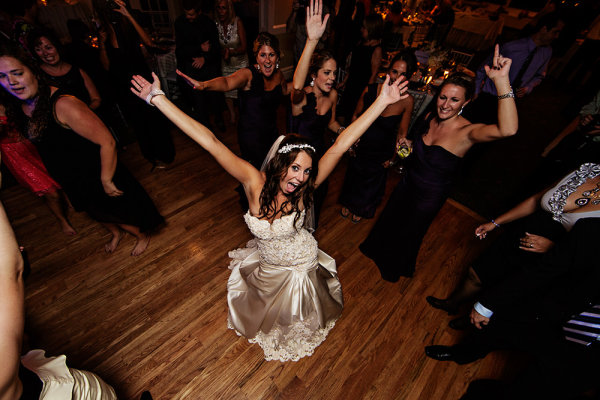
When the dancing started I decided I wanted something different. I mounted a 5D Mark III on a monopod with 14mm lens. a flash was mounted on the camera with the head aimed at the ceiling for bounce. Using a remote release, I got the bride's attention and waited for her reaction, firing when I saw it.

When the dancing started I decided I wanted something different. I mounted a 5D Mark III on a monopod with 14mm lens. a flash was mounted on the camera with the head aimed at the ceiling for bounce. I held the camera out over the dance floor by extending the monopod a few feet. Using a remote release, I got the bride’s attention and waited for her reaction, firing when I saw it. Photo by Rick Berk/kNot Photography
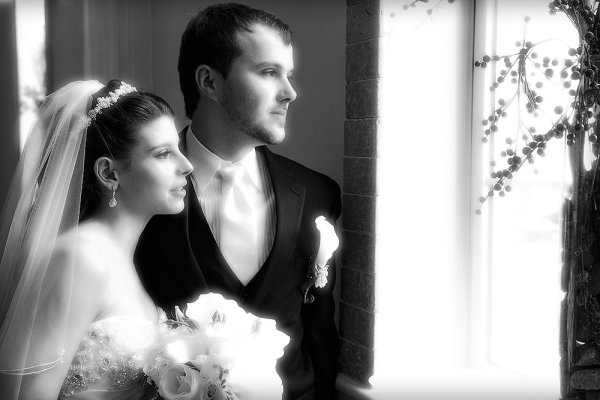
The church had these huge windows with light pouring in.  I knew I wanted to use it but time was tight.  I grabbed the bride and groom quickly and asked them to stand by the window and look out.  I fired off a handful of shots varying the exposure a bit. The black and white conversion added a nice artful touch. EOS-1D X with EF 24-70 f/2.8L II. ISO 1250, 1/100 f/5.6.

The church had these huge windows with light pouring in. I knew I wanted to use it but time was tight. I grabbed the bride and groom quickly and asked them to stand by the window and look out. I fired off a handful of shots varying the exposure a bit. The black and white conversion added a nice artful touch. EOS-1D X with EF 24-70 f/2.8L II. ISO 1250, 1/100 f/5.6. Photo by Rick Berk/OneRedTreePhoto.com

Further Wedding Photography Reading:

  • 21 Tips for Amateur Wedding Photographers
  • 50 Must Have Wedding Photography Shots
  • The One Location Technique for Wedding Photography

Post originally from: Digital Photography Tips.

Check out our more Photography Tips at Photography Tips for Beginners, Portrait Photography Tips and Wedding Photography Tips.

Weddings Through The Eyes of a “Noob”: Lessons I Learned


Digital Photography School
 
Comments Off on Weddings Through The Eyes of a “Noob”: Lessons I Learned

Posted in Photography


15 Reasons Why Your Instagram Followers Hate You

23 Feb

If you’re using Instagram, there are a few people who hate you. You can be a nice friendly person, and you friends are polite, that’s why they don’t comment your photos with an honest “Screw you, bastard!” But what did you do?! Just as a word can hurt, a photograph can insult even more – especially when you realize, browsing Continue Reading

The post 15 Reasons Why Your Instagram Followers Hate You appeared first on Photodoto.


Photodoto

 
Comments Off on 15 Reasons Why Your Instagram Followers Hate You

Posted in Photography


Lessons in Graffiti: Math Symbols Make Street Art Equations

23 Feb

[ By WebUrbanist in Art & Street Art & Graffiti. ]

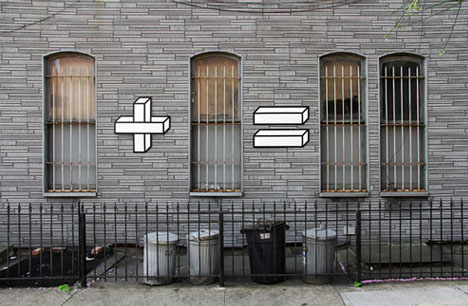
math street art

1 window plus 1 window equals 2 windows – seems obvious, but it warrants at least a double-take, so to speak, when you see it so explicitly expressed. Simple black-outlined, white-filled, faux-three-dimensional shapes that render urban happenstance into something with a humorous sense of order.

math graffiti alley tags

Dubbed Sum Times (itself a cute play on words) this latest street project by Aakash Nihalani skips the alpha and numeric and heads straight for the symbolic, turning everything from trash cans and dumpsters to windows and doors into educational equations.

math inspired 3d symbols

The basics of multiplication, divisions, addition and subtraction – literal object lessons that makes chaos more comprehensible, and might even teach school children a thing or two (including how to subvert their surroundings).

math based installation equations

Regular readers and fans may recognize this artist’s style from similarly-abstract street artwork including this urban tape art series and this set of shifting geometries, each of which also impose a kind of three-dimensional geometry on flat urban surfaces.

Share on Facebook


[ By WebUrbanist in Art & Street Art & Graffiti. ]

[ WebUrbanist | Archives | Galleries | Privacy | TOS ]


WebUrbanist

 
Comments Off on Lessons in Graffiti: Math Symbols Make Street Art Equations

Posted in Creativity


Tell a Story with a Diptych: Weekly Photography Challenge [With 15 Examples]

23 Feb

UntitledEarlier in the week we published a post on how to use Diptych’s to tell a story. Today we’re issuing the challenge to go out and shoot and edit one up to share with us!

Come on – we dare you! No… we double dare you (it’s a Double Diptych Dare).

Read Jason’s article on Diptychs, grab your camera and head out to shoot.

You can tell any kind of story you want – shoot on the street, photograph an event, set up a little story in your home – it’s totally up to you as there are so many possible approaches to take (we’ll include a few ideas below).

Once you’ve created your DIPTYCH upload it to your favourite photo sharing site and either share a link to it or – embed it in the comments using the our new tool to do so.

If you tag your photos on Flickr, Instagram, Twitter or other sites with Tagging tag them as #DPSDIPTYCH to help others find them. Linking back to this page might also help others know what you’re doing so that they can share in the fun.

Also – don’t forget to check out some of the great shots posted in our last challenge – Cute challenge where there were some beautiful shots submitted.

Looking for some Inspiration?

Check out these examples. Click the images to be taken to the photographers page on Flickr.

What a difference a day makes

half full or half empty

Justin Diptych

lavender

att blunda och se allting

Goodbye snow

sisters.

the journey as the destination for now

let's go chase the sunset, bring me the horizon

Day 60: Watch Out for Bogeys.

Mike - Stranger 37/100

First

Translation.

Sotsugyô, Japanese graduation ceremony

Post originally from: Digital Photography Tips.

Check out our more Photography Tips at Photography Tips for Beginners, Portrait Photography Tips and Wedding Photography Tips.

Tell a Story with a Diptych: Weekly Photography Challenge [With 15 Examples]


Digital Photography School

 
Comments Off on Tell a Story with a Diptych: Weekly Photography Challenge [With 15 Examples]

Posted in Photography


Thanks to Flickr for Featuring Me and My Photography on the Flickr Blog

23 Feb

Thanks so much to Yahoo and Flickr for featuring me and my photography today on the Flickr blog and the Weekly Flickr. I joined Flickr back the year that they started in 2004 and publish photos there every single day. It’s been a wonderful place to build my library and archive and publish my photography. I thought they did a really nice professional job with this video. Thanks!


Thomas Hawk Digital Connection

 
Comments Off on Thanks to Flickr for Featuring Me and My Photography on the Flickr Blog

Posted in Photography


MIT builds advanced photo functions into hardware for mobile devices

23 Feb

MIT.jpg

A project at the Massachusetts Institute of Technology has embedded advanced processing functions into an image processor for mobile devices. The chip includes features such as ‘real-time’ HDR processing and sophisticated bilateral noise reduction at a hardware level – making the process more energy efficient than running it as software, and making the chip more appropriate for battery-limited mobile devices. The work was funded by iPhone manufacturer Foxconn and a prototype chip, fabricated by the Taiwan Semiconductor Manufacturing Company, is now being tested.

News: Digital Photography Review (dpreview.com)

 
Comments Off on MIT builds advanced photo functions into hardware for mobile devices

Posted in Uncategorized


22. Februar 2013

23 Feb

Ein Beitrag von: Martin S.

© Martin S.


kwerfeldein – Fotografie Magazin

 
Comments Off on 22. Februar 2013

Posted in Equipment